Archive
JOHN WILLIAMS REVIEWS – 1960-1969
 In this latest installment of the new irregular series looking at the early career of some iconic composers, we switch to Hollywood to look at the work of John Williams.
Williams attended the University of California, Los Angeles, and studied privately with the Italian composer Mario Castelnuovo-Tedesco, before being drafted into the U.S. Air Force, where he conducted and arranged music for Air Force bands as part of his assignments. After his service, Williams moved back to New York, and studied both at the Juilliard School, and at the Eastman School of Music, while moonlighting as a jazz pianist.
After completing his studies, Williams worked in Hollywood, orchestrating and performing piano on film scores for composers such as Alfred Newman, Bernard Herrmann, Elmer Bernstein and Jerry Goldsmith. Williams made his film music composing debut in 1959 on the film Daddy-O at the age of 27 – credited as Johnny Williams – and these first reviews look at sixteen subsequent film scores Williams that wrote between 1960 and 1969.
Not included here are the multitude of episodic TV scores he wrote during the period for shows and anthology series like Alcoa Premier, Playhouse 90, M-Squad, Wagon Train, Impact, The Virginian, Lost in Space, The Time Tunnel, and Land of the Giants, and others. Nor am I including the two scores where Williams adapted music by other people: Valley of the Dolls (1967), where Williams worked with music by André Previn and Dory Previn and for which he received his first Oscar nomination for Best Adaptation Score of a Musical Picture, and Goodbye, Mr. Chips (1969), where Williams adapted music by Leslie Bricusse, and for which he earned his second nomination in the same category. Read more…
SUPERMAN IV: THE QUEST FOR PEACE – Alexander Courage, John Williams
 THROWBACK THIRTY
Original Review by Jonathan Broxton
The original 1978 Superman film was a groundbreaking motion picture in many respects. It essentially introduced the concept of the contemporary comic book super hero to the movie world, it made a star out of its granite-jawed leading man Christopher Reeve, and it spawned one of the greatest scores in motion picture history, penned by the incomparable John Williams. However, as the 1980s progressed, each successive Superman sequel diminished in quality, until the franchise reached its nadir with 1987’s Superman IV: The Quest for Peace. Despite the presence of both Christopher Reeve and Gene Hackman in the cast, and a potentially interesting environmentally aware plot involving nuclear energy, the film was an utter disaster. An increasingly shrinking budget put the film in a constant state of flux, and forced director Sidney J. Furie to shoot the film mostly in the English provincial town of Milton Keynes instead of New York. Special effects were left apparently half-finished, the script was constantly being re-written and footage re-shot, and the actors were disgruntled throughout. The terrible reviews of the film once it opened signaled the death knell of the franchise at that point, and Superman would not be seen on the silver screen again until 2006’s Superman Returns. Read more…
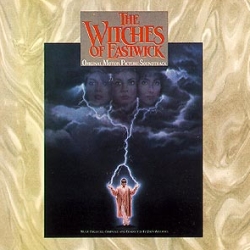
THE WITCHES OF EASTWICK – John Williams
 THROWBACK THIRTY
GREATEST SCORES OF THE TWENTIETH CENTURY
Original Review by Jonathan Broxton
A raucous fantasy comedy based on the novel by John Updike, The Witches of Eastwick stars Susan Sarandon, Michelle Pfeiffer, and Cher, as three women in a small New England town suffering from broken relationships: fiery artist Alexandra (Cher) is a widow, shy and insecure teacher Jane (Sarandon) is a divorcee, and mousy writer Sukie (Pfeiffer) was abandoned by her husband, leaving her to raise six children alone. Despite them living in a town with a history of magic, none of the women realize that they have powers of witchcraft, until an unusual stranger named Daryl Van Horne (Jack Nicholson) arrives in town and begins courting each of them in turn; before long, the women are spending time at Daryl’s mansion, learning about their powers, and finally indulging the passionate, sexual sides of their personality after years of being unfulfilled and repressed. However, as Daryl’s behavior starts to get more and more unpredictable, the women begin to worry about his intentions, and whether his arrival in Eastwick was a good idea. Read more…
THE BFG – John Williams
 Original Review by Jonathan Broxton
Roald Dahl’s The BFG has been one of the most beloved stories of British children’s literature since it was first published in 1982. It tells the story of a young girl named Sophie, who lives in an orphanage in London, and who one night sees a giant blowing something via a trumpet-like object into a bedroom window down the street from where she lives. Fearing that his existence will be revealed, the giant kidnaps Sophie and takes her far away to his home in Giant Country. However, rather than being a fearsome monster, the giant turns out to be a Big Friendly Giant – a “BFG” – and the two quickly become friends. Unfortunately, a dozen or so other giants also live in Giant Country, and these giants are fearsome cannibals who eat children and bully the BFG, who is the smallest of their kind. Having witnessed the cruelty of the giants first hand, Sophie convinces the BFG to help her hatch a plan to stop them and their child-chomping ways once and for all. The story was originally made into a much-loved animated film in 1989 featuring the voice of the great David Jason, and has now been given the Hollywood live-action treatment, with Oscar-winning actor Mark Rylance in motion capture as the BFG, newcomer Ruby Barnhill as Sophie, and Steven Spielberg in the director’s chair. Read more…
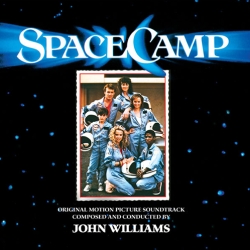
SPACECAMP – John Williams
 THROWBACK THIRTY
Original Review by Jonathan Broxton
Having enjoyed what will, in all probability, go down in history as the most successful creative period of any composer in film music history from 1975 through 1984, when he wrote the scores for Jaws, Close Encounters of the Third Kind, three Star Wars films, Superman, two Indiana Jones films, and E. T. The Extra-Terrestrial, among others, John Williams quite rightly decided to take a break. With the exception of a couple of episodes of the TV series Amazing Stories, he didn’t write anything in 1985, while in 1986 his only score was this one: the children’s adventure film SpaceCamp. Directed by TV veteran Harry Winer, the film followed the escapades of five brilliant teenagers (including Lea Thompson, Tate Donovan, Kelly Preston, and Joaquin Phoenix) who enroll in NASA’s SpaceCamp program with a view to becoming astronauts when they grow up. After meeting their instructors (Kate Capshaw and Tom Skerritt), and a friendly robot named Jinx, the kids are allowed into the cockpit of the Space Shuttle Atlantis during a routine engine test; however, a malfunction occurs, launching the shuttle into space, and forcing the inexperienced children to work together to try to bring the shuttle safely back to Earth. Read more…
STAR WARS: THE FORCE AWAKENS – John Williams
 Original Review by Jonathan Broxton
WARNING: THIS REVIEW CONTAINS PLOT SPOILERS. IF YOU HAVE NOT YET SEEN THE FILM, YOU MIGHT WANT TO CONSIDER WAITING UNTIL AFTER YOU HAVE DONE SO TO READ IT.
When John Williams first sat down to write the score for the original Star Wars over the winter of 1976, I doubt that even he could have imagined that he would still be writing music for those characters, and that universe, some 39 years later. There aren’t many film scores you can point to as being an actual turning point, a watershed moment in the history of the genre, but Star Wars was unquestionably one of those, and it went on to inspire a generation of filmmakers, composers, and fans. To say that The Force Awakens, the seventh film in the Star Wars franchise, is an eagerly awaited film would perhaps be one of the greatest understatements of all time – I don’t think I have ever seen a film with this much marketing, pre-release hype, and fevered anticipation – and, thankfully, it does not disappoint in any way. More than any installment in the prequels did, The Force Awakens feels like a proper Star Wars movie, a return to the fun and crowd-pleasing filmmaking of the original trio, and director J. J. Abrams should be congratulated for returning the franchise to its roots, and going some way to banishing the ghost of Jar Jar Binks forever. Read more…
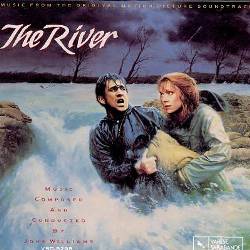
THE RIVER – John Williams
 THROWBACK THIRTY
Original Review by Jonathan Broxton
The River is a contemporary drama film directed by Mark Rydell, starring Mel Gibson and Sissy Spacek as Tom and Mae Garvey, a married couple trying to make ends meet on their farm in rural Tennessee. Over the course of several years, Tom and his family battle desperately to save and hold on to their home, despite the threats they face when a bank threatens to repossess their farm, when severe storms threaten to make the nearby river burst its banks and ruin their crops, and when a ruthless hydroelectric developer (played by Scott Glenn) threatens to cut off their power supply for his own ends. The film was a moderate critical success when it opened in cinemas in December 1984, and picked up four Academy Award nominations, with nods for Spacek as Best Actress, cinematography, sound, and John Williams’s folksy original score. Williams wrote The River at a time when he was still regularly working with multiple directors, and this was the last of his five collaborations with director Rydell, which previously encompassed similarly Americana-heavy films such as The Reivers, The Cowboys, The Long Goodbye, and Cinderella Liberty. Read more…
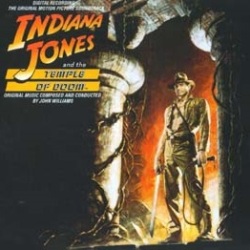
INDIANA JONES AND THE TEMPLE OF DOOM – John Williams
 THROWBACK THIRTY
GREATEST SCORES OF THE TWENTIETH CENTURY
Original Review by Jonathan Broxton
Fortune and glory, kid. Fortune and glory.
Even after thirty years, Indiana Jones and the Temple of Doom remains one of the most iconic and beloved action films of the 1980s. A darker, scarier prequel to Raiders of the Lost Ark, Steven Spielberg’s film has Harrison Ford returning as the archaeologist-adventurer Indiana Jones, crossing paths with Chinese jewel smugglers in Shanghai in 1934. After his deal with the Triads goes wrong, Indy flees on a plane with his diminutive sidekick Short Round (Ke Huy Quan) and nightclub singer Willie Scott (Kate Capshaw), only to crash over the Himalayas, washing up in a remote Indian village. Before long, Indy is embroiled in yet another adventure, this time involving missing children, ancient mystical stones said to have magic powers, and a terrifying cult that worships the Hindu goddess Kali. The film was a massive commercial success, ending up the third highest grossing film of 1984 with an adjusted-for-inflation gross of almost $436 million, and received two Academy Award nominations, including one for its score by John Williams. Read more…
THE BOOK THIEF – John Williams
 Original Review by Jonathan Broxton
The Book Thief, based on the popular novel by Markus Zusak, is a World War II drama set in Germany about the power of the written word. Young Sophie Nélisse stars as the lead character, Liesel, who is sent to live with foster parents (Geoffrey Rush and Emily Watson), just as the specter of war looms over the country and Nazism begins to take hold. Through her innocent eyes Liesel begins to witness the first months of what would be eventually become the Holocaust, but through the compassion of her new parents, their imparted love of books and literature, and her friendship with of a young Jewish man named Max, she finds a way to deal with the atrocities that are starting to take place in her community. The film is directed by Brian Percival, best known for his work on the critically acclaimed TV series Downton Abbey, and has a score by the legendary John Williams. Read more…
LINCOLN – John Williams
 Original Review by Jonathan Broxton
In the annals of American political history, virtually no-one is as universally admired, revered and respected as Abraham Lincoln. Born into relative poverty in Kentucky in 1809, Lincoln rose from being a simple country lawyer to being elected the 16th President of the United States in 1860. During the course of his presidency Lincoln essentially re-defined the United States as we know it today, successfully defeating the Confederacy in the four-year Civil War, issuing the Emancipation Proclamation that essentially ended slavery in the country, and delivering the Gettysburg Address, one of the most famous political speeches of all time. He was re-elected in 1864 but, as we all know, was assassinated by actor John Wilkes Booth while watching a play in a Washington DC theatre in April 1865, before he could fully establish his second term. There have been many films over the years featuring Lincoln as a central figure, but director Steven Spielberg’s film – simply titled “Lincoln” – is a straightforward biopic of the man’s life and achievements. The film stars Daniel Day Lewis in the eponymous role, and features a stellar supporting cast including Sally Field as Lincoln’s wife Mary Todd, Tommy Lee Jones as republican leader Thaddeus Stevens, Joseph Gordon-Levitt as Lincoln’s son Robert, David Strathairn as secretary of state William Seward, and Jackie Earle Haley, James Spader, John Hawkes, Jared Harris and Hal Holbrook in smaller roles. Read more…
WAR HORSE – John Williams
 Original Review by Jonathan Broxton
A variation on the classic Black Beauty tale about of the life of a heroic horse, filtered through the cinematic lens of director John Ford, War Horse is director Steven Spielberg’s adaptation of the well-regarded novel by Michael Morpurgo about the adventures of a horse named Joey during World War I. The action moves from rural Devon, where young Joey is raised as a plow horse by Albert Narracott (Jeremy Irvine) to work on his father’s farm, to the battlefields of central Europe after he is sold to the British Army upon the outbreak of war and is adopted by a kindly cavalry officer as his personal mount. Moving from adventure to adventure, Joey makes his way through the mire of The Great War, serving on both sides of the conflict – and all the while young Albert, now himself serving in the trenches, never gives up hope of being reunited with his equine friend. The film co-stars Peter Mullan, Emily Watson, David Thewlis, Niels Arestrup, Tom Hiddleston and Benedict Cumberbatch, and of course has a score by the venerable John Williams, his second score of 2011 after several years away from the podium. Read more…
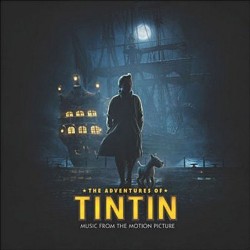
THE ADVENTURES OF TINTIN: THE SECRET OF THE UNICORN – John Williams
 Original Review by Jonathan Broxton
I think you have to be Belgian, or at least a Francophone, to fully appreciate all the subtleties and nuances of Tintin. Created by the Belgian artist and author Georges Rémi under his pen name Hergé, the character first appeared in print in 1929 and went on to appear in 23 adventure novels spanning a 46-year period up until 1975, followed by the posthumous publication of a final story in 1986, three years after Hergé’s death. Not only that, the stories have been adapted for radio, theatre, and a popular 1960s animated television show with its famous voiceover proclaiming that you are watching “Hergé’s Adventures of Tintin!” Despite all that, and for reasons I have never fully understood I was never a fan of the franchise – unlike Hollywood giant Steven Spielberg, who is not a Francophone, but who is adapting the story for its first major big screen adventure using state of the art-motion capture technology. Read more…
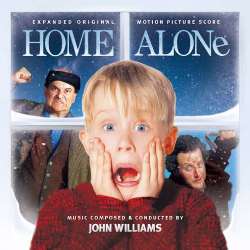
HOME ALONE – John Williams
 MOVIE MUSIC UK CLASSICS
Original Review by Craig Lysy
Writer-producer John Hughes, best known for his 80’s teen movies “16 Candles”, “The Breakfast Club” and “Ferris Bueller’s Day Off” conceived a new twist on the holidays when he took on “Home Alone”. The story opens with the McAllister family preparing for a Christmas vacation in Paris, France. As the family is packing, Kevin (Macaulay Culkin) gets into a scuffle with his older brother Buzz and is sent to his room on the third floor. As the out of control family rushes to depart the next morning, Kevin is somehow overlooked and left “Home Alone.” When Kevin awakes and finds himself alone he makes the best of it, as any kid would, by having fun, eating pizza, making a mess and jumping up and down on his parents’ bed. The real fun begins however when Kevin discovers two burglars, Harry (Joe Pesci) and Marv (Daniel Stern) planning to rob his house on Christmas Eve and devises all sorts of booby traps and outrageous schemes to defend his house at all costs. The film stretched credulity from the start, but through its slap-stick humor, Christmas sentimentality and Culkin’s endearing screen persona, it won the hearts of the public and became a huge commercial success. The film made Culkin an instant star, spawned a sequel and to this day remains an enduring holiday favorite. Read more…
INDIANA JONES AND THE KINGDOM OF THE CRYSTAL SKULL – John Williams
 Original Review by Jonathan Broxton
Play the Raiders March to any film music fan – hell, anyone who went to the cinema in the last 20 years or so – and the same imagery will pop into their mind: Harrison Ford, unkempt, unshaven, battered leather jacket, battered fedora hat, whip in one hand, gun in the other, a languorous grin on his face, preparing to dispatch some insidious bad guy standing in his way from rightfully claiming one of the world’s lost archeological artifacts. Such is the power and durability of John Williams’ classic themes that there are inextricably linked with their subject matter, from the sinister cello chords of Jaws to the breathless joy of E.T., to the effortless heroism of Star Wars. There’s no wonder Williams remains one of the most well-respected and well-loved film composers of all time, and why his music remains a pop culture touchstone for millions. Read more…
MUNICH – John Williams
 Original Review by Jonathan Broxton
The events of 4 September 1972 are forever etched into the memories of those who saw them unfold. At the 20th Olympic Games in Munich, Germany, members of the Palestinian terrorist organisation Black September took hostage eleven members of the Israeli team – wrestlers, weightlifters, and coaches from the shooting and fencing squads – demanded the release of 234 Palestinians and non-Arabs jailed in Israel, and threatened to kill the hostages if their demands were not met, while the horrified world looked on. As the terrorists attempted to escape to Cairo with their prisoners, German police staged a botched rescue attempt at Fürstenfeldbruck airbase: in the ensuing chaos, all the hostages, all but three of the terrorists, and several policemen were killed. Read more…

Shop at the Movie Music UK Store

Member of the

 MOVIE MUSIC UK