Archive
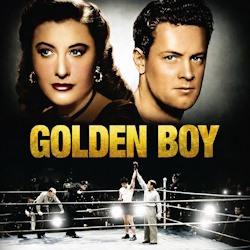
GOLDEN BOY – Victor Young
 GREATEST SCORES OF THE TWENTIETH CENTURY
Original Review by Craig Lysy
In 1938 Columbia Pictures bought the film rights to the play Golden Boy by Clifford Odets for $100,000, intending to showcase their star Jean Arthur with Frank Capra directing. However, when Capra was unavailable, Rouben Mamoulian was tasked with directing, which resulted in cast changes. William Perlberg was assigned production and the team of Lewis Meltzer, Daniel Taradash, Sarah Mason and Victor Heerman wrote the screenplay. Barbara Stanwyck was cast to star in the film as Lorna Moon, with Adolphe Menjou as Tom Moody, Joseph Calleia as Eddie Fuseli, and Lee J. Cobb as Papa Bonaparte. In an audacious decision, Mamoulian decided against studio wishes, to cast the young William Holden (21 years old) in his first acting role as Joe Bonaparte, a decision that ended up launching his career as a young heart throb. Read more…
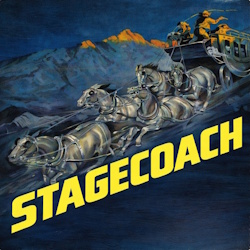
STAGECOACH – Richard Hageman
 GREATEST SCORES OF THE TWENTIETH CENTURY
Original Review by Craig Lysy
Director John Ford came upon a short story, “The Stage to Lordsburg” by Dudley Nichols, which inspired him for his next film project, and whose film rights he purchased for $2,500. Yet he had difficulty securing financial backing as the studios believed “A” western pictures were out of vogue, and they had no confidence that John Wayne could carry the film. Ford was insistent on retaining Wayne and eventually hammered out a deal with independent producer Walter Wanger who would manage production with a $531,374 budget. Ford would direct and Dudley Nichols was hired to write the screenplay. A fine cast was assembled, including Claire Trevor as Dallas, John Wayne as Ringo Kid, Andy Devine as Buck, John Carridine as Hatfield, Thomas Mitchell as Doc Boone, Louise Platt as Lucy Mallory, George Bancroft as Marshall Curley Wilcox, Donald Meek as Samuel Peacock, Berton Churchill as Henry Gatewood, and Time Holt as Lieutenant Blanchard. Read more…
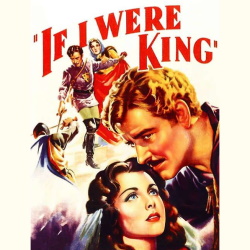
IF I WERE KING – Richard Hageman
 GREATEST SCORES OF THE TWENTIETH CENTURY
Original Review by Craig Lysy
In 1937 Paramount Pictures studio executives were seeking a period piece as a vehicle to showcase studio star Ronald Coleman. They found their story with the 1901 biographical novel and play titled “If I Were King” by Justin Huntly McCarthy. Frank Lloyd was placed in charge of production with a $1 million budget, would also direct, and Preston Sturges was hired to write the screenplay. Ronald Coleman would star as Francois Villon, joined by Basil Rathborne as King Louis XI, Frances Dee as Katherine DeVaucelles, Ellen Drew as Huguette, Bruce Lester as Noel le Jolys, and C. V. France as Father Villon. Read more…
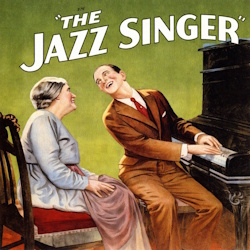
THE JAZZ SINGER – Louis Silvers
 GREATEST SCORES OF THE TWENTIETH CENTURY
Original Review by Craig Lysy
The genesis of The Jazz Singer film lay with writer Samson Raphaelson, who after seeing 30-year-old Al Jolson perform decided to wrote a short story called “Day of Atonement” about a Jew named Jackie Rabinowitz, based on Jolson’s life. He then adapted the story into a successful play titled “The Jazz Singer”, which became a sensation in 1925. Warner Brothers executives rolled the dice and bought the film rights; along with the Vitaphone Corporation they would finance the film with a $422,000 budget, Darryl F. Zanuck would manage production, Alan Crosland would direct, and Alfred A. Cohn would write the screenplay. Sam Warner, nicknamed “Father of the Talkies,” made the creative decision to synchronize the film’s music. Later, he insisted that Al Jolson’s ad-libbed speech (about two minutes) also be included in the movie. Tragically Warner did not live to see his pioneering efforts come to fruition as he died the day before opening night. For the cast, Al Jolson would star as Jakie Rabinowitz, joined by Warner Oland as Canto Rabinowitz, Eugenie Besserer as Sara Rabinowitz, and May McAvoy as Mary Dale. Read more…
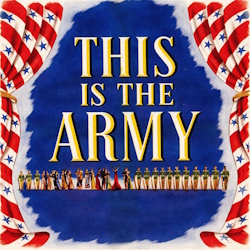
THIS IS THE ARMY – Irving Berlin, Ray Heindorf
 GREATEST SCORES OF THE TWENTIETH CENTURY
Original Review by Craig Lysy
The Broadway play “This Is The Army” by James Coll and Irving Berlin was very successful, and Warner Brothers Studio executive Jack L. Warner decided to bring the story to the big screen in a patriotic effort to boost public morale during World War II. Warner and Hal B. Wallis purchased the film rights, would oversee production with a $1.87 million budget, Michael Curtiz was tasked with directing, and Casey Robinson and Claude Binyon would write the screenplay. A cast for the ages was assembled, including, as themselves: Irving Berlin, Frances Langford, Joe Louis, Kate Smith, and Ezra Stone. Joining them would be George Murphy as Jerry Jones, Joan Leslie as Eileen Dibble, George Tobias as Maxie Twardofsky, Alan Hale as Sergeant McGee, and Ronald Reagan as Corporal Johnny Jones. Read more…
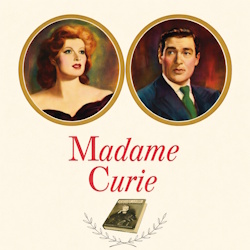
MADAME CURIE – Herbert Stothart
 GREATEST SCORES OF THE TWENTIETH CENTURY
Original Review by Craig Lysy
In 1938 Universal Pictures sought and bought the film rights to the biography “Madame Curie” by Éve Curie, the subject’s daughter, believing it afforded an excellent story to showcase their premier star, Irene Dunne. However, the project never got off the ground and the film rights were sold in 1940 to Metro-Goldwyn-Mayer. Sidney Franklin was assigned production with a $1.94 million budget and Mervyn LeRoy was tasked with directing. The journey to obtain a script was arduous, with both Aldous Huxley, and F. Scott Fitzgerald’s efforts being rejected. Eventually a collaborative effort by Paul Osborn, Hans Remeau and Walter Reisch was approved. Casting was also problematic with star Greta Garbo departing MGM for Warner Brothers. Joan Crawford was then turned down, causing her to also depart the studio for Warner Brothers, leaving Greer Garson with the role of Madame Curie. Joining her would be Walter Pidgeon as Pierre Curie, and Henry Travers as Eugéne Curie. Read more…
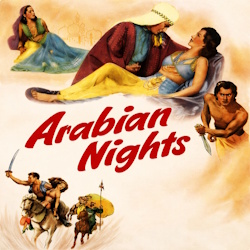
ARABIAN NIGHTS – Frank Skinner
 GREATEST SCORES OF THE TWENTIETH CENTURY
Original Review by Craig Lysy
The success of The Thief of Bagdad in 1940 spurred Universal Pictures to enter the exotic adventure film genre, resulting in production of four WWII era films, including Arabian Nights in 1942, White Savage in 1943, Ali Baba and the Forty Thieves in 1944, and Cobra Woman also in 1944. The first film, Arabian Nights would be derived from the Islamic classic “One Thousand and One Nights”. Walter Wagner was placed in charge of production with a $904,765 budget, John Rawlins was tasked with directing, and Michael Hogan was hired to write the screenplay. For the cast, John Hall would star as Haroun-Al-Rashid, Maria Montez as Scheherazade, Sabu as Ali Ben Ali, Leif Erikson as Kamar, Edgar Barrier as Nadan, Shemp Howard as Sinbad, Thomas Gomez as Hakim, Tuhan Bey as Captain of the Guard, and John Qualen as Aladdin. Read more…
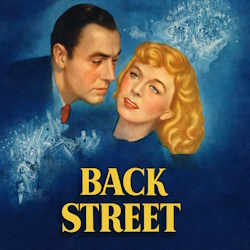
BACK STREET – Frank Skinner
 GREATEST SCORES OF THE TWENTIETH CENTURY
Original Review by Craig Lysy
In 1932 Universal Pictures adapted the 1931 novel “Back Street” by Fannie Hurst. In 1940 the studio decided to remake the film as a way to showcase their star, Margaret Sullavan. Bruce Manning was assigned production with a budget of $675,000, Robert Stevenson was tasked with directing, and the team of Bruce Manning and Felix Jackson would write the screenplay drawing from the script of the 1932 film, and the original novel. Margaret Sullavan would star and play Ray Smith. She insisted that the studio hire Charles Boyer, whom she always wanted to work with, and managed to induce him to accept by agreeing to surrender her top billing to him. He would play Walter Louis Saxel, and joining them would be Richard Carlson as Curt Stanton, Frank McHugh as Ed Porter, and Samuel S. Hinds as Felix Darren. Read more…
DR. JEKYLL AND MR. HYDE – Franz Waxman
 GREATEST SCORES OF THE TWENTIETH CENTURY
Original Review by Craig Lysy
Director Victor Fleming wanted to retell the classic 1886 Robert Louis Stevenson tale The Strange Case of Dr. Jekyll and Mr. Hyde. He purchased the film rights from Paramount Pictures, which had made a 1931 film version starring Fredric March and sold his vision to MGM executives. Victor Saville was placed in charge of production with a $1.1 million budget, Fleming would direct, and John Lee Mahin would adapt the 1931 film screenplay by Percy Heath and Samuel Hoffenstein. A stellar cast was assembled, including Spencer Tracy as Dr. Henry Jekyll/Mr. Edward Hyde, Ingrid Bergman as Ivy Pearson, Lana Turner as Beatrix Emery and Donald Crisp as Sir Charles Emery. Read more…
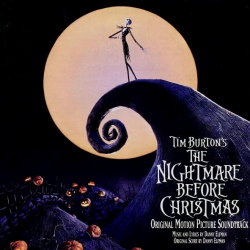
THE NIGHTMARE BEFORE CHRISTMAS – Danny Elfman
 THROWBACK THIRTY
GREATEST SCORES OF THE TWENTIETH CENTURY
Original Review by Jonathan Broxton
If any film project perfectly encapsulates the professional relationship between director Tim Burton and composer Danny Elfman, it is their 1993 stop-motion animated fantasy musical The Nightmare Before Christmas. It tells the story of Jack Skellington, the ‘Pumpkin King’ of Halloweentown, the fantasy world charged with organizing the annual Halloween holiday. Despite being enormously successful, Jack has grown disillusioned of the same annual routine and wants something new; while wandering in the woods the next morning, he accidentally finds a door to Christmastown – the parallel land which organizes Christmas – and is enchanted by what he finds. Wanting to bring the Christmas spirit to Halloweentown, and despite the warnings of his unrequited love Sally, Jack decides that he will kidnap ‘Sandy Claws’ and take over Christmastown for himself – with predictably disastrous results. Read more…
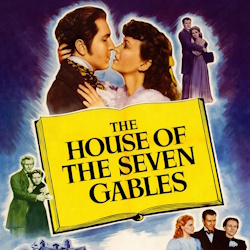
THE HOUSE OF THE SEVEN GABLES – Frank Skinner
 GREATEST SCORES OF THE TWENTIETH CENTURY
Original Review by Craig Lysy
The 1851 novel The House of the Seven Gables by Nathaniel Hawthorne was first adapted to the screen in 1910 by Universal Studios. In 1939 studio executives decided to remake the film, believing a retelling of its gothic tale of a self-destructive family consumed by greed would be well-received by the public. It was conceived to be a B-film offering and so Universal assigned one of its B-film producers, Burt Kelly, to oversee production with a small budget of $178,000. Joe May was tasked with directing and Lester Cole was hired to write the screenplay. Despite its small budget, a fine cast was assembled, including; George Sanders as Jaffrey Pyncheon, Margaret Lindsay as Hepzibah Pyncheon, Vincent Price as Clifford Pyncheon, Nan Grey as Phoebe Pyncheon, Dick Foran as Matthew Holgrave, and Gilbert Emery as Gerald Pyncheon. Read more…
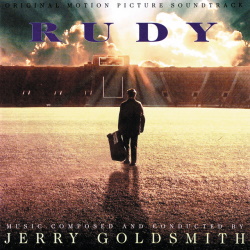
RUDY – Jerry Goldsmith
 THROWBACK THIRTY
GREATEST SCORES OF THE TWENTIETH CENTURY
Original Review by Jonathan Broxton
Arguably one of the most inspiring and beloved sporting drama films ever made, Rudy tells the story of Daniel “Rudy” Ruettiger, a working class kid from Chicago who harbors dreams of playing American football at the University of Notre Dame despite significant obstacles – notably, his lack of good academic grades, his family’s financial struggles, and his diminutive stature. However, Ruettiger’s persistence and positive nature eventually results in him making the team, earning the respect of his college teammates, and even being interviewed for the college newspaper, which makes him a cult figure in South Bend. Eventually Rudy convinces the stubborn head coach to put him on the field for the last ten seconds of the final game of his final year at the college – his first and last appearance – whereupon he sacks the opposition quarterback, and is carried from the field in glory while the stadium chants his name. Much of the story is apocryphal and embellished for dramatic purposes, but it’s a feelgood tale nevertheless. The film is directed by David Anspaugh from a screenplay by Angelo Pizzo, and stars Sean Astin as Rudy, along with Ned Beatty, Jason Miller, Robert Prosky, and Charles S. Dutton in supporting roles, as well as Jon Favreau and Vince Vaughn making their acting debuts. Read more…
THE BLUE BIRD – Alfred Newman
 GREATEST SCORES OF THE TWENTIETH CENTURY
Original Review by Craig Lysy
Following the enormous success of The Wizard of Oz in 1939, Darryl F. Zanuck, the Vice-President of Production at 20th Century Fox, decided to cash in on the children’s fantasy genre to showcase their child star Shirley Temple. Film rights to the 1908 fantasy play “The Blue Bird” by Maurice Maeterlinck were purchased. Gene Markey was assigned production with a budget of $2.0 million, Walter Lang was tasked with directing, and Ernest Pascal was hired to write the screenplay. Heading the cast was megastar Shirley Temple as Mytyl, Spring Byington as Mummy Tyl, Nigel Bruce as Mr. Luxury, Gale Sondergaard as Tylette, Eddie Collins as Tylo, Sybil Jason as Angela Berlingot, Jessie Ralph as Fairy Berylune, Helen Ericson as Light, Johnny Russel as Tyltyl and Laura Hope Crews as Mrs. Luxury. Read more…
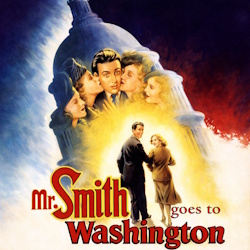
MR. SMITH GOES TO WASHINGTON – Dimitri Tiomkin
 GREATEST SCORES OF THE TWENTIETH CENTURY
Original Review by Craig Lysy
Columbia Pictures decided to purchase an unpublished story “The Gentleman From Montana” by Lewis R. Foster to adapt for a sequel to their film “Mr. Deeds Goes to Town (1936), which starred Gary Cooper and Jean Arthur. Frank Capra was placed in charge of production with a $1.5 million budget, would also direct, and Sidney Buchman and Myles Connolly were hired to write the screenplay. Gary Cooper was unavailable to reprise his role and so Capra decided to borrow James Stewart from MGM who he believed was perfectly suited to the role of Jefferson Smith. Joining him would be Jean Arthur as Clarissa Saunders, Claude Rains as Senator Joseph Harrison Paine, Edward Arnold as Jim Taylor, Guy Kibbee as Governor Hubert Hopper, Thomas Mitchell as Diz Moe and Beulah Bondi as Ma Smith. Read more…
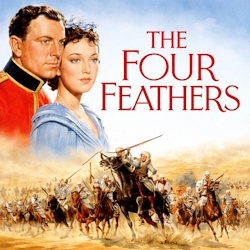
THE FOUR FEATHERS – Miklós Rózsa
 GREATEST SCORES OF THE TWENTIETH CENTURY
Original Review by Craig Lysy
Renowned film maker brothers Zoltan and Alexander Korda decided that for their next film they wanted to go for a historical epic. They chose to adapt the 1902 novel “The Four Feathers” by A. E. Wilson, which tells the story of the Madhist Wars circa 1881. Alexander would oversee production with a budget of $1.0 million, Zoltan would direct, and R. C. Sherriff, Lajos Bíró and Arthur Wimperis were hired to write the screenplay. The cast would include John Clements as Harry Faversham, Ralph Richardson as Captain John Durrance, C. Aubrey Smith as General Burroughs, and Jack Allen as Lieutenant Thomas Willoughby. Read more…

Shop at the Movie Music UK Store

Member of the

 MOVIE MUSIC UK