Archive
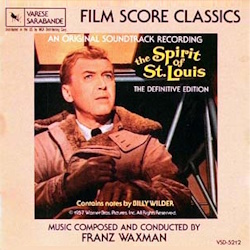
THE SPIRIT OF ST. LOUIS – Franz Waxman
 GREATEST SCORES OF THE TWENTIETH CENTURY
Original Review by Craig Lysy
Studio executive Jack Warner decided that the history-making tale of Charles A. Lindbergh’s pioneering transatlantic flight needed to be brought to the big screen. He assigned production to Leland Hayward with a $3 million budget, tasked Billy Wilder with directing (who also assisted with the screenplay), and hired screenwriters Charles Lederer and Wendell Mayes to adapt Lindbergh’s autobiographical account in his 1953 book The Spirit of St. Louis. Casting the lead role was problematic, as Warner’s choice of John Kerr was turned down by the actor, who was offended by Lindbergh’s pro-Nazi sympathies and antisemitism. James Stewart lobbied for the role and was chosen by Wilder despite Warner’s misgivings that, at 47 years of age, he was too old for the role, given that Lindbergh was 25 years old when he made the flight. Joining Stewart would be Murray Hamilton as Bud Gurney and Patricia Smith as Mirror Girl. Read more…
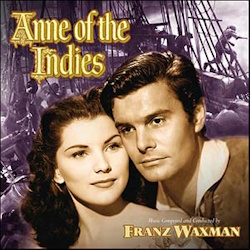
ANNE OF THE INDIES – Franz Waxman
 GREATEST SCORES OF THE TWENTIETH CENTURY
Original Review by Craig Lysy
Writer Herbert Sass wrote a short story “Anne of the Indies” for the Saturday Evening Post in 1947. It made an impression with the public and his New York publisher asked him to write a screenplay. Sass did so and it caught the eye of producer Walter Wanger who bought the film rights, intending to showcase his star Susan Hayward who he had under contract. Wanger however could not finance the film, and so the rights were sold to 20th Century Fox. Arthur Caesar and Philip Dunne were hired to rewrite the screenplay, which was well received by the studio. As such, George Jessel was placed in charge of production with a $1.5 million budget, and Jacques Tourneur was tasked with directing. By time production began in 1950, Susan Hayward had dropped out. So, the cast was reimagined, and Jean Peters would star as Captain Anne Providence, joined by Louis Jourdan as Captain Pierre Francois La Rochelle, Debra Paget as Molly La Rochelle, Herbert Marshall as Dr. Jameson, and Thomas Gomez as Blackbeard. Read more…
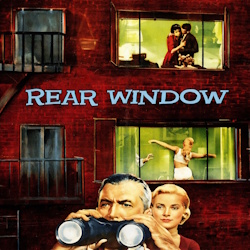
REAR WINDOW – Franz Waxman
 GREATEST SCORES OF THE TWENTIETH CENTURY
Original Review by Craig Lysy
Following the success of his film Dial M For Murder in 1954, director Alfred Hitchcock embarked on his next project that would be based on a 1942 short story mystery thriller “It Had To Be Murder” by Cornell Woolrich. It offered him a perfect ‘Hitchcock’ story to bring to the big screen and he secured financial support for Paramount pictures and Patron Incorporated to purchase the film rights. Hitchcock would personally manage production with a $1 million budget, direct, and John Michael Hayes was hired to write the screenplay. A stellar cast was assembled, including; James Stewart as Jeff Jeffries, Grace Kelly as Lisa Carol Fremont, Wendell Corey as Detective Tom J. Doyle, Thelma Ritter as Stella, and Raymond Burr as Lars Thorwald. Read more…
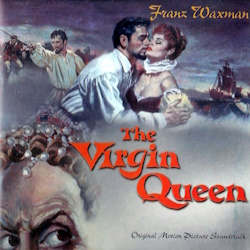
THE VIRGIN QUEEN – Franz Waxman
 GREATEST SCORES OF THE TWENTIETH CENTURY
Original Review by Craig Lysy
In 1954 20th Century Fox executive Daryl F. Zanuck conceived of a film to be titled “Sir Walter Raleigh” set during the reign of Queen Elizabeth I. He offered Bette Davis the role of Elizabeth, yet she bristled at the film title, which made no reference to her. The title was changed to “The Virgin Queen” and she agreed to reprise her portrayal of Queen Elizabeth, first performed in 1939 with “The Private Lives of Elizabeth and Essex”. Charles Brackett was assigned production with a budget of $1.6 million, Henry Koster was tasked with directing, and Mildret Lord would write the screenplay. For the cast, joining Davis would be Richard Todd as Sir Walter Raleigh, Joan Collins as Elizabeth “Beth” Throckmorton, Jay Robinson as Chadwick, Herbert Marshall as Robert Dudly, Earl of Leicester, Dan O’Herlihy as Lord Derry, and Robert Douglas as Sir Christopher Hatton. Read more…
UNTAMED – Franz Waxman
 GREATEST SCORES OF THE TWENTIETH CENTURY
Original Review by Craig Lysy
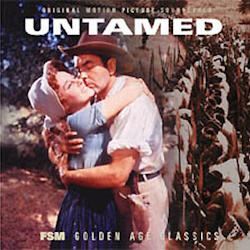
The genesis Untamed lies with South African Helga Moray, who wrote a 17-page outline of the story that drew inspiration from one her female ancestors. Her handiwork caught the eye of producer William Bacher who saw a story that needed to be brough to the big screen. He purchased the film rights, which allowed Moray to expand her story into a full-fledged novel. After being rejected by many studios due to cost concerns, 20th Century Fox agreed to finance the film to exploit their new CinemaScope technology. Bacher and Bert E. Friedlob were assigned production with a $3.56 million budget, Henry King was tasked with directing, and a team of writers that included Michael Blankfort, Frank Fenton, Talbot Jennings and William Bacher would write the screenplay. A fine cast was assembled, led by Tyrone Power as Paul van Riebeck and Susan Hayward as Katje O’Neil. Joining them would be Agnes Moorehead as Aggie O’Toole, and Richard Egan as Kurt Hout. Read more…
MY COUSIN RACHEL – Franz Waxman
 GREATEST SCORES OF THE TWENTIETH CENTURY
Original Review by Craig Lysy
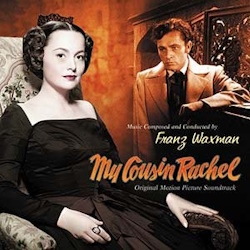
Author Daphne du Maurier’s efforts to sell film rights for her 1951 novel My Cousin Rachel for $100,000 and 5% of the international box office was rejected by all of the major Hollywood studios except 20th Century Fox, whose counter offer of $80,000 was accepted. Nunnally Johnson was assigned production with a budget of $1.2 million, wrote the screenplay, and George Cukor was tasked with directing. Controversy arose when both Cukor and du Maurier both objected to the script, with bot departing the project when their revisions were rejected. Casting was also problematic with Cukor’s choice of either Greta Garbo or Vivien Leigh playing Rachel Sangalletti Ashley, fell through with his departure. Olivia de Havilland was instead brought in and joined by Richard Burton in his Hollywood debut as Philip Ashley, along with Audrey Dalton as Louise Kendall. Read more…
MR. SKEFFINGTON – Franz Waxman
 GREATEST SCORES OF THE TWENTIETH CENTURY
Original Review by Craig Lysy
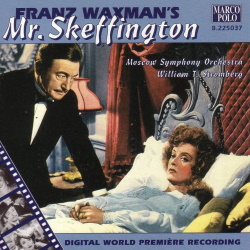
Executive Jack L. Warner of Warner Brothers decided that the popular American Book of The Month Club novel “Mr. Skeffington” (1940) by Elizabeth von Arnim could be successfully adapted to the big screen. He purchased the film rights and would manage production along with the Epstein brothers, Julius and Philip. A $1.521 million budget was provided, the Epstein brothers would write the screenplay, and Vincent Sherman would direct. Casting was a challenge in that studio stars Merle Oberon, Hedy Lamar and Paul Henreid all turned down offers. Eventually Bette Davis accepted the role of Fanny Trellis Skeffington. Joining her would be Claude Rains as Job Skeffington, and Richard Waring as Trippy Trellis. Read more…
OBJECTIVE BURMA – Franz Waxman
 GREATEST SCORES OF THE TWENTIETH CENTURY
Original Review by Craig Lysy
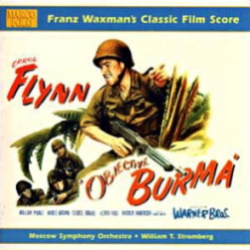
Warner Brothers Studios producer Jerry Wald wanted to make a WWII film, but one which was set in another theater of the war far remote from the Pacific where most of the battles were being waged. With that in mind, he came up with a story set in Burma near the Chinese border. He pitched his idea to studio executives and was given the green light to proceed with production empowered with a $1.592 million budget. Ranald MacDougall and Lester Cole were hired to write an original screenplay, and Raoul Walsh was tasked with directing. Wald had always envisioned the film as a vehicle for MGM’s star Errol Flynn, who after some coaxing signed on to play Captain Nelson. Joining him would be James Brown as Sergeant Treacy, Henry Hull as Mark Williams, William Hudson as Hollis, Anthony Caruso as Miggleori, and William Prince as Lieutenant Sid Jacobs. Read more…
A CHRISTMAS CAROL – Franz Waxman
 GREATEST SCORES OF THE TWENTIETH CENTURY
Original Review by Craig Lysy
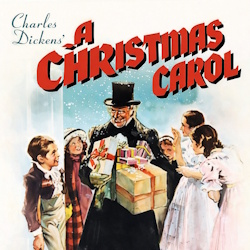
MGM Studios decided that they wanted to bring the 1843 novella “A Christmas Carol” by Charles Dickens to the big screen. They secured the film rights and assigned Joseph L. Mankiewicz to production. Hugo Butler was hired to adapt the novel and write the screenplay, however, the studio insisted that the final product be a “Family Film” as was its historic practice with literary adaptations. As such, much of the grimmest, and scariest elements of Dicken’s tale was excised, which robbed the film of much of its potent social commentary. Edwin L. Marin was tasked with directing and after recasting the lead actor role, a great cast was assembled, including Reginald Owen as Ebenezer Scrooge, Gene Lockhart as Bob Cratchit, Kathleen Lockhart as Mrs. Cratchit, Terry Kilburn as Tiny Tim Cratchit and Barry MacKay as Fred. Read more…
PEYTON PLACE – Franz Waxman
 GREATEST SCORES OF THE TWENTIETH CENTURY
Original Review by Craig Lysy
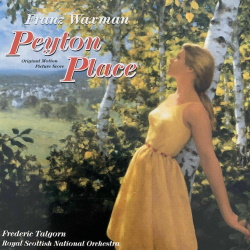
20th Century Fox producer Jerry Wald observed the enormous popularity of the novel Peyton Place by Grace Metalious, which sold 60,000 copies in the first ten days and soared to the top of the New York Times best sellers list, where it would remain for over a year. He convinced studio executives to back a film adaptation and purchased the film rights for $250,000. John Michael Hays was hired to adapt the novel, which ended up causing great controversy with the author. The story offers a sordid tale of moral hypocrisy and turpitude, which features scandals, murder, suicide, and incest. Hays was forced to sanitize the novel’s most lurid elements due to content restrictions imposed by the notorious Hayes Code. This “sanitation” enraged Metalious who would publicly deride the film, while taking her $400,000 share of the profits. Mark Robson was tasked with directing and provided a budget of $2.0 million. An excellent cast was assembled, which included Lana Turner as Constance MacKenzie, Diane Varsi as Allison MacKenzie, Hope Kange as Selena Cross, Arthur Kennedy as Lucas Cross, Lee Philips as Michael Rossi, Lloyd Nolan as Dr. Matthew Swain, Russ Tamblyn as Norman Page and Terry Moore as Betty Anderson. Read more…
THE SILVER CHALICE – Franz Waxman
 GREATEST SCORES OF THE TWENTIETH CENTURY
Original Review by Craig Lysy
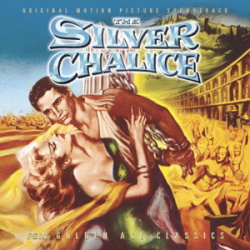
Warner Brothers studio executives decided that following the stunning commercial success of MGM’s “Quo Vadis” in 1951 and 20th Century Fox’s “The Robe” in 1953, that they would cash in on the popular religious epic genre. To that end they purchased the film rights to the popular 1952 novel “The Silver Chalice” by Thomas B. Costain. Lesser Samuels was hired to adapt the novel and write the screenplay. Victor Saville was tasked with production and directing the film with a budget of $4.5 million. Saville made the artistic decision to eschew traditional realism for the film’s visual design, instead embracing stage design with an Art Deco style by renown operatic stage designer Rolfe Gerard. It was an audacious decision, which in the end was not received well by critics or the public. A fine cast was hired, which included Virginia Mayo as Helena, Pier Angeli as Deborra, Jack Palance as Simon Magus, Joseph Wiseman as Mijamin, and Alexander Scourby as Luke. Read more…
CAPTAINS COURAGEOUS – Franz Waxman
 GREATEST SCORES OF THE TWENTIETH CENTURY
Original Review by Craig Lysy
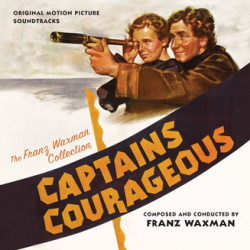
In 1936 MGM Studios decided to adapt the Rudyard Kipling’s 1897 coming of age novel Captains Courageous to the big screen. They purchased the screen rights, and management of the project was assigned to producer Louis D. Lighton who was provided a budget of $1.65 million. Screenwriters John Lee Mahin, Marc Connelly and Dale Van Every were hired to adapt the novel, and Victor Fleming was tasked with directing. For casting, of prime importance was finding the right boy to play the Harvey Cheyne role. The creative team hired Freddie Batholomew, an English-American actor who many regards as one of the greatest child actors in cinematic history. Joining him would be Spencer Tracy as Manuel Fidello, Lionel Barrymore as Captain Disko Troop, Melvyn Douglas as Frank Burton Cheyne, and Mickey Rooney as Dan Troop. Read more…
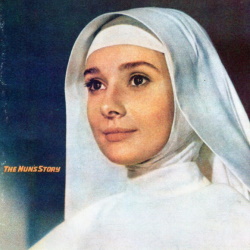
THE NUN’S STORY – Franz Waxman
 GREATEST SCORES OF THE TWENTIETH CENTURY
Original Review by Craig Lysy
Director Fred Zinnemann was intrigued by Kathryn Hulme’s best-selling novel “The Nun’s Story (1956) and purchased the film rights. To his dismay, he could not obtain financial backing from any studio as they all felt that the lack of action would not resonate with audiences. All this changed dramatically when Audrey Hepburn decided she wanted to take on the role of Gaby Van der Mal. A bidding war ensued with Warner Brothers prevailing. Henry Blanke was hired to produce the film with a 3.5 million budget. Robert Anderson was tasked with adapting the novel and writing the screenplay. Zinnemann would direct and he assembled a fine cast. Joining Hepburn would be Peter Finch as Dr. Fortunati, Dame Edith Evans as Mother Emmanuel and Dame Peggy Ashcroft as Mother Mathilde. Read more…
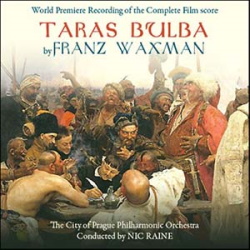
TARAS BULBA – Franz Waxman
 GREATEST SCORES OF THE TWENTIETH CENTURY
Original Review by Craig Lysy
Robert Aldrich, a producer, director and screenwriter had for many years been crafting a script for his dream project, adapting the 1895 novella Taras Bulba by Nikolai Gogol for the big screen. After five scripts he believe he had at last created a “sensational” screenplay. The project moved forward in 1959, but foundered when financing failed. Aldrich fell into debt, and was forced to sell the script to Joseph Kaufman, an agent for producer Harold Hecht for $100,000. Harold Hecht Productions would finance the film with United Artists distributing. A budget of $6 million was provided and J. Lee Thompson was brought in to direct. A fine cast was assembled, which included Tony Curtis as Andrei Bulba, Yul Brynner as Taras Bulba, Christine Kaufman as Natalie Dubrov, and Perry Lopez as Ostap Bulba. Read more…
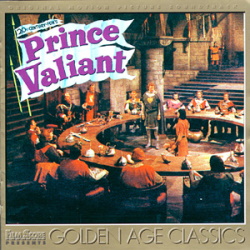
PRINCE VALIANT – Franz Waxman
 GREATEST SCORES OF THE TWENTIETH CENTURY
Original Review by Craig Lysy
MGM studios had purchased the film rights to the legendary comic book saga but was never able to reduce the sprawling story into a discreet screenplay. After languishing on the shelf for many years MGM allowed its option to lapse. Robert Jacks, who was the son in law of studio executive Darryl F. Zanuck of 20th Century Fox secured the film rights, sensing an opportunity given that swashbuckler films had been experiencing a resurgence in popularity after Ivanhoe (1952). Robert L. Jacks was given a generous budget of nearly $3 million to produce the film, which would be shot in CinemaScope. Dudley Nichols was hired to condense Hal Foster’s comic book tale into a more concise and cogent screenplay, and Henry Hathaway was tasked with directing. A stellar cast was assembled with 24-year-old heartthrob Robert Wagner playing the titular role. Joining him would be James Mason as the villain Sir Brack, Janet Leigh as love interest Princess Aleta, Debra Paget as Princess Irene, Sterling Hayden as Sir Gawain, Victor McLaglen as Boltar, Donald Crisp as King Aguar, Brian Aherne as King Arthur, and Primo Carnera as Sligon. Read more…

Shop at the Movie Music UK Store

Member of the

 MOVIE MUSIC UK