Archive
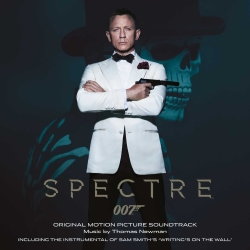
SPECTRE – Thomas Newman
 Original Review by Jonathan Broxton
The 24th official James Bond film, the fourth starring Daniel Craig, and the second directed by Sam Mendes, Spectre apparently concludes a four-movie storyline, bringing together the plots of the three preceding films – Casino Royale, Quantum of Solace, and Skyfall – and re-introducing Bond to his greatest nemesis. As he globe-trots around the world from Mexico to Rome, to Austria, and beyond, Bond gradually discovers the existence of a shadowy organization which appears to be orchestrating a series of terrorist events, including the ones Bond investigated in the previous films, and whose leader may be a figure from his own past. The film co-stars Christoph Waltz, Léa Seydoux, Ben Whishaw, Naomie Harris, Dave Bautista, Monica Bellucci, and Ralph Fiennes, and in many ways is a love letter to the entire James Bond franchise. Not only is this Bond a touch more light-hearted, with a little more emphasis on the gadgets and the girls than the previous films, there are innumerable nods and winks and in-jokes for the Bond connoisseur: the mountaintop clinic is straight out of On Her Majesty’s Secret Service, the “hollowed out volcano” in the desert is from You Only Live Twice, the car from Goldfinger makes a spectacular return, the fight on the train has echoes of both From Russia With Love and Live and Let Die, the “funhouse” in the remains of the MI6 building recalls The Man With the Golden Gun, and the monosyllabic henchman Hinx is clearly modeled after the similarly taciturn Jaws. The whole film is a loving homage to everything preceding it, and delighted this long-time fan of the genre, although of course you have to overlook the contrivances and plot holes that always come with this territory. Read more…
EN MAI FAIS CE QU’IL TE PLAÎT/COME WHAT MAY – Ennio Morricone
 Original Review by Jonathan Broxton
If the information on the Internet Movie Database is correct, En Mai Fais Ce Qu’il te Plaît is the 521st score of Ennio Morricone’s career, which stretches back to his first score, Il Federale, in 1961. In the intervening 54 years the Italian has written some of the most iconic music in the history of cinema; En Mai Fais Ce Qu’il te Plaît will likely not be remembered as one of his standout works but, considering the fact that he is now aged 86, that he is writing film music at all is a minor miracle. That it’s still this good is nothing short of astonishing. The film – the title of which translates to Darling Buds of May in English – is a French drama written and directed by Christian Carion, who previously directed the well regarded films Une Hirondelle a Fait le Printemps and Joyeux Noël. Set during the early days of World War II, the story follows a group of people from a small village in Pas-de-Calais in northern France, who flee from the advancing German troops, and essentially become homeless, traversing the French countryside trying to avoid the Nazis, while trying to retain some semblance of a normal life under new, terrible circumstances. Read more…
ALEXANDER NEVSKY – Sergei Prokofiev
 GREATEST SCORES OF THE TWENTIETH CENTURY
Original Review by Craig Lysy
Film director Sergei Eisenstein had secured the favor of Soviet dictator Stalin with two films, which extolled the revolution and Communist party; The Battleship Potemkin (1925) and October: Ten Days That Shook The World (1928). Unfortunately, a misguided foray to the West to make films unrestrained by the demands of Soviet Realism caused him to fall out of favor. Upon returning to the Soviet Union in 1932 he was slowly rehabilitated and fortune smiled upon him when Stalin approved production of a film about Alexander Nevsky. Dimitri Vasilyev was assigned by the Ministry of Culture to keep Eisenstein on schedule and budget. The screenplay would be written by Eisenstein and Pyotyr Pavlenko. The telegenic Nikolay Cherkasov would play the titular role and be supported by Nikolay Okhlopkov as Vasili Buslaev and Andrei Abrikosov as Gavrilo Oleksich. Sergei Eisenstein made Alexander Nevsky during the dark pall of the Stalinist era. The film offers an obvious allegory on the historic Germanic-Russian animus, as well as the escalating distrust and tension felt with the Nazi regime. The story celebrates Prince Alexander Nevsky, who achieves an apotheosis, passing unto legend after he leads the armies of Holy Mother Russia to victory over the crusading Catholic Teutonic Knights. Read more…
SECRETS OF A PSYCHOPATH – Scott Glasgow
 Original Review by Jonathan Broxton
I apologize in advance for what this review is about to become, because I know many of you will see it as a rant, but it’s something that’s been bothering me for quite a while and I need to get it off my chest. But first, the basics: Secrets of a Psychopath is a low budget horror-thriller starring Kari Wuhrer and Mark Famiglietti as Katherine and Henry, two siblings who lure unsuspecting victims to their house via an online dating site, and then subject the hapless women who respond their ad to increasingly gruesome games of torture and, eventually, murder, all in an apparent attempt to ‘heal’ Henry’s sexual dysfunction. It’s directed by 93-year old Bert Gordon, the man behind such cult shockers as The Amazing Colossal Man, Earth vs. the Spider, Empire of the Ants, and The Food of the Gods, and has an original score by the super talented Scott Glasgow, who has shown his skill at crafting memorable scores in this genre through previous titles like Lo and Riddle. Read more…
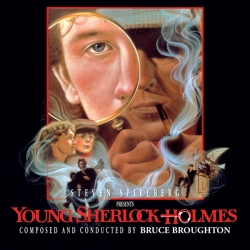
YOUNG SHERLOCK HOLMES – Bruce Broughton
 THROWBACK THIRTY
Original Review by Jonathan Broxton
The fascination with Sir Arthur Conan Doyle’s great fictional detective Sherlock Holmes has often been such that people have ventured beyond the realms of the original 60 stories, and written extrapolations investigating both Holmes’s childhood and his life after his career ended, as well as re-imaginings of the character in more contemporary settings. The 1985 film Young Sherlock Holmes is one such tale, an original story chronicling the supposed first meeting between Sherlock Holmes and his long-suffering friend John Watson, and their first adventure together. Written by Chris Columbus and directed by Barry Sonnenfeld, the film stars Nicholas Rowe as Holmes and Alan Cox as Watson, who meet as teenagers at London’s Brompton Academy in the 1870s. After a series of murders in which the victims – one of whom is Holmes’s mentor and former professor Rupert Waxflatter – experience terrifying hallucinations before they die, and after having his suspicions rebuffed by an incompetent police chief, Holmes and Watson begin to investigate the case themselves, and uncover a secret cult of Egyptian god worshippers who appear to be responsible for the deaths. The film co-stars Anthony Higgins, Sophie Ward, and Nigel Stock, and received generally positive reviews, especially for its special effects: the film is notable for including the first fully computer-generated animated character in the shape of a knight made of stained glass, and was one of the first films worked on by pioneering animator John Lasseter, who would later go on to found Pixar. Read more…
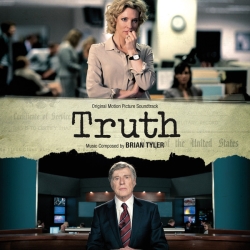
TRUTH – Brian Tyler
 Original Review by Jonathan Broxton
Truth is a film about journalistic integrity and ethics, which looks specifically at the 2004 ‘Killian documents controversy’ which essentially ended the careers of veteran CBS news producer Mary Mapes and the well-respected news anchor and journalist Dan Rather. In the lead up to the 2004 US presidential election Mapes and Rather presented a report on the news magazine show 60 Minutes containing some damning allegations about then-president George W. Bush’s service in the Air National Guard in the 1970s. However, following the airing of the show, it was revealed that the documents Mapes and Rather relied upon as the basis for the report had been entirely fabricated – ostensibly to cripple Bush’s re-election campaign – and the resulting scandal was intensely damaging to CBS, who were accused of poor journalistic standards and incomplete fact-checking. The film was directed by James Vanderbilt, and has an all-star cast, including Robert Redford as Rather, Cate Blanchett as Mapes, and Topher Grace, Dennis Quaid, Elisabeth Moss, and Bruce Greenwood in supporting roles. Read more…
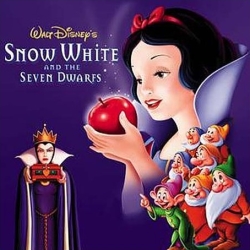
SNOW WHITE AND THE SEVEN DWARFS – Frank Churchill, Leigh Harline, Paul J. Smith
 GREATEST SCORES OF THE TWENTIETH CENTURY
Original Review by Craig Lysy
Walt Disney Productions had been very successful in producing animated short subject films such as Mickey Mouse and the Silly Symphonies. In 1934 CEO Walt Disney believed it was time to move his studio into the realm of producing feature films. To that end he resolved to inaugurate a new era by producing a feature animated film based on the fairytale of Snow White and the Seven Dwarfs by the Brothers Grimm. Disney would produce the film and he tasked screenwriter Richard Creedon and a team of seven writers to come up with the screenplay. David Hand was hired as supervising Director for a team of five directors. For the cast Adriana Caselotti would voice for the titular role. Joining her would be Lucille La Verne as Queen Grimhilde (the witch), Henry Stockwell as the Prince, Stuart Buchanan as the Huntsman, and Moroni Olsen as The Magic Mirror. For the seven dwarfs we have Roy Atwell as Doc, Pinto Colvig as both Grumpy and Sleepy, Otis Harlan as Happy, Scotty Mattraw as Bashful, Billy Gilbert as Sneezy, and Eddie Collins as Dopey. Read more…
A NIGHTMARE ON ELM STREET 2: FREDDY’S REVENGE – Christopher Young
 THROWBACK THIRTY
Original Review by Jonathan Broxton
In the wake of the massive, and unexpected, success of A Nightmare on Elm Street in 1984, New Line Cinema realized they had a potential franchise on their hands. Audiences had responded very positively to Freddy Krueger, the wisecracking maniac with a striped sweater and a gloved hand full of knives who kills people in their dreams. Despite him having apparently been vanquished at the end of the first film, they found a way to bring him back for a sequel, and A Nightmare on Elm Street 2: Freddy’s Revenge got the green light for release on Halloween weekend, 1985, under the direction of veteran Jack Sholder. With the exception of Robert Englund as Freddy, the film featured an all-new cast, focusing on Jesse Walsh (Mark Patton), a teenage boy who moves into a new house with his family, without realizing that it is the same house where Nancy Thompson (Heather Langenkamp) fought Freddy years previously. Before long, Jesse is having nightmares about being stranded on a school bus with two girls and being stalked by a deformed killer; Jesse and his friends soon uncover information regarding Freddy’s legacy, but things quickly turn violent, and it becomes apparent that, instead of Freddy murdering people in their dreams, he is actually possessing Jesse’s body so that he can carry out murders in the real world. Read more…
CRIMSON PEAK – Fernando Velázquez
 Original Review by Jonathan Broxton
This is not a ghost story. It’s a story with ghosts in it.
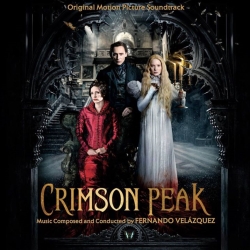
Director Guillermo del Toro’s latest film, Crimson Peak, is a love letter to the great Gothic horror stories of the 1800s, inspired by authors like Edgar Allan Poe, Bram Stoker, and Mary Shelley, as well as Charlotte Brontë’s classic Jane Eyre. Mia Wasikowska stars as Edith Cushing, the headstrong heiress to a Buffalo NY mining company, who is swept off her feet in the aftermath of a family tragedy by a dashing British nobleman, Lord Thomas Sharpe (Tom Hiddleston). After relocating to the Sharpe ancestral home, the crumbling Allerdale Hall in the north of England, Edith finds herself in unfamiliar surroundings, having to deal not only with the dilapidated building – which seems to literally bleed from the walls due to the red clay on which it stands – but also with Thomas’s aloof sister Lucille (Jessica Chastain), who seems to be hiding sinister motivations. Worst of all, however, is the fact that Edith has been able to see ghosts since her childhood, and Allerdale Hall is full of them, all warning her to stay away… Read more…
THE BRIDE OF FRANKENSTEIN – Franz Waxman
 GREATEST SCORES OF THE TWENTIETH CENTURY
Original Review by Craig Lysy
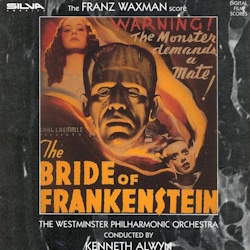
Due to the tremendous commercial success of Frankenstein in 1931, Universal Studios was highly motivated to film a sequel. However, director James Whale was not interested preferring to pursue other projects, going on to make The Old Dark House in 1932 and The Invisible Man in 1933. Ultimately, he succumbed after four relentless years of badgering, and agreed to direct The Bride of Frankenstein for release in 1935. He brought in trusted screenwriters John Balderston and William Hurlbut to write the script for “The Return of Frankenstein” and he was given a budget of $300,000. Over time the story evolved leading it to be retitled “The Bride of Frankenstein”. Boris Karloff would reprise the role of the monster, while Colin Cleve would return as Henry Frankenstein. Joining them would be Valerie Hobson as Elizabeth, Ernest Thesiger as Doctor Pretorius, Elsa Lanchester as the Monster’s bride, Glavin Gordon as Lord Byron, Douglas Walton as Percy Bysshe Shelley, Dwight Frye as Karl Glutz, and Una O’Connor as Minnie. Read more…
COMMANDO – James Horner
 THROWBACK THIRTY
Original Review by Jonathan Broxton
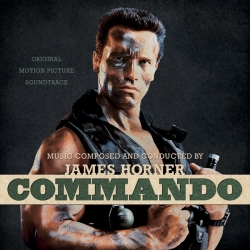
Arnold Schwarzenegger and Sylvester Stallone were cinematic rivals throughout the 1980s, going toe-to-toe through a series of increasingly spectacular action movies, as they tried to out-shoot, out-fight, and out-muscle each other to the top of the box office charts. 1985 was arguably the year their battle commenced, as it saw the release of Stallone’s Rambo: First Blood Part II, and Schwarzenegger’s Commando, the first movie in which the Austrian Oak starred as a contemporary human being, after playing a fantasy warrior in the Conan series, and an unstoppable cyborg in The Terminator. Directed by journeyman Mark L. Lester, Commando saw Schwarzenegger playing John Matrix, a retired elite Black Ops commando who is forced back into action when Arius, the exiled South American dictator he helped depose, kidnaps his daughter, intending to blackmail Matrix into restoring Arius to power. The film, which also starred Rae Dawn Chong, Dan Hedaya, Vernon Wells, and an 8-year-old Alyssa Milano, was critically lambasted, but was a commercial success, and helped initiate Schwarzenegger’s career as a heroic leading man. Read more…
BRIDGE OF SPIES – Thomas Newman
 Original Review by Jonathan Broxton
Steven Spielberg’s latest film, Bridge of Spies, is a cold war thriller set in 1957 starring Tom Hanks as James Donovan, an insurance lawyer who is unexpectedly hired by the US Government to represent Rudolf Abel (Mark Rylance), an unassuming middle-aged artist accused of being a Russian spy. Although the evidence against Abel is overwhelming – and even though Abel himself does not deny the charges – Donovan mounts a spirited defense, arguing that the US constitution affords everyone due process to a fair trial. Months later, Donovan is called upon once again when a U-2 spy plane operating over Russia is shot down, and its young pilot is arrested by the Soviets. Realizing that Abel can be used as a bargaining chip, the CIA sends Donovan to East Berlin, just as the Wall is being erected, to negotiate a trade. The screenplay, by Matt Charman, Ethan Coen and Joel Coen, is based on real events, and allows the narrative to unfold at a measured pace. This is a film about conversations, negotiations, political ideologies, and ethical dilemmas, and there is nary an action sequence in the entire film, which will alienate those who need more ‘stuff happening’, but which drew me into its intricacies. Tom Hanks is superb in the lead role, serious and honorable, while Mark Rylance is relaxed and unexpectedly funny in his role as the accused spy with an artistic flair. The film is also notable for another reason: it’s the first Steven Spielberg film in 30 years not to feature a John Williams score. Read more…
THINGS TO COME – Arthur Bliss
 GREATEST SCORES OF THE TWENTIETH CENTURY
Original Review by Craig Lysy
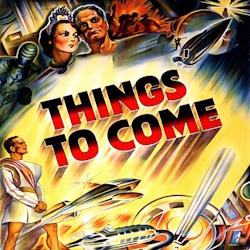
H. G. Wells published his novel The Shape Of Things To Come in 1933 and it immediately resonated with the public. Producer Alexander Korda was coming off the success of his last film, The Private Lives of Henry VIII, and recognized an opportunity to cash in on the popularity of Wells’s latest book. He purchased the film rights, but Wells imposed significant contractual constraints, which ensured he maintained creative control and wrote the screenplay. Korda tasked William Cameron Menzies with directing and brought in a stellar cast, which included Raymond Massey as John and Oswald Cabal, Edward Chapman as Pippa and Raymond Passworthy, Ralph Richardson as Rudolf – the Boss, Margaretta Scott as Roxana Black and Rowena Cabal, Cedric Hardwicke as Theotocopulos, Naurice Braddell as Dr. Edward Harding, Pearl Argyle as Catherine Cabal, and Sophie Stewart as Mrs. Cabal. The story paints a grim tale of a catastrophic World War, which commences in 1940 and rages for decades. After a plague pandemic in 1966 wipes out most of the populace, civilization collapses and people return to an agrarian life in small towns. It comes to pass that one day an advanced aircraft lands in one of the communities and brings news that an organization is restoring civilization to communities such as this. Civilization is reborn and an advanced society re-emerges with humanity living in grand underground cities. Yet there are those that remember the Great War, and on the eve of the first manned spaceflight to the Moon, these Luddites rebel against the new social order. The film had only modest commercial success and in the end did not cover its production costs of 260,000 pounds. Critics, however, hailed it as a masterpiece and it has served as an iconic example of thoughtful and provocative and science fiction. Read more…
SUFFRAGETTE – Alexandre Desplat
 Original Review by Jonathan Broxton
Women in the United Kingdom did not receive the right to vote until 1928. The issue of universal suffrage had been a parliamentary hot potato since at least 1872, and had dominated the political lives of several of the country’s leaders at the time, most notably King George V, and prime ministers David Lloyd George and Herbert Henry Asquith, all of whom were vehemently opposed to it. Things came to a head following the formation of the influential Women’s Social and Political Union, which had shifted sentiments in favor of women’s suffrage by 1906, but was equally criticized for its militant and sometimes violent campaign. Most commentators credit two women with changing the minds of British politicians: Emmeline Pankhurst, the leader of the WSPU (and the British equivalent of Susan B. Anthony), and Emily Davison, who intentionally walked in front of, and was subsequently trampled and killed by, the King’s horse Anmer during the running of the 1913 Epsom Derby horse race. Director Sarah Gavron’s film Suffragette tells the story of the movement from the point of view of the fictional Maud Watts, who joins the WSPU at the height of its influence, and becomes deeply involved in its activities. It stars Carey Mulligan, Helena Bonham-Carter, and Meryl Streep as Pankhurst, and is the first real ‘Oscar bait’ film of 2015. Read more…
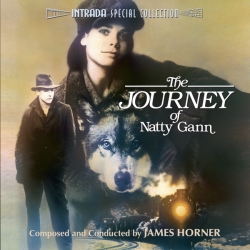
THE JOURNEY OF NATTY GANN – James Horner
 THROWBACK THIRTY
Original Review by Jonathan Broxton
Following his breakout year in 1982, when he wrote music for the box-office smashes Star Trek II and 48 HRS., James Horner spent the next several years solidly entrenched as one of the newest, most exciting young members of the Hollywood studio system, scoring several successful and popular features. After he proved his reliability when asked to replace Georges Delerue on Something Wicked This Way Comes in 1983, the executives at Walt Disney turned to Horner again in the fall of 1985, when they asked him to write a last-minute replacement for Elmer Bernstein’ score for the film The Journey of Natty Gann. Directed by Jeremy Kagan from an original screenplay by Jeanne Rosenberg, and set during the darkest days of the Great Depression in 1935, the film starred 12-year old Meredith Salenger as the eponymous Natty, a tomboy who sets off on a cross-country trek to find her father Sol (Ray Wise) after he leaves their Pacific Northwest home for Chicago in a desperate attempt to find work. En route she is befriended by a wolf, who travels with and protects her for much of her voyage, and even has a brief, innocent romance with another young traveler named Harry, played by a young John Cusack. Read more…

Shop at the Movie Music UK Store

Member of the

 MOVIE MUSIC UK