Movie Music UK Awards 2018
 The world of film music in 2018 yielded some truly outstanding scores, but my top scores of the year actually came to me rather more easily than they usually do. They each spoke to different aspects of my musical personality, touching on my love of screen musicals, my love of powerful and rousing action, my love of deep emotional content, and my love of memorable themes. The year’s best score, for me, heralded the triumphant return to Hollywood of a 1990s great who has spent more time on Broadway than in Tinseltown, and if there is any justice at all he will be the world’s newest EGOT after the Oscars are announced.
Meanwhile, the world outside of the United States proved once again that brilliant film music can be found all over the globe if you are prepared to actively seek it out instead of simply settling for whatever the major studios foist upon us; my winners and nominees this year include scores from the UK, Mexico, Spain, France, Germany, the Netherlands, Iceland, Norway, Japan, China, and even Egypt. So, without further ado, here are my choices… Read more…
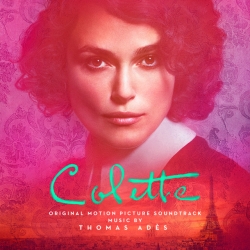
COLETTE – Thomas Adès
 Original Review by Jonathan Broxton
There is always a slight frisson through the classical music fraternity whenever a respected contemporary concert hall composer writes a film score. It happened when John Corigliano scored (and won an Oscar for) The Red Violin in 1999. It happened when Sir John Tavener contributed music to Children of Men in 2006. And now the latest composer to ‘slum it’ in the world of film is Englishman Thomas Adès, the wunderkind behind such acclaimed classical works as The Exterminating Angel, Powder on Her Face, Asyla, and The Tempest. What invariably happens is that these esteemed composers thoroughly enjoy the process of writing for film, and comment on how difficult it is and how much it stretched their creative abilities, while the highbrow music press writes lavish articles about the composer’s experiences, offering backhanded compliments about the genre while continuing to look down their nose at the entire industry as a ‘lesser art form’. Of course, the other thing that invariably happens is that the classical composer writes a tremendous piece of music too, and this is exactly what has happened here with Adès’s score for Colette. Read more…
Under-the-Radar Round Up 2018, Part 4
 Original Reviews by Jonathan Broxton
This is the fourth and final installment in my annual series of articles looking at the best “under the radar” scores from around the world. Again, rather than doing the scores on a geographical basis, this year I decided to simply preset the scores in a random order. This conclusive batch includes six scores: a superb children’s adventure score from an independent American film rebooting a beloved 1970s franchise, two beautiful scores from Japanese animations, a fun and spooky German children’s fantasy-comedy, a Spanish sports comedy caper, and a wonderfully nostalgic throwback to 80s synth scores for a Swedish comedy-thriller.
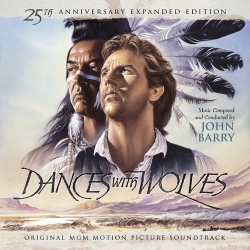
DANCES WITH WOLVES – John Barry
 GREATEST SCORES OF THE TWENTIETH CENTURY
Original Review by Craig Lysy
Kevin Costner had long wished to produce and star in a western and, after several years of searching, finally came upon a script by his friend Michael Blake that piqued his interest. Set in the post-Civil War era, the tale explored the clash of civilizations between the indigenous American Indians and the westward expanding white Europeans. Costner asked Blake to expand his script into a novel to improve its chances of being adapted to the big screen. He did so, and Dances With Wolves was published in 1988. Costner immediately purchased the film rights and set his plan into motion, using his own Tig Productions Company to finance the film. He would audaciously produce, direct and star in the film. He began with a production budget of $15 million dollars, which ballooned to $22 million due to his insistence on geographical, linguistic and cultural authenticity. To support him in the lead role of Lieutenant John Dunbar he hired Mary McDonnell as Stands With A Fist, Graham Greene as Kicking Bird, and Rodney A. Grant as Wind In His Hair. Read more…
Michel Legrand, 1932-2019
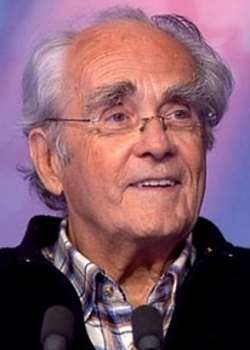 Composer Michel Legrand died on January 26, 2019, in hospital in Paris, France, after a short illness related to a pulmonary infection. He was 86.
Michel Jean Legrand was born in Paris, France, in 1932, the son of composer-conductor Raymond Legrand and his wife, Marcelle Ter-Mikaëlian, who was the sister of conductor Jacques Hélian. Legrand studied music at the Conservatoire de Paris from age 11, working with Nadia Boulanger among others, and as both a composer and a pianist. He achieved early career success in 1954 age 22 when his original jazz album I Love Paris became a surprise hit in Europe. He released numerous more albums in the 1950s, including the popular Paris Jazz Piano in 1959, and then established himself as a jazz composer, pianist, and bandleader in the United States, working with jazz stars such as Miles Davis, Stan Getz, and Lena Horne.
Legrand dabbled in film music from the mid 1950s onwards, but achieved his first significant success in 1960 when he scored director Jean-Luc Godard’s groundbreaking A Woman Is a Woman (Une Femme Est Une Femme) in 1961. Legrand quickly became a key musical component of the French New Wave, working for Godard and other directors such as Jacques Demy and Agnès Varda, among others, on such classics as Lola (1961), Vivre Sa Vie (1962), Cléo de 5 à 7 (1962), La Baie des Anges (1963), Bande à Part (1964), and La Chinoise (1967). His score for Demy’s 1965 musical film The Umbrellas of Cherbourg earned him his first Academy Award nomination, and from that point on Legrand split his time between Hollywood and Europe, working on both big-budget American and films and more artistic French fare. Read more…
Academy Award Nominations 2018
 The Academy of Motion Picture Arts and Sciences (AMPAS) have announced the nominations for the 91st Academy Awards, honoring the best in film in 2018.
In the Best Original Score category, the nominees are:
- TERENCE BLANCHARD for Blackkklansman
- NICHOLAS BRITELL for If Beale Street Could Talk
- ALEXANDRE DESPLAT for Isle of Dogs
- LUDWIG GÖRANSSON for Black Panther
- MARC SHAIMAN for Mary Poppins Returns
These are the first Oscar nominations for Blanchard and Göransson. This is the second nomination Britell (his first was Moonlight in 2016) and the fourth score nomination for Shaiman (his seventh overall, including nominations for Best Song) – although his last one came in 1999 for Patch Adams. Desplat has now been nominated ten times, and is the only former Oscar winner in the field, having won for The Grand Budapest Hotel in 2014, and for The Shape of Water last year in 2017.
In the Best Original Song category, the nominees are:
- STEFANI GERMANOTTA (LADY GAGA), MARK RONSON, ANTHONY ROSSOMANDO, and ANDREW WYATT for “Shallow” from A Star is Born
- KENDRICK LAMAR DUCKWORTH, MARK SPEARS (SOUNWAVE), ANTHONY TIFFITH, and SOLANA ROWE (SZA) for “All the Stars” from Black Panther
- DAVID RAWLINGS and GILLIAN WELCH for “When a Cowboy Trades His Spurs for Wings” from The Ballad of Buster Scruggs
- MARC SHAIMAN and SCOTT WITTMAN for “The Place Where Lost Things Go” from MARY POPPINS RETURNS
- DIANE WARREN for “I’ll Fight” from RGB
The winners of the 91st Academy Awards will be announced on February 24, 2018.
Under-the-Radar Round Up 2018, Part 3
Original Reviews by Jonathan Broxton
This is the third installment in my annual series of articles looking at the best “under the radar” scores from around the world. As was the case before, rather than doing the scores on a geographical basis, this year I decided to simply preset the scores in a random order. This second batch includes six scores: two superb scores from Spain – a fantasy drama and a period thriller – a children’s animated film from Norway, a children’s adventure film from Sweden, a family adventure film from France, and a big-screen version of a beloved children’s story from Germany.
EDWARD SCISSORHANDS – Danny Elfman
 GREATEST SCORES OF THE TWENTIETH CENTURY
Original Review by Craig Lysy
Director Tim Burton related that, as a teenager growing up in Burbank California, he felt estranged, isolated and misunderstood. A drawing by him of a solemn man bearing long sharp blades spoke to his inability to form and retain friends. The drawing served as inspiration for his film Edward Scissorhands, where he sought to explore a young man dealing with feelings of isolation and self-discovery. After reading First Born, a 1983 novelette by Caroline Thompson, he was sufficiently impressed to hire her to write the screenplay for the film. Burton and her sought inspiration from the classic monster movies of the past including The Hunchback of Notre Dame, The Phantom of the Opera, and Frankenstein, as well traditional fairy tales. The project was very personal to Burton, and Thompson relates she wrote the screenplay as a love poem to the director. 20th Century Fox acquired the film rights, and given Burton’s stunning commercial success with Batman in 1989, gave him complete creative control. He assembled a fine cast, including Johnny Depp for the titular role. Joining him would be Winona Ryder as Kim Boggs, Dianne Wiest as Peg Boggs, Anthony Michael Hall as Jim, Kathy Baker as Joyce, Robert Oliveri as Kevin Boggs, Alan Arkin as Bill Boggs, O-Lan Jones as Esmeralda, and Vincent Price in his final screen role as Edward’s creator. Read more…
Under-the-Radar Round Up 2018, Part 2
Original Reviews by Jonathan Broxton
This is the second installment in my annual series of articles looking at the best “under the radar” scores from around the world. Rather than grouping the scores on a geographical basis, this year I decided to simply present the scores in a random order, and so this first batch includes five scores from several disparate locations – a stunning romantic TV drama from China, a political drama score for a TV series from Egypt, a drama score from India by one of the world’s most successful composers, and two standout works from Spain – a historical TV drama series, and a stunning documentary work about mysteries of science, nature, and space.
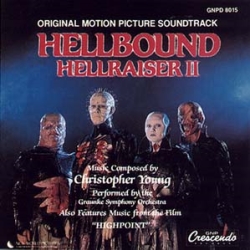
HELLBOUND: HELLRAISER II – Christopher Young
 THROWBACK THIRTY
GREATEST SCORES OF THE TWENTIETH CENTURY
Original Review by Jonathan Broxton
The 1987 film Hellraiser, based on the novella The Hellbound Heart by British horror author Clive Barker, was an unexpected critical and commercial success at the box office, and as such an immediate sequel was commissioned to cash in on the new popularity of Pinhead and his merry band of ‘cenobite’ demons, who live in a realm of hell where pleasure, pain, and suffering are one. The resulting film, titled Hellbound: Hellraiser II, takes place in the immediate aftermath of the first film, and finds protagonist Kirsty (Ashley Laurence) – having escaped from Pinhead (Doug Bradley) – recovering in a mental institution under the care of Dr Channard (Kenneth Cranham). However, it is revealed that Channard is secretly obsessed with cenobites, and has been searching for the ‘lament configuration’ puzzle box that summons them for years. Despite Kirsty’s desperate pleas, Channard recovers the bloody mattress that Kirsty’s stepmother Julia (Clare Higgins) died on in the last film, and uses it to resurrect her; so begins a gruesome, desperate game, as Channard and Julia explore the realms of hell together, while Kirsty tries to stop the cenobites once and for all. The film was written by Peter Atkins and is directed by journeyman Tony Randel, taking over duties from Barker. Read more…
BAFTA Nominations 2018
 The British Academy of Film and Television Arts (BAFTA) has announced the nominations for the 72nd British Academy Film Awards, honoring the best in film in 2018.
In the Best Original Music category, which is named in memory of the film director Anthony Asquith, the nominees are:
- TERENCE BLANCHARD for Blackkklansman
- NICHOLAS BRITELL for If Beale Street Could Talk
- BRADLEY COOPER, STEFANI GERMANOTTA (LADY GAGA), and LUKAS NELSON for A Star is Born
- ALEXANDRE DESPLAT for Isle of Dogs
- MARC SHAIMAN for Mary Poppins Returns
This is the ninth BAFTA nomination for Desplat, who won for “The King’s Speech” in 2010, “The Grand Budapest Hotel” in 2014, and for “The Shape of Water” in 2018; and the second nomination for Shaiman, who was previously nominated for “Sleepless in Seattle” in 1993. It is the first nomination for both Blanchard and Britell. Cooper, Nelson, and Lady Gaga are nominated for the numerous original songs they wrote for the latest screen version of A Star is Born.
The winners of the 72nd BAFTA Awards will be announced on February 20, 2019.
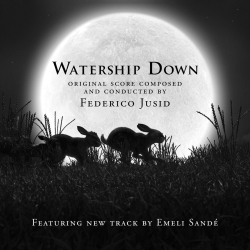
WATERSHIP DOWN – Federico Jusid
 Original Review by Jonathan Broxton
The 1972 novel Watership Down by Richard Adams is a classic of British literature. Note that I said literature and not children’s literature, because although the story is about a group of anthropomorphized rabbits, the story is very much an adult one. Following the destruction of their warren, a group of rabbits led by the brave Hazel, the sensitive Fiver, and the strong Bigwig make their way across the English countryside in search of a new home, and must fight against all manner of dangers – both natural and man-made – as they do so. What’s so brilliant about Adams’s novel is the way in which it creates an entire culture for the rabbits, with a creation myth, gods and spirits, a unique language with specialized vocabulary, and even a hierarchical society – the latter of which comes into play when Hazel and his friends encounter rabbits from an authoritarian rival warren overseen by the tyrannical General Woundwort. When you combine this with themes that mirror classical epics about life and death, environmentalism, and politics, the result is one of the great English books of the last fifty years. The story was made into a much-loved animated film in 1978 – again, not for kids – and is now a three-part mini-series jointly produced by the BBC and Netflix, directed by Noam Murro, which features an astonishing voice cast including James McAvoy, Nicholas Hoult, John Boyega, Ben Kingsley, Tom Wilkinson, Gemma Arterton, Olivia Colman, Daniel Kaluuya, Taron Egerton, and many many others. Read more…
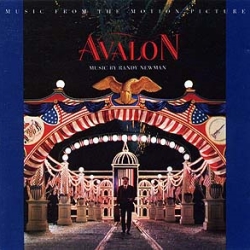
AVALON – Randy Newman
 GREATEST SCORES OF THE TWENTIETH CENTURY
Original Review by Craig Lysy
Avalon offered Barry Levinson’s third installment of his semi-autobiographical tetralogy of ”Baltimore Films” – Diner (1982), Tin Men (1987), Avalon (1990) and Liberty Heights (1999) – which explored immigrant life in his hometown Baltimore from the 1940s through the 1960s. He served as producer, director and screenwriter for the project and his production company Baltimore Pictures financed the film. He brought in a first class cast, which included Leo Fuchs as Hymie Krichinsky, Lou Jacobi as Gabriel Krichinsky, Armin Mueller-Stahl as Sam Krichinsky, Joan Plowright as Eva Krichinsky, Israel Rubinek as Nathan Krichinsky, Eve Gordon as Dottie Kirk, Elizabeth Perkins as Ann Kaye, Aiden Quinn as Jules Kaye and Elijah Wood as Michael Kaye. The film offers a commentary on the challenges of immigrant Russian-Jews trying to assimilate in America. Sam, the patriarch of the Krichinsky family, arrives in 1914 to forge a new life, eventually settling in Baltimore where he works as a wallpaper man. Matriarch Eva is firmly grounded in the old ways and ensures the family stays true to its roots. Conflicts between old country familial culture and modern American culture are inevitable and elicit generational clashes as Sam and Eva struggle to balance the old with the new. Despite hardships, which include an armed robbery, a devastating home fire, and children abandoning their surname for an American one, the family holds together, weathering the storm, united in love. The film was a commercial success and secured four Academy Award nominations including Best Screenplay, Best Cinematography, Best Costume Design and Best Film Score. Read more…
Golden Globe Winners 2018
 The Hollywood Foreign Press Association (HFPA) have announced the winners of the 76th Golden Globe Awards, honoring the best in film and American television of 2018.
In the Best Original Score category composer Justin Hurwitz won the award for his score for director Damien Chazelle’s film First Man, which tells the life story of the first man on the moon Neil Armstrong. This is Hurwitz’s second Golden Globe, him having won previously for La La Land in 2016. In his acceptance speech, Hurwitz said:
“OK, alright. I have to thank Nick Baxter who mixed this score, and John Taylor who mixed this movie, because a theremin score could have ended up being very annoying, and they found the right place for everything to sit and showed that great mixers can make a composer look good. So, thanks to them. I want to thank Tom Cross who cut the film, and the whole editorial department – Harry Yoon, John To, Derek Drouin, Jennifer Stelemma, Jeff Harlacker, Jason Miller – I’m in awe of how you guys put together something so complex. Thank you of course to Damian [Chazelle], who is brilliant and loyal and touches every detail of our work. Thank you HFPA, thank you everybody at Universal, and the Los Angeles musicians.”
The other nominees were Marco Beltrami for A Quiet Place, Alexandre Desplat for Isle of Dogs, Ludwig Göransson for Black Panther, and Marc Shaiman for Mary Poppins Returns.
In the Best Original Song category, the winners were Stefani Germanotta (Lady Gaga), Mark Ronson, Anthony Rossomando, and Andrew Wyatt, for their song “Shallow” from the latest version of A Star Is Born.
The other nominees were Jón Þór Birgisson (Jónsi), Troye Sivan, and Brett McLaughlin for “Revelation” from Boy Erased; Kendrick Lamar Duckworth, Anthony Tiffith, Mark Spears (Sounwave), Solána Rowe (SZA), and Al Shuckburgh (Al Shux) for “All the Stars” from Black Panther; Annie Lennox for “Requiem for A Private War” from A Private War; and Dolly Parton and Linda Perry for “Girl in the Movies” from Dumplin’.
VICE – Nicholas Britell
 Original Review by Jonathan Broxton
How much do we actually know about Dick Cheney? According to director Adam McKay’s new film Vice, the answer is ‘not enough’. The film is a fascinating, hilarious, eye-opening piece of cinema, one part biopic, one part satire, and one part exposé of the way the political machine works in Washington DC, examining how one man can have so many fingers in so many pies that he can fundamentally alter the entire world without us really realizing it. It follows Cheney from his early years as an electrical lineman and violent drunk in Wyoming, his relationship with his wife Lynne, and how he eventually turned his life around and over the course of the next 40 years became a White House staffer during the Nixon administration, the White House Chief of Staff under Gerald Ford, a long-term member of the House of Representatives, the US Secretary of Defense under George Bush, the CEO of the Halliburton oilfield services company, and eventually Vice President under George W. Bush. He was directly involved in Operation Desert Storm, the military response to 9/11, the invasion of Iraq and the ousting of Saddam Hussein, and the drafting of the US Patriot Act – but the film also posits that he was also indirectly involved in the creation of Fox News to act as a mouthpiece for right wing views, advocated for the torture enemy combatants at Guantanamo Bay and elsewhere, and helped created the circumstances which led to the rise of ISIS. Changing the world indeed. Read more…

Shop at the Movie Music UK Store

Member of the

 MOVIE MUSIC UK