Archive
FLIGHTPLAN – James Horner
 Original Review by Jonathan Broxton
Up until now, James Horner has had a quiet 2005: with no films since the forgettable The Forgotten last September, he’s done what he invariably tends to do and done nothing, then ended up having six films come out at the end of the year in the space of three months. Discounting the low-budget independent The Chumscrubber, the first of these is Flightplan, a high-concept action thriller set on a sophisticated aeroplane, directed by German debutant Robert Schwentke. The film stars Jodie Foster as Kyle Pratt, an aeronautics engineer who is traveling from Berlin to New York with her young daughter Julia (Marlene Lawston) on a state-of-the-art airliner she helped design. Shortly after takeoff, Kyle drifts into a deep sleep, and when she awakens three hours later, the plane is over the Atlantic Ocean, and Julia is missing. Read more…
OLIVER TWIST – Rachel Portman
 Original Review by Jonathan Broxton
There have been dozens of cinematic versions of Oliver Twist over the years, from the earliest days of Hollywood, to David Lean’s 1948 classic with Alec Guinness and music by Sir Arnold Bax, and the beloved 1968 Lionel Bart musical starring Ron Moody and Oliver Reed. Almost the last person you would expect to make one is Roman Polanski, but make one he has – this time featuring the talents of Ben Kingsley as Fagin, the relatively unknown Jamie Foreman as Bill Sikes, and the totally unknown Barney Clark in the title role. For those who have never seen any of the screen versions, or read Charles Dickens’ classic 1838 novel, about a young orphan boy in a workhouse in London who, having had the temerity to ask for “more food”, is thrown out onto the streets. There he meets a young tearaway known as The Artful Dodger (Harry Eden), the leader of a gang of child pickpockets overseen by the nefarious Fagin, who keeps the ragamuffins fed and clothed in exchange for a home. Oliver soon falls into a new, licentious lifestyle, but dreams of a better life away from the streets. As much as he tries to escape, circumstance keeps pulling him back into the clutches of Fagin, the boorish and violent Bill Sikes, and Sykes’s good-hearted but downtrodden girlfriend Nancy. Read more…
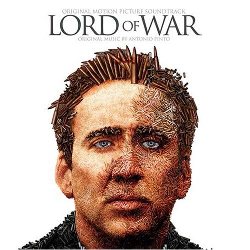
LORD OF WAR – Antonio Pinto
 Original Review by Jonathan Broxton
It’s interesting to chart the careers of certain film music composers, who they are, and where they come from. I’d be willing to wager that no-one outside of Brazil had heard of Antonio Pinto prior to 1998. He contributed guitar performances and additional music for Jaques Morelenbaum on the Oscar-nominated Central Station in that year, and wrote the score for the surprisingly popular urban drama City of God in 2002 – and now all of sudden he’s scoring a major studio movie in Hollywood, starring Nicolas Cage, directed by man behind The Truman Show, and Gattaca. It’s strange because for the life of me I can’t figure out why he’s suddenly so popular – by and large his music I have found his music to be downbeat and generally unimpressive. Lord of War is no different. Read more…
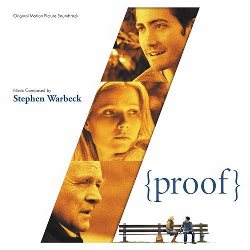
PROOF – Stephen Warbeck
 Original Review by Jonathan Broxton
One of the best reviewed films of late summer 2005 has been Proof, the latest effort from John Madden, the Oscar-winning director of Shakespeare in Love and Captain Corelli’s Mandolin. Based on the Tony Award and Pulitzer Prize-winning stage play by David Auburn, it stars Gwyneth Paltrow as Catherine, the daughter of the brilliant, recently-deceased, mathematician and scientist Robert (Anthony Hopkins), who in the latter years of his life was plagued by the onset of dementia. As Robert’s sole care-giver, Catherine – an equally brilliant scholar – spent day and night with her father tending to his needs, and is aggrieved when her sister Claire (Hope Davis) jets in from New York full of bluster and empty words of consolation, and a former dissertation student named Hal (Jake Gyllenhaal) starts poring through her father’s work looking for some spark of genius within the madness. Worst of all, Catherine begins to think that, as well as inheriting her father’s intellect, she may also have inherited his tendency for insanity… Read more…
CORPSE BRIDE – Danny Elfman
 Original Review by Jonathan Broxton
With the possible exception of Steven Spielberg and John Williams, Tim Burton and Danny Elfman have by far the most creatively positive composer/director relationship in Hollywood. One glance at their mutual filmography – everything from Pee Wee to Beetlejuice to Batman to Edward Scissorhands and Sleepy Hollow – proves beyond doubt that they are a pairing in perfect synch with each other’s way of thinking, of what one needs from the other to excel. Their latest collaboration, Corpse Bride, takes inspiration from the wonderful 1993 stop-motion animation The Nightmare Before Christmas, and tells an equally beautiful and tragic tale of love, loss, longing, and unfulfilled dreams. Read more…
ECHOES OF INNOCENCE – Brad Sayles
 Original Review by Jonathan Broxton
Echoes of Innocence, which won awards at film festivals in Colorado Springs and Houston and was released on DVD in September 2005, is an interesting film about a regular high school girl who, unexpectedly, begins to hear voices and see visions like a modern day Joan of Arc. Starring Sara Simmonds and Jake McDormand, and written, produced and directed by debutante N. Todd Sims, the film also marks the film music debut of Texan composer Brad Sayles.
It’s interesting to note that Sayles is as much a sound designer as he is a composer – he worked on Clint Eastwood’s Space Cowboys in that capacity – and several times during the course of the score he uses his talents for electronic and synthetic design (listen for the seagulls in “Sarah’s Second Vision”!) While some cues do make use of acoustic instruments, quite a lot of the score is sampled (primarily for budgetary reasons), but despite the sonic limitations imposed by the electronics, the writing is still commendable. One can imagine cues such as “Visiting Violet” and the action-packed “Into the Woods/The Rescue” sounding pretty good if they were to be performed by a live orchestra. Read more…
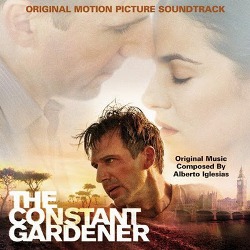
THE CONSTANT GARDENER – Alberto Iglesias
 Original Review by Jonathan Broxton
A taut political thriller from the pen of John Le Carré, about the pharmaceutical industry and human rights violations in central Africa, The Constant Gardener is the latest film from acclaimed Brazilian director Fernando Meirelles. Ralph Fiennes stars as Justin Quayle, a soft-spoken British diplomat in Kenya, who learns that his young wife, Tessa (Rachel Weisz), has been killed while traveling in a jeep along a lonely stretch of highway. The official cause of death is a ‘bandit raid’, but Justin suspects a cover-up. As he delves deeper into his wife’s past, he discovers some disturbing truths about her life as a human rights activist, and the work of a shady drug company who are testing a new vaccine for tuberculosis amongst the local population. The film, which also stars Danny Huston, Bill Nighy, Pete Postlethwaite, Gerard McSorley and Hubert Koundé, has been generally lauded by film critics, and looks to be a major player at awards ceremonies in the near future. Read more…
VALIANT – George Fenton
 Original Review by Jonathan Broxton
The first British film to jump on the CGI animation bandwagon, Valiant is an entertaining (if a little un-ambitious) movie which does for pigeons what Chicken Run did for fowl. Set in a highly stylised England at the height of World War II, the film follows the exploits of the titular Valiant (voice of Ewan McGregor), a diminutive wood pigeon who dreams of joining the Royal Homing Pigeon Service and doing his bit for King and country. Valiant gets his opportunity when, after meeting the dashing Captain Gutsy (Hugh Laurie) at a rally to drum up new recruits, he decides to go to London to enlist. Teaming up with Cockney wide-boy pigeon Bugsy (Ricky Gervais), Valiant and his new cohorts find themselves in basic training under the gruff Sergeant (Jim Broadbent), and before long are embarking on their first mission – to retrieve and return with a secret message lost in occupied France. However, in order to complete the mission, they must face the evil General von Talon (Tim Curry), a ruthless falcon with a penchant for leather capes and Third Reich regalia, who has captured and eaten pigeons before… Read more…
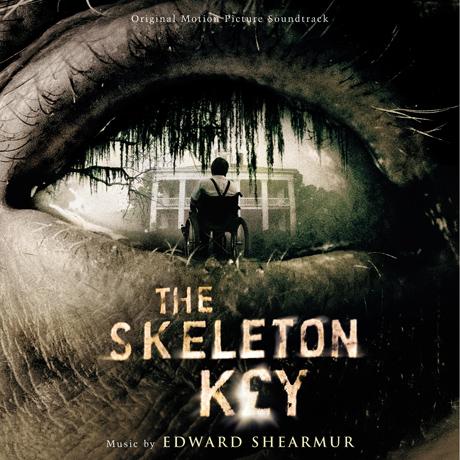
THE SKELETON KEY – Edward Shearmur
 Original Review by Jonathan Broxton
There’s something sinister going on down on the bayou in The Skeleton Key, the latest film by director Iain Softley and “Ring” screenwriter Ehren Kruger. Kate Hudson stars as Caroline Ellis, a palliative care nurse in New Orleans who accepts a job at a rural plantation house out in the Louisiana swamps owned by Violet Devereaux (Gena Rowlands) to look after Violet’s husband Ben (John Hurt), an old man who has suffered a debilitating stroke. However, as Violet sorts out some legal issues with the family lawyer Luke (Peter Sarsgaard), Caroline discovers disturbing evidence of old voodoo rituals up in the attic, leading her to believe that not everything to do with the Devereaux household is what it seems… Read more…
Remembering Miklós Rózsa, 1907-1995
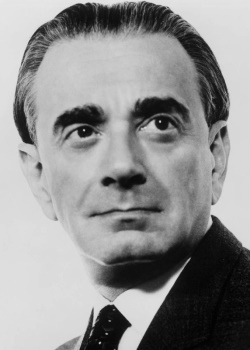 Composer Miklós Rózsa died ten years ago today, on July 27, 1995, at his home in Los Angeles, California, due to complications from a series of strokes. He was 88.
Born in Budapest in April 1907, Rózsa was a child prodigy who studied violin and composition from an early age. He completed his formal training in Leipzig, Germany, and initially made his name as a composer of concert music. In the 1930s he moved to Paris, and later London, having been encouraged by his friend, Swiss composer Arthur Honegger, to supplement his income writing music for cinema. His entry into film scoring came with Knight Without Armour (1937), produced by his fellow Hungarian Alexander Korda, and his success in British cinema led to a contract with MGM and a move to Hollywood in 1940.
Rózsa quickly distinguished himself in America with powerful, emotionally charged scores for films such as The Thief of Bagdad (1940), Lydia (1940), Sundown (1941), That Hamilton Woman (1941), Jungle Book (1942), Double Indemnity (1944), and Spellbound (1945), the latter of which earned him the the first of his three Oscar wins for Best Original Score. He was acclaimed for his ability to seamlessly blend traditional symphonic writing with dramatic storytelling, and often conducted extensive historical and ethnomusicological research to bring authenticity to his scores, resulting in a style that helped define the sound of Hollywood’s Golden Age.
He won his second Oscar for A Double Life (1947), and then a third for Ben-Hur (1959), which at time was heralded as one of the most ambitious film scores ever written, and which subsequently became a benchmark of epic film music. His other acclaimed and popular scores included such titles as The Lost Weekend (1945), The Killers (1946), The Red Danube (1949), Quo Vadis (1951), Ivanhoe (1952), Julius Caesar (1953), Knights of the Round Table (1953), Young Bess (1953), Valley of the Kings (1954), Lust for Life (1956), El Cid (1961), King of Kings (1961), Sodom and Gomorrah (1963), and The Golden Voyage of Sinbad (1974). Read more…
L’AVION/THE PLANE – Gabriel Yared
 Original Review by Jonathan Broxton
Following the controversial (and, in my opinion, wholly inexcusable) rejection of Gabriel Yared’s score for Troy last year, and his subsequent public spat with Warner Brothers, many people wondered whether he would ever work in the Hollywood mainstream again. Although the idea of him being given a complete cold-shoulder by the major studio executives is unlikely, it’s not unsurprising to learn that his first post-Troy feature assignments are all predominantly European films: the German drama Das Leben Der Anderen, English director Anthony Minghella’s Breaking and Entering, and this film: the French drama L’Avion. Read more…
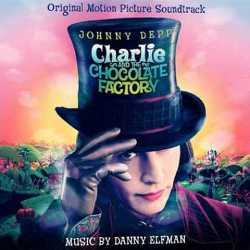
CHARLIE AND THE CHOCOLATE FACTORY – Danny Elfman
 Original Review by Jonathan Broxton
One thing you can say about Tim Burton, he isn’t afraid of taking risks. Having already re-made one of cinema’s all-time classic science fiction films in the shape of Planet of the Apes, he has again subjected himself to the wrath of fans by revisiting another well-loved classic: Charlie and the Chocolate Factory, a remake of the 1971 Gene Wilder classic, which was itself based on a famous novel by Roald Dahl. Along for the ride for the tenth time is Danny Elfman, whose collaborations with Burton have resulted in some of the finest movie music heard in the last 20 years. Interestingly, on Charlie and the Chocolate Factory, Elfman was given the opportunity to write a number of original songs to complement his score, something he has not attempted for over a decade. It was worth the wait. Read more…
WEDDING CRASHERS – Rolfe Kent
 Original Review by Jonathan Broxton
One of 2005’s more effective summer comedies, Wedding Crashers is the latest vehicle for comedy duo Owen Wilson and Vince Vaughn, who seem to be making something of a habit of appearing in movies together. This time round they play best friends John Beckwith and Jeremy Grey, good-natured womanisers who spend each summer crashing society weddings, spinning tall tales about their lives and histories, with the express purpose of ‘having their way’ with the bridesmaids. However, then the pair crash a wedding hosted by powerful US Senator Cleary (Christopher Walken), things change: John (Wilson) meets unexpectedly falls in love with Cleary’s middle daughter Claire (Rachel McAdams), while Jeremy (Vaughn) finds himself pursued by Cleary’s slightly insane youngest daughter Gloria (Isla Fisher). Before they realise what has happened, the happy-go-lucky conmen have been invited up to the Senator’s lavish summer home in the country, where they meet the rest of the family, including Cleary’s sex crazed wife Kathleen (Jane Seymour) and Claire’s jock boyfriend Sack (Bradley Cooper). Unfortunately, John and Jeremy must continue with their charade in order for true love to blossom… Read more…
DARK WATER – Angelo Badalamenti
 Original Review by Jonathan Broxton
A remake of the 2002 Japanese film Honogurai Mizu No Soko Kara, which was directed by Hideo Nakata, Dark Water is a slow-burning horror movie which takes everyday circumstances and mixes them with a healthy dose of the supernatural, with chilling results. Jennifer Connelly stars as Dahlia, a young mother who moves into a run down apartment block with her daughter Ceci (Ariel Gade) while her divorce is being finalized. Before long, strange events are happening in their new home. Water begins to drip from the ceiling, much to the consternation of the building’s superintendent (Pete Postlethwaite); footsteps are heard coming from the vacant apartment above; a strangely sinister red bag keeps turning up in odd places; ghostly images appear on the CCTV camera footage from inside the apartment’s lift; and, worst of all, Ceci keeps having fleeting glimpses of a child in a yellow raincoat, who seems to bear a remarkable similarity to a little girl who went missing years previously. Is the stress of her life causing Dahlia to slowly go insane, as her ex-husband Kyle (Dougray Scott) believes? Or is some specter haunting her… Read more…
FANTASTIC FOUR – John Ottman
 Original Review by Jonathan Broxton
All of a sudden, it seems, Hollywood is full of super-heroes. The comic book, once the exclusive domain of spotty teenagers and their escapist fantasies, is now the deepest well of cinematic inspiration for the movie making machine, having recently sprung forth with new versions of Superman, Batman, Spider-Man, X-Men, Hulk, Daredevil, Elektra, Blade, The Punisher, Hellboy, Sin City, and a multitude of others. In many ways, the Fantastic Four can lay legitimate claim to being the grand-daddy of them all, having first appeared in print way back in 1961. The quartet first appeared on film in 1994 in a movie which was made with the intent of it never seeing the light of day, purely as an exercise so that the production company could hold on to the publication rights. That debacle aside, director Tim Story’s 2005 summer blockbuster marks the first time the four have “properly” appeared on the big screen. Read more…

Shop at the Movie Music UK Store

Member of the

 MOVIE MUSIC UK