THE BIG ROAD – Er Nie, Guang Ren
 GREATEST SCORES OF THE TWENTIETH CENTURY
Original Review by Craig Lysy
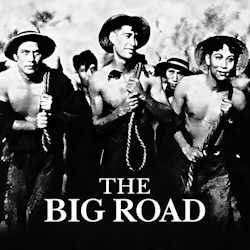
Following the completion of the woman’s sports film Ti Yu Huang Hou in 1934, director Sun Yu decided that he wanted to contribute to the “National Defense Cinema” movement with a film, which showcased cinema stars actress Li Lili and actor Jin Yan. He conceived using the metaphor of ordinary citizens building a military highway to symbolize collective resistance against imperialist invaders. Challenges arose because the Nationalist Kuomintang government enforced strict censorship policies to avoid directly provoking Japan. As such Sun Yu cleverly substituted explicit references to Japan with generalized patriotic struggles of “weak nations” against an unnamed enemy. He secured funding from Lianhua Film Company, Lu Jie and Lo Ming Yau would oversee production, and Sun Yu would direct and write the screenplay. A stellar cast was assembled led by Jin Yan as Brother Jin, Li Lili as Jasmine, joined by Luo Peng as Little Luo, Zheng Junli as Zheng Jun, Chen Yen-Yen as Ding Xiang (Orchid) and Han Langen as Little Six.
The film is set in 1930s China and follows the fortunes of six young laid-off workers from Shanghai who travel to the Chinese interior to build a vital military highway during a national crisis. They bond with local villagers and two beautiful local women Jasmine and Orchid who join the crew. The work is framed as a joyful and energetic collective effort, blending romance, music, and camaraderie. A corrupt foreman is bribed by enemy agents to sabotage the highway construction, which leads to an attack by foreign invaders (Japanese army). In a dramatic and surreal finale, enemy warplanes strafe and kill the road builders, but the spirits of the fallen workers rise up to keep singing and finishing the Big Road. The film strongly resonated with audiences, and was a massive commercial success. Critical reception was also universal, with the film being praised as a high-water mark of the Progressive “National Defense Cinema” movement. Today, the film is widely celebrated as a masterpiece of early Chinese left-wing cinema and was considered by Sun Yu himself to be his representative masterwork.
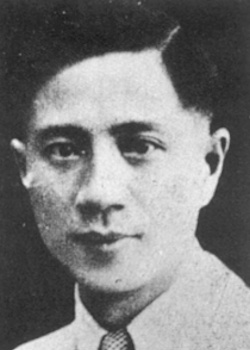
The maturation of Chinese sound-on-film technology inspired Sun Yu to push forward with dynamic musical elements and synchronized sound effects. Sun had previously enjoyed his collaborations with composer Er Nie on “The Blood of Passion on the Volcano in 1932 and Little Toys in 1933. Also, both Sun and Nie were aligned with progressive, left-wing cultural circles in Shanghai tied to the burgeoning leftist film movement. As such, Sun approached Nie hoping to capitalize on the young composer’s prominent reputation for leftist, patriotic “mass music”, his unique ability to understand and relate to the lives of ordinary laborers, coupled with his rare capacity among urban intellectuals to capture, and genuinely express the spirit, resilience, and optimism of China’s working class. Friend, and fellow composer Ren Guang, who was also the Director of Music at Pathé Records, was brought in and made a significant contribution to the musical tone of the film – while Er Nie focused on the film’s soundscape and aggressive, patriotic march-like work themes, Ren Guang collaborated with lyricist An E to handle the lighter, character-driven folk song music as well as composing the film’s lyrical and emotional interlude tracks.
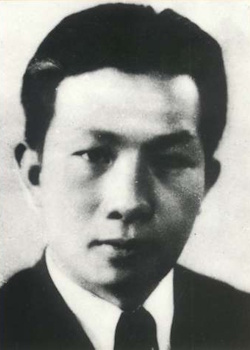 Nie immersed himself in the film, and often left the confines of his studio, to actively live with, and work alongside actual workers, hauling ropes, and pulling heavy iron rollers. He listened closely to authentic work chants and collective labor rhythms to capture the genuine pulse of manual laborers. As to conceiving his soundscape, Nie blended Western compositional methods with traditional Chinese pentatonic modes, strophic song structures, and local folk idioms. He also embraced socialist realist aesthetics and Soviet mass song traditions, by composing songs that could be easily learned and sung by everyday people. Lastly, Er Nie actively participated in on-set filming because “The Big Road” to synchronize the singing sequences. This necessitated metronomic precision, and so Nie used a metronome on location to dictate exact tempo requirements, ensuring that actors and real workers pulled the rollers in precise time before the silent cameras filmed the sequences for later audio compositing. I am amazed at how diligently and innovatively Nie worked in fashioning his score.
Nie eschewed character leitmotifs, and instead chose to use collective work songs as a unified thematic anchor representing the solidarity and shared struggle of the road-construction workers as a whole. The titular song, “Da Lu Ge” (The Big Road”), lyrics by Sun Yu would serve as the Main Theme. Prior to writing the song, Er Nie asked the director what kind of mood the song needed. Sun Yu told him, “The film is a great tragedy, but within the tragedy lies heroism and grandeur, so the theme song he envisioned should be tragic, stirring and express the passionate enthusiasm, and optimistic confidence, of the road construction workers.” To that end. Nie composed what would become, an iconic song of the Nationalist Movement, which functions as a work song blending Western sensibilities with a Chinese pentatonic scale. It unfolds as a collective anthem for the male labor crew, symbolizing unity, endurance, and physical strength.
“Kailu Xianfeng” (“The Road-Building Pioneers”), lyrics by Sun Shi Yi, offers another major upbeat, rhythmic march-like theme composed by Er Nie that accompanies the laborers as they build roads and push through physical obstacles. In assessing Ren Guang’s and lyricist An E contributions: “Yanyan Ge” (Yanyan’s Song) offers an interlude track, which expresses a beautiful and stirring romantic ballad explicitly composed for the character Moli played by actress Chen Yanyan. “Xin Fengyang Ge” (New Song of Fengyang) offers a modern, leftist adaptation of a traditional Chinese folk style that plays during the film’s lighter narrative moments.
 There is no commercial release of this score. As such, I will use film scene descriptors and time indices to provide film context. 0:00 “Main Title” offers a rousing score highlight. The display of the film title initiates the flow of the opening credits with white Chinese characters displayed against a grey textured background. At 0:38 music enters to support the cast credits and we are provided a confident, forthright marcia risoluta rendering of the Titular song empowered by horns, driving rhythms, and buttressed by chorus. Nie evokes worker solidarity, physical labor, and national resilience, which embody the working-class themes of roadbuilders constructing a strategic military highway. The march is sustained as we enter the film proper at 1:10 “Kailu Xianfeng” (The Road-Building Pioneers). Offers a rousing musical highlight. Six happy shirtless men arrive at the work site led by Bother Jin who then leads his comrades in singing the patriotic song;
They all laugh to complete the song. Nie masterfully matched the song’s cadence to the physical actions on the screen; sledge hammering of stakes, and dynamite explosions, etc. The song’s music is confident with an infectious optimism that defies the gruesome work and desperate poverty of the workers who fled famine, lost parents, and faced starvation in the city. The privation of their tragic past is melted away into the collective rhythm of their stride and swinging hammers as the song swells with a powerful sense of unity. Beyond just moving dirt, the melody acts as the visceral heartbeat for a once great nation under siege. Indeed, when Jin sings of blasting through the obstructing mountains and laying down a highway for the army, his tone is fierce, resolute, and deeply patriotic, turning the physical construction of a road into an emotional declaration of China’s indomitable will to live and fight against imperialism.
In a flashback of twenty years, we shift to a desolate field we see the Jin Ge family struggling to walk as the flee their impoverished mountain village. Brother Jin is an infant and after his mother collapses, she exhorts her husband to push on, caresses both one last time, and the dies. Jin’s father is devastated and weeps that he made the wrong decision. He buries her but cannot seem to bring himself to move on, but looking at his son, finally empowers him. Narrative script says “Three Years pass”. We see legs pulling a large roller, used to compact a dirt road. The camera shifts upwards and we see Jin, now a toddler, held by his father as one of the toiling laborers. New narrative script says “Ten years pass”. Jin’s father collapsing and as Jin cries out and weeps at his side, he dies. New narrative script says “Twenty Years Pass” and we see Jin now toiling pulling by rope a large roller. A steamroller compacter ride past in the opposite direction, and Xiao Luo says he could die without regrets if someday he can drive one. Jin smiles and tells Xiao Lui that he is always so cheerful. Nie supports a playful punch with mickey-mousing. Jin then turns and tells his buddy Old Zhang to cheer up. Later Jin’s friend Big Zhang harasses women and gets into a fight, which causes the foreman to fire him and his other gang members. Jin, Old Zhang, Zheng Jun, Little Luo, Big Zhang are now out of work. The group is despondent as they eat, but Jin rouses them, saying we never give up! They all laugh, and take turns pushing the hand down on another’s head and then mock punching them. Each slapstick act is supported comically with mickey-mousing, which seems to work.
13:54 “Jin Saves Little Six” reveals a man playing a harmonica as the camera pans a bustling village. A poster reveals Storyteller Zhao will offer “Tale of the Heroic Yang” tonight at the theater. Later we see Little Six trying to steal some food. He is discovered, flees, but is caught. Jin comes to is defense saying that the poor man has not eaten in three days. The vender relents and Jin takes him back with them, gives him food which he eats ravenously. Jin tells their new friend that he is funny looking and asks his name. He says he is Little Six, all alone in the world as he lost his family, and cannot find work. Jin affectionately pats his head and says that he will now live with us, but if you want to eat, you have to work! Jin then relates that they will all have jobs working in the countryside building a big road! The men are happy and Jin says tomorrow we will depart. 21:28 “To The Big Road!” show Jin leading his men along a country road as Zheng Jun accompanies with a harmonica felice. At 22:24 we switch to an animated map that illustrates the massive, strategic highway spanning across China. The musical narrative shifts the scene from a localized story about individual laborers to a grand allegory for national defense and modernization. Nei supports with the titular song melody rendered as a bold, choral empowered, rhythm, which propels the expansion of China’s roads, in a cinematic call-to-arms. We shift seamlessly carried by the choral sung titular song as we reach the works site quarry when Jin happily hammers in synchrony with the song they sing. As the song unfolds, a montage of scenes showing the various types of works being performed are seen;
At 24:04 we shift to the kitchen at Ding Fu’s Place, and we see Orchid using a rolling pin to flatten dough in the kitchen. The rolling pin shifts back in forth in synchrony with the song’s cadence. Jasmine teases Orchid for day dreaming about Xiao Luo’s singing! She yells for her to toss her some corn, and she threatens to tell their father to send you back home to be a flower-drum singer again. The song continues as they fuss in the kitchen;
The song stops suddenly at 25:58 “Help Me!” when a worker expresses extreme physical weakness and begs the foreman for relief. Jin arrives and the man pleads that he is too weak to move and that Master Zhou wants to punish me. Nie shifts the music’s tempo downward and the key to minor modal as a grim and bleak musical narrative unfolds and expresses the brutal physical toll of manual labor of working under harsh conditions. Zhou barks for Jin to stay out of this! He adds he is a loafer and he is taking him to Deputy Hu! The workers press up and surround Zhou supported by a crescendo dramatico. He feels threatened and flees. On a cliff above, Deputy Hu asks his associate, Old Hong who is the little trouble-maker? Why are so many people supporting him? Old Hong says for us to remember this man as we may be able to make use of him. At 28:25 the music shifts to valzer elegante as the two men take notice of Jasmine and Orchid who have come out and joined Jin. The waltz carries Jin and the workers into Ding’s restaurant for lunch. But inside, the waltz becomes playful, driven by xylophone animato with comedic accents as the guys begin playing like school kids in the restaurant. At 31:35 the boys get out of control and all fight for a cup of tea and the music shifts to vaudevillian slapstick comedy. At 32:21, when food is served, the music dissipates on a diminuendo as the guys dig in. When lunch is finished, the playful musical narrative resumes as people are seen juggling their chopsticks. Yet the music resurges as the women bring out more rice. Little Six tells Big Zhang that he heard Orchid sing a song to Xiao Luo, and says, let’s have her sing one for us! Word gets past around the table, and Jin tells Orchid that everyone is calling for a song. Please sing one! She is shy, and Jasmine says she will sing, but insists on accompiament. The guys support rhythmically with chopstick percussion against metal objects as Orchid at 36:01 sings “Xin Fengyang Ge” (New Song of Fengyang). At 36:22 a montage begins showing scenes of desperate poverty and suffering as the song continues. At 36:40 we shift back to Jasmine singing at the restaurant. At 37:23 the camera shifts and pans an inundated village whose peasant huts have water up to their roof tops. At 37:43 we return to the restaurant. At 37:48 Deputy Hu and Old Hong arrive and we shift to a battle with people dying and houses set aflame, tanks rolling and armies clashing. At 38:42 we shift back to Jasmine singing, and the whole crowd bursts into applause. Jasmine sings a mournful song whose lyrics speak of peasants suffering generation, after generation from intractable poverty, natural disasters, and war during the reign of the Ming Dynasty’s Emperor Zhu. Despite this, the Chinese people remain resilient and indefatigable.
In 39:07 “Manager Hong’s Invitation”, animated xylophone and wood percussion offer a spritely musical narrative as Manager Hong comes up and commends Jasmine on her singing. He adds that tomorrow he will take her to go have some fun at Deputy Hu’s place. She is flattered, and agrees to pay her respects to his master tomorrow. He then turns to Orchid and says that Deputy Hu heard that you make an excellent stir-fried fish with vinegar. He says please make the dish and I will escort you over tomorrow. He then paws her shoulder, and she brushes him off. When he does it again Xiao Luo pulls his hand off and postures, prepared to fight for his girl. Manager Hong smiles and backs away. Jin then approaches him, dusts off Hong’s shoulders, and asks if he had ever flown in a plane? He says no, Jin picks him up, places him on his shoulders, and begins spinning with an airplane motor sound supporting. The stop, put him down and he dizzily staggers with animated stars and an airplane circling his head. 42:35 “Work Resumes” reveals Jin leading the six and his fellow workers in pulling the massive and heavy road rollers as they sing the Main Theme song. Inside Jasmine smiles as Orchid tries to curl her hair. She comes over, holds Orchid, and says no wonder Xiao Luo pines for you. They kiss and hug, and cuddle, and then Orchis asks Jasmine who she loves? She says all of them, and then list the attributes she admires in each supported by a camera close-up; Jin’s leadership and confidence, Old Zhang’s strength and bravery, Zheng’s intelligence, Big Zhang’s coarseness and that he is a man of action, Xiao Luo as he is young and handsome, and Little Han the sixth, that little monkey who cannot do anything right! Orchid’s father joins and asks her to take the donkey and pickup supplies.
48:56 “The Guys Caught” reveals Jasmine and Orchid guiding two loaded donkeys and look down at the worksite below. They are curious as they do not see the six. They push on and the camera shifts to the lake and white-water stream where they are all skinny dipping. On the cliff above Orchid recoils, but Jasmine smiles and yells Hi! The guys all jump into deeper water for modesty. They yell go away, or we will come out! She sits down and calls their bluff. They concede, and asks what she wants? Orchid returns and yells that tonight her dad is treating them all to dinner! They are very happy and charge out of the water, which elicits the women to turn away. The guys, now clothed, run up the hill and break open two watermelons to celebrate. Later that night reveals everyone feasting at Ding Fu’s Place. After dinner, Old Zhang and Little Six clutch their stomachs as they gorged themselves. Little Six says that Xiao Luo and Orchid slipped away together. They all sneak out together to investigate.
52:51 “Luo and Orchid” offers a beautiful romantic score highlight. The scene reveals Luo and Orchid alone in the garden where Nie masterfully creates a fleeting, tranquil oasis, a world unto themselves where our two lovers find respite from the harsh realities of road building and wartime conflict. In one of the score’s most intimate moments, the music pivots to a gentle, poetic, and romantic mood with orchestration, which blends Western instrumentation with traditional Chinese pentatonic structures. The music utilizes a soft, flowing legato texture to mimic the gentle rustling of the garden and the innocence of young love. Central to the musical narrative is Nie’s use of “Yanyan’s Song”, which Orchid sings with gentle femininity as a sweet and innocent romantic ode to Luo.
The song’s lyrical and beautiful melody swells during lingering close-ups between Luo and Orchid to build an unspoken romantic tension, acting as a substitute for spoken words. The symbology of the song’s lyrics also offers a testament to Nie’s genius. A pair of swallows flying together symbolizes a youthful and hopeful romance that has taken wing towards a shared destiny. This scene was a most welcome counterpoint to the film’s often harsh and brutal masculine dominated narrative. 56:43 “Cavalry Arrive” reveals that the intimate moment is lost when Jasmine and the guys jump out and surprise them. After a good laugh, the look below at the arrival of armed Nationalist military cavalry. They descend the hill to join the rest of the workers. The captain declares that the enemy’s army has landed on our shores and begun attacking. He asks for their County Head and Manager Hong directs them. The group is unsettled by the grim news. Jin says this is not unexpected as they want our land as a battalion of infantry arrive. News informs that the enemy has reached Tiger Mountain Pass and we switch to the front line as artillery supports and attack. Back at camp a man says all is lost, lets run and save our necks. Jin yells out and says to not panic, as panicking will lead to certain death. Adding it is too late to runaway anyway as you cannot outrun airplanes. He exhorts them to continue to build the road for our troops and help our army fight the enemy! He says we will not run away, and the crowd cheers Jin.
1:01:20 “Work Resumes” reveals the next day the men, full of confidence and good spirit back at work building the road. The titular song melody, later buttressed by chorus, supports rhythmically in synchrony with their manual labor. We shift to night as they again pull the heavy road rollers as infantry men keep watch. The captain informs Deputy Hu that completing the road is crucial to getting the army to Tiger Pass. We see this news disturbs Deputy Hu, who has secretly sold out to the enemy. 1:02:47 “The Bribe” reveals an enemy courier advises Deputy Hu, and Manager Dong that he must stop road construction. He gives them an ultimatum and a huge bill fold; take our money and stop the construction, or expect our bombs! We shift to Ding’s restaurant where Jasmine cooks a fish in a skillet, as the men arrive for lunch. We are informed that Big Brother Jin and the others went to Hu Mansion with Hong Jin and will not be eating here. At Hu’s mansion he serves the men suckling pig and a sumptuous feast. He argues that we are no match for the enemy planes and bombs, that they will be here tomorrow and that we are in mortal peril. He adds that we cannot allow all you fine workers to be slaughtered, that you six are the leaders, and to not be heartless sending your fellow workers to the slaughter. He then distributes $400 in bribes to each of the six. He says take it, and then tonight at camp tell everyone to run for their lives. Jin winks to Luo and stands, thanking Deputy Hu for his generous gifts and effort to save the workers. He adds that you are the kindest man in the world. Then he drops a bombshell; if we run away to save ourselves, millions will die! As such, we cannot accept your money, and one by one they tear up the money. Hu shouts foolish swine! You dare to defy me! He calls his guards who bear pistols and canes, and threatens punishment. Jin calls him a traitor and a fight breaks out, in which they are subdued and taken to the dungeon for torture. Hu asks Jin, do you want the money, or the whip? He refuses and is savagely whipped. Hu stops, and says to give each man thirty lashes. If you all still refuse to cooperate, you will be killed like dogs.
1:14:53 “The Rescue” reveals a return to the road building site. Jasmine and Orchid ask about the guys, and the worker says they left Hu’s a while ago. They do not understand why they have gone missing until Jasmine says they never left. Later she and Orchid entertain Hu and his guests. Hu is drunk and let’s slip that he is thankful you two treasures have come or I would still be upset about those six vicious dogs! Orchid goes to the kitchen to cook Hu his fish, and Jasmine follows. They force a servant a scissor point to take them to the dungeon. They toss down the scissors to Jin without alerting the guard. They tie up and gag the servant, Orchid departs to warn the army, and Jasmine returns to Hu to buy time. Back at camp Orchid alerts Liu Chang who announces to everyone that Jin and the guys are locked up at Hu’s and he plans to kill them. An angry mob grabs tools and torches and run to Hu’s house. The captain orders soldiers to support and accompany the workers. Back at Hu’s Jasmine fights off his advances with more and more alcohol, while below Jin manages to cut his binds while the guard nods off. The guard wakes as Jin is freeing Old Zhang and throws his dagger, mortally wounding Zhang in the chest. A fight breaks out between Jin and the guard who is killed by Old Zhang throwing back the dagger. As the men fight Hu’s men in the dungeon, the mob batters down the front door and storm the mansion. The army arrest Hu who they find bound in his bed, thanks to Jasmine, who also provides the bribe note. The scene closes with Old Zhang caressing Jin’s head and dying.
1:36:14 “We Push On!” reveals Jin, Jasmine, the five, and fellow workers again singing the titular song with confidence as the pull the massive road roller. Xiao Luo has finally realized his dream as we see him driving a mechanized steamroller. The captain tells a soldier that three days and nights of work and the highway will be finished so our troop transport trucks can pass. Enemy aircraft approach and the captain says to brace yourselves! The plane makes a strafing runs the kills Big Zhang, Little Six, Xiao Luo, and Zheng Jun. Orchid weeps over Xiao Luo while we see that Jin, and Jasmine are mortally wounded. Jin in a final act of defiance grabs a rifle and shoots at the plane, which is making another strafing run. He sees the plane crash and then crawls to be with Jasmine. He reaches her, their eyes lock, and at 1:39:52 a grief-stricken, somber lament supports their final moments together. They smile, and then Jasmine passes, followed by Jin as Orchid holds both and begins weeping. The captain declares that our road is finished as a caravan of troop transport trucks arrive. Orchid’s father says that they are all dead. 1:42:00 “Finale” reveals Orchid countering; “No! They haven’t died!” We see Jin, Jasmine, followed one by one Old Zhang, Big Zhang, Little Six, Xiao Luo, and Zheng Jun spirits rise up from their corpses in a ghostly ascension as the “The Big Road Song” swells on a crescendo eroico into a triumphant anthem. They smile, join together and begin pulling the massive road roller, their message, clear; our bodies have died, but our spirits survive and continue to march on the eternal great road to freedom. The film closes with a close up of Orchid, the only survivor, a living symbol of national survival, endurance, and hope, who will for the rest of her life honor and extol the sacrifice of her beloved friends for the motherland.
I believe that the score and songs of The Big Road constitute a monumental milestone, and revolutionary turning point. Composer Er Nie introduced the first true working-class labor anthem into Chinese cinema, and inaugurated the birth of the Chinese Work Song genre film. The score and songs bridged the gap between silent and sound cinema with its narrative fostering, extoling, and ennobling acts of worker solidarity. For me, the film’s iconic songs epitomize the altruism and patriotism of the leftist “National Defense Cinema”. By using confident, optimistic, synchronized choral singing, Nie fostered nationalist fervor, and championed proletarian solidarity in defense of the motherland against foreign invasion. The titular song “Dalu Ge” (The Big Road Song) is celebrated as the earliest cinematic work song in Chinese film history, one that explicitly expressed the grim and grueling physical reality of these working-class heroes. Over time it has become known historically as the “bugle call of the Chinese revolution,” sung proudly and defiantly across the country during the Anti-Japanese War to bolster public morale.
Today, the music from the film remains so culturally sacred that the titular song “Dalu Ge” is kept on a continuous loop in major historical institutions, such as the Shanghai History Museum, to commemorate China’s historic cultural resistance. The song “Kailu Xianfeng” (The Road-Building Pioneers) also revolutionized Chinese cinema by revealing that the privation of each worker’s tragic past is melted away into the collective rhythm of their stride and swinging hammers as the song swells with a powerful sense of unity and collective national purpose. The use of the traditional folk songs “Yanyan’s Song” “Xin Fengyang Ge” served to ground the film into the very sinews of Chinese culture, and resonated very personally with Chinese audiences. Folks, Er Nie blended Western binary song forms with traditional Chinese pentatonic scales. He also purposely synchronized his music to the physical cadence of heavy manual labor, matching the rhythm of workers pulling road rollers. This technique allowed the music to sound contemporary and cinematic to urban audiences while remaining rooted in cultural folk foundations that ordinary citizens could easily sing along with. Lastly, following the massive success of the film, a revolution occurred that transformed the industry; the release of the film songs on phonograph records in 1935. They became massive public hits that ultimately transcended the film itself.
Sadly, both Er Nie and Guang Ren died shortly after the film was released, with both men having never really worked in cinema again. Nie famously wrote the melody for what would eventually become the national anthem of the People’s Republic of China, but then died in 1935 while swimming in Japan, at the age of just 23. Some suspect that he was killed by the Japanese, while others believe that he was killed by Chinese Nationalists. Ren was then also killed in 1941 during the so-called Wannan Incident of the Second Sino-Japanese War.
For those of you unfamiliar with the score, I have embedded a YouTube link to the titular song: https://www.youtube.com/watch?v=-6fg8h16vQ8
Track Listing:
- NOT AVAILABLE
Music composed and conducted by Er Nie. Orchestrations by Er Nie. Additional music by Guang Ren. Recorded and mixed by XXX. Edited by XXX. Score produced by Er Nie.

Shop at the Movie Music UK Store

Member of the


