Under-the-Radar Round Up 2026, Part 1
 I’m pleased to present the latest installment in my ongoing series of articles looking at the best under-the-radar scores from around the world.
This article, the first of 2026, explores five outstanding scores from the first month or so of the year, including a historical fantasy action epic from Finland, a Japanese anime TV series about two young people falling in love in turn-of-the-century London, an Italian TV drama mini-series about a heroic doctor standing up to the Nazis in World War II, a Chinese family comedy-drama film about the friendship between a young man and an old man with Alzheimer’s disease, and a German fantasy action film sequel about a teenage boy with the power to shapeshift.
KALEVALA: THE STORY OF KULLERVO – Lauri Porra
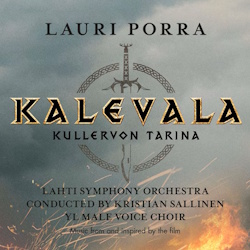 Kalevala: The Story of Kullervo, known as Kalevala: Kullervon Tarina in its native language (and alternately as The Son of Revenge: The Story of Kalevala), is an epic historical fantasy action film from Finland directed by Antti Jokinen. It is based on The Kalevala, the national epic of Finland, a 19th-century work of poetry compiled by Elias Lönnrot from local oral folklore that played a crucial role in shaping Finnish national identity and literature. The Kalevala offers a series of mythological tales of creation, magic, and heroism; this particular film tells the story of Kullervo, a tragic hero of the poetry. Kullervo is raised with cruelty in the household of the man who slaughtered his family, leading him to develop immense rage. Later, after being sold into slavery, Kullervo falls in love with a woman, only to later discover that she is his long-lost sister; this revelation drives him to madness and sets him on a quest to exact vengeance on those who have wronged him.
The score for Kalevala is by Finnish composer Lauri Porra, who impressed me mightily with his breakout work Stormskerry Maja in 2024, and then again with his score for the TV series Queen of Fucking Everything last year, which really highlighted his versatility. As I noted in those reviews, Porra is the great-grandson of the famous Finnish classical composer Jean Sibelius, and is well known in Finland not only for his work scoring film and TV projects, but also as a recording artist and classical composer in his own right, and through his high-profile gig as the bass guitarist in the power metal band Stratovarius.
Kalevala is closer in tone to Stormskerry Maja, in that it is a dark, serious orchestral work that draws heavily on Finnish folk music, but then transposes it into a modern neo-classical setting, which reminded me at times of scores like The Northman. It was recorded in Finland with the Lahti Symphony Orchestra and the YL Male Voice Choir, conducted by Kristian Sallinen, and has a lovely, rich sound that captured me from the first bars of the opening cue, “The Hills of Kaleva,” which has a warm, romantic, but masculine sound underpinned by medieval-sounding chord progressions.
Further cues like the outstanding “The Tragedy of Kullervo, Son of Kalervo,” the sweepingly dramatic “Kullervo Learns the Truth,” and the introspective finale “Kullervo’s Kantele” build on the sound of the opening cue, often reprising the main theme with satisfying grandeur. However, Porra doesn’t just maintain this one tone throughout; instead, he explores different emotional drivers in several standout cues. “Aina,” for example, is underpinned with a powerful sense of tragedy through its solemn solo violin part. “Where the Mountains Meet” is dance-like and elegant. “The Joys of Smithing” has a rousing, folk-like sound that occasionally reminds me of prime Basil Poledouris, and has a theme that is reprised later in the more subdued “The Blacksmith.” There is romantic loss and anguish baked into the emotional tone of “Kullervo’s Lament,” and then a sense of quiet desperation in the sparsely tragic “The Burning of Kullervo.”
“Father, Face Me” is the first of several dour and imposing action cues that blend the orchestra and regional instrumentation with increasingly powerful percussion, chanted male voices, and subtle electronics; later cues like “Death of Maria,” the tension-filled and chaotic “Ambush,” the brutal “The Oath of Vengeance,” the dissonant and horror-adjacent “Rise from the Dead,” and the thunderous final pair “Crimson Rage” and “Kullervo’s Final Battle” build on this sound to excellent effect, and give the score some much-needed variety and depth. Some of the brass writing in these latter cues is vivid and vicious, echoing Elliot Goldenthal’s style at his throaty best.
Kalevala: The Story of Kullervo is an outstanding score from start to finish, and will appeal to anyone who has a liking for dark, serious, but still melodically strong and emotionally powerful music. It also confirms Lauri Porra as a major name on the list of great contemporary film composers from Finland, alongside Panu Aaltio, Tuomas Kantelinen, and Lasse Enersen. The score is available to stream and download from all the major online sources via Platoon Music.
Track Listing: 1. The Hills of Kaleva (1:38), 2. Aino (2:57), 3. The Tragedy of Kullervo, Son of Kalervo (2:36), 4. Where The Mountains Meet (2:10), 5. Father, Face Me (3:13), 6. Death of Maria (4:30), 7. Melancholy’s Embrace (2:06), 8. Kullervo Learns the Truth (1:13), 9. The Joys of Smithing (1:47), 10. Builder of Walls (2:08), 11. Woods of Tapiola (1:04), 12. The Blacksmith (0:59), 13. Young Kullervo (1:14), 14. The Moss (2:33), 15. Father, Leave Me (1:40), 16. Ambush (1:16), 17. Ecstasy of War (1:48), 18. Solace in Hard Work (2:53), 19. Take Me From This Place (1:11), 20. Kullervo’s Lament (1:31), 21. The Hunter Hunted (2:13), 22. The Oath of Vengeance (2:25), 23. The Cross (3:14), 24. The Burning of Kullervo (2:25), 25. Rise From The Dead (0:47), 26. Crimson Rage (2:04), 27. Kullervo’s Final Battle (1:29), 28. Kullervo’s Kantele (1:35). Platoon Music, 56 minutes 57 seconds.
LOVE THROUGH A PRISM – Naoki Chiba
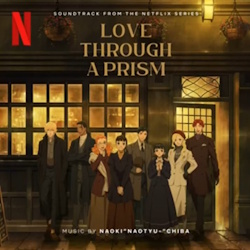 Love Through a Prism is a Japanese animated TV series directed by Kazuto Nakazawa and Tetsuya Takahashi, based on the graphic novel by Yoko Kamio. Set in early twentieth-century London, the story follows Lili, a Japanese exchange student who enrolls at a prestigious school with the goal of becoming a professional painter. Under pressure from her parents to excel or return to Japan, Lili throws herself into her studies – but things change when she meets Kit, the talented but emotionally distant son of an aristocratic family. What begins as a professional rivalry between Lili and Kit then gradually develops into a romantic relationship.
The score for Love Through a Prism is by Japanese composer and songwriter Naoki Chiba, known professionally as ‘Naotyu,’ and whose work was entirely unknown to me prior to this score, although he has been writing music for a variety of Japanese film and television projects – mostly animated – since at least 2011. Here, Chiba seems to be trying to do what appears to be an approximation of the ‘BBC costume drama’ sound, albeit one that is filtered through a distinctly more Japanese anime sensibility, with an end result that is a fascinating collision of two musical worlds: it’s not that Chiba’s attempts are ‘wrong’ per se – far from it, actually – but more that the end result feels like a fresh take on a familiar sound.
There is often a very particular sound to Japanese orchestral scores which I can’t fully describe because I lack the technical expertise, but it’s very distinct, something to do with the chord progressions and the harmonies, and the relationship between traditional Japanese folk and classical music, influences from modern pop songwriting, and how that then intersects with a Western orchestra. Chiba’s score for Love Through a Prism is full of this, and it’s when he applies this to the similarly distinct British period sound that the score truly comes alive.
The main “Love Through a Prism Theme” is a pleasant melody somewhat incongruously accompanied by a modern percussion section, but then the subsequent “Overture” settles into the period sound with an endearing, warm melody for piano, woodwinds, dancing strings, and an unexpected bagpipe/accordion sound that captures the sunny personality of Lili perfectly. This whimsical, upbeat sound carries through much of the rest of the score, including cues like the “Scarlet Waltz,” the lightly elegant “Street Stroll,” the prancing pizzicato and lively oboe textures of “Alleyway,” the graceful harpsichords of “River Thames,” and more. Chiba presents turn-of-the-century London as something magical, almost like a fairy tale, which of course it must have been when Lili first saw it.
The love story between Lili and Kit develops through several cues that have a more distinctly Japanese sound, beginning with “Dignity,” the shimmering version of the main theme in “The Beginning of the Story,” the intimate “Grow Slowly,” the gorgeous cellos of “Moonlit Duet,” the regal-sounding “Banquet,” the warmly nostalgic “Family,” the more serious and refined version of the theme in “Beautiful Days,” the more contemporary-sounding “Tomorrow Never Knows,” and the euphoric “Glassy Sky,” before climaxing with the swooningly romantic trio “Salut d’Amour,” “The World is Full of Colours,” and “Sound of Waves.”
Other moments of one-off interest include the Victorian hustle and bustle of “Loud Morning,” which reminds me of so many of those ‘British light music’ pieces and Pathé News scores from the period. There is jazzy action in “Devil’s Bread,” a comedic march in “Stargazy Pie,” optimistic determination in “A Long-Distance Train Carrying Hope,” lightly brassy energy in “Rescue Mission,” and even some gorgeous, moody jazz in “Cobalt Twilight.”
In sum, this is a superb score from Chiba, one that will appeal to those who appreciate the conventions of the Hollywood Golden Age sound, the BBC period drama sound, and modern anime romances, and who might want to hear an excellent new work that combines all three. The score is available to stream and download from all the major online sources via Netflix Music.
Track Listing: 1. Love Through a Prism Theme (0:34), 2. Overture (2:11), 3. Scarlet Waltz (1:09), 4. Street Stroll (1:58), 5. Alleyway (1:19), 6. River Thames (1:52), 7. Dignity (1:57), 8. Loud Morning (0:56), 9. The Beginning of Story (1:48), 10. Devil’s Bread (1:14), 11. Stargazy Pie (1:04), 12. Vermilion Orange (1:17), 13. Grow Slowly (1:36), 14. Moonlit Duet (1:59), 15. Colour (1:44), 16. Composure (1:28), 17. Banquet (2:10), 18. Family (1:19), 19. Beautiful Days (1:26), 20. Tomorrow Never Knows (2:43), 21. A Long-Distance Train Carrying Hope (3:47), 22. Hesitation (1:42), 23. Grow Apart (1:55), 24. Rescue Mission (1:19), 25. Glassy Sky (4:01), 26. Cobalt Twilight (1:46), 27. Monochrome (1:48), 28. Pinky Swear (3:13), 29. Salut d’Amour (2:48), 30. The World is Full of Colours (3:21), 31. Sound of Waves (5:05), 32. Love Through a Prism (1:54). Netflix Music, 64 minutes 25 seconds.
MORBO K – Stefano Lentini
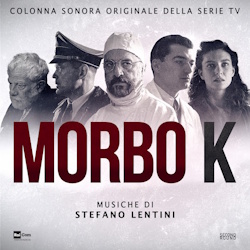 Morbo K is an Italian TV drama mini-series directed by Francesco Patierno, starring Giacomo Giorgio, Vincenzo Ferrera, and Marco Fiore. Set in Italy in the 1940s during World War II, it tells the true story of Professor Giancarlo Prati, the director of the Fatebenefratelli hospital in Rome. When Prati begins to sense what the German SS forces in Rome are doing to local Jewish families, he takes it upon himself to save as many of them as he can. To this end, he manages to transfer some Jewish families to a special ward on a nearby island, telling the Germans that they have a fake disease – the deadly “Morbo K” – and that anyone showing symptoms needs to be isolated to prevent an epidemic. The story is a little-known variation on a Schindler’s List-style narrative, where a kind-hearted man defies the Nazis and prevents his neighbors from becoming victims of the Holocaust thanks to a clever ruse.
The score for Morbo K is by Italian composer Stefano Lentini, who has been working extensively in the Italian film and TV industry for more than 20 years, and whose score for Belcanto last year impressed me a great deal. His music is an interesting combination of Jewish folk music, Italianate classical traditions, and straightforward film music orchestral drama, blending together the cultural identities of many of the characters involved in what is ultimately a very interesting tonal palette. It’s not as overwhelmingly dark or tragic as Schindler’s List; instead, Lentini concentrates more on the sense of hope that Prati provides for the Jews, and this makes for a different, but still powerful and enjoyable listen.
“Roma Vista dal Cielo” is a perfect example of this compositional approach, as Lentini blends some really quite lovely violin-based orchestral writing with clarinets from the klezmer tradition, as well as an unusual and subtle ‘wind’ effect that blows through the cue at regular intervals. The central theme around which all these instruments are woven is excellent, and it provides the backbone for the rest of the score, all of which is equally engaging.
“Reparto K” is a bold and dramatic track with a driving central riff that passes between syncopated pianos and sparkling classical violins. “L’Amica” is darker and more introspective, featuring a tender but downbeat piano solo of great depth, and a central melody that is expanded for the larger orchestra in “Due Occhi”. There is more of a sense of insistent, sinister underpinnings to the driving strings in “Herr Professor,” but then a gorgeous cascading elegance to the pianos in “Fotografia”. “Intenzioni Sconosciute” reprises the main theme with a sense of sparkling energy that is really engaging; in fact, one of the things that stands out about the score as a whole is the sense of busy activity, which effectively describes the urgency and purpose that drive Prati and his colleagues throughout the story.
Later, the superb “L’Isola” reprises the main theme with a sense of passionate emotional distress. “Unione” makes excellent use of pizzicato textures, which give it an unexpectedly playful sound; this contrasts greatly with the bleak, downcast “La Spia”. “Famiglie Divise” brings back the clarinets and the subtle vocal inflections from the opening cue to excellent effect, and becomes quite powerful during its conclusion, especially once the solo violin line emerges. The conclusive “Oro” really pushes all the right emotional buttons, bringing out a final statement of the main theme that is deeply effective.
Morbo K is an outstanding, traditional, emotional orchestral drama score which should appeal greatly to film music aficionados of my generation, and could provide an excellent introduction to Stefano Lentini’s work. The score is available to stream and download from all the major online sources via Rai Com/Second Round Records.
Track Listing: 1. Roma Vista dal Cielo (3:44), 2. Reparto K (2:37), 3. L’Amica (3:33), 4. Herr Professor (3:51), 5. Messa in Scena (4:47), 6. Fotografia (4:53), 7. Due Occhi (6:03), 8. Intenzioni Sconosciute (4:15), 9. Infinito è Qui (2:31), 10. L’Isola (5:11), 11. Unione (2:37), 12. La Spia (4:31), 13. Famiglie Divise (5:25), 14. Qualcosa di Brutto nell’Aria (5:39), 15. Oro (5:26), Rai Com/Second Round, 60 minutes 09 seconds.
UNEXPECTED FAMILY – Roc Chen
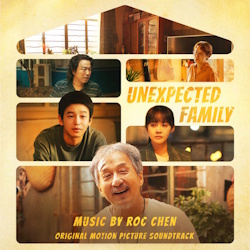 Unexpected Family is a Chinese family comedy-drama film directed by Li Taiyan, starring Jackie Chan and Peng Yuchang. The movie follows a young man named Zhong Bufan from a small town who flees to Beijing to escape his own troubled family background, where he crosses paths with an old man named Ren Jiqing – played by Jackie Chan – who is suffering from Alzheimer’s disease and who mistakes the young man for his son.
The score for Unexpected Family is by the Los Angeles-based Chinese composer Roc Chen, who scored one of the highest-grossing films in the world last year with the animated fantasy action movie Ne Zha 2, and has previously written excellent music for film and TV projects such as Guardians of the Tomb (2018), Royal Nirvana (2020), The Age of Awakening (2021), and Into the Mortal World (2024).
Unexpected Family is a score which showcases Chen’s softer, calmer, more intimate side, and consists of a series of lovely instrumentals that focus mostly on piano, harp, and subtle electronics, presented as a series of gentle pieces which speak to the relationship between Bufan and Jiqing, and especially the emotional central idea of the old man’s Alzheimer’s disease. The opening cue, “Old Man’s Monologue,” is a perfect encapsulation of the tone of the whole piece: wistful, pretty, sentimental, emotional but not overbearing, and with a twinge of sadness beneath the beauty. When Chen increases the scope of the theme with a larger string ensemble, some lovely vocal stylings, and a magnificent solo cello, the effect is outstanding.
Most of the rest of the score is, essentially, variations on the thematic ideas and instrumental textures from this opening cue, but there are still numerous standout pieces that leave a positive impression despite the score’s overall brevity. There is a wonderful sense of sparkling magic in the gorgeous “Time Slips By,” an effervescent playfulness to “A Beautiful Street,” poignant introspection in “The Past,” raw anguish in “Falling Apart,” classical ambiance in “The Sudden Ambulance,” and ghostly evocativeness in “Bittersweet Hardship.” The increased presence of brass gives “Memories of That Year” a powerful, dominant sound.
Cleverly, Chen depicts the confusion and disorientation of Jiqing’s memory issues by sometimes distorting the music with intrusive electronic noises and effects, which feel jagged and unpleasant on album, but are important in the story context. A few moments of additional uniqueness come via the unexpected guitar rock stylings of “Don’t Mess With Me” and “What’s Your Withdrawal Pin,” the driving modern action of “Elephant Legs,” the rowdy energy of “Run, Then,” and the determination of “The Final Push,” but these moments are mostly brief in comparison to the rest of the score.
Unexpected Family is an outstanding drama score by Chen, and demonstrates exactly why he is increasingly in demand for the biggest blockbusters in Chinese cinema. The depth of emotion he shows here showcases another side to his musical personality, and personally I like it a great deal. The score is available to stream and download from all the major online sources via Roc Chen’s own label.
Track Listing: 1. Old Man’s Monologue (5:40), 2. Time Slips By (1:34), 3. A Beautiful Street Corner (1:08), 4. Don’t Mess With Me (0:37), 5. The Past (1:15), 6. What’s Your Withdrawal Pin (0:49), 7. Elephant Legs (2:58), 8. Loneliness (1:17), 9. Run, Then (0:38), 10. Falling Apart (1:40), 11. The Sudden Ambulance (1:30), 12. Bittersweet Hardship (1:16), 13. Memories of That Year (1:07), 14. Everything You Wanted (2:06), 15. The Final Push (1:40), 16. Working Is Never Easy (2:55), 17. Reliable or Not (0:32), 18. Dad Protect You (0:54). Roc Chen Music, 29 minutes 37 seconds.
WOODWALKERS 2 – Anne-Kathrin Dern
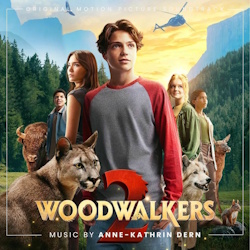 Woodwalkers 2 is a German fantasy action film directed by Sven Unterwaldt Jr., based on the series of popular novels by Katja Brandis. It is the sequel to the first film in the series, Woodwalkers from 2017, and continues the adventures of a teenager named Carag (Emile Chérif) who discovers that he is a shapeshifter – half human, half cougar – and must learn how to coexist with the human world. In this specific story, Carag faces a moral crisis when his mentor offers to reunite him with his cougar family in exchange for false testimony, bringing danger to him and his friends at Clearwater High School.
The score for Woodwalkers 2 is by the Los Angeles-based German composer Anne-Kathrin Dern, who also scored the first film. I have been a huge fan of Dern’s work ever since I first heard her breakthrough score, The Jade Pendant in 2017, and since then she has written numerous excellent works, including Fearless (2020), The Devil Conspiracy (2023), two films in the German ‘Help I Shrunk My…’ series, and three films in the Belgian ‘Claus Family’ series, among many others. Dern is a composer who writes in that wonderfully expressive, intelligently orchestral way that I really enjoy, and Woodwalkers 2 is another title to add to that list.
Woodwalkers 2 fits very neatly into that ‘young adult fantasy’ genre that includes things like Harry Potter, How to Train Your Dragon, The Hunger Games series, and the Percy Jackson series, and Dern pitches her score at a similar level. The opening cue, “Flight of the Ravens,” is a belter, a sweeping combination of the classical and the contemporary, a soaring piece of majestic orchestral fantasy bolstered by modern percussion, unusual vocals, and subtle synths. This general sound dominates the score, and several cues build on this sound in excellent ways. There’s clearly a significant amount of John Powell in the temp track for this, but Dern is a good enough composer that she is able to make it her own.
Counterbalancing this are some more playful, magical passages which speak to the overall setting (Clearwater High School is a school for ‘shapeshifters’), and these often have an effervescent, magical, sparkling sound that makes prominent use of metallic percussion, and often remind me of classic Thomas Newman. Parts of cues like “Abandoned” and “Miro” feature this sound strongly. Other cues of note include the tenderly emotional “Holly’s Regret,” the playfully comical and vaguely circus-esque “Mr. Crump” and “Crump Returns,” the slightly abstract and strangely unnerving “Tikaani,” and the poignant “The Confession,” which blends elements of the main theme with some chord progressions that have a distinct James Horner-like sound.
There are also a large number of outstanding action sequences, including the Hans Zimmer-adjacent “Helicopter,” the flamboyantly brassy “Mishaps in Town,” the kinetic and bubbly “Spies,” “The Break-In,” the darker and more aggressive “Following Milling,” and the extended “Rescue Mission,” all of which add a real boost of dynamism and lithe energy to the score. Dern has shown herself to be an excellent action composer over the years – Fearless features some notable examples – and the action in Woodwalkers 2 further showcases that talent. The rousing “Blockade” and the subsequent “Until We Meet Again” then offer a superb finale that veers between propulsive action and robust heroism.
Listeners who gravitate towards the contemporary young adult fantasy sound of the scores mentioned above will find Woodwalkers 2 to be very much to their taste; some may find the obvious temp-tracking to be perhaps a tiny bit off-putting, but personally I found that Dern’s compositional skill and emotional depth overcome any issues in that regard. The score is available to stream and download from all the major online sources on the Blue Eyes Fiction label.
Track Listing: 1. Flight of the Ravens (4:44), 2. Holly’s Regret (1:17), 3. Helicopter (1:23), 4. Abandoned (3:01), 5. Mr. Crump (2:03), 6. Mishaps in Town (3:37), 7. Lou’s Disappointment (1:51), 8. Spies (3:01), 9. The Break-In (6:44), 10. Tikaani (3:31), 11. Crump Returns (1:04), 12. The Confession (4:31), 13. Following Milling (2:27), 14. Rescue Mission (7:21), 15. Miro (3:13), 16. Torn Between Two Worlds (3:12), 17. The Trial (2:26), 18. Blockade (6:31), 19. Until We Meet Again (2:00). Blue Eyes Fiction, 63 minutes 59 seconds.

Shop at the Movie Music UK Store

Member of the

 MOVIE MUSIC UK