Under-the-Radar Round Up 2025, Part 9
 Original Reviews by Jonathan Broxton
I’m pleased to present the latest installment in my on-going series of articles looking at the best under-the-radar scores from around the world.
This article, the ninth and last of 2025, is a bumper crop, and covers another nine scores released last year from a wide array of genres and countries, including a short film from the Netherlands about magical paintings, a short film from Canada that makes the directorial debut of an Emmy-winning composer, a comedy-drama film from Denmark about a bank robber with dissociative identity disorder, a supernatural murder mystery from Vietnam about a 19th-century detective, and a short film from Mexico about a little girl and a heroic horsewoman who wields a magical lasso.
Then there’s an Australian sci-fi action horror film about a group of American soldiers encountering dinosaurs during the Vietnam war, an animated sex comedy from Norway about two sperms on an epic adventure trying to find their way to an un-fertilized egg, a Spanish TV series about a detective investigating a series of murders in a rural community, and an action horror film from Norway about a pair of gargantuan trolls terrorizing the fjords!
ACHTER DE DEUR/BEHIND THE DOOR – Roy Bemelmans
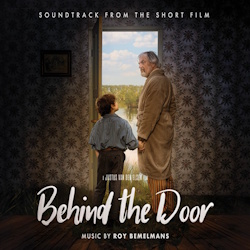 Achter de Deur, or Behind the Door, is a live action short film from the Netherlands directed by Justus van den Elsen, loosely based a novel by Giorgio Bassani. The film stars Derek de Lint and Sanne Vogel and is about a 10-year-old boy named Joris who loves drawing and admires his famous grandfather, whom he has never met. When the grandfather falls gravely ill, a curious Joris goes to his house and sneaks inside, where he discovers something extraordinary – that his grandfather can enter the world within his paintings. It’s a film about art and magic and family, and has been a popular success on the European short film festival circuit throughout 2025.
The score for Achter de Deur is by Dutch composer Roy Bemelmans, and it’s excellent, gentle and mysterious, and perhaps a little bit sad, but also underpinned with a sense of magic and wonderment that fits with the film’s themes. The main theme is performed twice; once as a lovely, delicate solo piano piece, and then in more expansive version where the piano is joined by an emotive solo cello. The theme is one of the prettiest things I have heard this year, just sublime.
The rest of the score is no less impressive; it follows mostly in the same tonal footsteps as the main theme, and is based mostly around variations on the main theme, but one or two cues do offer something different – the music box sound of “Joris Sees the Paintings,” the harsher and more aggressive string passages in “You Cannot Leave,” and the melancholic vibe of “I Believe in You,” for example, all leave a positive impression.
The score for Achter de Deur is on CD or to download for free via his own website here: https://music.roy-bemelmans.com/store, and I heartily recommend that you do. This is a superb short work by a clearly very talented composer, whose name I shall be watching for going forward.
Track Listing: 1. Behind the Door Theme (3:54), 2. Magical Perspective (3:11), 3. Joris Sees the Paintings (1:32), 4. Drawing Lessons (2:01), 5. You Cannot Leave (1:50), 6. I Believe in You (1:29), 7. Shall We Go? (1:30), 8. Behind the Door Theme (Piano Version) (3:37). Roy Bemelmans, 17 minutes 06 seconds.
BUTTERFLY ON A WHEEL – Trevor Morris
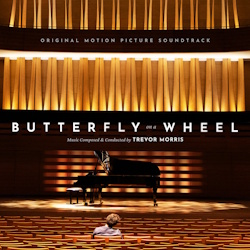 Butterfly on a Wheel is a live action short film from the Canada which marks the directorial and screenwriting debut of composer Trevor Morris. The film is set in Toronto and is a loosely autobiographical story based on Morris’s own adolescence; it stars Curran Walters as Jacen Davis, a gifted young musician struggling to keep up with daily life due to his OCD and anxiety while studying jazz at the prestigious Royal Canadian Conservatory of Music. While playing alone one afternoon, a chance encounter with fellow student name Sorrel (Brielle Robillard) sets in motion ‘a transformative journey that will shape Jacen’s perception of the world around him’.
The film has been an enormous success for Morris, and was shortlisted for 2025 Best Live Action Short Film Oscar. Of course, Morris scored the film himself, but anyone who knows his work on big-budget action epic like Immortals and Olympus Has Fallen, or sweeping historical TV dramas like The Tudors, The Pillars of the Earth, and Vikings may be surprised by Butterfly on a Wheel, which has a much more intimate, restrained, sometimes quite jazzy sound.
Cues like “Lush Life” have a piano lounge vibe that I really appreciate, while cues like “Deux Arabesques” and the moving, dramatic “Healing Montage” have a gorgeous, romantic, cascading sound that at times reminds of John Williams, and reveal a very different side to Morris’s musical persona. The use of voices in “Jacen Takes a Bow” gives the cue a mystical quality, but then the string dissonance of “Jacen Spirals” is an excellent representation of the mental health problems that plague him. I also must mention “Jacen’s Jazz,” a terrific piece of jazz-funk fusion that blends rowdily complicated piano patterns with Hammond organs, howling electric guitars, and a rock drum kit in a way that sounds like a refugee from a 1970s TV cop show. Groovy!
This is a very special score for Trevor Morris, even more so because of the fact that he wrote and directed the film himself, and the fact there is so much of his own life in the story. Unfortunately the score for Butterfly on a Wheel is not available for purchase on CD, but is available to download and stream from most of the major online platforms.
Track Listing: 1. Young Jacen (0:44), 2. Lush Life (3:59), 3. Deux Arabesques (1:34), 4. Jacen Takes a Bow (1:03), 5. Jacen Spirals (1:33), 6. Nothing Is Wrong With Me (2:49), 7. Healing Montage (2:17), 8. Big Brother Talk (Showtime) (2:15), 9. Jacens Jazz (2:15), 10. Shine (Dub Mix) (3:21), 11. Healing Montage (4 Handed Piano) (2:11), 12. Shine (Trevor Morris Room Mix) (3:17). Trevor Morris Music, 27 minutes 12 seconds.
DEN SIDSTE VIKING/THE LAST VIKING – Jeppe Kaas
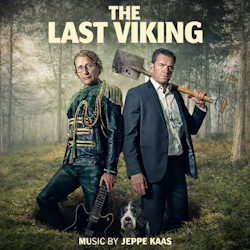 Den Sidste Viking, or The Last Viking, is a comedy-drama film from Denmark written and directed by Anders Thomas Jensen. The film stars as Nikolaj Lie Kaas as Anker, who as the film begins has just been released from prison following a fifteen-year sentence for robbery. Before he was incarcerated Anker entrusts his brother Manfred (Mads Mikkelsen) to bury the heist money for safekeeping, and only Manfred knows where the loot is; however, during the intervening decade, Manfred has developed a dissociative identity disorder and now cannot recall where he hid the money. Hilarity ensues.
The score Den Sidste Viking is by Danish composer Jeppe Kaas, who isn’t a particularly well-known name outside of Scandinavian cinema, but some may remember him for his excellent work on scores like Skammerens Datter and Mænd & Høns back in the mid-2010s. This score is just as impressive, but its tone and approach may be surprising to many considering the film’s plot. Parts of it are very warm, welcoming and sentimental, and are led by a beautiful main piano theme backed by lovely orchestral textures that at times remind me of 1990s Alan Silvestri. Other parts are much darker and more thriller-esque in tone, although again with a clear 1990s sound, and are equally notable in a different way.
The theme in the “Prologue” is just gorgeous, a nostalgic and wholesome lyrical treat that appears to represent the relationship between Anker and Manfred, going back to their childhood. The theme comes back reasonably frequently as the score progresses, and at times it reaches some quite sweeping heights. Subsequent cues like “Manfred at the Hospital,” the outstanding “You Are Nothing/Killing Their Father,” “Anker Finds The Money,” and the gorgeous chorally-enhanced “Epilogue” build on the sound, whereas the “Flashback” scenes and later cues like “Freya Is Told The Truth” tend to be more reserved, more emotional, and a little more sparse, but still excellent.
Meanwhile, elsewhere in the score, Kaas explores dark thriller textures in cues like the superb “To Mother’s House,” “Anker Finds The Skull,” “Digging In The Forest,” and the actually quite harsh and aggressive pair comprising “It’s All Your Fault” and “Be Very Careful/Manfred Rescues Anker,” some of which has a touch of Thomas Newman and The Shawshank Redemption to it, especially when he offsets ground bass figures against lighter violins. Considering that the film is nominally a comedy, it’s surprising that this style of music features so prominently, but even with this in mine Kaas’s compositional talent shines through. Elmer Bernstein always said to score the drama, as it makes the comedy funnier, and that appears to have been Kaas’s approach here.
Everything comes to a head with a 4-minute “Credits – A Suite of the Main Themes,” which reprises everything with a notably powerful symphonic sweep, and is really quite excellent. Unfortunately the score for Den Sidste Viking is not available for commercial purchase and as of the time of writing is not on any of the streaming services – Kaas submitted it for awards consideration purposes – but, as always, I hope this review inspires a release at some point in the future. It’s certainly worth tracking down and exploring if you ever get the opportunity.
Track Listing: 1. Prologue (3:08), 2. Manfred at the Hospital (1:47), 3. Flashback 1 (1:42), 4. To Mothers House (2:02), 5. Flashback 2 (1:22), 6. Anker Finds The Skull (1:32), 7. Flashback 3/Killing The Dog (2:28), 8. Manfred Cant Speak (0:54), 9. Digging In The Forest (1:03), 10. The Barn (1:22), 11. A Little Clue (2:18), 12. Am I Somebody (1:34), 13. It’s All Your Fault (1:18), 14. Be Very Careful/Manfred Rescues Anker (4:48), 15. You Are Nothing/Killing Their Father (2:50), 16. Freya Is Told The Truth (1:44), 17. We Are Truly Sorry-Kopj (0:45), 18. Anker Finds The Money (1:19), 19. Manfred, You Can Do It (0:35), 20. Epilogue (2:50), 21. Credits – A Suite of the Main Themes (4:16). Promo, 41 minutes 51 seconds.
EL LAZO DE PETRA – Carl Thiel
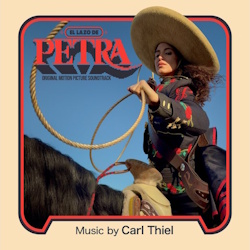 El Lazo de Petra is a short film from Mexico, a mix of live action and animation, which was produced and funded by Apple as a way to showcase the cinematic features of their iPhone 16 Pro. The film was written and directed by Gigi Saul Guerrero and follows the story of a little girl from Mexico City who visits her grandmother’s ranch and, after hearing a bedtime story, starts to have rich and vivid dreams about fantastical creatures, monsters and zombies, and a heroic hero on horseback named Petra who wields a magical lasso.
The score El Lazo de Petra is by Texas-based composer Carl Thiel, who brought together elements from Spaghetti Western films and Mexican folk music to create a bespoke soundtrack for the film. Thiel – who some may know for his work with director Robert Rodriguez and John Debney on scores like Spy Kids: All the Time in the World, Machete Kills, Sin City: A Dame to Kill For, and the From Dusk Till Dawn TV series – was born and raised in Mexico City and this score gave him the opportunity to combine traditional Mexican sounds and instrumentation with fantastical and mystical elements for the orchestra, and even a touch of rock, which gives it a unique and enjoyable sound.
The score is so much fun; think of the most rambunctious guitar and orchestra parts of James Horner’s The Mask of Zorro, combined with the lonely trumpets of an Ennio Morricone score for Sergio Leone, and that’s essentially what this score is. The score is only 10-minutes long, but the whole thing is outstanding from start to finish. I love the flamboyance of the main theme in “La Leyenda de Petra,” collapsing chaos of the core sound in “Paseando Por el Puebla,” the unexpectedly dark horror stylings of “La Llorona,” ther militaristic percussion and chirruping woodwinds of “Los Chaneques,” the howling rock electric guitars of “El Coco,” and the epic sweep in the conclusive “El Destino de la Chiarra” which augments the music with flamenco handclap percussion and soaring vocals.
Unfortunately, the soundtrack for El Lazo de Petra has not been released as a physical CD, but it is available to stream and download via most other major digital music services on the Desde El Alma Music label. This is a short, but wholly excellent trip into the wonderful world of Mexican fantasy, and gets an unreserved recommendation from me.
Track Listing: 1. De Que Te Ries (1:05), 2. La Leyenda de Petra (1:19), 3. Paseando Por el Puebla (0:50), 4. La Llorona (0:45), 5. Los Chaneques (1:02), 6. El Coco (2:31), 7. El Destino de la Chiarra (1:51), 8. El Corazon de Petra (0:53). Desde El Alma Music , 10 minutes 16 seconds.
PRIMITIVE WAR – Frederik Wiedmann
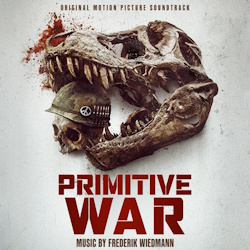 Primitive War is an Australian sci-fi action horror film directed by Luke Sparke, based on the 2017 novel of the same name by Ethan Pettus. It stars Ryan Kwanten, Tricia Helfer, Nick Wechsler and Jeremy Piven, and it set in 1968 during the Vietnam War. When a US Army Special Forces platoon goes missing deep in the Vietnamese jungle, a reconnaissance unit is called in to carry out a rescue mission and bring the platoon home – but find themselves encountering a danger they never expected to find, in the form of a pack of deadly dinosaurs who have somehow re-appeared millions of years after their supposed extinction. The film is a fun, action-packed, bloody B-movie collision of Predator and Jurassic Park; it was given limited theatrical runs in Australia, the US, and the UK, but has found an audience via video-on-demand, with many people praising it for its unpretentiousness and 80s/90s throwback vibe.
The score for Primitive War is by the US-based German composer Frederik Wiedmann, and it’s an absolute blast. It was recorded in Skopje, Macedonia, with the FAMES Project Orchestra, which was then augmented with various tribal flutes, percussion sounds, and other world instruments to illustrate the film’s Vietnamese setting. Most of the score is built around an increasingly impressive array of suspense, horror, and military action cues, which grow bigger and more threatening as the marines venture deeper into the jungle and are forced into increasingly violent encounters with the dinosaurs.
After the exciting, violently atmospheric opening in “1968” Wiedmann introduces his main theme for the military heroes in “The Vultures,” a muscular and imposing march full of thrusting strings, stirring brass, tremulous percussion, all built around a nostalgic 1990s Hans Zimmer power anthem vibe. This theme features prominently throughout the rest of the score, especially in moments where the soldiers are engaging in moments of bravery; subsequent cues like “Into the Valley,” the stoic and determined-sounding “Prehistoric Beasts,” and the euphoric “Pack Hunters” feature especially notable statements.
The magnificent, dynamic “Freefall” introduces the theme for Tricia Helfer’s character Sophia, a Soviet paleontologist who becomes the link between the Vultures platoon and the dinosaurs that are hunting them. There’s also a theme for the Russian antagonists which features a prominent Slavic choir and receives a notably prominent performance in the tremendous “Vultures Closing In”.
However, it is the action and horror music that inspired and dominates the most, and in these cues Wiedmann sheds all pretenses of subtlety and unleashes the might of his orchestra with everything he’s got. Cues like “The Cave Attack,” the nightmarish “First Encounter,” “Chased by a Tyrannosaurus Rex,” the thrilling “Field Ambush,” the exhilarating “They Are Coming,” “Should Have Stayed on the Damn Boat,” and the big finale comprising “Breaking In, “Tyrannosaurus Rex Fury,” and “C4 Good to Go” are unstoppable musical onslaughts, ferocious, complicated, relentless, but also ‘musical’ in all the best ways – fully orchestrated and clearly defined, with each section given something challenging and prominent to do. There’s so much variety in the rhythms, the tempos, the orchestration, it’s such a thrill to hear this kind of dense, rich action music in 2025, and massive kudos should go to Frederik Wiedmann for writing it.
The conclusive pair comprising “Requiem for Soldiers” and “A New World” are appropriately epic and awe-inspiring moments, and end the score on a thematic high. Unfortunately, the score for Primitive War is not available for purchase on CD, but it is available to download and stream from most of the major online platforms, and I highly recommend you do – it’s one of the best action scores of the year.
Track Listing: 1. 1968 (2:26), 2. The Vultures (4:23), 3. Into the Valley (1:47), 4. In the Shadows of the Jungle (3:05), 5. The Cave Attack (3:03), 6. First Encounter (2:30), 7. Chased by a Tyrannosaurus Rex (1:37), 8. Freefall (4:43), 9. Defeated (1:21), 10. Collider (2:17), 11. Prehistoric Beasts (2:19), 12. Field Ambush (2:45), 13. Flying Predator (2:15), 14. Pack Hunters (5:10), 15. Get Some Morphine (5:06), 16. That Was God (2:52), 17. They Are Coming (4:20), 18. Real Nasty Stuff (3:55), 19. Grazing Animals (5:25), 20. Should Have Stayed on the Damn Boat (3:16), 21. Vultures Closing In (6:22), 22. Breaking In (5:12), 23. Tyrannosaurus Rex Fury (4:35), 24. C4 Good to Go (4:01), 25. Requiem for Soldiers (4:54), 26. A New World (1:31) Kaleido Sound, 91 minutes 10 seconds.
SPERMAGEDDON – Christian Wibe
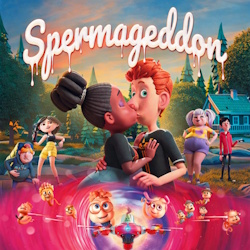 Spermageddon is an animated sex comedy from Norway directed by Tommy Wirkola and Rasmus A. Sivertsen. The film follows two equally raunchy narrative threads: one is an emerging love story between two awkward teens, Jens and Lisa, who meet and have sex for the first time while at summer camp; the other is about Simon the Semen, who lives inside Jens’s scrotum, and who embarks on an epic quest to reach the mythical Egg.
The score for Spermageddon is by Norwegian composer Christian Wibe, who some may know from his scores for Dead Snow 2 in 2014, What Happened To Monday in 2017, and Gulltransporten [Gold Run] in 2022. It is, in a word, terrific, and is perhaps the most surprising film score of 2025 in terms of expectation (based on the type of film it is) vs reality. The closest thing I can think of, by way of comparison, is Christopher Lennertz’s score for the Sausage Party movie in 2016, which intentionally used massive orchestral over-scoring to make a comedic point in context. Spermageddon is very much cut from the same cloth.
It opens cheerfully with the lovely and playful “Simen,” a wholesome introduction to Simen and Cumilla, the two main character sperms who lives inside of Jens. There’s a bit of John Powell’s Robots, a bit of Thomas Newman’s Wall*E, in the overall sound, which should give you a good grounding for the score as a whole. However, things move on quickly, and become more epic, more raucous, and more dramatic with each successive cue, turning Simen and Cumilla’s quest into an action extravaganza.
The theme for “Jizzmo,” Simon’s ruthless rival who creates an Iron Man-inspired suit to ensure he reaches the egg first, is a superb parody of superhero villain music. The love theme for “Jens & Lisa” is pretty and wholesome, with a lovely central piano melody. “Alarm” is the first of several outstanding action cues that blend the orchestra with a bubbling, energetic electronic undercurrent. “Nu Gjel Det” and “Love” are wonderful musical explosions of soaring heroism.
“Lunsj” successfully combines thunderous and sometimes quite brutal action with jazz caper interludes. “Magesyra” embodies a celestial religioso sound with its vocals and magical metallic percussion. “Fossen” at times fees like Wibe’s incongruous approximation of an Elmer Bernstein wild west anthem. “Tvillinger” is epic and emotional. “Egg Lokalisert, Part 2” has the drive of a Hans Zimmer power anthem. It’s all just superb.
And then there are the four original songs, co-written by Wibe with screenwriter Jesper Sundnes; all are sung in Norwegian, so you won’t understand the lyrics unless you run them through Google, but I think they are fabulous all the same. “Her i Punge” (which translates to “Here in the Scrotum”) is performed by Aksel Hennie and Mathilde Storm as Simen and Cumilla, and is a whimsical march describing their lives inside Jens’s ballsack with disgustingly hilarious details. “E. Colisangen” is performed by Stig Frode Henriksen as e-coli troll who lives inside of Lisa’s colon and sings about the joys of farting and pooping. “Abortsangen” (“The Abortion Song”) is performed brilliantly by Silya Nymoen as a gynecologist expounding on the benefits of not having children with a toe-tapping finger-snapping jazz standard that would scandalize the religious right in America if they ever heard it. If you’re not ready, you’re not ready!
However, the pièce de résistance, the crème de la crème, (the cum de la cum?) is “Spermageddon” which is performed by Christian Rubeck as Jizzmo, and is a hard-rock headbanging masterpiece that takes everything that is good about Scandinavian rock and metal and applies it to comedy. Rubeck’s gravelly voice reminds me of Finnish death metal singer Mr Lordi in all the best ways, and the fact that the lyrics treat the impending coitus between John and Lisa like a coming apocalypse sells the whole thing. The drums pound. The guitars roar. The backing vocalists soar. Jens’s cheese sausage is marinated. It’s easily one my favorite songs of 2025.
The release details about the Spermageddon soundtrack are confusing. The four original songs are widely available to stream and download via most other major digital music services, but Wibe’s score does not appear to have been released commercially – he submitted it for awards consideration purposes. As always, I hope this review inspires a release at some point in the future, because this is one of the best, most unexpectedly engaging animation scores of 2025.
Track Listing: 1. Simen (2:27), 2. Her i Pungen (written by Christian Wibe and Jesper Sundnes, performed by Aksel Hennie and Mathilde Storm) (3:50), 3. Jizzmo (2:23), 4. Olsen Banden (1:32), 5. Jens & Lisa (1:18), 6. Alarm (0:50), 7. Spermageddon (written by Christian Wibe and Jesper Sundnes, performed by Christian Rubeck) (3:15), 8. Too Late (1:12), 9. Nu Gjel Det (2:24), 10. Tarmen (1:30), 11. E. Colisangen (written by Christian Wibe and Jesper Sundnes, performed by Stig Frode Henriksen) (1:23), 12. En Plan (1:14), 13. Love (0:58), 14. Lunsj (2:36), 15. Mat (1:24), 16. Magesyra (0:55), 17. Fossen (2:06), 18. Etterskvet Dør (1:03), 19. Tvillinger (1:23), 20. Egg Lokalisert, Part 1 (2:35), 21. Egg Lokalisert, Part 2 (1:28), 22. William Tell (3:32), 23. Happy Ending (2:07), 24. Abortsangen (written by Christian Wibe and Jesper Sundnes, performed by Silya Nymoen) (4:33). 74 Entertainment, 48 minutes 07 seconds.
TERRA ALTA – Arturo Cardelús
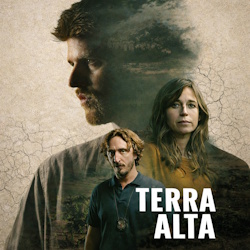 Terra Alta is a Spanish TV series created by Eligio R. Montero, based on the award-winning novel by Javier Cercas. It stars Miguel Bernardeau as Melchor Marín, a young police detective who is called to a rural area of Spain to investigate the brutal murder of a powerful local business owner. The show began airing in December on the Spanish network Movistar, where it received good reviews for its moody atmosphere, detailed plotting, and dramatic performances.
The score Terra Alta is by the excellent Los Angeles-based Spanish composer Arturo Cardelús, who previously wrote such standout scores as Chiamatemi Francesco: Il Papa Della Gente, Buñuel in the Labyrinth of the Turtles, and Dragonkeeper. Cardelús won the 2025 Hollywood Music in Media Award for Best Original Score – TV Show/Limited Series (Foreign Language) for this score, and it’s not difficult to see why.
Terra Alta is a classic dark Hitchcockian thriller score, full of surging moody strings and ominous atmospherics, occasionally enlivened with more intense periods of action and suspense. Much of the score is built around layers of strings – ground cellos and basses are especially prominent – and Cardelús uses them to create an excellent overall tone that matches the seriousness of the murder investigation and the man at the center of it. There’s a superb main title theme in “Terra Alta,” lyrical writing for strings and piano in cues like “El Crimen” and “Esteban Todos” and “La Tierra No Olvida,” tenderness and sentiment in “Familia,” impending danger in “Qué Manera De Matar,” moody piano romance in “Jamás Me Lo Perdonaré,” heartfelt sorrow in “Y Por Qué Olga”. Many of these different sounds and emotions are created by Cardelús using a fairly simple string-based instrumental palette, but his sophisticated writing and dramatic intelligence give it all an outstanding sheen of quality.
The action cues – “El Contrato,” the low-key intense “Sicarios,” the brilliantly uneasy “Traición” – often come in sharp, brief bursts, and often find ways to weave statements of the main theme into the fabric of it all. Many of these cues are then underpinned with tick-tock percussion rhythms and subtle electronic textures too which help propel the action forwards. It’s all very impressive, and then by the end of the album Cardelús uses his final two cues – “Misericordia” and “Epílogo” – to really lean into the overarching sense beautiful tragedy and present his main theme at its most impressively lyrical.
Unfortunately the score for Terra Alta is not available for commercial purchase and as of the time of writing is not on any of the streaming services – Cardelús submitted it for awards consideration purposes – but sources indicate that it will be released by Moviescore Media at some point in 2026.
Track Listing: 1. Terra Alta (1:00), 2. El Crimen (1:34), 3. Estaban Todos (1:20), 4. Familia (2:22), 5. Qué Manera De Matar (0:55), 6. El Contrato (1:29), 7. Sicarios (1:56), 8. Cosette (1:15), 9. Traición (1:53), 10. Jamás Me Lo Perdonaré (2:41), 11. La Tierra No Olvida (2:41), 12. No Quiero Perderte (1:40), 13. Los Olvidados (2:03), 14. Y Por Qué Olga (2:35), 15. Exposición (1:21), 16. Misericordia (2:39), 17. Epílogo (1:32). Promo, 31 minutes 01 seconds.
THÁM TỬ KIÊN: KỲ ÁN KHÔNG ĐẦU/DETECTIVE KIÊN: THE HEADLESS HORROR – Christopher Wong, Garrett Crosby, Ian Rees
 Detective Kiên: The Headless Horror, known in its native language as Thám Tử Kiên: Kỳ Án Không Đầu, is a Vietnamese period supernatural murder mystery directed by Victor Vu. The film stars Quoc Huy, Tran Quoc Anh and Dinh Ngoc Diep. Set against the atmospheric backdrop of 19th-century Vietnam during the Nguyễn Dynasty, the film centers on a terrifying mystery after the discovery of a headless corpse sends shockwaves through a rural village, and follows the investigations of the detective charged with finding out what happened.
The score for Detective Kiên: The Headless Horror is by composer Christopher Wong, with additional music by his regular co-composers Garrett Crosby and Ian Rees. Wong has worked with director Vu on numerous scores, including Yellow Flowers on the Green Grass, Lôi Báo, The Immortal, Mắt Biếc, The Royal Bride, Camellia Sisters, and Maika, many of which have been enormous domestic box office hits.
In the album’s publicity material, Wong explains: “Victor Vu and I have done a lot of suspense movies together, but one thing that makes this score unique from our previous efforts is the prominent use of the Vietnamese two-stringed fiddle, the dan co. We came upon this idea organically, while working on the earliest teaser trailer – Victor knew that he wanted a string solo in a certain moment, but nothing I was doing on the cello was working for him. On a whim, I decided to try the dan co and he liked it so much that we started looking for places to put it in the actual film. It ended up musically representing a lot of the supernatural moments in the film and was a lot of fun to incorporate.”
The score starts out strongly with a muscular and brassy Goldsmith/Poledouris-esque main title theme in the “Detective Kiên: Opening,” but this quickly switches to something more tender and intimate for a solo piano and strings. This duality – dominant power in the action and suspense sequences, versus calmer reflection in the more thoughtful and sometimes romantic scenes – is present throughout the score, and it again highlights Christopher Wong’s excellent dramatic sense and versatility.
The power comes via cues like “Matters to Attend,” “The Waterfall,” and the guttural “Workshop Ghost,” all of which combine moments of sinister tension with explosions of harsh action. Some of the more horrific cues like “Head Under Water” and “Cycles of Vengeance” prominently feature the sound of the dan co fiddle, which sounds a bit like an erhu, and gives the score a slightly eerie, but fascinatingly appealing, aspect. The calmer reflection is present more in cues such as “Greetings, Miss Moon,” “Nga and Moon,” and the lovely “Nga and Thac,” which use restrained piano textures, string sustains, and harp glissandi to create an uneasy mood, but also sometimes embrace a sort of dark romance that I really appreciate. “Guilt and Grief” uses spiritual, ghostly vocals to excellent effect.
Garrett Crosby’s main contributions to the album are the aforementioned “Head Under Water,” which is just outstanding, as well as the forebodingly passionate “Shamed,” and “Wrong Body,” while Ian Rees’s main contributions to the album are the historical-sounding “Throwing Knives,” the intensely percussive and superbly aggressive “Swords and Knives,” and the gorgeous, lush “Reunited”. The exciting and energetic “Chasing Dong” is credited to both of them, and is also a score highlight.
I have been writing variations on this paragraph repeatedly since at least 2014 now, but when I listen to scores like Detective Kiên I continue to be staggered that Wong, Crosby, and Rees still don’t have a film scoring profile in north America, and remain primarily writing music for Vietnamese cinema. Yes, they are wildly successful in that arena, but it’s been over a decade now, and surely someone with influence must notice at some point. The score for Detective Kiên: The Headless Horror is available to stream and download via MovieScore Media, here: https://moviescoremedia.com/newsite/catalogue/detective-kien-the-headless-horror-christopher-wong-ian-rees-and-garrett-crosby/.
Track Listing: 1. Detective Kiên: Opening (2:54), 2. Greetings, Miss Moon (1:44), 3. Matters to Attend (2:12), 4. Nga and Moon (3:20), 5. The Waterfall (2:34), 6. Head Under Water (2:59), 7. Nga and Thac (3:55), 8. Workshop Ghost (2:42), 9. Conflicts of Interest (3:56), 10. Throwing Knives (2:42), 11. Shamed (2:19), 12. Chasing Dong (1:50), 13. Blackmailed (3:32), 14. One Week Ago (3:57), 15. Present Day (2:02), 16. Swords and Knives (5:32), 17. Guilt and Grief (4:55), 18. Sold Out (2:30), 19. Dangerous Walk (2:36), 20. Wrong Body (7:12), 21. Reunited (2:12), 22. Cycles of Vengeance (5:08), 23. You Are Whom I Wish (1:46), 24. Detective Kiên: Finale (1:08). Moviescore Media MMS-25013, 75 minutes 39 seconds.
TROLL 2 – Johannes Ringen
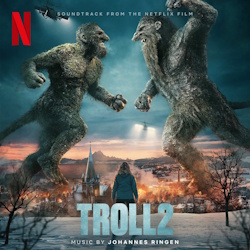 Troll 2 is an action-horror film from Norway directed by Roar Uthaug and is a sequel to the original Troll film from 2022, which saw a group of scientists and local residents banding together to stop an ancient giant troll from wreaking havoc after it was accidentally awakened from a remote mountain. In the sequel three of the survivors of the first film – paleontologist Nora (Ine Marie Wilmann), politician Andreas (Kim Falck-Jørgensen), and military Captain Holm (Mads Sjøgård Pettersen) – have to come together once more to protect Norway from another giant troll, but then receive unexpected support from a third troll who awakens and unexpectedly decides to help them.
The score Troll 2 is by Norwegian composer Johannes Ringen, who also scored the first Troll film, and anyone who heard that score will know what they are in for here. Norwegian films are, by and large, not known for their balls-to-the-wall action stylistics, but Troll 2 is the exception and is exactly that – a beefy, energetic orchestral score full of intensity and drama. What makes Troll 2 stand out even more is the fact that Ringen has augmented his orchestra with a number of traditional Scandinavian folk instruments – most prominently the hardanger fiddle – plus vocals performed Brita Sjöberg, Tarjei Nysted, and Merethe Soltvedt, to give the whole thing a geographically specific flavor that is enormously appealing.
Sometimes Ringen’s music is full of sentimental regret and bittersweet sorrow (“Hey Beautiful”), sometimes it is dramatic and heroic (“It’s Been an Honor”), and sometimes the music is more wondrous and mysterious (“The Lost Tomb”). However, for me, the standout moments are the expansive action cues, of which there are numerous. “The Troll Massacre” starts out full of pathos, but slowly grows into a massive powerhouse that pits the full orchestra against chanted choirs and a church organ. “Project Jotun” and “The Pilgrimage to Nidaros” are driving and dynamic, full of determined resolve and a sense of impending danger. Both “An Awakening” and “The Battle of Hemsedal” briefly (and hilariously) quote Grieg’s classical masterpiece ‘In the Hall of the Mountain King’ in an action setting, and are absolutely fantastic. “Into the Dark Ages” is full of low, menacing brass and dancing, trilling, dark string figures. The four-cue series from “Game On” through to the end of “Monster Mash” simply never lets up. Listen especially for the James Horner rumbling pianos in “Hey There, Handsome”
Weaving throughout all of this action music is Ringen’s overarching main theme from the first film, and that’s something else I very much appreciate about this score; it’s not just crash-bang-wallop, but there are clear and identifiable recurring melodic ideas too, and that alone is something worth recognizing on its own terms.
This is a terrific orchestral action horror score from an unexpected source, which makes use of all the usual bells and whistles, but becomes more unique through Johannes Ringen’s clever usage of traditional Scandinavian instrumental folk music sounds and vocals as part of the overall mix. Unfortunately, the soundtrack for Troll 2 has not been released as a physical CD, but it is available to stream and download via most other major digital music services on the Netflix Music label.
Track Listing: 1. The Troll Massacre (1:38), 2. Troll Mother’s Lullaby (Trollmors Vuggevise) (0:32), 3. Project Jotun (2:53), 4. An Awakening (2:49), 5. You’re Clark Kent, Not Superman (1:15), 6. The Battle of Hemsedal (2:19), 7. It’s Been an Honor (3:24), 8. Hey Beautiful (2:00), 9. The Pilgrimage to Nidaros (2:17), 10. Into the Dark Ages (1:12), 11. The Lost Tomb (4:52), 12. Game On (1:37),13. Hey There, Handsome (4:06), 14. Come Get Some (1:33), 15. Monster Mash (4:08), 16. A Side Quest (2:31), 17. It Doesn’t End Here (2:06). Netflix Music, 41 minutes 14 seconds.
Leave a comment

Shop at the Movie Music UK Store

Member of the

 MOVIE MUSIC UK
As always, love these short form reviews.
This might be the first one ever where I’d already heard one of the scores (Primitive War- it’s good!)