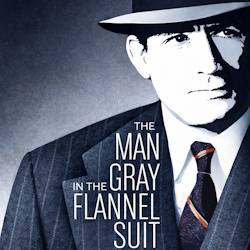
THE MAN IN THE GRAY FLANNEL SUIT – Bernard Herrmann
 GREATEST SCORES OF THE TWENTIETH CENTURY
Original Review by Craig Lysy
The best-selling 1955 novel “The Man in the Gray Flannel Suit” by Sloan Wilson caught the imagination of Nunnally Johnson, a producer, director, screenwriter, and playwright. He believed that its story of a man and wife struggling to find life meaning and purpose following WWII would resonate with the public. He sold his conception to Darryl F. Zanuck of 20th Century Fox, the film rights were purchased, and Zanuck would personally oversee production with a $2.6 million budget. Johnson would direct and also write the screenplay. A fine cast was hired, with Gregory Peck starring as Tom Rath. He would be joined by Jennifer Jones as Betsy Rath, and Fredric March as Ralph Hopkins.
The story follows the fortunes of Tom Rath, a WWII veteran living in suburban Connecticut with his wife Betsy and three children. It is ten years after the war and Tom is experiencing difficulties supporting his family on his meager salary as a writer, contending with a wife who wants a higher standard of living, suffering from Post-Traumatic Stress Syndrome related to him causing the death of his best friend, and confronting the revelation that he has a son from an affair he had with Italian girl during the war. Both Tom and Betsy struggle to find meaning and purpose in their lives, temporarily separate after Betsy learns of Tom’s infidelity and bastard son. In the end, they reunite and gain an understanding that it is not the destination of life’s journey that matters, but instead enjoying the journey together. The film was commercially successful, earning a profit of $1.8 million. Critical reception was mixed, but overall, trended positive. The film received no Academy Award Nominations.
Bernard Herrmann was assigned to the project by Alfred Newman, Director of Music at 20th Century Fox. Upon viewing the film, I believe Herrmann perceived that the nexus of the story outwardly concerned a man’s struggle against conformity as he seeks purpose for his life. Inwardly we discern a war hero suffering with wounds to his psyche from his accidental killing of his best friend on the battlefield, a man haunted by the faces of the seventeen men he killed. He also struggles to accept the loss of spontaneity and romanticism he embraced in his youth, which led to a child out of wedlock, but now has vanished and left his wife wanting. This perception informed, and guided Herrmann in creating his score. Once again, he demonstrated masterful insight into the characters by choosing to score the most poignant, and emotional elements of Tom’s story – the flashbacks to his past.
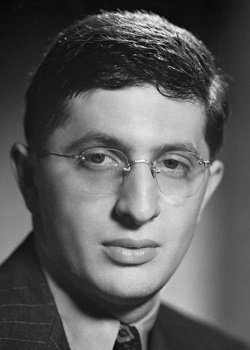 For his soundscape Herrmann composed two primary themes, both love themes for the two women who captured Tom’s heart. They are very different and inform us of who, in the final analysis, is his true love. Betsy’s Love Theme, offers repeating three and four note phrasing of exquisite lyrical romanticism. The flowing melodic line is full of yearning, passionate, and forthright in seeking resolution. Indeed, two of the score’s finest rapturous moments occur when it soars ever upwards on a crescendo romantico and blossoms. Maria’s Love Theme also graces us with lyrical beauty, offering repeating five-note phrasing. It unfolds as a string borne romanza full of yearning, and yet we discern in the notes a pervasive sadness. Her theme seeks, yet never finds resolution, instead offering a melancholia that reflects Maria’s heart-breaking disclosure to Tom that everyone she knows either dies, or leaves her.
In my judgement the film is Tom’s story, and yet I did not discern musically, a personal thematic identity. I did however, discern woven throughout the film, Herrmann’s use of a solo oboe. While I do not believe it use served as Tom’s leitmotif as it is not consistently used or pervasive in the film, I did sense by the scenes in which it is used, that it expressed Tom’s sense of loneliness, isolation, and struggle to realize his post war identity and life purpose. There are significant scenes filled with tension, suspense, violence, and conflict, where we are buffeted by intense emotions such as frustration, anger, disappointment, remorse, and betrayal. In these scenes we see Herrmann’s renown iconoclastic scoring techniques with his familiar use of “cells structure”; the construction of musical passages using short, repeating fragments, also known as, motifs. He eschews long-lined melodies, instead creating music which is modular, extremely adaptable, so as to effectively convey tension, mood, and suspense utilizing rhythmic repetition. Lastly, there are a few scenes such as Tom serenading Maria, and Caesar disclosing to Tom in a bar that Maria bore him a son, where Herrmann infuses source music to provide the requisite cultural sensibilities.
Cues coded (*) contain music not presented on the album. “Prelude” offers one of Bernard Herrmann’s most eloquent and evocative Main Title compositions in his canon, one that graces us with exquisite romanticism. He eschews Alfred Newman’s iconic 20th Century Fox fanfare for the studio logo, instead offering his own fanfare dramatico. This fanfare usher in a rapturous exposition of Tom and Betsy’s Love Theme, which captures the film’s emotional core, as the opening credits unfold. At 1:33 we enter the film proper, with a shifting panorama of an urban skyline, which Herrmann supports with a harsh, and dynamically repeating seven-note agitato. The next scenes of the film are unscored as we learn of Tom’s financial challenges and watch him turn down a job opportunity suggested by his friend Bill, that pays more money, but would also take him out of his comfort zone. His wife Betsy picks him up at the train station and bears only bad news; it will cost $250 to replace the washing machine, and daughter Barbara has the Chicken Pox. At home he is buffeted by the usual parental problems raising two daughters and a son. With the kids in bed, Betsy joins him for a cocktail. A telephone call brings disappointing news; the anticipated windfall from his grandmother’s estate is a bust; she died broke and in debt. This precipitates an argument and the growing fracture in the relationship is exposed; Betsy wants more out of life, romance, fun, and a better house, Tom however is content, secure in a safe job, and prefers the security of the here and now, rather than gambling for a better future.
“The Children’s Hour” offers a poignant score highlight where Herrmann offers a tear-evoking composition that speaks to Tom’s wounded psyche. Tom shoots down all her ideas, is tone deaf to her disappointments, and dismissive to her aspirations. He declares against risk-taking and seeking a better life, and instead argues for the safety, security of the status quo. Anger sets in and she asks him point blank; “What has happened to you since the war?” He asks her, what do you mean? This causes the dam holding back her frustrations with their marriage and life together to break, and she says something very hurtful; “You’ve lost your guts, and I all of a sudden I am ashamed of you”. Music enters painfully with this searing revelation, and a pall of melancholia descends borne by aching strings tristi. The Pathetique which unfolds offers a rare blessing, where Herrmann sheds his iconoclastic style and embraces unabashed romanticism, gracing us with an exquisite musical narrative of heartache. Tom’s response seems to validate her feelings; he pauses, and calmly asks her if she would like another drink. She declines, continues to serve dinner, and he goes upstairs, eschewing retaliation, and instead seeking solace in familial love. He finds his son Pete crying, because mom would not let him sleep with a dirty dog. Tom returns with the dog and a loving Pete is thankful. Tom then visits the girls and gives each a kiss goodnight. For me, this scene affirmed that Tom is a kind, loving and dutiful father. The next day offers a train ride to work in an unscored scene where Tom asks his friend Bill to facilitate an interview for the Public Relations job they discussed yesterday.
“The Coat” offers a score highlight where Herrmann uses impressionism to musically support, with brilliant intuitive understanding, Tom’s psychic trauma. The flashback offers juxtaposition using a dark mirror that contrasts his coveted survival uniform of the past, the German sentry’s warm coat, against his now contemporary uniform of corporate conformity – a gray flannel suit. The flashback is triggered when Tom sees a man on the train wearing a fur collared jacket, a jacket that takes him back to the war where he was freezing to death. Herrmann sow unease, isolation, and dread with shifting, muffled timpani, a forlorn oboe solista, low register woodwinds, and horns grave, which evoke a sense of unease and dread. There is no synchrony between the timpani and woodwinds and horns, instead an unresolved, formless and random musical narrative. He and his friend kill the two German sentries and take their coats; however, Tom’s sentry recovers from his strangulation as a German patrol approaches, and we flow seamlessly into “The Killing”, which sustains the musical narrative. To avoid discovery, Tom is forced to thrust a bayonet into the man’s heart as they lock eyes, which rips him back to the present. At 0:20 we segue into “Rome” atop warm French horns and strings gentile as we enter a second flash back to Tom’s service in Italy. He is a Captain, and receives new orders that offer a punch to the gut; instead of going home to America, he and his company are being redeployed to the Pacific. After he breaks the bad news to his men, he accepts Sergeant Caesar Gardella’s remedy – drinking some vino!
Afterwards, Tom wants to return to base, however Caesar has become amorous and returns with two women; Gina, and her cousin, Maria. Tom initially keeps his head down, yet when Caesar persists and introduces Maria, Tom looks up, and their eyes lock with mutual desire. “Maria” offers a romantic score highlight, and Herrmann supports their carriage ride home together. He introduces Maria’s Theme as a string borne romanza, which weaves together her yearning, and loneliness. However, within its repeating five note phrases we find Maria’s affection falling like waves upon a seawall as Tom seems remote, no doubt thinking of his wife Betsy. Yet, in the end, it is the seawall that begins to crack as she invites him up to her room, and he consents. We segue into “Maria’s Room”, and we bear witness to Tom’s seawall weakening, overcome by her tenderness, yearning heart, and desire to be held. At 1:14 the melodic line shifts to woodwinds as we see the wall around his heart collapse, with her theme blossoming at 2:30 as he takes her into a kissing embrace. My observation is that her theme’s blossoming ends not with fulfilment, instead Herrmann ends with uncertainty. We close the scene with the suggestion that they spent the night making love. The next day Tom returns with SPAM and other provisions and decides to spend his last day of leave on a picnic with Maria. Maria is thankful for all the food, but warns rain is forecast.
In “The Rain” we are graced with another romantic score highlight. Tom is now relaxed, comfortable and amorous with Maria as they drive in the rain. For me, this antecedent composition in many ways is kindred to his more famous “Scene d’Armour” from “Vertigo” (1958). I believe it again demonstrates that there were many facets to Herrmann’s compositional gifts, and that he was quite capable, when inclined, to write beautiful, lyrical romanzas. We close the scene with Tom asking Maria if she can sing, and she says no. With that he stops the jeep, tells her to drive, as he will sing. He grabs a ukulele and begins singing the college fight song “I’m a Ramblin’ Wreck From Georgia Tech”. “Farewell” reveals Tom and Maria bedded down in a bombed out building warmed by a hearth fire. She asks him if this is the last day, and he says yes, I ship out tomorrow. She says I thought so, and then adds that everyone she knows dies or leaves her. He says he was going to tell her tonight. She adds that she will never see him again, and soon he will no longer remember her. He says he will always remember her and they kiss. Afterwards he says he will remember her this day, the first time they met, and every minute in between. She says that she will always have something to remember him, and discloses that she is with child, a child that she desperately wants, and that she will love until she dies. Herrmann again reprises her romanza, however deeply woven withing its lyrical flow are auras of regret, heartache, and a pervasive sadness. When we flash back to the train, we see these feelings on his face and know that he truly loved her. Bill says he will set up the interview at United Broadcasting Company (U.B.C.) at noon, and the two men depart.
Tom arrives for his interview at U.B.C. and is instructed by Manager Gordon Walker to write an autobiography in one hour, and close it answering this question; “The most significant thing about me is…” In “The Clock” Tom goes into the adjoining room and begins to type his autobiography. The scene offers classic Herrmann, as he uses a metronome effect for the passage of time, overlaid by formless, ever shifting four-note woodwind figures which never resolve. We flow seamlessly into “Biography”, where the metronomic effect continues, now overlaid with bleak, two-note phrases, which never resolve. (*) “Flashback: Pacific” reveals Tom taking a break from the typewriter. He looks out the window and sees a military bomber flying in the distance, which takes him back to WWII where he commands a parachute brigade. His mission is to secure a bridge behind enemy lines, and hold it until Marines arrive from the beach. Herrmann intensifies the metronome effect, adding ever shifting five-note woodwind figures, which swell on a crescendo dramatico that triggers the flashback. In (*) “Tom Kills Hank” Tom’s squad lands but comes under withering mortar bombardment causing massive casualties as the men try to find cover. Tom leads an audacious attack that takes out the Japanese mortar nest with three grenades. To his horror, after he tosses the third grenade, his friend Hank enters the nest unaware and is mortally wounded. He calls for a medic, and personally carries Hank to the field hospital. He is pronounced dead, but Tom rages he is not, and refuses to accept their findings. Later, when a sergeant arrives and also confirms the man is dead, Tom is forced to accept the bitter truth, that he killed his best friend. A blaring two-note horn ostinato brings him back to the present. The Metronome Motif with woodwind figures resumes softly. He takes the typed essay and presents it, unfinished to Mr. Hopkins. As Hopkins reads it, he finds a succinct declaration that he wants the job, is confident that he can grow into it, and will be happy to answer any questions directly related to his application. Hopkins is taken aback, and says he will be in contact.
“Daydreams” reveals Tom arriving at the train station. He drives home with Betsy who apologizes. She asks him what is wrong with us, and then, is it me? He says there is nothing wrong with us and then informs her that he applied for a job at U.B.C., which makes her quite happy. She wants to celebrate; he defers until they hire him. Herrmann supports with a minor modal musical narrative where tenderness and sadness entwine. I discern a kernel of hope, yet it never gains sufficient strength to break free and assert itself. (*) “What Can Make You Proud of Me?” reveals Tom and Betsy talking in the kitchen as they clean up after dinner, and he asks her; “What Can Make You Proud of Me?” She says applying to U.B.C. is sufficient to her. Loud gunshots from the TV take them to the livening room where the kids are watching “Yellow Sky” (1948) with Alfred Newman’s ferocious and charging music supporting the battle unfolding on the screen. They send the kids up to bed for the night. In an unscored scene Gordon and Assistant Manager Bill Ogden discuss their concern with CEO Ralph Hopkins’ desire to go outside the organization for his latest project. Tom arrives, and the three join Ralph for an introductory meeting. Ralph is impressed with Tom, and invites him to join the group for lunch, to which he agrees. Over lunch Ralph provides an overview of his latest project mental health, which is extensive and worsening in society. Tom offers several ideas regarding investment, state and federal funds, and opening community clinics. Ralph is impressed with this first meeting, but excuses himself to depart for an important engagement. Tom then sits down and Bill offers him a $7,000 salary, which Tom declines saying that is what he is making now. He counters $10,000, which is shot down quickly by Bill. Tom says he will not accept his current salary, merely for the pleasure of working for U.B.C., which causes Bill and Gordon to sit back in their chairs. Bill ends the meeting and says they will be in touch. After Tom departs Bill advises that they have to go up, and that $9,000 will get him.
“Hopkins’ Promise” reveals a meeting with his estranged wife Helen, who frets over their daughter Susan’s life style; the all night parties, and dating much older divorced men seeking to marry her. She blames his disengagement as contributory and demands he forcefully intervene before she destroys her life. She adds a caveat, saying that if he does not make this effort, that she will never want to see him again. He takes her into a hugging embrace and we see genuine love from him, but it is clear that she fell out of love long ago. Herrmann supports with aching strings of disappointment and a musical narrative full of pain, and regret. We close with Ralph declaring; “I will. I promise you.” In “Duo” Betsy again expresses her insecurities to Tom, of how she feels that he is often remote. This elicits a very direct and forthright declaration of his undying love, to which reassures her as they join in a kissing embrace. Herrmann supports with one of the score’s finest compositions, Betsy’s Love Theme rendered as a beautiful, string borne romanza, which soars on a crescendo romantico, cresting rapturously at 2:02 to support their kissing embrace. In an unscored scene Tom’s direct manager Bill, an imperious micro-manager, tasks him with research for a speech to be given by Mr. Hopkins, which is intended to launch his initiative. He makes it very clear that he, not Tom will draft the final speech.
“The New House” reveals Tom and Betsy driving to his grandmother’s. He debriefs her on his first assignment and she criticizes him for being too bright and cynical in regards to Bill’s tight leash, and directive to only research the speech, not write it. She coaches him to be honest and authentic, and write the speech. She then drops a bombshell; she sold the house for $14,000 and they have to move in at once to his grandma’s house so she can execute her plan; file occupancy, and then submit a request to change to the local zoning laws that will allow her to divide the 50-acre estate into 5-acre plots. They will build ten house and after sale, make a profit of $100,000. A chagrined musical narrative begins with her revelation of the house sale; however, it slowly loses vitality and unfolds on a descending contour, which portends a problem as they arrive. In an unscored scene, Betsy goes upstairs to assess the bedrooms and Tom meets with Edward, the caretaker. The conversation goes south quickly and a confrontation erupts after Edward dismisses the probated will, and declares he has proof that the house was left to him. When he keeps degrading Tom’s grandmother’s memory, Tom grabs him by the collar, and orders him out within an hour.
“Susan’s Rage” reveals Ralph meeting with his daughter Susan. He is gentle, calm, and genuinely tries to reestablish a father daughter relationship. It becomes clear that it is too little, and too late, as she cruelly rebuffs his overture. She storms out declaring that he never loved her or was active in her life, just as he was with mother. Music enters as she storms out with a repeating four-note phrase with a harsh first note, with the trailing three notes descending in futility. Herrmann informs us of Ralph’s rejection, and despair as he not only loses his daughter, but also his wife as a consequence of losing. “Honesty” was evidently dialed out of the film. The scene involves a very blunt conversation between Tom and Betsy with her exhorting him to embrace honesty by offering a forthright criticism of Mr. Hopkin’s draft speech, while he argues that he needs to ensure whatever action he takes does not jeopardize his job as he needs to support his family. Once again, she resurrects the observation that he is not the man she married and that he has changed since the war. She exhorts him to rediscover that man and embrace honesty. Herrmann supports with a repeating, brooding two-note with a forlorn bassoon counter.
“Tomorrow” reveals Tom visiting Ralph to discuss his paper. He is forthright and honest with his critique, which surprises Ralph, who is never the less receptive. A phone call interrupts and Ralph in a matter of minutes receives two body blows; the AP calls and asks for his comment on the marriage of his daughter. He does not admit surprise, says he is happy for them, and that he wished they had not eloped. He hangs up, calls his wife who already knows and is equally devastated. He tries to console her, to no avail and the phone call ends with her stating she never wanted to see or talk to him again. A clearly wounded Ralph rejoins Tom, and asks him if he would stay and have a drink. Tom agrees and Ralph proceeds to reveal how he has failed his family, and if he had it all to do it over, he would choose to be a 9 – 5 man so he could spend time with his family. The conversation is poignant and filled with painful regret. Yet Herrmann only scores Tom’s departure with a Pathetique for strings as Ralph affectionately grabs his arm and thanks him for coming. (*) “Caesar” reveals that he works as the elevator operator in the U.B.C. building where he reacquaints with Tom. He asks to meet to discuss a very important matter, and they agree to meet after work in the first-floor bar. Non-distinct background source music supports as they take a table. Tom is surprised when Caesar discloses that he married the Italian girl Gina he met on their double date. After an awkward pause, Maria comes up. Tom advises that he wrote her, but she never responded. Caesar says that she got married, had a baby boy, but that her husband died in a riot. He adds that she and the boy are living with Gina’s mother and that the family is struggling to make ends meet. He says they send money, because she is Gina’s mother, but that Maria and the boy are not really part of our family.
We flow seamlessly into “The Letter” where Caesar presents him with a sealed letter from Maria. As he begins to read it, music begins, and the words are spoken by Maria. She is desperate, did not know what else to do. She asks for assistance not for herself, but for the boy. She says he is a good boy, that he studies, and enclosed is a picture. She closes with; “It is now in the hands of God.” Herrmann supports with their string borne Love Theme draped with tresses of melancholia. After this the soft jazz source music of the bar resumes. Tom looks at the boy, who is handsome and bears his likeness. He becomes ponderous, as he does not want to reveal his infidelity to Betsy as it would rock the very foundation of their marriage. He asks Caesar for time to think this over, and how much money would be needed for the two to live comfortably, and Caesar says $100 a month. Later he comes home and is buffeted by gunfire coming from the TV. He says good evening, and all three children ignore him. He walks away without the kids taking notice. Upstairs he informs Betsy that he did what she counselled, and gave Mr. Hopkins an honest and frank critique. She is ecstatic and runs to give him an embrace. He then gets up, closes the door and says that there is something else that is not going to be easy either – another little touch of honesty. She smiles, sits on the bed and says; “Let’s have it.”
“Breakdown” reveals him disclosing that he fathered a son in Italy. He explains the backdrop of the horrors of war, how he killed seventeen men whose faces he could see close up. How he slit the throat of a young boy for his coat, how he accidentally killed his best friend. He adds that he did not believe he was going to survive much longer and so reached out for one last bit of comfort. When asked if he loved her, he says yes, back then, but not through the years, and not now. She reads the letter and asks for the photo, and she sees the resemblance. The discussion now shifts to her suffering, his lack of writing, how she felt alone socially, and how she panicked each time the phone rang, thinking it was the army calling to inform her of your death. She becomes angry, questioning whether she was prettier than her, had a better figure than her, and if you think of her when you are kissing me. He says no to each, saying it was ten years ago, and over ten years ago. He declares his undying love and asks for her understanding. Yet when he touches her, she recoils with disgust, beats him on his chest, and yells; “I don’t want you to touch me! I don’t want anything to do with you!”, and then runs out. Herrmann scores the aftermath with a painful descent by strings affanato through their full register, shifting from basses to horns. This descent carries her run down the stairs, followed by Tom. She runs out into the yard, he catches her, takes her into his arms and they fall to the ground supported by an abyssal crash at 0:30. He begs her to come into the house, she says later, and that she wanted to be alone. The painful string descent reprises, shorn of its pain, instead muted, with a feeling of despair. He persists, she resists, saying to go back to Rome and decide which one of us you love. He said that is not necessary as he loves her fully. She agrees to return, but he must go first and give her some time. He walks back carried by a bleak musical narrative with a rumbling bass sustain, a muted reprise of the string descent embellished with shifting two, three and four-note woodwind figures. He enters the house at 2:03 as a dark pall envelops him, joined by forlorn three-note oboe figures.
“Ordeal” reveals he is ponderous, unsure and distressed. Herrmann offers a truly bleak, and formless musical narrative full of despair, borne by harp figures and dire rumbling strings. He lights a cigarette, hears the car engine start and at 0:38 runs out to see Betsy driving away propelled stridently by the painful string descent motif, which mutates into a frenetic storm of fury. (*) “Betsy Flees” reveals she is distraught, and driving recklessly fast along the unlit two-lane street at night. She barely avoids a head-on collision with a truck, and the scene blacks out with tears streaming down her face. Herrmann propels the drive with a strident, repeating six-note horn furioso. (*) “Tom’s Vigil” reveals Tom waiting as the clock sounds four o’clock. Herrmann sow tension and unease with an amorphous musical narrative using plucked six-note harp figures, rumbling strings and woodwind tones. (*) “Betsy Wakes Up” reveals her sleeping on the steering wheel, supported with a reprise of the strident string descent motif, which ends in a foreboding abyssal crash as she lifts her head up. In an unscored scene, the phone rings while the children eat breakfast prepared by Mrs. Manter. Tom answers and it’s the police who picked up his wife walking on the highway. He asks to speak to her and she says she ran out of gas. He laughs, she cuts him off and says its not funny. She asks for him to pick her up and bring her license so no charges will be made. He agrees, and she closes saying she needs to talk to him.
In “The Morning”, as Tom prepares to leave, Ralph calls, informs him that he needs him at 10 pm for a meeting out of town. Tom, pauses and then declines saying he needs to be with his family tonight. When Ralph presses, Tom reminds him of his musing about being a 9 – 5 man and Ralph relents. After the call, a ponderous Ralph sits and is served a breakfast tray by his maid. Herrmann speaks to a man full of regret, taking stock of his life with a repeating narrative of strummed harp, answered by a three-note string descent full of regret. In “Finale” the first 1:32 of the cue was dialed out of the film, which I believe was a creative error. It was conceived to support a crucial scene where Tom and Betsy meet with Judge Bernstein and advise him of Tom’s son in Italy. They request his assistance, and he agrees for gratis, to manage a monthly distribution of $100 to Tom’s son in Italy, until such time that a trust can be setup. Herrmann offers a bittersweet exposition of Maria’s Theme, that I believe achieved a cinematic confluence, which brought the emotional power needed for the scene. Afterwards as Tom joins Betsy in the car, he turns to her and at 1:24 a stirring crescendo romantico supports him placing his arm around her, looking into her eyes, and saying, he worships. With this declaration, the music blossoms at 1:33 as they join in a passionate kissing embrace. We then close the film in grand dramatic fashion with a flourish, as “The End” displays.
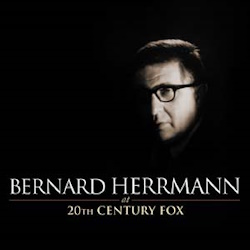 I would like to thank the late Nick Redman, and Robert Townson for their magnificent 14 CD box set “Bernard Herrmann at 20th Century Fox. Thanks to the efforts of the technical team, the score for “The Man in the Gray Flannel Suit” was restored, offering excellent audio quality, which allows Herrmann’s handiwork to shine. Although this assignment was for Herrmann, the road less traveled, it is a road I wish he had traveled more. This film offered a complex emotional drama with multiple intersections of conflict involving work, ambition, family, and romance. Herrmann sow tension in these scenes with amorphous musical narratives animated by harp, solo woodwinds, and strings in ever shifting succinct motifs, which never seem to resolve. But Tom was also tormented by horrible memories of the war, which he suffered during flashbacks; his accidental killing of his best friend, the faces of the seventeen men he killed, especially a young boy’s as he thrust his dagger into his heart. For these scenes Herrmann supports non-melodically with a harsh, strident, jagged and violent musical narratives, which use ever shifting motifs and tonality to speak to the raw emotions unfolding during the scene. The film follows Tom as he struggles to heal his psyche, and regain his former self. Ultimately it is the fruit of his past, which forces Tom to confront all that ails him. Transformation unfolds with his revelation of an affair during the war in Italy that resulted in the birth of a son. It serves to catalyze a cleansing, healing, and liberating catharsis for his marriage with Betsy. As such, two love themes, beautiful string borne romanzas, empower the film, with Maria’s draped in the melancholia of abandonment, and Betsy’s, which yearns for the return of the daring, and romantic young man who captured her heart. Ultimately, thanks to the catharsis, the Love Theme of their youth is rekindled, and soars on a passionate crescendo romantico, which crests rapturously to end the film. Folks, if you like intense emotional drama and conflict, enriched by Herrmann’s romantic, yet often searing music, then this is a score for you. The box set is out of production and prohibitively expensive at secondary markets. If you can afford it, do so as it is a treasure trove. Do take in the film and bear witness to a romantic Herrmann, who enhanced this poignant film in every way imaginable.
For those of you unfamiliar with the score, I have embedded a YouTube link to a suite: https://www.youtube.com/watch?v=paMlY7dJ1tQ&list=RDpaMlY7dJ1tQ&start_radio=1
Buy the Man in the Gray Flannel Suit soundtrack from the Movie Music UK Store
Track Listing:
- Prelude (1:55)
- The Children’s Hour (2:53)
- The Coat (4:34)
- The Killing / Rome (0:44)
- Maria (2:28)
- Maria’s Room (3:00)
- The Rain (1:18)
- Farewell (4:58)
- The Clock (2:33)
- Biography (0:36)
- Daydreams (1:05)
- Hopkins’ Promise (0:39)
- Duo (2:45)
- The New House (1:02)
- Susan’s Rage (0:38)
- Honesty (0:41)
- Tomorrow (0:29)
- The Letter (0:40)
- Breakdown (2:42)
- Ordeal (1:04)
- The Morning (0:46)
- Finale (2:08)
- I Feel Like Dancing (Source) (2:13) BONUS
Varese Sarabande CD Club VCL 1211 1128 (1956/2011)
Running Time: 35 minutes 06 seconds
Music composed and conducted by Bernard Herrmann. Orchestrations by Bernard Herrmann. Recorded and mixed by XXXX. Score produced by Bernard Herrmann. Album produced by Nick Redman and Robert Townson.

Shop at the Movie Music UK Store

Member of the

 MOVIE MUSIC UK