AVATAR: FIRE AND ASH – Simon Franglen
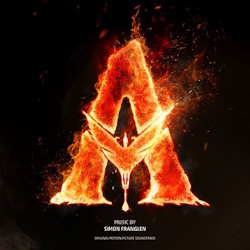 Original Review by Jonathan Broxton
WARNING: THIS REVIEW CONTAINS PLOT SPOILERS. IF YOU HAVE NOT YET SEEN THE FILM, YOU MIGHT WANT TO CONSIDER WAITING UNTIL AFTER YOU HAVE DONE SO TO READ IT.
The whole situation concerning the Avatar movies continues to fascinate me. When James Cameron’s ambitious sci-fi epic arrived in cinemas in December 2009, it was instantly acclaimed as a visual landmark. The film showcased some of the most advanced and convincing visual effects ever seen on screen, while also pushing 3D presentation and motion-capture technology to unprecedented new heights. It went on to win three Academy Awards, received six further nominations including Best Picture, and earned approximately $2.9 billion worldwide, cementing its status as one of the most commercially successful films in cinema history. However, in the decade that separated Avatar from its long-awaited sequel, Avatar: The Way of Water, the mood surrounding the original film shifted noticeably. The unusually long gap between installments did little to sustain enthusiasm, and a growing critical backlash took hold. Commentators increasingly highlighted perceived weaknesses in the narrative, unacknowledged parallels with earlier films, and a number of troubling elements tied to its reliance on so-called “white savior” and “noble savage” tropes. Then the sequel film came out and it grossed another $2.3 billion at the global box office, despite many people – including me – feeling that, even though it was still visually astonishing, it was significantly inferior to the original in terms of story, writing, and performances.
Now we have Avatar: Fire and Ash, the third entry in the series, which arrives just three years after The Way of Water. Thankfully, in my view, it comes far closer in quality to the original film than its immediate predecessor. Set only weeks after the events of the previous installment, it finds former Marine Jake Sully (Sam Worthington) and his Na’vi wife Neytiri (Zoë Saldaña) still living in exile among the ocean-dwelling Metkayina clan with their surviving children Lo’ak and Tuk, their adopted son Spider, and their adopted daughter Kiri (Sigourney Weaver), who is a Na’vi clone of Grace Augustine, who died at the end of the first film. All are grieving the loss of Neteyam during the events of the previous film. Meanwhile, the human RDA colonists – led by the recombinant Na’vi incarnation of Jake’s old enemy Quaritch (Stephen Lang) – remain determined to strip Pandora of its resources, while Quaritch continues to pursue his personal vendetta against Sully. Expanding the world further is the introduction of a new Na’vi clan, the Mangkwan, who hail from a volcanic region of Pandora and are led by the alluring yet dangerous Varang (Oona Chaplin).
As I said, for me, Fire and Ash is a significant improvement over The Way of Water. While it is fair to note that the film revisits many of the same narrative beats as its predecessor – it culminates once again in the rescue of a Sully child from a sinking RDA vessel, among other similarities – I found myself far more emotionally invested this time around. Rather than feeling repetitive, the familiar structure worked in the film’s favor, allowing the parallels to resonate and the refinements to stand out. Visually, the film is predictably spectacular: from the lush bioluminescent forests and floating mountains of the Omaticaya, to the aquatic splendor of the Metkayina, and the clinical industrial strongholds of the RDA, every setting is rendered with extraordinary beauty and detail.
The new elements introduced – most notably the Mangkwan fire clan and the nomadic “windtraders” – are also strong additions, with the Mangkwan proving especially compelling. They offer a fascinating counterpoint to established Na’vi culture, illustrating the consequences of deliberately severing ties with Eywa’s spiritual interconnectedness in favor of a harsher, more violent way of life. At the center of this is Varang, who cuts a striking presence: sexy, but violently unpredictable, brimming with barely suppressed fury, and suggestive of deep-seated resentment and betrayal beneath the surface. I can’t wait for Avatar 4, whenever it comes out.
 The score for Avatar: Fire and Ash is again by composer Simon Franglen, who at this point in his career has been embedded into the musical culture of Avatar for more than 15 years. He was credited as “electronic music arranger” on the original Avatar (although in reality he contributed far more than that), he adapted James Horner’s music from Avatar for the theme park experience Pandora: The World of Avatar following Horner’s tragic death in 2015, and he later went on to score The Way of Water three years ago. In my review of that score, I noted my appreciation for the balance between legacy and originality in Franglen’s work. I loved hearing Horner’s musical DNA throughout the score – familiar phrasing, harmonies, techniques, and reprises of specific themes – but I also appreciated that Franglen never felt like a simple imitator; he clearly had a voice of his own, and his references to Horner came across as respectful and intentional. The same is very much true of Fire and Ash.
For this latest score, Franglen expanded on the repertoire of existing themes – thirteen or fourteen of them, by my count, drawn from the first two films – while introducing a handful of new themes to represent this film’s new characters and concepts. He then weaves all of these themes seamlessly into a series of thrilling action-adventure sequences, some of which stretch for nearly 20 minutes of continuous intensity, particularly in the film’s final third.
The new main theme is called the ‘Future and the Past’ theme, and is based on the melody of a Na’vi mourning song which was originally written by Franglen for Zoë Saldaña to sing in a scene which was eventually cut out of the final movie. The theme really represents the heart of what the film is about – the loss of Neteyam, how differently Jake and Neytiri grieve for him, and how those differences cause a rift in the family. Neytiri, especially, embraces hatred bordering on racism towards ‘pink skins,’ and to illustrate this Franglen’s theme is based on two lines that are moving apart rather than together, just as Jake and Neytiri appear to be diverging emotionally. It’s a clever idea, and the theme appears frequently throughout the score to address this disconnect.
The second major new theme is for the Windtraders, a nomadic, air-faring Na’vi clan who navigate the skies in massive floating galleons. Franglen describes them as reminiscent of ancient Phoenician traders – more sophisticated and erudite than both the Omaticaya and the Metkayina – and his music reflects this, drawing deliberately on the swashbuckling scores of 1930s and 1940s Hollywood adventure films. Because the Windtraders are shown performing music on screen, Franglen also created several original instruments for them, inspired by their culture: drums fashioned from the same material as the ship’s sails, string instruments from the ship’s rigging, and more. These instruments were then physically built by the props department using a massive 3D printer, lending remarkable authenticity to the scenes in which they appear.
The final major themes are the Ash Theme, representing the Mangkwan, and a related vocal motif specific to their leader Varang. Franglen describes the Mangkwan as “chaos agents” and says he wanted their music to have “a visceral quality”. To achieve this, Franglen used a string instrument called a morin khuur – essentially a Mongolian two-stringed cello, which he had encountered during a visit there years earlier, and is one of the most important musical instruments of the Mongol people – and crafted a texture around its sound. The resulting theme is less a traditional melody and more an impressionistic feeling, built from harsh dissonances that reflect the clan’s inherently destructive nature.
In addition to these there are new expanded musical identities for the children Lo’ak, Kiri, and Spider, all of which are offshoots from and developments of ideas in the wholesome Family theme from Way of Water, and which receive individual ‘hero moments’ at important points in the film. Furthermore, Franglen also brings back many other ideas he first introduced in Way of Water: notably the beautiful themes representing the Metyakina clan, the Tulkun whale-like creatures, and the individual tulkun Payakan who bonds with Neteyam, and then the harshly militaristic and war-like themes for the RDA Resources Development Administration and for Quaritch himself. Not only that, several of James Horner’s themes from the original Avatar appear too, including the iconic ‘I See You’ motif representing Neytiri, the gorgeous sparkling ‘bioluminescence’ sounds of Eywa, and the heroic motif that represents Jake after he bonds with the fearsome great leonopteryx Toruk and becomes the mythical warrior Toruk Makto.
The entire score is a treasure trove of thematic, emotional, and intense action delights performed by massive orchestra and choir, and frankly I was engaged from beginning to end. One thing I will say is that the album is VERY long – almost two and a quarter hours all tolled – and normally I would rail against that sort of excess, but honestly the album is so absorbing that the time flew by for me. However, for anyone with a shorter attention span, or who simply wants a more comprehensive snapshot of the score’s highlights, Franglen himself has published several shorter curated playlists specifically for that purpose, and these are easy to find online.
The album opens with “Brothers,” a wonderfully nostalgic sequence that hits multiple ideas from previous Avatar films – the “I See You” chords, a variation on the ‘Happiness Is Simple’ cue from The Way of Water, the spine-tingling descending trumpets from “Jake’s First Flight” – as Lo’ak connects with the spirit of his brother Neteyam via Eywa and remembers happier times with him in the past. The cue concludes with the first performance of the haunting Future and the Past theme, and ends with the first appearance of the expanded theme for Kiri on violins, acknowledging her increasing importance to the Avatar story as a whole. The subsequent “Mourning” features a soulful performance of the ‘Songcord’ from The Way of Water, performed with emotional lyricism by Zoë Saldaña as part of her character’s grieving process, and the little motif for high flutes at 1:44 represents the bow that forms a key part of Neytiri’s warrior identity; it plays an important role part in her emotional journey throughout the film, and it appears in several cues thereafter in scenes that feature it.
The new theme for “The Windtraders” appears in the cue of that title, and is a spectacular explosion of orchestral and choral majesty. There is a lightness, an openness, and a sense of expansive freedom to the melody – a perfect representation of the clan and their charismatic leader Peylak – and the way Franglen combines his new theme with the percussive and ethnic vocal textures that Horner established for the Avatar sound is sublime. The actual melody itself reminds me a little of the love theme from Horner’s score for The Mask of Zorro, and when it bursts into its most majestic statement at the 1:00 mark the effect is magnificent. The Windtraders theme then continues on into the subsequent “Caravan at Night,” where it combines with the Future and the Past theme in a moment of introspection and reflection.
The calm is interrupted by the score’s first major action sequence, “Mangkwan Attack,” which underscores their assault on the Windtrader galleon and as such sees the first appearance of the Ash theme. The harsh, guttural Ash theme explodes into fierce prominence here, accompanying their relentless barrage of fire from the air, but Franglen cleverly blends it with numerous spotted motifs whenever one of the protagonists interjects – there are brief flashes of the Neytiri motif from ‘I See You,’ Jake’s hero theme, the new expanded theme for Lo’ak, and the Windtraders theme, all in brassy action mode – before the cue ends with a molto tragico statement of the Family theme as the Windtrader galleon crashes to the ground and the family is separated.
Franglen’s action writing here, and throughout the score, is simply outstanding. As I described in my Way of Water review, Franglen is like Horner in the way that he builds his action cues around melody rather than relying solely on rhythm. The music is energetic and propulsive, but it avoids the clichéd repetitive ostinatos so common in other modern action scores. Instead, it’s dense, inventive, and expertly orchestrated, using the full ensemble in unexpected and creative ways. Each cue mirrors the story’s flow, not in a gimmicky way, but so the listener feels the shifting advantage between characters and the emotional weight of each moment.
I love Franglen’s use of several established Hornerisms throughout the fantastic, high-speed “Forest Chase” – the puffing shakuhachis, the Aliens-like internal rhythms – and the way they combine with more statements of the Ash theme and the throaty vocal sound representing Varang herself. This contrasts with the magical spirituality of the “Miracle,” where Franglen revisits Horner’s wondrous sound for the bioluminescent wood sprites, and then introduces an evocative new version of the Eywa theme with lyrics – ‘Ma Eywa’ – for the scene where Kiri calls on the spirit of the great mother to help save Spider. “How Do You Still Live” is an intricate musical battle between Varang’s motif and the Eywa motif, with the added complication of the Family theme and Quaritch’s theme played contrapuntally on top of each other in an action setting, representing the uneasy alliance that forms between Jake and Quaritch as they agree to briefly suspend hostilities in order to rescue their children from her.
“You Said You Could Protect Us” is a devastating dramatic scene representing the low point in Jake’s relationship with Neytiri, and sees Franglen engaging in a complex interweaving of the Family theme, the Future and the Past theme, and Neytiri’s ‘I See You’ theme from the first film, as their emotions run high and Neytiri begins to reveal the true depths of her all-encompassing grief.
“The Ash Camp” and “I Am the Fire” underscore the scene where Quaritch journeys to the Mangkwan stronghold in the shadow of a dormant volcano, and attempts to convince Varang to join him in his quest to find and kill Jake by offering her advanced technological weaponry. The whole sequence is an extended exploration of different elements of the Ash theme and Varang’s theme, and is full of angry vocals, relentless clattering percussion, and clamorous performances of the morin khuur, with subtle electronic embellishments. The interplay between Varang’s theme and Quaritch’s theme in “I Am the Fire” is especially fascinating, coming across something like a twisted romance between two dominant personalities vying for superiority.
The confrontation between Quaritch, Varang, and the Mangkwan, and Jake, Neytiri, and the Metkayina on “The Beach” is a masterpiece of intricate leitmotivic scoring, as the two groups face off with the fate of Jake and the Metkayina village on the line. Franglen hits Quaritch’s theme, the family theme, a huge choral version of the Metkayina theme, the Future and the Past theme, and more, in quick succession, perfectly capturing the ebbs and flows of the negotiations, the superiority and the inferiority, and the intense dramatic stakes for all involved. The sequence ends with Jake being arrested by Quaritch and taken to the RDA compound, who then celebrate his capture in “Mission Accomplished”. There is a dark heroism to the statements of the RDA March and Quaritch’s theme, while Jake’s family lament his capture with the Family theme played on mournful horns.
A full statement of the heroic expanded theme for “Lo’ak” gets a rousing full-orchestra-and-chorus performance in the cue that bears his name. “The Deep Ones” is a mighty action cue accompanying a scene where Lo’ak is attacked by a school of enormous squid-like monsters while swimming; the cameo appearance of the James Horner crashing pianos from scores like The Pelican Brief here was a wonderful nostalgic treat. “I Am Your Father” then contains one of the few prominent statements of the expanded personal theme for Spider, rendered here on a solo piano.
There are some excellent bubbling electronic textures throughout “Protest Noted,” along with an interesting tonal throwback to the ‘Bad Parents’ cue from The Way of Water, blended with Neytiri’s theme from ‘I See You’ and parts of Varang’s motif. The quick burst of Horner’s four note danger motif here pleased me enormously too. “Sacrifice” is built on interplay between the Future and the Past and the Eywa theme, and then the “Tulkun Council” cue – which underscores one of the pivotal scenes where the Tulkun elders gather to discuss their response to the imminent danger – offers a series of statements of both the Tulkun theme and Payakan’s theme that are both heroic and tragic.
The last 40 minutes or so of the score – essentially everything from “Preparing for Attack” onwards – is one long enormous action sequence, as all the ‘good’ Na’vi clans and the animals of Pandora join forces with Jake and Neytiri to launch a full-on assault against Quaritch, the RDA, and Varang and the Mangkwan. One of the main sub-plots in the film is the idea that the brains of the Tulkun contain a valuable substance called amrita, a rare, golden‑colored liquid that the humans extract because it reportedly has the ability to stop human aging, making it even more coveted than the unobtanium from the first film, and a major part of the finale involves the Na’vi protecting the tulkun from Mick Scoresby, the head of an RDA private sector marine hunting vessel which has been charged with extracting the amrita.
“Preparing for Attack” pits the RDA theme against the Family theme and the ethnic chanted vocals, along with additional satisfying bursts of Horner’s four note danger motif, as the looming threat to the tulkun from Scoresby increases. In response to this, “Marshaling Forces” sees Jake again adopting the Toruk Makto persona he previously abandoned and putting out a call to the other Na’vi clans to join him in the fight against the RDA; Franglen again hits numerous individual themes and motifs to illustrate this, and arranges them at in the most stirring fashion imaginable, including an absolutely epic version of the Tulkun theme, and a similarly massive statement of Kiri’s theme during the cue’s final moments. Interestingly this cue does not appear in the final cut of the film in this way, and is instead replaced with a new version of the Horner’s “Gathering All the Na’vi Clans for Battle,” a terrific callback to the first film which got me all emotional when I heard it. The subsequent “I Call Upon the Warrior Mother” has similar emotional aims and sees Kiri, Spider, and even little Tuk joining forces and communing with Eywa to secure the support of Pandora’s flora and fauna; the Eywa theme underpins the entire cue, often in conjunction with Family theme, and builds though a series of anguished crescendos to a massive finale.
The climax of the ‘Tulkun hunting’ sequence begins with “Herding Tulkun,” which offers a dark version of the Tulkun theme playing against the RDA theme and more bursts of the danger motif, as Scoresby and his merciless amrita hunters corner the tulkun pod in a bay and prepare to attack. However, the tide turns in “Settling the Score” as the tulkun – aided by the squid-like ‘deep ones’ – launch a devastating counterattack against the RDA fleet. A heroic version of the Eywa theme underpins a lot of the action, representing how the deep ones have shifted their alliances thanks to Eywa’s call, there’s a fantastic burst of the valiant Toruk Makto theme from the first score at 2:13 when Jake and Toruk join the fray, and the whole thing climaxes with a superb statement of the Tulkun theme as they finally get their revenge over Scoresby. Settling the score indeed.
Meanwhile, over on the main RDA flagship, Jake, Neyriti, and Lo’ak come together to try to save Kiri and Spider from Quaritch and Varang before the whole thing is pulled into a magnetic flux that has formed in the middle of the ocean thanks to the atmospheric changes caused by a Pandoran eclipse. Kiri enjoys a moment of personal triumph over Varang at the end of “Leave My Mother Alone,” as her theme and the Eywa theme finally vanquish the Ash motif in an action sequence that has some intentional stylistic echoes of the finale of Aliens. Get away from her, you bitch. Elsewhere, Jake and Quaritch take part in a mano-a-mano battle in the middle of the “Flux Devil,” fighting while leaping across a series of small floating rocks caught in its updraft; initially the music is vicious and violent, but then Franglen cleverly overlays Quaritch’s theme and the Family theme on top of each other for the moment when they stop fighting and save Spider together. The cue finishes with a tragic final statement of Quaritch’s theme as he throws himself off the rock and into the flux to an uncertain demise, and the RDA Flagship is sucked into the void too, seemingly killing both General Ardmore and Parker Selfridge, and finally ending the RDA threat.
The finale of the score, “The Light Always Returns,” is a beautiful, ethereal combination of both the Eywa theme and the Family theme as Spider is officially welcomed into the Omaticaya clan, Kiri is met by a spirit vision of her ‘mother’ Grace Augustine, and all the Na’vi – except Varang and the Mangkwan, of course – celebrate their relationship with Pandora’s god. Franglen channels the spirit of James Horner here too, using several techniques he often used to represent yearning spirituality (those gorgeous piano chords around the 1:50 mark), before ending with a final flourish of the main Avatar theme.
The final track on the album, “The Future and the Past,” is Zoë Saldaña’s performance of Neytiri’s mourning song that inspired the ‘Future and the Past’ theme, which Franglen wanted to include on the album so people could hear the performance and understand where the main theme came from, even though it was cut from the film. There’s also an original song, “Dream As One,” which Franglen co-wrote with pop star Miley Cyrus, Mark Ronson, and Andrew Wyatt, and which is performed by Cyrus. It’s fine – probably the best of the three Avatar songs – but I will never understand why these exist in the first place. Just like it was with Leona Lewis and The Weeknd before her, hearing Miley Cyrus suddenly appear in the film is a jarring lurch back into reality that breaks the entire magical spell of the preceding three hours of film. Just give me a 10-minute end credits score suite and be done with the song nonsense.
That one incredibly minor issue aside, everything else about Avatar: Fire and Ash is simply outstanding. And; look. It’s basically encoded into my DNA that I would respond positively to a score like this. James Horner is my favorite composer, and will likely always remain so. Simon Franglen was integral part of Horner’s team when he was alive, and he has ensured that Horner’s musical fingerprints are all over the Avatar world. It’s appropriate that he did. But, even with all that in mind, it’s important not to minimize what Franglen has achieved here, because it would be very easy (albeit incredibly lazy and reductive) to dismiss the score as a ‘Horner clone’ as if that is something that just anyone could do. No.
The intelligent design and emotional impact of the new themes, the way Franglen blends these themes with themes from previous Avatars in an intricate narrative tapestry, the power and intensity of the action, the richness of the orchestrations, the beautiful representations of Pandora itself and its spiritual interconnectedness… it’s just superb. Absolutely superb. This is without a doubt one of the scores of the year.
Buy the Avatar: Fire and Ash soundtrack from the Movie Music UK Store
Track Listing:
- Dream As One (written by Miley Cyrus, Simon Franglen, Mark Ronson, and Andrew Wyatt, performed by Miley Cyrus) (3:22)
- Brothers (3:52)
- Mourning (2:11)
- You Still Have This Family (3:03)
- The Windtraders (2:57)
- Caravan at Night (1:17)
- Mangkwan Attack (5:18)
- Forest Chase (3:40)
- Miracle (5:29)
- How Do You Still Live? (5:00)
- Family Reunited (2:58)
- Exiled (3:16)
- You Said You Could Protect Us (3:06)
- I Can Be Your Guide (1:15)
- The Ash Camp (3:25)
- I Am the Fire (5:50)
- Find the Girl (1:58)
- The Beach (6:31)
- Mission Accomplished (3:20)
- Lo’ak (3:24)
- The Deep Ones (1:51)
- I Am Your Father (1:55)
- Disguise and Escape (3:06)
- Protest Noted (3:49)
- Sacrifice (4:31)
- Tulkun Council (5:06)
- Preparing for Attack (3:24)
- Marshaling Forces (6:07)
- I Call Upon the Warrior Mother (3:51)
- Wounded (2:53)
- You Will Protect Her (3:57)
- Herding Tulkun (1:21)
- Settling the Score (3:35)
- Leave My Mother Alone (3:53)
- Flux Devil (3:52)
- The Light Always Returns (3:34)
- The Future and the Past (performed by Zoë Saldaña) (3:10)
Hollywood Records (2025)
Running Time: 131 minutes 05 seconds
Music composed by Simon Franglen. Conducted by Anthony Parnther, Steven Baker and Simon Franglen. Orchestrations by Steven Baker, William Ross, Graham Foote, J.A.C. Redford and Jon Kull. Original Avatar themes by James Horner. Featured musical soloists Alyssa Park, Jacob Braun, George Doering, Pedro Eustache and Tony Hinnigan. Recorded and mixed by Brad Haehnel and Alan Meyerson. Edited by Joe E. Rand and Darren Hall. Album produced by Simon Franglen.
-
February 6, 2026 at 8:00 amMovie Music UK Awards 2025 | MOVIE MUSIC UK

Shop at the Movie Music UK Store

Member of the

 MOVIE MUSIC UK