ELLA MCCAY – Hans Zimmer
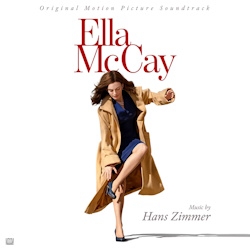 Original Review by Jonathan Broxton
Ella McCay is the first new film from director James L. Brooks in 15 years (since How Do You Know in 2010), and as such is a landmark event considering that he is the creator of such lauded works as Terms of Endearment, Broadcast News, As Good As It Gets, and of course The Simpsons. It is a political comedy-drama starring Emma Mackey in the title role; Ella is an idealistic, progressive young politician who becomes the governor of her state when her boss and mentor, Governor Bill Moore (Albert Brooks), unexpectedly resigns. In addition to her new role as a politician of significance, Ella also finds herself navigating her complex family relationships, especially when her long-estranged father Eddie (Woody Harrelson) re-enters her life. The film has a stellar supporting cast – Jamie Lee Curtis, Jack Lowden, Kumail Nanjiani, Ayo Edebiri, Rebecca Hall – but unfortunately critics have not been kind to it, with many people criticizing it for poor writing, a contrived plot, and tonal inconsistency.
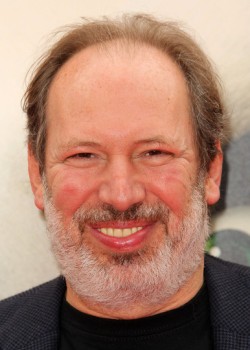
The score for Ella McCay is by Brooks’s long-time musical collaborator Hans Zimmer, and is their fifth film together as director-composer, after I’ll Do Anything in 1994, the aforementioned As Good As It Gets in 1997, Spanglish in 2004, and How Do You Know (he has also scored several projects produced by Brooks). It’s been a long time since Zimmer was asked to write something light, tuneful, comedic, and romantic for a live action film with this high a profile, and it’s a shame because he has always been so good at that kind of score – he received an Oscar nomination for As Good As It Gets, and I have always had a soft spot for things like The Holiday and Something’s Gotta Give. These latter scores, as well as the 1990s work of composers like Alan Silvestri and Marc Shaiman, are the works this score resembles greatly, and personally I found this throwback sound to be an utter delight.
 The score centers on a modest orchestral palette, highlighting strings, woodwinds, piano, and subtle metallic percussion. Clarinet and bassoon lines are especially pronounced, while occasional touches of electric bass, acoustic guitar, and marimba add variety to the instrumentation. There is a recurring prominent main theme for Ella which anchors the score – you hear it in a full performance in the opening cue “Ella,” and subsequently in virtually every other cue in one form or another – and although it’s lovely, it perhaps doesn’t quite have the same sort of immediate ear-worm quality as, say, the main themes from As Good As It Gets or Spanglish. But, as I say, it is lovely; the opening performance features some lovely writing for warm strings, effervescent woodwinds, and intimate pianos, and several later cues build on this sound.
I especially enjoy the effervescence and ebullience of the performance in “Do I Ever Love You,” the enthusiasm and anticipation of “The New Governor,” the clarinet quirkiness of “Late for School,” the slightly panicky over-eagerness of “Inauguration,” the earnest and tender piano and flute writing in “Taking a Moment,” the grandly florid waltz-time arrangement in “The Governor’s Mansion,” and the sentimental combination of pianos and harps in “Make People’s Lives Better.”
Other cues of note include the slightly more bittersweet theme for elongated string and woodwind textures that can be heard in cues like “Hopeful Things,” “A Moment Alone,” “Closeness of a Kind,” and towards the end of “Hamsters on the Same Wheel,” and which tends to underscore serious or more introspective moments in Ella’s life. There is a terrific burst of finger-snapping swing jazz in the “The Phone Room” that brings back good memories of Zimmer’s score for A League of Their Own,” as well as the main theme of the classic British sitcom Are You Being Served with its funny bell sound effects.
One of the few cues to focus on brass is the “The Husband That Gets Mentioned,” a weirdly comedic but also much darker waltz-inspired piece for Ella’s idiot husband who intentionally screws up her career. This stands in contrast to the more sophisticated and reserved sound of the piano and oboe together in “Casey Opens Up,” representing Ella’s difficult relationship with her brother, or the opening moments of “Hamsters on the Same Wheel,” which is a frantic piano scherzo that seeks to capture the hustle and bustle of life at the top of state politics.
The 7-minute finale “Hope Comes Close” offers a more substantial performance of Ella’s theme that grows richer and more emotionally powerful as it develops, moving around the different solo parts of the ensemble until it emerges into a lush orchestral statement that is very satisfying and ends the album on a lovely thematic high. The album only runs for about 40 minutes – perfect length for this type of music – offering all the highlights without outstaying its welcome.
As much as Zimmer is lauded for his high profile action and sci-fi fantasy scores, and for his work with Christopher Nolan and Denis Villeneuve, I really miss this side to his personality – the side that values a light touch, a warm theme, a comedic interlude, and an orchestra that shines in the quieter and more introspective moments. Fans of any of the other James L. Brooks scores that I mentioned earlier, or of the similar sounding 1990s scores by composers like Alan Silvestri and Marc Shaiman, will find Ella McCay to be a nostalgic throwback delight; as such, it’s one of my favorite comedy scores of the year.
Buy the Ella McCay soundtrack from the Movie Music UK Store
Track Listing:
- Ella (1:51)
- The Other Shoe Drops (0:53)
- Hopeful Things (1:49)
- The Phone Room (0:54)
- Do I Ever Love You (1:29)
- A Moment Alone (1:00)
- The New Governor (1:44)
- Late for School (1:06)
- Closeness of a Kind (1:15)
- Inauguration (1:51)
- Taking a Moment (1:00)
- You Didn’t Check the Label (0:50)
- The Governor’s Mansion (1:08)
- Make People’s Lives Better (1:32)
- The Husband That Gets Mentioned (1:01)
- Casey Opens Up (2:40)
- Look Who’s Functional (1:08)
- If You Even Liked Me (4:25)
- Would You Be My Girlfriend (0:56)
- Hamsters on the Same Wheel (1:26)
- I Love the Job (1:09)
- Hope Comes Close (7:06)
Hollywood Records (2025)
Running Time: 38 minutes 11 seconds
Music composed by Hans Zimmer. Conducted by Anthony Parnther. Orchestrations by Jennifer Hammond and Dave Giuli. Additional music by Steve Mazzaro. Recorded and mixed by Kevin Globerman. Edited by Ryan Rubin. Album produced by Hans Zimmer.
-
February 6, 2026 at 8:01 amMovie Music UK Awards 2025 | MOVIE MUSIC UK

Shop at the Movie Music UK Store

Member of the

 MOVIE MUSIC UK