WICKED, PART TWO: FOR GOOD – John Powell, Stephen Schwartz
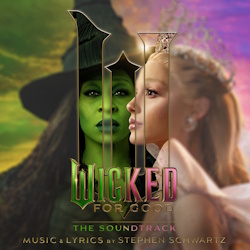 Original Review by Jonathan Broxton
I don’t expect that even the most ardent fans of the original stage musical could have anticipated the impact and acclaim received by Wicked, Part One, following its release just before Christmas in 2024. It received 10 Oscar nominations (winning for Best Costume Design and Best Production Design), grossed more than $750 million at the global box office, and became something of a cultural phenomenon, turning the already-famous leading actresses Cynthia Erivo and Ariana Grande into megastars, and raising the profile of lead actor Jonathan Bailey enormously.
Wicked is, of course, a big-screen version of the 2004 stage musical by Stephen Schwartz, which is itself an adaptation of the 1995 novel Wicked: The Life and Times of the Wicked Witch of the West by Gregory Maguire, and is essentially a prequel to the legendary 1939 film The Wizard of Oz, which was itself based on the 1900 novel The Wonderful Wizard of Oz by L. Frank Baum. The film is told from the perspective of the original story’s antagonist, the Wicked Witch of the West, and explores her childhood and her complicated relationship with Glinda, who herself becomes the Good Witch of the North. The Wicked Witch – whose real name is Elphaba Thropp – is born with green skin and grows up a victim of prejudice and injustice; after meeting and befriending Glinda at Shiz University, Elphaba eventually realizes that something is not right in Oz, and a lot of it stems from the all-powerful Wizard, who rules the land from the Emerald City.
The first film ended with the iconic ‘Defying Gravity’ moment where Elphaba fully embraces her new ‘wicked witch’ persona by imploring people who want to find her to “look to the western skies,” climaxing with a massive primal roar of triumph, Elphaba framed in silhouette against the setting sun, her cape billowing epically in the breeze. Part Two picks up the story around a year later; the Wizard of Oz is well into building the famous yellow brick road, and Glinda is now the Wizard’s spokesperson, and is apparently engaged to her handsome university boyfriend Fiyero, who now has been made the Captain of the Wizard’s Gale Force guard. Glinda and her former teacher Madame Morrible are waging a propaganda war against Elphaba, who is essentially fighting a one-witch guerrilla campaign to expose the Wizard as a fraud – and successfully too, and the people of Oz hate and fear Elphaba in equal measure. However, both Glinda and Fiyero are having serious doubts about their roles in all of this, doubts which are exacerbated when Morrible conjures a tornado which brings a young girl named Dorothy to Oz.
Once again the film is directed by John M. Chu and stars Cynthia Erivo and Ariana Grande as Elphaba and Glinda, with Jonathan Bailey as Fiyero, Michelle Yeoh as Morrible, and Jeff Goldblum as the Wizard, plus Ethan Slater, Marissa Bode, and Bowen Yang in major supporting roles. Again, it is a visual feast for the eyes, with notably spectacular cinematography, production design, and costumes; one particular scene, in which Glinda sings a newly-penned song while moving in and around and through a series of mirrors, left me speechless and deeply impressed. As was the case with the first film, the screenplay continues to explore themes of racism and intolerance, the dangers of unchecked political propaganda, and the complicated nature of female friendships, all of which are commendable.
However, I have to admit that I found this second film to be something of a disappointment when compared to the first film, and these things mostly stem from its relationship to the original Wizard of Oz story. This story reveals the origins of the Scarecrow, Tin Man, and Cowardly Lion characters, as well as some things to do with Elphaba’s sister the Wicked Witch of the East, and none of them really made logical sense to me in terms of who they are, how they came to be, and especially how they relate to what Dorothy does in the original story. Anyone who has seen the 1939 film will be familiar with its progression in terms of how long it takes for the events to unfold, the timeline of when things happen in the narrative, and what many of the characters say about themselves and their own histories, and for me the way this film makes changes to all that frustrated me, especially when the first film appeared to be so intent on preserving and maintaining that link. I also found the love triangle aspect of the story to be a little unconvincing, and I found the easy way that Glinda deals with Morrible and the Wizard to be underwhelming, but enough about all that, as most people will be here for the music.
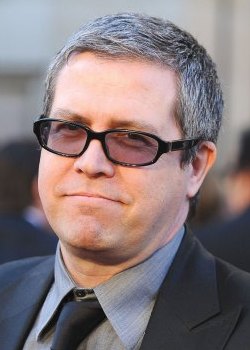
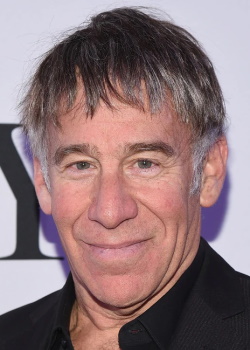 Once again, the score for the movie is a direct collaboration between Schwartz and composer John Powell, who worked together to craft a new orchestral musical accompaniment that sits alongside and complements the songs, taking thematic elements from one and embedding them deep within the other, so that they feel as though they have always been that way. As I said in my review of the first score, it’s quite an undertaking; Schwartz as a composer is very much influenced by Stephen Sondheim, who was himself inspired by the leitmotif style of Richard Wagner’s operas, in the way that recurring ideas and characters have their own musical motifs that carry across multiple songs. While this is of course a familiar concept to film score fans, I think that it’s less common these days in musical theater, and so the way that Schwartz and Powell were able to bring that all out and translate it into their new score is really impressive.
The songs from this second film are, for the most part, good, although with the exception of the conclusive “For Good” none of them really attain the emotional heights of “The Wizard and I,” “Popular,” “I’m Not That Girl,” or “Defying Gravity” from the first film, which for me makes the experience a slightly less engaging and less memorable one overall.
The first track, “Every Day More Wicked,” is essentially an echo of the first film’s opening song “No One Mourns the Wicked,” and is big and bold and dramatic, with an absolutely massive opening orchestral salvo, followed by multiple allusions to Elphaba’s brassy ‘wicked witch’ theme. There is an intense rock undercurrent to the song, a sense of menace to way the townspeople of Oz proclaim their hatred and fear of Elphaba, and some clever melodic callbacks to “The Wizard and I”, “What is This Feeling,” and “Popular” in the parts that Erivo and Grande sing, but the one weak point – yet again – is Michelle Yeoh as Morrible, who really can’t carry a tune and sticks out like a sore thumb. In fact, Yeoh is probably the most disappointing part of the whole production, both in terms of her singing and her acting, and often appears out of her depth on all fronts.
“Thank Goodness/I Couldn’t Be Happier” is a peppy, upbeat, charming song performed by Grande, in which she tries to convince the townspeople of Oz, Fiyero, and herself, that her engagement to Fiyero is legitimate. The pointed pauses in Grande’s delivery perfectly sell the sense of doubt that runs through their entire relationship, and you feel for Glinda because we know that she knows that it’s all a sham. “The Wicked Witch of the East” is the origin story for that character as Elphaba’s sister Nessarose – who is now the governor of Munchkinland following their father’s death – attempts to cast a spell from the Grimmerie on the hapless Boq to make him love her, but pronounces the incantation wrong and shrinks his heart instead; Elphaba tries to save him, but can only succeeds in transforming him into a tin man who does not need a heart to live.
“Wonderful” is a crowd-pleasing piece of Tin Pan Alley jazz performed mostly by Jeff Goldblum as the Wizard, trying to convince Elphaba to join forces with him and Glinda by explaining that he is an ordinary man who became revered by the citizens of Oz almost by accident. The song includes some melodic callbacks to the “No One Mourns the Wicked” sequence showing Elphaba’s mother having an affair with a mysterious stranger, as well as more references to the recurring “Unlimited” motif which is derived from the opening notes of “Somewhere Over the Rainbow” from the 1939 film. Glinda’s reprise of “I’m Not That Girl” is a clever echo of the same song from the first film, although this time it’s her and not Elphaba singing about how Fiyero will never reciprocate her feelings for him. This leads into the film’s main romantic duet, “As Long as You’re Mine,” performed by Erivo and Bailey as Elphaba and Fiyero as they admit their love for each other, and then consummate that love while wearing exquisite chunky sweaters. The song is sexy and fiery, but also forceful and a little bit dark, with a soft rock current driven by a prominent electric bass.
In the aftermath of Nessarose being crushed to death by Dorothy’s house falling from the sky, which results in Elphaba having a physical fight with Glinda and Fiyero being arrested for trying to save her, Elphaba again re-asserts herself in her Wicked Witch of the West role, gives into her rage, and decides she will no longer even attempt to do good. Erivo casts an incantation from the Grimmerie to try to help Fiyero, and then viciously belts out her frustrations in “No Good Deed,” hitting spine-tingling high note after spine-tingling high note, underpinned with a sense of menacing drama.
The thunderous and aggressive “March of the Witch Hunters” opens with a sly reference to the ‘o-ee-yah, eoh-ah’ winkie chant from Herbert Stothart’s original Oz score, and also includes some callbacks to the mob song from “Every Day More Wicked,” but this leads into the showstopping finale “For Good,” wherein Glinda and Elphaba express their feelings about their enduring friendship by explaining how, because of the fact they knew each other, they were both positively changed by the other. Schwartz references the melodies of both “Unlimited” and “Defying Gravity” as well as the song’s primary “For Good” motif, and allows the performances of Erivo and Grande to become deeply emotional, especially in the third verse where their lines harmonize. The lyrics are perhaps a touch corny, and the arrangement is 100% 1980s romantic pop ballad cheese, but the sentiment is sincere, and it places a satisfying cap on their bond.
For the film version of the show, Schwartz was tasked with coming up with two brand new original songs to accompany two new key scenes, and these are “No Place Like Home“ and “The Girl in the Bubble“. “No Place Like Home” is performed by Erivo as Elphaba and, of course, references Judy Garland’s signature line “there’s no place like home” from the 1939 film. The song appears in a scene where Elphaba tries to convince a group of animals fleeing Oz, including her childhood nanny Dulcibear and the Cowardly Lion, to stay and help her defeat the Wizard by extolling the virtues of their shared home. The song has some ironic tonal references to “Every Day More Wicked,” and gradually moves from being soft and contemplative to more militant as it progresses. It also has some not-so-subtle lyrical references to contemporary politics in America , which appear likely to ruffle certain feathers, but will appeal as a rallying cry to certain others.
Meanwhile, “The Girl in the Bubble” is a lament performed by Grande as Glinda and helps initiate the character’s growing realization that everything she has been doing to help the Wizard, Morrible, and by extension Oz itself, has actually been tainted by corruption, and that her life has been lived in a bubble of privilege – sometimes metaphorical, sometimes literal – that she needs to emerge from if she really wants to be the ‘good’ witch she claims to be. Grande belts out her epiphany with emotional clarity as she stalks around her pink apartment – the aforementioned brilliant scene in which she moves in and around and through a series of mirrors – and hits a row of sensational whistle notes that could shatter glass. This song, and “No Place Like Home,” are both genuine contenders for the Best Song Oscar next year.
 Moving on to the score; as I discussed in my review of the first score, Schwartz and John Powell worked together to create an orchestral accompaniment to the songs that draws from the same thematic and motivic pool, and inhabits the same sonic world, but also builds on Powell’s own experience writing fantasy scores like Shrek and How to Train Your Dragon to enhance the drama and create a compelling score-based narrative. The end result is triumphant; inevitably it plays second fiddle to the songs, as all the most dramatic moments are sung rather than acted, but Powell still finds plenty of opportunities to impress with his rich and varied cues. In fact, due to the second film being slightly less song-heavy, Powell’s music actually has a little more to do, and as such perhaps has more dramatic impact in context.
In addition to the multitude of thematic references from the songs, Powell also composed three brand new specific themes unique to this film: two for Glinda, and one which Powell calls the ‘Struggle of the Animals’ theme. In the score’s press material Powell notes that Glinda needed more thematic material this time because she has matured since the first film, and says that her music had to reflect that growth, saying “one of her new themes reflects her true, magnanimous nature. It gives her a sense of expansiveness and command in her most powerful moments. The other explores lies and doubt. Sometimes it is woven with a light, ornamental touch, and other times it anchors her most pivotal scenes.” Then, Powell says that the ‘Struggle of the Animals’ theme is a “a haunting passacaglia motif” that “always circles back on itself … It may seem like it is starting to take shape and move forward, but then it immediately returns to the beginning. That relentlessness and discomfort was meant to mirror the way the animals are trapped in a never-ending cycle they cannot escape.”
The opening cue, “Building a Golden Road,” underscores the film’s opening scene of the Wizard’s iconic yellow brick road being laid, with the shocking revelation that animal slave labor is being exploited to do so. Powell cleverly introduces the new ‘Struggle of the Animals’ theme right from the outset, undulating strings and dark choral textures in order to illustrate that; the trilling brasses and general sense of menace that Powell makes use of during the foreshadowing references to the melodies from both “Wonderful” and “No Good Deed” are excellent, before the whole thing finishes with a burst of “No One Mourns the Wicked” which acts as linking material as the scene segues into the opening number.
The two new themes for Glinda are introduced basically back-to-back at the beginning of “Bubbles and Rainbows,” which appears during the “Couldn’t Be Happier” scene and accompanies Glinda addressing the Ozian crowd, announcing her engagement to Fiyero, and spreading Morrible’s propaganda, much to her own discomfort. The music is initially light, pretty, and intricate, prancing strings accompanied by an angelic choir and sometimes sleigh bells, but then it adopts a more thoughtful and introspective tone, and the movement between the two Glinda themes illustrates the struggle she feels at her own involvement in the plot to libel Elphaba. Nostalgic snippets of the melody from “Popular” accompany a flashback to Glinda’s childhood, and these continue into the “Backstage Confrontation” between Glinda and Fiyero.
The sequence climaxes in “Lies in the Sky” when Elphaba appears above the village and sky-writes the truth about the Wizard, only for Morrible to cast a spell changing the words into something Elphaba did not intend. The action music in the second half of the cue is outstanding, especially when Powell unleashes both his chaotic Flying Monkeys theme and the gothic theme for the Grimmerie spellbook as Elphaba is chased from the scene on her broomstick, brasses flashing and strings chopping frantically. There is a lovely, magical, whimsical, John Williams-esque touch to the music in “Forest Furnishings” as Elphaba eventually retreats to her woodland home, light strings and chimes, and yet again Powell cleverly references different song melodies to illustrate her inner monologue. including a flash of “Dancing Through Life” to acknowledge her love for Fiyero.
 Meanwhile, over in Munchkinland, Elphaba’s sister Nessarose has been elected Governor. Nessarose is responsible for a lot of the anti-animal legislation in Oz, but a significant amount of her attention is also given over to her munchkin assistant Boq, whom she loves but who does not love her in return. These two concepts anchor the music in the sequence from “Governor Nessarose’s Petty Proclamations” through to the end of “Tin Woodman”. The melody of the ‘Wicked Witch of the East’ song combines with Powell’s ‘Struggle of the Animals’ theme throughout much of the former cue, emphasizing emotions of unrequited affection, loss, and bitterness with soft strings, metallic percussion, and poignant woodwind textures. There is an increasing sense of darkness too, conveyed by both a deep male voice choir and references to the ‘No One Mourns the Wicked’ melody, although here the theme speaks not to Elphaba but to Nessarose’s increasing willingness to resort to dark magic to achieve her goals.
There is a brilliant reference to the song “If I Were King of the Forest” from The Wizard of Oz embedded into the ‘Struggle of the Animals’ theme during the subsequent “Oz Is Lost,” and then in the outstanding “All Around the Wicked Witch of the East” Powell builds more and more on the Wicked Witch of the East melody, turning it darker and more imposing, and offsetting it against the ominous vocal Grimmerie theme, until the moment where Nessarose incorrectly casts the spell that, instead of making Boq fall in love with her, makes his heart start to shrink. There are some gorgeous textures here, including some notable passages with prominent harps, but it all explodes into anguish with a burst of the ‘Every Day More Wicked’ ostinato as Nessarose fully becomes the Wicked Witch of the East. The “Tin Woodman” cue comes during the aftermath of Elphaba’s spell, which saves Boq’s life but transforms him into the Tin Man; Powell uses a brief flash of the music from ‘No Good Deed’ as, yet again, Elphaba realizes that her desire to help has backfired, and it ends with a vivid action variant on the Grimmerie theme for orchestra and chorus as a distraught and enraged Boq rampages through and then out of Nessarose’s office.
After the magical hi-jinks of “Wedding Preparations” – a track full of movement and energy with a fairy-tale sheen and a rousing, sweeping statement of Glinda’s new theme – “A Model Wizard” underscores the scene were the Wizard and Glinda try to convince Elphaba to drop her opposition to his regime and help them help Oz, and it almost works too. Powell weaves the jazzy melody from “Wonderful” with the optimistic melody from “The Wizard and I” as Elphaba recalls how much she used to admire him, and then in “Monkey Freedom” Powell uses similar music to score the scene where Elphaba successfully convinces the Wizard to release Chistery and the other flying monkeys from captivity as a gesture of good faith. The statement of the melody from the new “No Place Like Home” song at 2:05 is an excellent piece of dramatic leitmotif writing. However, there is a little bit of minor-key unease in the music in the final moments of the cue from the Grimmerie motif, foreshadowing the dark revelation to come.
“Popular Wedding Music” arranges the melody of the ‘Popular’ song like a swooning romantic wedding march for solo cello, harp, and choir, as Glinda walks down the aisle towards her enchanted nuptials with Fiyero; however, this is juxtaposed brilliantly by the music in “Cages, Chaos and Cake,” in which Elphaba discovers the dark secret where a large number of talking animals (including her former goat professor Dr Dillamond) are being kept in a secret dungeon under the Wizard’s castle. Director Chu does a brilliant visual parallel here, using the same camera angles first to frame Glinda walking down the aisle surrounded by pretty flowers, and then Elphaba walking down a corridor lined with squalid cages. The music moves from sounds of expressive revelation to nervous tension accentuated by chanted chorales and snare drum patterns, and eventually large-scale fantasy action; the brassy statement of Glinda’s ‘dark’ theme underneath the flamboyance at 2:07 is notable as it captures the emotions she feels when she realizes Fiyero is abandoning her for Elphaba.
“Lust and Betrayal” and “Cyclones and Premonitions” initiate the start of what is by far the darkest sequence of music on the album as Glinda – devastated by what she sees as Fiyero leaving her, and Elphaba betraying her – briefly starts to embrace her own dark side, and encourages Madame Morrible to use Elphaba’s love for her sister as bait in order to capture her. Powell weaves together multiple statements of the Grimmerie theme, Glinda’s ‘dark’ theme, and Madame Morrible’s theme across the two cues, in a way that is reminiscent of the “Transformations” cue from the first score, full of low brooding string passages backed with twinkling chimes and other metallic percussion, fulsome storming brass, and dominant choral outbursts. The howling statement of Madame Morrible’s theme at the beginning of “Cyclones and Premonitions” as she conjures up the tornado that brings Dorothy to Oz is especially superb.
Elphaba discovers her dead sister, crushed by Dorothy’s tornado-driven house falling from the sky, in “Requiem for a Witch,” a moment of pain and anguish that Powell first scores with a child-like music box motif and an emotional reprise of the ‘Wicked Witch of the East’ theme. However, as Elphaba’s emotions change from sorrow to anger, so does the music, first with a vibrant statement of Elphaba’s theme and the underling pulses from ‘Every Day More Wicked’, and then with a variation on the theme from the “What Is This Feeling” song – which, in the first film, accompanied the first meeting between Elphaba and Glinda at school when they hated each other – to coincide with Glinda’s arrival on the scene. “Witches Get Snitches” is the Elphaba vs. Glinda fight scene, and it’s amazing, featuring a bombastic action arrangement of the “What Is This Feeling” melody, equally brutal flashes of “No One Mourns the Wicked ” and “I’m Not That Girl” which speak to the different conflicts between them, and then a tragedy-laden version of “Dancing Through Life” as Fiyero arrives on the scene, but is arrested and beaten for his troubles. There are some brilliant passages here for flutter-tongued brasses, frantic flute lines, and more, making this a standout cue.
The confrontation between Glinda and Morrible in “Getting What You Wanted,” in which Morrible lays some uncomfortable home truths on Glinda regarding her complicity in everything that has happened, continues the darkness, but is important in the way it contains the first brief appearance of the melody from “For Good” in the score proper, acknowledging Glinda’s change of allegiance and new determination to put things right. The action music that accompanies Glinda’s “Ride to See Elphie” is tremendous, and in context leads into the “For Good” sequence that sees them resolve their issues, rekindle their friendship, and admit their true feelings for each other.
Elphaba pushes Glinda “Into the Closet” upon the arrival of Dorothy and her friends at her castle, and Powell scores their final moments together with warm, soaring, deeply emotional orchestral textures full of pathos and tenderness. Dorothy douses Elphaba with a bucket of water in “The Melting” – what a world, what a world! – and Powell lays on even more emotion here with versions of “No One Mourns the Wicked” and “Unlimited,” arranged like a requiem for orchestra and chorus, followed by a tender recapitulation of “For Good” as Glinda finds Elphaba’s hat, a small green bottle, but nothing else, and mourns her friend. However, in “The Story of the Green Bottle,” Glinda finally puts two and two together and comes to understand that the Wizard was Elphaba’s biological father all along; a dark version of “Wonderful” underscores the scene of Glinda banishing the Wizard back to Kansas, sharing a hot air balloon with Dorothy, and then in “The Rise of Glinda” Powell asserts Glinda’s ‘good’ theme with rousing heroism as she uses her new powers as the ruler of Oz to arrest Madame Morrible for her crimes.
Glinda finishes her speech to the people of Oz – the same speech that she started in the first scene of the first movie – to the warm strains of “For Good,” and then in the “Wicked Good Finale” the film reveals its twist: the ‘melting’ of Elphaba was all a trick to make the people of Oz think that she was dead, and she and Fiyero – who was transformed into a scarecrow by Elphaba’s final spell to save him from being beaten to death – have actually left Oz entirely to start a new life together. Powell’s score here rises to its most majestic heights yet, offering outstanding performances of “As Long As You’re Mine” (now fully realized as the Elphaba and Fiyero love theme), “Defying Gravity,” “For Good,” and the “Unlimited” motif, one after the other. The whole thing then concludes with the massive, spine-tingling “Wicked: For Good Suite,” which plays over a portion of the end credits, and again offers wonderfully fulsome statements of numerous song themes for the full orchestra and choir. It’s magical, melodic, old-fashioned, sweeping, movie music at its best.
Having enjoyed the music for the first Wicked film enormously, I expected that I would enjoy the music for Wicked: For Good just as much, but honestly it exceeded all my expectations. Schwartz’s songs, while perhaps a tiny bit behind the ones in the first half of the story, are still outstanding, and the two new ones – especially “The Girl in the Bubble” – build on that sound tremendously well. However, it is John Powell’s score that stands out here as something really genuinely special. The density of the thematic interplay, the creation of the new themes for Glinda and the ‘Struggle of the Animals’ concept, the intelligent structuring of those themes to illustrate the story’s dramatic narrative, the rich and bold orchestral arrangements… it’s all just top notch. Like its predecessor last year, Wicked: For Good is an excellent musical achievement from start to finish, and is easily one of the outstanding scores of 2025.
Buy the Wicked: For Good soundtrack from the Movie Music UK Store
Track Listing:
- SONG ALBUM
- Every Day More Wicked (performed by Cynthia Erivo and Wicked Cast feat. Michelle Yeoh and Ariana Grande) (4:49)
- Thank Goodness/I Couldn’t Be Happier (performed by Ariana Grande and Wicked Cast feat. Michelle Yeoh) (5:23)
- No Place Like Home (performed by Cynthia Erivo) (3:51)
- The Wicked Witch of the East (performed by Marissa Bode, Cynthia Erivo, and Ethan Slater) (3:23)
- Wonderful (performed by Jeff Goldblum, Ariana Grande, and Cynthia Erivo) (4:45)
- I’m Not That Girl – Reprise (performed by Ariana Grande) (2:11)
- As Long as You’re Mine (performed by Cynthia Erivo and Jonathan Bailey) (4:07)
- No Good Deed (performed by Cynthia Erivo) (3:50)
- March of the Witch Hunters (performed by Ethan Slater and Wicked Cast) (2:36)
- The Girl in the Bubble (performed by Ariana Grande) (3:41)
- For Good (performed by Cynthia Erivo and Ariana Grande) (6:17)
- SCORE ALBUM
- Building a Golden Road (3:03)
- Bubbles and Rainbows (5:18)
- Backstage Confrontation (2:14)
- Lies in the Sky (1:36)
- Forest Furnishing (2:21)
- Governor Nessarose’s Petty Proclamations (4:32)
- Oz Is Lost (1:27)
- Sisterly Reunion (2:21)
- All Around the Wicked Witch of the East (5:15)
- Tin Woodman (2:17)
- Wedding Preparations (3:16)
- A Model Wizard (2:18)
- Monkey Freedom (3:54)
- Popular Wedding Music (1:39)
- Cages, Chaos and Cake (2:57)
- Lust and Betrayal (6:37)
- Cyclones and Premonitions (3:30)
- Requiem for a Witch (3:18)
- Witches Get Stitches (3:25)
- Getting What You Wanted (1:09)
- Ride to See Elphie (3:50)
- In the Closet (1:25)
- The Melting (1:46)
- The Story of the Green Bottle (2:06)
- The Rise of Glinda (2:14)
- Glinda’s Speech (3:15)
- A Wicked Good Finale (feat. Ariana Grande and Cynthia Erivo) (4:39)
- Wicked: For Good Suite (2:37)
Republic Records/Verve (2025)
Running Time: 44 minutes 53 seconds – Song Album
Running Time: 84 minutes 19 seconds – Score Album
SONG ALBUM
Music and lyrics by Stephen Schwartz. Conducted by Stephen Oremus. Orchestrations and arrangements by Greg Wells, Stephen Oremus, Jeff Atmajian, Jonathan Beard, Edward Trybek and Henri Wilkinson. Recorded and mixed by Nick Wollage and Robin Baynton. Edited by Jack Dolman and Catherine Wilson. Album produced by Stephen Schwartz, Greg Wells, and Stephen Oremus.
SCORE ALBUM
Music composed by John Powell and Stephen Schwartz. Conducted by Gavin Greenaway. Orchestrations by Jonathan Beard, Edward Trybek, Henri Wilkinson, Sean Barrett, Jennifer Dirkes, Benjamin Hoff, Steven Rader, Jacob Shrum, and Jamie Thierman. Additional music by Batu Sener, Markus Siegel and Paul Mounsey. Special vocal performances by Holly Sedillos. Recorded and mixed by Nick Wollage and John Michael Caldwell. Edited by Jack Dolman and Catherine Wilson. Album produced by John Powell and Stephen Schwartz.
-
February 6, 2026 at 8:01 amMovie Music UK Awards 2025 | MOVIE MUSIC UK

Shop at the Movie Music UK Store

Member of the

 MOVIE MUSIC UK