Under-the-Radar Round Up 2025, Part 6
 Original Reviews by Jonathan Broxton
I’m pleased to present the latest installment in my on-going series of articles looking at the best under-the-radar scores from around the world.
This article, the sixth of 2025, covers another five scores released this year from a wide array of genres and countries, including a Japanese anime TV series set in a steampunk alternate-universe World War I, a children’s fantasy film from Germany based on a beloved novel, a playful animated fantasy film from Thailand, a superb romantic score from a French live action short film, and an epic fantasy adventure score from China based on one of the four great classic novels of Chinese literature!
LEVIATHAN – Nobuko Toda, Kazuma Jinnouchi, Joe Hisaishi
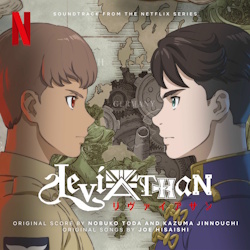 Leviathan is a Japanese anime television series for Netflix, based on the 2009 English-language novel by American author Scott Westerfeld. The series is set in an alternate history version of the First World War that has science fiction and steampunk elements; in it, the Austro-Hungarians and Germans use Clankers, diesel-driven robots loaded with guns and ammunition, while the British employ genetically engineered animals as their weaponry. The plot follows Deryn Sharp, a female pilot who pretends to be male named Dylan so that she can join the British Air Navy aboard the genetically engineered HMA Leviathan, and Prince Aleksandar, who flees the Austro-Hungarian Empire in a clanker after the assassination of his father, Archduke Franz Ferdinand.
The score for Leviathan is by Japanese composers Nobuko Toda and Kazuma Jinnouchi, with additional music and original songs written by the legendary Joe Hisaishi. Both Toda and Jinnouchi are relatively new names, at least in the west, with Jinnouchi’s most prominent work coming via games such as Marvel’s Iron Man VR, Scavengers, Star Wars: Outlaws, and several entries in the Halo series. This is the first music of any kind that I have heard from Toda, but on this evidence she has some seriously impressive talent. Leviathan might give them a significant boost; it’s a superbly entertaining romp for a full orchestra and chorus that combines military patriotism, rousing anthems, and flamboyant action with moments of elegance and romance that reflect both the period setting and the unexpected relationship that develops between Deryn and Aleksandar.
The “Leviathan Main Theme” touches on all these different tonal drivers right from the outset in a superb opening salvo, but once the score settles down in earnest it continues to impress with its symphonic scale, melodic content, rich orchestrations, and powerful drama. As is often the case I was especially drawn to the moments of action and heroism, and several cues of that nature stand out. “Huxley Flies Away” has a touch of John Williams’s Olympic music to its brass writing. The fabulous “Clanker Army” is bold and rousing in all the best ways. “Get that Flare Off” has a brilliant cascading brass effect running through it all that is seriously impressive, and again has John Williams thank for its rhythmic ideas. “SMS Kaiser” and “SMS Herkules” are both imposing and full of swirling portent. Later cues like the thunderous “The Turkish War of Independence,” “No Goliath for the German Army,” and the magnificently religioso “For the Greater Good,” all build on this same style and sound with enormously satisfying results.
Elsewhere, I love the graceful classical violin writing in “Prince Aleksandar of Hohenberg,” the understated melancholy of “Sarajevo, 1914” which laments Franz Ferdinand’s assassination, the clichéd but nevertheless engaging Gallic joie de vivre of “Leviathan in Paris,” the moody combination writing for woodwinds and pianos in “Royal Inheritance,” the unexpectedly romantic lyricism of “Preparing for Launch,” the emotional pain of “Parting Ways,” the grandiose melodrama of “Moonlight Flight,” the Middle Eastern flavors of “Nene” and “Ottoman Empire,” the soft nobility of “To End This War,” the haunting violin textures of “Dr. Nora Barlow’s Findings,” and so much more. There’s even a couple of original period jazz pieces in “Big Whale Blues” and “Kidnapped”.
Joe Hisaishi’s contributions comprise two original songs and three orchestral cues; “The Sky Ahead” is a lovely, optimistic, sweeping song impressively performed in Japanese by the American J-Pop singer and voice actor Diana Garnet, while “Paths Combine – Violin and Vocal Version” is performed by Natsumi Fujiwara, and is full of longing and regret, almost like a Japanese version of an Irish lovers lament. His score cues are equally lovely: “Building Friendship” is hesitantly romantic, “A Night in Istanbul” is exotic, mischievous, and unexpectedly sexy, while the conclusive “Paths Combine (Piano Duet Version)” is an instrumental version of the song, and is just gorgeous.
This is tremendous work from start to finish, and is yet another example of why Japanese film and television music, especially anime, is a real hotbed of talent, and should be the first port of call for anyone who laments the shift away from large-scale orchestral scoring in mainstream Hollywood. They are doing it in Tokyo now. Kudos to both Nobuko Toda and Kazuma Jinnouchi for rising to the challenge; it all comes together beautifully. Unfortunately the soundtrack for Leviathan has not been released as a physical CD, but is available to stream and download on Amazon and most other major digital music services via Netflix Records.
Track Listing: 1. The Sky Ahead (written by Joe Hisaishi, performed by Diana Garnet) (3:41), 2. Leviathan Main Theme (4:30), 3. Stormwalker (1:05), 4. Deryn Is Dylan Sharp (1:18), 5. Huxley Flies Away (2:26), 6. Aberdeen (0:26), 7. Deryn and Her Father (0:37), 8. Prince Aleksandar of Hohenberg (1:14), 9. Sarajevo, 1914 (0:41), 10. Clanker Army (1:45), 11. Leviathan in Paris (1:09), 12. Outbreak of War (1:28), 13. Get That Flare Off! (2:14), 14. The World at War (1:16), 15. Royal Inheritance (2:12), 16. Building Friendship (written by Joe Hisaishi) (2:09), 17. Preparing for Launch (1:21), 18. SMS Kaiser (2:40), 19. SMS Herkules (1:40), 20. Bovril (0:57), 21. Parting Ways (1:52), 22. Moonlight Flight (2:28), 23. Nene (1:21), 24. A Night in Istanbul (written by Joe Hisaishi) (1:21), 25. When the War Is Over (0:49), 26. Ottoman Empire (1:02), 27. The Turkish War of Independence (4:41), 28. Otto Klopp (2:16), 29. To End This War (1:35), 30. Anomalies (2:01), 31. Dr. Nora Barlow’s Findings (1:16), 32. Paths Combine – Violin and Vocal Version (written by Joe Hisaishi, performed by Natsumi Fujiwara) (2:07), 33. Big Whale Blues (0:42), 34. Nikola Tesla’s Premiere (0:44), 35. Meeting Tesla (1:20), 36. Kidnapped (1:11), 37. No Goliath for the German Army! (2:28), 38. For the Greater Good (5:50), 39. Deryn and the Leviathan (0:41), 40. Who We Are (1:05), 41. Paths Combine (Piano Duet Version) (written by Joe Hisaishi) (1:18). Netflix Music, 72 minutes 58 seconds.
MOMO – Fil Eisler
 Momo is a fantasy adventure film from Germany, based on the popular 1973 novel by Michael Ende, the author of The NeverEnding Story. The story is centered on a young, mysterious girl named Momo who lives in the ruins of an old amphitheater on the outskirts of a city. Momo has no possessions and little background, but she possesses one remarkable gift: she listens deeply. People who talk to her find that their own problems become clearer simply through being heard. The peace of the city is disrupted by the arrival of the Men in Grey, shadowy figures who persuade people to “save time” by cutting out leisure, friendship, imagination, and simple pleasures, promising that this saved time will make them more successful and efficient. In reality, the Men in Grey *steal* this time, feeding on it to sustain themselves, leaving people anxious, hurried, and emotionally drained. As the city becomes colder and more mechanical, Momo is the only one who notices what is being lost, and with the help of Master Hora, the keeper of time, and a gentle tortoise named Cassiopeia, she confronts the Men in Grey to help restore time to the people.
This film is directed by Christian Ditter, stars Alexa Goodall in the title role alongside Martin Freeman, Claes Bang, Kim Bodnia, and Laura Haddock, and has a score by the Czech-born English composer Fil Eisler. Frankly, and I mean this in the nicest possible way, but I had no idea that Eisler had this music in him. Eisler’s history is as a working musician touring with rock bands and pop artists like Robbie Williams, Dave Stewart, Imogen Heap, Kylie Minogue, and Brian May, and although he has written some excellent orchestral scores before – the Newtown documentary, Superintelligence, Thunder Force, among others – Momo is a genuine revelation.
The score is a huge, symphonic fantasy epic of the highest order, filled with memorable themes, beautiful orchestral textures, powerful action, and moments of magic and wonderment. The music is outstanding from the get-go, right from the first moments of the “Opening Titles,” and Eisler doesn’t waste time in introducing his core ideas, presenting most of the recurring material in the first six cues. There’s a fantastic brassy fanfare motif that runs through a lot of the score, a heroic and sweeping theme for Momo, a more sinister theme for the Greys augmented by an ominous choir that’s introduced in “The Trial,” and a more classical and emotional theme for Momo’s friend Gino that’s introduced in the gorgeous “The Betrayal”. Eisler uses intricate metallic percussion sounds, unnerving whispering sounds, and rhythmic ideas that sound like clockwork to capture the sense of ‘time’.
Later, there’s a solid, slightly mischievous, slightly awkward motif for Cassiopeia the tortoise that I really enjoy, and then there is an unusual but highly effective idea for Master Hora and the Nowhere House that uses impressionistic vocal textures and manipulated electronic ideas that play around with the idea of time moving forwards and backwards. The majestic sweep of Momo’s theme in “The Time Lake” is massively satisfying, as are the ones halfway through the action cue “Get Away from That Girl,” and embedded in the determined rhythms of “Can You Stop Time”. Conversely, the writing for solo harp in “Time is In Your Heart” is poignant and moving, just lovely.
In terms of the action, it changes in style and tone regularly, and often places one or more of the different themes in different settings. “There Once Was a Girl” and “Everybody Wins … What?” are intricate and adventurous and full of cheerful rambunctiousness. Parts of “Cassiopeia and the Hunt for Momo” and “She Must Be Eliminated” and especially “A Grey Shadow in Neverlane” are darker and more unnerving, with low brass phrases that indicate significant danger. “Watch Out Tortoise!!” is shrill and intense, and then during the score’s climax cues like “Get Away from That Girl,” “Hide,” “Race to the Vault,” and “Get Her” are bold and full of rich fantasy textures and powerful rhythms, before the conclusive “Finale” reprises the score’s most significant moments with an appropriately epic sweep.
This is outstanding stuff from top to bottom, and for me is easily the most impressive score of Fil Eisler’s career to date. The style and approach is perfectly suited to my taste – big orchestra, big action, big emotions – but even taking that into account it’s still not easy to get everything right. Eisler does and, as such, that makes the whole thing an easy recommendation. Unfortunately the soundtrack for Momo has not been released as a physical CD, but is available to stream and download on Amazon and most other major digital music services via Ratside Records.
Track Listing: 1. Opening Titles (1:44), 2. The Symphony of Everything (Momo’s Theme) (2:02), 3. A Silhouette in the Sun / Enter Gino (1:53), 4. There Once Was a Girl (1:26), 5. The Trial (the Grey’s Theme) (4:16), 6. The Betrayal (Gino’s Theme) (2:44), 7. Lilliana Swims (3:22), 8. Everybody Wins … What? (1:14), 9. Cassiopeia and the Hunt for Momo (2:47), 10. Neverlane (1:06), 11. Doesn’t Anyone Love You? (2:58), 12. Watch Out Tortoise!! (1:13), 13. Entering Nowhere House (1:40), 14. She Must Be Eliminated (1:09), 15. The Time Glasses (2:12), 16. The Time Lake (1:54), 17. Awake in the Grey World (3:03), 18. Get Away from That Girl! (1:49), 19. Time Is in Your Heart (1:30), 20. Show Yourself! (2:31), 21. A Grey Shadow in Neverlane (1:58), 22. Can You Stop Time? (1:35), 23. The Time Flower (1:14), 24. Hide! (2:11), 25. Race to the Vault (2:38), 26. The Underworld (2:43), 27. Get Her! (3:01), 28. Finale (4:28). Ratside Records, 62 minutes 22 seconds.
OUT OF THE NEST – Fabrizio Mancinelli
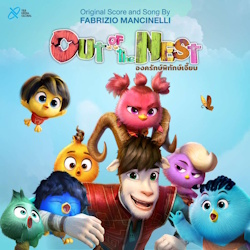 Out of the Nest is a Thai/Chinese animated film directed by former Disney and Pixar animators Arturo A. Hernandez and Andrew Gordon. The rather convoluted plot is set in a fantasy kingdom of anthropomorphic animals called Castilia, and follows the adventures of a teenage goat named Arthur, who dreams of being a world-class hairdresser, but whose plans are put on hold when he is tasked with rescuing seven fledgling chicks – the offspring of the Emperor and Empress – who have been kidnapped by an evil wizard who wants to usurp the throne.
The film had its world premiere at the Annecy International Animation Festival in 2024, and went on to become something of a box office smash especially in Southeast Asia. It’s also notable for its excellent score, written by the outstanding Italian composer/conductor/orchestrator Fabrizio Mancinelli. The score was recorded in Hungary with the Budapest Scoring Orchestra and it’s a big, old fashioned, symphonic animated adventure score full of themes, colorful orchestrations, and energetic action. By way of comparison, a lot of the score feels like a John Powell Dreamworks Animation score, and I often found myself thinking of the Kung Fu Panda franchise as I listened.
What’s most impressive about the score to me is its variety and depth, which really highlights Mancinelli’s versatility in writing excellent music in an endlessly changing array of styles. There is rambunctious action in the first half of the “Prologue,” and in later cues like the darker but vibrantly nimble “Canis to the Rescue,” the ominous but spirited “The Claw is in the Temple,” the brilliant “Forest Chase,” “Haircuts for All,” and especially the powerful, intricate “Arrows,” which is probably the score’s single action highlight.
There is charming and playful light comedy in the second half of the “Prologue,” and in many of the cues that underscore scenes of Arthur dealing with the antics of the newborn chicks, such as “Hatched”. There is heart-warming tenderness and emotion in “You Need To Grow Arthur” and “Arthur’s Growing Pains,” much of which features especially lovely writing for oboes and cellos. There are several moments where Mancinelli makes excellent use of East Asian instrumental textures to add yet another layer to the score, especially the erhu in cues like “The Hairdressing Academy” the aforementioned “The Claw is in the Temple,” and the delicate “The Porcupine Lady”. Running throughout all of these is a memorable main theme for Arthur, plus several recurring sub-themes, which allow the score to develop a warm individual identity.
As the score enters its final third it drops some of its playful overtones and in general becomes more traditionally heroic and adventurous, even working in some moment of poignancy and intense emotion, as the stakes that Arthur finds himself up against become more serious. The determined brassy heroism of “Magic Scissors” heralds this change, and then the music in the five finale cues from “Chasing the Chicks” through to the end of “It’s Over” is notably outstanding in this regard, a magnificent burst of rousing and rambunctious action. There’s a gorgeous burst of emotional erhu writing in the middle of “To The Rescue” that impressed me enormously, and then “The Dark Powers” reaches some quite apocalyptic heights during its almost 6-minute running time.
Perhaps the one main drawback to Out of the Nest is its lack of focus; while I personally appreciate the level of skill Mancinelli brought to all the different styles, some may find themselves getting musical whiplash from all the quick changes, and all the the shifts between tones amid a whole host of short cues, which in turn could affect the effect of the album overall. For me, however, I found it all to be superb – it’s richly orchestrated, exciting, fun, and a fantastic showcase for Mancinelli’s seemingly bottomless well of inventiveness. Unfortunately the soundtrack for Out of the Nest has not been released as a physical CD, but is available to stream and download from most of the major digital music services from T&B Media Global.
Track Listing: 1. Prologue (2:40), 2. The Hairdressing Academy (0:53), 3. Arthur Is Late, As Usual (1:35), 4. You Need To Grow, Arthur (2:16), 5. Realization (0:41), 6. Proud Parents (0:48), 7. Canis to the Rescue (2:04), 8. Cleaning Duties (0:47), 9. The Claw is in the Temple (4:23), 10. Somebody, call the Queen (0:48), 11. Forest Chase (2:46), 12. The Unknown Savior (1:07), 13. Temple on Fire (0:53), 14. The Heroes of Castilia (3:48), 15. Arthur’s Growing Pains (1:55), 16. Protect the Eggs (1:12), 17. Hatched (2:34), 18. Arrows (4:00), 19. Naming the Chicks (1:28), 20. The City Carnival (3:28), 21. Haircuts for All (1:39), 22. Where is the Goat (2:56), 23. The Porcupine Lady (2:53), 24. Magic Scissors (2:33), 25. Meeting Kronus (3:25), 26. Chasing the Chicks (2:14), 27. In the Dungeon (3:11), 28. To The Rescue (2:36), 29. The Dark Powers (5:41), 30. It’s Over (3:23), 31. The Royal Coiffeur (1:57), 32. You’re a Hero (3:15). T&B Media Global, 72 minutes 34 seconds.
LE SECRET DE MARTHA/MARTHA’S SECRET – Romain Paillot
 Le Secret de Martha is a French-language short film written and directed by Pierre Noguéras and Paul Parent, starring Lina Ancel and Roel Dirven. The film is set in France during the Second World War and explores the forbidden romantic relationship that develops between a French woman – the titular Martha – and a German soldier. It has played at various short film festivals across Europe in 2025, but is still somewhat obscure and under normal circumstances would have been likely to remain so, were it not for its magnificent music.
The score for Le Secret de Martha is by French composer Romain Paillot, who first came across my radar in 2019 with his impressive score for the horror film Achoura, and then followed that up with his score for the short film The Dove Secret last year. The score was recorded in Hungary with the Budapest Scoring Orchestra, and it is a melodic, romantic, emotional, thematic delight, one of the best scores of its type this year.
The centerpiece of the score is the opening cue, “Le Secret de Martha (Main Theme),” which is a rich and sumptuous symphonic delight with a strong waltz-like central melody and gorgeous, sweeping, romantic orchestrations. This is the sort of film music that I have always adored and the fact that a composer like Romain Paillot is still writing music like this in 2025 is nothing short of remarkable. The first time I heard the cue I was bowled over by its deep emotions, beautiful tone, and strong thematic content.
After this stunning opening it might be expected that the rest of the score pales in comparison, but this is absolutely not the case. The main theme is reprised with more emphasis on classical violins and effervescent woodwind textures in “A Forbidden Love”. Darker textures for brass and morose pianos dominate “Thomas Edward’s Story”. Shrill dissonances and ghostly vocals make “Only The Children Remain” a bleak reflection of the horrors of war. “Save Martha” and “The Battle of Sainte-Marie” are powerful action cues filled with strident percussion rhythms, heroic brass, and a touch of James Horner. There is a longing, aching quality to the string writing in “Karl and Martha”, and a bittersweet tenderness in the conclusive “Josephine’s Truth,” which reprises the main theme to excellent effect. It’s really all superb.
Unfortunately the soundtrack for Le Secret de Martha has not been released as a physical CD, but is available to stream and download on major digital music services. I unreservedly recommend it to all, especially those who have missed the huge symphonic scores that regularly accompanied historical love stories like these in decades past; at this point, it’s long past the point where Romain Paillot should be scoring obscure short films. Give this man a mainstream historical epic and give him an Oscar. Shout out also to my friend Joel Griswell at https://www.thesoundtrackgallery.com/ who designed the album’s cover art.
Track Listing: 1. Le Secret de Martha (Main Theme) (2:27), 2. A Forbidden Love (1:51), 3. Thomas Edward’s Story (3:12), 4. Only The Children Remain (1:46), 5. A Hope for Happiness (1:01), 6. Save Martha! (1:24), 7. Flash Back (0:50), 8. Karl and Martha (1:33), 9. Wir Sind Monster (1:15), 10. The Battle of Sainte-Marie (1:17), 11. Blood and Rage (1:17), 12. Josephine’s Truth (1:49). Romain Paillot Music, 19 minutes 42 seconds.
THREE KINGDOMS: STARLIT HEROES – Neal Acree
 Three Kingdoms: Starlit Heroes is an animated fantasy action adventure film from China, directed by Yu Meng and Yuan Yuan, with a screenplay written and produced by cultural scholar Yi Zhongtian. It is based on The Romance of the Three Kingdoms, one of the four great classic novels of Chinese literature, which is described as “a saga of strategy, betrayal, loyalty, and destiny”. The story is set in the years towards the end of the Han dynasty, around the year 200, and follows the exploits of three rival warlords named Cao Cao, Liu Xei, and Sun Quan, each of whom wants their own kingdom to replace the Han dynasty and rule over all of China.
The score for Three Kingdoms: Starlit Heroes is by composer Neal Acree, who (along with composers like Gordy Haab and others) has been working fairly regularly in East Asian media over the last few years, including on films like Animal World and video games like Revelation, Imperial Reign, and Honor of Kings. I’ve been a huge admirer of Acree’s work for many, many years, ever since he was scoring low budget creature features for director Jim Wynorski in the early 2000s, and seeing him be given this kind of canvas to write music for is terrific.
Long-time readers of mine will know that one of my favorite musical styles is the ‘western symphony orchestra with East Asian soloists’ sound, and Acree is one of the best practitioners of this working anywhere in the world right now. Three Kingdoms: Starlit Heroes is another one of those scores; it blends huge orchestral forces with a number of exquisite solos for various ethnic instruments – I’m pretty sure I picked out an erhu, a dizi bamboo flute, a pipa or ruan lute, and possibly a guzheng zither – resulting in a score which is sometimes epic, sometimes action packed, sometimes quiet and intimate, sometimes romantic, but always massively entertaining.
The thematic density of the score is complex, but I think I identified at least four recurring themes – one for each of the warlords, and then an overarching main theme – but without additional context it’s difficult to pin them down. However, there is plenty of thematic material to latch on to throughout the entire score, and they all receive multiple stirring statements
After a mischievous and playful opening in “The Trick,” which initially adopts some of the quirky sensibilities and instrumental textures from traditional Chinese opera, but them becomes a knockabout chase sequence, the score begins in earnest with the magnificent and dramatic “Luo Yang in Flames,” which is the first of several tremendous action and battle cues. Later tracks such as “The Battle of Bian Shui,” “The Battle of Guan Du,” and then pretty much entire finale from “The Siege” through to the end of “Surrender or Die,” build on this style; complex action writing with constantly shifting rhythmic ideas and varied percussion styles, punctuated by thematic outbursts of heroism and grandeur. It’s outstanding.
Other cues that stood out to me include the dreamy, evocative “Song of the Mulberries,” the emotional and poignant “The Young Emperor,” the grand but bittersweet “The Followers of Yuan Shao,” the playful pizzicato-heavy and subtly romantic “Cao Cao Tours the Harvest,” the beautifully downbeat cello writing in “Homecoming,” the inspiring “A Dream of Luo Yang” (which has a bit of How to Train Your Dragon to it), and the gorgeous writing for erhu in “The Banquet”. “The Fate of Yun Shao” is deeply emotional with an undercurrent of tragedy, and then the conclusive “Starlit Heroes,” which I assume is part of the end credits, offers a massive rousing finale to the score, ending the whole thing on a rewarding high.
When the World of Warcraft movie came out in 2016 I said I wanted Neal Acree to score it, considering how integral he was to the sound of the game, and I was immensely disappointed he didn’t. The music here proves that my instincts were right, and going forward I would love for him to be given the opportunity to write something like this for a major Hollywood production. Unfortunately the soundtrack for Three Kingdoms: Starlit Heroes has not been released as a physical CD, but is available to stream and download on major digital music services on the Dream Studio label.
Track Listing: 1. The Trick (3:46), 2. Luo Yang in Flames (1:38), 3. Song of the Mulberries (1:06), 4. The Young Emperor (3:00), 5. The Battle of Bian Shui (2:56), 6. The Followers of Yuan Shao (1:20), 7. Cao Cao Tours the Harvest (2:39), 8. Homecoming (1:32), 9. A Dream of Luo Yang (2:38), 10. Cao Cao and Liu Xie (2:47), 11. Salute to Liu Xie (1:32), 12. The Banquet (3:37), 13. The Battle of Guan Du (2:55), 14. Written in the Stars (1:26), 15. The Siege (2:00), 16. Aftermath (3:14), 17. Finding Resolve (3:22), 18. Surrender or Die (6:27), 19. The Fate of Yuan Shao (3:05), 20. Starlit Heroes (2:45). Dream Studio, 53 minutes 49 seconds.
Leave a comment

Shop at the Movie Music UK Store

Member of the

 MOVIE MUSIC UK
These under the radar posts are some of my favorites! It’s a great way to find out about music that I would never have been interested in.