THE AMERICAN PRESIDENT – Marc Shaiman
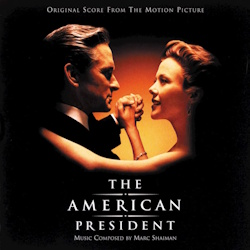 THROWBACK THIRTY
Original Review by Jonathan Broxton
Looking back now, considering where we are today in terms of what the American political landscape has become over the past decade, it seems almost unbelievably naïve and quaint to think that, in the 1990s, people were still making films about US presidents who were good, upstanding people who cared about their jobs and the electorate that voted for them. The American President is one of those films; written by Aaron Sorkin and directed by Rob Reiner, the film is a romantic drama set in the White House. Michael Douglas plays President Andrew Shepherd, a widower nearing the end of his first term. He is well-liked, pragmatic, and politically savvy, but cautious about jeopardizing his public image. Things change when Shepherd becomes romantically involved with Sydney Wade (Annette Bening), an environmental lobbyist who comes to Washington to push for a bold emissions-reduction bill. Their relationship quickly becomes serious, but because it unfolds under intense media scrutiny, it also becomes a political liability. As Shepherd’s approval ratings fall, his opponents – especially conservative senator Bob Rumson (Richard Dreyfuss) – exploit the situation, framing the relationship as unpresidential. Shepherd initially tries to keep politics and romance separate, hoping the story will fizzle out, but before long public pressure forces him to choose between maintaining power and standing up for the values he claims to represent.
The film blends romance and a splash comedy with political drama, presenting an idealistic vision of American governance where the president can act from principle, not just strategy. Sorkin’s portrayal of the presidency is based on hitherto traditional American ideals of optimism and honesty, something that is sadly lacking up and down Pennsylvania Avenue today. Shepherd is depicted as a decent public servant who genuinely wants to bridge politics and personal ethics, to govern with integrity, transparency and aspiration; contrast that with our current reality, and the complete and utter political nightmare that exists in Washington, and the differences couldn’t be more startling. What we wouldn’t give right now for a real-life president with the moral fiber of a President Shepherd, or a Dave Kovic from Dave. Heck, I’d even take Harrison Ford’s President Marshall from Air Force One, throwing Russian gangsters off his plane.
It’s interesting that, in many ways, this film can be seen as a major precursor to the TV series The West Wing, which was also written by Sorkin and which debuted in 1999, four years after this film premiered. Character types and thematic concerns from this story reappear in the later show, the sense of dignity and steadfastness in the Oval Office is retained, and even some cast members overlap – for example, Martin Sheen here plays the President’s Chief of Staff, several years before playing The West Wing’s President Bartlet. Those similarities also stretch to the film’s music, which was by composer Marc Shaiman.
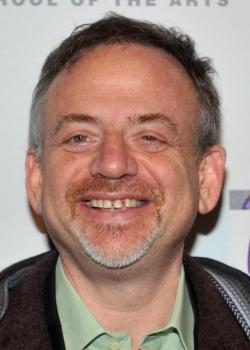 The American President was the fifth collaboration between Shaiman and director Rob Reiner, after When Harry Met Sally in 1989, Misery in 1990, A Few Good Men in 1992, and North in 1994. For me, it’s also one of Shaiman’s career best, one of his most emotionally open and lyrical works. It plays a major role in shaping the movie’s tone, giving it a sense of dignity, warmth, and idealized Americana; in order to achieve this Shaiman wrote music that is lush, orchestral, and strongly melodic, offering a patriotic, noble, slightly nostalgic and romanticized image of the presidency, which might seem clichéd today, but was perfect for the time, and plays like gangbusters in context.
There are two core musical ideas that anchor the score: the first is a sweeping, noble Presidential Theme that contains broad, confident horn lines backed by strong string passages that sound heroic, but not militaristic. The Presidential Theme is by far the score’s standout identity, and it essentially bookends the score, with exceptional performances in the “Main Titles” and then in the two concluding cues, “President Shepherd” and the “End Titles”. The performances in the finale are notably outstanding, and by the time the final moments of the “End Titles” come around Shaiman has adorned his orchestra with a set of stirring, almost Sousa-esque snare drum riffs to really hammer home the score’s powerful sense of noble patriotism. The stirring countermelody in the horns during these moments is especially excellent too, and this is something that would go on to become a hallmark of Shaiman’s lush Americana writing in later scores, especially Patch Adams in 1999.
The Presidential theme contrasts with the score’s second primary identity, the love theme for Shepherd and Sydney, which is gentle, lyrical, and full of warmth, and is often carried by graceful, slightly wistful writing for strings, piano, and woodwinds that often has a sense of hesitant vulnerability to it, capturing the unexpected sweetness of their romance. The love theme has a touch of old Hollywood glamor to it – Shaiman is, for better worse, an old Hollywood soul – and this Golden Age sensibility is clearly evident, from its subtle introduction in “I Like Her,” through its loveliest performances in “The First Kiss,” “The Slow-Down Plan,” “The Morning After,” and “Camp David,” and then finally intertwined with the Presidential Theme in “President Shepherd” in moments where the future of their relationship is being addressed.
One final idea that receives some significant attention during the score’s middle section is a more serious idea that accompanies the intrigue and machinations of Shepherd’s political career, especially his rivalry with Rumson. In cues like the vibrant “Meet the Press” and the more resonant “Gathering Votes” Shaiman increases the sense of tension and drama with bold, rhythmic writing for busily churning strings, anxious pulsating brass, and rapped percussion, but impressive as these interludes are they never overshadow the heart of Shaiman’s emotional intent.
Just to go back to The West Wing for a moment, I noted earlier the similarities between this score and Snuffy Walden’s superb writing for that show, and it really is true – when you listen to the end credits suite of The American President, you can almost hear the uplifting, idealistic style of the main titles of The West Wing beginning to form out of it.
The American President earned Marc Shaiman his first ever Best Score Academy Award nomination (it came during the period where the category was split between Drama scores and Comedy/Musical scores), but sadly Shaiman was in the comedy half, so he naturally got obliterated by the all-conquering Alan Menken and Pocahontas; with that in mind, the fact that he was nominated in the first place is praise indeed. Interestingly, Shaiman’s Presidential Theme would also go on to be a trailer music staple through the rest of the 1990s, when trailers regularly re-used pre-existing film music, and featured prominently in the trailer for Steven Spielberg’s Saving Private Ryan.
All this is to say that, for anyone who appreciates outstanding melodic scores that successfully combine patriotic Americana with Hollywood romance, The American President is a score well worth exploring; the whole score is excellent, with the final two tracks remaining some of the best straightforward thematic orchestral music of Marc Shaiman’s entire career.
Buy the American President soundtrack from the Movie Music UK Store
Track Listing:
- Main Titles (2:23)
- Call Me Andy (1:36)
- I Like Her (1:48)
- It’s Meatloaf Night (0:40)
- The First Kiss (2:21)
- The Slow Down Plan (1:13)
- The Morning After / Meet the Press (2:11)
- Politics as Usual (0:57)
- Never Have an Airline Strike at Christmas (0:35)
- I Have Dreamed (The State Dinner) (written by Richard Rodgers and Oscar Hammerstein II) (2:57)
- Camp David (1:30)
- Gathering Votes (2:36)
- Make the Deal (3:42)
- Decisions (1:45)
- President Shepherd (7:28)
- End Titles (5:05)
Running Time: 39 minutes 06 seconds
MCA Soundtracks MCAD-11380 (1995)
Music composed by Marc Shaiman. Conducted by Artie Kane. Orchestrations by Jeff Atmajian. Recorded and mixed by Dennis Sands. Edited by Scott Stambler. Album produced by Marc Shaiman.

Shop at the Movie Music UK Store

Member of the

 MOVIE MUSIC UK