ANNE OF THE INDIES – Franz Waxman
 GREATEST SCORES OF THE TWENTIETH CENTURY
Original Review by Craig Lysy
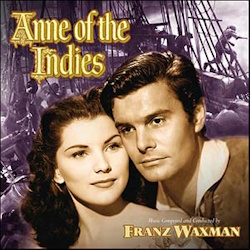
Writer Herbert Sass wrote a short story “Anne of the Indies” for the Saturday Evening Post in 1947. It made an impression with the public and his New York publisher asked him to write a screenplay. Sass did so and it caught the eye of producer Walter Wanger who bought the film rights, intending to showcase his star Susan Hayward who he had under contract. Wanger however could not finance the film, and so the rights were sold to 20th Century Fox. Arthur Caesar and Philip Dunne were hired to rewrite the screenplay, which was well received by the studio. As such, George Jessel was placed in charge of production with a $1.5 million budget, and Jacques Tourneur was tasked with directing. By time production began in 1950, Susan Hayward had dropped out. So, the cast was reimagined, and Jean Peters would star as Captain Anne Providence, joined by Louis Jourdan as Captain Pierre Francois La Rochelle, Debra Paget as Molly La Rochelle, Herbert Marshall as Dr. Jameson, and Thomas Gomez as Blackbeard.
The film is set in the West Indies circa 1716. Anne Providence was captured by Blackbeard the pirate as a girl, and then raised by him. As she passed into womanhood, she became a pirate in her own right and master of her own ship. One day she captures a British ship and becomes attracted to a handsome Frenchman, Pierre Francois LaRochelle, whose life she spares. Conflict arises when her adoptive father Blackbeard recognizes Pierre as a French naval officer. She refuses to turn him over and her relationship with Blackbeard is shattered. Anne’s love is however deceived when it is revealed that Pierre has a wife and is a spy. He betrays her to the British who attack her ship, but she escapes with Pierre’s wife. Pierre regains his ship the Molly O’Brie and pursues Anne, but is defeated in battle and taken prisoner. Anne enacts revenge by abandoning Pierre and his wife on a desert island to die. Yet later she has a change of heart and decides to provide them with provisions and a boat. As she approaches the island Blackbeard arrives and the two engage in battle, as she knows that he would kill Pierre. In a fierce battle, Anne, who is outgunned, dies during a devastating salvo, which earns thankful praise of Pierre and his wife. The film broke even commercially, and critical reception was tepid. The film received no Academy Award Nominations.
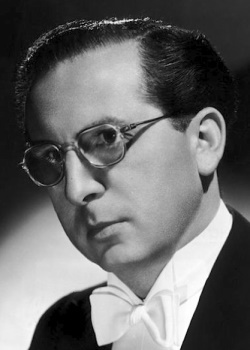
Alfred Newman, the 20th Century Fox Director of Music, assigned Franz Waxman to the project. This was Waxman’s first swashbuckling film, and he was surely enthused to set foot in a new genre. It offered a big canvass, and I believe he understood that he would have to empower his score with a grand sense of adventure, a nautical flavor, romance, intrigue, and pirate ships battling at sea. I believe he also understood that this was Anne’s story and it was rare in Hollywood for a woman to enter the domain of men and assume a mantle of leadership as a ship’s captain.
 For his soundscape Waxman offers six primary themes. Anne, as the central character and heroine was provided with two themes, with each speaking to the dichotomy of her persona. The first identity speaks to her as captain, and master of the Sheba Queen. Horns bravura offer a soaring nautical theme of adventure. It is proud, confident, forthright and masculine in its bearing as for Anne to succeed in a man’s domain she needs to be seen by her crew to be as tough as a man. This theme by extension empowers her ship the Sheba Queen and often propels it during external camera shots of it sailing the Caribbean Sea. Her second theme speaks to her as a woman, and supports during intimate moments when she lowers her hard edged and stern masculine veneer as captain, thus allowing herself to be vulnerable. It is Pierre, her first love, who unlocks her repressed femininity and Waxman offers a sweeping string borne romanza for the ages, one of the best Love Themes in his canon. We observe throughout the film that the music emotes from only her perspective.
Pierre, who is the love of her life, and who in the end breaks her heart, is also given a theme. It is horn declared, and masculine in its bearing, yet there is an intangible quality, which Waxman captures. His theme only soars in the last act of the film and operates within a very narrow range of emotional expression as his relationship with Anne is duplicitous and forged out of necessity. This is most evident when he first takes her into a kissing embrace and we see his amorousness is not genuine and lacks ardor. Pierre, who is married to Molly, does have a genuine Love Theme. Unlike Anne’s passionate sweeping string borne Love Theme, Molly’s Love Theme is woodwind borne, led by solo oboe tenero and full of yearning. Dr. Jameson, who serves as ship’s doctor, but also Anne’s counselor has a theme borne by solo oboe tenero draped with auras of paternal love. The legendary larger than life Blackbeard offers swaggering strength and is empowered with a low register, lumbering identity, which dominates any scene in which he is seen. When angered it swells and offers a monstrous expression. Most interesting is that his theme softens and offers tenderness and paternal love to Anne until she defies and humiliates him in front of his men.
(*) “Logo” offers Alfred Newman’s iconic fanfare for 20th Century Fox Studios. We flow into “Main Title”, a score highlight, where Waxman establishes both the adventure and romanticism of the film. Fanfare bravura declare the soaring adventure of Anne’s Captain Theme as the opening credits display in bold red script against a backdrop of pirate treasure. At 0:30 we flow atop sumptuous strings romantico into the florid Love Theme for Anne and Pierre, concluding with a coda of her Captain Theme to end the credits. At 0:58 a piercing piccolo tremolo usher in a grim march, which takes us into the film proper where we behold an overflowing treasure chest. Narrative script displays informing us of the demise of the last great pirates less than 250 years ago, and that this is a tale of the greatest buccaneer captain of them all. At 1:21 tremolo strings usher in a musical narrative of woe, which support a company list of its ships, tonnage and masters. One by one the ledger strikes a red line across the page, declaring another ship lost to Captain Providence.
“Pirate Ship” reveals the pirate ship Sheba Queen under the command of Captain Anne Providence on the high seas, with script that reads “Man the Guns!”. She orders an attack run and the captain of the British ship orders, prepare to repel borders. A menacing Captain Anne Theme resounds as the Sheba Queen opens fire and the battle commences. After two broadsides, the Sheba Queen moves in and her crew storms the British ship. Waxman unleashes a torrent of violence empowered by Anne’s Captain Theme, which dissipates at 1:42 as the British captain lowers his flag and surrenders. A shifting textural narrative between tremolo strings and horns grave unfolds as one by one the British seamen are forced to walk the plank. At 2:15 the musical narrative softens atop Jameson’s Theme borne by a solo oboe tenero as the ship’s physician, Dr. Jameson tends to Anne for a flesh wound above her left breast. I believe the music emotes paternally from his perspective as Anne maintains her hard shell of an exterior. I surmise that she cannot ever lower her guard as a woman residing in the domain of men. At 2:45 the music become ominous as she returns to deck and confronts the British captain. He appeals to her sense of mercy as he surrendered his vessel, but she will have none of it, reminding him that the British showed her brother no mercy when they hanged him. She orders him to walk the plank and the music darkens at 3:39 atop a grim variant of “Rule Britannia”, which portends his doom. Afterwards, the music lightens and her theme becomes inquisitive as she sees a man in shackles. At 3:48 Pierre’s Theme is introduced by horns when she demands to know why he is in shackles, and he relates, that like her he is a privateer, captain of the Molly Brown, and that he was imprisoned for raiding British ships. She choses to believe him, and offers him the choice of accepting the post as her navigator, or walking the plank. He responds that this is an easy choice, and accepts her offer.
“Dougle Turns” reveals that first mate Dougle advises the doctor that he does not believe LaRochelle’s story as the Molly Brown was captured over a year ago. That night the bounty is divided up among the crew, supported by a variant of Anne’s Captain Theme rendered in Sea Shanty form. Comedy joins the musical narrative as Dougle uses his massive belly to bludgeon two men fighting to the ground. At 0:57 Jameson’s Theme joins on oboe as Anne asks the him to take his portion, and he surprises her by taking a book. She mocks him, but he counters that books are mightier than the sword. She then asks Frenchie, who surprises her by taking an ornate dress. She asks if he has a wench, and he counters, I am a Frenchman, which elicits a wry smile. Wax weaves a subtle musical narrative, allowing dialogue to carry the scene. At 2:07 the music darkens on Pierre’s Theme borne by muted horns as she asks Pierre if he had heard of Blackbeard. He acknowledges the greatest of all pirates, but adds that he has never met him. She says you will soon will meet him and orders him to steer a course to Nassau. (*) “The Black Anchor 1” reveals the saloon sign, and the camera takes us in. Drunkenness and raucous merriment abound and we see Blackbeard holding court at the head of a table. Waxman supports with source music to establish the saloon’s drunken, festive and brawling ambiance. Black Beard fires his pistols, throws silver coins on the table betting on his wrestling bear, and challenges anyone to bet against him. Some do, and the bear and his human opponent are brought in. The fight ensues as Annie and Pierre arrive. She wants to introduce him, but he is wary. Never the less she insists and says not to fear as he is under her protection.
“Black Beard” reveals him seeing her arrival and rushing to greet and embrace her. His raucous, lumbering and heavy theme joins with Anne’s Captain Theme, which has softened and adopted a more feminine sensibility. Waxman sow sea shanty tunes and comedic accents as Blackbeard bellies Dougle to the floor where he takes a liking to a wench. Anne introduces Pierre to Blackbeard and we see that Pierre is wary, and Blackbeard ponderous, as he believes they may have met before. At 0:55 Blackbeard’s and Anne’s Theme interplays as he takes her to the bar for a drink, and she impresses him with six ship seizures. At 1:23 tinny fanfare resounds as she then gifts him a sword, much to his delight. The music becomes bravado as Blackbeard challenges all present to try out his new sword, all refuse. At 1:29 Anne’s Captain Theme sounds as she takes up his challenge, much to his delight. At 2:00 a diminuendo interlude reveals Dougle warning Blackbeard to be wary of the Frenchman. We flow into “Fencing” and horns energico propel the swashbuckling sword duel. Both their themes contest after he infuriates her by pinching her nose. Behind the scenes, we see Pierre make a discreet exit. At 0:52 a shrill piccolo supports Blackbeard’s outrage when Anne boots his toe. A furioso erupts to bring the fight to conclusion when Anne falls and is at Blackbeard’s mercy. As he boasts, she leaps, disarms him and point two swords at his gut, much to his delight. He calls for drinks on the house and they all celebrate.
In “Anne Looks For Pierre” Waxman sow unease when Dougle informs Anne that the Frenchman had disappeared. We see suspicion in her eyes and we shift scenes to Pierre stealthily approaching the Sheba Queen in a row boat. A misterioso unfolds to support his arrival and stealth ascent to the deck. At 0:45 an ominous two-note ostinato supports Dougle capturing Pierre and informing him that the captain has ordered him brought to her cabin. A dire crescendo carries Pierre’s forced escort to her cabin. For the confrontation, his theme borne evasively by woodwinds create a subtle undercurrent of tension, which plays under the dialogue. She asks him where he has been, and he reminds her that he had business to attend to. When she asks what type of business, he deflects with, “My business.” Unsatisfied she presses; “A wench?”, “A spy?”, yet he continues to deflect. She toys with her pistol, and he cautions her that it may go off, to which she replies; “Not by accident.” She presses, but he remains silent only offering a wry smile. She orders Dougle to take him to the brig and shackle him. A beleaguered quote of Pierre’s Theme supports him being sucker punched by Dougle as they depart. At 2:30 the soaring Captain Anne’s Theme supports an exterior of the Sheba Queen sailing on open seas. The melody is sustained as we see Pierre being whipped on deck, with whipped strings punctuating each lash. Anne is dissatisfied with the ship’s speed and orders Dougle to steer to Inagua Island so they can clean barnacles off the hull. She orders Pierre taken to her cabin and meets with the doctor who reveals that he found something searching Pierre’s cabin. At 3:30 Pierre’s Theme empowers a misterioso as Jameson reveals a half of a map, from what they discern from faded script; “Captain Morgan’s Treasure”. She relates that he buried an enormous treasure, and that they must find it. They return to her cabin and try to match the fragment to an existing map. They succeed and determine it is a small island off the east coast of Hispaniola.
“Pierre Passes Out” is supported by his theme woven within a textural misterioso, which plays softly under the dialogue. Anne interrogates Pierre and confronts him with his map. She asks if he will partner with her, and he agrees when she gives him her word. She swears, and he says that the other half of the map is held by Pedro Mendoza who resides in Port Royale, the British naval base in the Caribbean. He then passes out from exhaustion. The doctor asks her that since she now knows what he knows, why did you not cut his throat and take the entire treasure. At 1:51 she answers, because I gave him my word, and Waxman uses nuance to close the scene, introducing her nascent Love Theme, which informs us that it is not her word that guides her, but her heart. As she departs, she orders the doctor to restore him to full health. “Sheba Queen Beached” reveals the Sheba Queen purposely beached in a cove at low tide with the crew scraping her hull of barnacles to restore her speed. The imposing camera shot is buttressed with a proud sparkling statement of Anne’s Captain Theme. A diminuendo brings us to Anne and Pierre strolling on the beach supported by an idyllic woodwind borne rendering of her Love Theme. She has lowered her captain veneer and they share an intimate conversation about their roots and early lives. Clearly, she has become attracted to him and when she finds out that he is a Parisian, she extends her hand for him to promise one day to take her there, as partners. When she asks for whom did, he buy the dress, he answers for a woman he hopes to meet some day. This was not the answer she sought. The music sours and her tough Captain’s Theme borne by muted French horns support as her masculine captain veneer rises up and she orders him to join the work crews, and then stand the night watch. A diminuendo takes us to her beachside tent as we see her restless in her sleep. Remnants of Pierre’s Theme seem to plague her, as she pounds her bed at 2:45 in frustration.
“Anne In Yellow Dress” offers an exquisite score highlight. The next day Pierre goes to his tent to freshen up and is surprised to find Anne in front of a mirror wearing the resplendent golden dress. He asks if she need help fastening it, and she summons him astern. We are graced by the Love Theme borne by solo violin romantico adorned with celeste and harp accents. A retinue of kindred strings join and we expand into a romanza. After he ties the straps, she asks, how can wench’s move in garb like this, and Pierre answers, they wait for the man to make the moves. She says that when a man sees a woman like this, he wants to make love to her? He hesitates, answer yes, and she asks, how? At 1:39 he takes her into a passionate kissing embrace and the Love Theme blossoms. A diminuendo supports two calls of “Captain” by Dougle, and finally his entry into the tent, where he expresses surprise. He advises that a ship approaches and she goes out, takes his telescope and declares it is Blackbeard’s ship, the Revenge. At 1:55 dark, foreboding quotes of his theme resound as she orders Dougle to break out her finest Jamaican rum. After he departs, a relaxed and more gentile rendering of the Love Theme returns as Anne laughs, and then orders Pierre to help her get out of this rig as Blackbeard would tear the hide off her if he ever saw her dressed like this. At 2:38 we close with resounding ominous declarations of Blackbeard’s Theme, joined by the Main Theme as his row boat arrives and he and Anne embrace.
“I’m Captain Here” reveals Blackbeard, Anne and their crews celebrating, yet all of the sudden the merriment is shattered when Blackbeard tosses his rum in Pierre’s face and declares him a traitor scum. He stands accused of being a French naval officer and of hanging Sam Austin, a member of Blackbeard’s crew. When confronted by Anne, Pierre admits he was a French officer, but that he was not on the ship that captured Blackbeard’s friend, not on the court that convicted him, nor responsible for his hanging. Under orders he like all officers were required to attend the execution. He reminds her that she is captain here, that he signed her articles, and that he has been loyal, and will continue to be loyal on future trips. She believes him innocent, which enrages Blackbeard who draws his sword. Waxman sow an escalating tension as Anne asserts her prerogatives as captain and in command of this post. His angry theme swells as he pushes her aside and strikes Pierre in the shoulder. She disarms him and when he says he did it for her own good, she slaps him across the face. Horns sour and an angry musical narrative unfolds as he says she will pay for this betrayal. She orders his men disarmed and escorted to their long boat. We close with a monstrous iteration of Blackbeard’s Theme, which abounds with rage as he returns to his boat humiliated. She is distraught by this event, and we end on a diminuendo of concern as she is assured by the doctor that he will live as she kisses his forehead.
“At Sea” reveals the adventurous Main Theme carrying the Sheba Queen in the Caribbean Sea. “Land Ho!” is called and Anne orders Dougle to keep them far off Jamaica’s shore as they will sneak into Port Royale at night. She descends into her cabin on a diminuendo at 0:32 where the doctor declares Pierre fit. At 0:52 the Love Theme supports her taking him into her arms for a kissing embrace. At 1:51 the theme retreats under the dialogue as Anne frets that she is worried as it is too dangerous for him to go onshore. At 2:07 Waxman weaves a narrative of tension as Pierre departs by long boat to the shore outside the city. As Pierre sets off, Dougle issues a warning to not deceive them. At 4:41 a short quote of “Rule Britannia” supports the saloon sign; “The Governor’s Tavern – Port Royale”. Inside we see a dozen British officers as Pierre enters an is greeted by the barkeep Greenough, an old friend. Pierre goes upstairs, knocks on an apartment door and is greeted by a woman. He walks in, she takes offence until she recognizes him in the light, and runs into his embrace. She is Molly his wife, and they kiss passionately as she declares she feared he was dead. We flow into “Pierre And Molly” atop their yearning Love Theme borne by solo oboe tenero. He explains his circumstances and his theme, also borne by oboe joins at 1:14 buttressed by horns a Greenbough knocks and said the men have arrived. He reassures Molly, and then departs to join them downstairs. Pierre informs the British officers of the location of the Sheba Queen and we learn he was on a covert mission to locate Captain Providence as part of a deal – once she is captured and brought to British Justice, he would be absolved of all charges against the crown, and his ship the Molly Brown returned to him.
“Harris Leaves” opens with resounding horns of resolve as the British officers depart. At 0:05 the scene shifts to the Sheba Queen anchored off shore. An amorphous, textural, musical narrative of unease unfolds as a restless Anne walks the deck and frets to the doctor. At 0:49 a slow, foreboding low register ostinato joined by slithering strings commences as they hear a boat approaching. Anne rushes to the greet Pierre only to have Dougle sound the alarm, ordering the anchor cut and an immediate departure. Anne is outraged and countermands the order only to have Dougle disclose that he followed Pierre into town and witnessed his betrayal with British officers. Slowly a crescendo irato joins the musical narrative as she says he did not as he loves her, but then she is shattered when Dougal declares he is already married and reunited with his wife. At 1:41 we crest atop a wounded Love Theme as a British warship opens fire exposing Pierre’s betrayal. Dire trumpets bellicoso resound and unleash a martial musical narrative as the Sheba Queen unfurls all the canvass she can. We close on dire horns or retribution as they elude the warship and slip away into the black moonless might. We close at 2:54 on a diminuendo of uncertainty as Anne orders Dougle, against his objections, to take the ship to the north side of the island and anchor
“There Are Other Captains” reveals an aggrieved Pierre confronting Admiral Harris at the officer’s club, demanding that he fulfill his part of their agreement. Harris is dismissive and refuses, saying that the Sheba Queen was not delivered into our hands, to which Pierre replies because you bungled the operation. He again demands his ship’s return, and adds one way of another I will regain my ship. He storms out, pursued by an officer from another table. He is offered his ship, and a crew on condition that he engages in piracy, and provides he and his ‘investors’ a captain’s portion of the spoils. Pierre refuses saying he will pursue honest commerce, to which the officer replies with a veiled threat, that there are other captains they will turn to if he refuses. Music punctuates this threat with dire horns. A foreboding plodding musical narrative carries Pierre back to Molly’s apartment. It is empty and a woodwind misterioso unfolds as he searches in the darkness. At 0:30, a horrific stinger erupts to support a note from Anne affixed to the wall with a dagger; “You will never again see your wife alive.” He tears the note from the wall in anger and Molly’s Love Theme carried by aggrieved strings propels his departure. In the empty lobby he finds the officer who offered him a deal. Their eyes lock, he offers Pierre a sinister smile, and Pierre, supported by a diminuendo of resignation, sits down, compelled to make a deal with the Devil to save Molly. At 1:10 muted French horns offer Anne’s Theme, joined by foreboding accent as she takes a meal in her cabin. She orders Dougle to bring Molly in, and to leave them alone. Waxman sow a myriad of emotions; anger, betrayal, and disgust as Anne examines her. Music ends and dialogue carries the scene. Molly is disdainful, willful, and mocking. After Anne says, was he the best you could get? She replies sardonically that you could not get him, which elicits a slap from Anne, with the punctuation that she will never have him again. She says she will not kill her, but instead sell her to the highest bidder. She then orders Dougle to take her to the brig and as she departs Molly says with spite, remember, I am his wife, not you.
“Molly O’Brien At Sea” opens with heraldic trumpets joined by French horns declaring Pierre’s Theme as we see the Molly O’Brien again sailing under his command on the high seas. A languorous, nautical, diminuendo follows, dissolving as he is confronted by the crew. They are confused and agitated that he has bypassed three merchant ships. At 0:32 dire horns resound as he declares that he is taking them for the greatest of prizes, the Sheba Queen. They are stunned and wary, but when he says she bears the greatest of all treasures, he wins them over. He says we are bound for Nassau where he will take twenty men ashore to try to obtain news of her location. We close with a quote of Molly’s Theme joined by Anne’s Theme as they are bound together. In (*) “The Black Anchor 2” Pierre and his men enter the saloon where a man sings a sad ballad of unrequited love. He and his men hold Blackbeard and his men at gunpoint and disarm them. He offers 50 Guineas for the location of the Sheba Queen. No one responds accept Blackbeard who says he would offer 5,000 Guineas for her location. Pierre and his men depart warning everyone that it would be unwise to follow.
“Now I’ll Take Those Guineas” offers a score highlight where Waxman demonstrates mastery of his craft with poignant thematic interplay. It reveals a man joining them in the jungle. He asks for the reward, and informs Pierre that in Tortuga he heard crewmen saying she was bound for Maracaibo to pick up a great prize as it is the opening of the slave markets. Music enters with urgency as Pierre gives him the money and departs with haste. At 0:08 the Main Theme resounds as we see the Sheba Queen sailing on the high seas. In her cabin the doctor counsels that she gets some sleep. She refuses and swirling strings furioso bring Molly to her cabin. This is a riveting scene with the intersection of Anne’s fury, sense of betrayal, and heart ache, joined by Molly’s spite, mockery and disdain as the two engage in hurtful repartee. Waxman speaks masterfully to their mutual animus with a musical narrative ever shifting to and fro with their themes; Anne’s angry and vengeful, Molly’s loving and hopeful. She orders Molly to don the dress Pierre bought for you but gifted to me. She does so under threat of the men forcing her. She is then taken out, told the Arabs will bid handsomely for such a rare flower. We close at 2:14 with great pathos as Anne collapses in anguish and despair, with Waxman magnifying her devastation with her theme.
“Algerian Market Place” opens with a serpentine oboe Arabo draped with ethnic adornment and exotic rhythms as Anne forcibly leads the resplendently dressed Molly to the slave market. The Arabic musical narrative plays under the dialogue as the slave master auctions off the women, one by one. Anne forcibly takes the stage and offers Molly up, yet the doctor speaks out, declaring that the she is a descent woman stolen from her husband. Anne bludgeons him with her sword and we flow into “Distant Ship” atop a trumpet declared Pierre’s Theme as his ship opens fire in the harbor. The slave master orders Anne to leave at once, threatening violence if she refuses. Back on the ship, they realize the Sheba Queen is trapped, Anne orders Molly brought forward as she will be their shield of escape. At 0:56 Molly’s Theme swells as Pierre sees her bound. Unwilling to fire least he kill Molly; Pierre orders the ship to charge so they may repel in and fight hand to hand. Anne’s Theme emotes with menace and dire purpose contested by a hopeful Pierre’s Theme as Waxman unleashes a tempest of battle violence. As Pierre charges, it allows the Sheba Queen to blast the Molly O’Brien with multiple salvos. At 2:27 Waxman evokes the Molly O’Brien’s death throes as the Sheba Queen’s salvos demasts and cripples her, forcing Pierre and the men to abandon ship as she is consumed by flames. We close with a molto tragico statement of Anne’s Love Theme as Pierre is brought on deck. He embraces Molly as Anne stares coldly, and orders her taken below.
“Dougle Follows Pierre” Anne order’s Pierre brought to her cabin and then orders that they be left alone. He asks for no mercy for himself, but to please spare his wife. She asks if he will do anything she asks? And he answers, yes. This earns her ire as she declares that he will do anything for her, nothing for me. She reminds him that he said he loved her, to which he replies he lied and never loved her. She is furious and orders Dougle to imprison them together. Pierre thanks her for her generosity, to which she replies that she wants to encourage a true love as her love was all lies. After they depart her theme surges with rage. Eerie tremolo strings support her going to a map, and we follow her finger to a desolate, desert island “Dead Man’s Cay”, crowned with a dire chord. On shore, Anne exacts a terrible revenge saying there is only salt water, no shelter, no shade and you will watch your wife roast and die horribly. She rejects Pierre entreaties to her humanity, to spare his wife, and accept him as her servant. Waxman sow a dire textural musical narrative with tremolo strings, dark chords and a repeating descending four-note ostinato to create a sense of doom. Woven within this narrative are forlorn fragments of the Love Theme, which informs us that Anne still loves him.
In “Night At Sea” the eerie tremolo strings of Dead Man’s Cay reveals that for three nights Anne has been tormented, screaming and crying as she is plagued by what she has done. On deck Dougle suggest the doctor go down and talk to her. Once again Waxman offers a haunting textural musical narrative using effects and instrument auras, which speak to Anne’s suffering and torment. Woven within the music is her theme voiced by forlorn woodwinds. At 1:36 woodwinds tristi emote Jameson’s Theme as he once again appeals to her humanity to no avail. He rebukes her for a lack of conscience, and then despite her threats, doubles down, saying he used to like her, as she was gallant and somehow clean, and now says that she has become a creature so foul that even your crew cannot stomach her. She is furious, orders him out at gunpoint, yet he remains defiant as he leaves saying, you have betrayed yourself my dear. The door closes, she fires and then collapses in anguish.
“Cay Day and End Title” offers a climatic action score highlight. It reveals the scorching cay strewn with human skeletal remains supported by the eerie string tremolo, ghostly woodwind figures and the weakened, descending four-note ostinato, as Pierre keeps a death watch. Pierre has fashioned a tent for shade using Molly’s gown as he soaks a cloth in water and then places it on her head. At 0:45 a dire declaration of the Main Theme heralds the return of the Sheba Queen. Anne orders that a long boat with a mast and sail, and filled with provisions, a compass and chart be sent to the cay. The music shifts to a narrative of regret and parting with her theme used as a substrate. Anne orders the doctor unshackled, informing him that he will not be returning as she will not suffer a man who does not respect her. He is thankful, shakes her hand and departs to the cay carried by the Cay textural effects. At 2:42 dire horns resound as the scout yells Sail ho! He then declares it to be Blackbeard’s Revenge. Anne could outrun him, yet decides to fight as she knows Blackbeard will surely kill Pierre. Blackbeard is astonished that she is closing to fight rather than flee and at 3:07 his theme surges ominously as he orders canon’s loaded, saying he is going to blow her out of the water. At 3:21 we shift to the Cay atop religioso auras as Pierre sees what Anne is doing, and the doctor informs him that she is sparing his and Molly’s life. At 3:39 Blackbeard’s Theme surges monstrously as the Revenge opens fire and riddles the Sheba Queen. The men are wary of a fight they cannot win, some jump overboard while other begin lowering the flag to surrender. Anne will have none of this, grabs her sword and at 5:02 she fights the mutineers empowered by her theme, now rendered as a heroic anthem. Yet at 6:16 her anthem loses its vitality with Blackbeard’s now dominating as the Sheba Queen is pummeled under Revenge’s withering bombardment. Dougle falls, and at 7:21 Anne propelled by a defiant declaration of her theme climbs up and calls out to Blackbeard to settle this one to one. He orders cease fire, but it is too late and a salvo kills Anne at 7:29. Back on the cay Pierre remarks that she is home at last, and let the sea keep her as her theme reprises in memoriam, sustained in the next scene as the ledger records the sinking of the Sheba Queen off Barbados, under Master Providence. We close the film with a heroic coda of Anne’s Theme. “Anne Of The Indies”, music by Joe Cooper, lyrics by George Jessel and Samuel Lerner, and vocal by Bob Graham offers a song demo planned by the studio, which did not materialize.
I commend Nick Redman and Robert Townson for restoring Franz Waxman’s swashbuckling masterpiece, “Anne of the Indies”. Restoration was achieved using optical transfer of the original 35 mm source tapes. The resultant recording, greatly improved the monaural audio, and offers a good listening experience that does not diminish Waxman’s handiwork. This film offered a woman in the starring role as a protagonist hero – a stunning departure from the chauvinist gender roles of the age. Waxman understood that Anne was the nexus of the film’s narrative and so he composed two wonderful themes, which spoke to the dichotomy of a woman thriving as a leader in the domain of men. The soaring, proud call to adventure of her Captain’s Theme empowered her mantle of leadership, while her Love Theme revealed her very essence once the masculine veneer of her persona was lowered. Masterful is how her Love Theme changes over the course of the film from florid, passionate romanticism, to molto tragico anguish once Pierre’s duplicity and betrayal is revealed. For most of the film Pierre’s Theme is restrained, operating in a very narrow emotional range as he nearly succeeds in a diabolical deception and betrayal. Once his duplicity is revealed, he is able to shed his false persona to reveal his own heroism as he races to save his wife. Blackbeard, who was a giant among men, and a legendary figure, was provided with a powerful, swaggering and lumbering theme, which dwarfed all those around him. Folks, many of the film scenes offered an intersection of powerful emotions, with Waxman masterfully fueling the conflicts with inspired thematic interplay. He provided the sense of adventure, heroism, and romanticism the film required, and I believe he enhanced its narrative arc, elevating the film reel to reel. If you like nautical adventure, sea battles, complex character emotional dynamics, and romanticism, then this is the score for you. A score as magnificent as any Erich Wolfgang Korngold wrote for the genre. I highly recommend you purchase this album and take in the film.
For those of you unfamiliar with the score, I have embedded a YouTube link to a wonderful 15-minute suite: https://www.youtube.com/watch?v=tskvtCPXHdM&list=RDtskvtCPXHdM&start_radio=1
Buy the Anne of the Indies soundtrack from the Movie Music UK Store
Track Listing:
- Main Title (1:42)
- Pirate Ship (4:22)
- Dougle Turns (2:29)
- Black Beard (2:31)
- Fencing (1:10)
- Anne Looks For Pierre (5:26)
- Pierre Passes Out (2:22)
- Sheba Queen Beached (2:57)
- Anne In Yellow Dress (3:04)
- I’m Captain Here (1:52)
- At Sea (5:01)
- Pierre And Molly (1:40)
- Harris Leaves (3:15)
- There Are Other Captains (1:56)
- Molly O’Brien At Sea (1:13)
- Now I’ll Take Those Guineas (2:43)
- Algerian Market Place (0:59)
- Distant Ship (3:39)
- Dougle Follows Pierre (2:51)
- Night At Sea (2:08)
- Cay Day and End Title (8:10)
- Anne Of The Indies (3:08)
Varese Sarabande CD Club VCL-0707-1066 (1951/2007)
Running Time: 64 minutes 38 seconds
Music composed and conducted by Franz Waxman. Orchestrations by Edward B. Powell and Leonid Raab. Recorded and mixed by XXX. Edited by XXX. Score produced by Franz Waxman. Album produced by Nick Redman and Robert Townson.

Shop at the Movie Music UK Store

Member of the

 MOVIE MUSIC UK