AMERICANA – David Fleming
 Original Review by Jonathan Broxton
Americana is a modern western crime thriller written and directed by Tony Tost, starring Sydney Sweeney, Paul Walter Hauser, Eric Dane, Zahn McClarnon, and Halsey. The film centers on a rare Native American artifact that falls into the black market, sparking an increasingly violent conflict between various characters including a waitress, a US military veteran, a hardened criminal, and an indigenous leader. The film was shot in 2022 in New Mexico and premiered at the South by Southwest Film & TV Festival in 2023, but then it languished in distribution hell for a couple of years, before finally receiving a belated theatrical release in August 2025. Unfortunately, despite decent critical reviews, the film was an enormous commercial flop and disappeared from cinemas after just a couple of weeks, with some people suggesting that a backlash to Sweeney’s recent controversial American Eagle jeans commercial may have contributed to its failure.
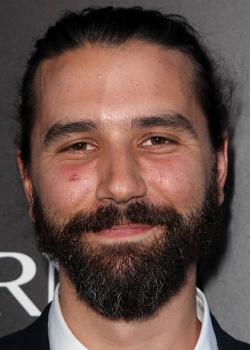
The score for Americana is by composer David Fleming, and if things unfold as they should, it will have a much more positive reception than the film it accompanies. Fleming has had a banner year in 2025, his score for the James Gunn-directed Superman raising his public profile considerably, but he actually wrote and recorded Americana more than two years ago, before Superman, before The Alto Knights, before Jim Henson: Idea Man, and before Damsel, around the time that he began collaborating with Gustavo Santaolalla on the score for the Last of Us TV show. It’s also very, very good.
 One of the incredibly niche film music sub-genres I greatly enjoy is the ‘contemplative neo-revisionist western’ sound, and Fleming’s Americana fits perfectly within that mould. Fleming’s instrumental ensemble mostly comprises a small orchestra backed by dulcimers, pedal steel guitars, mandolins, fiddles, a vintage piano, and an electric bass, plus special vocal performances by the late Michael Geiger, who notably performed the Sardaukar Chant on Hans Zimmer’s score for Dune, and who sadly passed away this past June.
For long stretches the score is somewhat introspective and minimalist, but in a way that I find deeply appealing. The closest score that comes to mind when I think of Americana is Christopher Young’s 1991 score for the film Bright Angel; in my review of that score I described Young’s music as ‘one of the most evocative depictions of the contemporary American west I have ever heard… it’s lonely, but not alone; it’s bittersweet, but not sad; it’s romantic, but it’s not about love… its soundscape is completely captivating to me, and the mental imagery it inspires in me is romantic and mesmerizing in a way that very few other scores are.’ This is also how I feel about Americana.
In the album’s press kit, Fleming says that “creating the score for Americana meant a full immersion into the deep and beautiful world of country and western music, including a trove of albums and scores that inspired our director Tony Tost. While the score is grounded in a tradition of country music that is decades old, I also sought to evoke the feeling of a truly ancient old west, full of ghosts and mystery. To help me achieve this, Michael Geiger’s brilliant, gravelly bass voice acts as the narrator for the score. Adding strains of pedal steel guitar and an orchestra recorded in Nashville, I came away from this film with a profound respect for this musical culture and the tradition of storytelling that it is steeped in.”
The opening cue, “The Old New West,” is a perfect encapsulation of this approach; a slow, methodical, mesmerizing blend of the instruments with Geiger’s deep wordless voice that builds into a superb evocation of the time, the place, and the culture. A descending five-note motif winds its way through a lot of the cue, moving around between different instruments and the vocals, anchoring it with a recurring melodic identity. I think it’s fantastic; I can’t explain it. The sound, the emotional resonance, the overall timbre, just attaches itself to something in my subconscious.
Many subsequent cues are built out from this instrumental sound palette, but have different emotional drivers. “Americana” and “The Ballad of Lefty & Penny Jo” feel more wistful, but also have an undercurrent of warmth and wholesomeness that is very appealing. “Monte Carlo” is faster, more agitated, more rhythmic, with more emphasis on plucked guitars and spiky strings. Cues like “My Heroes Have Always Killed Cowboys,” “The Ghost Shirt,” and the guitar-driven “Two-Lane Blacktop” offer a variety of different setting of the five-note motif, including one that sounds distant, almost spectral, like an echo, while the deep and sonorous vocals surround them.
Elsewhere, “Shotgun” is upbeat and vibrant, with a buoyant and carefree sound that is instantly appealing. “Arm the Women” is bolder and more insistent, with a driving electric guitar beat and a bank of clattering percussion items; this leads into the excellent pair “Wyoming Showdown” and “The Cowboy Code” which underscore the film’s most prominent action sequences, and which embed Geiger’s voice and the five-note motif into a dramatic, rhythmic, dynamic, Morricone-esque set piece.
The conclusive pair, “The Great Western Heritage” and “Sacred Ground,” don’t deviate much from the score’s established sound, and again prominently feature the main five-note motif and the vocals, but are perhaps a little more thoughtful, a little more pensive, and a little freer with their emotions, which tend to step in the direction of melancholic remembrance. I especially like the warm string writing and the use of quiet religioso chimes in the former, and the calming nature of the guitars in the latter.
In my reviews here I often heap praise upon huge symphonic scores with complicated thematic structures, dense orchestrations, and powerful emotions, and while that type of music will always draw my attention first, there is also something to be said for a composer who can do something smaller, more intimate, and do it really, really well. That is what David Fleming has done here with Americana. Using a palette of traditional regional instruments, a memorable vocalist, and a simple recurring theme, Fleming has created an outstanding contemporary western score that treads a fine line between poignant drama, suspense, and cultural heritage, and succeeds at conveying all three. Anyone who, like me, is drawn to this enigmatically romantic sound of the American west will find Fleming’s particular type of Americana to be a wholly compelling listen from start to finish.
Buy Americana soundtrack from the Movie Music UK Store
Track Listing:
- The Old New West (4:02)
- Americana (1:42)
- Monte Carlo (2:00)
- My Heroes Have Always Killed Cowboys (1:55)
- Shotgun (2:09)
- The Ghost Shirt (3:04)
- The Ballad of Lefty & Penny Jo (1:41)
- Two-Lane Blacktop (1:01)
- Arm the Women (1:48)
- Wyoming Showdown (2:08)
- The Cowboy Code (4:12)
- The Great Western Heritage (3:37)
- Sacred Ground (4:55)
Lakeshore Records (2025)
Running Time: 34 minutes 13 seconds
Music composed by David Fleming. Conducted by David Shipps. Orchestrations by David Deutsch. Special vocal performances by Michael Geiger. Recorded and mixed by Nick Spezia and Stephen Lipson. Edited by Nate Underkuffler. Album produced by David Fleming.
-
February 6, 2026 at 8:01 amMovie Music UK Awards 2025 | MOVIE MUSIC UK

Shop at the Movie Music UK Store

Member of the

 MOVIE MUSIC UK