BEAU GESTE – Alfred Newman
 GREATEST SCORES OF THE TWENTIETH CENTURY
Original Review by Craig Lysy
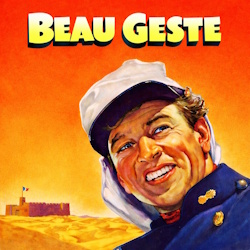
Paramount Pictures executives decided that they wanted to remake their 1926 silent film “Beau Geste”, which starred Ronald Coleman. William Wellman was assigned production, he would also direct, and Robert Carson was tasked with writing the screenplay. The 1926 film was based on the novel “Beau Geste” (1924) by P. C. Wren and the creative team ultimately decided to adopt the screenplay of the 1926 film almost verbatim. For the cast, Gary Cooper would star in the titular role, joined by Ray Milland as John Geste, Robert Preston as Digby Geste, J. Carrol Naish as Rasinoff, Susan Hayward as Isobel Rivers, and Brian Donlevy as Sergeant Markoff.
The story is set in 1914 just before the onset of WWI. It follows the fortunes of the Geste brothers, Beau, John and Digby who were adopted by the wealthy Brandon family. Sir Hector Brandon is a profligate spender who runs through the family fortune. Beset by creditors, he announces that he intends to sell the family’s one remaining asset the priceless “Blue Water” sapphire, which would leave Lady Brandon and the estate destitute. Beau steals the sapphire and flees, and Digby and John pursue only to discover that Beau has joined the French Foreign Legion. They too join with Beau and John assigned to the remote Sahara Desert Fort Zinderneuf, and Digby assigned to Fort Tocacu. The romanticism attributed to the Foreign Legion is quickly dispelled as they are made to suffer under the sadistic Sergeant Markoff, and find themselves besieged by the Tuareg tribesmen. Markoff learns of the sapphire, decides to steal it from a mortally wounded Beau only to be killed by John. When Digby arrives with a relief column, he finds Beau dead and fulfills his boyhood promise to give his brother a fiery Viking funeral. The film was a commercial success, with mixed critical reception as some believe the film only mimicked the 1926 version, which they believe was superior. The film received two Academy Award Nominations for Best Supporting Actor and Best Art Direction.
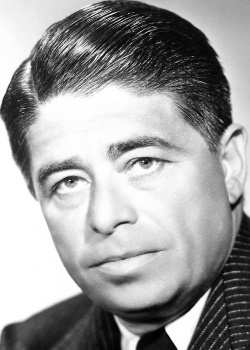
During the 1930s Alfred Newman established himself as a talented, reliable and imaginative composer with three Academy Award nominations under his belt; The Hurricane (1937), The Prisoner of Zenda (1937) and Alexander’s Ragtime Band (1938). Producer-director William Wellman recognized his talent and hired him for the project. Upon viewing the film, I believe Newman understood that the brothers Geste were the nexus of the film and that their musical identity would underpin his musical narrative. He also realized that he had to impart a sense of adventure, as well as the grim reality of serving in the French Foreign Legion. Lastly, he needed to speak to the ever-shifting sands of the vast Sahara Desert and the menace of the warlike Tuaregs who refused to accept French intrusion into their domain.
 For his soundscape, Newman composed five primary themes. Foremost was the Brothers Geste Theme, which exuded youthful confidence, jauntiness and vigor, as well as a sense of adventure. As it is their story, the theme serves as the Main Theme and permeates the film. Newman dispatches the romanticization of the Foreign Legion with a grim, heavy and oppressive musical identity, which by extension also supports the diabolical and sadistic Sergeant Markoff. The Tuareg Theme offers an exotic musical identity draped with orientalism. It is borne by a serpentine solo oboe and alto flute mistico, which speak to the vast ever shifting sands of the Sahara Desert and the lurking menace of the Tuareg who inhabit and fiercely defend it. In battle the theme is militarized and transformed into a ferocious anthem. The Love Theme offers a classic Romanza full of longing, borne by strings d’amore. First introduce by piano, it emotes with a classical sensibility. The Sapphire Theme, supports the massive gem of House Brandon. Newman imbues it with an other-worldly sensibility created by an eerie flute, celeste, and vibraphone, which are draped with string harmonics.
Cues coded (*) offer music not included on the album. “Prelude” offers a score highlight where Newman introduces three of his primary themes and masterfully sets the tone of the film. The Paramount Pictures logo is supported by a grim and foreboding statement of the Legionnaire Theme. We flow into a desert façade where blowing winds carry sand away to reveal the film title etched in sand. A horn empowered string bridge usher in at 0:18 a buoyant and adventurous Brothers Geste Theme, which supports the flow of the opening credits. At 0:44 Newman introduces his Sahara Theme carried by meandering woodwinds misteriosi buttressed with a saft drum cadence. At 1:06 the Brother’s Theme, borne with sentimentality by lyrical strings, reprises to support narrative script. At 1:22 we enter the film proper where a French Legionnaire relief column treks through the desert dunes empowered by the Legionnaire Theme rendered as a dour march. At 1:31 dire horns sound to support the sight of a fort. The Legionnaire March with trumpet militare resumes with narrative script, which reveals Major de Beaujolais leading a relief column to reinforce Fort Zinderneuf as a Tuareg attack is imminent.
(*) “Grim Discovery” reveals a slumberous fort and the major orders the bugler (Digby) to rouse them. He does so with a classic reveille, yet there is no response from the men holding their guns in the parapets. The major fires his pistol into the air and we see a rifle extend from a parapet and fire two warning shots into the sand in front of the major. The major decides to investigate and rides to the wall carried by woodwinds misteriosi. Dire horns resound as he looks up and sees a corpse. A lamentation unfolds as he circles the fort and sees that all the men are dead. He returns and dispatches the bugler to scale the walls and open the gate. Woodwinds eerily evoke the Sahara Theme with horns energico propelling Digby’s climb. Dire horns resound as he reaches the parapet and discovers a dead man. A grim Legionnaire Theme supports his scan of the fort and descent into it. Yet the gate fails to open, and so the major rides forth and scales the wall with a reprise of the same musical narrative. He sees a dead sergeant with a dagger protruding from his chest and holding a letter in his hand, next to another dead soldier laying in repose. An eerie musical narrative unfolds as the major grabs the note and reads the letter, which is addressed to Scotland Yard. The letter offers a confession by Beau that he stole the sapphire from Lord Brandon, which is supported by the other-worldly sensibility of the Sapphire Theme. Newman sow tension and weaves a foreboding narrative as the major descends into the fort and repeatedly calls out to the bugler. As he searches the fort an eerie Sahara Theme supports. A dire bass sustain usher in a determined Legionnaire Theme as the major opens the gates.
(*) “The Attack” reveals the major escorting his adjutant, Lieutenant Dufour, through the fort carried by a lamentation. He is baffled when he discovers that the bodies of the sergeant and soldier have disappeared. They return to the gate and the major orders the regiment to camp by the oasis. Suddenly gunfire erupts empowered by the Tuareg Theme and the major orders a fall back to the oasis where they will form lines and make their stand. An energetic Legionnaire Theme propels their flight. Trumpets militare empower the battle as the troops return fire. He orders Digby and another soldier to ride back and bring reinforcements. The major then orders cease fire, as he and Dufour see the fort in flames, punctuated by a dire chord. “The Early Years” opens atop languorous strings buttressed by trumpets as we see two ships at sea with narrative script; “About fifteen Years earlier in England, at Brandon Abbas”. The Brother’s Theme joins with a playful, nautical rendering as toy sailing ships engage in battle in the estate pond. Ashore we find the brothers Geste play acting the naval battle. Admiral Beau orders John to retrieve the ships, and the music becomes aggrieved at 1:17 as one of the small canon fires and hits John in the leg with a shell. They lay him down and Beau extracts the small shell. At 1:44 their theme resumes a playful iteration as Beau rewards John for not crying out during the shell extraction. At 2:11 trumpets usher in a regal rendering of their theme as Beau knights his brother, Sir John. They then decide to hold a Viking funeral and lay a toy soldier on the deck of one of the ships. A playful rendering of their theme supports John’s runs into the house to fetch a dog figurine, as the burial ritual requires it. They place the dog, light matches and shove off the boat, with a sentimental rendering of their theme. The toy ship burns and finally sinks. Woodwinds solenne emote the Brother’s Theme as Beau expresses his desire for a Viking Funeral when he dies, and Digby promises that he will.
(*) “Major Henri de Beaujolais” reveals Lady Patricia Brandon arriving and introducing a friend of the family, Major Henri de Beaujolais to the Geste boys, Augustus (Gussie), House Brandon’s heir, and her ward Isobel. Newman offers musical pleasantries joined with a reserved Legionnaire Theme. After they depart, the Legionnaire Theme shifts to a stately iteration as the boys reveal their desire to one day join the French Foreign Legion. Newman graces us with gentility as we shift to the major strolling with Lady Brandon. She discloses that her husband has gambled away the family fortune and that all that remained was the Blue Water Sapphire. The major has heard of its beauty, and asks if he could see it. In the study, she presses a switch, which swings open the fireplace. Newman supports with a misterioso as they enter the secret chamber. She presses another button, which opens a smaller hidden chamber in the wall. Slowly, the mystical, otherworldly Sapphire Theme begins to impinge on the misterioso, gaining prominence when she opens a container and we behold the massive faceted jewel.
(*) “Knights of the Round Table” reveals the children trapped indoors because of a rainstorm supported by a playful rendering of the Brother’s Theme. Beau decides that they will play King Arthur and the Knights of the Round Table. Trumpets regale sound as he leads them to a suit of armor. He decides that he will be King Arthur, Digby, Sir Lancelot, John, Sir Gawain, Isobel Queen Guinevere, and Gussie as Lord Modred. A faux regal rendering of their theme supports as they assist Beau crawl into the suit of armor. They then run to the next room, leaving Beau behind. Newman sow a misterioso of tension draped with Indian auras as the butler enters and admits Lady Brandon and a Sikh courier. He gives her a note and the courier depart as Beau watches surreptitiously. The Indian auras dissipate, and the misterioso resumes as she pauses with contemplation. She then exits the main room without ever noticing Beau. Digby and John return and assist Beau getting out of the armor supported by a distressed Brother’s Theme. Beau relates what he saw but they do not believe him, and horns regale declare his indignation that they dare to disbelieve King Arthur.
(*) “Gussie and Isobel” reveals narrative script supported by warm lyrical strings, which informs us that fifteen years had passed and that the children have grown to young adulthood. Gussie’s eyes are affixed on Isobel as she plays a classical piece on the piano. Aunt Pat joins and asks that Isobel continue. In “Chasing a Mouse” Beau runs down the stairs and grabs the Knight’s polearm and frantic strings energico propel his run upstairs. He joins Digby and they strategize how to trap and kill a mouse. At 0:14 strings romantico support their conversation turning to Gussie, who Beau asserts is lovestruck with Isobel. At 0:26 the mouse emerges from under the sofa. He sits on the rug and begins grooming himself, much to the amusement of the two, who sit down and watch. Newman supports with his diminutive Mouse Motif, which is quirky, animated, syncopated, and carried lightly by upper strings and woodwinds. At 0:55 Beau spares the mouse’s life and a warm Brother’s Theme supports their return downstairs. We flow back into the classical piano piece as the three men reunite. A telegram arrives and the butler takes it to Lady Brandon. She is devastated to learn that Hector is returning as he is again out of money and plans to sell-off the sapphire, which will leave them destitute. Beau asks if they could see the sapphire one last time, and she agrees.
“Blue Water Sapphire” reveals Aunt Pat returning with a box, which she opens to display a refulgent gem. Newman supports with a full rendering of the Sapphire Theme, which bathes us in an other-worldly sensibility created by a flute mistico, celeste, and vibraphone draped with string harmonics. At 1:01 an eerie misterioso entwines with the Sapphire Theme to support the lights going out as the room plunged into darkness. When the lights are restored, the sapphire is missing. Aunt Pat queries everyone in the room, knowing one of them took the sapphire. A sad flute borne Brother’s Theme joins, informs us that one of the three brothers took it. Aunt Pat departs saying the sapphire must be returned by morning or she will notify the police. After Digby forcibly frisks Gussie, they all turn in for the night. The next day at 2:32 we segue into “Farewell” as Digby and John read a farewell note from Beau who confesses to stealing the sapphire and says not to follow him. Newman supports the scene with a warm and tender rendering of the Brother’s Theme full of brotherly love. We close darkly, with John asking where do you think Beau went, with Digby responding, the Foreign Legion.
The next day in (*) “Digby’s Note” reveals the butler delivering a note from Digby to John. He reads it and joins Isobel in the study. John informs her that Digby falsely claimed he stole the sapphire and fled to ensure he is not blamed. A tender yet sad Brother’s Theme supports. John then takes Isobel into his arms and confesses his love empowered by their Love Theme, a string borne romanza. He informs her that he must join his brothers and hope she understands. When she asks if he took the sapphire, he says no, and that the only thing he wanted from the estate, was her. “March Out” reveals narrative script; “Saida. . . Clearing station for the desert forts”. We see the new recruits in uniform lined up in the fort courtyard supported by the trumpeting fanfare empowering a martial Foreign Legion Theme. A new line of recruits arrives in civilian clothes, and Beau and Digby see that John has also enlisted. John and his fellows make the acquaintance with the gruff, Sergeant Markoff. (*) “Brothers Reunited” reveals a jubilant reunion of the brothers in the barracks. They decide to celebrate at the saloon and head out with some rag tag recruits. They return to the barracks drunk singing the “Legionnaire’s Song”, music by Troy Sanders and lyrics by Frank Loesser. Back at the barracks, they decide to flee the collective snoring and sleep outside, supported by a warm and tender rendering of their theme. Each takes turns explaining how they will sell the sapphire and the life they will live unaware that the snitch Rasinoff is listening around the barrack’s corner unseen.
In (*) “Rasinoff Searches for the Sapphire” The brothers go to sleep and we segue into narrative script; “Another night – a month later. . . a fourth jewel thief – uninvited”. Newman sow a tense and suspenseful musical narrative as Rasinoff gets out of bed while everyone sleeps and begins searching through the Geste brother’s belongings. As he reaches down Beau’s shirt, he wakes and a fight ensues with a frenetic tempest propelled by strings irato. The other men hate Rasinoff, force him onto a table and prepare to pummel him when reveille sounds and supports the arrival of Sergeant Markoff who accuses Rasinoff of being up to his old tricks. He orders him out, and then orders the barracks back to bed. Outside he demands to know who Rasinoff was trying to rob. He admits that one of the brothers stole a jewel, which he will sell for £30,000. Markoff and Rasinoff conspire to steal the jewel by separating the brothers. He then orders Rasinoff to bed. The next day Markoff separates Digby from Beau and John, dispatching him for cavalry training at Fort Tocacu while Beau and John will remain under his command at Fort Zinderneuf. Digby’s regiment exits the fort propelled by a drum empowered marcia militare. Markoff then orders his regiment to depart empowered by a military band rendering the Legionnaire Theme as a marcia militare.
(*) “Fort Zinderneuf” reveals reveille supporting the sight of the fort, and narrative script; Months later. . . at Zinderneuf”. Lieutenant Martin is ill and Sergeant Markoff is overseeing daily operations. Two deserters have been captured and Martin orders them imprisoned and sent to Algiers for court martial. The deserters are desiccated and suffering heat prostration. Markoff disobeys orders and gives the men two choices, the firing squad, or returning to the desert. He forces them out with two Berber scouts with orders to drive them away from the oasis to certain death. Markoff warns the company not to cross him, and returns to his quarters as Rasinoff closes the gates. Newman supports with a sinister and ominous musical narrative. Later that night a shot of the flag being lowered at nightfall is supported by reveille. (*) “I Am Dying” reveals Markoff checking in on Martin. When he asks how he is doing, Martin says he is dying and is saddened that he will be buried under the sand and soon forgotten, instead of dying honorably in battle. He orders Markoff to sent a man to Fort Tocacu to inform Major de Beaujolais to send an officer to assume command. He counsels Markoff to lead the men, not drive them and then apparently expires. Markoff put his ear to Dufour’s chest and we see a malevolent smile of glee. Newman supports the scene up to Dufour’s death with a lamentation of despair and bitterness. After he expires, the music darkens and becomes sinister. Later Markoff visits the barracks, announces Lieutenant Martin’s death, and says he now assumes command. He adds a caveat as he departs; discipline will be severe – I promise you.
(*) “Mutiny” reveals private Schwartz railing against Markoff’s brutality, which is no longer restrained by Martin. He incites the other men to join him in mutiny the next morning. However, Beau, John, and Maris refuse to take part. Schwartz sends Voisin out to secure the guard’s loyalty. Music enters with an ominous narrative when Voisin betrays the mutineers by tipping off Markoff. Back at the barracks Voisin returns confirming that he had alerted the guards. Krenke shrieks and finally dies from fever. Dire strings support Schwartz’s order that no one leave the barracks. (*) “Markoff and Rasinoff Strike” reveals Markoff waking Rasinoff and ordering him to dress with no shoes. A sinister statement of the Legionnaire Theme supports. Newman sow suspense and tension with a pizzicato string cadence and portentous woodwinds as Markoff disarms the sleeping guard and locks him in the brig. Markoff sneaks into the barracks as the men sleep and Rasinoff wakes Vaison, Beau, John and Maris. While Rasinoff stands guard with a pistol, Markoff orders the four men to remove all the rifles. While working, Markoff demands that Beau surrender the jewel and he refuses, which elicits a death threat. Beau however remains defiant. Markoff and the five-armed men wake the mutineers, and they are ordered to march out to the courtyard. Markoff spews his disdain at the men and orders Beau and John to execute the leaders Schwartz and Renoir, but they refuse. Markoff is furious, disarms them, and prepares to execute them but pounding on the gate dissuades him. He opens the portal and the Berber scouts alert him to a Tuareg attack. Markoff orders them to ride to Fort Tocacu for reinforcements, and then orders the men to arm themselves and defend the fort.
“Battle” offers a score action highlight that displays outstanding thematic interplay. It reveals an onslaught of Tuareg warriors riding to attack the fort. Newman unleashes a maelstrom with aggressive and warlike rendering of the Tuareg and Legionnaires Theme, which contest in battle, joined by the Brother’s Theme when they are on camera. The Tuaregs retreat after many casualties and we conclude at 2:45 with a thankful Brother’s Theme as Beau and John count their blessings. Markoff orders men to change into uniform in shifts, and that coffee and bread be served. (*) “Markoff’s Threat” reveals him advising Beau that perhaps the Tuaregs will do is handiwork. Beau calmly counters that they are in this fight together, which causes Markoff to storm off. Newman supports under the dialogue with a sinister musical narrative. Later, as the men wait for the next attack, a lurking and meandering Tuareg Theme supports. The Brother’s Theme supports as they lock eyes, joined by a grim Legionnaire Theme as Markoff relates to Rasinoff that it has been three hours since the first attack. Markoff orders Schwartz to the tower as a lookout, a station where he is exposed. Schwartz understands this and dire trumpets buttress his scowl and departure, joined by swirling strings and the Legionnaire Theme, which propel his run and ascent up the ladder.
(*) “Second Attack” the Tuareg Theme empowered by swirling strings propel the Tuareg who approach on foot using the dunes for cover. Reveille counters as the battle is joined. Dire declarations of the Legionnaire Theme support the loss of several men. A resolute Brother’s Theme joins as we see Beau firing from the parapet. Schwartz is shot and killed as the Tuaregs again retreat. Markoff orders cease fire and the bugler sounds reveille. Unlike the first attack, significant deaths are suffered, which weakens the fort’s defense. A truly grim musical narrative empowered by dire horn declarations unfolds as Markoff one by one lifts up a dead soldier and positions him with his gun in a parapet to deceive the enemy of their loses. A grim Legionnaire quote punctuates Markoff’s glee as he looks at Schwartz’s corpse aloft. He then diabolically orders Voisin to the tower, and certain death as punishment for betraying his friends. The Legionnaire Theme on trumpets carry his departure. That night, a dispirited Legionnaire Theme supports the men resting on the parapets, joined by a warm Brother’s Theme as they again lock eyes from a distance.
(*) “Third Attack” a charging variant of the Tuareg Theme propels the arrival of Tuareg cavalry. They charge supported by an infantry charge. A fierce battle ensues and once again Newman propels the fight with dynamic interplay of the Tuareg and Legionnaire Themes. We discern musically that the Tuareg Theme is energetic and ferocious, while the Legionnaire Theme is grim with less vitality as we see casualties mounting and their ranks thinning. Once again, the Tuareg retreat with swirling strings energico empowering their theme. Markoff again orders cease fire with the bugler sounding reveille, and we close with a warm, yet exhausted Brother’s Theme as we see a weary Beau and John sitting together. We reprise the truly grim musical narrative empowered by dire horn declarations as Markoff once again one by one lifts up his dead soldiers and positions them with their guns in a parapet to deceive the enemy of their loses. Markoff orders Rasinoff to take a head count, and only twelve men out of fifty remain alive. He orders men in shifts of two to the barracks to eat and drink. With the brothers Geste going first. He then issues another diabolical order to Rasinoff to ascend to the tower and dream of the jewel. Markoff smiles gleefully as dire, portentous trumpets of death declare Rasinoff’s departure, joined by swirling strings and the legionnaire Theme, which propel his run and ascent up the ladder. In the barracks a fatigued Brother’s Theme supports Beau and John as they discuss their unbreakable bond as brothers, joined by a fleeting Love Theme as John speaks of Isobel. Beau advises John that if he falls, in his jacket are a package a letter for Aunt Pat, and a second letter that stays with him. When Beau asks John if he has any requests, he says to relate his love for Isobel, which is supported by their Love Theme. We close with a somnolent Brother’s Theme as they fall asleep, exhausted.
The next day in (*) “Markoff’s Defiance”, he orders the bugler to show the Tuareg’s their pride and confidence with a long bugling passage. He does so and it resounds over the dunes, much to Markoff’s satisfaction. He then orders the men to one-by-one laugh to help foster morale and inform the Tuareg that they have no fear. As Rasinoff is called upon to, laugh, he does so like a hyena, much to the men’s delight. (*) “Final Attack” commences with Rasinoff’s death and fall from the tower. Once again Tuareg cavalry charge as infantry lay on dune crests and fire. The Tuareg Theme is ascendent as there is no longer sufficient gun fire to hold them back from the fort. The bugler dies and a heroic rendering of the Brother’s Theme supports Beau efforts to fight on. As John also bravely fights on, he turns and see that Beau is mortally wounded. He runs to his side supported by a molo tragico rendering of their theme. Markoff at gun point orders John back to the fight, carried by a resurgent Legionnaire Theme. John manages to shoot the Chief off his horse, which ends the attack as his army retreats and his men carry him away.
(*) “Leave My Brother Alone” reveals John confronting Markoff as he will not allow him to place Beau’s body on the parapet. Markoff orders him to fetch wine and bread, and John counters that if he moves Beau’s body, he will kill him. Markoff then gloats as we see the Tuaregs departing, supported by a mystical rendering of their theme. As he boasts that he will earn the medal of honor, and be made an officer for this victory, the camera reveals Beau with eye movement. A forlorn Brother’s Theme carries John’s trip to get wine and bread. When he returns, he finds Markoff with the sapphire, saying he is now a rich man. John grabs his dagger and says he warned him, but Markoff raises his pistol and says the record will show you died a mutineer. As he prepares, to shoot Beau strike his leg throwing him off balance and his shot misses John. John thrusts his dagger into Markoff’s heart and kneels next to Beau. A musical lament joins as he tells John to take the package and letter for Aunt Pat, and to put the second letter in Markoff’s hand. He offers his regret of not seeing Digby again. He then counsels him to flee to Egypt. Reveille from Major de Beaujolais regiment sounds, and Beau relates that it is too late as he expires, punctuated by a tragic chord. John fires two rifle shots into the sand and returns to Beau. The lament resumes as he places a letter in Markoff’s hand, takes the package and other letter, and then tenderly folds Beau’s arms on his chest, and gives him a parting kiss on the cheek. A grim Legionnaire’s Theme carries his run to the barracks. After he gathers personal effects and two canteens, the Brother’s Theme carries him upwards to the rear parapet where he prepares to jump into the sand and flee undetected. As he turns to jump a tragic chord punctuated his last look at Beau. He jumps into the soft sand and then flees into the dunes, where he hides out of sight.
(*) “Digby and Beau” reveals Digby the bugler scaling the walls. A dire chord resounds as he sees all the dead men at the parapets. He sees Beau’s body, runs to him, places his ear over his heart, and weeps. He then remembers John and calls out to him as he searches the fort. A dire chord of death supports the major scaling the walls and viewing all the dead soldiers. As he goes to Markoff, the camera reveals John pretending to be one of the dead soldiers. The major opens and reads the letter supported by grieving strings as he gazes at Beau’s body. He calls out to the bugler and as he searches the fort an eerie Sahara Theme supports. Digby takes Beau’s body and carries it down towards the barracks, eluding the major. The Brother’s Theme, rendered as an aching lament supports him laying Beau on his cot. As he places sheets and blankets under the cot horns maestoso resound. Horns Solenne resound as Digby departs and runs back to the parapet where he carries Markoff’s body and places it at the foot of Beau’s bed.
In “A Viking’s Funeral” Digby begins pouring lamp oil over the bed, and a threnody unfolds borne by horns solenne and angelic women’s wordless chorus, which stops as the major opens the gate. At 0:43 a grim Legionnaire Theme supports the major taking Lieutenant Dufour to the parapet. He is dumbstruck when he discovers that the bodies of Markoff and Beau have disappeared. At 1:50 angelic women’s voices, muted trumpet and horns solenne offer an elegy as John lights the fire to recreate the Viking Funeral he promised Beau as a boy, with the cot serving as a metaphor of a Viking ship, and Markoff as the dog. At 2:25 a grim Legionnaire Theme carries the major and Lieutenant back to the gate. At 2:36 a mystical woodwind borne Sahara Theme wafts in like a desert breeze. At 3:02 film and album diverge. On the album we conclude with an elegy full of heartache as Digby bids a final farewell to Beau. In the film Digby pushes cloth into his bugle and offers an elegy, which is not found on the album. We end with a dire chord as gun fire erupts.
(*) “Fall Back!” reveals the major ordering the regimen to fall back to the nearby oasis and form firing lines. The Tuareg Theme reprises with raging ferocity as the regiment falls back and forms lines as Digby makes a dash for the rear parapets. As the troops return fire, a heroic Brother’s Theme supports Digby seeing that John is firing shots as a diversion. He jumps off into soft sand and makes a dash to join John. They are happy to reunite, but the death of Beau weighs heavily with the Brother’s Theme expressed with the heartache of loss. A grim and heavy Legionnaire Theme joins as they look up and see the fort in flames. The theme shifts to a lament as Digby explains that they are looking at a Viking’s funeral. John thanks him for upholding their boyhood promise. As they ponder their future, they set-off to Egypt as Beau counselled. They are met by their two American buddies on horseback who join them on the journey. (*) “Digby’s Death” reveals the parched men laying on a dune crest overlooking an oasis. Regretfully it is occupied by fifty Tuareg fighters. Digby’s plan is for him to sound a bugle attack while the other three fire, hoping they will flee an ambush by the French army. He races off to another dune crest and bugles the attack as the men open fire, killing several Tuaregs who flee. Unfortunately, a parting shot mortally wounds Digby, which is supported by dire horn chords and swirling strings of descent as he rolls down the dune. John reaches him, rolls him over and finds him dead. He weeps as a solitary trumpet offers an elegy.
(*) “John Returns Home” reveals John’s return home where he is greeted warmly by the butler Burden. The piano borne Love Theme is heard in the parlor and he runs in and finds Isobel who runs to him for a kissing embrace as their theme blossoms orchestrally. Aunt Pat joins with happiness, which turns to sadness as the music ends after she asks, are you alone? And John answers, yes. He then offers the package and letter to her, saying it was Beau’s wish. She reads aloud Beau’s letter, which reveals that as a child he was hiding in a suit of armor and witnessed her selling the “Blue Water” to the Maharaja’s agent. He realized that she had replaced it with a fake and so that night he stole the faux gem to protect her honor — his “beau geste” (gallant gesture). “Finale” reveals that Aunt Pat is thankful, and deeply moved. She turns to John and says; “We did not name him wrongly, did we.” Newman supports warmly, and with sentimentality the Brother’s Theme on strings tenero, which ascends on a crescendo dramatico that crests with a bold declaration of the Legionnaire Theme. At 0:39 we segue into “End Cast”, which offers a bravado rendering of the Brother’s Theme.
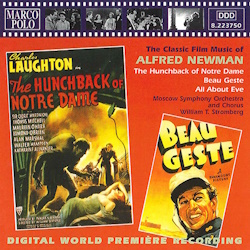 I commend John Morgan and William Stromberg for rerecording the score for Alfred Newman’s “Beau Geste” This compilation album also features the score for “The Hunchback of Notre Dame” (1939) and a suite from “All about Eve” (1950). The reconstruction effort by Stromberg was excellent and the performance of the Moscow Symphony Orchestra under his baton, also excellent, with the album providing a wonderful listening experience. Newman understood that the film’s title literally encapsulated its narrative – “Beau Geste” or gallant gesture, buttressed by an ancient Arab Proverb;
“The love of a man and a woman waxes and wanes like the moon… but the love of a brother for brother is steadfast as the stars, and endures like the word of the prophet”.
His theme for Beau, and by extension the brothers Geste was well-conceived and executed providing youthful confidence, jauntiness and vigor, as well as a sense of adventure. The theme was very malleable with its more tender, and intimate renderings offering some of the score’s finest moments. Indeed, the score’s emotional apogee was achieved when John dutifully performed his filial duties by honoring Beau’s boyhood wish to have a Viking burial. The elegiac writing joined by wordless women’s angelic voices was breath-taking and supremely moving. The juxtaposition of the dour and oppressive march of the French Legionnaire’s Theme and the mystical and meandering Sahara Theme perfectly contrasted the vast ever shifting sands of the desert setting and French imperialism. Later in the film the exotic Sahara Theme is transformed into a battle anthem for the Tuareg people and I was very impressed how Newman supported the battle scenes with the French and Tuareg musical identities engaged in ferocious interplay. His music empowered the combatants and elevated the film in every way. Folks, this was an exceptional score in what was a banner year for Newman that included five Academy Award nominations. (There were more nominations/year in the 1930s than present day). If you like brotherly love and loyalty, adventure, dynamic action writing, and a classic Love Theme, then this is a score for you. Less than half of the score was reconstructed and I hope that one day we will get a complete recording. Until that day, I highly recommend you purchase this compilation album, and take in the film as well to witness how music can elevate and empower a film.
For those of you unfamiliar with the score, I have embedded a YouTube link to the Prelude: https://www.youtube.com/watch?v=qULGNiXs1ZA
Buy the Beau Geste soundtrack from the Movie Music UK Store
Track Listing:
- Prelude (1:52)
- The Early Years (3:31)
- Chasing a Mouse (1:37)
- Blue Water Sapphire – Farewell (3:55)
- March Out (0:53)
- Battle (3:16)
- A Viking’s Funeral (3:45)
- Finale – End Cast (1:20)
Marco Polo 8.223750 (1939/1996)
Running Time: 22 minutes 06 seconds
Music composed by Alfred Newman. Conducted by William Stromberg. Performed by The Moscow Symphony Orchestra. Original orchestrations by Edward Powell. Recorded and mixed by Edvard Shakhnazarian and Vitaly Ivanov. Edited by XXX. Score produced by Alfred Newman. Album produced by John Morgan, William Stromberg, and Anna Bonn.

Shop at the Movie Music UK Store

Member of the

 MOVIE MUSIC UK