Lalo Schifrin, 1932-2025
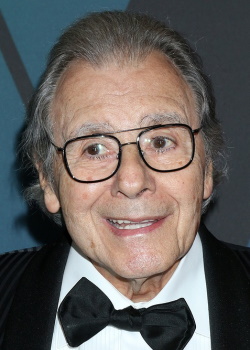 Composer, pianist and conductor Lalo Schifrin died at his home in Los Angeles on June 26, 2025, at the age of 93, from complications of pneumonia.
One of the most versatile and distinctive film composers of the twentieth century, Schifrin wrote music for more than 100 films and television productions, received six Academy Award nominations and won four Grammy Awards. His scores encompassed jazz, funk, Latin music, avant-garde experimentation and large-scale symphonic writing, but his most famous composition remains the instantly recognizable theme for Mission: Impossible.
Boris Claudio Schifrin was born in Buenos Aires, Argentina, on June 21, 1932. His father Luis was concertmaster at the Teatro Colón, and Schifrin began studying piano at five. After early training in Argentina he received a scholarship to the Paris Conservatoire, where his studies included work with Olivier Messiaen and Charles Koechlin. At the same time he immersed himself in jazz, performing in Paris clubs and developing the combination of classical technique and rhythmic freedom that would become central to his musical personality.
Returning to Argentina in 1956, Schifrin formed a jazz orchestra and came to the attention of Dizzy Gillespie, who encouraged him to move to the United States. Schifrin subsequently became pianist and arranger for Gillespie and composed the acclaimed Gillespiana, beginning an enduring career in jazz alongside his work for the screen. He also arranged and recorded with musicians including Count Basie, Stan Getz, Sarah Vaughan and Ella Fitzgerald.
Schifrin moved to Los Angeles in 1963 and quickly became established in film and television. Early feature assignments included Rhino! (1964) and The Cincinnati Kid (1965), while television brought him work on The Man from U.N.C.L.E. and, in 1966, the assignment that changed his career. For Mission: Impossible he wrote a propulsive main theme in unusual 5/4 time, combining insistent percussion, brass and flute into one of the most instantly identifiable television themes ever composed. It won Grammys for Best Instrumental Theme and Best Original Score for a Motion Picture or Television Show and later became an essential part of the Tom Cruise film series.
The late 1960s established Schifrin as a major film composer. Stuart Rosenberg’s Cool Hand Luke (1967) allowed him to combine Americana, blues, percussion and orchestral writing in support of Paul Newman’s rebellious prisoner, earning Schifrin his first Academy Award nomination. The same year he received another nomination for the sensitive drama The Fox. Peter Yates’s Bullitt (1968) became another landmark, its cool jazz, electric guitar, tense rhythms and sharp brass perfectly complementing Steve McQueen’s San Francisco police thriller. Significantly, Schifrin and Yates allowed the film’s famous car chase to unfold without musical underscore, demonstrating that Schifrin understood silence as effectively as sound.
An especially important relationship developed with Clint Eastwood. Beginning with Coogan’s Bluff (1968), Schifrin scored The Beguiled (1971), Dirty Harry (1971), Joe Kidd (1972), Magnum Force (1973), Sudden Impact (1983) and The Dead Pool (1988). Dirty Harry remains among his defining achievements, combining eerie female voices, dissonant orchestral textures, jazz and driving funk rhythms to capture both the menace of the Scorpio killer and the hard-edged atmosphere of contemporary San Francisco. The score helped establish a musical vocabulary for urban thrillers that would be widely imitated throughout the 1970s.
Schifrin’s extraordinary versatility was evident throughout the decade. He wrote the eccentric, experimental music for George Lucas’s dystopian THX 1138 (1971), scored Don Siegel’s Charley Varrick (1973), and brought a potent mixture of Eastern sonorities, jazz, funk and orchestral action to Bruce Lee’s Enter the Dragon (1973). Other major assignments included Kelly’s Heroes (1970), The Four Musketeers (1974), The Eagle Has Landed (1976), Voyage of the Damned (1976) and The Amityville Horror (1979). The latter two brought further Academy Award nominations, with the sinister children’s-choir writing of The Amityville Horror demonstrating Schifrin’s effectiveness in a genre far removed from the jazz thrillers with which he was most closely associated.
His later film work included Brubaker (1980), The Competition (1980), The Sting II (1983), The Osterman Weekend (1983) and The Fourth Protocol (1987). “People Alone,” written for The Competition, earned him an Oscar nomination for Best Original Song, while The Sting II brought his sixth and final competitive Academy nomination. Schifrin enjoyed renewed popular success with Rush Hour (1998), starring Jackie Chan and Chris Tucker, and returned for both of its sequels. One of his later scores was Abominable (2006), directed by his son Ryan.
Television remained equally important. In addition to Mission: Impossible, Schifrin wrote memorable themes and scores for Mannix, Medical Center, Planet of the Apes, Petrocelli and Starsky & Hutch. His television music shared many of the qualities of his film scores: irregular rhythms, jazz sophistication, bold brass writing and an ability to create an immediately recognizable musical identity within seconds.
Away from the screen, Schifrin remained an important jazz and concert composer, writing symphonies, concertos and large-scale works while conducting major orchestras around the world. His Jazz Meets the Symphony recordings deliberately brought his classical and jazz careers together, while in 1990 he arranged music for the historic Three Tenors concert surrounding the World Cup final in Rome. His four Grammy Awards included two for jazz composition and two associated with Mission: Impossible.
Despite six competitive Oscar nominations without a win, Schifrin finally received an Honorary Academy Award in 2018, presented by his longtime collaborator Clint Eastwood in recognition of his contribution to film music. He is survived by his wife Donna and his children William, Frances and Ryan.

Shop at the Movie Music UK Store

Member of the


