THE LIFE OF CHUCK – The Newton Brothers
 Original Review by Jonathan Broxton
The Life of Chuck is an unusual, but ultimately warm-hearted and life-affirming story that touches on subjects no less important than the meaning of life itself, which it explores in a way that combines art, dance, poetry, music, mathematics, philosophy, existentialism, and a little bit of supernatural magic. It is based on a novella by Stephen King that was published in the 2020 anthology book ‘If It Bleeds’; similar to things like The Shawshank Redemption and Stand By Me, it is not a horror story, and instead is more of a rumination on the nature of reality. Told in reverse chronological order, it traces the life of a man named Charles “Chuck” Krantz, played by Tom Hiddleston as an adult. To reveal more of the plot would do it a disservice, so I’ll leave it at that, but at its core the story is a meditation on mortality, memory, and the idea that a single life contains a universe, as Walt Whitman once proposed. Rather than horror, it delivers awe – both for how fragile the world is, and how astonishingly rich a single human life can be if we take the time to make it so.
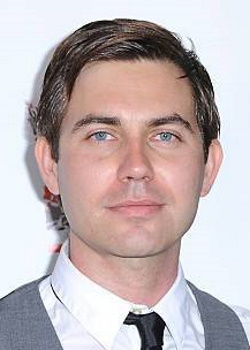
The film is directed by Mike Flanagan, who has directed two Stephen King adaptations before – Gerald’s Game in 2017 and Doctor Sleep in 2019 – and has served as showrunner on several excellent Netflix horror series such as The Haunting of Hill House, The Haunting of Bly Manor, Midnight Mass, and The Fall of the House of Usher. In addition to Hiddleston the film co-stars Benjamin Pajak and Jacob Tremblay as younger versions of Chuck, and Mia Sara and Mark Hamill as Chuck’s grandparents, plus Chiwetel Ejiofor and Karen Gillan, and several members of Flanagan’s recurring ‘acting troupe’ in key smaller roles, including Kate Siegel, Samantha Sloyan, and Rahul Kohli. The score for The Life of Chuck is also by regular Flanagan collaborators, composers John Grush and Taylor Newton Stewart, who work together as ‘The Newton Brothers’. This is their 12th project together overall.
 I’m not sure why I like the score for The Life of Chuck as much as I do. It’s very understated, quiet and calm, with an instrumental palette that is limited mostly to just pianos and synths. There is a small amount of pleasant recurring thematic content, and in terms of emotional depth it offers a few moments of gentle catharsis, but for the most part remains on an even keel, adding a sort of magical and wistful sheen to the movie without ever raising its voice. People I respect have dismissed the score as being ‘frustratingly sparse,’ among other similarly disparaging terms, but I didn’t find it to be that way at all. In fact, I actually found myself being uncharacteristically drawn to its subtlety, and part of that might be because I found myself being constantly reminded of early James Horner, and 1980s Maurice Jarre.
In the 1980s and 90s Horner interspersed his big flashy orchestral scores with a number of smaller-scale and more intimate works for dramas; scores like Jack the Bear, House of Cards, Testament, Extreme Close-Up, and especially Field of Dreams. The orchestration of those scores were all different – they all had more fulsome arrangements, and of course the finale of Field of Dreams was big and symphonic – but the vibe was the same. These were all scores which find depth and meaning in the quiet moments in life, and I found that same vibe here in The Life of Chuck.
Then, in terms of 1980s Maurice Jarre, it was the specific timbre of the electronics that the Newton Brothers use that brought me back to that time and place. It’s actually somewhat ironic that I found myself appreciating that here, because by and large I find Jarre’s 1980s synth scores to be quite poor. With just one or two notable exceptions (like Dead Poets Society) Jarre’s 1980s synth scores always came across to me as somewhat amateurish and clumsy. Jarre was a composer much more at home writing for big orchestras, and his side-step into embracing synths in that decade showed that he did not really know how to translate one composition style into the other. However, with this score, the Newton Brothers prove that they are significantly more adept at writing music for electronic instruments than Jarre was. They write music that is clearly specifically intended to be performed on keyboards, whereas Jarre’s music felt like it was written for an orchestra but then awkwardly rendered on a keyboard purely because that’s what he thought the conventions of the decade required.
 As such, I found almost all of The Life of Chuck to be a soothing, nostalgic treat. Almost the entire score adopts this tone. The gentle lullaby-like piano main theme appears in several cues, beginning with the opening cue “The Sidle of Evening,” and continuing on with prominent statements in later cues like “Calendar,” the warmly appealing “Emergency Broadcast System,” “No More Today,” “Just That,” and the lovely “It Works”. “Get In Here” is one of the few cues that features live strings – it sounds like just one viola, one cello, and a harp – and then the quietly devastating “Empty Cars,” which for all intents and purposes literally underscores the end of the world, contains moments of harshness and eerie dissonance, but concludes with a sense of regret and longing blended with tranquil acceptance and peace.
In other cues the Newton Brothers strip down the thematic content even further, simply presenting the chord structure, or even just one piano note, against their fuzzy electronic textures, in a way that is oddly mesmerizing, almost hypnotic. Cues like the brilliantly-named “Fuckin’ Porn Hub,” “Skywriting,” and “What Did You See” are great examples of this. Often, the Newton Brothers will use a single-note piano cluster technique in exactly the same way that Horner did in Field of Dreams during the ‘cornfield’ scenes, highlighting a particular dramatic moment with the sound of magical inevitability. “Millions of Stars” augments the electronic wash with the sound of tinkling bells, and then the conclusive “I Am Wonderful” ends things on an understated, tender note full of meaning.
The track “Joy” accompanies the pivotal scene where the adult Chuck is inspired to stop and joyfully dance to a drum solo performed by a busker on a street corner. That busker is played by the popular professional percussionist Taylor Gordon, better known as The Pocket Queen, and she performs the music herself too, in a variety of engaging styles and with virtuoso flamboyance. This seemingly out of character act by Chuck captures a fleeting but beautiful experience that defines part of who he is, and taps into the film’s underlying message: that a human life, even ones filled mostly with quiet or mundane moments, can also contain infinite richness. The music and the dancing is pretty good too. The album ends with a performance of the traditional folk song “The Parting Glass” by the South African-born contemporary folk singer Gregory Alan Isakov, and this again taps into the film’s messages as it is often sung at the end of gatherings, wakes, or farewells.
Don’t go into The Life of Chuck expecting big emotional outbursts or huge orchestral performances. It’s not that kind of score, and if you need that you’ll be left disappointed. Instead, The Life of Chuck is a quiet, reflective, slightly sad, but ultimately life-affirming meditation on life and death and everything in between; and if you’re a fan of James Horner’s low-key 1980s and 90s drama scores, or of the specific timbre of Maurice Jarre’s electronic scores from the same era, you may find yourself as drawn to it as I was.
Buy the Life of Chuck soundtrack from the Movie Music UK Store
Track Listing:
- The Sidle of Evening (2:05)
- Fuckin’ Porn Hub (3:30)
- Calendar (3:37)
- Skywriting (4:52)
- Emergency Broadcast System (2:35)
- Empty Cars (8:49)
- Joy (written by Taylor Gordon, performed by The Pocket Queen) (5:13)
- No More Today (1:53)
- Get In Here (2:36)
- Just That (1:55)
- World Inside Your Head (2:13)
- What Did You See (0:59)
- It Works (1:32)
- Millions of Stars (2:11)
- I Am Wonderful (1:19)
- Empty Cars – Reprise (1:06)
- The Parting Glass (traditional, performed by Gregory Alan Isakov) (4:07)
Lakeshore Records (2025)
Running Time: 50 minutes 32 seconds
Music composed, arranged, and performed by John Grush and Taylor Newton Stewart (The Newton Brothers). Recorded and mixed by Jonathan Wales. Edited by Brett Pierce. Albums produced by The Newton Brothers.

Shop at the Movie Music UK Store

Member of the

 MOVIE MUSIC UK