Under-the-Radar Round Up 2025, Part 1
 Original Reviews by Jonathan Broxton
I’m pleased to present the latest installment in my on-going series of articles looking at the best under-the-radar scores from around the world.
This article, the first of 2025, covers seven scores released in the first quarter of the year from a wide array of genres and countries, including tender romance score from Japan, a fantastic historical animated action-adventure TV score from France, a jazzy Swiss period drama, a Japanese animated short film, a Norwegian nature documentary TV series, a French period TV series, and a French action-adventure score with a gender-swapped twist!
35TH YEAR LOVE LETTER – Tarô Iwashiro
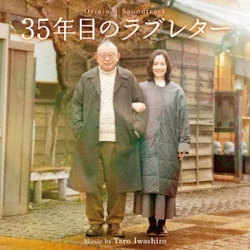 35th Year Love Letter is a heartwarming romantic Japanese drama film written and directed by Renpei Tsukamoto. It stars Tsurube Shôfukutei as an elderly man named Tamotsu Nishihata. As he was born during World War II, Nishihata was unable to receive a proper education and grew up unable to read or write. Many years later, in order to express his gratitude to his beloved wife Kyoko (Tomoyo Harada) who has supported him for so long, Nishihata begins attending night school so that he can write her a love letter.
The score for 35th Year Love Letter is by Tarô Iwashiro, one of the most acclaimed and accomplished composers in contemporary Japanese cinema. Over the years I have heard Iwashiro write everything from stirring choral elegies (Fukushima 50 in 2020), to action epics (Red Cliff in 2008, Heroic Legend of Arslan in 2015), and spellbinding classicism (NHK Special: The British Museum in 2012), but I don’t think I have ever heard him be as tender and romantic as he is here in 35th Year Love Letter.
The score is just a delight; quiet, intimate, elegant, but also imbued with a sense of deep emotion and longing that is just outstanding. To be flippant, 35th Year Love Letter sounds to me like a Japanese 1990s John Barry score – it overflows with those lush, elongated violin melodies backed by seep, sonorous cello chords, that Barry wrote so often in the last decade or so of his life, and while it was clearly not intentional Iwashiro seems to be exploring those same musical avenues here. Tracks like “Unknown Tomorrow,” “Gravestone Returns,” and “This is Japan…” overflow with this beauty and slightly melancholic romance, and I just adore it.
Elsewhere there are moments of lightness and delicacy, almost playfulness, in the woodwind and harp writing of cues like “Record of a Certain Creature”. There is sorrow and meaningful poignancy in cues like “End of Utopia”. There is a soulfulness to the piano lines of cues like “Who Will Succeed” and especially “Peace on Earth,” and then in “At the End of the Endless Stream” Iwashiro allows his oboes to take center stage with real sensitivity and heart. The extended finale, “Resurrection Day,” is a sumptuous full-orchestral take on everything that has come before it, extending the symphonic palette and presenting the main themes in all their full glory .
While I can see how some people might find its subtlety and quietness a little too low key and simple, that was not my experience at all. I thought it was all just outstanding, a welcome diversion from the rowdiness of certain parts of modern film music, and yet another instance of what an excellent, multifaceted composer Tarô Iwashiro is. The score for 35th Year Love Letter is available as an import CD from retailers like YesAsia, and is also available to stream and download from most of the usual online sources.
Track Listing: 1. Unknown Tomorrow (1:34), 2. Record of a Certain Creature (1:02), 3. End of Utopia (2:39), 4. Gravestone Returns (1:53), 5. Who Will Succeed? (1:51), 6. Peace on Earth (3:46), 7. At the End of the Endless Stream (4:27), 8. Beyond the Rain, Wind, and Sunset (1:59), 9. When Dawn Breaks (3:07), 10. Gordian Knot – Long Road to God (5:11), 11. This is Japan… (1:20), 12. Resurrection Day (6:26), 13. Keep Holding U (Movie Edit) (2:39). Rambling Records RBCP-3577, 30 minutes 01 seconds.
ASTÉRIX & OBÉLIX: LE COMBAT DES CHEFS – Mathieu Alvado
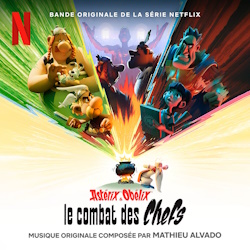 Astérix & Obélix: Le Combat des Chefs, known in English as Asterix & Obelix: The Big Fight, is a French-language animated TV series for Netflix, based on the incredibly popular comic book series by René Goscinny and Albert Uderzo. The show was created by Alain Chabat and follows the title characters – heroic/comedic warriors in medieval France – as they must defend their village from the Roman invaders.
There has been a lot of great music written for Astérix & Obélix movies and TV shows over the years, from composers as eminent as Gérard Calvi, Vladimir Cosma, Michel Colombier, and more recently Frédéric Talgorn and Philippe Rombi. Scoring an Astérix project is almost a rite-of-passage for French composers, and latest one to throw his hat into the ring is Mathieu Alvado. The only prior work I had heard by him was from the 2023 video game score Empire of the Ants, which he co-scored with Mark Choi, but on the evidence of that score and this one, he is a genuine talent to watch.
The music is performed by the London Symphony Orchestra, and is outstanding, a terrific throwback to classic 1980s and 90s symphonic action adventure scoring. The score is teeming with themes and recurring leitmotifs, features moments of Roman pageantry, and sequences of Gallic-inflected peasant folk music, and features at least half a dozen outstanding full-throttle action cues which impressed me greatly. Stylistically I was reminded very much of the music people like Bruce Broughton, and to a lesser extent James Horner and Alan Silvestri, were writing in the 1980s and 90s, and once in a while I also picked up a more contemporary edge that reminded me of John Powell and How to Train Your Dragon.
In an album chock-full of highlights, numerous cues stood out, beginning with the rousing militaristic brass fanfares at the beginning of in “Légion, Potion et Petits Garçons,” and then the sprightly and whimsical and beautifully orchestrated initial statement of the main theme in the second half of the same cue. Later, the gentle elegance of “Deux Amis, Un Secret,” the pastoral intimacy of “Balades en Forêt,” the energetic and fulsome folk music of “Fête Gauloise,” the unexpected jazz in “Potions Pour Potus,” the aggressive and modernistic “Psychothérapix,” the unexpected electric guitars of “Candidatures,” the spectacular reprise of the main theme in “Arrivée à la Fête,” and the choral magic and heartfelt cello emotion of “Toute La Gaule N’est Pas” all impressed me enormously.
However, my personal favorite moments come in the thrilling, throbbing action music of cues like “Allez,” “César et le Combat des Chefs,” “Aplusbégalix,” “Attractions Fatales,” “Sur Le Ring,” the darkly imposing “Vous Voulez du Spectacle,” and the spectacular finale from “Sur Les Montagnes Slaves” through “Une Bagarre à l’Antique” and “À la Catapulte,” to the brilliant “Gaulois, Rassemblement!” The speed and dexterity of the string writing in these cues was especially notable to me, as it is full of flashy and intricate runs that combine magnificently with equally dense and complicated passages for brass and woodwinds. Finally, the “End Credix” offer a superb suite reprising many of the score’s main themes with a satisfying orchestral sweep.
I’m not familiar enough with the musical history of Astérix to know whether Alvado quoted any of the previous scores, and so film music aficionados more in tune with the history of the franchise may have more insight and derive more nostalgic pleasure from any references that do exist, but even without that Astérix & Obélix: Le Combat des Chefs remains a true delight for lovers of classic orchestral action and adventure scores. Bravo!
There is a vinyl LP album of the score for Astérix & Obélix: Le Combat des Chefs, and the music is available to download and stream from all the usual online resources, via Netflix Music, but at the time of writing it has not been released on CD.
Track Listing: 1. Légion, Potion et Petits Garçons (2:48), 2. Allez! (1:34), 3. Dans La Hutte (3:29), 4. Deux Amis, Un Secret (1:43), 5. Préparation (1:39), 6. Balades en Forêt (3:54), 7. Fête Gauloise (1:00), 8. César et le Combat des Chefs (1:33), 9. Aplusbégalix (1:47), 10. Potions Pour Potus (1:32), 11. Psychothérapix (4:04), 12. Candidatures (1:02), 13. Arrivée à la Fête (3:11), 14. Attractions Fatales (3:10), 15. Sur Le Ring (1:51), 16. Encerclement (0:55), 17. Toute La Gaule N’est Pas Occupée (2:19), 18. Vous Voulez du Spectacle? (2:07), 19. Sur Les Montagnes Slaves (3:52), 20. Une Bagarre à l’Antique (3:22), 21. À la Catapulte (2:33), 22. Gaulois, Rassemblement! (3:41), 23. Un Dernier Petit Détail à Régler (2:12), 24. Obélix, Générix et Netflix (1:32), 25. End Credix (5:18), 26. Mission Potager (performed by Anne Gravoin) (3:11), 27. C’est Un Monde Romain (1:01) BONUS, 28. Panono (1:21) BONUS. Netflix Music, 67 minutes 41 seconds.
LA CACHE/THE SAFE HOUSE – Diego Baldenweg, Nora Baldenweg, Lionel Baldenweg
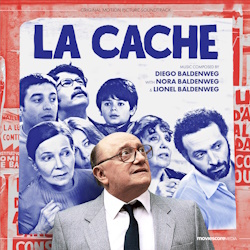 La Cache, or The Safe House, is a Franco-Swiss comedy-drama film co-written and directed by Lionel Baier, adapted from the novel of the same name by Christophe Boltanski. It stars Michel Blanc and Dominique Reymond and follows a nine-year-old boy from Paris and his experiences living through the events of May 1968, a period of widespread protests, strikes, and civil unrest in France that began in that month and became one of the most significant social uprisings in modern European history, and ultimately led to the downfall of French President Charles de Gaulle.
The score for La Cache is by the Swiss-Australian siblings Diego Baldenweg, Nora Baldenweg, and Lionel Baldenweg, who together write under the ‘Great Garbo Music’ moniker. The Baldenwegs wrote one of the best scores of the year in 2023 with their music for the Irish thriller In the Land of Saints and Sinners, and I have been singing their praises since 2019 following my discovery of their outstanding score for the historical drama film Zwingli, and anyone who enjoyed those scores will find this one to be of a similar high standard.
In the publicity material for the album, the Baldenwegs wrote: “The film always balances between quirky/strange and truthful/serious. After trying different music approaches, which always gave new ideas for tightening the edit, we ended with fast paced drum grooves complemented by jazzy soloists and in many parts only needing very reduced musical textures played by different live instruments. To amplify the fast pace of the edit and dialogue we recorded a variety of organic, moody jazz drum grooves. For the more intimate moments we searched for ways to be as close as possible to the protagonists. Instead of relying on electronics or a full orchestra, we decided to mainly work with wind instruments and asked the musicians to musically breathe along with the movement of the protagonists. Based on our musical arrangements and music notes we asked for interpretations and loose improvisations with trumpet, flute, bass flute, ocarina, clarinet, bass clarinet, double bass and piano. Bringing together the vibrant groovy drums with the intimate organic wind instruments, dressed in warm vintage plate reverbs gave this score a compelling 70’s vibe.”
The resulting score is just terrific, a wonderful blend of groovy 1960s/70s jazz that has a distinct Lalo Schifrin sound, perhaps crossed with something Ennio Morricone might have written for a Euro-thriller, along with some passages that are more abstract and impressionistic, but still highlight the Baldenwegs’ skill at crafting this sort of stuff authentically. There is a superb, catchy main theme first heard in the second cue “Posters” that features a nimble-fingered solo trumpet motif surrounded by jazz flutes, double bass, a killer percussion licks; later cues like “Art Gallery,” the fabulous “Toy Car,” the urgent and aggressive “Wolves,” the propulsive “Driving in Paris,” and the compelling “Revolution,’ adopt a similar tone, and unless I knew better I would swear I was listening to a jazz album by Chet Baker or one of his contemporaries
Some other cues have a sort of delicate beauty, especially cues such as “Home,” “Burning,” and “Far Away, Yet Close,” which tend to focus more on lighter woodwind textures or smoother, more languidly romantic brass. I really like them. However, something that some people may have trouble with are the longer stretches of more abstract jazz, which anyone who is not completely on board with the whole approach may find difficult. Thankfully my personal tolerance for this sort of ‘free jazz’ has increased over the years, and so I can appreciate them for their musicianship, if nothing else.
This is yet another deeply impressive work from the Baldenwegs who, with every score they write, are showing their versatility and their talent across multiple genres. TYhe score for La Cache is available to download and stream from Moviescore Media here: https://moviescoremedia.com/newsite/catalogue/la-cache-the-safe-house-diego-baldenweg-with-nora-baldenweg-lionel-baldenweg/, and will be available as a CD-on-demand shortly.
Track Listing: 1. Secrets (1:55), 2. Posters (1:39), 3. Mysterious Visitor (1:13), 4. Art Gallery (1:38), 5. Toy Car (1:58), 6. Home (1:18), 7. Burning (2:11), 8. 1968 (2:02), 9. Workers (1:20), 10. The Mystery Cat (1:02), 11. Driving in Paris (1:22), 12. Gas Mask (1:46), 13. Art (0:58), 14. Citroën (1:01), 15. Far Away, Yet Close (1:46), 16. Invasion and Memories (2:50), 17. An Odd Feeling (0:50), 18. Speedwalk (1:08), 19. Revolution (3:31), 20. Odessa (0:57), 21. Variations on a Theme by Haydn, Op. 56b (Film Edit) (performed by Alexey Botvinov) (3:31). Moviescore Media MMS25006, 35 minutes 56 seconds
DRAGONITE AND THE SPECIAL DELIVERY – Evan Call
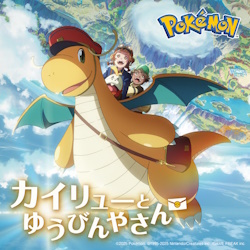 Dragonite and the Special Delivery is an animated short film commemorating Pokémon Day 2025. This story – and this is taken straight from the Pokémon publicity material, so I hope it makes sense! – follows Hana, a young girl who lives in Paldea who admires the Dragonite postmen and aspires to become one herself. One day Hana finds a letter with no addressee, with so the help of her partner Fuecoco decides to try help find the sender. When they find the sender, a boy named Rio, they learn that Rio sent the letter to celebrate the birthday his father who lives in Kanto, and to make it worse, the birthday is today. It’s up to Hana, Rio and Dragonite to get the letter to him as soon as they can.
The score for Dragonite and the Special Delivery is by the Tokyo-based American composer Evan Call, who over the last few years has quickly established himself as one of my favorite composers in world cinema, off the back of excellent scores such as Violet Evergarden (2018), The 13 Lords of Shogun (2022), Gold Kingdom and Water Kingdom (2023), and The Swallows Don’t Come Back (2024).
Call’s score for Dragonite and the Special Delivery is a light, pretty, energetic, tuneful delight, a fully symphonic romp full of sparkling orchestrations, moments of light comedy, and rousing celebrations of the freedom of flight. There is a vague western-esque vibe to the phrasing of the orchestra in parts of “Hana’s First Step,” a sense of tender emotion to the pianos in “Rio’s Letter,” and then in “The Winged Ace Takes Flight,” “To Kanto We Fly,” and “Paper Airplanes” Call’s music reaches for the skies and soars. There is an unexpected French flavor to the music in “Paper Airplanes” thanks to the inclusion of an accordion in the orchestration, and this appealed to me very much.
There is no physical album of the score for Dragonite and the Special Delivery, but fans can watch the movie for free on the official Pokémon YouTube channel, and can listen to the score there too. It’s a brief, but wholly delightful diversion, full of the sort of heartfelt emotion and openness that many of the best scores of this type contain. Some online streams of the score also include a Japanese language song based on the melody from “Paper Airplane” performed by Suis from the Japanese rock band Yorushika, and which is actually a quite nice bonus track if you can find it.
Track Listing: 1. Welcome to Paldea Post Office (1:32), 2. Hana’s First Step (2:03), 3. Rio’s Letter (1:19), 4. The Winged Ace Takes Flight (1:01), 5. To Kanto We Fly (0:42), 6. Paper Airplane (2:15), 7. Happy Birthdays and Happy Memories (1:45), 8. Special Delivery (1:26). Pokémon/Universal Music, 11 minutes 57 seconds.
MARIE ANTOINETTE: L’AFFAIRE DU COLLIER – Guillaume Roussel
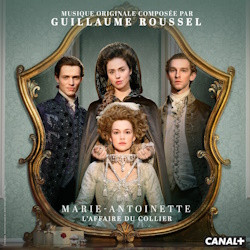 L’Affaire du Collier is the subtitle of the second season of the French TV series about the famed queen Marie Antoinette, who was the last queen of France before the French Revolution. The season looks at the famous ‘Affair of the Necklace’ of 1784, in which queen’s reputation, already tarnished by gossip, was further sullied by the false accusation that she had participated in a crime to defraud the Crown’s jewellers in acquiring a very expensive diamond necklace she then refused to pay for. The show stars Emilia Schüle, Louis Cunningham, and Freya Mavor, and has a sumptuous original score by composer Guillaume Roussel.
Roussel has quickly turned into one of my favorite contemporary French composers, off the back of excellent scores like Black Beauty in 2020, C’Est Magnifique and King in 2022, Les Trois Mousquetaires: D’Artagnan and Les Trois Mousquetaires: Milady in 2023, and Loups-Garous last year, among several others. L’Affaire du Collier very much continues that trend; it builds on the stylistics of the music from season one, in that it is steeped in the style and traditions of 17th century French classical music, but is also very modern in the way is takes the style and then arranges it so that it appeals to contemporary audiences.
After a subdued and mysterious opening in “Not This Again” and the restrained “Fersen’s Performance,” there is a gorgeous sense of understated romance in “Josephine’s Joy” which twinkled with pizzicato textures and florid, expressive piano lines. There’s a beautiful period lilt to the strings in “Chartres Is Back” before it all explodes in a flurry of harpsichords and choral voices. “A Feeling of Déjà Vu” is nervous and full of chattering percussive strings, and that same sound builds to a dark and imposing crescendo in “Constitution,” before climaxing with a flourish in “It’s Time for a Revolution”.
Again, anyone who enjoys detailed, authentic, but also modern and relevant classical music should give Marie-Antoinette: L’Affaire du Collier a chance. Unfortunately the score for L’Affaire du Collier has not been released on CD, but the music is available to download and stream from all the usual online resources, via 22D Music.
Track Listing: 1. Not This Again (1:46), 2. Fersen’s Performance (1:17), 3. Josephine’s Joy (2:10), 4. Rest Your Eyes (1:20), 5. Chartres Is Back (1:52), 6. Lese-Majesty (1:56), 7. Back to Versailles (1:24), 8. News from Provence (1:13), 9. Court Is Ajourned (1:11), 10. A Feeling of Déjà Vu (1:34), 11. Constitution (2:23), 12. Reputation at Stake (3:19), 13. France’s Debts (1:55), 14. It’s Time for a Revolution (1:48). 22D Music, 25 minutes 08 seconds.0
MONSEN OG NASJONALPARKENE – Raymond Enoksen
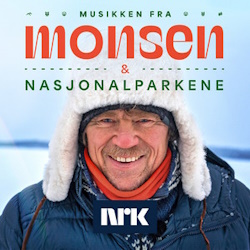 Monsen og Nasjonalparkene is a Norwegian TV nature documentary series starring the popular TV presenter, journalist, and adventurer Lars Monsen. Monsen is sort of a Norwegian combination of Bear Grylls, Steve Irwin, and David Attenborough, and the series follows him as he treks across Norway visiting various national parks, exploring the landscape, and experiencing the flora and fauna of the country as he goes. It premiered on the Norwegian TV network NRK back in January 2025.
The score for Monsen og Nasjonalparkene is by Norwegian composer Raymond Enoksen, who has been working in the trans-Scandinavian film and TV music industry for many years, but who I only discovered last year via his scores for the TV series Familien Nerdrum and the documentary feature Secrets of the Spy Whale. It’s also one of the most surprising, unexpectedly outstanding scores of the year to date – a big, bold, thematic, robust, symphonic celebration of Norway’s spectacular landscape and natural wonders.
Enosken lets his intentions be known immediately in the opening cue “Son of the Wilderness,” which presents a tremendous, galloping theme and blends the orchestra with a steel guitar, trumpets, stylish strings, and even a whistler; it’s obviously an Ennio Morricone pastiche, but it’s done with a great deal of style that one can’t help but be taken in by it all. The sound of the specific guitar Enoksen uses also reminds me very much of the 1950s instrumental surf rock sound – think Dick Dale’s “Misirlou” from the opening titles of Pulp Fiction.
The main theme melody returns later in cues like “Son of Freedom,” the fantastic and vivacious “Running Like the Wind,” the more lyrical and tender “Echoes of the Past,” and the two “Me and the Mountains” cues, often in conjunction with some of the Morricone western pastiche ideas, but the rest of the score is more varied, and Enoksen takes the time to paint a series of different emotional pictures with his music, each evoking a different aspect of the Norwegian landscape, and each as engaging as the next.
“Beautiful Horizons” is calming and intimate, a lovely combination of synths and ethnic woodwinds, and later a solo trumpet. The three “Walking Slow” cues have a quirky, playful, but delightful recurring melody running through them, while the two “Trumpet Tune” pieces have a more soulful sound. “Arctic Pulse” has a more contemporary instrumental soft rock vibe, “The Dog” is laid back jazz, and the two “Music for the Lonely Man” cues have a sense of dramatic determination in their snare drum cadences and John Williams-esque trumpet lines.
It’s all just superb, an unexpectedly outstanding entry which again proves that some of the best film music in the world is being written in the most surprising places – Norwegian television nature documentaries? I heartily recommend this, and many of Enoksen’s prior scores, to anyone with a desire to discover excellent music off the beaten path. Unfortunately the score for Monsen og Nasjonalparkene not been released on CD, but the music is available to download and stream from all the usual online resources, via Grappa Music.
Track Listing: 1. Son of the Wilderness (1:49), 2. Beautiful Horizons (5:58), 3. Walking Slow 3 (2:53), 4. Son of Freedom (5:05), 5. Running Like the Wind (1:19), 6. Trumpet Tune 1 (2:54), 7. Trumpet Tune 2 (1:14), 8. Arctic Pulse (2:47), 9. Echoes of the Past (3:05), 10. Walking Slow 1 (1:55), 11. The Dog (2:28), 12. Solitaire (1:34), 13. Music for the Lonely Man (2:48), 14. Me and the Mountains (3:05), 15. Whistling in the Wind (2:22), 16. Music for the Lonely Man 2 (3:03), 17. Me and the Wilderness (2:17), 18. Me and the Mountains 2 (2:11), 19. Walking Slow 2 (5:05), 20. The National Park (3:18). Grappa Music, 57 minutes 10 seconds.
TOUTES POUR UNE/ALL FOR ONE – Amine Bouhafa, Emilie Gassin, Ben Violet
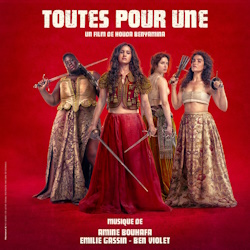 Touts Pour Une, or All For One, is a French action-adventure film directed Houda Benyamina. Essentially a gender-swapped version of The Three Musketeers, it stars Oulaya Amamra as Sara d’Artagnan, a peasant young girl from the countryside who comes to Paris with dreams of joining the platoon of elite female guards who are tasked with protecting the Queen of France – and quickly finds herself in the company of four of the best: Athos (Sabrina Ouazani), Portau (Déborah Lukumuena), and Aramitz (Daphné Patakia).
The score for Toutes Pour Une is by the prolific Franco-Tunisian composer Amine Bouhafa, who here is collaborating with fellow composers Emilie Gassin and Ben Violet. I have been a fan of Bouhafa’s work for many years – I especially like his work on Grand Hotel [Secret of the Nile], La Belle et la Meute, and Un Homme Heureux – but Toutes Pour Une might be his most satisfying and enjoyable score, at least of the ones I have heard.
The score is an engaging, energetic delight, mostly symphonic, but with the added benefit of numerous specialty instruments, including varied types of guitars, fiddles, and harmonicas. Some of the music is quiet and intimate, from the lovely opening “Toutes Pour Une,” and some is more abstract, like the rattling jazzy Lalo Schifrin-esque textures of “Elle Nous A Vues, On La Tue” and “Richelieu,” or the percussive groove of “Les Charbonniers” with its flamenco handclaps and spirited guitar flourishes.
But where the scores really comes alive is in its action music, which really sizzles. Interestingly, a lot of the music has a prominent 1960s and 70s spaghetti western vibe, which surprised me when I first heard it, but it gradually came to make sense in the context of the whole thing being a revisionist take on classic literature. Cues like “Mousquetaires,” “Sur La Route,” “Ils Sont Où Nos Chevaux,” and “Chevauchée Royale” wholeheartedly embrace the sound, while the fantastic pair “Au Nom de la Mere, de la Fille et de la Sainte Esprit” and “Arrivée en Espagne” have a relentless sense of forward motion and a stylistic panache that is just fantastic – they even bring out the Hammond organs and the Morricone-style gruff vocals!
The expansive “La Reine Est Sauve” gives the main theme a satisfying Hollywood sweep. “Les Adieux à la Reine” has a lovely vein of elegance and romance that sees the main theme arranged for period instruments including woodwinds and harpsichords. “Une Pour Toutes” strips the main theme down to its basics, with an understated, mesmerizing arrangement that feels inspired by many of those 1970s European romantic drama scores by composers like Francis Lai and Pierre Bachelet; the haunting vocals that come in during the score’s second half are superb. The “Epilogue” even features an Alessandro Alessandrini-style whistler and an Edda dell’Orso-style vocalist to further pay homage to Ennio Morricone’s classic western vibe.
In addition to the score there are several original songs dotted through the score, many of which are excellent. I really like the dirty, gritty, groovy “Watch Out!” which is sung in English and features soulful vocals by American blues singer Sarah McCoy. I also like the classic R&B attitude of “My Colour Is Freedom,” performed with throaty sultriness by Josie, and the gorgeous and heartfelt ballad “Someone Else But Me” which is performed beautifully by co-composer Emilie Gassin.
Unfortunately the score for Touts Pour Une not been released on CD, but the music is available to download and stream from all the usual online resources, via 22D Music.
Track Listing: 1. Toutes Pour Une (2:31), 2. Mousquetaires (1:19), 3. Watch Out! (performed by Sarah McCoy) (2:53), 4. Sur La Route (1:58), 5. Elle Nous A Vues, On La Tue (1:16), 6. Ils Sont Où Nos Chevaux? (0:49), 7. My Colour Is Freedom (performed by Josie) (4:04), 8. Danser Avec Nos Chaines (0:58), 9. L’Attente (1:43), 10. Au Nom de la Mere, de la Fille et de la Sainte Esprit (1:48), 11. Dance With My Chains (performed by Tracy De Sá) (1:54), 12. Arrivée en Espagne (1:38), 13. Chevauchée Royale (0:59), 14. Fin Du Voyage (0:52), 15. Les Charbonniers (2:44), 16. Le Pacte (1:04), 17. La Reine Est Sauve (1:35), 18. Richelieu (2:12), 19. Les Adieux à la Reine (1:57), 20. Someone Else But Me (4:08), 21. Une Pour Toutes (3:10), 22. Epilogue (3:09), 23. Sororité (2:37). 22D Music, 47 minutes 18 seconds.
-
February 6, 2026 at 8:00 amMovie Music UK Awards 2025 | MOVIE MUSIC UK

Shop at the Movie Music UK Store

Member of the

 MOVIE MUSIC UK