TRIBUTE TO A BAD MAN – Miklós Rózsa
 GREATEST SCORES OF THE TWENTIETH CENTURY
Original Review by Craig Lysy
MGM Studios has suffered a string of loses and sought to recoup them with a film in a popular, money-making genre – Westerns. They came across the short story “Hangings for the Lucky” by Jack Schaefer, and purchased the film rights, which ultimately became this film: Tribute to a Bad Man. Sam Zimbalist was assigned production with a $2.8 million budget. Schaefer and Michael Blankfort would write the screenplay, and Robert Wise was tasked with directing. Casting was not smooth sailing as the star Spencer Tracy was fired by Wise for disrupting filming and Grace Kelly left her career to marry Prince Ranier III of Monaco. James Cagney was brought in for the starring role of Jeremy Rodock, and joining him would be Don Dubbins as Steve Millar, Stephen McNally as McNulty, and Irene Papas as Jocasta Constantine.
The film is set in the American west during the late 19th century and focuses on rancher Jeremy Rodock and his wife Jocasta, a former dance hall girl who is ashamed of her past. Rodock is a brutal, and ruthless man who practices harsh, extra-judicial frontier justice. One day he is robbed and left for dead, yet saved by a young man Steve Millar, whom he in gratitude hires as a ranch hand. Rodock heals but unleashes jealous rage against his head wrangler McNulty whom he beats and fires for allegedly flirting with his wife. He then attacks and kills his former partner Peterson, whom he believes was behind the attack on him, which precipitates a blood feud with the son Lars. Lars, McNulty and Barjak strike and steal most of Rodock’s horse yet after a relentless pursuit they are captured and forced to walk barefoot through the desert. After Barjak nearly dies on the way, Rodock relents, frees the men and promises Lars restitution. When Rodock returns home he is stunned to learn that Steve and Jocasta are leaving together. He rides after her bringing the earrings she left behind. She realizes that he has changed, abandons Steve to seek a new life with Rodock, while Steve returns to run the ranch. The film was a commercial disaster, losing MGM $1.623 million. Critics praised the film, especially Cagney’s Oscar deserving performance, however the film failed to earn any Academy Award nominations.
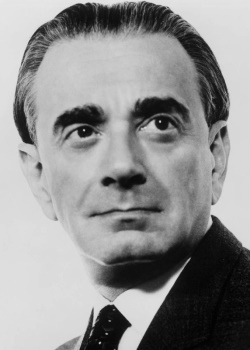
Film producer Sam Zimbalist, for whom Miklós Rózsa had worked with on Quo Vadis in 1951, was already in the planning stage for a new epic film “Ben-Hur: A Tale of the Christ”. Rózsa strongly desired to score that film, and so to ensure a continued working relationship with Zimbalist, agreed to take on “Tribute To A Bad Man”. Historically Rózsa had eschewed the western genre. He related;
“I had always avoided westerns. To my ears Hollywood “Western” music was so stereotyped that all the scores came out sounding the same, and the American folk idiom one I felt sufficiently in tune with to want to assimilate”.
In conceiving his soundscape, Rózsa related;
“I did not use authentic American folk songs as such, but rather my interpretation of them, much as I had interpreted songs of my own country in the “Hungarian Sketches” and other works. Whether the species of Americana I evolved for the film would have been approved by Aaron Copland I hardly know, but I presume my music must have had some merit since I was requested to represent it on one of my later Polydor analogies…”
 For his soundscape, Rózsa provides four primary themes. The Main Theme offers a soaring, classic major modal invocation of Americana, which speaks to Rodock’s pride in his ranching empire. Rózsa offers an ABA construct with the proud, confident, and forthright horn declared A Phrase embracing classic Americana. The lyrical and romantic string borne B Phrase is enriched by contrapuntal horns speaks and speaks of Rodock’s love of their land and wide-open spaces. The Hanging Theme is associated with Jeremy’s extra-judicial justice of hanging all those who wrong him. Strings grave offer a dire and ruthless musical narrative of obsession within which is woven seeds of tragedy. Jeremy has lost his humanity as his heart has become hardened and cold, driven by vengeance. In many ways I discern that these two themes offer Rodock’s version of Dr. Jekyl and Mr. Hyde. The Greek folk song “Pandrevoun” serves as a Love Theme for Jeremy and Jocasta. I was unable to locate lyrics, however I believe that the cantabile melody suggests the sadness, and unfulfillment of unrequited love. Jocasta is thankful of Jeremy rescuing her and yearns for him to love her, but she is repulsed by his obsessive ‘hanging fever’ which turns him into a vengeful, murdering monster. Steve and Jocasta’s Love Theme offers a softly swaying and dance-like sensibility borne warmly by strings tenero draped with harp tresses. It is tender, but lacks ardency and passion as he is unfamiliar with romantic love. Both Love Themes are unrequited, with Jocasta reversing roles and being the one that does not return Steve’s love.
“Prelude” offers a magnificent score highlight. It opens with rousing fanfare dramatico, which supports the MGM and Cinemascope logos, as well as the credit to lead actor James Cagney. At 0:18 the film title displays in red script and the flow of the opening credits commence against a majestic panorama of the Rocky Mountains. Rózsa supports with his Main Theme rendered with an ABA construct, empowered by a proud, and forthright horn declared A Phrase, which embraces classic Americana. At 0:44 the more lyrical and romantic string borne B Phrase, enriched by contrapuntal horns, speaks of Rodock’s pride in the ranch empire he has built in a beautiful valley isolated by wide-open spaces. We return with pride to the A Phrase, which concludes the credits. At 1:39 we enter the film proper with the Main Theme shifted to a more relaxed and gentler variant as flash back narration by Steve Miller introduces us to him. He stops and gazes at Jeremy Rodock’s vast valley, where he first visited as a boy, and left as a man who had learned lessons in hate, and love. In “Gettin’ Acquainted” a gun fight draws his attention as he sees Jeremy Rodock on the ground shooting from behind his dead horse at two other men. Steve dismounts grabs his rifle, and the two men flee as they would be caught in a crossfire. After introductions, he finds Jeremy wounded by the poachers. He helps him atop his horse and says he is taking him back to his ranch. As Steve walks along his horse, which is bearing Jeremy, they acquaint. Jeremy is unimpressed that the kid is a former grocer, with no horse or killing experience. Rózsa supports with a classic folksy western melody rendered with a strolling tempo. We end grimly as Jeremy passes out.
In an unscored scene they setup camp for the night, and Steve heats a knife in the fire as Jeremy has told him he has to remove the bullet from his back or he will die. Steve reluctantly performs the extraction and almost faints. A horse arrives with a man Jeremy calls Whitey. He is tied up and Steve brings him down, only to discover he is dead. The next day in “Rodock’s Horses” the two ride together trying to track the killers, but lose their tracks. Later, they come across Jeremy’s herd of horses, which are grazing. Rózsa supports with the Main Theme rendered by oboe tenero and strings with warmth and gentility. At 1:05 the music darkens and becomes foreboding atop bassoon and tremolo strings as two of Jeremy’s ranch hands Baldy and Abe ride towards them. Jeremy orders them to check the other herd and sound the alarm with the other ranch hands. At 1:31 we segue into “Ranch” atop the strolling rendering of the Main Theme embellished with contrapuntal horns as the two finally arrive at Jeremy’s sprawling ranch. In an unscored scene Steve wake from a nap and prepares to leave, but is stunned by the entrance of the beautiful Jocasta. She offers him work at the ranch, which he accepts, and then she takes him into the kitchen to feed him. They acquaint and are joined by head wrangler McNulty, who Jocosta clearly dislikes. He brings bad news that all the horses on the east range have been stolen. Jocasta leaves to inform Jeremy and Steve and McNulty acquaint. In Jeremy’s bedroom we see that he and Jocasta are affectionate as she tends to his needs, bringing in another bottle of whiskey. Back in the kitchen Steve is dispatched to wash his dishes and we learn that McNulty and Jocasta have history as he makes an advance and coaxes her to leave with him as Jeremy does not love her. She slaps him and he departs as Jeremy joins and tells McNulty that in the future, he should take coffee with the other wranglers.
“Earrings” reveals Jeremy taking to the piano and failing to remember all the notes to play the romantic ballad “I’ll Take You Home Again, Kathleen”. Jocasta joins, and he asks her to play it, which she does as he joins in singing. She stops and he reminisces about their first meeting, which Rózsa supports with a tender rendering of the song’s melody. He makes her very happy when he gifts her jeweled earrings. She says she is thankful for all that he has done for her, and that she intends to remain here. Yet as he caresses her cheek, he informs her that one day that she will grow tired of life here and leave. With that, at 1:32 she begins playing and singing in Greek the folk song “Pandrevoun”. I was unable to locate lyrics, however the melody suggests sadness, and perhaps unrequited love. The next morning Cooky rings the dinner triangle to rouse the ranch. In “Conflict” Jocasta begs Jeremy not to go on another hanging mission, but he is resolute, saying he is the only law within 200 miles, that he will find the men who killed Whitey and stole his horses, and render justice by hanging. She frets and says that these outings change him as he becomes obsessed by the ‘Hanging Fever’. Music enters darkly with a marcia minacciosa as the argument escalates when she says that with each hanging, part of you also dies. At 0:38 the Hanging Theme is introduced, borne by strings grave as he rages that he is the law and will render justice. To her dismay he walks out with grim purpose to join his men. At 0:53 we segue into “Tracking” where we see Jeremy and his men riding out empowered with vengeance by the dire Hanging Theme rendered as a galloping travel motif. Narration informs us that harsh winds have blown away the hustler’s tracks, yet Jeremey remains undaunted, and resolute. The theme’s vital energy weakens as the men tire and voice the futility of continuing, yet Jeremy pushes on, the theme propelled by his resolute will. At 1:28 the music darkens as they arrive at the Peterson ranch, Jeremy’s former partner to which he had a falling out. Music ceases during the tense dialogue as Jeremy accuses Peterson and his son Lars of stealing his horses, adding that Whitey was murdered. Guns are drawn, and Jeremy relents and departs with a warning; that if he finds evidence of Petersen’s complicity, he will return and hang him. As he rides away Hearn and Barjak, the two hustlers who stole the horses and murdered Whitey emerge, revealing that Petersen is complicit with the theft. At 1:34 the dire Hanging Theme resumes as Jeremy and his men ride off.
“Return” reveals Jeremy returning to his ranch carried by a proud rendering of the Hanging Theme. The musical narrative transitions to the Love Theme as he searches the house and is unable to find Jocasta. Cooky joins with a bottle of whiskey and informs him that she was in the barn attending to a colt birth. At 0:54 we segue into “Proposition” as McNulty informs Jocasta of their failure, and again solicits her to leave the ranch with him. Rózsa sow tension as once again Jocasta spurns McNulty’s unwanted advances. (*) “Skip to My Lou” reveals a ranch hand playing the traditional tune on a pan flute as Jocasta comes out to take in some fresh air. She spots Steve and joins him for some chit chat. She then departs, and is trailed by McNulty against the warning of his fellow wranglers. He reaches her, yet after he speaks, she walks off in a huff. He follows her into the barn where he forces a kiss. She recoils and tells him repeatedly to leave her alone. “Jealousy” reveals that Jeremy has returns carried by a dark and foreboding variant of the Main Theme. He sees Jocasta leave the barn, followed by McNulty and a crescendo irato swells with his rage. He rides up to McNulty, fires him, and tells him to leave at once. Yet McNulty follows him into the barn insisting on the reason he is being fired. A brutal fight breaks out and McNulty is pummeled to the ground. Inside Jeremy is quite pleased with himself, sits down for dinner, and informs Jocasta that he has fired McNulty. In “Home” Jeremy again queries Jocasta on whether she is happy here and intends to remain. A warm and tender Love Theme borne by strings romantico with harp adornment support her affirming her happiness living in this home with him. This pleases him as he kisses her hand, yet the music sours at 0:52 as she picks up and smokes a cigarette, which he dislikes as it reminds him of her past working as a saloon girl. He departs and the Love Theme resumes with sadness by celli tristi as she douses her cigarette while a contemplative Jeremy feeds a horse.
“Letter” offers a poignant score highlight. Steve arrives and asks Jocasta a favor; to write a letter to his mother as he is illiterate. She is happy to assists and he is pleased with what she wrote. He is very thankful that she is loaning him $10 to send until he can get paid. Rózsa at last speaks to the growing feelings of affection rising up between them with their softly swaying and dance-like theme borne warmly by strings tenero draped with harp tresses. Yet at 1:43 the music sours and we shift to Pandrevoun as she exhorts him to go back home, find a girl and start a family lest he end up like these wranglers, with broken bodies, broken souls, and an unfulfilled life of loneliness. Tears reveals that she is also speaking to herself and that she feels trapped here due to obligation to Jeremy for saving her life. At 2:52 we segue into “Moonlight and Horses” atop the Main Theme rendered with nocturnal tranquility. Jeremy is impressed with Steve’s progress and we see him now taking a paternal liking to him as he relates that he may make him his head wrangler one day.
The next three cues offer dramatic score highlights. “Hanging Fever” reveals Fat Jones riding in propelled with urgency by an aggressive Hanging Theme as he alerts Jeremy that the stolen herd and three rustlers have been sighted in the east clearing. Jeremy orders the posse and is joined by Jocasta at 0:21 supported by their aggrieved Love Theme. No words are spoken but we see dismay in her eyes, that is not assuaged by Jeremy’s parting kiss. At 0:52 the posse’s charging ride across the plain is propelled by a ferocious galloping rendering of the Hanging Theme. A diminuendo of suspense at 1:14 supports the arrival overlooking a pasture where his stolen horses graze. Jeremy sends out a flanking squad and they move in cautiously atop a wary Hanging Theme given the three hustlers remain unseen. At 1:59 we surge into “Rustlers” as the rustlers open fire with a bullet strike hitting Jeremy’s sheathed rifle, which causes his horse to rear up, and he to tumble to the ground. Rózsa unleashes a maelstrom fueled by a ferocious Hanging Theme as a gun battle unfolds. The rustlers flee as they are outnumbered with Jeremy’s men in hot pursuit. At 2:37 Hearn’s horse is shot from under him followed by Petersen death from a mortal bullet strike. At 2:58 a lamentation supports Jeremy looking down at his former friend and partner. At 3:17 we segue into “Justice” atop the Hanging Theme empowered by dire horn declarations of revenge as Hearns is brought to Jeremy at gunpoint. A torturous musical narrative unfolds as Jeremy orders Hearns to be hung over Steve’s pleas to turn him in to the sheriff. We shift to a crescendo orribile, which crests with grotesque fury at 4:14 as Jeremy orders the hanging to proceed. A diminuendo of pain follows as Steve vomits and Jeremy tells him it is time to become a man and accept these things. At 4:43 we segue into “Revenge” atop a woodwind agitato as McNulty discovers the third rustler Barjack and convinces him to join him in exacting revenge on Jeremy. We close with a mournful rendering of the Hanging Theme as Jeremy returns Petersen’s body to his wife and son Lars. He declares he did not want things to end this way, that he will send money in the morning to assist them return east. Lars is disdainful and seethes with revenge, and Rózsa expresses this portentously as Jeremy departs, informing us that more violence lay instore.
“Barn” reveals Jeremy and the men returning to the ranch. He summons Steve to his house and pours him a whiskey. Steve declines and tries to leave, but Jeremy is insistent. He tries to make the point that this is what frontier justice is, and that he needs to get used to it. Steve is distraught and counters that Jeremy had no proof that it was Hearn that killed Whitey and that is why courts needs to dispense justice. Jocasta joins, and Steve hands her his glass and departs, saying he had never seen a hanging before. Jeremy and Jocasta quarrel and she says she needs to comfort Steve as he is upset. Jeremy orders her to remain here with him, but she defies him and leaves. Music enters angrily as Jeremy shatters his glass against the wall, and then rages to Cooky who enters concerned. A tortured musical narrative unfolds as he is plagued daily by the thought that Jocasta will one day leave him. At 0:38 we shift to the barn where Jocasta joins Steve. He finally drops all pretenses and declares that he loves her and wants to leave with him to begin a life together. He takes her into his arms and they kiss. He again asks her to join him, but she turns and walks away. As she departs, he says he loves her. Rózsa masterfully scores this scene taking their nascent theme first voiced in “The Letter”, and transforming it into a tender Love Theme full of yearning. It has yet to achieve romantic passion, as it is unrequited, with Jocasta now clearly conflicted.
“Stagecoach” reveals Jocasta rejoining Jeremy in the house. He speaks of people from Wells Fargo arriving in a few days to purchase his horses, which will secure them a big profit. Yet she is clearly distracted and he tries to soothe her in by asking her to play Pandrevoun on the piano. She angrily refuses, and storms out to her bedroom. Music enters with a sad and aggrieved rendering of their Love Theme, as he finds the notebook Jocasta is using to teach Steven how to write. When he turns a page and sees ‘Jocasta’ written repeatedly, he become enraged and throws the notebook into the fire. At 0:34 a proud and sweeping rendering of the Main Theme supports the travel of the Wells Fargo merchants the next day. At 0:50 an ominous interlude supports the sight of McNulty, Barjack and Lars surreptitiously observing the ranch from a nearby wooded hill top. We close at 0:56 with a bright coda of the Main Theme as Steve and the passengers disembark. In an unscored scene in the kitchen, Steve again confronts Jocasta saying that he loves her, and wants to marry her. She declines again, saying there are things in her past of being a saloon girl that she is ashamed, but he says he does not care. When she says Jeremy saved her from that life, that she is forever grateful, and that she loves him, Steve’s head dips with the pain of rejection. Jeremy joins, orders Steve to join the other wranglers, and then unleashes a barrage of grievances regarding her affection for McNulty and now Steve, which impugns her fidelity to him. She is hurt, denies it, and storms into her bedroom in tears.
(*) “Rough Wrangler” reveals everyone celebrating the sale as the men, accompanied by fiddle, piano and harmonica, sing and dance to the festive folk song. Jocasta remains in her bedroom, removes the earrings Jeremy gifted her, and lies down in sadness. The next day in “Decision”, the men ride off with the horses as a still drinking, and drunk Jeremy bids them goodbye. A plaintive Pandrevoun supports Jocasta’s isolation and despair in her room, while outside we see a dejected Steve riding off. At 0:26 a tranquil rendering of the Main Theme supports narration by Steve as he travels the countryside, leaving Rodock Valley to move on with his life. He loves Jocasta’s but accepts that they will never be together. At 0:46 the music darkens as he sees something and rides towards it. At 0:55 he discovers an abandoned colt with a broken leg, which Rózsa supports with a playful tune. At 1:14 we segue into “Loyalty” propelled by urgent strings, which carry Steve’s ride back to the ranch where he seeks out Jeremey in the house. He wakes Jeremy from his stupor and tells him that the mares and colts have been stolen. Jeremy leaves to wash up and orders Steve to assemble the men, however he says that only he and Abe remain. In “Promise” Steve reveals that he only came back out of loyalty and that he was intending to go west and seek a new life. She then stuns him with the revelation that she too is leaving as she just cannot live here anymore. At 0:05 their Love Theme at last begins to blossom with hope as he pleads with her to join him in a life together. He asks her to wait until he returns, and she reluctantly agrees.
“Punishment” reveals Jeremy inspecting the lame colt, and with regret, ordering Abe to put it down. Jeremy is perplexed as to why they also took the colts as this slows their escape. In a scene shift McNulty and Barjack are crippling all the mares by gruesomely sawing off their hoofs. Steve surprises McNulty when he rides in nonchalantly. They turn to greet him and he informs McNulty that Rodock fired him, and that he is headed to Cheyenne. At that point Jeremy and Abe emerge from the bushes behind and with pistols drawn and order the three to disarm. He orders Steve to bind McNulty for hanging, but then notices that his mares are hobbling and discovers that their hoofs have been sawed off. He is enraged and informs Steve that this forces the mares to remain here, suckling the colts, and then McNulty will return later to cash in. Jeremy decides on a diabolical revenge; he orders their boots removed and announces that they will take them to the Sheriff at Fort Whitley, however they will walk and not ride so they can feel the same pain they inflicted on his mares. Music enters as Jeremy forces the three to begin walking. Rózsa empowers with tortuous march of pain and dread. At 0:31 an accelerando of desperation propels Barjak’s run for freedom only to be knocked down by a mounted Jeremy, and then forced to resume. At 0:54 the marcia tortuosa resumes with the three now beginning to show signs of pain with every step. They approach a stone lined stream and Jeremy orders their ties cut. McNulty and Barjack wade in to drink and soothe their feet, but Lars refuses. Jeremy orders them rebound and Steve sets up camp for the night.
“Torture” reveals the next day and the men traversing a rocky and hilly terrain. Rózsa again sow dread with a grim, and unrelenting marcia tortuosa. In “Exhaustion” we see Jeremy mercilessly driving the three men forward in unrelenting torment. Barjak collapses and can go no further, so Jeremy orders Steve to halt, rest and give the men some water. Jeremy then orders the men up as Lars asks if he is really going to force them to walk to Fort Whiley? Jeremy fires back that not only are they thieves, but their cruelty to his horses is unforgiveable. Barjak cannot continue on foot, and so Jeremy orders Steve to put him on a horse. They push on with Rózsa supporting with the unending torment of his marcia tortuosa. These next two cues “Agony” and “Homecoming” were Rózsa’s original conceptions that were not used in the film. The following tertiary cue offers the film version.
“Agony” reveals Jeremy forcing McNulty and Lars forward with the march shifting to a marcia funebre. Steve pleads with Jeremy saying that this is just revenge, and that it is inhuman. At 0:32 we segue into “Climax” with a stepped three-note crescendo di dilore which swells until 1:04 when agonal strings support McNulty’s sobbing collapse. With him writhing in agony on the ground saying he can’t go on. Jeremy orders Steve to place both men on a horse, but Lars is defiant and at 1:30 marches on fueled by hatred and spite. He however collapses, and Rózsa sow desperation and drama as Jeremy rides up to him, dismounts, and begs him to get on a horse. We see in Jeremy’s eyes that he has realized that he has lost his humanity. He turns to McNulty and Barjack and says they are free to go, but are never to return to Rodock Valley. They ride off and at 2:12 we segue into “Homecoming” atop a somber rendering of the Hanging Theme as Jeremy and Steve bring Lars home to his mother. Lars dismounts and at 2:32 Rózsa unleashes a tempest of anger as he runs into the house to get his rifle. Yet the anger dissipates as his mother disarms him and says there will be no more killing. Jeremy extends an olive branch with an offer to have Lars oversee his herd of mares and colts, but Lars remains spiteful and refuses.
In “Surprise” a grim reprise of the Hanging Theme reprises as Jeremy accepts Lars’ choice and he and Steve depart. At 0:25 a gentle rendering of the Main Theme borne by oboe with soft contrapuntal horns brings Jeremy and Steve home. At 0:48 we flow into a sad rendering of Pandrevoun as Jeremy turns, sees that Jocasta is dressed for travel, and then is asked by Steve that in lieu of his salary, can he take an extra horse and a buckboard. At 1:34 harsh, menacing strings irato surge when ask why, and Steve informs him that he and Jocasta are leaving. We see anger in his eyes and he is forced to accept the situation when Jocasta informs him that the decision to leave was hers. She then admonishes Jeremy for his incapacity to love and cherish her, saying he understands horses well, but not women. He chooses not to argue the point, and turns his back and walks into the house.
“Alone” reveals Jeremy clearly devastated by the loss of Jocasta supported by an aching Pandrevoun lament filled with regret. At 0:38 we flow into a grieving rendering of the Hanging Theme after he pounds the piano keyboard twice with his fists. He looks out the window and see Steve and Jocasta depart, and turns away. At 1:16 a beautiful piano rendering of Pandrevoun supports him seeing the earrings he gifted Jocasta. We close at 1:37 sprightly travel music supports Steve and Jocasta trotting down the road.
“Finale” offers an inspiring score highlight. Steve relates to Jocasta the humanity Jeremy showed in releasing Barjack and McNulty as well as the generosity he offered the Petersens. Adding that Jeremy stated that he was tired of hunting down and killing men, and that he has decided to give it all up. We see this makes an impression on Jocasta. Back at the ranch, Jeremy decides to ride after Jocasta and give her the earrings she left behind. He reaches them, gives her back the earrings, wishes them good luck, and rides away. Music enters with a sad and yearning Pandrevoun as Jocasta begins to sob. Steve realizes that Jocasta remains in love with Jeremy, and so he turns the buckboard around and pursues Jeremy. At 0:51 they reach him, Jocasta runs to Jeremy and their Love Theme blossoms as she declares that she did not really want to go, and that she loved him. They kiss and then Jeremy declares that he is taking the buckboard to find a new life together with Jocasta, and that Steve can have his horse, and the ranch. At 1:15 a tender Main Theme joins to support the farewell as Jeremy proposes and Jocasta accepts. The Main Theme then slowly swells for a heart-warming statement that concludes grandly as Steve rides to the ranch supported by his narration, where he says that he never saw Jeremy and Jocasta again, but for the rest of his life he caried them with him wherever he went. At 2:46 we segue into “End Cast” for a proud statement of the Main Theme, which concludes with a flourish.
I want to thank Lukas Kendall for providing the complete score for Miklós Rózsa’s outstanding score for “Tribute To A Bad Man”. The technical staff expertly remixed and digitally remastered the original stereophonic source masters. The audio quality is excellent and offers wonderful listening experience. Rózsa during his career was never an enthusiast for the Western genre. Nevertheless he took this project on and for me provided an excellent score. He composed the requisite grand Americana Theme western’s demand, but what sets this this score apart is his approach for the rest of the film. I believe he scored the drama in the same manner he utilized for his Film Noir films, by using music to focus more on the psychological and interpersonal dynamics of the characters. There is a tremendous amount of anger, grievance, obsession and vengeance driving many of the characters, and I believe Rózsa’s music masterfully expressed these emotions. The Hanging Theme, and its many iterations, was well-conceived and executed. Indeed, its form as a marcia tortuosa brilliantly spoke to both the suffering of the outlaws, as well as Jeremy’s cruelty and inhumanity. Juxtaposed were two Love Themes, which provided respites from the conflicts, violence and tension. Both were unrequited and so imbued with sadness, however Jeremy and Jocasta’s Love Theme in the last scene finally blossoms when he at last proposes, and she accepts. Folks, this is the road less traveled for both Rózsa, and the Western genre. I highly recommend you purchase this quality album and take in the film.
For those of you unfamiliar with the score, I have embedded a YouTube link to a five-minute suite; https://www.youtube.com/watch?v=G55uSoXnn5Y
Buy the Tribute To A Bad Man soundtrack from the Movie Music UK Store
Track Listing:
- Prelude (2:33)
- Gettin’ Acquainted (2:05)
- Rudock’s Horses/Ranch (2:08)
- Earrings/Pandrevoun (2:32)
- Conflict/Tracking (2:40)
- Return/Proposition (1:21)
- Jealousy (0:55)
- Home (1:36)
- Letter/Moonlight and Horses (4:15)
- Hanging Fever/Rustlers/Justice/Revenge (6:40)
- Barn (3:02)
- Stagecoach (1:11)
- Decision/Loyalty (1:46)
- Promise (0:44)
- Punishment (1:33)
- Torture (1:11)
- Exhaustion (1:24)
- Agony (2:41)
- Homecoming (0:49)
- Agony/Climax/Homecoming (Revised) (2:50)
- Surprise (1:50)
- Alone (1:49)
- Finale/End Cast (3:10)
Film Score Monthly FSMCD Vol. 5 No. 19 (1956/2003)
Running Time: 50 minutes 45 seconds
Music composed and conducted by Miklós Rózsa. Orchestrations by Eugene Zador. Recorded and mixed by XXXX. Score produced by Miklós Rózsa. Album produced by Lukas Kendall.

Shop at the Movie Music UK Store

Member of the

 MOVIE MUSIC UK