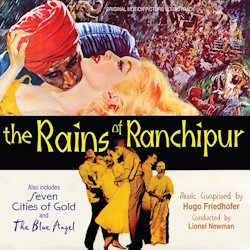
THE RAINS OF RANCHIPUR – Hugo Friedhofer
 GREATEST SCORES OF THE TWENTIETH CENTURY
Original Review by Craig Lysy
In the early 1950s, 20th Century Fox Studio executives committed to remaking several of their popular black and white films of the 1930s in DeLuxe Color Cinemascope. It was decided that the 1939 film “The Rains Came” would be refashioned as “The Rains of Ranchipur”. It would again be based on the 1937 novel “The Rains Came” by Louis Bromfield, with Merle Miller adapting the screenplay. Frank Ross was placed in charge of production, provided a budget of $2.9 million, and Jean Negulesco was tasked with directing. A stellar cast was assembled, including; Lana Turner as Lady Edwina Esketh, Richard Burton as Dr. Rama Safti, Fred McMurray as Tom Ransome, Michael Rennie as Lord Esketh, Joan Caufield as Fern Simon, and Eugenie Leontovich as Maharani.
The film is set in India during post WWII colonial rule. British aristocrats Lord and Lady Esketh have traveled to Ranchipur on the invitation of Maharani. Their marriage is unhappy due to Edwina’s shameless infidelity and Lord Esketh informs her that he will be divorcing her upon their return to England. Intrigue unfolds as Edwina true to form first tries to rekindle a romance with former lover Tom Ransome, and then seduces Dr. Rama Saftti, which outrages his patroness Maharani as she had cultivated him to succeed her. Edwina is ordered to leave, but to Maharani’s dismay, Safti decides to accompany her. Yet natural events overtake them all as a massive earthquake causes a local dam to rupture and flood the countryside and town during a torrential rainstorm. In the end Safti chooses his people and rebuilding the town as his life priorities and Edwina realizes that she has no future with him. They part amicably and as they drive away Lord Esketh affectionately wipes a tear from Edwina’s cheek. The film was a commercial failure, losing $300,000. Critics derided it as orientalist, colonialist, and white Supremacist for its narrative, but also for again casting white actors in Asian roles. The film received no Academy Award nominations.
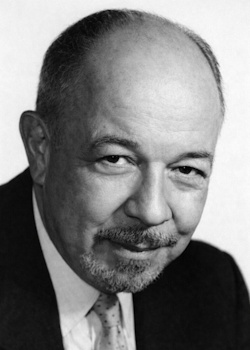
Director Negulesco had collaborated with Hugo Friedhofer on three prior films, “Spanish Fiesta” (1942), “Three Came Home” (1950), and “Lydia Bailey” (1952), and he was quite happy when Director of Music Alfred Newman assigned him to this latest project. Friedhofer had never scored a film set in India and was eager to take on the challenge. He realized after viewing the film that there was a lot packed into its narrative, which offered British-Indian colonial tension, marital intrigue and infidelity, forbidden romance, and a devastating natural disaster. Its setting in colonial India meant that he would have to blend the requisite Indian and Occidental sensibilities to the story’s setting, as well as to speak to the two cultures. As such he augmented his orchestra with non-traditional instruments, including; bansuri, sitar, guiro, gourd, maracas, tom toms, timbales, and antique cymbals.
 For his soundscape, Friedhofer composed three primary themes, and several motifs, including; the Love Theme for Rama and Edwina interpolates one of the themes of Alexsandr Glauzunov’s Violin Concerto in A Minor Opus 82. Yet I believe Friedhofer makes it his own embellishing it with ornate Indian auras. It offers the sadness of unrequited love as Rama’s altruism and selfless idealism mean that while she has his heart, she will never be first and foremost as duty comes first. This is something she cannot bear. It offers an ABA construct draped with exotic orientalism. The declarative and sweeping A Phrase is borne by forthright and expressive strings romantico, while the B Phrase is imbued with yearning and vulnerability. The theme strives, yet never culminates, such is the nature of unrequited love. Rama’s Theme offers horns and strings nobile, buttressed by chords religioso and draped by ethereal mysticism. Clearly spiritual in its expression, it perfectly aligns with Rama’s selfless altruism. Edwina’s Theme is serpentine and usually expressed by a beguiling solo clarinet. Her music like her, is alluring, sensual and seductive, but it also never finds resolution as she can never find happiness and contentment with a single man. Fern’s Theme is string borne and offers a tender, musing musical narrative with a tinge of sadness. She wants to go to college and become a teacher, yet her mother is trying to force her into an arranged marriage. There is innocence and naivete in the notes, but also and endearing sweet tenderness. In terms of motifs, Friedhofer always reminds us that we are in India with several Indian Motifs borne by nativist and indigenous instruments, which bathe us in India’s exotic auras. He varies the rhythms, instruments and textures based on scene setting and dynamics. There are a recurring descending five-note motif phrases borne by either woodwinds or strings, which supports scenes in which it is raining. I believe it this Rain Motif truly captures rainfall instrumentally. Lastly two dances are incorporated, one is an Indian danza esotica that supports the traditional Odissi dance, and one western, an original valzer elegante, which supports a British dinner party.
(*) “Logo” offers the iconic Alfred Newman extended fanfare for 20th Century Fox and CinemaScope.” We flow into “Main Title”, which offers an exotic score highlight set against a montage of shots of the city of Lahore. Friedhofer immediately establishes the setting with horns Indiane declarations of the Love Theme, which bathes us in the mystical and exotic auras of India. At 0:26 a second horn declaration supports the display of the film title, and the commencement of the flow of the opening credits. The theme graces us with an extended exposition, which is exotic, yet infused with both mystery, and a tinge of sadness. We see hotel porters loading the luggage of Lord Allan and Lady Edwina Esketh’s onto the hotel taxi roof storage rack, with Lady Esketh (Lana Turner) making a stunning film entrance. At 2:05 we segue into “Lahore Station” atop a meandering Indian travel motif borne by rhythmic drums esotica, hand cymbals, bansuri and kindred woodwinds as we see a British police escort of the Esketh’s to the train station. There is a subtle tension in the notes and we end on a diminuendo as they reach the train station.
“Allan and Edwina” reveals the train car attendant informing Lord Esketh that Lady Esketh has selected three rooms; one for her, a second intervening room for her maid, and one at the end for his Lordship. After the attendant departs Allan pauses to knock on Edwina’s door, decides against it and enters his room. As he sits and contemplates his sad life with her, a grim musical narrative unfolds on Edwina’s Theme borne by strings grave, which informs us of their estrangement. At 0:15 a churning train motif supports the passage of the train out of Lahore. At 0:26 dissonant horn blasts join the churning train motif as we see the train traveling against the night sky. At 0:31 a meandering woodwind passage draped with sadness emotes Edwina’s Theme, and supports her pouring a drink, and then relaxing with a cigarette. The music pauses as Allan arrives and brings in a service tray, and proceeds to reminisce about their first trip together to New Orleans, and how he won her heart making Café Diabolo, which he again duplicates, offering her a glass. After Lahore, she makes it clear that they are going to the French Riviera, will share a hotel suite, but have separate bedrooms. The conversation turns to why they married, she makes it clear it was not for love, but security. He responds that she was perfect for him as she had a lot of money and no heart, so he would never need to worry about hurting her. Her slap is intercepted, and he kisses her on the forehead and departs. At 0:47 music resumes as we flow into “Goodnight” atop a descending contour by strings tristi as she sits down and offers a wry smile. At 1:20 strident and dissonant horn blares empower the Train Motif as the train speeds across the countryside. (*) “Arrival” reveals the train’s arrival in the sweltering heat of Ranchipur and as Allan and Edwina disembark, they are greeted by a bouquet of flowers and a girls’ choir singing a song of welcome. At 1:27 we flow into “Ranchipur” where they are greeted by Mr. Adoani, the personal emissary of the Maharani of Ranchipur. As he escorts them to their limousine, we are bathed in Indian auras by a meandering passage borne by nativist percussion and woodwinds esotica.
In “En Route” the exotic Indian Motif is sustained as we see them driving through the countryside. At 0:29 we segue into “The Palace” carried by lush strings and warm horns, which support their drive past guards at the grand palace gates and past landscaped grounds to the palace entry. The motif shifts at 0:49 to a foreboding woodwind borne misterioso as they arrive and are graciously received by the Maharani. At 1:23 we segue into “The Terrace” where the Maharani serves tea. A new motif by nativist percussion, sitar and flute esotica plays softly under the dialogue in the manner of a mesmerizing snake charmer melody. Later she shows Allan her prize horse Ashoka, which he intends to buy, however she declares that he is precious to her and she will never sell. Tom Ransome joins, and surprises Allan by kissing Edwina on the lips. “American Mission” reveals a visit to the American Mission in Ranchipur by an emissary of the Maharani who extends a formal invitation to Miss Fern Simon. Friedhofer offers another meandering Indian Motif borne by a small ensemble of bansuri, sitar, guiro, gourd, maracas, tom toms, timbales, and antique cymbals.
“A Visitor” reveals Fern visiting Tom who is lounging on the veranda sipping on a drink. She is intent on securing a ride with him to the party. A languorous Indian Motif led by flute with soft percussion supports. She asks for a favor, and they sit. She probes about his drinking as he pours another glass, but he deflects. She then compliments him at 1:35 and we shift “You’re Nice” atop her string borne theme, which offers a tender, musing musical narrative with a tinge of sadness. She relates to Tom that she aspires to teach, but lacks the money to attend college in America, while her mother seeks to marry her off to an English gentleman. At 3:36 we segue into “Fern Inquires” as her theme shifts to clarinet with violin draping as she relates her dinner invitation and need for both an escort and transportation. He is gracious, and agrees. At 4:11 we shift to tom tom’s draped with Indian accents as she queries him about Lady Esketh, and all the whispering about her notoriety. He confirms the rumors and says meeting her will do her no harm. He then coaxes her to go and get ready as they depart in two hours. At 4:48 we segue into “Before Dinner” atop sumptuous strings as we view a nighttime panorama of the palace’s enormous pool of fountains. At 4:53 woodwinds seducenti support Dr. Rama Safti’s arrival and a shifting of the musical narrative as a lustful and covetous Edwina looks him over.
After dinner in “Dholak Geet” a native ensemble of bansuri, dholak, sitar, tanpura, and drum offers a danza esotica as a woman dancer performs the traditional Odissi dance. Edwina leers at Rama, who senses it, turns, and they lock eyes, with hers clearly offering an alluring invitation. He becomes uncomfortable, and turns away. In “On the Terrace” Fern steps out onto the terrace and finds Tom drinking alone. She drops all pretenses and says she knows he is rich and asks if he would loan her $1,000. It would allow her to go to college in Cedar Rapids, pay for food and lodging, and after she graduates, she would pay him back. He says while he is open, he asks if she considered how the women of polite society would perceive her getting money from a man with his reputation. This causes her to reconsider, and he offers to think of other ways she could obtain the money. Friedhofer supports with a sensual passage led by a sinuous flute weaving to and fro over soft percussion. “Art Gallery” offers a beautiful romantic score highlight with exquisite Golden Age romanticism. It reveals Edwina ensnaring Rama to give her a private tour of the palace’s Mogul art gallery. As they walk an Indian flute sensuale meanders over soft drums and shimmering percussion. In the viewing corridor he lights her cigarette and says each picture tells a story, usually of unrequited love and at 0:27 we shift to the sumptuous Love Theme borne as a romanza for strings romantico. He speaks of Indian courting culture, of how men land their kites in the courtyards of a woman they seek, adding that if she takes it, she consents to courtship. At 1:23 the transfer of the melody to a solo violin d’Amore is rapturous. When he asks how English women do it, she says dropping a handkerchief is now cliché, and today women lift their eyes and stare at what they want, which she does, only to avert them and say they also pine for what they desire. She entices him to reveal his feelings towards her, and he says that she is very beautiful. When she asks, is that all? Yearning woodwinds join as he says that he never had time to learn to fly kites. He then says it is late, and that they must return to say good night to the Maharani.
In “Edwina”, as the guests depart to turn in for the night the Maharani insists that Lady Esketh stay a moment so she may speak to her. After dancing around the point, the Maharani comes to it. She says Rama was an untouchable orphan who she has raised as her son. She says he is inexperienced in matters of the heart, that she intends him to succeed her in governing Ranchipur. She then with resolve makes the point that she will allow no one to interfere with her plan, especially a selfish woman of notoriety. Music enters sinuously atop Edwina’s Theme borne by a solo clarinet as Edwina counters that she should let Rama experience affairs of the heart, but Maharani counters that she too is selfish, and will ensure his welfare and what is best for Ranchipur. She then turns her back, and departs and we close on a sinister reprise of Edwina’s Theme as we see her resolve to proceed in seducing Rama in defiance of Maharani’s dictums. At 0:47 we shift to the next night the next day as everyone assembles for the hunt. A dance-like musical narrative borne by a meandering flute Indiano and ethnic drums. Allan enters Edwina’s tent and informs her that it is his birthday. With indifference, Edwina wishes him a happy birthday. His anger and frustration regarding their marriage boils over as he voices his disgust for her shameless attempts to seduce Rama. He declares he is leaving tomorrow for Lahore and then London, where he will begin divorce proceedings. She remains defiant, and says he is all talk and will once again come crawling back to her, but this time, she will not take him back. He says that will never happen, and that he knows she is afraid of being alone. He departs, and cancels from dinner with Dr. Safti later that night.
We flow seamlessly atop a coda of her theme into “Safti and Edwina” where we see an unsettled Edwina lost in thought. Later, we shift to an aggrieved rendering of her theme as she and Rama share after dinner cordials. She relates that she and Allan had a fight, and that Rama is always very polite, but also, very distant, as though he does not approve of her. She says she has her way of living, and you have yours. Friedhofer now shifts the musical narrative to Rama’s Theme, draping us with mystical religiosity as he relates that, yes, he has his way, that it took him quite some time and anguish to find it. He said he discovered that to do good was not enough, and to be good was all. Adding when a man is good, that he can do no harm to himself or others. At 2:10 the music sours and her sinuous theme resumes as he discloses that he does not approve of her, that he was complicit in what happened last night in the art gallery, and that it was wrong. When she asks if he considered that she was lonely, and he responds with a devastating rejoinder that he did not wish to be added to her lists of conquest, with a footnote – the brown skinned man from India. She takes umbrage, and says she is leaving. Rama, says goodbye, and adds, you know the way to your tent. At 2:18 tremolo strings and abyssal woodwinds sow tension as she comes across a cobra, which raises up, preparing to strike. She screams, Rama comes to her, tells her to stand still, and at 2:37 a horrific instrumental shrill supports Rama tossing a fiery branch from the fire pit, which impacts the cobra and drives it away. Afterwards she becomes hysterical, and he slaps her to restore her wits. She falls into his tender embrace and her theme transforms into a string borne Love Theme, which swells on a crescendo romantico until it crests at 3:15 on trumpets as he surrenders and kisses her. We end harshly, with a scene change to the next day as we see a line of men beating sticks and drums to drive a tiger into the sights of the hunting party.
“Allan Wounded” reveals Allan and Rami are in a tree blind. The tiger enters the clearing and Allan fires two shots and then descends to the ground to inspect his kill. Rami warns him to not assume it is dead, until it is skinned. But he ignores him and approaches to admire his kill. The Tiger is not dead, leaps on him and he is mauled until Rami fires a lethal shot. Music enters in the aftermath is sliding strings of pain, joined by a repeating five-note descent Rain Motif by strings as men carry Allan away in a thunderstorm. At 0:45 the motif’s rhythm and texture soften as Edwina sits in her tent with chills and a native brings news of Allan’s injury. As Edwina runs out the motif continues to shift to other forms. She reaches him and Rama says he is not dead but seriously wounded. At 1:29 the music shifts to a formal Indian expression as we see a hospital, and then Rami inside tending dutifully to Allan’s wounds. While Allan is thankful, he drops all pretenses and asks Rama if he is in love with his wife. Rama hesitates, and answers, yes. Allan then offers a litany of all the lovers Edwina had taken, paid off, and discarded. He warns Rama that he does not wish to see a great man such as you, destroyed by a shameless woman who tires of men easily. We flow into “Pavilion” a poignant and romantic score highlight which features some of Friedhofer’s most exquisite writing. A forlorn rendering of Edwina’s Theme supports as Rama, like a moth to the flame, admits he knows who she is, what she has done, but does not care as he loves her. Friedhofer’s rendering of Edwina’s Theme informs us of Allan’s sadness of a marriage gone terribly wrong, as well as a portentous allusion to what awaits Rama. At 0:20 we shift to an idyllic musical narrative as we see Rama and Edwina walking across a causeway threw the massive pool of fountains. He recounts his words to Allan and affirms to her, that he loves her, yet before she can respond, a downpour engulfs them and the woodwind borne Rain Motif carries their run to shelter. Inside she asks when he fell in love with her, as he drapes her with his tunic and takes her into a loving embrace. Her theme shifts to a sinuous flute of ensnarement as she both savors her latest conquest, but is also wary as he is very amorous. Her theme shifts at 0:49 to a gorgeous romantic rendering as we see that she is succumbing, but she relates her fear that she cannot change He informs her that she can change as he did, relating how prison transformed him. At 1:41 her theme again shifts, this time to an aching sadness as she says they could never stay here, and that he would not be happy anywhere else. He says he will be happy anywhere as long as he has her, yet she says what they are doing is wrong, and that it will never work. But he is undeterred and takes her into a kissing embrace. At 3:15 we shift scenes and close atop the Rain Motif, which carries Tom’s arrival home where he is surprised to find an uninvited Fern waiting for him.
“Tom and Fern” reveals her nervously babbling and clearly distracting him. She declares that she has run away from home, and left a note. He tells her to change into some dry clothes, drink a warm brandy, and then he will take her home. She says no, I am sleeping here on your couch. Later as they sip brandy’s Friedhofer introduces her sweet theme bore by strings tenero, which belies her revelation; that she did this purposely as it will ruin her reputation, end the arranged marriage, and leave her mother no alternative but to send her away to college. He gets up, gives her a coat, and says he is taking her ack now. She acquiesces, and as he assists her with the coat at 1:02, a crescendo romantico joins and crests at 1:16 as he gives her a short passionate kiss, and then walks away. She is speechless, and we close with sadness on her theme. We flow into “This Means You” where Tom at last comes clean. He says he is drunk, always drunk, and that she has to go. He then admits that he once had a mistress, her name being idealism. But the war changed that as well as the world that followed, and so he gave up on his dreams found Ranchipur, and now lives out his days in seclusion as a drunk. He says at my door is a sign; “Keep Out. This Means You”. He turns to her and says, it means you Fern. A musical Pathetique unfolds, swelling at 0:20 on aching violins full of regret as she tells him, we were both wrong, adding look what it did to you as she steps out. At 0:28 the string borne Rain Motif carries their drive to the American Mission. As she steps out, she tells him with regret, that she wished she had known him back then, when he had that mistress.
“You Need This Strength” offers a poignant score highlight. It reveals the Maharani making an unexpected night visit to hospital, where she asks to speak to Rama in private. They go to his office and she drops all pretenses, asking him directly, what has happened? He relates that he loves Edwina. She states that she understands true love, and what is not. Then she relates how she received him back when he was released from prison, and says she could tell immediately, that he was stronger. She then takes his arm and says – you need that strength now. Music enters here and Friedhofer supports with great pathos, offering an aching molto tragico musical narrative, which supports the rupture of the mother-son bond. The Maharani says she will not allow this evil to proceed and will order that woman to leave Ranchipur in the morning. She says she must do this, even if it means he will hate her. He says that if she does this, that he will leave with her. She replies, this is the chance I must take as she departs.
“Adoani’s Party” reveals Adoani hosting a sumptuous party for Ranchipur’s elite. Edwina arrives, despite an explicit letter from the Maharani disinviting her. She is defiant and Mr. Adoani acquiesces to avoid a scene. Tom takes Edwina by the hand and pulls her to the balcony, saying he has to talk to her. He repeatedly tells her to leave his friend alone. She says for the first time that she has fallen in love. He replies, how would you know, and then departs as Rama comes out on the balcony. Friedhofer embraces old world sensibilities offering a wonderful and original valzer elegante. We segue into “Balcony” where they both compliment each other on their looks. String romantico swell on her theme as he kisses her, yet at 0:09 it shifts back to its original incarnation of a sinuous flute sensulae as she relates that she and the Maharani had a fight. The music darkens on her theme as she says she defied her orders to leave and he tells her he will make preparations for their departure. He then admits that he will miss this place, and the people. She asks if she is being selfish as he theme descends in pain and regret. Yet at 1:24 it shifts to yearning violins as he again declares his love, but there is no happiness, nor joy to be found in the notes, only a pervasive sadness. We end on a diminuendo misterioso as he declares that he cannot be stopped and they return to the party.
In (*) “Earthquake” Tom and Rama quarrel with Tom intimating that Edwina is a whore, which causes the two to begin to fight, yet an earthquake rocks the house, causing a panic. Captain Rashid and Rama leave to report in at the police station and hospital. Edwina is frantic and tries to follow, but is restrained in the rain by Tom. She screams that he hates her because she has more money than him, as she pounds his chest to let her go to him. Her theme surges with pain as he sweeps her up in his arms and carries her back inside. The first quake was a foreshock, and now the main quake strikes causing extensive damage to the house and the city, where people flee in panic as thousands are killed by falling masonry. Then the dam collapses unleashing a cataclysmic flood that destroys everything in its path with thousands swept away to their doom. (*) “Aftermath” opens with a panorama of a destroyed and flooded Ranchipur with an oppressive declaration of the Rain Motif. Inside Adoani’s house, Tom paces in the bedroom as Edwina sleeps. A foreboding musical narrative drapes them as Edwina wakes and they hear someone calling from outside. Tom goes to the balcony and sees Fern paddling a small boat through the flooded streets in a downpour carried by the Rain Motif. He brings her in and she is cold, wet, and exhausted. Her gentle woodwind borne theme enters as she says she had to make the journey to be sure he was all right. He has her bed down on the floor and covers her with blankets. Her theme swells with romanticism when she begs him to stay forever here, and he promises. He then sets off to the American Mission to see if there are survivors. He lifts the sick Edwina, and tells her they are going on a boat ride. In town the Rain Motif supports the relentless downpour as we see people flooding into the mission for food and assistance.
(*) “Emily and Edwina” reveals her tending to Edwina’s fever. Edwina is distraught and fearful that she is going to die, begging to go to Rama as she must tell him what it has meant to her to meet him. Her theme, full of despair, supports the scene with a Pathetique as she falls asleep sobbing. Outside Emily’s husband Homer asks how Edwina is doing, and she says that she probably will not last the night. He frets that the plague is spreading and that the flood water in town cannot drain because a debris damn has pugged the river’s narrow outlet. At hospital Allan comes to Rama and says a young boy brought him news that Edwina is very sick, Allan finally acknowledges that he loves her and begs Rama to go. However, Rama will not desert tending to the hundreds of ill and injured, and refuses. Two massive explosions rock the hospital and we see that someone has detonated explosives to destroy the debris dam so the flood waters can drain from town.
(*) “Edwina Recovers” reveals her fever has broken, and that she is hungry. Mrs. Smiley goes to get her some soup and a thankful rendering of Edwina’s Theme supports her relief that she has survived. We shift to a panorama of the town atop strings and horns maestoso as people cross the bridge and begin returning to town. At the mission Fern reassures Edwina that Rama will come as soon as he can. She steps out, finds Tom, and runs to his welcoming embrace. Rama arrives, and he and Tom reconcile, after he deduces that Tom was the hero who saved Ranchipur, by using his engineering skills to strategically place the explosives. Tom acknowledges it was indeed him and Rama is thankful to have such a friend. He goes into the bedroom and he takes Edwina into a loving embrace. In “Realization” Friedhofer employs Edwina’s Theme to empower a musical narrative of pain, rejection, and despair. Rama reveals that he knew two days ago that she was ill, but said he could not abandon his duties as too many of the sick and injured depended on him. She asks if he knew she was dying, would he still have stayed away, and he answered, yes. At 0:56 her theme shifts to a clarinet full of despair as he said that it was a difficult decision, but one that needed to be made. At 1:16 the music shift atop horns grave to a portentous, and beckoning prelude, from which ascends the mystical religiosity of Rama’s Theme as he advises that he has to cancel their departure as he will be integral to the rebuilding of Ranchipur. Yet we descend on strings affanato into despair as we see her realize that he is an altruist, and idealist, which means that she will never be first in his life. He asks if she understands? She weeps, hesitates, says that she understands, and asks him to hug her, which he does. However, Friedhofer informs us that this is not true as we return with despair atop her theme, which dissipates on a bleak diminuendo.
“Goodbye, Edwina (End Title)” offers an achingly beautiful romantic score highlight filled with regret. It reveals Allan and Edwina preparing to depart as porters carry their luggage to the taxi. Edwina diverts to talk to the Maharani, who agrees to see her. Edwina’s efforts for contrition flounder on the rocks of the Maharani’s contemptuous shores. There can be no reconciliation, however Edwina asserts that Rama is a great man who one day will need to find love as one cannot live with selfless duty alone. She had hoped that she would be the one, but leaves knowing, she was not. Music enters with the sinuous clarinet voicing her theme. At 0:15 a prelude of descending chords religioso support Rama intercepting her as she exits, and usher in an extended plaintive exposition of the Love Theme, full of heartache and regret. He tells her it is important that she understands that what he felt was true, and that she will always be in his heart. He says that as she departs, she must do so without regrets, and that he knows that he will never see her again. He says that the few hours they spent together were the most beautiful of his life, and thanks her for introducing him to love, which he now understands, he cannot live without. He kisses her goodbye and says that he will be eternally grateful. She turns, departs, says goodbye to Tom and Fern, and joins Allan in the taxi. As they depart at 3:19 muted trumpets sound and inside the car Edwina’s string borne theme entwines with the Love Theme as Allan gently brushes a tear fro her cheek, which elicits a thankful smile. As the car departs the palace grounds, we conclude the film with a grand flourish that supports “The End”.
Until this album, only thirteen minutes of stereophonic music existed for “The Rain of Ranchipur”. The technical team was able to locate most of the score, save seven minutes, from the 20th Century vaults, and they remixed and remastered these monaural sources. We are thankful for their discovery and presentation of this album. Perhaps one day we can get a rerecording of the complete score with 21st century audio quality as this is indeed one of the finest scores in Friedhofer’s canon. At its core, the film is a tale of unrequited love, and so the film really belongs to Lana Turner. Edwina was fickle and sought men for security, and as edifices to her ego, yet in the end, she easily tired of them and either disposed of them, or paid them off. I believe Friedhofer understood this and he crafted a serpentine theme in the vein of a snake charmer, which perfectly embodied her allure and seductive wiles. Juxtaposed was Rama’s Theme, her latest love interest, in which Friedhofer imbued nobility, altruism, and religious mysticism. His Love Theme seeks to bind them, yet in the end, their disparate natures are irreconcilable, resulting in a romanticism that yearns desperately to blossom only to wither unfulfilled. It also seems to me that Friedhofer must have been Indian in a prior incarnation as his music finds a perfect confluence with time, culture and setting. Folks, this score contains some of Friedhofer’s most eloquent and romantic writing in his career. I believe his music transcends its film, and constitutes an essential score for your collection. I highly recommend you seek it out and take in the film that is widely available on streaming services.
For those of you unfamiliar with the score, I have embedded a YouTube link to the wondrous “Evening” cue: https://www.youtube.com/watch?v=7WXCRY65lm0
Buy the Rains of Ranchipur soundtrack from the Movie Music UK Store
Track Listing:
- Main Title / Lahore Station (4:00)
- Allan and Edwina / Goodnight / Ranchipur (1:58)
- En Route / The Palace / The Terrace (3:39)
- American Mission (1:17)
- A Visitor / You’re Nice / Fern Inquires / Before Dinner
- Dholak Geet (1:43)
- On the Terrace (2:23)
- Art Gallery (3:11)
- Edwina (1:42)
- Safti and Edwina (3:35)
- Allan Wounded (1:48)
- Pavilion (4:00)
- Tom and Fern (1:49)
- This Means You (1:09)
- You Need This Strength (2:33)
- Adoani’s Party (2:38)
- Balcony (1:57)
- Realization (2:32)
- Goodbye, Edwina (End Title) (4:03)
- Main Title / Lahore Station (stereo) (4:15)
- Theme (stereo) (2:44)
- Safti and Edwina (stereo) (3:34)
- Pavilion (stereo) (4:01)
- End Title (stereo excerpt) (0:33)
Kritzerland KR 20024-1 (1955/2012)
Running Time: 66 minutes 52 seconds
Music composed by Hugo Friedhofer. Conducted by Lionel Newman. Orchestrations by Maurice de Packh. Recorded and mixed by XXXX. Score produced by Hugo Friedhofer. Album produced by Bruce Kimmel and Nick Redman.

Shop at the Movie Music UK Store

Member of the

 MOVIE MUSIC UK