PRESENCE – Zack Ryan
 Original Review by Jonathan Broxton
Presence is the latest film from the highly eclectic filmmaker Steven Soderbergh, whose efforts over the years have veered from the mainstream (Out of Sight, Erin Brockovich, Ocean’s Eleven, Ocean’s Twelve, Magic Mike), to the arthouse (Sex Lies and Videotape, Solaris), to the boldly experimental (The Girlfriend Experience). Presence sort of blurs the lines between all three; essentially a meditation on death and grief dressed up with horror/thriller overtones, the film is told from the point of view of ‘the presence,’ a spectral poltergeist-like figure that haunts a house that has just become the new home of a suburban family – mom Lucy Liu, dad Chris Sullivan, and their children Callina Liang and Eddy Maday. To reveal more about the plot would be an injustice, suffice to say that the film has been broadly praised for its technical elements, its performances, and for the philosophical undertones of writer David Koepp’s screenplay.
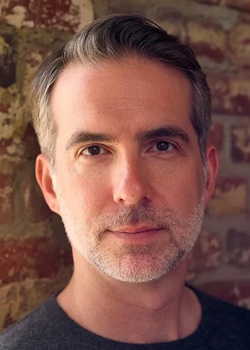
Over the years Soderbergh has shown a similarly eclectic taste when it comes to his film’s scores. Most of his most popular and acclaimed films have been scored by either David Holmes, Thomas Newman, or Cliff Martinez, and a lot of those scores have been heavily influenced by jazz and/or ambient electronica. Presence is different in that it adopts a more traditionally orchestral sound, and is warmer and more tonal than one might expect, considering the film’s horror/thriller undertones, and Soderbergh’s own personal musical taste. The score is by a relative unknown, 45-year-old Los Angeles native Zack Ryan, who has worked extensively as an arranger and orchestrator for composers like Deborah Lurie and Christopher Lennertz, and has been writing his own music for lower-profile movies, short films, and TV shows since at least 2003, but has never had a major theatrical release of this importance before. He has worked with Steven Soderbergh before, though, on the docuseries Leavenworth in 2020, and on the HBO-Max limited series Full Circle in 2023, and it was those successful collaborations that led to him working on Presence.
In an interview with Daniel Schweiger for On the Score Ryan explains that Soderbergh wanted the film to have a traditional orchestral score, but one of the things they also discussed was how well composer Michael Small was able to incorporate an electric keyboard into his score for Marathon Man in 1976, and they thought that could be a nice color for this story too. They also decided to have a solo piano version of the film’s main theme to act as a bookend, and so as such the soundtrack album features that arrangement in both the first and last cues. It’s also worth noting that Soderbergh and Ryan intentionally moved away from the currently in-vogue but increasingly clichéd horror music style of dissonance and jump scares, instead embracing a quieter and more lyrical sound that is more old-fashioned, but speaks perfectly to this film’s more intimate and emotional tone.
 The score is short, lasting for just a touch over 15 minutes, but the precise and targeted spotting of the music in context gives it a real impact, and it leaves a wholly positive impression despite its brevity. There is a touch of Jerry Goldsmith, and perhaps a touch of James Newton Howard, in the score’s main theme, which is first heard in the opening cue “Presence.”
There is a real delicacy, and a tender sentiment, to the theme, and as the score develops Ryan regularly allows it to expand out into more fulsome orchestral statements – I especially love the aching warmth of “Here,” the sense of mystery and anguish that comes from the more abstract piano and string textures in “Help,” and then the bigger orchestral sweep in the “Presence Theme (End Credits)”.
The rest of the score unfolds with a mostly similar tone, although to Ryan’s credit he introduces new melodic ideas and new instrumental textures with enough frequency to keep the score interesting. There is a sense of weighty dramatic emotion in the strings of “Still Here.” There is a lilting melodrama to the woodwind writing in the lovely “Come to Light.” “Control” is darker and suspenseful, with a more forceful tone to the strings. “Bonds” is perhaps the most outright horrific cue in the score, as it contains an array of aggressive and sometimes quite harsh string writing. And then, throughout all of this, the electric keyboard adds an interesting texture that allows the score to differentiate itself from many of its contemporaries.
Presence really impressed me a lot, and I hope this is the start of bigger things for Zack Ryan. I really appreciate how he and director Soderbergh intentionally bucked the trend of what contemporary horror/thriller films tend to sound like, and embraced a more symphonic, classical, romantic, emotional approach, and the fact that Ryan is clearly a composer who comfortable in that arena bodes well for the future. In the bigger scheme of things Presence is not a score that is going to set the world alight, but I found the whole tone of the thing to be a refreshing change, and anyone who appreciates the darkly romantic sound that horror movies often used to have will likely feel the same way.
Buy the Presence soundtrack from the Movie Music UK Store
Track Listing:
- Presence (2:01)
- Still Here (1:25)
- Come to Light (1:11)
- Control (1:08)
- Here (1:25)
- Help (1:46)
- Bonds (1:13)
- Hiding Place (1:51)
- New Approach (1:53)
- Presence Theme (End Credits) (2:18)
Milan Records (2025)
Running Time: 16 minutes 11 seconds
Music composed by Zack Ryan. Conducted by XXXX. Orchestrations by XXXX. Recorded and mixed by XXXX. Edited by XXXX. Album produced by Zack Ryan.

Shop at the Movie Music UK Store

Member of the

 MOVIE MUSIC UK