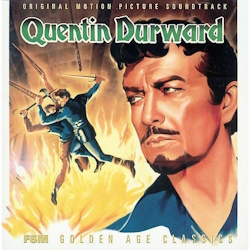
QUENTIN DURWARD – Bronislau Kaper
 GREATEST SCORES OF THE TWENTIETH CENTURY
Original Review by Craig Lysy
In 1951 MGM sought to capitalize on the huge commercial success of Robert Taylor in “Ivanhoe” with him starring in another period piece. To that end they chose to adapt the 1823 novel “Quentin Durward” by Sir Walter Scott. Pandro S. Berman was again assigned production with a $2.47 million budget, Robert Ardey and George Frooeschel were hired to write the screenplay, and Richard Thorpe was tasked with directing. For the cast, Robert Taylor would star in the titular role as the hero Quentin Durward, with Kay Kendall as Isabelle, Countess of Macroy, Robert Morley as King Louis XI, George Cole as Hayraddin, Alec Clunes as Charles the Bold, Duke of Burgundy and Duncan Lamont as Count Philip De Creville.
The story is set in France during the reign of King Louis XI circa 1465 C.E. A political marriage has been arranged to establish an alliance between Scotland and the kingdom of Burgundy. Quentin Durward is dispatched to France by his aged uncle to determine if Isabelle, Countess of Marcroy offers a suitable match. Along the way he gets caught up in rivalry between King Louis XI of France who has tasked him to guard Isabelle, and his rival Charles Duke of Burgundy. During their time together they begin to fall in love, although Quentin advises her that as much as he would like to court her, he must act in his uncle’s interest. To prevent the political alliance the king orders, Count William De la Marck, to kidnap Isabelle and marry her to ensure her lands remain loyal to France. Eventually Quentin slays De la Marck in a duel, rescues the king who was captured by the duke and wins the hand of Isabelle when news arrives that his uncle had passed away. The film was a commercial failure, losing a staggering $1.23 million. Critics panned the film for its contrived plot and lack of excitement, and it failed to earn any Academy Award nominations.
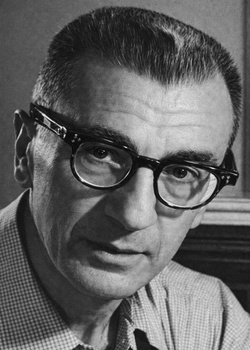 MGM’s go to composer for period pieces was Miklós Rózsa, however he was scoring “Diane” and was unavailable. As such Director of Music Johnny Green assigned Bronislau Kaper to the project. Upon viewing the film Kaper understood that he would have to infuse his soundscape with the requisite Scottish sensibilities for the hero Quentin, and French sensibilities for the film’s setting. The pomp and circumstance of the French and Burgundian Courts would also require regal, heraldic fanfares and court music. As with any swashbuckling film there were sword fights, which required kinetic and rhythmic action pieces to propel the battle. Lastly, over the course of the story a romance slowly comes to life between Quentin and Isabelle.
Kaper’s soundscape is supported by six themes, including; Quentin’s Theme, which supports our hero, and has a dichotomous expression. In its primary iteration it emotes with the sensibilities of a Scottish jig, empowered by heraldic fanfare, which speaks to the pride and integrity of a knight. During scenes of battle, it assumes the mantle of heroism. Yet his second woodwind borne iteration is more animated, comic, and frankly, irreverent as the film seeks to not take itself to seriously, and pokes fun at Quentin who to others seems anachronistic in his steadfast fidelity to knightly honor and chivalry. Isabelle’s Theme is supported by two themes; the first serves as both her personal identity, but also as a Love Theme for her and Quentin. Its construct offers an ABA form expressed as a lush, string borne romanza, with the A Phrase yearning, and the more emotional B Phrase, rapturous. Her second theme, I call the Struggle Theme, speaks to her conflict between love and duty. She feels like a piece of property traded by men to satisfy their greed and ambitions. It offers feelings of dread, melancholia and hopelessness, emoted by repeating phrases by strings tristi and aching woodwinds, which never resolve and suggest, futility. For our villain De la Marck’s Theme offers dire and descending seven-note phrasing, providing a diabolical musical narrative empowered by horns malevole. The Gypsy Theme operates on two levels, with its transpersonal expression speaking to the Gypsy clan, while serving as a personal emblem for the spy Hayraddin. Kaper offers exotic dance-like rhythms and instrumental color with its expression draped with orientalism.
“Main Title” opens with heraldic fanfare regale, which supports the MGM Pictures logo, and the commencement of the opening credits, which display with a sword and pole axe crossed, and flanked by the Scottish and Burgundian flags. At 0:17 Quentin’s Theme springs to life as a spritely Scottish jig led first by woodwinds, and then muted trumpets as Robert Taylor’s name displays. At 0:32 we flow into the lush string borne B Phrase of the Love Theme, which shifts back at 0:57 to a festive Main Theme. At 1:22 we segue the film proper with “Lord Crawford” as narrative script displays; “Our story begins in Scotland in 1465 – when Knighthood was a drooping blossom. . .” It reveals the honorable Sir Quentin Durward, a knight wo has fallen on hard times and is penniless, summoned by his uncle, Lord Crawford. Muted horns join with spritely woodwinds to empower a travel motif as he rides into the castle. Quentin is welcomed by his uncle with affection and gratitude as the two reacquaint. Kaper supports with a warm, and familial musical narrative, which blends Quentin’s Theme draped with Sottish auras. Muted trumpets embellish a comic musical narrative as Crawford reveals a small portrait of himself, which Quentin is to take to France. He is tasked with a mission to present himself at the court of Charles the Bold, Duke of Burgundy, and deliver this portrait to the Scottish ambassador. Then he is to assess whether the Countess of Marcroy, his bride to be, is as beautiful in life as she is in the painting hanging here on his wall, adding that she must be a woman who is modest, humble, chaste, sweet of nature, gracious and properly shy.
In “My Uncle” Kaper offers warmth, and filial love as Crawford commends Quentin on his noble commitment to knighthood. At 0:15 woodwinds comici join as Crawford discloses with a wink, that what matters most, is that she has reliable income. We close the scene warmly as Quentin departs. At 0:30 script reveals; “France – The Chateau of the Duke of Burgundy at Peronne”. Kaper supports the imposing view of the chateau with restrained fanfare maestro. At 0:48 we flow into “Your Grace” with tentative woodwinds, which usher the Duke into Isabelle’s quarters. They quarrel when she refuses to be peddled like a farm animal to an aged Lord with one foot in the grave. He asserts his royal prerogative to wed her, his ward, as it is in his kingdom’s best interest. She remains defiant and he departs frustrated, but firm in his resolve. At 1:00 we segue into “Poor Nation” atop Quentin’s Theme rendered as a gentle riding motif as he arrives at the chateau. He meets with Lord Malcolm, the Scottish ambassador, who asserts that Isabelle is one of the most beautiful women in France, but also the wealthiest, and that Lord Crawford should be contented with his choice. At 1:21 a silly musical narrative borne by woodwinds comici supports the ambassador dolling out coins so Quentin my be properly attired for the feast tonight. At 1:29 we segue into “Waiters” atop the comic and playful second variant of the Main Theme as waiters prepare the banquet room for the feast.
“Vanished” reveals that Isabelle has fled the chateau and a crescendo of alarm surges. Kaper sow tension as the duke orders a search, insisting that she be found. We flow at 0:20 into a proud, galloping rendering of Quentin’s Theme borne by horns nobile as he mounts a horse and pursues. At 0:41 we flow into Isabelle’s Theme as the camera shifts to her, lost in thought in her carriage. Later, as the horses are watered at an inn, Kaper sow an intangible unease. She departs, and a crippled boy passes on information to a rider, who rides off with knowledge of the road she is travelling. At 1:37 the rider discloses to the malevolent Count William de la Marck Isabelle’s whereabouts and that she bears a huge jewel case. A malevolent musical narrative empowered by his repeating theme by woodwinds sinistri supports, crowned with declarations by horns malevole as he has the rider rewarded by his men with a dagger thrust. At 2:19 we segue into “Honorable House” atop Quentin’s galloping theme, as he arrives at the inn. Inside a lurking de la Marck Theme supports the interrogation of the boy who betrayed Isabelle to de la Marck. We shift to the stopped carriage, which Kaper supports with tension as the soldiers advise Isabelle that they are consulting locals as to which fork of the road they should take. At 3:03 Quentin resumes his ride propelled by his galloping theme, joined with interplay at 3:13 by de la Marck’s malevolent theme, which swells with menace as he and his men follow. At 3:58 we segue into “Fight at Bridge” as Quentin alerts the trailing guards of de la Marck’s approach. An energetic ascent motif supports Quentin’s climb atop the roof of the covered bridge as the two guards fire a volley at de la Mark’s men, and then flee. Kaper unleashes a tempest furiosa with Quentin’s and de la Marck’s theme contesting as Quentin takes on de la Marck and his men alone. Outmanned and outgunned, he eventually escapes by diving into the river and escaping in the darkness. Later, he returns to the chateau having lost Isabelle’s trail.
“Quentin Arrives at Castle” reveals a ragged Quentin jumping on an animal cart for transport to the chateau, seen in the distance. Kaper supports his ignominy with a comedic and mocking musical narrative. As Quentin takes a bath, he rages to Lord Malcolm against his failure, and relates to him the name of the road on which he lost her. Malcolm advises that the road Beauvais leads to the castle of King Louis XI in Tours, not to her home at Marcroy. Malcolm dispatches him to the royal court and woodwinds sardonica support him once again gifting Quentin money to buy suitable attire. “Quentin Cases Castle” reveals Quentin traveling to the royal court by cart with a plodding travel motif (not on the album). Music enters with resounding fanfare regale to support a view of the royal chateau and scripts, which reads; “The Chateau of King Louis XI at Plessis les Tours”. A carefree rendering of his theme carries Quentin to the entry guards. An inglorious, and sardonic musical narrative supports as they demand a bribe to allow entry, he refuses, and they toss him down a moat embankment. Undeterred, warm French horns support as he circles the chateau in an effort to find a way to gain entry to no avail. A misterioso unfolds as the hours pass, and he gives up, and walks into the countryside carried at 1:33 by a pastorale. Tension swells as two gypsy women rush to him begging him to help them get him down! He runs with them, finds a man hung from a tree branch, and at 2:02 a spritely rendering of his theme cloaked with heroism carries his ascent up the tree, and then cutting of the rope, which bring the man down with a thump. At 2:24 strings sinistri introduce the Gypsy Theme as Hayraddin, a hidden gypsy spy observes. At 2:31 a bold galloping military motif supports the arrival of an armed party escorting King Louis XI. They shoot one of the women who flee and a diminuendo supports their examination of the body.
“Begone or Hang” reveals Quentin being sighted aloft in the tree and ordered to disarm and come down. He declares himself an honorable Scotsman who offers his sword to the King, saying he should wisely choose him, over these brigands and rabble. He adds that if the king refuses, then perhaps he is not as smart or worthy as I was led to believe. Well, King Louis XI answers, and tells Quentin to be gone, or hang as I do not trust any man that I cannot buy. A bassoon sardonica punctuates the royal rebuke, as they ride away, and at 0:06 we segue into “Palm of Your Hand” on muted horns as Quentin gazes across to moat at the chateau. Hayraddin joins him, and thanks him for trying to save his brother. He discloses that he is a spy, that the Lady Marcroy is indeed in the well-guarded castle, and that the duke of Burgundy will soon receive news of the Lady’s stay here. Quentin prepares to swim the mote, as Hayraddin explains the castle layout. At 0:12 we segue into “Lady Hameline” where Kaper introduces a second theme for Isabelle as she gazes out into the night from her window. The music speaks to her melancholia, feelings of dread, and hopelessness from be used against her will as a token for the ambitions of the duke. At 0:33 the music becomes grim and tension rises as Quentin enters the moat and begins his swim to the castle. He reaches the castle embankment, and climbs vines clinging to the battlement. He succeeds with acrobatics to swing to a balcony and gain entry as Hayraddin diverts the guard’s attention with owl hoots. As the guard peers over the edge Quentin sneaks up from behind and flips him off the battlement and into the moat with the guard’s heavy armor sinking him to his doom. He assumes the guise of the cloaked court physician to enter the king’s quarters, and places a dagger at his throat, and wakes him. He declares that this is proof that you are guarded by incompetents, and why you need me, a man of honor to serve you. He hands the dagger over to Louis, who is stunned, but gracious. At 0:42 the king asks Quentin to join him in a drink, and Kaper supports their toast with warmth, yet also sardonic comedy, crowned by warm French horns. At 0:54, the next day reveals Quentin being outfitted in his new Captain of the Guards uniform, supported by a playful musical narrative. At 1:06 the musical narrative shifts to one of gentility as the scene moves to Isabelle passing time in her chamber with her aunt, who reminisces over the lost age of chivalry. Quentin accidently enters Isabelle’s quarters, their eyes lock, and we see love at first sight. He apologizes, departs, and music enters at 1:48 in “Quentin Exits” as refulgent strings romantico voice their Love Theme.
“Message” reveals the king being shaved and extoling to his barber and confidant Master Oliver the virtue of having men like Durward around him. Pompous fanfare regale resounds as the kings looks out to see the arrival of Count Philipe de Creville of Burgundy with an armed regiment of calvary. King Louis is advised that the envoy demands an audience, and he orders an armed regiment to assemble and support him when he greets the count. He then orders Durward to guard at all costs with his life, a lady of exquisite beauty, to which Quentin pledges his life. At 0:36 a comic musical narrative unfolds as Oliver escorts Quentin to the lady. At 0:56 we segue into “Quentin Closes Shutters” atop strings romantico as Quentin pauses at Isabelle’s door. A formal rendering of the Love Theme supports as he enters, presents himself, locks the door, and proceeds to shutter all the windows over her objections. She begins to shout and pound on the doors, but is hand muzzled by Quentin. Afterwards, at 1:36 when she acquiesces, the Love Theme becomes tender as we see she liked being in his arms. He informs her that she must not reveal her presence until the Burgundian’s have left, or the king commands. At 1:53 horns maestoso support the king exiting his quarters dressed in full royal garb, into the throne room filled with the royal court.
In “De Creville” the king announces that he will receive his cousin. Horns grave declarations empower a grim marcia maestoso as the count violates court protocol arriving with armed men, and he dressed in full battle armor. The count is arrogant and issues accusations and demands from his liege, the duke. The king denies all of them, and de Creville with contempt tosses his glove to the floor, He arrogantly declares that Burgundy no longer recognizes the kingship of a coward, and announces herself independent and ready for war. King Louis details how civil war will aid the English in again invading France, and instead proposes a thirty day pause for the duke to reconsider. If he does not, then Louis declares that he will personally come to the duke with only a small honor guard to negotiate our differences. De Creville, accepts back his glove and departs with an air of condescension. At 0:37 we segue with gentility into “He Is a Paragon” as Quentin reveals to Isabelle that he is a Scotsman, and then extols the many virtues of his uncle. A soft, and tender romantic ambiance unfolds as Isabelle offers her impressions of him, which cause him to walk away to the window. He hears something, opens the shutters, and observes the count and his men departing carried at 1:40 by foreboding horns. Back in his private quarters, Louis relates to Oliver that he will not be going to Burgundy, but will instead outwit the duke by offering de la Marck lands and subjects to create a distracting stronghold on Burgundy’s flank. We close at 1:56 with a grim chord as Louis summons the gypsy Hayraddin to serve as his envoy to Count de la Marck. At 2:01 we segue into “What Are You?” where Isabelle defeats Quentin in chess, winning five ducats, which he cannot pay. She asks who Quentin really is, and why he is so far from Scotland? He deflects, she persists, and he relents, offering that he joined the knighthood and still believes to this day in its noble principles of chivalry, adding that he recognizes that he is a relic of the past. Kaper reprises Isabelle’s woodwind and string borne Struggle Theme to support their conversation. At 2:59 the music darkens on strings grave as the king arrives. He dismisses Durward, and we conclude at 3:11 with comedy as she reminds him that he owes her money.
In “France” the king advises that she cannot remain as it puts him and his throne in peril. She advises that she will seek sanctuary with her godfather the bishop of Liege. As he leaves, portentous elegiac horns support. In the corridor at 0:28 Master Oliver encounters Hayraddin, who is supported by a comedic variant of his theme. At 0:40 we segue darkly into “Plot” where the king informs Oliver of his diabolical plot; he will bribe Hayraddin, who will deliver a massive bribe of gold to de la Marck, and offer a map of Isabelle’s route with orders to kill her. He will assign minimal loyal guards to defend her to the death so as to not implicate the crown. Kaper supports with a diabolical musical narrative empowered by strings malevoli, which plays under the dialogue. An oblique quote of Quentin’s Theme is heard when the king advises that he will assign loyal men to guard her, including one whom she loves. At 2:24 we segue into “Departure” atop an energetic Gypsy Theme, which shifts to a travel motif as Hayraddin rides to de la Marck with the bribe. At 2:32 dire, muted trumpets support the king watching the departure from his balcony, joined by portentous horns. At 2:45 de la Marck’s sinister theme swells on a crescendo violento buttressed by slurred trombones malevole, howling trumpets, and drums bellicoso as Hayraddin arrives at his camp and bestows the bribe to the drunk count who accepts and then laughs maniacally. At 3:23 warm French horns nobile support the king tasking Quentin to escort Isabelle and defend her at all costs. Trumpets reali buttress the duplicitous king as he commends Quentin. At 3:45 we segue into “Away” a wonderful romantic score highlight atop a warm and inviting musical narrative as Quentin is introduced to his charge, the Lady Isabelle. They depart and we are graced with an exquisite extended rendering of the Love Theme draped with a pastorale as the travel through the verdant countryside. At 5:21 we shift to a spritely musical narrative as the coach arrives at an inn, a scheduled rest stop. Dark horns support the innkeeper coming out to greet them, joined by Quentin’s noble fanfare as he escorts her from the coach. At 5:43 we segue into “More Wine”, which reveals Isabelle and Quentin dining supported by a shifting musical narrative, which opens with a romanza. At 6:17 we shift to the comedic atop his theme as she asks Quentin, about fellow Scotsman, Lord Crawford, which causes him into the uncomfortable position of window dressing the aged man. She recognizes that he is trying to hide the fact that Lord Crawford is old and grey, and at 6:52 we shift to her Struggle Theme, which offers a Pathetique where she speaks of her sadness that her heart and soul are not hers to command, and that she is gifted as mere property to serve the interests of powerful men. At 7:41 his comedic theme returns as he pours more wine and tries to change the subject. Yet she and the music become angry when he refuses to state why he is in France, and how he came to know her name. He refuses to answer, because of an oath he took. Tension subsides and they both stop speaking as servants come in to clear the table.
“Stop” opens with unresolved tension as Quentin advises that he will sleep in the next room, and then departs. At 0:20 the Love Theme resumes as a traveling pastorale as we see the carriage proceeding on the second leg of its journey. At 0:41 tension dissonance supports a rear wheel coming off, which brings the carriage to a stop. We close darkly joined by Hayraddin’s Theme who joins and seems surprised that his friend Quentin is guarding Isabelle, as this portends his death. They return to the carriage and the guards advise of a two-hour repair. Hayaiddin tries to invite Quentin to his camp for safety and better food, but is declined. At 1:15 we flow into “It’s Useless” as Quentin finds that Isabelle has run off, and he pursues her into a field. He catches her, she yells to not touch her, and he stuns her by saying that he loves her, which initiates the Love Theme as he takes her into a kissing embrace. The theme blossoms as they walk hand in hand back to the carriage, and then carries their trip and arrival at the inn. At 2:41 we segue into “Take the Gypsy”, which reveals Isabelle being shown to her room. Kaper drapes the scene with dark auras, informing us that danger lurks. At 3:02 a bouncy Hayraddin’s Theme supports his failed efforts at de la Marck’s camp to dissuade him from attacking to save his friend Quentin. At 3:22 the music becomes foreboding as the attack looms, and Quentin informs Isabelle that there is no room in the inn, and that he will bed down above the stables. At 3:52 a pleading Love Theme supports her asking him to stay the night with her, but he declines, citing his knightly duties, and departs. At 4:06 syncopated horns support his departure and joining Hayraddin in the stables loft.
“I Feel Better” reveals Hayraddin regaining his conscience and alerting Quentin that de la Marck’s men have arrived to murder him. Music enters on tense strings with the revelation. The following three cues were adapted by Conrad Salinger utilizing Kaper’s themes. We flow seamlessly into “Do Something” as Isabelle is attacked in her room and Quentin in the barn. A musical tempest with acrobatic flare and interplay of Quentin’s, de la Marck’s and Isabelle’s Themes is unleashed as Quentin confounds his attacker with his dexterity and acrobatics, while a feisty Isabelle escapes via the roof to join Hayraddin in the stable loft. At 2:39 de la Marck’s Theme resounds atop dire horn declarations as the brigand leader approaches Quentin with a red-hot pole bar. Comic interludes support Isabelle exhorting the cowardly Hayraddin to help. At 3:16 we flow atop timpani into “Whip” as Quentin begins lashing the leader with flaying strikes of the coachman’s whip, which keeps him at bay. At 3:41 the whip gets caught up in the rafters and de la Marck’s sinister theme sounds as his minion regains the initiative. They ride out on horseback with Isabelle on one, and Quentin doubling up with Hayraddin. De la Marck’s men bar their exit from the barn, but at 4:13 we segue into “Jewel Box” atop shrill dissonance as Isabelle tosses her jewel box, and the brigands all dive to enrich themselves, clearing a path for them to escape. Quentin however is shot in the left shoulder as they escape. At 4:27 the music darkens, empowered by de la Mark’s Theme as he arrives and is outraged that they allowed them to escape. In a rage he pummels the leader at 4:48 punctuated with five orchestral strikes, and orders a pursuit. Aggrieved strings support Quentin’s painful ride away, and we segue at 5:01 into “Gypsy Dance” where they arrive and take refuge at the Gypsy camp where they tend to Quentin’s wound. Kaper supports the scene with the Gypsy Theme rendered as a danza esotica.
The music darkens on de la Marck’s Theme in “Crossroads” when Hayraddin’s cousin warns him that his actions place them all at risk from de la Marck’s fury. He departs the camp with Isabelle and Quentin in the wagon, in hopes of escaping. A stalking de la Marck’s Theme joins with a sinister galloping motif as we see the wagon fleeing on a forest road, with de la Mark’s soldiers in pursuit. Isabelle’s Struggle Theme joins when Hayraddin informs her of the king’s treachery and she frets about her circumstances as Quentin listens in the back. Hayraddin senses danger and pulls off the road at 0:38 as a dire de la Marck’s Theme propels his horsemen past them without notice. A plaintive musical narrative follows, empowered by Isabelle’s Struggle Theme as we see the three have abandoned the wagon for a rowboat. At 2:17 welcoming strings and thankful French horns of relief bring them to her godfather’s castle dock, where they disembark. At 3:02 we segue into “Liege”, which reveals Isabelle offering thanks to her godfather, Bishop Louis de Bourbon for offering sanctuary. Kaper supports by interpolating an organ composition by Renaissance composer Josquin des Pres. At 3:41 we segue into “Distant Fanfare” top fanfare regale that supports Count de Creville bringing news to Duke Charles that the Bishop of Leige has given Isabelle sanctuary, that she denies ever being at Tours, and that the bishop refuses to relinquish her. At 3:49 we segue into “Royal Fanfare” atop trumpets reali, which resound as the duke conspires to find a new pretext to initiate war.
In an unscored scene King Louis receives word that Lady Isabelle has taken sanctuary in Leige, and that she denies ever being here at Tours. The king is flummoxed, ends court, and returns to his private quarters where he discloses to Master Oliver that now that he is out of options, that he will have to keep his word and journey to see the Duke of Burgundy. “Louis’s Gold” reveals de la Marck setting plans into motion as he orders his men to take the gold he received from the king to purchase canons. The malignant, abyssal rendering of the de la Marck Theme supports the scene. At 0:26 we shift with gentility to the bishop’s garden where Isabelle and Quentin converse. A tender Love Theme supports as she tries to elicit him to open up as to why he is in France. We segue at 1:53 into “Am I Absurd?” with sadness as he discloses, supported by his Scottish Theme, that his uncle, Lord Crawford dispatched him here to assess her for marriage and that he must return. When she says that he loves her, he replies that he is indebted to, and loves his uncle, which means their love cannot be. She is overcome and they embrace, saddened by their circumstances. At 3:12 we segue into “King’s Visit” atop fanfare reali declarations by French horns and trumpets, which herald the arrival of King Louis XI in chateau Perrone. He enters the courtyard with two trailing guards, flanked by honor guards, with the duke mounted and waiting. The two men lock eyes, and then the duke dismounts and bends the knee, eliciting a smile of relief from the king.
“I Must Go” reveals a nightfall departure by Quentin for Burgundy, joined by his friend Hayraddin. Kaper supports with the sadness of parting, with interplay of the Gypsy Theme as they stop in town and Quentin declines his offer to join him for a drink. At 1:20 Isabelle’s Struggle Theme joins when Hayraddin discloses to Quentin that he knows that she loves him, and that he loves her, expressing sadness at his decision to leave. Quention smiles, departs, and Hayraddin goes into the pub. Later, he is drunk, stumbles up to pay his tab, only to find that de la Marck’s brigands are at a nearby table. At 1:32 we segue into “Get Him” empowered by a desperate Gypsy Theme as the brigands recognize him, and yell “Get him!”. Hayraddin runs out, mounts his horse, but is shot while fleeing. He makes it to Liege, with the Gypsy Theme weakening as he collapses off his horse upon arrival. At 2:17 a ferocious de la Marck’s Theme empowers his canon bombardment of Bishop de Bourbon’s castle at Liege, followed by an assault, which breeches its defenses. They win the battle, sack the castle, desecrate the chapel, and take the bishop and Isabelle prisoner. He orders her top gown removed and then looks her over with palpable lust. He orders his men to fetch the bishop as he demands to be married immediately.
“Goodbye Gypsy” offers a lamentation as Quentin returns, and covers his dead friend Hayraddin with a cloak. At 0:25 we segue into “Another Priest” with malevolence atop de la Marck’s Theme as the bishop is man-handled into the chapel and ordered to marry de la Marck and Isabelle at once. The bishop condemns him for desecrating the chapel, says he will not violate God’s law, and banishes him as a swine of the forest. De la Marck response is swift, and lethal, as he kills the bishop with his dagger at 0:57. “It’s the Room” reveals Quentin audacious rescue of Isabelle with tension slowly building until 0:39 when Kaper launches an acrobatic flight with the combatants swinging on church bells ropes as the steeple burns around them. This kinetic fight set piece is propelled by ferocious interplay of De la Marck’s and Quentin’s Themes. In the end, Quentin prevails and they head off to Burgundy where the king has been placed on trial for funding the attack on Liège. “Arrest” reveals Quentin and Isabelle arriving at Peronne carried by the Scottish Theme rendered as a gentle riding motif. Forlorn horns reali and snare drums support their arrest, by Count de le Creville. Inside he meets with Lord Malcolm at 0:44 supported by the Scottish Theme on muted trumpets, who counsels that he should escape and return to Scotland. At 0:54 strings affanato support Malcolm’s disclosure that his uncle has died. In an unscored interlude featuring the trial, Quentin exonerates the king by offering the severed head of de la Marck, whom he says he killed on the king’s orders. The king thanks Quentin, who promptly tenders his resignation. Later, the duke and the king then quarrel over who should marry Isabelle, each insisting on an ally, as they both covet the lands and wealth of Marcroy. The flustered king offers a compromise, which the duke accepts – let Isabelle choose. She is summoned, and announces that she chooses Quentin Durward, which flummoxes the king, and brings a wry smile to the duke. In “End and Cast” playful comedy unfolds as our two lovers run out of the chateau together, and we close the film with the Love Theme that blossoms as the kiss and embrace in a carriage taking them to their new life together. The cast credits are empowered at 1:56 by a vibrant rendering of Quentin’s Theme, which ends in a flourish.
I wish to thank Lukas Kendall for this premiere release of the complete swashbuckling score of Bronislau Kaper’s “Quentin Durward”. The remix and remastering of the original source 35mm three-track recording offers excellent audio quality, with only the source music of track 10 Gypsy Dance being monaural. The film never sought to take itself seriously by offering a classic and dramatic period piece narrative, but instead chose to provide a more lighthearted, comedic and adventure romance. Our hero is not afforded a classic anthem, but instead a spritely Scottish jig, which speaks to his heritage, and propels his amazing acrobatics during fight scenes. The Love Theme for Quentin and Isabel offers a classic Golden Age romanza, which aches for consummation as it is only late in the film that their love is allowed to take wing. Juxtaposed is the diabolic malevolence of Count William De la Marck’s Theme, which served as a menacing foil to our hero, and the playful, exotic and often comedic Gypsy Theme for our spy and sidekick Hayraddin. Folks, this score will not show up on any list of all-time great Golden Age swashbuckling scores, however, that being said, it fits its film like a glove, embodies each of the principal characters perfectly, embraces the comedic, empowers the acrobatic action scenes, and propels the film’s narrative pacing and forward momentum. If you want a fun, exciting and entertaining score, do purchase this quality album and take in the film.
For those of you unfamiliar with the score, I have embedded a YouTube link to a wonderful ten-minute suite: https://www.youtube.com/watch?v=YNI2OQnI9Hk
Buy the Quentin Durward soundtrack from the Movie Music UK Store
Track Listing:
- Main Title/Lord Crawford (3:25)
- My Uncle/Your Grace/Poor Nation/Waiters (2:01)
- Vanished/Honorable House/Fight at Bridge (5:45)
- Quentin Arrives at Castle/Quentin Cases Castle (2:56)
- Begone or Hang/Palm of Your Hand/Lady Hameline/Quentin Exits (2:09)
- Message/Quentin Closes Shutters (2:11)
- De Creville/He Is a Paragon/What Are You? (3:24)
- France/Plot/Departure/Away/More Wine (8:34)
- Stop/It’s Useless/Take the Gypsy (4:24)
- I Feel Better/Do Something/Whip/Jewel Box/Gypsy Dance (6:19)
- Crossroads/Liege/Distant Fanfare/Royal Fanfare (4:05)
- Louis’s Gold/Am I Absurd?/King’s Visit (3:30)
- I Must Go/Get Him (3:34)
- Goodbye Gypsy/Another Priest (1:14)
- It’s the Room (2:30)
- Arrest/End and Cast (2:25)
Film Score Monthly FSMCD Vol. 8 No. 7 (1955/2005)
Running Time: 58 minutes 26 seconds
Music composed by Bronislau Kaper. Conducted by Johnny Green. Orchestrations by Robert Franklyn and Conrad Salinger. Recorded and mixed by XXXX. Score produced by Bronislau Kaper. Album produced by Lukas Kendall.

Shop at the Movie Music UK Store

Member of the

 MOVIE MUSIC UK