REAR WINDOW – Franz Waxman
 GREATEST SCORES OF THE TWENTIETH CENTURY
Original Review by Craig Lysy
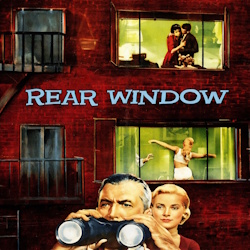
Following the success of his film Dial M For Murder in 1954, director Alfred Hitchcock embarked on his next project that would be based on a 1942 short story mystery thriller “It Had To Be Murder” by Cornell Woolrich. It offered him a perfect ‘Hitchcock’ story to bring to the big screen and he secured financial support for Paramount pictures and Patron Incorporated to purchase the film rights. Hitchcock would personally manage production with a $1 million budget, direct, and John Michael Hayes was hired to write the screenplay. A stellar cast was assembled, including; James Stewart as Jeff Jeffries, Grace Kelly as Lisa Carol Fremont, Wendell Corey as Detective Tom J. Doyle, Thelma Ritter as Stella, and Raymond Burr as Lars Thorwald.
The film is set in Greenwich Village New York City and centers on photographer Jeff Jeffries, who is confined to his apartment as he recuperates from a broken leg. His world is reduced to gazing at the opposing apartments windows that lie across the courtyard from his rear apartment windows. There is a lonely woman he nicknames Miss ‘Lonelyhearts, a newlywed couple, a pianist, a pretty dancer nick named ‘Miss Torso’, a middle-aged couple whose pet dog relentlessly digs in the flower garden and Lars Thorwald a jewelry salesman who cares for his bedridden wife. What unfolds is a murder mystery, which Jeff tries to solve, which ultimately leads to he himself being attacked and almost losing his life as his wheel chair is pushed over the edge. Luckily the police below break his fall and catch the murderer. The film was a huge commercial success, earning a staggering profit of $36 million. Critics praised the film and today it is believed to be one of the finest in Hitchcock’s directorial canon. The film earned four Academy Award nominations, including Best Director, Best Screenplay, Best Cinematography and Best Sound Recording.
Hitchcock enjoyed his three prior collaborations with Franz Waxman, on “Rebecca” in 1940, “Suspicion” in 1941, and “The Paradine Case” in 1947, and recruited him for the film. Hitchcock advised Waxman, that given the film’s setting in Jeff’s enclosed apartment, with a window being his portal to the rest of the world, that he wanted most of the soundscape to be diegetic and infused with natural sounds. As such several popular songs and classical works were chosen and during the film, they would waft across the apartment courtyard into Jeff’s apartment. Waxman’s original score would be limited to the Opening and End Credits, and one romantic ballad for piano “Lisa”.
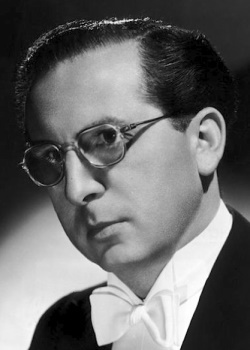 For his soundscape, Waxman offered four original pieces; Opening Credits offers a saxophone led frenetic jazz piece with dazzling orchestration. We close the credits on a freeform trilling flute dancing over drum strikes crowned with horns dramatico. I believe Waxman’s approach was spot on, beginning a film that has a static and enclosed setting with a dynamic piece, which captures the audience’s attention and provides momentum to the film’s narrative flow. Lisa offers a romanza cantabile borne by piano with a retinue of strings. There is an aching sadness, and yearning in the notes, as her love for Jeff for most of the film is unrequited as he is too stubborn, and unwilling to change his lifestyle as a traveling photographer to allow her into his life. She however gains entry by immersing herself in his world. The melody is malleable and Waxman renders it with a broad range of iterations; jazz, swing, playful etc. The song “To See You”, (Is to Love You) (1952) by Jimmy Van Heusen, lyrics by Johnny Burke serves as a leitmotif for the lonely, and unlucky in love Miss Lonelyhearts. The sad melody and lyrics of unrequited love define her perfectly. End Credits offers a quirky musical coda with a panorama from Jeff’s rear window to end the film.
0:00 “Main Tile” reveals the roll of the opening credits against a backdrop of blinds being raised on a bank of windows opens with a saxophone led frenetic jazz piece with dazzling orchestration. We close the credits on a freeform trilling flute dancing over drum strikes crowned with horns dramatico. I believe Waxman’s approach was spot on, beginning a film that has a static and enclosed setting with a dynamic piece, which captures the audience’s attention and provides momentum to the film’s narrative flow. 1:37 “Fancy Free”, we enter the film proper and the music’s frenetic energy subsides, and shifts to a spritelier and dance-like musical narrative with Waxman interpolating a jazzy passage from Leonard Bernstein’s ballet music from “Fancy Free”. The camera pans many apartment windows overlooking a central courtyard where we see various neighbors engaged in daily life, including a husband and wife sleeping on his fire escape platform due to the heat wave. The camera pan ends with a view of Jeff Jeffries sweaty forehead and a thermometer reading of 94 degrees. Vibrant lyrical strings take up the melody as we shift to the songwriter shaving, Miss Torso, a ballet dancer, putting her bra on, pouring some coffee and doing a series of leg lifts, and the bird lady placing her bird cage on the window sill. We shift to Jeff’s apartment where he sleeps as we see his leg cast, which displays; “Here lie the broken bones of L. B. Jeffries. Bernstein’s lively piece provides the necessary energy as the camera pans the room revealing his broken camera, and a gallery of photos from his distinguished career.
Hitchcock used city noises as part of his soundscape, and as Jeff talks to his editor we hear traffic sounds, kids playing, and a helicopter flying overhead as the camera supports his shifting line of sight. 4:48 “Fancy Free Reprise” offers the spirited resumption of Bernstein’s jazzy ballet music as the camera focuses on scantily clothed Miss Torso who is practicing her ballet dancing. The syncing of the music and her dancing is spot on. Below Miss Torso, the redheaded Miss Hearing Aide frets at the dance thumps on her ceiling as we shift to piano, which supports the songwriter composing a new song. Jeff complains of being cooped up for six weeks with nothing to do but look out at his neighbors. We see Lars Thorwald arriving home to his nagging, bed-ridden wife. At 7:09 woodwinds comici support Jeff maneuvering a back scratcher into his cast to relieve an itch. Bernstein’s piece shifts to a softer, free form piano carried jazz iteration as Miss Hearing Aid and the Bird lady converse. Lars enters the courtyard to tend to his flowers garden, only to have Miss Hearing Aide join and nag that he is overwatering his flowers. He disses her off as Stella, Jeff’s maid arrives and proceeds to lecture him about being a ‘Peeping Tom’. She then lectures him to stop over-analyzing things and marry Lisa, however he asserts that she is too good for him.
14:11 “That’s Amore” is rendered with a carnivalesque iteration by an ice cream truck as Jeff watches Lars return to his apartment. The camera pans to Miss Torso, and then two newlyweds who just received the apartment key from the landlord. They kiss and then he carries her over the threshold. 15:39 “Woman Singing” reveals it is nighttime and a woman is singing operatic scales. Jeff is lost in thought until Lisa arrives with a loving gaze and kiss. Playful banter follows as she shows off her latest Paris fashion dress. He is hungry, and she opens the door and admits a delivery man with a catered dinner and wine. She coaxes him to give up being a traveling photographer and to set up a studio here to establish roots, and begin a life together. 21:13 “To See You (Is to Love You)” the romantic ballad opens instrumentally for a perfect confluence to her romantic entreaties. He pours cold water on her suggestion, and she departs to the kitchen to serve dinner. He sees Miss Lonelyhearts at her dinner setting for her imaginary lover and we then shift to Bing Crosby’s vocal.
As the song unfolds Jeff watches her pitiful performance welcoming her imaginary lover, pouring wine, and chit chatting. Yet as the song concludes we shift back to an instrumental version of the song, she sets her wine glass down and lowers her head in despair and sobs, unable to sustain the fantasy. Lisa returns and the camera pans to Miss Torso entertaining a flock of desirous suitors. The song melody continues to the Thorwald apartment as Lars brings his wife Anna a dinner tray, and she snaps, “I hope you cooked them right this time!” He kisses her on the forehead, and she responds by throwing away the freshly cut flower, which wounds him. We shift at 26:02 into “Lisa”, where Waxman introduces his Love Theme after she gets out of bed and catches him talking to another woman. They fight, and the camera shifts to the songwriter’s apartment where a piano rendering of the theme unfolds as Hitchcock makes his usual cameo as a clock-winder. She serves dinner, yet he kills the romance with his cynicism and instead of complimenting her about dinner, says instead, it’s perfect as usual. They quarrel as he provides a litany of reasons why her pampered life of luxury and his as a traveling photographer, often to uncomfortable and dangerous places, are irreconcilable. She declares her love, and futility that she cannot find a way to be part of his life. She fights back tears and says goodbye, not good night, and we see that he is conflicted that he may lose her. Afterward he is pensive as the camera pans the apartment complex. The calm is shattered when a woman screams and a glass is heard shattering.
32:07 “Rainstorm” reveals a down pour starting with slapstick comedy unfolding as the couple sleeping on the fire escape offer buffoonery trying to get their mattress back into their apartment. Jeff also notices Lars leaving his apartment at 1:55 am carrying a large metal suitcase. At 2:35 am Lars returns with the suitcase, while the drunk songwriter stumbles into his apartment. Soon after, Lars again leaves with the metal suitcase. Waxman supports the scene with a softly woven danza comici. Here the music ends. Later, Jeff wakes to observe Miss Torso fighting to close her door, saying, “No, you can’t come in!”. She grabs a sandwich from the refrigerator and then Jeff observes Lars again returning with the suitcase. Jeff again dozes off and we shift to earl morning where we see Lars leaving his apartment with a woman dressed in black with a large hat the hides her face. 36:39 “Morning” reveals the complex bustling with life as Miss Hearing Aide sculps, Miss Torso dances, the ice man delivers a block of ice, and the fire escape lady lowers her pet dog in a basket to the courtyard below. As Stella gives Jeff a back massage, he shares his suspicion’s regarding Lars’ odd behavior. Waxman interpolates music from his score to “A Place In The Sun” (1951) to give the extended scene the vital energy it needed. After the message a woman again sings her operatic scales. 40:06 “Lars Cleans His Suitcase” reveals Jeff noticing Lars cleaning his suitcase. As Stella departs, Jeff asks for his binoculars and he observes Lars loading his suitcase with jewelry. He then retrieves his camera and observes Lars wrapping a large serrated knife and saw in newspaper and then taking a nap on his sofa. The songwriter plays the “Lisa” melody on his piano to support the extended scene. This rendering of the song lacks romance, instead expressed as elevator like background music.
43:14 “The Songwriter Struggles” reveals him cleaning his floor and stopping to play a chord and some notes that will create the version of the Lisa song he desires. The camera pans the complex and we again see the fire escape couple setting up their mattress, with the woman whistle calling their dog to the elevator basket, and then hauling it up. Her whistling follows a camera pan that finds Jeff and Lisa in a kissing embrace. She asks him; “How far does a girl have to go before you’ll notice her?” He responds by flattering her for her beauty. As her amorous kisses grow in intensity, he spoils the moment asking her about Lars strange behavior. She gives up and walks away frustrated that her amorous efforts have again foundered. At 46:13 the piano caried Lisa melody wafts in through the window. Lars returns with a rope and enters his bedroom and Lisa takes away his binoculars and reproaches him for his inappropriate voyeurism. They argue as she criticizes him and his conspiracy theories, however when she sees Lar’s mattress coiled and him finishing tying a very large travel box with rope, she relents, and asks Jeff to tell her everything he has seen from the beginning. Music stops here. Later that night Lisa calls Jeff and provides him the apartment’s registry information and phone number for Mr. and Mrs. Lars Thorwald. The next day Jeff calls and asks his detective friend Thomas Doyle to come over for a possible murder. Stella alerts Jeff and they see two men entering Lars’ apartment and carrying out the box. She runs out to get the name of the shipping company so they can trace it, but she arrives too late.
54:59 “Doyle Will Investigate” reveals Doyle hearing Jeff’s observations and deferring an official police investigation, preferring a non-official investigation by him alone. As he departs, Waxman interpolates a carnivalesque instrumental passage from the film ‘Red Garters'(1954) by Jay Livingston and Ray Evans. Jeff sees the dog digging up Lars’ garden, but he shows no anger, and gently sends the dog on his way. Later, Doyle returns and says Mrs. Thorwald was seen leaving the apartment at 6:00 am, during a time Jeff admits he was sleeping. At 56:46 Doyle is distracted by Miss Torso dancing to a reprise of Bernstein’s instrumental rendered tune of “Fancy Free”. The piece plays subtly under the dialogue throughout the scene. Jeff refuses to accept statements form the train superintendent and two tenants that Mrs. Thorwald got on the train. He rebuffs Jeff exhorting him to do an illegal search and begins to become irritated at Jeff’s relentless conspiracy theory and heckling. Doyle then remembers a post card he found in Thorwald’s mailbox, from Anna, his wife saying she arrived in Merritsville and is already feeling better. Doyle departs, and later in the day Jeff watches the doggy basket lift lowering the dog to the ground supported by the lady whistling. He then uses his tele-photo camera lens to observe Miss Lonelyhearts imbibing a whiskey on the rocks as she prepares herself for a ‘date’ at her makeup table. On her way out, she stops to pour another shot and then departs.
At 1:01:20 “Many Dreams Ago” Reveals the songwriter entertaining a beautifully dressed woman as Miss Torso practices lifts with her male partner. Miss Lonelyhearts crosses the street, takes a seat at a café, and orders a drink. This cue song, sung by a woman, speaks of an aching heart longing for love, and offers a poignant confluence with the pitiful Miss Lonelyhearts. Lars steps into the camera’s field as he crosses the street, returns home, and begins packing his clothes, as the song continues. When the music stops Jeff calls Doyle’s home, but his wife says he has not returned home. Jeff asks that when he does, to please have him come over at once. The song melody shifts to a piano rendering as Lars takes Anna’s purse and begins taking out its contents, which includes two rings as he makes a phone call. Jeff is distracted by the arrival of several guests at the songwriter’s apartment. Lars returns to the bedroom and hides the purse under some clothes and Jeff is startled by Lisa’s arrival. He fills her in as Lars departs his apartment, and we see that she has now fully bought into the conspiracy theory. Lisa points out behavior that a woman would never do regarding their best purse and jewelry. She then asserts that the woman seen by witnesses was not the current Mrs. Thorwald, but the future Mrs. Thorwald. She then is welcomed into his arms for a kissing embrace where she discloses that she will be staying the night. We discern that she has found the key to accessing his heart – joining him in solving the murder mystery.
1:10:39 “Lisa Unpacks” reveals her unpacking her small travel suitcase to reveal silk night ware and slippers, which piques his interest. A piano rendering of the Lisa song as a romanza enters as Lisa comments on it while looking at the songwriter playing it for his many guests. As Lisa warms up some brandies in the kitchen, she hums the Lisa song melody. Meanwhile Jeff observes newlywed Harry smoking by his window as Doyle arrives. Doyle seems pensive as he scans the apartment complex. The songwriter’s music upshifts to a swing-like tempo as the party becomes more festive, providing an undercurrent to the dialogue. As Lisa serves the brandy sniffers, Doyle systematically discredits all of their allegations about Lars, point by point. Doyle closes the case, advising that Anna was not killed, but moved out and separated from Lars. 1:17:52 “Mona Lisa” reveals Doyle preparing to depart, as the people at the songwriter’s apartment begin singing Nat King Cole iconic song. After Doyle departs, they are surprised when Miss Lonelyhearts arrives home with a younger man. He begins kissing her, and she pulls down the blinds. Through them we see him aggressively push her on the couch and mount her. She pushes him off, and slaps his face. He becomes angry, they have words, and she sobs as she pushes him out of the apartment. She then collapses on the sofa sobbing as Jeff and Lisa avert their eyes.
1:20:24 “Jeff Commends Doyle” a piano reprise of the Lisa song resumes as Jeff offers credit to Doyle’s expertise. As he assesses the propriety of his voyeurism, Lisa pulls down the bamboo blinds to close them off, saying that the show is over for tonight. She then grabs her silk sleeping gown and heads to the bathroom saying; “Here’s a preview of coming attractions”. At 1:22:32 the Lisa song shifts to a romanza for piano as she emerges from the bathroom dressed like a goddess in a flowing champagne colored silk gown. The moment is shattered at 1:22:51 by a woman screaming. They see the fire escape woman discovering her dead dog on the ground below. Everyone in the complex looks out as Miss Lonelyhearts examines the dog and says its neck is broken, and that it is dead. She places it in the basket and Mrs. Firesescape offers a diatribe to her neighbors, accusing one of them of killing her dog as her husband pulls its body up to their apartment. At 1:24:17 the Lisa song assumes a soft jazz iteration as she and her husband take the dog into their apartment. Jeff then notices something odd, only Lars did not come out to observe, instead calmly sitting in the dark on his couch smoking a cigarette.
The next day Jeff, Lisa and Stella observe Lars cleaning his bathroom walls, again alleging a murder coverup. He then alleges that Lars killed the dog for constantly digging up his flower garden, and buried his wife there as the flowers seem different. Jeff then notices Lars packing and conceives a plan – he writes a note to Lars, which Lisa will place in an envelope, and slide under his apartment door. The note says; “What have you done with her?” 1:28:28 “Lisa Delivers The Note” reveals her being watched through Jeff’s camera lens as she places the letter under his door. Lars notices and moves to the door as she flees down stairs. He reads the note and then a cat and mouse pursuit unfolds, with Lisa successfully eluding him. An energetic and jazzy “Fancy Free” supports the scene. Lars then resumes packing his clothes as they also observe Mrs. Lonelyhearts pouring out a lethal dose of red sleeping pills and a glass of water. Lisa returns and they observe Lars placing Anna’s purse in the luggage. Stella and Lisa decide that they are going to dig up the garden, but first Jeff’s conceives a phone call to Lars to lure him away as we see Miss Lonelyhearts pull down her blinds. Jeff calls, and after hesitating, Lars picks up the phone. Jeff makes a blackmail threat regarding Lars’ wife, and asks that they meet at the Prince Albert Hotel. Lars departs and the women head down to the courtyard, climb into the garden and begin digging it up with a shovel. A soft jazz iteration of the Lisa song wafts out of the Songwriter’s apartment as Miss Lonleyhearts writes a note at her makeup table. Stella discovers that there is no body, and then Lisa impulsively begins climbing the fire escape to Lars’ apartment. She climbs into his apartment through an open window and shows Jeff who is extremely anxious, that Anna’s purse is empty.
1:38:52 “Call The Police!” reveals Stella telling Jeff to call the police as Miss Lonelyhearts places the note on her nightstand and sits on the bed. The songwriter and his band shift to an aching blues rendering of Lisa’s Song, which elicits Miss Lonelyhearts to put down the pills and go her window. Then Lars arrives home and Lisa runs to hide with jewelry in her hand. Jeff advises the police of a man assaulting a woman as we see Lars discover that his luggage has been opened. He finds Lisa, throws her onto the couch, and demands back the jewelry she took. She tries to flee and a struggle ensues as she yells Jeff, and Lars turns off the lights. When the police arrive, the struggle ends, with Lars turning on the lights, and then greeting the police. An inaudible conversation with the police unfolds as Jeff and Stella search for bail money for Lisa, who is taken away. We notice that Lars has noticed Jeff and Stella observing him, as he departs his apartment. Doyle then calls back and Jeff offers the latest conspiracy theory which leaves the detective incredulous. He agrees to spring Lisa and Jeff hangs up. The phone then rings and Jeff says; ‘Tom’ I think Thorwald left”. There is no answer, just a phone hang up click, aa an anxious Jeff realizes that it was not Tom on the phone. A door slams and he hears footsteps approaching his door and begins to panic. He backs up to the window and arms himself with his flash bulbs as Lars enters.
Lars repeatedly asks, what he wants from him? Why didn’t the woman turn him in, and that he does not have a lot of money. He demands that he return the ring and begins approaching Jeff, who tries to forestall him with a series of blinding flash bulb flashes. Thorwald reaches him and begins to strangle him. Jeff sees Doyle at Lars’ door and yells for help. Lars forces him out of his wheelchair and throws him out the window with Doyle and police breaking his fall as Lars is apprehended. Doyle is then advised by a policeman that Thorwald is ready to take them on a tour of the East River. He adds that he killed the dog for being too inquisitive about what he buried, and that he unburied it and placed it in a hat box in his apartment. 1:50:50 “It Means So Much To Me” reveals the next day where we see Miss Lonelyhearts in the songwriter’s apartment thanking him for playing his new song, which means so much to her. As he plays a taped recording, the love song unfolds with all its sumptuous romantic beauty. The camera pans the complex, and we see Lars’ apartment being repainted for a new renter, the Fire Escape lady lowering her new dog in a basket, Miss Torso practicing her ballet, as her dorky and diminutive army boyfriend arrives, Miss Hearing Aide napping on a lounge chair, and the newlyweds quarreling, as Lisa and Jeff lounge in the apartment. As the camera graces us with a focus on a supremely beautiful Lisa reading a magazine, we close with the song lyrics; “But dream forever in your arms, oh, Lisa, Lisa…” 1:52:18 “Finale” offers a quirky musical coda with a panorama from Jeff’s rear window to end the film.
There are many ways to score a film, with original music embraced as the traditional Hollywood norm. However, as demonstrated here, there as films such as this, where a preponderance of the soundscape offers non-original music. Pastiche, interpolation of previous film music, diegetic source music and classical works are proven methods in a composer’s toolbox of supporting the film’s narrative. This entire film unfolds from a very narrow perspective – Jeff’s apartment’s rear window. As such it operates very much in the manner of a stage play. The apartment complex is inhabited by a variety of quirky, comedic, pitiful, and unusual people, offering a microcosm of society itself. Waxman was tasked with providing a soundscape one would expect from a New York City apartment complex, and indeed the music chosen was masterfully attenuated to each of the inhabitants, and the complex itself. Leonard’s jazzy ballet music from “Fancy Free” provided the bustling, vibrant energy of the apartment complex. While the yearning love ballad “To See You” perfectly expressed the pitiful longing of Miss Lonelyhearts for love. Yet there was one essential thread woven into the score’s tapestry, which unified its narrative, an idée fixe, namely, Lisa’s Theme. The obvious film narrative was the solving of a murder, however underneath we discern a potent romantic narrative – Lisa struggling with unrequited love, as she tries to break into Jeff’s world. Waxman conceived a Love Theme that supported this narrative and over the course of the film it evolves, and is emoted in a number of iterations, which ultimately speak to Lisa’s success. In the end, it becomes transcendent as love is realized with her admission into Jeff’s world. Folks, this film is considered by many to be one of the finest in Alfred Hitchcock’s directorial canon. I believe much of its success is attributable to Waxman and his team’s soundscape, which brought each of the characters and the complex itself, to life. I do not believe there will ever be a score album, as such I highly recommend you take the film in on a streaming service to appreciate Waxman’s handiwork.
For those of you unfamiliar with the score, I have embedded a YouTube link to the score’s finest piece, “Lisa”; https://www.youtube.com/watch?v=460kqdhminI
Editor’s Note: As mentioned, there is no commercial release of the score for Rear Window, but suites are available on several compilations.
Track Listing:
- NOT AVAILABLE
Music composed and conducted by Franz Waxman. Orchestrations by Sidney Cutner, Gus Levene, Leonid Raab, Leo Shuken, and Nathan Van Cleave. Recorded and mixed by XXX. Score produced by Franz Waxman.

Shop at the Movie Music UK Store

Member of the

 MOVIE MUSIC UK