TOM & VIV – Debbie Wiseman
 THROWBACK THIRTY
Original Review by Jonathan Broxton
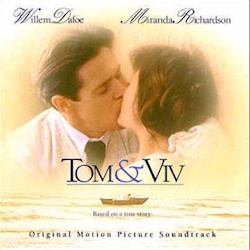
Thomas Stearns ‘T. S.’ Eliot is considered to be one of the 20th century’s greatest poets, with notable works such as The Love Song of J. Alfred Prufrock, The Hollow Men, Ash Wednesday, Four Quartets, and Old Possum’s Book of Practical Cats, the latter of which inspired the Andrew Lloyd Webber musical. While living in London in 1914 Eliot met and married Vivienne Haigh-Wood, a governess from Cambridge, who became not only the love of his life, but also his muse, inspiring what is possibly Eliot’s most acclaimed work, The Waste Land, written in 1922. However, their relationship was also turbulent, in part because of Viv’s health problems, which eventually resulted in her having significant mental instability and often being confined to an asylum. Although they formally separated in 1933 Eliot refused to divorce her, and they remained married until her death in 1947. Their relationship became the subject of the 1984 play Tom & Viv by Michael Hastings, which was then adapted into this film by Hastings and screenwriter Adrian Hodges. The film starred Willem Dafoe as Eliot and Miranda Richardson as Haigh-Wood, and was directed by Brian Gilbert. Although not especially successful from a financial point of view it was acclaimed by critics, and both Richardson and Rosemary Harris (who played Haigh-Wood’s mother) were nominated for Oscars for their roles.
The score for Tom & Viv was the breakout score by the then 31-year-old English composer and conductor Debbie Wiseman. As a graduate of the Trinity College of Music and the Guildhall School of Music and Drama, Wiseman had been writing music for British television for a decade or so prior to her scoring Tom & Viv; most notably she composed the theme for the massively popular 1990s sitcom The Upper Hand, as well as the score for the acclaimed TV drama Dying of the Light in 1992. Tom & Viv introduced her work to a worldwide audience, and launched a career which now sees her as one of the most respected British composers in the world; her work includes not only prestigious film and television projects but also classical pieces, an extensive lecturing and teaching schedule, and commissions from the royal family, including official pieces to mark Queen Elizabeth II’s platinum jubilee, Queen Elizabeth II’s funeral, and King Charles III’s coronation.
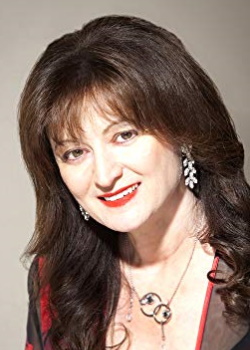 Wiseman is a composer whose music is strongly, almost defiantly, British, and I mean that in the best possible way. Her musical lineage includes not only her mentor, Scottish composer Buxton Orr, but also takes stylistic cues from classical greats like Edward Elgar, Ralph Vaughan Williams, Frederick Delius, and Gustav Holst, the same group that also influenced contemporaries like George Fenton, Patrick Doyle, and Rachel Portman. So, when I say that Tom & Viv is a very, very British score, you’ll probably get an idea of exactly what I mean.
The score is performed by the Royal Philharmonic Orchestra with featured piano solos performed by Andrew Bottrill and Wiseman herself. Tonally it is romantic and tender, but also slightly restrained and formal, as was the way with all romances in post-Victorian England, which only really emerged into real passion behind closed doors. Then, in terms of approach, one could easily say that Tom & Viv provides audiences with their first experience of the sound that Wiseman would later go on to develop through numerous subsequent scores – Haunted, Wilde, Tom’s Midnight Garden. Her approach usually comprises banks of searching strings, delicate piano melodies, warm brass harmonies, and the use of rumbling percussion to initiate especially fulsome statements of themes.
There are two main themes that anchor the score: an overarching main theme for the story as a whole, and a specific love theme for the pair which accompanies them during the ups and downs of their tumultuous relationship. Interestingly, neither Eliot nor Haigh-Wood have their own personal themes, although there is a prominent secondary theme that appears to represent Vivienne’s health problems and her slow descent into insanity.
The album begins with the “End Credits” performance of the main theme, which is a prototypical Wiseman theme filled with a mass of strings, lush, elegant, tender, but also slightly melancholy, backed by lovely piano lines and an increasingly ravishing orchestra which builds over the course of the piece. It’s interesting how Wiseman was able to musically capture the conflicting emotions that were inherent in their relationship – it was filled with love, of course, but that love was tempered by the sadness that Eliot felt as he slowly watched Haigh-Wood slip away from him into a fog of mental illness and drug addiction. Several subsequent cues feature the main theme prominently, notably the lovely “Opening Titles” (which, inexplicably, is the 19th cue on the album), and the slower and more cautious-sounding “Tom & Bertie,” as well as the piano solo performance in “Viv & Maurice” and the moving “Viv Explains,” which somehow conveys despair, longing, and regret, all at the same time.
The love theme for Tom & Viv is best heard in two cues: the ravishing “The Honeymoon” with its gorgeous layered strings, and the “Love Theme” which is performed as a piano solo by Andrew Bottrill. Unlike the main theme, the love theme dispenses with the quietly tragic underbelly that permeates the rest of the score and simply scores their relationship as it would have been in the best of circumstances – a meeting of intellectual minds who stimulate each other in all the best ways two people can stimulate each other. Subsequent performances of the love theme in cues like “Viv & Louise” and “The Print Room” are equally striking, and in the second of these pieces Wiseman cleverly and elegantly moves between statements of the main theme and love theme.
The theme that represents Viv’s health problems is prominent in several cues, notably “Hospital Scene,” “Viv Becomes Ill,” “Viv is Excluded,” and “Viv is Committed”. In each of these cues Wiseman arranges her lyrical theme for sad, slow strings imbued with a sense of palpable melancholy bordering on tragedy, speaking directly to how her relationship with Tom collapses under the weight of all her illnesses. “Viv Becomes Ill” also features some notable writing for woodwinds, while “Viv Is Committed” again features some darkly beautiful solo piano performances. What’s even more tragic about this is the fact that, by the end of the film, it becomes abundantly clear that many of Viv’s illnesses may have been exaggerated by the men in her life, many of whom wanted to separate her from Eliot; as a writer and free thinker she did not always meet the expectations society placed on women in the 1930s.
Other cues of note include “Maurice’s Farewell,” a dramatic piece underscoring a pivotal scene involving Viv’s brother; “The Harvard Letter,” which is highlighted by pretty piano flourishes; “Church Scene,” which makes unexpectedly powerful use of massed liturgical voices, and “The Poetry Reading,” which broods amid a bed of dark strings and underscores a scene where an increasingly distraught Viv – who has been shunned by Tom at the behest of his friends – stalks him around London at a series of public speaking engagements.
A couple of pieces of period and source music flesh out the album. “Bertie & Viv’s Pianola Rag” is a jaunty and whimsical piano theme that adds a touch of joviality to the friendly relationship between Haigh-Wood and the philosopher Bertrand Russell; this same theme is arranged for a chamber orchestra in the subsequent “The Road to Garsington,” Garsington being the country house where the society hostess Lady Ottoline Morrell would organize parties attended by Eliot, Haigh-Wood, Russell, and other pre-eminent writers and thinkers of the day, including Aldous Huxley, Virginia Woolf, Siegfried Sassoon, and D. H. Lawrence.
“Tom & Viv’s Dance” is a bouncy, peppy waltz interspersed with a laughing chorus, performed by the Palm Court Theatre Orchestra. “The Wibbly Wobbly Walk” was a popular novelty song from 1913 performed by the vaudeville singer Jack Charman, and then there are two classical pieces: “Fac, Ut Ardeat Cor Meum” from Sabat Mater by Pergolesi, and Strauss’s “Beim Schlafengehen” performed by the great New Zealand opera diva Dame Kiri Te Kanawa. Note that the Pergolesi and Strauss pieces do not appear on the European version of the soundtrack released by Sony Masterworks.
Overall, Tom & Viv is a lovely score. The way Debbie Wiseman was able to convey both the passion and the tragedy inherent in the relationship of Eliot and Haigh-Wood is remarkable, especially considering her youth and comparative lack of experience at that point in her career. It’s a clear indication of the outstanding composer Wiseman would ultimately become, and is an essential experience for anyone who loves her specific personal style of English period romance.
Buy the Tom & Viv soundtrack from the Movie Music UK Store
Track Listing:
- End Credits (3:02)
- Maurice’s Farewell (2:03)
- Hospital Scene (1:52)
- Tom & Viv’s Dance (performed by the Palm Court Theatre Orchestra) (3:12)
- The Honeymoon (2:59)
- Tom & Bertie (3:09)
- Bertie & Viv’s Pianola Rag (2:43)
- The Road to Garsington (0:39)
- Viv & Maurice (4:59)
- Viv Becomes Ill (3:02)
- Tom Wants Nothing (1:21)
- Love Theme (2:09)
- Fac, Ut Ardeat Cor Meum from Sabat Mater (written by Giovanni Battista Pergolesi) (2:27)
- The Harvard Letter (3:49)
- Church Scene (1:07)
- Viv & Louise (1:27)
- The Poetry Reading (1:36)
- The Wibbly Wobbly Walk (composed by J. P. Long and Paul Pelham, performed by Jack Charman) (4:04)
- The Print Room (5:28)
- Opening Titles (3:00)
- Beim Schlafengehen from Four Last Songs (written by Richard Strauss, performed by Kiri Te Kanawa) (5:26)
- Viv Is Excluded (1:16)
- Viv Explains (1:19)
- Viv Is Committed (4:48)
Sony Classical SK-64381 (1994)
Running Time: 58 minutes 14 seconds
Music composed and conducted by Debbie Wiseman. Orchestrations by Debbie Wiseman. Featured musical soloists Debbie Wiseman and Andrew Bottrill. Recorded and mixed by Dick Lewzey. Edited by XXXX. Album produced by Debbie Wiseman.

Shop at the Movie Music UK Store

Member of the

 MOVIE MUSIC UK