ELLIOT GOLDENTHAL: MUSIC FOR FILM – Elliot Goldenthal
 Original Review by Jonathan Broxton
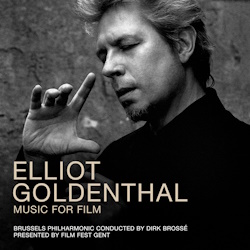
Each year at the Film Fest in Ghent, Belgium, one composer is awarded the Lifetime Achievement Award by the World Soundtrack Awards committee, and as part of that experience there is a live concert of their music, and an accompanying soundtrack compilation CD. Previous Lifetime Achievement Award winners include Laurence Rosenthal, Mark Isham, Mychael Danna, Gabriel Yared, Shigeru Umebayashi, Marco Beltrami, Carter Burwell, Terence Blanchard, Ryuichi Sakamoto, and Alan Silvestri. In 2024, the recipient was Elliot Goldenthal, and this is the album celebrating him and his work.
For a long time I had something of love-hate relationship with Elliot Goldenthal’s music. The first two scores of his I consciously heard were Alien 3 in 1992 and Interview With the Vampire in 1994, and initially they broke my brain. In my review of the Alien 3 score I wrote about how, upon hearing it for the first time, I had no idea what I was listening to. It felt like angry, vicious, random noise, and I absolutely hated it. I hadn’t yet begun to explore the darker and more atonal side of film music, and I had no knowledge of Stravinsky or Penderecki, or of twentieth century avant-garde music in general. In short, I had no clue what Elliot Goldenthal was doing, and I didn’t have the vocabulary to understand it. Thankfully, thirty years down the line, I now have had vastly more exposure to and tolerance of this type of aggressive music, and I can now appreciate it for the masterpiece it is, and I can appreciate Goldenthal for the genius he is too.
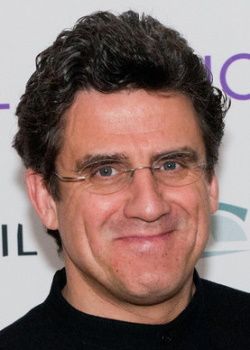
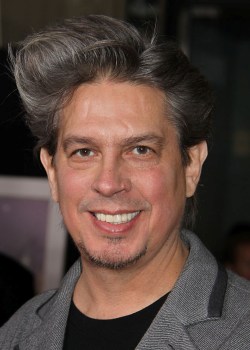 The music was recorded by the great Dirk Brossé conducting the Brussels Philharmonic Orchestra, and as always the resulting album is magnificent, an outstanding overview of many of Goldenthal’s career highlight works. The album contains music from 11 of Goldenthal’s most well-loved scores, with three of them arranged into suites ranging in length from almost ten minutes to almost twenty. The first of these is the so-called ‘Grand Gothic Suite’ containing music from his two super hero scores, Batman Forever from 1995 and Batman & Robin from 1997. The suite is a brilliantly disorientating spin around both scores, from the rousing but dark heroic fanfare main title and the anarchic and chaotic bubbling action sequences, to the slinky jazz for the femme fatale Poison Ivy character, the unexpectedly sultry bossa-nova version of his Batman march, and so much more. Goldenthal’s take on the characters is, somehow, zanier and more unhinged than Danny Elfman’s scores for the first two films in the series, but it is endlessly creative, and hearing this music here makes a proper release of the Batman & Robin score all the more essential.
“The Homecoming” is from his score from the 1994 film Cobb, about the life of baseball legend Ty Cobb. The piece is reflective of Cobb’s pride at being inducted into the Baseball Hall of Fame, and is an outstanding piece of warm orchestral Americana, although even here the music is underpinned with a sense of dangerousness and barely-suppressed anger that touches on Cobb’s volatile personality. The two pieces from his masterpiece gothic horror score Interview with the Vampire are “Born to Darkness” and “Louis’ Revenge,” which together form a frustratingly short 3½ minute suite from one of his all time greats. “Born to Darkness” is, of course, the gorgeously lush and tragically romantic lament that speaks to the ache that Brad Pitt’s character Louis feels at becoming a vampire, while the gargantuan action cue “Louis’ Revenge” underscores the scene where the character takes a scythe to a coven of French vampires, with horrifically bloody results. Brossé and the Brussels Philharmonic did a stellar job of capturing the Goldenthal sound here, especially in the more brutal moments of juicy, howling, brassy goodness. The room must have been shaking when they recorded those pieces.
“Of Helplessness” is from his score for the 1995 action heist movie Heat, and is one of its more understated and downbeat pieces, a slow-moving set of string figures that reflect on the harrowing tragedy at the heart of the story, and which eventually grow to some searingly operatic heights. “Still Life” is a short piece from Goldenthal’s Oscar-winning score for Frida from 2002, an intimate piano solo that tries to capture the essence of the enduring love affair between the Mexican artists Frida Kahlo and Diego Rivera, although even here Goldenthal plays around in minor keys, tugging at the frayed parts of their relationship.
The two cues from his 1999 masterpiece Titus are “Arrows of the Gods” and the 7-minute “Finale”. The first cue is a thunderous scherzo built into a loud and angry action cue, which swells with deep-throated brass phrases, whirligig string passages, and immense percussion, and is especially notable for its energy and forward-thrusting motion. The latter remains some of the most moving and emotionally powerful music Goldenthal has ever written; it accompanies young Lucius’s defiant final walk into the sunset, after the death of pretty much everyone else in the movie, and for me remains an undisputed career highlight.
 “The Gift” is another short piece, this time from the 1998 Michael Crichton sci-fi/horror Sphere, which is really very beautiful and has an unexpectedly magical and uplifting quality that stands at odds with the aggressiveness of the rest of the score. This is followed by an extended suite from Alien 3, comprising the cues “First Attack,” “The Entrapment,” “Lento,” and “Adagio”. The first two cues represent Goldenthal at his most uncompromising: brutal collisions of sound, scampering figures that dart around the string section, and banks of seething, snarling brass that underline the threat of that film’s alien in no uncertain terms. Then the last two cues see Goldenthal embracing a powerful religioso sound, including a solo boy soprano performance singing in Latin, which builds and climaxes with an enormous burst of poignant thematic consonance as the iconic Ripley character sacrifices herself to the flames.
“JD Dies” is from the score from the 2009 film Public Enemies and underscores the climactic scene where the gangster John Dillinger, played by Johnny Depp, is gunned down in a hail of bullets; Goldenthal scores the scene like an epic tragedy, with music that is full of searing, plaintive strings, and some impressionistic woodwind patterns. The final piece is the 12-minute “Final Fantasia” suite from his score for the 2001 animated sci-fi epic Final Fantasy: The Spirits Within. The sheer size of this score is monumental, and the sounds that Goldenthal gets the orchestra to produce are immense. I love that the suite includes the brilliant ‘Race to Old New York’ sequence, a phenomenal scherzo full of flashing strings and deep, resonant brass phrases that recall his Batman scores; elsewhere, the music veers between opulent classical violin writing, passages of heavy pounding percussion, and piano-led references to his lyrical main theme ‘The Dream Within,’ before it all builds up to a thunderous finale that ends the album on the highest possible note.
There are a couple of tweaks I would have made to the album running time. I might have preferred a slightly shorter Batman suite, in order to make room for some music from other scores I love but which were not included, such as Demolition Man and Michael Collins. I would personally have included one of the “Reno Ho!” cues from Cobb to complement the “Homecoming” piece, and I would also have loved to have heard Brossé’s take on the staggering “Victorius Titus” opening cue from Titus, but these are small matters of personal taste, and in no way reflect on the quality of the music that is there, which is all superb.
One thing I should note is that some respected voices in film music have pointed out some flaws in the sound of this album, as if something was wrong in the recording or mixing, or perhaps that the mic placement was wrong resulting in some sections of the orchestra sounding muffled. Honestly, I didn’t notice any sound issues at all, but I am notoriously bad at noticing things like that, and as such I will defer to the expertise of others here. It’s just something for people to bear in mind.
As many people know, Elliot Goldenthal has not really been an active voice in film music for quite some time. In 2005 he fell off a chair in his kitchen and smacked his head on the marble floor; it caused a subdural hematoma, briefly put him in a coma, and rendered him literally speechless for several months afterwards. He has since regained his faculties almost entirely, but his film music output since then has been limited to just five scores – arranging Beatles music for Across The Universe in 2007, Public Enemies in 2009, The Tempest in 2010, Our Souls at Night in 2017, and The Glorias in 2020 – plus three plays and a handful of classical commissions. Almost all his film work has been on films directed by his long-time partner, Julie Taymor. I guess what I’m saying is that I miss Goldenthal’s voice in cinema immensely, and this album offers a vivid reminder of how great he is.
Buy the Elliot Goldenthal: Music for Film soundtrack from the Movie Music UK Store
Track Listing:
- Batman Forever/Batman & Robin – Grand Gothic Suite (21:32)
- Cobb – The Homecoming (6:16)
- Interview with the Vampire – Suite: Born to Darkness/Louis’ Revenge (3:31)
- Heat – Of Helplessness (3:02)
- Frida – Still Life (1:39)
- Titus – Arrows of the Gods (1:36)
- Titus – Finale (6:47)
- Sphere – The Gift (1:49)
- Alien 3 – Suite: First Attack/The Entrapment/Lento/Adagio (9:46)
- Public Enemies – JD Dies (4:03)
- Final Fantasy: The Spirits Within – Final Fantasia (11:43)
Silva Screen/Film Fest Gent (2024)
Running Time: 75 minutes 17 seconds
Music composed by Elliot Goldenthal. Conducted by Dirk Brossé. Performed by the Brussels Philharmonic Orchestra. Recorded and mixed by Patrick Lemmens. Album produced by Thomas Van Parys for Film Fest Gent and Reynold d’Silva and David Stoner for Silva Screen Records.

Shop at the Movie Music UK Store

Member of the

 MOVIE MUSIC UK