THE EGYPTIAN – Alfred Newman, Bernard Herrmann
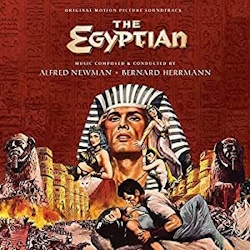 GREATEST SCORES OF THE TWENTIETH CENTURY
Original Review by Craig Lysy
Following the commercial success of “The Robe” in 1953, 20th Century Fox executive Daryl F. Zanuck decided to cash in with another lavish religious epic set in ancient Egypt. He was inspired by the 1945 novel “The Egyptian” by Mika Waltari, which was itself based upon the ancient 2,000-year-old Egyptian tale “Story of Sinuhe”. Zanuck purchased the film rights and personally took charge of production with a massive $3.9 million budget. He also decided that he would film with CinemaScope and DeLuxe Color. Philip Dunne and Casey Robinson were hired to write the screenplay and Michael Curtiz was borrowed from Paramount Studios to direct. A stellar cast was assembled, which included Jean Simmons as Merit, Edmund Purdom (a late replacement for Marlon Brando who quit one week before filming) as Sinuhe, Victor Mature as Horemheb, Bella Darvi as Nefer, Gene Tierney as Baketamon, Michael Wilding as Pharoah Akhenaten, and Peter Ustinov as Kaptah.
The story is set during the reign of Pharaoh Akhenaton circa 1350 B.C.E. and follows the life of Sinuhe, a physician who rises to prominence as the pharaoh’s personal physician after he saves his life during an epileptic seizure. Tragedy follows as he falls in love with courtesan Nefer, who he lavishes with all his wealth as well as his parent’s property only to be rejected. His parents are shamed, commit suicide and Sinuhe lacks resources for a proper burial. He spends weeks working as an embalmer to earn money only to be blamed for being unavailable to treat the pharaoh’s daughter who dies. Sinuhe is forced to flee but returns years later, forgiven by the pharaoh. Yet controversy escalates as the traditionalist priests try to overthrow Akhenaton’s new monotheistic religion. They recruit Sinuhe to poison the pharaoh, who with his dying breaths forgives him. This is an epiphany for Sinhue who is banished to live out his remaining days in exile. He does so preaching the ideals of love and forgiveness espoused by Akhenaton. The film was a commercial success, earning a profit of $5.35 million. Critics offered muted praise for the film, which earned one Academy Award nomination for Best Cinematography.
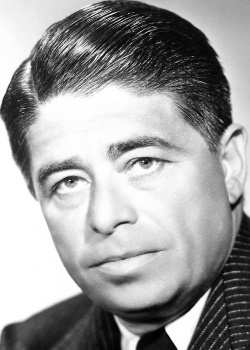 As Director of Music at 20th Century Fox Alfred Newman understood that he needed to personally attend to scoring any of Darryl F. Zanuck’s passion projects. Yet when finance executives moved the release date up by three weeks, he realized that he could not meet the deadline. His friend Bernard Herrmann came to him and proposed a solution, that they split the scoring duties, to which Newman agreed.
Fortunately, the film was structured in such a way that made this division of labor workable. There were three narratives; Sinuhe’s love for Merit, the dissolution of Sinuhe with the tragic unrequited love of Nefer, and the quest of Akhenaten to transform Egypt into a monotheistic religion. They agreed that Herrmann would take the second narrative involving Sinuhe and Nefer, with Newman handling the other two. They also agreed that stylistically they would utilize the pentatonic scale, wordless choir, a lute, and exotic percussion. Additionally, Newman would tone down his traditionally lush string timbre writing for a more direct, succinct and simple style while embracing Herrmann’s more exotic instrumentation and harmonies. In the final analysis the score flows seamlessly, a testament to the genius of both men.
For the architecture of their soundscape, five primary themes and a motif are utilized. This is Sinuhe’s story and his theme, an idée fixe, permeates the film. From boyhood, Sinuhe has sought to understand the meaning of life and Newman evokes this with a, tender, aspirational theme draped with religioso auras borne by yearning strings. Instructive is how his theme mutates, loses it purity, and becomes sensual when lust for Nefer corrupts him as he descends into dissolution betraying himself, his birth right, his parents, and Pharaoh. Merit’s Theme speaks to the long-suffering and unfulfillment of her unrequited love for Sinuhe. In the film she is a tragic figure, who bears Sinuhe’s son, yet at the moment his heart finally opens to her, she is slain in the tumult of a holy war. Newman evokes pathos, and romantic yearning tinged with sadness with a melody as gentle as a Nile breeze, meandering on an alluring alto flute playing in unison with an oboe d’amore supported by a retinue of strings.
Horemheb does not has a personal theme, but rather fanfares and a march, which speak to his willfulness, pride, aggression, and military prowess. Early scenes in the film support with strident, and aggressive horns and drums, which speak to these qualities. At the end of the film, as he ascends to become pharaoh, the living god, we shift to a more imperious and grandiose fanfare by trumpets reale. Nefer’s Theme speaks to this truly manipulative and irredeemably evil woman who ensnares Sinuhe in her web, which leads to his complete dissolution. Herrmann rarely in his career composed long-lined romantic melodies, yet when he did, as he does here, we witness beauty. Her serpentine theme offers a Siren’s call, borne by soft, alluring strings seducenti, which entice and bring the moth to the flame.
In terms of religious themes, Newman offers two with stirring eloquence; the Sunrise Theme speaks to Amenhotep’s mystical rapture with the Divine (Aton) during sunrise, an event, which results in his spiritual epiphany. Newman inspires with refulgent ethereal strings, which join the trumpet in an adoration as pharaoh orders the men to silence as he communes with God, who he says is coming. For the Hymn to Aton Theme, Newman and Darby created a mystical and profoundly moving ethereal adoration where we bear witness to an exaltation, borne by reverential mixed choral beautifully draped with exotic Egyptian auras. The confluence of lyrics, voices and music offers sublimity.
Lastly, a small ensemble of woodwinds, strings, sistrum, tambourine and various drums was used to create a number of source compositions to provide the requisite cultural sensibilities of antiquity.
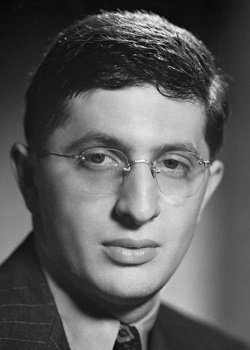 The following codes will be used in the cue title to inform you as to which composer composed the cue; † Composed by Alfred Newman, and ‡ Composed by Bernard Herrmann. ‡ “Prelude” offers a beautiful and magnificent score highlight where Herrmann masterfully sets the tone of the film by speaking to two of the film’s primary plot lines; the quest of Akhenaton to transform Egypt into a monotheistic religion and Sinuhe’s personal quest for the Divine. Herrmann excelled throughout his career composing powerful, and dramatic Main Titles, and he once again acquaints himself well. We open dramatic fanfare grandioso, joined by ethereal wordless women’s choir, which replaces Alfred Newman’s iconic 20th Century Fox fanfare. At 0:19 the fanfare grandioso reprises to declare the film title and the unfolding of the opening credits, which display against Egyptian hieroglyph reliefs. Herrmann bathes us with auras of orientalism and women’s chorus who voices seem to yearn for the Divine, the one God promulgated by Akhenaten. At 0:39 refulgent harp and wordless women’s chorus offer Sinhue’s Theme, which speaks to his life long search for enlightenment, and the meaning of life. We close with yearning women’s voices, crowned with a final fanfare grandioso declaration.
‡ “The Ruins” reveals narration, which speaks to the grandeur, power, and magnificence of ancient Egypt as a montage of monuments and ruins unfolds. Herrmann supports with an elegy empowered by a soft drum beat and muted trumpets. At 0:41 a grandiose orchestral declaration supports the visual transformation on the screen as the Sphinx, pyramids and architectural grandeur of ancient Egypt return to their pristine former glory, as the narrator speaks of exploring the life of a man who dwelled in this land of splendor thirty-three centuries ago. We close with a resounding trumpet declaration. ‡ “The Red Sea and Childhood” reveals a slow panorama of the shores of the Red Sea. Herrmann supports with a repeating four-note phrase by grim low register strings and woodwinds. At 0:28 a wistful musical narrative tinged with regret, led by yearning violins and forlorn woodwinds unfolds as we come upon an aged and exiled Sinuhe writing his memoir as three soldiers stand guard. He relates that he leaves it to the reader to render final judgment for all that he has done, both the good, and evil. At 1:11 a flashback reveals his foster parents discovering him, an abandoned child set adrift on the Nile River in a reed boat. Herrmann sow a profound pathos, as Sinuhe recalls his inauspicious beginnings. At 2:08 woodwinds doloroso flow over grim bass we see Sinuhe as a young boy living in Thebes in a house along the river bank. He relates his admiration of his foster father, a masterful physician who chose altruistically to minister to the poor, rather that the elite members of court.
‡ “The Nile and the Temple” opens with refulgent strings solenne and yearning woodwinds, which support narration by Sinhue, who relates his penchant for seeking of solitude as he walked along the Nile. At 0:16 he relates that it came to pass that he entered the school of life as we see him kowtowing along with other students during a religious ritual led by priests in a temple. Woodwinds solenne draped with harp arpeggios support the ceremony. He relates he spent ten years studying so that he may follow in his father’s footsteps and become a physician. Yet he questioned the devotion to the gods, who remain elusive as he raises his head and asks, why? We close at 1:03 with grim strings as a fellow student counsels him to lower his head, and to remain silent and obedient. † “Crocodile Inn” reveals drunk Sinuhe sitting alone in a tavern uninvolved in the celebration of his fellow graduating students, who praise Horemheb as the best swordsman and wrestler among them. Newman supports the festive ambiance with a danza esotica by a small ensemble consisting of Egyptian flute, various drums, tambourine and plucked harp. We see that Merit, the tavern maid is fond of, and protective of the drunken Sinuhe. We close with Sinuhe’s friend and protector Horemheb dutifully helping him go home. At 0:42 we segue into † “Thebes”, a narration declares her the “Queen of Cities”, capital of Egypt. Newman sow orientalism a la Herrmann using a repeating exotic, dance-like, eight-note motif as we see Sinuhe hanging up his doctor’s shingle in one of the poorer quarters of the capital.
† “Her Name Was Merit” offers a beautiful score highlight where Newman graces us with Merit’s Theme. It reveals Sinuhe having a chance meeting with the tavern maid Merit who is impressed that he cared enough to treat a slave who died of his wounds. Her theme enters gently like a Nile breeze, meandering on an alluring alto flute playing in unison with an oboe d’amore. At 0:32 the melody transfers to strings romantico as Kaptah, Sinuhe’s new servant who ingratiated himself into employment, warns that she is a dangerous woman. † “Death of Pharaoh” reveals the announcement by the court herald of the death of Pharaoh Amenhotep III. Newman supports with a processione solenne empowered by drums grave and gong strikes. † “Chant for Dead Pharaoh” reveals Sinuhe, Kaptah and Horemheb drinking at the tavern as Merit cleans tables. Horenbeb is drunk and enraged that he was denied acceptance into the Pharaoh’s guard due to his peasant birth to a cheese-maker, while nobles with inferior fighting prowess were accepted. Against this backdrop Newman offers a dirge borne by funereal mixed wordless choral chants. Horemheb and Sinuhe are both weary of the incessant chanting and resolve to leave the city to go lion hunting.
‡ “The Chariot Ride” reveals Horemheb and Sinuhe galloping through the desert propelled aggressively by a kinetic, surging cadence buttressed by horns bellicoso. A diminuendo at 0:23 supports the sight of a lion’s den. At 0:33 Herrmann ratchets up the tension with three sequential dire trumpet declarations supporting the chariot ride, with grim, threatening interludes revealing the lions rising due to the scent of prey. At 1:10 a crescendo of violence supports two lion attacks, both driven off by Horemheb’s arrows. At 1:21 we segue into ‡ “Pursuit” atop a relentless surging maelstrom of orchestral violence as Horemheb initiates a chariot pursuit of one of the fleeing lions. At 1:45 the horn empowered maelstrom dissipates as we see the lion entering a clearing where a man kneels in prayer. † “Akhenaton (The One Deity)” offers a sublime score highlight, where Newman once again demonstrates his capacity for evoking the serenity of the Divine. As the man supplicates himself in prayer, empowered by a solo trumpet reverenziale sounds as he experiences a religious epiphany. He praying continues unfazed despite the sound of the charging lion behind him. Horemheb slays the lion with a single arrow, dropping it in its tracks five feet behind the man. At 0:15 refulgent ethereal strings join the trumpet in an adoration as the man orders the men to silence as he communes with God, who he says is coming. He begins verbalizing homage to Aton, yet at 1:23 the serenity is lost, dissipating into distressed strings as the man suffers an epileptic seizure. Sinuhe treats him, and then the two lift him into the chariot for transport.
† “Put Them in Chains” reveals the arrival of a royal procession and soldiers. The minister orders the Sinuhe and Horemheb arrested, and placed in chains. Dire horns sound and empower a grim musical narrative. At 0:22 we segue into † “The Throne Room” where we see the royal court assembled and waiting for the arrival of pharaoh, with Sinuhe and Horemheb flanked by guards. Instead of the fanfare declared pomp normally associated with the arrival of royals, Newman instead graces us with an unpretentious musical narrative of pleasantries and gentility borne by a small ensemble, woodwinds, sistrum, percussion and harp. Upon Pharaoh Amenhotep IV and Queen Nefertiti’s arrival, he chooses to abandon’s court etiquette by ordering all to end their prostration, and instead stand. He then refuses the minister’s demand that Sinuhe and Horemheb be put to death for touching his royal person, and voids the law. He further inflames the minister by rewarding both men, making Sinuhe the royal physician, and Horemheb an officer in his royal guards. Pharoah then declares an end to court, deferring gifts from various ambassadors so he may return to meditation. † “The Throne Room Part 2” reprises the unpretentious, pleasant, gentility of the previous cue. The music also supports Sinuhe’s summon by the dowager Queen Taia.
‡ “Taia” reveals she asking Sinuhe to examine her as she knows that she is dying, and wishes to know how much longer she has. She relates that she is a tough as nails woman who is disappointed in her son who is too soft, saying her hard edged daughter Baketamon should be pharaoh. Sinuhe advises that her ailment is related to excessive drinking, and that she should forego drinking beer. She dismisses him saying that he should never tell an old woman the truth, even if she demands it. Music enters with her dismissal, offering a portentous musical narrative borne by ominous horns and grim low register strings that presages that Horemheb’s introduction of Sinuhe to Nefer at a party tonight. The meeting will serve as a catalyst, which brings ruin to Amenhotep IV, Sinuhe and Merit. † “Nubian Drums” offers a non-descript textural shifting drum rhythm, which provides the ambiance to Nefer’s party. We see Sinuhe transfixed, captured by Nefer’s stunning beauty. ‡ “Party’s End” offers an exotic woodwind borne musical narrative as Nefer ignores a fat suitor, instead offering an inviting glance to Sinuhe. At 0:18 Herrmann transmutes Sinhue’s string borne Theme into sensual covetousness as Sinuhe and Nefer lock eyes. At 0:35 the woodwind borne narrative resumes as Sinuhe declines Horemheb’s offer to ‘pick flowers’ with two maidens, as he remained captured by Nefer’s ensnaring beauty.
‡ “Nefer Nefer Nefer” provides an achingly beautiful score highlight with Herrmann offering the romantic pathos of unrequited love. Herrmann rarely in his career composed long-lined romantic melodies, yet when he did, as he does here, we witness sublimity. Nefer comes to him dressed in a resplendent golden gown. Her theme offers a Siren’s call, borne by soft, alluring strings seducenti, which entice and bring the moth to the flame. We also discern that it is tinged with sadness, as she forsakes love for wealth. At 1:05 Herrmann introduces a second theme for Sinuhe, who is hopelessly caught in the throngs of his first love, for a woman whose selfishness, treachery, and greed will precipitate his dissolution and bring ruin to both him, and his family. A yearning solo oboe triste attended by kindred woodwinds, and a retinue of soft strings tenero draped with harp adornment, speak to the awakening of love. She forestalls his advances supported by interplay with her sensuous theme. She warns him that like a cat that toys with its prey before it kills it, she must be true to her nature (a courtesan), inferring without words that while she is desirous of men and the gifts they bring, she is unwilling to ever yield and surrender her heart to them.
† “Kaptah’s Dilemma” reveals him fretting to Merit over Sinuhe abandoning his patients due to his obsession with that woman. Newman offers a sensual danza esotica borne by a small ensemble of woodwinds, stings, sistrum, and drums. At 1:09 we segue into † “The Garden” where Sinuhe waits as Nefer’s servants dress her behind a screen. A solo woman’s wordless voice draped with string harmonics with harp adornment weaves its spell. She resists his advances, saying she entertains a wealthy merchant tonight. At 1:51 her string borne theme joins as she relates that to survive and thrive here, she must never allow herself to surrender to her weaknesses – inferring the need to love. Yet Sinuhe continues undeterred, expressing jealousy We flow seamlessly into ‡ “The Offering” when she says that she cannot be with him tonight as the merchant brings her a ruby. He impulsively surrenders to lust and commits sacrilege by offering her Pharaoh’s personal emblem that was gifted to him after saving his life. His yearning theme, borne by strings tristi offer an aching Pathetique as we see in her eyes satisfaction, that she has ensnared his heart. When he offers her all his copper instruments if she would only love him, she coldly replies that she promises nothing. Adding, that if you wish to give her a present, do so, but ask for nothing in return, as I ask nothing from you. She then devastates him by telling him that she is an evil woman, which she warned him of from the start. As she departs, she tells him to keep his instruments and go.
‡ “The Harp Player” supports her departure and reclining in her bed. As a dejected Sinuhe departs, woodwinds, and strings offer a musical narrative of unbearable sadness, closing darkly at 0:38 as he passes by her bed. ‡ “The Bracelet and the Helmet” was dialed out of the film. It reveals Baketamon unhappy that Sinuhe has been neglecting Pharaoh. She gifts Horemheb her bracelet to use in seducing Nefer, a betrayal she hopes will break Sinuhe of his obsession. Horemheb visits Nefer, yet also sends a fake message to Sinuhe from Nefer to join her tonight. Sinuhe arrives, sees Horemheb’s helmet and whip, but is denied entry. Herrmann conception was to support the seduction with a scherzo animated by string appassianato, a contrapuntal bassoon, and later woodwinds taking up the melody. The director chose to instead reprise the soft harp motif of the previous cue. While I love Herrmann’s composition, I concur with the director that its energy was too much for the scene. Horemheb and Sinuhe come to blows, with Sinuhe rejecting Horemheb’s explanation that he did it to save him and expose this woman for what she is. Sinuhe however, ends their friendship, saying he never wants to see him again.
‡ “The Rebuke” offers a poignant score highlight, which features a Pathetique borne from a tête-à-tête between Sinuhe and Nefer’s Themes. It reveals the complete dissolution of Sinuhe as he bends the knee, pleads, and offers her the deed to his house and his precious instruments. She coldly rejects them and summons her servants. He does not relent and places them in her chest, saying he has now given her everything. Herrmann speaks to his dissolution with a painful descent of anguish by four-note string phrases answered by a grim two-note horn declaration. At 0:39 an oboe patetico with a retinue off woodwinds tristi voice his pleading for her love, the melody shifting to strings and horns grave as she sees the power, she now holds over him. She ruthlessly uses this power to leverage more from him, saying that what he offers is still not enough, suggesting that his parent’s estate, and burial mausoleum would prove his love to her, and she would reward him with “The Perfection of Love”. At 2:35 a surge of his theme with orchestral anger supports him throwing her against the wall for suggesting he deny his parents eternal life, and instead allowing their dead bodies rot to nothingness like slaves and animals. As he departs, her theme, voices satisfaction as she checks his latest gifts to her chest. We close at 3:01 angrily as we see Sinuhe walking the streets to his clinic, whose sign he rips down. He enters and finds Merit waiting for him.
‡ “The Deed” reveals Sinuhe rejecting Merit’s overture of love, instead pulling out the deeds of his parent’s house and mausoleum and demanding she witness the deed transfer. Grotesque woodwinds emote Sinuhe’s Theme joined by Nefer’s malignant theme as he prepares to do the unimaginable, and betray his parents and rob them of eternal life. At 0:50 his conscience enters atop the tender string borne theme of his youth, yet it is fleeting, and snuffed out by his lust and obsession for Nefer as Merit flees after refusing to help him perform this terrible deed. ‡ “The Harp and Couch” reveals Sinuhe’s arrival at Nefer’s pavilion. He places the deeds in her chest and approaches her as she reclines on her bed. He says all that he has is now hers and he stands before her accursed and disgraced before gods and men. Herrmann offers an idyllic romantic interlude borne by strummed harp and soft strings romantico. We flow into ‡ “The Perfection of Love”, which reveals that the romanza has slowed and soured. The harp separates from the strings, now offering strident counterpoint as Nefer at 0:38 grants his wish for the “Perfection of Love” – ejection for her house with the caveat that he never returns as “perfection” is only achieved by endings. Surges of pain and fury surge as Sinuhe is stunned. A tension diminuendo carries her departure, yet anger slowly begins to bubble up as we see hatred swell in his eyes. We flow seamlessly into ‡ “Violence” where he grabs Nefer, forces her down on her back as he tries to strangle her and then force her head into the pool to drown her. Herrmann unleashes a horrific musical narrative of violence empowered by trombones bellicoso, woodwinds irato and strings furioso. At 0:50 orchestral spikes punctuate her guards pummeling and throwing him out of her house. As he walks home in a rainstorm drums and horns angrily rebuke him, crowning his self-destruction.
‡ “The House of the Dead” reveals Sinuhe returning home to discover his parents had taken poison and committed suicide. While crying in anguish, Kaptah reads aloud their last will and testament. They express their love for their beloved son, who enriched their lives, refusing to blame him for the misfortune that has fallen upon them. Music enters as an oppressive pulsing dirge with a scene change to the House of Death, an embalming clinic where Sinuhe requests the embalming of his parents. The overseer orders their bodies thrown in the river when he is told he cannot pay. Yet when he advises that he is a doctor and will work to cover the costs, the overseer agrees. Narration reveals he worked for ninety days to pay his debt. ‡ “The Burial” reveals Sinuhe carrying his parent’s mummified remains by mule supported by an anguished rendering of his theme. At 0:24 and forlorn oboe supports his arrival among the vast network of tombs in the Valley of the Kings. His forlorn and inconsolable theme shifts among woodwinds as he prepares to bury his parents. A cynical grave robber confronts and mocks him for believing in an afterlife. Yet he sees Sinuhe is genuine and earnest and so offers to assist him with the burial.
† “Valley of the Kings, Part 1” reveals a signal of a stranger approaching by the grave robber’s friend. They hide and we see Merit arrive. Tentative woodwinds tenero with tremolo strings support her arrival. At 0:53 his original theme, now purged of its lust and sensuality returns as Merit offers bread and wine. He initially refuses, yet acquiesces, accepting her generosity and concern. His theme struggles to shed its grief and find its former self, yet at 2:19 it darkens as he with bitterness denounces the vicissitudes of life, saying men are vile and despoil all they touch. He says he will take her back to Thebes, but she says he can never go back as the Pharoah has issued a death sentence because his daughter died because you were unable to treat her. At 2:32 warmth returns atop strings tenero as Merit says all women are not like Nefer, asking at 3:03 supported by yearning strings romantico “Can you not believe in love from a woman who asks for nothing?” He responds by hugging her. At 3:33 we shift to the docks where Kaptah has purchased passage on a boat to take Sinuhe into exile. Newman offers an exotic strolling melody by small ensemble to support. At 4:05 sad strings of parting join, and at 4:16 Newman introduces his Aton Theme born by a yearning flute delicato attended by strings solenne as Merit gifts Sinuhe an ankh, the symbol of the one God Aton as a keep sake. Yet he refuses, saying this is goodbye forever. He tells Merit that she has her whole life ahead of her, while his is spent and will end in a dark foreign land. They hug and we close as his bittersweet theme swells to support his departure.
† “Valley of the Kings Part 2” supports narration for a montage of scenes of Sinuhe and Kaptah traveling the known world. Eventually they rise from destitution and thievery to attain wealth and notoriety gained from Sinuhe once again practicing his physician arts. Newman supports with an exotic musical narrative, which meanders like a desert breeze. In ‡ “The Homecoming” Sinuhe makes a fateful decision to return home, having cured the Commander of the Hittites. He has earned the reward of a new, unbreakable sword forged from iron, which is stronger than the Egyptian bronze swords. Languorous strings support their boat journey on the Nile, however at 0:10 Herrmann unleashes a maelstrom of fierce and dissonant violence as we see tumult in the streets. Narration informs us that Pharaoh has caused a cultural upheaval with reactionary violence from the priests and the conservative establishment that refuse to abandon their many gods and accept Akhenaten’s one God. An interlude at 0:29 reveals Sinuhe declaring his name and status of physician to Pharaoh, which triggers their arrest. The violent musical narrative resumes until 1:09. Sinuhe is brought to Horemheb who asks why he has returned knowing he has a death sentence. Sinuhe requests the confiscated Hittite sword, and then asks Horemheb to strike him. After two strikes, Horemheb’s sword shatters. Sinuhe advises that this new metal, called iron is how Hittites forge their swords, and that this is why he returned. We end on a dark and foreboding low register sustain as Horemheb orders him to follow him.
† “Hymn to Aton, The Sun” offers a magnificent score highlight, a masterpiece cue, where Newman and Darby create a mystical and profoundly moving cinematic moment, where we bear witness to a rapturous confluence of faith, devotion, cinematography, chorus and music. It reveals Akhenaten and Nefertiti leading a ceremony in an open-air temple giving homage to the one true God, Aton, as Horemheb, Sinuhe and Kaptah arrive. The music offers an ethereal exaltation, borne by reverential mixed choral beauty draped with exotic Egyptian auras. Afterwards, Akhenaten meets with Horemheb, Sinuhe and Kaptah. Surprisingly he bears no ill-will to Sinuhe, offering an apology for his anger. Horemheb reveals the iron sword of the Hittites and insists that he be empowered to attack them before their forges create iron swords that will make them invincible. Even Nefertiti agrees that they must go to war, but Akhenaten clings to his faith in Aton, and says he will send an emissary for a peaceful resolution of the problem, departing and leaving a frustrated Horemheb behind. The camera reveals as Sinuhe passes by the shrine’s stairs, that Merit has a boy at her side.
† “Nefer’s Return” and the following cue offer a score highlight of great pathos. Narration informs us that Sinuhe has gained enormous wealth ministering to the wealthy and elite of society. Kaptah enters and asks that he see one last patient for the day, handing him Pharaoh Amenhotep IV’s amulet he gifted to Nefer. He agrees, and she enters covered by multiple veils, that hide her disfigurement. He examines her and states that he can save her life, but cannot restore her beauty as the disfigurement caused by the disease cannot be undone. She chooses life but says she cannot pay him. He chooses to be magnanimous and advises that payment is not necessary, returning his amulet. Newman sow an aching sadness, with a tête-à-tête between their two themes, which reopens the psychic wounds for his betrayal of his parents, and her regret for hurting a decent man who was genuine in his love. We flow seamlessly into ‡ “Nefer’s Farewell” as her theme, borne by weeping strings with aching sadness supports her departure, with a last sad reprise of his Love Theme. At 1:41 a somber musical narrative supports Sinuhe telling Kaptah that while he longed to exact a slow and very painful revenge, today he feels only pity, adding that revenge leaves you as empty as fame and fortune. Masterful is how Newman’s music speaks to us more than the actual dialogue.
† “Sights, Sounds and Smells” reveals Sinuhe returning to the poor quarter of the city where he grew up, relating his experiences to Kaptah. Newman supports with a small ethnic ensemble offering a wistful strolling melody. The stroll is interrupted by three boys chasing and assaulting another boy, trying to steal his ankh. Sinuhe breaks it up and Merit runs out calling out Thoth. She is distraught as he has a cut and we flow into † “You’ve Been in My Prayers” with music entering as she suddenly recognizes Sinuhe. She said he had been in her prayers and a tender rendering of his theme supports. She then informs him that she bought his father’s house, and that the boy was an orphan taken in by her. As they enter and Thoth brings out his father’s physician case, his theme shifts to a wistful iteration as Merit departs with Kaptah for the courtyard to cook a meal. A tender woodwind borne musical narrative supports Sinuhe as he ministers to the boy who declares his intention to be a physician, but one who cares for the poor, a revelation in which Sinuhe recognizes himself in the boy. At 1:28 we segue atop a piccolo played by Kaptah into † “Kaptah”. Kaptah knows that Thoth is Sinuhe’s son, but keeps silent at Merit’s request. At 1:45 the music on strings and forlorn piccolo shift to sadness as Sinuhe joins Merit and she begins to weep. At 2:25 the piccolo soliloquy is dialed out of the film, evidently to allow the dialogue to carry the scene. She asks what the great, rich and cynical Sinuhe wants with a tavern maid. Sinuhe admits to Merit that he is the poorest of men as he has wasted his life, destroyed everything he touched, his birth right, his parents, and you. But then declares that perhaps there is salvation in what she has given him – a son.
We flow seamlessly into † “Live for Our Son” a beautiful score highlight with evocative interplay of Merit’s and Sinuhe’s Themes. Woodwinds offer a prelude from which at 0:38 a arises Merit’s Theme on a solo oboe tenero and kindred woodwinds. As Sinuhe says that perhaps they can find meaning in life living for their son. His theme joins on sumptuous strings as she falls into his welcoming embrace. † “Am I Mad?” reveals Sinuhe called to minister to pharaoh. On the way he meets with Baketamon who reveals the court is in chaos as her brother refuses to defend Egypt from the advancing Hittite army. He joins pharaoh who is distraught, asking if he is mad in refusing to shed blood fighting the Hittites. Newman offers a masterful musical narrative, opening with grim bassoons which speak to pharaoh’s despair. At 0:49 horns militare and drums of war resound as Horemheb marshals the army to defend Egypt. He asks Sinuhe if he is mad, joined at 1:13 by a mystical, ethereal rendering of the Aton Theme, which slowly descends into despair as Akhenaten says that Aton has abandoned him, and that his dream of bringing peace under the one God, has failed. Elegiac horns joins as he asks Sinuhe to relieve him of his life, to which he refuses, saying a physician works to prolong life, not end it. We end with futility and despair as Sinuhue departs and Akhenaten collapses in anguish at his private altar.
‡ “The Princess” reveals Sinuhe confronted by the ministers of court, priests, and Horeheb who demand that he administer a potion to relieve pharaoh of his pain, and by doing so, save Egypt. Afterwards, Horemheb will be declared pharaoh and will lead the Egyptian army to victory over the Hittites. Sinuhe rebukes them all for the treachery and treason, declaring he will play no part in ending pharaoh’s life, and then issues a warning, that murdering a pharaoh will forever establish a terrible precedent that will plague all future pharaohs. Music enters atop three dire horn declarations of finality to support his departure. A grave musical narrative supports his arrival at Baketamon’s quarters. She adds her plea for him to kill pharaoh, which he again refuses. She confides that she is to wed Horemheb to legitimize his reign, but she will not lower herself to marry the son of a cheesemaker. She asks Sinuhe to poison both her brother and Horemheb, and then marry her, disclosing that he is her half-brother born of one of Amenhotep III’s other wives. With this stunning revelation, we flow into ‡ “The True Pharaoh”. A dramatic musical narrative, which portends of great power beckoning as Sinuhe absorbs her words. He is unpersuaded despite the circumstantial evidence she presents, supported by a shift to a grim and foreboding musical narrative. We surge dramatically at 1:05 as she orders him to travel with her to her father’s tomb, where he will find evidence of his royal birth.
‡ “The Tomb” chords by horns solenne and contrapuntal bassoon carry their entry of pharaoh’s tomb. Herrmann supports with a solemn, reverential musical narrative, which shifts at 0:45 to lyrical strings as Baketamon offers him a mirror that reveal facial features nearly identical to the facial relief of Amenhotep III on his tomb. He asks to be left alone, and as he contemplates what he now knows to be true, muted trumpets grave sound. He finally departs carried by the solemn music that supported his arrival. In ‡ “The Proof” a forlorn musical narration borne of his theme supports as Sinuhe rejoins Baketamon and accepts the truth of his birth lineage. At 0:52 we segue into ‡ “The Holy War” as they see smoke rising in the sky over the capital. She exhorts Sinuhe to kill Horemheb, seize the throne, marry her, and become a living god. Martial horns bellicoso resound, declaring a horrific musical narrative as the two ride furiously back to the capital. ‡ “Danse Macabre” offers a powerful score highlight of destruction, where Herrmann unleashes a horrific maelstrom of violence and terror. Horns bellicose resound with fanfares of death, buttressed by shrill woodwinds, whirling strings furioso, and drums strikes of death as we see the city aflame as a holy war unfolds with followers of the old gods massacring the followers of Aton. A desperate Sinuhe finds Thoth safe with Kaptah, whom he gives money to go to the docks and buy safe passage out of the city while he searches for Merit.
† “The Death of Merit” offers a glorious score highlight where Newman offers musical counterpoint of the highest order. Kaptah is forced to surrender all his money to soldiers bent on killing them. He and Thoth manage to board the ship after he removes a large ruby that was hidden under his eye patch as payment. Music enters darkly as Kaptah adjusts to his new role as a parent. At 0:11 we shift to the palace sanctuary where followers join in an exaltation of Aton, offering devotion and singing praise to the one God. Newman supports with a powerful and inspiring reprise of the “Hymn of Aton” beset with a counterpoint of violence borne by horns bellicoso as soldiers batter down the gates. At 1:40 dire horns of death resound as archers slaughter Aton’s followers in a hail of arrows. Sinuhe arrives calls out to Merit who stands and turns, only to be struck down at 1:57 by an arrow. At 2:01 an anguished rendering of Merit’s Theme supports a grieving Sinuhe holding her in his arms. He assures her Thoth is safe with Kaptah and she asks that her love hold her as the vitality of her theme slowly dissipates unto death at 2:37 atop a solo violin affanato. Her theme swells with her passing now transformed into a threnody. At 3:42 the musical narrative becomes grim as Horemheb arrives, orders all survivors imprisoned, and that every brick of the temple be torn down. He tells Sinuhe this had to be done, and is surprised when he blames Akhenaten and his false god for Merit’s death. He tells Horemheb to meet him in the palace later so he can poison Akhenaton. We close on a grieving rendering of Merit’s Theme as Sinuhe carries her away.
‡ “The Death Potion” reveals Sinuhe adding poison to Pharaoh’s wine. He tells Horemheb to arrange an audience and that the three will toast, as he must be complicit in this murder. A dark and foreboding string borne narrative commences with the arrival of Baketamon. Yet she is shocked to see him pour poison in all three goblets. He shows her the antidote, yet rebuffs her embrace saying their relationship forms for power, not love. He then rebukes the evil nature forced upon her by others, while admitting that he chose evil on his own accord. We close at 2:01 with dire horns as Baketamon is told to leave, Sinuhe then drinks the antidote, and unlocks the door to let Horemheb in. He takes the platter with three goblets and the two walk to join Akhenaten who is praying in the Great Hall.
† “Death of Akhenaton” offers a supreme score highlight, with one of Newman’s immortal compositions, where music, acting and film narrative achieve a confluence of sublimity. It reveals the gentle, reformist pharaoh who fostered universal love and peace among men willingly accepting martyrdom. As Sinuhe and Horemheb enter the great hall Newman drapes the Great Hall with the solemnity of “Hymn to Aton” offered by pizzicato strings, ethereal wordless voices and tambourine adornment. At 0:38 a solo oboe delicato emotes Merit’s Theme (avenging her death serving as motivation) as Sinuhe, and Horemheb greet pharaoh in friendship. At 1:00 when Horemheb relates their first meeting at sunrise in the desert, the Rising Sun Theme joins as Akhenaton relates that he had hoped that it would be a sunrise for the world. Yet at 1:12 the music darkens as Sinuhe offers the platter, which each man taking a goblet. At 1:38 a dire gong struck chord of doom supports pharaoh asking Sinuhe if he had just drunk death, and receiving the answer, yes. At 1:50 ethereal auras joined by wailing voices and refulgent strings support as Akhenaten says, ‘So Be It”. He then makes a dying confession, saying he is thankful for his enlightenment gained bearing witness to Aton. He says he was wrong to perceive Him as the sun, as he exists everywhere in the hearts of men, which is why Horemheb’s tearing down of his temple will be for naught. At 2:42 a solitary low register trumpet usher in solemn, ethereal strings that voice an aching reprise of “How beautiful art thou”. As his life begins to ebb, we see Sinuhe affected by his martyrdom and profound wisdom. Akhenaten relates that one day, God will reveal Himself to all men in a manner that cannot be misunderstood, and that he is thankful to have been blessed with a glimpse of Him. A pall of funereal auras slowly descends with horns solenne and aching strings doloroso, which slowly lose their vitality as Akhenaten passes unto death, marked at 4:37 with a death chord.
† “I Am Pharaoh” reveals a happy Horemheb asking Sinuhe to join him in drink. Sinuhe says no, revealing his cup was also poisoned by request of Baketamon. Horemheb is outraged, but Sinuhe credits Akhenaten with his choice to show mercy. Sinuhe bids that he go and become the pharaoh Egypt wants. Music enters grimly as Horemheb grabs the double crown and declares “I am Pharoah!”. A spiritual rendering of Sinuhe’s Theme, borne by string solenne, support a camera shot the Aton sun symbol above the throne, informing us of his conversion. At 0:24 we segue into † “Horemheb’s Victorious Entrance” atop horns militare fanfare declarations buttressed by drums of war, which empower a marcia imperioso as imperial troops march in procession into the Great Hall. † “The New Pharaoh” reveals the court herald announcing the arrival pharaoh, the living god, and commands all to prostrate themselves. Trumpeting fanfare reale declarations resound and empower a processione grandioso as Pharaoh Horemheb and Queen Baketamon take their seats on the throne.
† “Exile and Death” offers a glorious score highlight of transcendence. It reveals Horemheb summoning Sinuhe, who wears an ankh around his neck, to his presence. He is accused of treason and offers no defense, and instead speaks with righteousness the tenets of Aton, which speak of love, compassion, non-violence and the equality of all men. Although offended, Horemheb cannot bring himself to kill his boyhood friend and instead orders him exiled for life. Music enters atop a grim musical narrative empowered by horns grave as Sinuhe is escorted away. At 0:19 we return to the present where we see Sinuhe as an old man ruminating over the loss of Merit, his son Thoth, his parents, and homeland. The fact that Newman supports with a bright and hopeful rendering of his spiritual theme informs us that he has overcome all that has befallen him, through the power of faith. Slowly at 1:00 wordless choir joins and empowers an uplifting crescendo glorioso, which reaches for the heavens as Sinuhe passes unto death. We crest with refulgent magnificence atop a transcendent declaration of his theme, which supports script, which reads; “These things happened thirteen centuries before the birth of Jesus Christ.”
I would like to thank La La Land Records, the late Nick Redman and his technical team for providing us with a magnificent remastered, stereophonic digital recording of Alfred Newman and Bernard Herrmann’s masterpiece, “The Egyptian”. The audio quality is good and the two CD album with alternative bonus tracks offers a rewarding listening experience. This score at its core offers a story of a man’s tortured journey in search of self-discovery, the meaning of life, and redemption. The film was epic in scope, offering a grand canvass that required grandeur, regal magnificence, a redemptive testament of faith, and a number of intimate relationships. I believe that these two very different composers succeeded in every way in composing music that enhanced and elevated the film’s narrative. We saw how Sinuhe’s Theme mirrored his journey in the film, from its boyhood innocence, its corruption due to lust for Nefer, its descent into cynicism and self-loathing after betraying his parents, until at last an epiphany catalyzes its spiritual rebirth. The writing for the two loves of Sinuhe’s life, Nefer and Merit, offered mirrored reflections of unrequited love with Sinuhe suffering due to Nefer, and Merit suffering due to Sinuhe. The two women’s themes were flawless in their conception and execution. Yet it is in scenes featuring Akhenaten that the music achieves its emotional apogee. Newman throughout his long career had the gift for bringing the Divine to life musically, and it is with his spiritual themes for the Sunrise (Aton manifest) and the Hymn to Aton (an exaltation and adoration), that the score become transcendent. Folks, the La La Land two CD album is for me, a Holy Grail. If you can find it on secondary markets, purchase it, as it stands as one of the finest examples of religious epics of the Golden Age.
For those of you unfamiliar with the score, I have embedded a YouTube link to a sixteen-minute suite; https://www.youtube.com/watch?v=hz3n0GORfgc
Buy the Egyptian soundtrack from the Movie Music UK Store
Track Listing:
- Prelude (1:45)
- The Ruins (0:53)
- The Red Sea and Childhood (2:51)
- The Nile and the Temple (1:14)
- Crocodile Inn/Thebes (1:25)
- Her Name Was Merit (1:13)
- Death of Pharaoh (0:58)
- Chant for Dead Pharaoh (1:48)
- The Chariot Ride/Pursuit (1:50)
- Akhnaton (The One Deity) (1:44)
- Put Them in Chains/The Throne Room (2:01)
- The Throne Room Part 2 (1:58)
- Taia (1:07)
- Nubian Drums (1:55)
- Party’s End (1:04)
- Nefer Nefer Nefer (5:27)
- Kaptah’s Dilemma/The Garden (3:58)
- The Offering (2:18)
- The Harp Player (0:48)
- The Bracelet and the Helmet (1:27)
- The Rebuke (3:25)
- The Deed (2:09)
- The Harp and Couch (1:18)
- The Perfection of Love (1:18)
- Violence (2:16)
- The House of the Dead (1:27)
- The Burial (1:26)
- Valley of the Kings (Sinuhe) (5:37)
- Valley of the Kings Part 2 (1:46)
- The Homecoming (1:26)
- Hymn to Aton (5:08)
- Nefer’s Return (1:47)
- Nefer’s Farewell (2:44)
- Sights, Sounds and Smells (0:49)
- You’ve Been in My Prayers/Kaptah (3:29)
- Live for Our Son (1:47)
- Am I Mad? (3:25)
- The Princess (0:55)
- The True Pharaoh (1:32)
- The Tomb (2:37)
- The Proof/The Holy War (1:35)
- Danse Macabre (1:33)
- The Death of Merit (4:22)
- The Death Potion (2:22)
- Death of Akhnaton (4:58)
- I Am Pharaoh/Horemheb’s Victorious Entrance (1:41)
- The New Pharaoh (0:49)
- Exile and Death (1:41)
- The Nile and the Temple (Alternate) (1:34) BONUS
- The Garden (Alternate) (2:49) BONUS
- The Bracelet and the Helmet (Alternate) (1:28) BONUS
- Danse Macabre (Alternate) (1:54) BONUS
- The Death of Merit (Alternate) (4:54) BONUS
- Exile and Death (Alternate) (2:06) BONUS
La-La Land Records LLLCD 1346 (1954/2015)
Running Time: 117 minutes 51 seconds
Music composed and conducted by Alfred Newman and Bernard Herrmann. Orchestrations by Edward B. Powell, Robert Russell Bennett, Earle Hagen, Pete King, Gus Levene, Bernard Mayers and Herbert W. Spencer. Recorded and mixed by XXXX. Edited by George Adams, Robert Mayer and David Khan. Score produced by Alfred Newman and Lionel Newman. Album produced by Nick Redman.

Shop at the Movie Music UK Store

Member of the

 MOVIE MUSIC UK