EXIT TO EDEN – Patrick Doyle
 THROWBACK THIRTY
Original Review by Jonathan Broxton
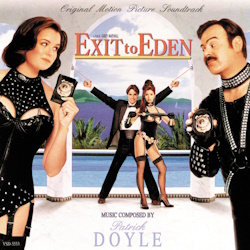
Exit to Eden is a romantic comedy-drama film loosely based on Anne Rice’s 1985 novel of the same name. The film was by directed Garry Marshall and stars Aussie actor Paul Mercurio – hot from his success in Strictly Ballroom in 1992 – as Elliot Slater, a photographer who travels to a BDSM-themed island resort called Eden, where guests can explore their fantasies. At Eden, he meets Lisa Emerson (Dana Delany), the resort’s lead dominatrix, and the two develop a romantic relationship. Meanwhile two detectives, played by Rosie O’Donnell and Dan Aykroyd, follow Elliot to Eden because they discover that he accidentally took the only known photograph of Omar (Stuart Wilson), an international diamond smuggler; Omar himself also discovers that Elliot has a photo of him, and also goes to Eden to try to recover the film. What follows is a series of increasingly ridiculous comedic situations involving all parties.
Despite the film having a good-looking cast and a sexy setting, the film was a critical and commercial disaster, and essentially ended Mercurio’s chances of being a romantic leading man in American cinema before they even began. The film deviates significantly from the source material in tone and plot, to such an extent that fans of Rice’s original novel hated it; whereas the novel centers on the psychological and sexual dynamics between Lisa and Elliot in a much more intense and serious manner, the film reduces them to stock romantic comedy tropes and plays many of their interactions for laughs. Meanwhile, the diamond smuggling/detective sub-plot – which was not in the novel at all – was deeply unfunny on a base level, and saw screenwriters Deborah Amelon and Bob Brunner resorting to crude slapstick, farcical chase and action scenes, and tasteless sex jokes in an attempt to make the whole thing more palatable for mainstream audiences.
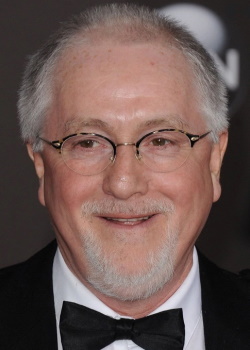 Stuck in the middle of all this was composer Patrick Doyle, who was still finding his feet in the American studio system after his early career successes with scores like Henry V, Dead Again, Indochine, Much Ado About Nothing, Needful Things, and Carlito’s Way. Although some of those films had comedic elements to them, Exit to Eden was the first out-and-out comedy of Doyle’s career. He had never worked with director Marshall before either, but considering Marshall’s track record as a comedy icon, Doyle’s decision to work on the film was clearly a no-brainer. Ultimately, Doyle is perhaps one of just two people associated with the film to leave it with their dignity intact (the other one being costume designer Ellen Mirojnick); his score is light, tuneful, romantic, and often works in interesting flavors of both New Orleans jazz and Caribbean calypso, making it quite unlike anything else in his filmography to that date.
The score is built around two recurring themes: a love theme for Elliott and Lisa, and what I’m calling the ‘Caper Theme’ as it tends to deal primarily with the jewel thief sub-plot and the elements associated with it. To deal with the Caper Theme first, it is actually the first thing you hear, in the opening cue “Nina” (named for the character played by supermodel Iman, Omar’s criminal partner and a wannabe dominatrix herself). The theme plays like a more light-hearted version of the finale chase from Carlito’s Way, crossed with some of the turbulent action music from Henry V. The combination of those themes really shouldn’t work in this way, but against all odds they do; Doyle somehow removes a lot of the portent and bombastic drama from those earlier scores by layering his music with darting woodwinds, light rapped percussion, and groovy marimbas, all within the sound of a fulsome orchestral ensemble. This creates a more fun and frivolous overall tone which sounds just terrific, and it adds a much-needed sense of light-hearted intensity to the otherwise lackluster heist plot.
Later, “Shoot Out” presents the Caper Theme as part of an unexpectedly intense action sequence, “Follow that Cab” features some notably intricate string passages, while “Streetscene” layers the Caper Theme contrapuntally against the Love Theme in a quite fascinating way, with some especially notable complex brass harmonies. Then, towards the end of the score, “Excuse Me” again takes the Caper Theme in a more intense and insistent direction, including one passage of excellent rambunctious brass writing that reminds me of the film noir-like sound Doyle brought to his score for Dead Again.
The second main theme is the ‘Elliot & Lisa Love Theme,’ which captures the sensual, emotional, complicated romantic relationship between the tortured photographer Elliot and the beautiful Lisa, who is by turns his girlfriend, therapist, and kinky mistress, as the situation demands. The love theme first appears in “Goodbye Dad,” and is initially presented as a sentimental piano melody backed by a lovely orchestral arrangement. The theme is developed further in both “Eyes Straight” and “The Temptation,” which are tender and intimate, and which again feature the central romantic piano theme and the gorgeous strings, but this time also feature some notably lovely writing for bass flute. Finally, the performance of the love theme in “Elliot & Lisa” is a little more downbeat, introspective, and tinged with regret, recognizing the state of their relationship at that point in the story.
There are a couple of other elements of note to the score. Both “The Arrival” and “Fair Day” contain what I am calling the ‘Eden Fanfare,’ a bold, grand, distinctly nautical theme, lush and extravagant and almost overly-ostentatious, heavy on the brass, and with a luscious dancing string passage in the middle. “The Arrival” underscores the scene where all the various guests arrive at Eden to begin their ‘fantasy vacation,’ and Mistress Lisa is carried into the island’s compound on a golden carriage, while “Fair Day” underscores a montage scene and is perhaps a little jauntier, with a sort of ‘oompah’ beat underneath the melody.
“Sheila in the Mirror” is a piece of sexy New York jazz, “Get With the Programme” is a fun and frothy piece of New Orleans jazz, while “The Bedroom” is a dainty prancing little number, distinctly classical, and somewhat unexpectedly English-sounding. “Tommy & Sheila” is a warm horn-based love theme with a classic Hollywood veneer, and was written for the unexpected relationship that develops between O’Donnell’s character and one of Lisa’s ‘house slaves’ who takes a shine to her. Finally, both “Careless Love” and “Dixie Time” are fun arrangements of the Elliot & Lisa Love Theme; the former is an upbeat and vivacious saxophone variation with a bossa nova beat, while the latter again has a distinct New Orleans jazz inflection.
In a way it’s a shame that Exit to Eden is as bad a movie as it is, because it means that Patrick Doyle’s score for it is consistently overlooked, to the point where I doubt anyone other than his most ardent fans realize he scored the film at all. It also doesn’t help that the original soundtrack album is a Varese Sarabande ‘thirty minute special,’ although to be frank it’s been decades since I saw the film and I have limited memory of how much more music is in it. However, despite its brevity (and despite the album having weirdly muted mixing), Exit to Eden is still a worthwhile score, especially for fans who enjoyed Doyle’s scores for Henry V and Carlito’s Way, and want to experience a lighter, and sometimes sexier, take on that sound.
Buy the Exit to Eden soundtrack from the Movie Music UK Store
Track Listing:
- Nina (3:06)
- Shoot Out (0:54)
- Follow that Cab (1:3)
- Goodbye Dad (0:53)
- The Arrival (1:55)
- Eyes Straight (2:25)
- The Temptation (2:15)
- Fair Day (1:14)
- Sheila in the Mirror (1:17)
- Get With the Programme (1:32)
- Streetscene (4:13)
- The Bedroom (0:49)
- Elliot & Lisa (1:36)
- Excuse Me (3:06)
- Tommy & Sheila (1:04)
- Careless Love (3:10)
- Dixie Time (1:29)
Varese Sarabande VSD-5553 (1994)
Running Time: 32 minutes 27 seconds
Music composed by Patrick Doyle. Conducted by David Snell. Orchestrations by Lawrence Ashmore, John Bell and Gavin Greenaway. Recorded and mixed by Paul Hulme. Edited by Roy Prendergast. Album produced by Patrick Doyle.

Shop at the Movie Music UK Store

Member of the

 MOVIE MUSIC UK