TIMECOP – Mark Isham
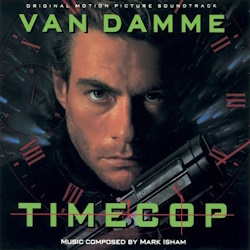 THROWBACK THIRTY
Original Review by Jonathan Broxton
Timecop is a science fiction action film directed by Peter Hyams and starring Jean-Claude Van Damme, Ron Silver, and Mia Sara. The story is set in a future where time travel has been invented and is regulated by the Time Enforcement Commission (TEC) to prevent temporal crimes. Van Damme plays Max Walker, a so-called ‘timecop’ who enforces these laws, but whose life is turned upside down when his wife is murdered in a home invasion. A decade later, Walker discovers that a corrupt politician named McComb is using time travel to manipulate past events so that he can amass power and wealth in the present; Walker’s investigation leads him to confront McComb’s men across different points in time, including a pivotal moment when McComb attempts to ensure his younger self gains control of a major corporation. As Walker battles to stop McComb he faces the challenges of time paradoxes and the dangers of altering history – including a new situation where he discovers he may be able to alter history to save his wife.
The film was a moderate critical success, but was a bonafide box office smash, grossing over $100 million worldwide; as of the time of writing it remains the highest-grossing film in which Van Damme had the lead role. The music for Timecop was by composer Mark Isham, and in 1994 marked something of a departure for him. Prior to this film Isham was still best known for his jazz scores and his more low-key romantic orchestral works like A River Runs Through It and Of Mice and Men; he had written some action music, notably on projects like Point Break in 1991 and Nowhere to Run in 1993 (the latter being another Van Damme vehicle), but Timecop was one of the first major scores where the action was the focus rather than a secondary element.
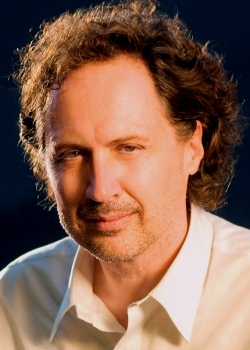 Personally, I have never considered Mark Isham to be a great action composer, but Timecop is one of the exceptions. It’s a pulsating, energetic action score that weaves its way through several exciting set pieces, and is enhanced further by a really quite pretty saxophone love theme representing the relationship between Walker and Melissa. Director Hyams has always shown a strong musical personality in his films, and stylistically Timecop sometimes reminds me of the music from several of his previous films: the Jerry Goldsmith pair Capricorn One and Outland, and the Bruce Broughton pair The Presidio and Narrow Margin. Like those earlier efforts, Timecop focuses on having a score with a sense of urgency, a strong rhythmic element, and heavy reliance on staccato strings and brasses underpinned with heavy, complicated percussion patterns.
The theme for Walker and Melissa is most prominent in two cues, “Melissa” and the conclusive “Rescue and Return” and features briefly in just one or two others, notably towards the end of “Polaroid”. It’s a pleasant theme, clearly rooted in the sultry jazz style that was prominent in the late 1980s and early 1990s, and it comes across to me as a cross between Isham’s noir scores for films like Mortal Thoughts and Romeo Is Bleeding, and Michael Kamen’s scores in the Lethal Weapon series. In its final iteration in “Rescue and Return” Isham transposes the theme from saxophones to the full orchestra to give it a more satisfying emotional sweep that I really enjoy.
Almost everything else in the score is action. The opening cue, “Time Cop,” presents the score’s main theme, a somewhat dour march for pounding pianos and wandering strings that acts as a central theme for Walker. It does become more expansive and heroic as it develops, especially when Isham adds in an additional layer of writing for brass, but it is perhaps a little under-powered and never truly emerges into the sort of memorable anthem that the character would seem to deserve.
“Blow Up,” “Lasers and Tasers,” “Polaroid,” “Rooftop,” and “C4” are all cut from the same cloth, and are dramatic and insistent suspense cues that help to drive the action and emphasize the seriousness of Walker’s task in preventing McComb from using time travel to change the future of the world. What I like about these cues is how different they sound from a lot of the action music that was being written at that time. Isham attacks his music in short, sharp, rat-a-tat bursts that dart from section to section, from pianos to strings to percussion to brass, and which often have unconventional jazz-like harmonies that give them a unique flavor. There’s a wonderful, driving section halfway through “Polaroid” that sees Isham really leaning into his brass section and allowing it to build up a terrific head of steam, which I really like. The conclusion of “C4” is similarly explosive (pun intended), a series of dark clusters of sound that increase in volume and speed like a countdown, building up to the moment where Walker saves the day.
Throughout these action cues Isham often weaves several statements of the main Timecop theme, which allows the score to develop and maintain something of an individual identity. However, it is a little disappointing that Isham never really instituted a recognizable thematic idea for McComb, the villain of the piece; the musical conflict between themes for heroes and villains is one of the things I often enjoy about scores like this, especially if the two themes are pitted against each other contrapuntally, but the fact that Isham doesn’t really do this here is something of a missed opportunity.
The score for Timecop was released by Varese Sarabande as one of their ‘thirty minute specials,’ and to be fair it is a perfectly serviceable album that I enjoy, but considering that the film was such a success, and considering how much more music is actually in the film, I’m surprised that there has yet not been an expansion, especially considering that the film is celebrating its thirtieth anniversary this year. Until that happens, I can still give the existing Timecop album a hesitant recommendation; although it’s short, it nevertheless offers a good example of one of Isham’s earliest attempts at straight orchestral action scoring, and it will appeal especially to anyone who wants to hear Isham’s film noir jazz style adapted into the more percussive and rhythmic action style that director Peter Hyams has employed in numerous films throughout his career.
Buy the Timecop soundtrack from the Movie Music UK Store
Track Listing:
- Time Cop (2:20)
- Melissa (2:41)
- Blow Up (2:12)
- Lasers and Tasers (4:23)
- Polaroid (6:10)
- Rooftop (6:16)
- C4 (2:37)
- Rescue and Return (3:22)
Varese Sarabande VSD-5532 (1994)
Running Time: 30 minutes 01 seconds
Music composed by Mark Isham. Conducted by Ken Kugler. Orchestrations by Ken Kugler and Dell Hake. Recorded and mixed by Stephen Krause. Edited by Tom Carlson. Album produced by Mark Isham.

Shop at the Movie Music UK Store

Member of the

 MOVIE MUSIC UK