MOONFLEET – Miklós Rózsa
 GREATEST SCORES OF THE TWENTIETH CENTURY
Original Review by Craig Lysy
In 1951 the English novel Moonfleet, written in 1898 by J. Meade Falkner, caught the eye of MGM executives, who decided that this exciting, Gothic, swashbuckling melodrama in the vein of Treasure Island could be successfully brought to the big screen. MGM purchased the film rights, John Houseman was placed in charge of production with a $1.96 million budget, Jan Lustig and Margaret Fitts were hired to write the screenplay, and Fritz Lang was tasked with directing. A stellar cast was assembled, including Stewart Granger as Jeremy Fox, George Sanders as Lord James Ashwood, Joan Greenwood as Lady Clarista Ashwood, John Whiteley as John Mohune, and Viveca Lindfors as Mrs. Minton.
The story is set in 18th century England and centers on the life of John Mohune, a nobleman by birth but now an orphan, who has been sent to the Dorset village of Moonfleet as a ward of his mother’s former lover, Jeremy Fox. Jeremy presents outwardly as a refined English gentleman but, in reality, he is a rogue who operates a pirating smuggling operation. Jeremy and John bond with John becoming his sidekick, and they run afoul of the law, ending up on the run. Intrigue follows when John stumbles upon the crypt of Redbeard the Pirate, which contains a secret message, offering clues as to the location of a fabulous diamond. Together Jeremy and John set off to find a cipher to decode the message. The film was a commercial disaster, losing $1.2 million. Critical reception was unfavorable, and the film received no Academy Award nominations.
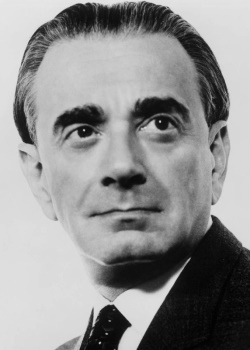 Miklós Rózsa had bonded in friendship with director Fritz Lang following two prior collaborations for “The Secret Beyond the Door” in 1946 and “Ministry of Fear” in 1948. As such, he welcomed the assignment, only to be disappointed to discover that the film was already finished, that Lang had departed for his next assignment, and that he would be scoring the film under the auspices of producer John Houseman. Rózsa, upon viewing the film was singularly unimpressed. The film would be severely edited in post production down to a running time of 86 minutes, which required Rózsa to rewrite a number of cues, including five versions of the finale! He related;
“The characters reminded me very much of those in my wife’s large collection of Rowlandson aquarelles, but the story was tedious and inconsequential. However, I managed a stirring enough seascape for the title music, which I recorded with on one of my Polydor albums of the mid-1970s”.
For his soundscape, a multiplicity of themes and motifs are offered. The Main Theme or Jeremy’s Theme offers a quintessential English sensibility and nautical flavor. It presents in classic long-lined, major modal ABA form, with a proud and declarative seventeen-note A Phrase, with the B Phrase dance-like with repeating eight-note phrasing. The theme permeates the film and is rendered to express a multiplicity of emotions. A second primary theme is the Mohune Theme. Initially its manifests as a motif, a three-note phrase, which rises and falls. The initial construct of three-notes represents its nascent form. Later it germinates and expands into a dark, and foreboding theme for House Mohune, which speaks to John’s origins, and the tragic past of Jeremy and Olivia’s doomed romance. A classic woodwind borne Pastorale supports scenes in the Fox estate garden, offering a perfect ambiance for John and Grace. The Buffoon Theme supports the truly hapless pirate who was short-changed of intelligence at birth. Rózsa supports his clueless buffoonery with a comic musical theme empowered by woodwinds sardonica.
For our villains, we have three themes. Redbeard’s Theme supports the infamous pirate and offers a swaggering statement borne by woodwinds sinistri. Throughout most of the film it is lurking and elusive as he is dead, although at times it becomes forceful like when John secures the locket, and then finds the huge diamond. The Smugglers Theme supports Jeremy’s unsavory minions and their nefarious deeds. It offers a grim construct of sinister, repeating six-note of phrases, which speak to the dark purpose and menace of these rogues. Minton’s Theme supports Jeremy’s long-suffering and aggrieved mistress. She is jealous of his dalliances with other women, and later vengeful after he dumps her, and orders her to return to the colonies. Borne usually by woodwinds and strings, the theme has a yearning quality, yet it wanders, and never resolves reflecting the pain of her unrequited love for Jeremy. Later in the film becomes sinister and finally swells angrily with vengeful violence when she betrays Jeremy to the Magistrate in the “Murder” cue.
Lastly, Rózsa uses a dire, descending, and repeating three-note phrase to portend or announce danger. It is pervasive throughout the score, often engages in interplay with other themes, and is quite effective in setting a dark tone to the film. He also provides a martial, and kinetic Galloping Motif, which is used to supports the ride of British cavalry soldiers. Rózsa also interpolated a number of source pieces including two 18th century French dances, a Flamenco guitar piece by Vincente Gomez, some traditional English hymns, and his spirited dance from his score for “Madame Bovary” to provide the requisite ambiance.
“Prelude” offers a score highlight where Rózsa masterfully sets the tone of the film. It opens with repeating dramatic statements of the Three-note Danger Motif, which support the display of the MGM Studio logo. At 0:15 trombones orgogliosi declare the nautical flavored Main Theme with swirling strings and woodwinds animato as the film title displays against a shore battered by crashing waves. The melody shifts to trumpets and then strings for one of the themes finest expositions in the film. At 1:39 we segue into “Foreword” where script reveals Dorsetshire 1757, and the seaside village Moonfleet, a haven for villainy and smugglers, where an orphaned young boy came in search of a friend. The script is supported by a plaintive rendering of the Main Theme.
In “Graveyard”, John Mohune, a young boy travels at night along a road alone, coming upon a road marker “Moonfleet 3 Miles”. He stops by a graveyard to remove a stone from his shoe, hears a noise, and stands up to look over the wall. The Danger Motif terrorizes him as he is startled by the sight of a dark angel. He screams and runs away enveloped by the Danger Motif, joined by a grim fragment of the Main Theme as he lays on a table, encircled by menacing smugglers. At 1:03 we segue atop the Danger Motif into “Letter Of Introduction”, which reveals John’s presenting a letter written by his mother to Jeremy Fox, leader of the smugglers. In the letter she entrusts John to the patronage of Jeremy. Rózsa offers a musical narrative at 1:21 by entwining the oboe tenero led Main Theme with interplay at 2:21 with a grave Mohune Theme as John presents Jeremy with proof of his identity, his grandfather’s Mohune family signet ring. Jeremey rails against the Mohune’s who forced him to the colonies, and then married off Olivia, John’s mother to a distant cousin. We close on a diminuendo as John falls asleep and Jeremy departs.
The next day in “Escape”, Jeremy orders John sent away by carriage. Bell tolls and horns reale sound the Main Theme as a recalcitrant John is tossed into the departing carriage. The jaunty traveling motif kindred to the Main Theme carries the carriage across the countryside. At 0:54 diminuendo supports his undetected escape out the window. At 1:10 John makes the gruesome discovery of a hanged smuggler empowered by a fierce Danger Motif and his theme. John has a chance meeting with Grace, the niece of a local magistrate, who offers to guide his walk back to the Fox Manor house. Repeating quotes of the Danger Motif offers a foreboding musical narrative. At 2:45 we segue into “Garden”, where John squeezes through the gate and enters the dilapidated estate. Woodwinds doloroso join with the Mohune Theme as he explores the grounds. (*) “Party” reveals John drawn to a window by the music of a harpsichord. As he peers inside, a trio of guitars supports a classic Flamenco with source music by Vicente Gómez. The woman dancer offers an enticing seductive performance for Jeremy as his mistress Minton stews.
“Preceding Nightmare” a precocious John makes an impression on the guests earning Jeremy’s grudging admiration. He agrees to rescind sending him away to a boarding school and orders his butler to escort John to the guest bedroom. Music enters atop repeating statements of the Mohune Motif as Jeremy again reads the letter from Olivia whom he loved. At 0:10 we segue into “Nightmare” where John in a nightmare, recalls a tale told by his mother in which a man being ravaged by the family dogs as punishment for expressing romantic feeling for her. Hearing the boy in distress, Jeremy comes to John’s bedside. At 0:46 repeating, dire statements of the Mohune Theme resound as he startles Jeremy by relating that Jeremy was the man attacked at the summer house. An impassioned Mohune Theme supports a strident, and defensive denial by Jeremy. At 1:11 Minton arrives and a crescendo dramatico swells and crests on the Mohune Theme as she exposes Jeremy’s lie by pulling down his shirt to reveal grievous scars om his back from the dog attack. A diminuendo descent of pain unfolds as a shocked John observes and Jeremy offers a withering stare at Minton, and departs speechless, his lie exposed by her cruel betrayal. We close on repeated dire declarations of the Mohone Motif as Minton confronts John, demanding to know why his mother sent him to Jeremey, and he answers, it was the Mohunes. At 2:24 a tender woodwind borne Minton’s Theme supports her joining Jeremy in his bedchamber where she asks why he never told her about Olivia? He says because she is dead. We end with devastation and despair when she speaks of his many dalliances with other women, and how she has suffered. Jeremy acknowledges the truth of this, and then shatters her by ordering her to depart in the morning on the Bonaventure to return to the islands. At 3:32 swirling strings support an orchestral tempest as a storm buffets the manor with lightning toppling a tree in the garden.
In the morning we segue at 4:07 into “Summerhouse” where we see John in the courtyard atop the downed tree. He is joined by Grace, the niece of a magistrate who gives him a guided tour of the Fox estate. Rózsa supports with a new theme, a pastorale borne by English horn, with interplay of the Mohune Theme. At 4:51 a grave Mohune Theme supports her invitation to join her in the Summer House. as he observes the ruins of his family’s summerhouse. At 5:32 a foreboding and plodding Redbeard’s Theme offers mystery and menace as she tells the tale of Redbeard the pirate, one of John’s ancestors who many believe haunts the local graveyard. She speaks of the locket and map to a large diamond. John says he will find the locket, obtain the diamond, and rebuild his mother’s estate to restore its former grandeur. At 6:03 we close on the Pastorale as church bells call them to Sunday service. (*) “Church Service” reveals the congregation singing a traditional hymn a Capella. During the fire and brimstone sermon, the minister rages against the perfidy of Redbeard and for Joh, validates the tale of the hidden diamond.
“Cave” reveals John walking home in the dark with a lantern carried by a portentous and sinister Smuggler’s Theme, joined with foreboding quotes of the Danger Motif. At 0:36 the Danger Motif intensifies on a crescendo terrore that dissipates at 0:55 in a descent motif as he falls into a cave used by Jeremy’s smugglers. At 1:09 we segue into “Redbeard”, which offers Rózsa’s original conception. Rózsa sow unease as John explores the cave, which is filled with smuggler goods with interplay of the Danger Motif, and Redbeard’s, the Smuggler’s and Mohune’s Themes, concluding with a new theme for a bumbling pirate by woodwinds comici. He discovers Redbeard’s open coffin and takes a locket. Cue16 “Redbeard” offers a truncated version of Rózsa’s music, with ominous interplay of Redbeard’s and the Smuggler’s Themes. We close with terror as John accidentally pulls down Redbeard’s casket, which shatters revealing his skeletal remains.
In “Smugglers” John finds and takes the locket, but is forced to hide in the shadows as the smugglers arrive. He is shocked to observe the arrival of Jeremy, who puts down firmly the discontent smugglers who demand he pay them more. The smugglers depart, and seal the main entrance, and the hole through which John fell. Rózsa supports with the sinister Smuggler’s Theme, joined at 0:22 with the woodwinds comici and sardonica of the Bumbling Pirate Theme as the hapless pirate is confounded that his hat has shrunk. Interplay of the Mohune and Smuggler’s Themes support as John is trapped in the cave, and panics, carried upwards at 1:11 by a crescendo of desperation as he climbs up a ladder and pounds on the tombstone seal above. At 1:25 we segue into “Passepied From Bovary”, which reveals Jeremy attending a ball hosted by Lord Ashwood. Rózsa interpolates his spirited dance from “Madame Bovary” (1949) to provide the requisite ambiance. “Bourree” reveals Jeremy and Lady Ashwood exiting the ball to a private room. Rózsa supports with interpolation of another French dance by a small ensemble of harpsichord, flute gentile and strings. They are joined by her husband who proffers a joint partnership using three armed galleons to be used for profiteering. Jeremy is suspicious, noncommittal, and departs in haste when a courier brings a communique that advises that the smugglers have captured John.
In “Denouement” the smuggler Block convinces the other men to kill John, but before they can act, the Magistrate arrives with soldiers and a search warrant. They acquiesce and soldiers search the house for stolen goods. Jeremy arrives as the Magistrate departs, as his search turned up no stolen goods. Block demands that they kill the boy, Jeremy refuses and the two duel in a brutal fight, with Jeremy triumphing. They return home and Jeremy informs John that he departs for the colonies in the morning as it is the only way to ensure his safety. Rózsa supports with a plaintive rendering of the Main Theme borne by English horn, that shifts to aching strings. Jeremy also informs Minton that she will be joining the boy tomorrow to sail on the Bonaventure, and then departs to change as he will be leading a new smuggling mission tonight. At 0:36 a vengeful Minton’s Theme joins as she sends a letter to the authorities alerting them of the planned heist. At 1:11 a woodwind borne Danger Motif supports Jeremy and John reaching the beach, with the Main Theme sadly emoting John’s departure in a row boat. Minton however refuses to budge, and at 2:14 we segue into “Murder” empowered by and aggressive and propulsively kinetic rendering of Minton’s Theme as Jeremy and his smugglers are ambushed by Magistrate Maskew and English soldiers. John witnesses the attack, abandons the rowboat, and swims to shore to help his friend Jeremy. Jeremy flees, followed by John up the cliffside. He suffers a hand wound, yet manages to kill Maskew at 4:04, with a descent motif of death carrying him to his doom. Impassioned strings carry John’s ascent to the cliff top, and we conclude on the Main Theme borne by a solo bassoon triste and forlorn low register strings as he and Jeremy reunite.
“Cipher” reveals John and the wounded Jeremy continuing their escape walking carried by a dispirited rendering of the Main Theme as Jeremy angrily tells John that he wishes that his mother never sent him to me. They reach the road and Jeremy orders the boy to setoff back to Moonfleet. At 0:35 a warm rendering of the Main Theme supports John gifting back the coin purse Jeremy had given him at the beach, saying that he believed he needed it back. A fleeting Redbeard’s Theme joins as John informs Jeremy that he found a note inside a locket taken from Redbeard’s coffin, which provides a coded clue, which if deciphered, may lead to the location of the prized diamond. At 1:00 a martial galloping motif supports the kinetic ride of cavalry soldiers on the nearby road, which forces the two to take cover until they pass. At 1:27 Redbeard’s Theme joins as Jeremy examines the note found in the locket and detects that the five biblical verses have incorrect numbering. Jeremy reasons that the second number of each verse refers to a word in the verse. At 1:46 the Galloping Motif forces them to again take cover as another soldier rides past. Jeremy deciphers the numbers to conclude a message; “treasure-buried-fourscore-deep-well”. He tells John that only Hollisbrooke castle has a well so deep and he decides they need to go there. We conclude with interplay of Redbeard’s and the Mohune Themes.
(*) “Reward For Jeremy Fox” reveals Lord Ashwood arriving at a pub to find a wanted poster for Jeremy Fox, which he tears down. He enters and is taken to a back room where he finds Jeremy. The drunken patrons sing an English drinking song to provide the pub’s ambiance. Jeremy declares he will commit to the partnership, but is rebuffed, with Ashwood saying he is now a wanted man with no financial means. Jeremy gets him to reconsider, saying that he will be paid in full by 10 pm tomorrow night. As Ashwood departs, he agrees, but with the caveat that the boy not join. Jeremy then signals a bar maid to take a major to a bedroom for a ‘nap’, where he is knocked out, with Jeremy assuming his identity. “Hollisbrooke Castle” opens with unease as Jeremy and John travel to Hollisbrooke Castle, to retrieve Redbeard’s diamond. A warm rendering of the Main Theme is joined by horns grandioso declarations as they approach the imposing castle. We close with a suspenseful, martial, and trumpet buttressed musical narrative as Jeremy uses his noble bearing and rank to intimidate and bluff their way past a sentry.
“Well (original version)” reveals Jeremy lowering John in a large bucket into the castle’s well, where the cipher indicates the diamond is hidden. A variant of the Mohune Theme rendered as an ethereal descent motif supports. At 0:29 a harsh Redbeard’s Theme joins as Jeremy dupes the well tender who arrived out of nowhere. A strident musical narrative that joins the Smuggler’s Theme and Redbeard’s Theme supports the unfolding drama. “Well (film version)” offers a truncated two segment version for the edited scene, which ends with a dark chord. At 2:31 we segue triumphantly atop Redbeard’s Theme into “Diamond” as John retrieves the diamond. As John is pulled up, the descent motif is reversed, transformed into an ascent motif. At 4:47 when John reaches the opening, two orchestral strikes support Jeremy knocking out the well tender who realized he was deceived. We close on a triumphant reprise of Redbeard’s Theme. At 4:09 we segue into “Snare Drums” atop a drums militare roll to support the castle guard, which have been assembled for the major’s inspection.
“Imposter” reveals the aggrieved major arriving by carriage in his underwear, and mocked by a crowd. Jeremy realizes that his deception will soon be exposed, and so embarks on an audacious and harrowing escape from the castle, which includes rescuing John. Rózsa propels the action with the kinetic martial force joined by a galloping flight motif. At 0:41 a subdued coda of the Main Theme supports their wait in a seaside hut. “Forsaken” reveals a tired John drifting off to sleep as he voices his hope for a happy future with Jeremy. As john falls asleep, his theme is voiced by an English horn tenero, joined with the three-note Mohune Motif, and a sad rendering of the Main Theme full of regret as a conflicted Jeremy leaves a bedside note saying no one should ever trust him, and then departs for a planned rendezvous with Lord and Lady Ashwood, who will give him passage with them to Rotterdam. At 1:26 the kinetic Galloping Theme supports a British calvary unit riding down the road as Jeremy hides in the shadows.
“Crossroad” reveals Jeremy meeting the Ashwood at the rendezvous point, where he reveals the diamond. The Ashwoods are stunned and covetous, yet Jeremy places it back in his coat, indicating that he is wary of transferring it until he has safe passage to Rotterdam. Lord Ashwood orders the coach to proceed to the port. Around the bend Lord Ashton uses his regal bearing and standing as a noble to bluff his way past a security checkpoint. In the coach Lord Ashwood begins to provoke Jeremy with dispersions against the boy and his hope that he has been killed. Music enters with interplay of plaintive renderings of the Main and Mohune Themes, the later informing us of Jeremy’s internal conflict for betraying the boy. We see him simmering with a growing anger and at 0:46 violence erupts atop a dire Danger Motif joined by an aggressive rendering of John’s Theme as Jeremy orders the coach stopped and is challenged by the coachman, whom he pummels. We swell at 1:11 on a crescendo dramatico as Lord Ashwood thrusts his sword into Jeremy’s back mortally wounding him. Jeremy turns and kills Lord Ashwood with his pistol, which causes the horses to bolt, resulting in Lady Ashwood’s carriage toppling over into a ditch.
At 1:54 we segue into “Finale (Film Version)” which was altered by the producer John Houseman, against director Fritz Langs’s wishes, to offer a happy and hopeful ending. Jeremy, sensing his end, returns to the seaside hut with a somnolent Main Theme supporting the sight of John sleeping peacefully. Jeremy enters the hut and removes the note. He then returns the diamond to John care, orders him to return to Moonfleet, and to give the diamond to the Parson to safely manage. The theme shifts to a more tender iteration imbued with paternal love as he encourages John’s departure by saying he needs someone he can trust to manage things at Moonfleet until he returns. John agrees, wishes him luck and waves a tearful goodbye as Jeremy takes to a waiting boat and sails off. At 3:59 John returns to the manor as instructed and informs the Parson that he awaits the day that his beloved friend Jeremy will return. We close with a hopeful rendering of the Main Theme, which supports John opening the gates at Moonfleet, much to the delight of the Parson and Grace. At 4:32 a heartfelt crescendo gioioso swells atop the Main Theme and crests gloriously at 4:52, as the cast credits commence empowered by a bright and confident Main Theme, which concludes in a magnificent flourish. “Finale (Original Version” reveals director Lang’s original conception of the film’s sad ending, in which Jeremey sails away resigned to death. Rózsa offers pathos with an elegiac tear-evoking rendering of the Main Theme now full of regret, joined at 2:16 by a mourning Mohune Theme. We close with a last grandiose exposition of the Main Theme that concludes the film with a magnificent flourish, one which I believe to be one of Rózsa’s finest film endings.
I commend Lukas Kendall for producing the complete score to Miklós Rózsa’s Moonfleet. The audio was remixed from the original three-track 35mm magnetic film with digital mastering. The audio quality, while not achieving 21st century qualitative standards, is good and the album, which includes alternate score and additional source cues provides an enjoyable listening experience. Once again, we have a composer faced with the daunting challenge of composing a soundscape for a flawed film. I believe Rózsa rose to the challenge and crafted a score, which elevated the film, and helped mitigate many of its inadequacies. The confident, nautical, and quintessential English Main Theme truly animated the film and gave it heart, while its juxtaposition by several villainous themes, enhanced the suspense, drama and conflict. The evolution of the Mohune Theme from a nascent motif to a full theme was well-conceived, as it mirrored the unfolding of the history of Jeremy’s tragic romance with Olivia and association with House Mohune. Folks, “Moonfleet will not be found on any Rózsa finest scores list, nevertheless it is a fine example of his mastery in discerning the emotional dynamics of a film’s narrative, and then composing music, which elevates it in every way. This is a fun and enjoyable score, and I recommend you purchase the album and watch the film.
For those of you unfamiliar with the score, I have embedded a YouTube link to a 10-minute suite; https://www.youtube.com/watch?v=uBsyLAsImcU
Buy the Moonfleet soundtrack from the Movie Music UK Store
Track Listing:
- Prelude/Foreword (2:14)
- Graveyard/Letter Of Introduction (3:53)
- Escape/Garden (3:37)
- Preceding Nightmare/Nightmare/Summerhouse (6:40)
- Cave/Redbeard (5:00)
- Smugglers/Passepied From Bovary (2:11)
- Denoument/Murder (5:03)
- Cipher (3:14)
- Hollisbrooke Castle (1:29)
- Well/Diamond/Snare Drums (4:17)
- Imposter (1:06)
- Forsaken (1:58)
- Crossroad/Finale (5:30)
- Letter Of Introduction (Original Version) (2:09) BONUS
- Garden (Original Version) (0:50) BONUS
- Redbeard (Film Version) (0:51) BONUS
- Cipher (Original Version) (3:16) BONUS
- Well (Film Version) (0:30) BONUS
- Forsaken (Original Version) (1:54) BONUS
- Finale (Original Version) (3:54) BONUS
- Finale (With Second Ending) (3:36) BONUS
- Bourree (Source Music) (1:47) BONUS
- Ayre (Source Music) (3:01) BONUS
- Hurdy Gurdy (Source Music) (1:49) BONUS
- Finale (With Third Ending) (3:07) BONUS
- Finale (With Fourth Ending) (3:07) BONUS
Film Score Monthly FSMCD Vol. 6 No. 20 (1955/2004)
Running Time: 76 minutes 03 seconds
Music composed and conducted by Miklós Rózsa. Orchestrations by Eugene Zador. Flamenco music composed by Vicente Gómez. Featured musical soloist Laurindo Almeida. Recorded and mixed by XXXX. Score produced by Miklós Rózsa. Album produced by Lukas Kendall.

Shop at the Movie Music UK Store

Member of the

 MOVIE MUSIC UK