BLACK BEAUTY – Danny Elfman
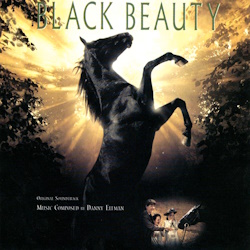 THROWBACK THIRTY
Original Review by Jonathan Broxton
Black Beauty is one of the most beloved works of children’s literature in the English language. Written by Anna Sewell and published in 1877, it tells the life story of the eponymous horse, beginning with his early days in the loving home of Farmer Grey, and then on through a series of subsequent owners, including the kind and gentle Squire Gordon of Birtwick Hall, and the cruel and neglectful Mr. York of Earlshall Park. After suffering a severe injury while working as a cab horse in London, he is rescued by Joe Green, a former employee of Squire Gordon, who eventually provides him with a peaceful and comfortable retirement. The novel is narrated in the first person by Black Beauty himself, providing a unique perspective on the life and experiences of a horse in Victorian England, and who juxtaposes his own life with those of others around him, some of whom suffer much worse fates. Most importantly Sewell addresses the then-unfashionable topic of animal welfare, and its success and popularity played a crucial role in shaping public attitudes towards animals and contributed to the development of modern animal rights movements.
Black Beauty has been adapted into films and television shows numerous times over the years. This one, which was released in the summer of 1994, was written and directed by Caroline Thompson in her directorial debut, and featured Sean Bean, David Thewlis, John Carter, Peter Davison, and Andrew Knott as the various humans in Black Beauty’s life, while Alan Cumming voiced the ‘inner monologue’ narration of Black Beauty himself. Director Thompson had previously written the screenplays for Edward Scissorhands and The Nightmare Before Christmas, and was dating composer Danny Elfman at the time, so despite the fact that he was finishing work on his final studio album with Oingo Boingo while Black Beauty was being made, he naturally agreed to score it.
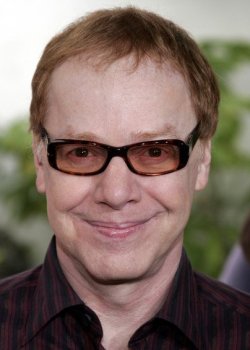 Black Beauty is seen by many people – including me – as one of the last scores in Elfman’s early ‘thematic/romantic/orchestral’ period that began with Beetlejuice in 1988, arguably reached its peak with Batman in 1989, and then continued through scores such as Dick Tracy, Darkman, Edward Scissorhands, Batman Returns, Sommersby, and The Nightmare Before Christmas. I have always considered this to be his ‘golden period,’ during which he wrote my own personal favorite scores of his, and as such listening to Black Beauty now is something of a bittersweet experience; Elfman’s musical style gradually began to move away from this style towards the latter half of the 1990s and into the early 2000s, and while he still occasionally revisited his earlier lush and romantic sound to great success, after Black Beauty this was very much the exception rather than the rule.
In terms of its sound, Black Beauty is probably best described as a cousin of Sommersby, but with a hint of Irish music where that earlier score’s country-Americana was. Elfman himself said that his use of Celtic instruments like the fiddle and penny whistles are not in any way intended to convey a specific geographic location to the action (which takes place entirely in England), but instead it was simply to add color and flavor to the sound of the orchestra, and I’m OK with that.
The score is built mainly around two prominent recurring themes, both of which are introduced in the superb “Main Titles”. The first is the theme for Beauty himself, which grows out from a duet between a solo violin and a pennywhistle to encompass the full orchestra in sweeping, stirring fashion. The main theme appears in almost every cue in the score in one form or another, either through a direct presentation of the central melody, or through allusions to its rhythmic countermelody, with the latter element being especially prominent in cues which underscore scene of Beauty galloping, frolicking, or being energetic in any way. What I like about this main theme is how emotionally malleable it is too; in the main title it is broad and expansive, but elsewhere in the score Elfman is able to strip it down to its core elements and present it as something darker, melancholic, or even tragic, depending on what circumstances Beauty finds himself in at the time.
Around the 1:40 mark of the “Main Titles” the score’s second main theme is introduced, the yearning and emotional ‘love theme’ that represents the horse’s relationships, both with his equine best friend Ginger who grows up with Beauty on Gray’s farm and whose life offers a contrasting juxtaposition to Beauty’s own, and also with the various human owners Beauty encounters over the years. This love theme is especially strong in cues that deal with the care and kindness Beauty receives from Farmer Gray, Squire Gordon, and Joe Green.
The rest of the score develops along similar lines, with several cues notably standing out. The scattershot and impressionistic textures for solo violin, piano, celesta, and woodwinds in “Baby Beauty” perfectly capture the unsteady first steps of the new foal, and as the cue progresses the initially disjointed statements of the main theme slowly coalesce as the young horse finds his feet, resulting in a beautiful and elegant statement at the end of the track. There are fleeting hints and textures from both Beetlejuice and The Nightmare Before Christmas here, which is lovely. Later, “Going On The Run” is similarly expressive, underscoring yet another first for Beauty as he is saddled and ridden by a human for the first time. The cue is initially somewhat chaotic and off-kilter, but by the end of the piece Beauty is galloping across the fields, and that rush of freedom and exhilaration is captured in Elfman’s glorious statement of the main theme.
Several cues in the middle of the album feature variations on an outstanding scherzo motif that is related to the feisty ‘exhilaration’ music from “Going On The Run,” and which when combined with elements from Beauty’s main theme is intended to capture the joy that Beauty experiences in simply being a horse, running and jumping, galloping in a herd with his friends, a carefree life in the open fields. “Jump For Joy” features a scintillating, undulating, whooping motif that bounces between pianos, woodwinds, and fiddles. “Kicking Up A Storm” underscores Beauty’s initially unsuccessful attempts at courting Ginger, which result in him receiving a swift hind leg kick from the frisky filly, and Elfman scores this with more buoyant abandon in his expressive statement of the main theme. Later, “Frolic” celebrates Beauty’s recovery from sickness with festive versions of both the main theme and the love theme, rapturous piano arpeggios, and a gorgeous cello line that cements Beauty and Ginger’s relationship.
Of course, all this gay abandon has its darker side too, and Elfman is careful to counterbalance the light with shade that address both the hardships in Beauty’s life, and Beauty’s relationships with his less-than-caring owners. “Sick,” for example, offers an unhealthy-sounding variation on Beauty’s theme for strings and dour pianos to accompany the horse as he recovers from an illness sustained while helping rescue someone from a flooded river. Later, “Ginger Snaps” underscores the scene where Ginger – driven mad by abuse and over-work – finally breaks under the pressure and goes berserk, kicking and thrashing to Elfman’s violent orchestral writing; the strings here are traditionally classical but also twitchy and unsettled, and by the end of the cue the woodwinds are screaming discordantly above a bed of agonized orchestral chords.
Perhaps the best action cue is “Wild Ride/Dream,” in which Beauty is commandeered by a drunk stable hand in the middle of the night, and ridden far too hard, until he throws both a horseshoe and his rider. Elfman accompanies the scene with a tortured version of the main theme embedded into some vivid orchestral chase music; it has echoes of both Darkman and Batman, but also foreshadows some of the darker stuff he would write for Sleepy Hollow in 1999, and it’s just excellent.
There is a wonderful, soulful version of the main theme in “In The Country,” and a heartbreaking version of the love theme in “Poor Ginger” as Beauty contemplates the tragic fate of his old stable companion, who has been literally worked to death by uncaring owners, and he imagines the life the two of them might have had together in different circumstances. This cue is the poignant highlight (or lowlight) of the score, and Elfman wrings every drop of emotion from his strings, a beautiful but agonizing elegy. Thankfully the final two cues – “Bye Jerry/Hard Times” and “Memories” – restore Beauty’s faith in humanity as he is rescued from certain death by his old groom Joe Green and lives out his days happily on Joe’s farm; Elfman’s music for the scene initially recalls the main theme with fondness tinged with regret, and again has some of that Sommersby-esque sense of heightened tragedy, but it eventually swells into a stunning final statement of the love theme before the ”End Credits” roll.
 The original 1994 Black Beauty soundtrack album was released on Giant Records as an excellent self-contained 45-minute presentation, but the record label itself folded soon afterwards and the album quickly went out of print, to the extent that by the end of the 1990s the album was a highly prized and very expensive collectible. Thankfully, in 2013, La-La Land Records and producer Dan Goldwasser issued a limited-edition expanded version of the score featuring another twenty minutes of music from the film, plus various bonus cues and alternate takes. The expanded album is outstanding – not only does it contain all the music from the original release, but it also contains several additional tracks not included on that first album. The most important of these for me are a pair of excellent action cues, “The Rescue” and “The Fire,” which expand on the action material from elsewhere in the score with undulating piano lines, powerful brass, and thrilling percussive snare drum patterns.
As I mentioned earlier, for me, Black Beauty marks the end of what I personally consider to be Danny Elfman’s golden period in film music, which began with Beetlejuice in 1988 and encompassed all the great, bold orchestral scores that established his personal compositional voice, propelled him to the film music A-list, and made me a lifelong fan. While he did return to this sound in numerous later scores – Sleepy Hollow, The Family Man, Big Fish, Alice in Wonderland, among others – I personally think Elfman was musically at his most exciting and vital between 1988 and 1994, and Black Beauty is the cherry on the top, a final flourish at the end of a remarkable run of scores. It’s an essential album for anyone who loves that period in Elfman’s career, and who appreciates his deeply personal type of emotional, thematic orchestral scoring.
Buy the Black Beauty soundtrack from the Movie Music UK Store
Track Listing:
- ORIGINAL 1994 RELEASE
- Main Titles (2:29)
- Baby Beauty (4:38)
- Going On The Run (2:16)
- Mommy (0:54)
- Jump For Joy (1:01)
- Kicking Up A Storm (1:34)
- The Dance/Bye Merrylegs (2:50)
- Sick (3:15)
- He’s Back (Revival) (1:17)
- Frolic (2:33)
- Ginger Snaps (3:20)
- Goodbye Joe (1:18)
- Wild Ride/Dream (2:12)
- Is It Joe ? (1:20)
- In The Country (2:37)
- Poor Ginger ! (3:49)
- Bye Jerry/Hard Times (4:56)
- Memories (1:29)
- End Credits (1:40)
- EXPANDED LA-LA LAND 2013 RELEASE
- Main Titles (2:34)
- Birth (Baby Beauty) (4:41)
- Gang on the Run/Bye Mum (4:37)
- Beauty (1:18)
- Merrylegs (2:03)
- Kicking Up a Storm (1:36)
- Jump for Joy (Film Version) (1:02)
- The Rescue (2:27)
- Sick (3:18)
- He’s Back (Revival)/Frolic (4:00)
- The Fire (3:42)
- Carriage (unused)/The Dance/Bye Merrylegs (3:23)
- Goodbye Joe (1:18)
- Ginger Snaps (3:21)
- Wound (0:52)
- Wild Ride/Dream (2:14)
- Injury/Job (2:37)
- Is It Joe? (1:21)
- Black Jack (Mommy) (1:14)
- Nuns/In the Country (3:35)
- Poor Ginger! (Film Version) (3:50)
- Sick Jerry (1:58)
- Bye Jerry (1:12)
- Hard Times/Epilogue: Saved (Memories) (5:30)
- End Credits (1:38)
- Street Violin (Source) (0:42) BONUS
- Bye Mum (Alternate) (0:46) BONUS
- Job (Alternate Intro) (1:07) BONUS
- Is It Joe? (Alternate) (1:21) BONUS
- Nuns (Alternate) (0:57) BONUS
- Sick Jerry (Alternate) (1:58) BONUS
- Jump For Joy (Album Version) (1:02) BONUS
- Poor Ginger! (Album Version) (4:19) BONUS
Giant Records 9-24568-2 (1994)
La-La Land Records LLLCD 1273 (1994/2013)
Running Time: 45 minutes 28 seconds – Original
Running Time: 77 minutes 33 seconds – Expanded
Music composed by Danny Elfman. Conducted by JAC Redford. Orchestrations by Steve Bartek and Jeff Atmajian. Recorded and mixed by Shawn Murphy. Edited by Bob Badami. Original album produced by Danny Elfman and Steve Bartek. Expanded album produced by Dan Goldwasser.

Shop at the Movie Music UK Store

Member of the

 MOVIE MUSIC UK