ACROSS THE WIDE MISSOURI – David Raksin
 GREATEST SCORES OF THE TWENTIETH CENTURY
Original Review by Craig Lysy
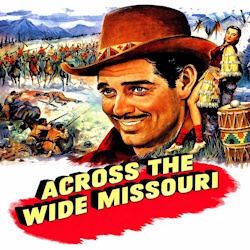
MGM Studios decided that Bernard DeVoto’s 1947 novel “Across the Wide Missouri,” which dealt with the lives of Rocky Mountain fur traders in the Upper Missouri River basin during the 1830s, could be successfully adapted for a big screen presentation. The film rights were purchased and Robert Sisk was assigned production with a $2.22 million budget. Talbot Jennings was hired to write the screenplay, and William Wellman was tasked with directing. A fine cast was assembled, which included Clark Gable as Flint Mitchell, Ricardo Montalbán as Ironshirt, John Hodiack as Brecan, James Whitmore as Old Bill, Adolphe Menjou as Pierre, and Maria Elena Marqués as Kamiah.
The story explores the lives of Flint Mitchell, one of the Rocky Mountain men who engaged in fur trade on the Indian frontier of Upper Missouri River basin during the 1830s. The Blackfoot Indian tribe dominates the frontier and Flint decides to marry Blackfoot princess Kamiah, albeit to gain him acceptance and leverage with the tribe. Over time this marriage to promote his trade evolves into a love match. In time Flint, despite his marriage to Kamiah, comes into conflict with Ironshirt, the Blackfoot war chief. Intervention by the Blackfoot Chief Bear Ghost ends the conflict, until an angry trader Roy DuNord kills him, which leads to Ironshirt becoming Chief. War reignites, Ironshirt kills Kamiah and then prepares to kill her and Clint’s son Chip. He is stopped by Flint who kills him and then takes Chip to live among the Blackfoot, which was his mother’s wish. The film was a commercial success, earning MGM a profit of $2.4 million. Critical reception was mixed with the film’s grand cinematography praised, while the 5o year old Gable criticize as too old to play the young Flint character. The film secured no Academy Award nominations.
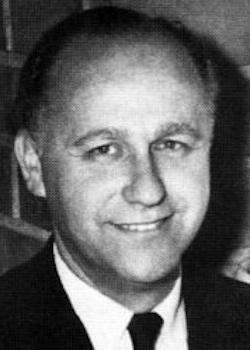 MGM Director of Music Johnny Green recognized David Raksin’s talent, and in 1949 he convinced him to join his team after he quit 20th Century Fox. He offered him the “Across The Wide Missouri” project and Raksin was enthusiastic to take on the assignment. The film offered some amazing grand cinematic sweeps, which lent themselves well to beautiful music. Raksin also understood that the film offered a classic clash of cultures with two lovers trying to forge a bridge of understanding. As such he would have to juxtapose the cultural identities of the white fur traders and the Blackfoot Indians, compose a number of action set pieces for the battles, and provide a romance for Flint and Kamiah. Sadly, creative micromanagement, which drove him to leave 20th Century Fox reared its ugly head when producer Robert Sisk and head editor Margaret Booth rejected his music for a twelve-minute trek scene through the mountains as being “too big for the scene”. They ordered a rewrite and rerecord in less than three days, Raksin refused saying it could not be done, and his orchestrator Al Sendrey wrote the new piece. Green was disposed to fire the recalcitrant Raksin, but the next day relented and mended fences.
For his soundscape Raksin provided five original theme themes, and two interpolating folk songs. Raksin decided early to incorporate frontier folk music and used the song “Shenandoah” as the score’s Main Theme. Its melody sweep is iconic and gave the film the heart and grandeur its narrative required. When joined by chorus it creates a magnificent cinematic moment. The playful folk song “Skip to My Lou” supported Flint’s flirtation with Kamilah, and later their love. Kamiah’s Theme supports the Blackfoot Indian girl who would become Flint’s wife. Raksin understood that he had to speak to her culture and so infuses an array of woodwinds arborei, a soft drum cadence and strings tenero, which speak to her nativist beauty, gentility, and femininity. Kindred, is the Blackfoot Theme, which also emotes with pastoral beauty and elegance. Yet it becomes martial and aggressive when used to support Ironshirt and his warriors. Brecan’s Theme supports this Scotsman who lives with the Blackfoot and who has adopted their culture. Friedhofer blends occidental and nativist Indian sensibilities into this cultural hybrid of a man using an array of woodwinds kindred to Kamiah’s Theme, but also incorporating warm French horns and masculine trumpets orgoglioso. The Frontiersmen Theme speaks to the trapper culture of the frontier and the men who practice the trade. Raksin imbues it with a classic, folksy Coplanesque Americana, imbued with a pioneering spirit. The Nature Theme was conceived to speak to the beauty of the untamed mountainous and forest vistas in which the film was set. Raksin offers a woodwind borne pastorale adorned with refulgent strings, which finds perfect confluence with the film’s cinematography.
Scenes coded (*) contain music not found on the album. “Main Title and Foreword” offers a score highlight where Raksin masterfully establishes the folksy Americana of the film. Raksin’s original score offers a more lyrical conception, which provides a stately rendition of Shenandoah Theme, which swells magnificently when joined by mixed chorus at 1:57. “Main Title” provides the final film version. It opens with the MGM Studios logo empowered by trumpeting declarations of the frontier dancing song “Skip to My Lou”. Raksin offers a festive exposition of the song as the opening credits display against a mountainous backdrop. A horn bridge usher in at 0:33 the quintessential American folk song “Shenandoah”, which has become legend, and is provided a sumptuous exposition. At 1:16 narration by Howard Keel, (Chip, the adult son of the film’s main character Flint Mitchell), relates the first nine years of his life as a boy living with his mother’s tribe on the frontier, takes us into the film proper. He extols his larger-than-life pioneer father, who helped expand America’s western expansion. At 1:45 the pastoral Nature Theme joins to support the montage of men set against a panorama of mountainous beauty. At 2:08 the spritely Frontiersman’s Theme supports a montage of the annual July convergence of the Mountain Men who joined in comradeship to celebrate their year of trapping, and compete in shooting and horse-riding contests. At 3:04 we flow back into the Shenandoah Theme as Scotsman; Captain Humberstone Lyon is introduced.
“Pony Go Where Kamiah Go (original version)” and “Pony Go Where Kamiah Go (intermediate version)” offer Raksin’s original and intermediate conception of the scene where Kamiah flirts unsuccessfully with Flint. (The finished film repurposes a portion of this cue for a scene between Flint and Kamiah much later in the story.) “Pony Go Where Kamiah Go” offers the final film version, which reveals Flint preparing to set off on a new beaver trapping expedition in Blackfoot Indian territory. Friedhofer introduces Kamiah’s Theme, which speaks to her culture using an array of woodwinds aborei, a soft drum cadence and strings tenero, which speak to her nativist gentility, and femininity. She rebuffs Humberstone’s advances, as she is clearly attracted to Flint. However, he expresses interests only in her pony, and rejects her offer that purchase of the pony includes her, which elicits her offense and departure. reveals his arrival at camp. At 5:12 of track 3 we segue into “Rendezvous”, which was shifted to this scene in the finished film. Friedhofer empowers Brecan’s horseback arrival with spritely strings, joined by the Coplandesque Trapper’s Theme borne by woodwinds arborei, warm, French horns and masculine trumpets orgoglioso. Humberstone welcomes a fellow Scotsman and invites him for a whiskey, which Brecan graciously accepts. Later, after a few rounds, the two dance the Ghillie Callum (Highland Sword Dance) supported by a third Scotsman playing bagpipes much to Flint and the camp’s amusement.
“Looking Glass Arrives” was dialed out of the film. It opens with a vibrant rendering of the Frontiersman’s Theme as Flint learns that Brecan is here to buy Kamiah’s freedom from Nez Perce Chief Looking Glass and return her to her father Bear Ghost, Medicine Man of the Blackfoot. Flint sees her as a vehicle of securing good favor with the Chief to support his hunting, and so prepares to outbid Brecan. We shift to a exposition of the Indian Theme as a bidding war, ensues and as they wait for Looking Glass and Kamiah’s decision. Film-scene synchrony ends at 1:32 with “Wolves” attached to a scene later in the film. In the film, Flint plays the Jewish Harp and sings the folk song “Skip To My Lou” (not on the album).
Flint is interrupted and advised that Kamiah has accepted his offer. He is joyous and orders a celebration be prepared. (*) “Wedding Celebration” reveals a caller calling out dance instructions as the men, many already drunk, dance festively to the accordion led folk tune. Later a drunken brawl ensues as the Indians watch with bemusement. “Now He’s Ready” was dialed out of the film and was intended to support Flint, who is freshly bathed, shaved and bearing flowers, returning contritely to Kamiah’s teepee, diffusing her anger and earning her love. Raksin offers tender interplay of the Indian and Trapper melodies, with a tender string borne expression of the “Skip to My Lou” melody joining at 0:43. “Kamiah Gets Ready” was dialed out of the film and was originally conceived to support the “Wedding Night” scene described below. The track opens with the Blackfoot Theme borne by a meandering flute with soft drum cadence. At 0:38 the music becomes comic as Kamilah tosses everything she can throw to drive the drunken Flint out of her teepee. At 1:12 we segue into “Where’s Freddy?” atop the Frontiersman Theme, which was written for a scene either deleted or never shot as there is no character named Freddy in the film. In the film’s final version, (*) “Wedding Night”, Kamiah is dressed in traditional Blackfoot Indian wedding attire being attended to by two matrons as she waits in the wedding teepee for Flint to Arrive. Her theme is softly woven as the women depart, and she awaits Flint’s arrival. He arrives drunk and repeats words he was instructed to say by Pierre “Entrez elle Attaque!” (Enter, she attacks!), which enrages Kamiah who pummels him with everything she can possibly throw. Pierre rescues him, tells him he is drunk, and takes him to the river where she scrubs him clean with soap. After bathing, Pierre douses him with perfume, so he can return clean, fragrant and presentable. Returning to the teepee her pensive theme supports her wait. As he enters, she prepares to pummel him with pots, but defers as she sees he is sober, clean, and smells fragrant. She faints and as he comes to her and lifts her head tenderly, the “Skip to My Lou” melody is rendered softly and romantically as she takes him into a kissing embrace.
We segue at 1:24 into “Rendezvous C’est Fini”, which was intended to support the scene I describe below “Until Next Year”. It offers a wonderful extended exposition of the Shenandoah Theme. At 3:04 the music darkens and swells with menace and violence to support the scene description I offered in the scene below titled “Blackfoot Country”. (*) “Until Next Year” reveals dawn the next day where a sign display advises of a rendezvous here next year on July 4th. The Frontiersmen Theme supports, and as the scene shifts to a trapper brigade of thirty people and seventy-five horses and pack mules riding out into the wilderness, chattering snare drums empower their journey with a more forceful and martial rendering of the Shenandoah Theme buttressed by trumpets orgoglioso. They carry traps, food, clothing and ammunition to sustain them for the trapping season. An interlude that features Flint and Kamiah is supported by her tender theme and their “Skip to my Lou” love theme. As they move on the drum propelled Shenandoah Travel Motif carries their progress. (*) “Blackfoot Country” reveals a group of trappers crossing into Blackfoot lands. A lurking Indian Theme supports. The calm is shattered by trumpet blasts of doom as a man is shot dead and his comrades flee. The Indian Theme darkens with menace as warriors scalp the dead trapper and Ironshirt, the Blackfoot War Chief is introduced. In a shift of scene, a wary Pierre encourages Flint to double the guards tonight. As Kamilah adorns herself while holding a hand mirror, Flint reprises “Skip to my Lou” on Jewish harp, which amuses her. Flint convinces her to take them in the back way over the mountains to the Blackfoot village to avoid detection by Ironshirt war parties. After Flint and Pierre depart, Komilah grabs his Jewish Harp and begins singing in mixed Indiglish, the ‘Skip to My Lou” song.
“Divide/Pass/Valley” was dialed out of the film and represents Raksin’s original scoring approach of the scenes I describe below. Raksin’s conception was to support with a trudging, and toiling dirge from which emerges a glorious and thankful statement of the Shenandoah Theme. “Trek” offers the controversial rewrite by Albert Sendrey for which Raksin was almost fired from MGM. It reveals the next day where they are hacking their way through the tangled forest undergrowth up the mountain side. A narration speaks of their journey through the harsh terrain, a warm, and folksy travel motif joins at 1:49 with a lyrical Shenandoah Theme to carry their progress against a panorama of beautiful mountain vistas. At 3:45, as they traverse a narrow cliffside path, the Frontiersmen Theme carries their progress, but then descends into trepidation as the path disappears into a massive snowdrift. Flint is hesitant to proceed, unsure of the path or snow depth, but a resolute Kamiah rides forth undeterred forging a path through the snow. The men watch with admiration as the Shenandoah Theme blossoms, cresting at 5:20 with horn trionfante declarations and a joyous paean as they all join her on the other side. We close gloriously at 5:34 with the expedition leaving the mountain pass to gain a magnificent panorama of the verdant, rich river valleys below. Pierre declares that the Blackfoot call this summit “The Light on the Mountain”, and Sendrey crowns the moment with a thankful statement of the Shenandoah Theme. Kamilah expresses happiness returning to the blessed land where she was born, while Flint remarks, this is the best beaver country he has ever seen. A celebratory ride down the mountain side unsupported by music carries them.
In “Stockade” narration speaks to the building of a stockade and the trapper community life. The track offers Raksin’s original conception, which with the exception of 0:25 – 0:55, was dialed out of the film. It offers a spritely rendition of the Coplanesque Frontiersmen Theme joined at 1:45 by a tender rendering of Kamiah’s Theme. The next day Flint and B’Tiste du Nord leave on a two-day trapping trip and are seen laying traps. When ducks are spooked, Flint become wary, grabs his rifle, anticipating an Indian attack. In “Hunted” Flint discovers B’Tiste’s arrow ridden corpse, which Raksin supports with a woodwind borne lamentation as Flint buries his friend. At 0:24 terror resounds as a knife flies past Flint’s face, and strikes the grave marker. He turns slowly to discover Ironshirt and his war party supported by a menacing Blackfoot Theme. Raksin sow tension as Flint’s coat is removed, and he is disarmed. Ironshirt grants him a chance for life, ordering him to run (in Blackfoot tradition, if a man can run to his freedom and escape, he is worthy of life). At 1:24 we segue into “Hare and Hounds”, propelled by strings furioso in an aggressive chase and pursuit musical narrative as Flint’s flees headlong for his life. At 2:30 a crescendo feroce swells as he leaps into a lake, is caught by a warrior, and they fight hand to hand. At 2:39 we crest horrifically with violence as Flint secures the Indian’s dagger and strikes him in the back, killing him. A vengeful Blackfoot Theme erupts to supports Ironshirt’s anger as he orders a search. At 3:01 we segue into “Quarry Escapes” where Flint takes refuge under a beaver den. Raksin sow a tense impressionist woodwind borne misterioso of uncertainty as Flint swims away unnoticed, using the Beaver dam architecture to hide his presence. Hours pass and at nightfall he emerges warily from the lake. Score-film synchrony ends at 5:11 in the track, with the remaining “Rendezvous” shifted to an earlier scene in the film. “Wolves” was attached to a scene edited out of the film. It was intended to support Flint being rescued from a pack of wolves by trapper Pierre and Humberstone Lyon. Raksin offers aggression and menace, sowing tension to support Flint’s dire circumstances and rescue.
“Marauders” reveals narration advising that Ironshirt, believing that Flint was dead, decided to raid the settlement and steal their horses. Aggressive strings energico propel the surprise attack and the Indians succeed is stealing a couple dozen horses before the guards can react. At 1:12, Kamilah’s Theme carries her on horseback out of the fort, and when she is told what happened, she becomes angry and an aggressive rendering of her theme carries her vengeful pursuit. At 1:12 we segue into “Flint Follows”. When Flint returns and is told of Kamiah’s departure, he rides out with seven men in pursuit of Kamilah propelled by a charging, tension filled musical narrative empowered by horns spiritoso. At 1:58 a diminuendo of unease supports their arrival at the Blackfoot village. Flint and Pierre disarm and ride in to parley carried by a warm rendering of the Frontiersmen’s Theme. When they arrive, Flint sees Kamiah at the lakeshore and comes to her. He takes her over his knee and spanks her, as her grandfather relates to Pierre, that Flint must be her husband. Flint then warmly greets Ghost Bear who responds in kind.
(*) “Feast” reveals Flint, Brecan and Kamiah enjoying a feast with Chief Bear Ghost, who relates the tragedy of how all his sons, whom he dearly loved, died in war. He expresses to Kamiah that he hopes to live long enough to see his granddaughter. They are then advised that Ironshirt will arrive tomorrow with Flint’s stolen horses. Tree limb drums and nativist chanting support the village ambiance. The next day Ironshirt arrives, becomes enraged that Flint is alive, and furious that Chief Bear Ghost has ordered him to return Flint’s horses. Flint’s gesture to let by gone be by gone is angrily rejected by Ironshirt. (*) “Flint Returns with His Horses” reveals Flint and his men departing the Blackfoot village carried by the Shenandoah Theme. Bear Ghost escorts him out supported by the Blackfoot Theme, and accepts Flint’s invitation to visit him with Brecan after the coming hunt. The theme warms as the Chief offers his blessings for a safe journey. Back at the fort, a playful rendering of the Frontiersmen Theme supports Flint and Kamiah trying to learn each other’s language. A romantic rendering of her theme supports his parting kiss as he sets off to hunt elk.
“Du Nord, My Brother” reveals Flint showing Roy Du Nord’s the burial site to his brother. Roy is visibly sad and Raksin supports tenderly with a woodwind borne lamentation. At 0:42 we return to the fort with portentous woodwinds of unease supporting Flint eating as a flock of geese fly overhead. Flint discusses with Kamiah that they must soon depart as winter approaches, but he is stunned when she drops a bombshell – she will bear him a son in the spring. Pierre then informs them that Bear Ghost will arrive at high sun, which brings joy to both Flint and Kamiah. (*) “Reception” reveals Flint preparing a reception and gifts for his father-in-law. As the gate open, he and his men ride out to greet Bear Ghost supported by bagpipes. The two parties converge and Bear Ghost offers a traditional Blackfoot greeting, which is answered by Flint. As Flint approaches, the camera shifts to Roy laying hidden in ambush. As Flint welcomes Bear Ghost, and presents a gift, we flow into “Bear Ghost Dies” as Roy fires and wounds Bear Ghost. Raksin sow a horrific and violent musical narrative as a stunned Flint kneels by Ghost Bear and Brecan charges and shoots dead Roy. At 0:26 an anguished Blackfoot Theme offers a threnody as Ghost Bear dies, with his theme slowly dissipating on the breeze. At 1:43 the music brightens for a fleeting moment after Brecan calms the Blackfoot and Flints warns his men that they must prepare for trouble as Ironshirt is now chief. Raksin sow uncertainty with a beleaguered Frontiersmen Theme as Flint orders them to prepare for a harsh winter and reprisal attacks by Ironshirt.
(*) “Kamiah Mourns” reveals Kamiah kneeling, and singing an aching lament for her grandfather. Flint arrives and comforts her by gently stroking her head. (*) “Christmas” reveals the Flint, Kamiah and the men at the fort singing merrily the festive French folk song as they celebrate Christmas. The singing is severed by a rifle shot from Ironshirt, who kills the night watch sentry. Grim muted horns of death support the men going to their fallen comrade as Ironshirt is seen sneaking away. “Printemps au Cutting Room” offers the pastoral Nature Theme to support a montage of beautiful nature scenes, which reflect the passage of the seasons, and our first sight of Flint and Kamiah’s infant, Chip. At 0:19 we shift to a vibrant Frontiersmen Theme as the settlers prepare to embark for another trapping season. (*) “Kamiah’s Lullaby” reveal Kamiah in their cabin tenderly singing a lullaby to Chip in her native tongue. In “Flint and Kamiah” he joins her and Raksin supports with a tender, and loving rendering of the Blackfoot Theme as he confesses his undying love for her. At 0:55 we segue into “Journey” where Flint, Kamiah, Chip and his men travel to join the annual July 4th rendezvous celebration. Raksin supports with a drum empowered, and horn enriched rendering of the Shenandoah Theme as a travel motif. At 2:37 we flow into Kamiah’s Theme with quotes of the lullaby as she blows a kiss to Flint, and dismounts to take a drink. Strings felice voice a spritely tune as everyone quenches their thirst. At 2:57 the music darkens as an arrow strikes Kamiah in the heart and the men sound the alarm – “Indians!”
The Indian attack is unscored, but the rifle shots cause Kamiah’s horse to bolt as Flint desperately pursues to save Chip who is attached in a papoose. As Kamiah’s horse rides past Ironshirt, he moves in ahead of Flint intent on killing Flint’s child. Back at the watering hole, the men suffer casualties, but mange to repel the attack. “Ironshirt Bites the Dust” reveals Kamiah’s horse stopping in the woods, with Ironshirt dismounting and moving in for the kill. Ironshirt shoots and misses Flint and then Flint’s shot also misses. As Ironshirt charges with a dagger Flint manages to reload and shoot him, with dire musical death throes entering with his death. At 0:18 weeping strings support Flint coming to the crying Chip and taking him lovingly into his arms. As he cradles his son, he contemplates life without Kamiah and the music descends sadly into a lamentation. (*) “Kamiah’s Burial” reveals a bag pipes supported service a Flint and his men pay their respects. Flint says that he intends to take Chip to the Blackfoot as Kamiah would have wanted him to grow up with her people. As he departs to a rifle salute, a sad Shenandoah Theme carries his departure.
The scene for “Blackfoot Village” was edited out of the film. The music offers a plaintive rendering of the Blackfoot Theme, which is bittersweet. The writing for woodwinds, is sublime. At 1:44 we segue into “Flint et Brecan”, which was also attached to a scene deleted from the movie. Raksin offers the Frontiersmen Theme, which for me suggests a parting of the ways. “Boy” was attached to a scene edited out of the film, showing Chip growing up. Raksin offers a youthful, and playful rendering of the Blackfoot Theme intended to support Chip boyhood with the Blackfoot. At 0:38 we segue into “Maybe Next Year” a heartfelt score highlight. Chip’s narration informs us that every year his conflicted father struggled as to whether to send him back east for a proper education, or have him grow to manhood under his guidance. Raksin offers perhaps the score’s most moving passage with a heartfelt exposition of the Blackfoot Theme, which swells atop strings of paternal love at 1:24. At 1:55 we segue into “End Title and Cast” atop a tender statement of the Shenandoah Theme as Flint takes pride in Chip’s horsemanship. Chip’s narration resumes, saying that in the end, he convinced his father that his life is best served remaining with him, a decision he says brought both father and son, happiness. As father and son trot out against a backdrop of cloud swept mountainous grandeur, the Shenandoah Theme swells with pride, joined by a chorus for a grand ending.
 David Raksin’s complete score to Across the Wide Missouri was obtained from ¼″ monaural tapes made from the original 35mm optical units, supplemented by monaural acetates stored at the USC Cinematic Arts Library. The digitally remastered archival monaural sound provides a good listening experience, but a rerecording is needed to bring out the grandeur and eloquence of Raksin’s handiwork. Regretfully Raksin’s score to “Across The Wide Missouri” joins “The Magnificent Ambersons” by Bernard Herrmann, and “It’s A Wonderful Life” by Dimitri Tiomkin as tragic examples of studio micromanagement and mutilation. Several cues were excised due to egregious editing, which took much of the heart from the film and some of Raksin’s score’s finest compositions. As to the controversial replacement of Raksin’s music for the “Divide/Pass/Valley” scenes, I believe having watched the scenes listening to both versions, that the decision to replace his music with the “Trek” rewrite, was a creative error. Nevertheless, thanks to this album, we are able to appreciate Raksin’s original conception, which I believe offers a fine score. The well-conceived use of the iconic Shenandoah melody and Nature Theme found stirring confluence with Walter C. Mellor’s cinematography. The juxtaposition by the Kamiah and Blackfoot themes provided the requisite cultural contrast, with beautiful writing for woodwinds. This was Raksin’s inaugural score for MGM, one that provides a testament to his compositional gifts, and scoring sensibilities. Although it is now hard to find, I highly recommend the box set “David Raksin at MGM for your collection.
For those unfamiliar with the score, I have embedded a YouTube link to the Main Title: https://www.youtube.com/watch?v=HyqBdusEM1M
Buy the Across the Wide Missouri soundtrack from the Movie Music UK Store
Track Listing:
- Main Title (3:39)
- Pony Go Where Kamiah Go (0:37)
- Hunted/Hare and Hounds/Quarry Escapes/Rendezvous (5:46)
- Looking Glass Arrives/Wolves (2:48)
- Pony Go Where Kamiah Go (2:18)
- Kamiah Gets Ready/Where’s Freddy? (1:26)
- Now He’s Ready/Rendezvous C’est Fini (3:38)
- Divide/Pass/Valley (6:15)
- Stockade (2:07)
- Du Nord, My Brother (0:53)
- Marauders/Flint Follows (2:46)
- Bear Ghost Dies (2:26)
- Printemps au Cutting Room (0:57)
- Flint and Kamiah/Journey (4:08)
- Ironshirt Bites the Dust (1:08)
- Blackfoot Village/Flint et Brecan (2:30)
- Boy/Maybe Next Year—End Title and Cast (3:37)
- Main Title and Foreword (Alternate) (2:51)
- Creatures of the Forest (Alternate) (2:42)
- Quarry Escapes (Alternate) (2:33)
- Pony Go Where Kamiah Go (Intermediate Version) (Alternate) (2:15)
- Now He’s Ready/Rendezvous C’est Fini (Alternate) (3:24)
- Trek (Alternate) (6:15)
- Flint et Kamiah/Journey (Alternate) (2:57)
- Final Episode/End Title and Cast (Alternate) (1:19)
- Main Title (Intermediate Version) (Alternate) (1:35)
Film Score Monthly FSM Vol. 12 No. 2 (1951/2009)
Running Time: 73 minutes 52 seconds
Music composed by David Raksin. Conducted by Johnny Green. Orchestrations by Al Sendrey, Leo Arnaud, Arthur Morton, Ruby Raksin and Robert Franklyn. Additional music by Al Sendrey. Recorded and mixed by XXXX. Score produced by David Raksin and Johnny Green. Album produced by Lukas Kendall.

Shop at the Movie Music UK Store

Member of the

 MOVIE MUSIC UK