THE UNINVITED – Victor Young
 GREATEST SCORES OF THE TWENTIETH CENTURY
Original Review by Craig Lysy
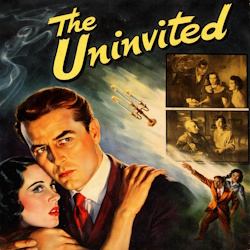
During WWII Hollywood began to explore a new genre – paranormal or supernatural themed films. When Irish author Dorothy Macardle’s 1941 novel “Uneasy Freehold” was published in the United States as “The Uninvited” producer Charles Brackett believed he had found a story that needed to be brought to the big screen. He sold his vison to Paramount and would oversee production, Lewis Allen was tasked with directing, and the team of Dodie Smith and Frank Partos would write the screenplay. For the cast, Ray Milland would star as Roderick “Rick” Fitzgerald, joined by Ruth Hussey as Pamela Fitzgerald, Donald Crisp as Commander Beech, Cornelia Otis Skinner as Miss Holloway, and Gail Russel as Stella Meredith.
The film is set in Cornwall, England, circa 1937. London music critic and composer Rick Fitzgerald and his sister Pamela fall in love with the abandoned Windward House while visiting the city. They purchase it from Commander Beech for a very low price. After moving in, a series of phenomena slowly brings them to the realization that the house is haunted. Eventually they unravel the mystery that Commander Beech’s granddaughter Stella is the child of Carmen, a Spanish Gypsy, with whom her father had an affair. Born in Paris, she was brought back by her father’s wife Mary. When Carmen returns to retrieve her daughter, a fight ensues which leads to Mary falling off a cliff to her death. When Stella eventually learns that Carmen was her mother, her ghost takes solace and departs the house. Closure comes when Rick confronts the ghost of Mary and reveals they know the truth and are no longer afraid of her, which causes her to also depart. The film resonated with the public and was the highest grossing film in the United States in 1944. Critical reception was mixed, but overall favorable and the film received one Academy Award nomination for Best Cinematography.
 Paramount Pictures resident composer Victor Young took on the scoring assignment. Upon viewing the film, I believe Young understood that he would have to speak to the haunted Windward House, which holds withing its walls, a dark secret – a paranormal battle waged by Stella’s real mother Carmen, and the woman who Stella believed was her real mother, Mary. The mystery and allure of the cliff overlooking the sea was also inextricably connected to the dark secrets of the past. Setting the tone of the film, the mystery, and the haunted ambiance would be crucial in ensuring director Lewis Allen achieved his vision.
Young provided three primary themes for his soundscape. Foremost is Stella’s Theme, which in my judgement is his immortal theme. When expressed for piano and orchestra it offers an astounding homage to his favorite classical composer, Sergei Rachmaninov. We are graced by a romanza, which harkens back to Rachmaninov’s immortal piano Concerto No. 2 in C minor. However, throughout most of the film it is expressed by solo violin delicato and kindred strings, or by solo piano. This rapturous melody for Stella, was transformed into both a concert piece for piano and orchestra by the composer, and also in 1946, a hit song “Stella By Starlight”, with lyrics provided by Ned Washington, which entered the repertoire of Frank Sinatra and Harry James.
Two themes were written for the two ghosts that inhabit Windward House, one for Mary, Stella’s adoptive mother, and one for Carmel, Stella’s real mother. Throughout the film, the jealous and vengeful Mary’s Theme dominates, offering a bleak two-note figure born by an alto flute, English horn and muted trumpet in unison, which evokes a ‘not of this world’ sorrow. This ghostly musical narrative of other-worldly terror is sometimes empowered by a vortex of swirling strings terrore. Juxtaposed to this malevolence is Carmel’s Theme. Because her presence throughout the film is intangible, her theme is fragmentary and illusive, only gaining voice at the end of the film when it is revealed that she is Stella’s birth mother. Her theme offers a long-lined string borne passage, which abounds with warmth, tenderness, and maternal love. The score also includes some impressive impressionist passages, rare for Young, as well as motifs for the crashing waves of the restless western ocean, and the Windward House, which is warm and comforting, reflecting Pamela’s love for it. Lastly, Young infused his soundscape with a number of classical and traditional pieces, including “The Sailor’s Hornpipe”, “My Silent Loveby Dana Suesse, “O God, Our Help in Ages Past” by Isaac Watts, “Liebestod” from Tristan und Isolde by Richard Wagner, and “Wee Chuckie Birdie”.
“Prelude” offers an iconic film opening of exquisite sublimity, a molto romantico score highlight where Young masterfully sets the tone of the film. The music opens with an eloquent prelude of refulgent splendor to support the Paramount Pictures Logo. We flow into the main titles, which display as black font against a grey cloud-like background. Young graces us with his sublime Stella’s Theme, an astounding homage to his favorite classical composer, Sergei Rachmaninov. At 0:25 the piano carried romanza harkens back to Rachmaninov’s immortal piano Concerto No. 2 in C minor. Yet at 1:12 the music darkens, gaining foreboding auras, ending on a muted horn ostinato diminuendo of uncertainty. (*) “The Shoreline”, is empowered by the restless sea motif, a formless, almost intangible, ever shifting misterioso as the wave battered coast of Cornwall and Devonshire is revealed. Narration describes the coast as the haunting shores of the west ocean, often beset by howling winds and fog. We see siblings Rick and Pamela Fitzgerald ascending the cliff path with their terrier Bobby, which takes them to the Windward House. The music brightens and the gentile musical narrative of the House Motif, which unfolds as the reach the front lawn, behold the manor house, and begin walking towards its front door.
“Squirrel Chase” offers a fun score highlight. It reveals Pamela sighting a squirrel on the front entry, which darts into the bushes and elicits Bobby to begin a madcap chase. The squirrel jumps through an open window with Bobby in hot pursuit, as well as Pamela and Rick. Young offers an energetic, playful, and comedic musical narrative empowered by spritely strings, and woodwinds animato, replete with prancing piano runs propelling the squirrel’s escape. Eventually the squirrel escapes by climbing up the chimney! In an unscored scene, Pamela is taken in by the vacant house as she and Rick take a tour. She loves it and presses Rick to join her in buying it, relocating away from dreary London. (*) “Seeking The Owner” reveals Rick and Pamela, who are in search of the owner of the property, arriving in the home of the austere Commander Beech. He is not at home, but his granddaughter Stella takes them in. Young supports with pleasant musical narrative borne by strings gentile. When Stella learns of their desire to purchase the Windward house, she becomes nervous and agitated, says it is not for sale, and asks them to leave. Pamela is insistent on speaking to the Commander, who makes a timely arrival. (*) “Please Don’t Sell it” Stella excuses herself, closes the study door, and quarrels with grandfather saying she does not want it sold as it was her mother’s house. The Commander says they cannot afford to maintain it and he will sell it. He enters the study, closes the door on Stella, and Young sow a foreboding musical narrative as we see Stella is clearly distressed. In an unscored scene the Commander agrees to their offer of £1,200, which he admits is far less than the manor’s actual value.
(*) “Our New House” reveals the Fitzgerald’s taking possession of their new house. The bubbling woodwinds of happiness of the House Motif carry their entry, and the playful squirrel piano motif reprises as Bobby goes to the chimney where the squirrel escaped. As they ascend the stairs, warm French horns join strings tenero to empower a comforting musical narrative as Pamela sets out her plans to refurbish and repaint the house. They unlock the door of the one room they had never seen, and behold a sun room with a gorgeous view of the coast. Yet upon entry, subtle foreboding undercurrents play under the dialogue as Rick decides that this room is ideal for his music studio. The music shifts to eerie strings and forlorn woodwinds as they both feel a chill, and Rick begins to feel unease at both the house and their decision to buy it. An otherworldly descent motif joins and supports the sight of Pamela’s flower bouquet withering on the table. Horns of alarm and Bobby’s howling startle them. As they exit to the head of the stairs, the former idyllic house narrative reprises. As they go to a bay window, the music darkens as they see a sad Stella staring at the house from the front lawn. She departs despite Pamela’s friendly wave. The House Motif reprises, now rendered warmly as a danza gentile as the descend the stairs.
“The Village” reveals Rick returning to the quaint seaside village supported by a wandering Celtic flute gentile, which leads a retinue of kindred woodwinds to emote a danza felice. A wary Stella watches as he checks out of the hotel and loads his car with his suitcase. In an unscored scene, Rick enters a tobacconist store, chats with Will Hardy, its welcoming owner, and sees postcards of Windward House, which he purchases. The storekeeper relates the tragic end of the commander’s daughter-in-law who fell off the cliff to her death, and he says the man has never been the same. As Rick departs, he is stopped by Stella who apologizes and relates that she was motivated to apologize by her mother’s portrait which hangs in her room. Rick invites her for a walk and she relates her grandfather’s hatred of the house, but her love for it. When he learns that she intends to spend the day reading a book, he takes her arm and says he has a better idea. (*) “Sailing” reveals Rick and Stella sailing in a small boat off the coast. Young offers a nautical, string borne romanticism that perfectly captures the mood as Stella relaxes and lets down her hair. He boasts that he never gets seasick, but the next frame shows him laying down sea sick, supported by saxophone sardonica. The Nautical Theme joins the musical narrative as she comes and tends to him with her scarf, scented with Mamosa, her mother’s perfume. The respite is short-lived as the saxophone sardonica resumes. The sea calms, he regains his wellness, and playfully orders her to take them back to the jetty, carried by the Nautical Theme. On shore, we see the two have bonded and he asks her to look in on Pamela as he will be gone for three weeks. As he prepares to drive to London, Stella wishes him and Pamela happiness at Windward and he kisses her hand. As he drives away, yearning strings supports Stella’s wave goodbye.
(*) “Rick Returns” reveals him arriving back at Windward at dusk with Lizzie, their housekeeper. Nocturnal strings with undercurrents of unease support their arrival. Rick is surprised when Pam says Bobby has run off. After they eat soup, Rick praises Pamela for her house renovation. He is surprised to learn that Stella did not call on Pamela while he was gone. Pamela picks up that Rick likes her and as they continue to converse, he sits down at the piano and begins playing the Stella’s Theme. Lizzie enters and says it is time for Pamela to turn in, and the gentile House Theme joins as they prepare to go upstairs. Tension surges as Lizzie’s cat seems terrified and refuses to go upstairs. As the three ascend, a harp embellished misterioso supports a cold breeze, which causes their candles to flicker. The gentile ambiance of the House Theme returns as they all go to their rooms. As Rick lays in bed reading, Young supports with an orchestral rendering of the song “My Silent Love” on the bedside radio. Pamela arrives to drop off a blanket, tries to inform Rick of something regarding the house, but decides to defer it until tomorrow. He then blows out his candles, turns in.
“The Sobbing Ghost” offers a brilliantly conceived score highlight and a testament to Young’s mastery of his craft. Tragically, director Lewis Allen dialed most of the cue out of the film. I believe this was a creative error, as I contend that the music really elevated and empowered the scene. The scene opens with the crashing waves along the rocky shore. Young offers a nocturne shattered at 0:12 by a crashing orchestral chord, which speaks to the fury of the restless sea below. Fluttering woodwinds swarm, evoking an unsettling agitato. What follows is a remarkable passage of impressionist writing, which Young conceived to sow unease as Pamela joins Rick and advises that she hears the woman weeping every night. She can never locate her, and it always ends with the dawn breeze. At 0:55 Mary’s Theme, a bleak two-note figure born by an alto flute, English horn and muted trumpet in unison, evokes a ‘not of this world’ sorrow. Slowly, an inexorable intensification of the motif unfolds, with increasing unsettling dissonance. At 3:10 the motif coalesces into a more lyrical and consonant form, which emotes warmth, tenderness and maternal love. Rick assures Pamela that there is a scientific explanation and a playful musical narrative lead by a solo flute felice carries his return to bed. We close harshly at 4:11 when the wind slam shuts the bedroom door, prompting Rick to flee beneath the covers.
In an unscored scene, Rick visits Mr. Beech’s office the next day and demands an explanation to the ghostly phenomenon. Beech deflects by asserting no knowledge, and suggesting natural causes for the sound by the sea caverns below the cliff. Stella joins and Mr. Beech makes it very clear that she cannot make new friends because of her health. He escorts her out and then declares to Rick that there will be no social contact between their two families, and that Stella will never step foot in that house. Rick makes it known that he has no intention of stopping his social contact with Stella, which elicits Beech’s ire. “Sunday Morning” reveals Stella walking along the seaside road to church. Rick pulls up and she gladly accepts his offer to get in. Young supports with pleasant gentility using church bells and a repeating three-note phrase with and echo. After a short drive they turn off on a side road, discuss spending more time together, and she accepts his dinner invitation for 8:00 pm tonight. At 0:20 we are graced by a gorgeous romance for strings, which transforms at 1:16 into a rapturous statement of Stella’s Theme embellished with warm French horns. Interludes of a plodding bassoon comici (not on the album) support the walk of Mr. Beech passing by, and then later when Rick drives past him with Stella bent down and hiding from sight. Young offers solemn religiosity (not on the album) as they arrive at the church, and Stella says goodbye. In the church, Mr. Beech joins Stella with both singing a hymn “O God, Our Help in Ages Past”. I am unable to place the music from 1:46 onward in the film and assume it was dialed out or left on the editing room floor. At 1:46 a misterioso unfolds, joined at 2:07 with Mary’s ghostly two-note figure. We close bleakly at 2:33 with a yearning Stella’s Theme, which entwines with Mary’s Theme.
In an unscored scene Stella defies her grandfather, insisting that she is twenty and will see who she wishes, and live her life as she would have it. This elicits his ire as he sends her to her room. He then makes a frantic call to Mrs. Holloway, who runs a sanitorium, and begs her to assist him with Stella. (*) “Rick Shows Stella the House” reveals Rick giving Stella a tour of the house, as she was only three years old when last she was here. Young reprises his romance for strings as they stroll through the house. In the sunroom she relates that here father painted portraits of both her mother and a model. They clearly enjoy each other’s company, and after he lights a candelabra while the sun sets, she asks him to play a piece on the piano. We are graced by Stella’s Theme, which is rendered tenderly as she gazes at the sunset. He stops, and she asks him to continue, only to see him add notes to the manuscript. She asks if he wrote it, and he answers yes. She says it is brilliant and asks what it is called. She is stunned when he replies; “Stella by Starlight”.
“The Cliff” offers a romantic score highlight. Stella sits next to Rick on the piano bench with him and asks that he play on. This rendering is more romantic, however as the room suddenly darkens at 0:29, so too does his playing. She stands, is joined by Rick and at 1:05 the theme shifts to sumptuous strings romantico empowered by French horns for a grand statement. She berates herself for being wicked for laughing in her house, adding she was so young and died so cruelly. At 1:32 trumpets tragico resound as she bolts with Rick in pursuit. Young propels her run with a crescendo terrore as she runs frantically towards the cliff edge, the music cresting at 1:57 as Rick grabs her at the last moment. We close ominously as she relates that she does not know what just happened, and then relates that this was the very spot her mother fell to her death.
(*) “Lizzie is Terrified” reveals Pamela joining them and relating that Stella is their first dinner guest. She then asks Rick to lead them singing “Wee Chuckie Birdie” a festive traditional song, which drew him into music. Their singing is shattered by Lizzie’s repeated horrific screams from the house. A crescendo of alarm carries Rick’s run into the house. He finds her on the stairs terrified from seeing a crawling mist like woman’s figure’ entering the sunroom. Young sow unease as they take Lizzie to the dining room and give her a sherry as Stella ascends the stairs. When Rick notices Stella is missing, he runs upstairs calling her name supported by a string lead crescendo of fear. He finds her passed out on the floor as Pamela joins him. He asks that they call a doctor, and aching strings of concern support as he carries her to the spare bedroom. Later in an unscored scene the doctor examines her and she relates that all she remembers is the room suddenly becoming very cold. Pamela brings her soup as the doctor and Rick step outside. Later Pamela joins them and the two relate to the doctor the tale of their ghost. The doctor brings up the scandal of Carmel becoming pregnant, Mary’s mysterious death falling off the cliff, followed a week later by Carmel’s death.
(*) “Stella’s Revelation” reveals Pamela walking in the study as Rick and the doctor play cards. They are overwhelmed by the scent of flowers, and then see a light from Stella’s room. A solo violin delicato weaves a misterioso as they investigate and discover Stella standing by the window. She says she wanted to see the dawn with her mother, whom she says is the ghost they have been talking about. She adds that for the first time she felt her love. Stella’s Theme joins softly on strings as the doctor agrees to take her home. Her melody suggests longing as Rick tells Pamela that he regrets bringing her here. Inside Pamela suggests that perhaps good has come out of this as her mother has at last found peace. She suggests that perhaps they no longer have a ghost and leads Rick upstairs to the sun room. They find the room cold, and as they turn to leave the sound of a woman sobbing returns supported by the eerie and ghostly Mary’s Theme. Rick then realizes that they do not have a single ghost, but instead two.
In (*) “Rick Visits Stella” the next day, Rick pays a call on Mr. Beech, but his maid says he will not return until evening. He then decides to see Stella and is invited in. Her theme, full of happiness, carries her to him. She asks for him to take her back to Windward, and he refuses, saying he wants her to instead come live with him in London, saying it is best to tear the house down. The music sours as she relates that she does not want to give up her mother. Mary’s Theme entwines with her theme as he kisses her, hoping to change her mind, yet she bolts crying that she will hate him if he denies her request. In an unscored scene Pamela reacquaints with Bobby, who was saved and taken in by Dr. Scott. Rick arrives and implores Dr. Scott to intervene with Stella. Pamela stuns them when she suggests a séance. They agree with reservations after Rick advises that he intends to manipulate the answer from Stella’s mother Mary to coax her to leave Windward forever.
(*) “The Séance” opens with a shot of crashing waves upon the shore supported by the foreboding Sea Motif. We shift to Windward with Dr. Scott, Stella, Rick and Pamela seated at a séance table. They all place a finger on the wine glass and Stella begins to ask questions. With each answer Young offers an eerie figure by sliding strings as the glass glides to the answer. When she asks if she wants her to stay away from Windward, Rick winks at Scott and they guide the glass to “Yes”, only to be foiled as it slides beyond their control to “No”, astonishing Rick. Further questions indicate that she remains to guard Stella from danger. When she asks from what, the glass glides to C-A-R-M, and they all state in unison “Time Out”. A twinkling motif erupts as the glass begins shaking and then flies to the hearth where it shatters. They agree to stop and go into the other room only to see Stella fall into a trance. When asked if she is Stella’s mother, she begins speaking frantically in Spanish, which is interrupted by the doorbell. They feel overpowered by the Mamosa scent, Stella faints, the room becomes deathly cold and the doorbell rings again. The candles extinguish and the doorbell rings a third time, prompting Pamela to answer it. Yet she stops when a white mist coalesces into the form of a woman and begins approaching. Mr. Beech shattering the door window causes her to vanish. Mr. Beech is outraged, and Rick counters that the secret he has hidden from them is exposed and that they intend to cure the house. Beech demands that Scott drive them home, and Stella departs with them.
In two unscored scenes Dr. Scott gives Stella a sleep aide and advises Mr. Beech that he will return in the morning. Beech curtly declares that he his services will no longer be used and dismisses him. Beech then lets Mrs. Holloway in through a side door. They decide that Stella must undergo treatment, and she has her chauffeur carry Stella to her car so she can wake at her place in the morning. The next day Lizzie, having discovered the séance table, chastises Rick for using the tools of the Devil. She then discloses that a nurse, Mrs. Holloway, witnessed the death of Mary and provides him with the address to her estate – “The Mary Meredith Retreat”. (*) “Rick Visits Mrs. Holloway” reveals Rick and Pamela visiting the sanatorium. Young supports with a string borne idyllic narrative as an attendant welcomes them and invites them in. As they wait in the parlor, a door slowly opens empowered by a fluttering flute, which ushers in pizzicato strings comici as Rick investigates and is surprised by a lady with a basket. The music becomes playful as we see them bemused by the giggling Miss. Bird’s peculiar behavior and affect. Prancing strings carry her departure, which is stooped by the stern attendant, who orders her back to her room. Spritely strings of flight carry her hurried departure. The idyllic musical narrative resumes as the attendant escorts them to Mrs. Holloway.
In an unscored scene they elicit Mrs. Holloway to explain the history of Windward and she relates that Mary suffered during her husband’s affair with an evil Spanish Gypsy Carmel. They eventually took Carmel to Paris, gave her a payoff and returned with their child. Carmel eventually returned for Meredith’s husband, and adds you know how it ended. Rick startles her with knowledge of a terrified child crying as Mary fell to her death and Mrs. Holloway grudgingly adds that Carmel ran to the cliff with baby Stella, fought with Mary, and struck her down. Carmel then ran off into a storm, and returned with pneumonia, which Mrs. Holloway tried to cure, despite her hatred of Carmel, but she ended up dying. The Fitzgeralds thank her and depart. (*) “Holloway and Stella” offers a foreboding misterioso as Mrs. Holloway goes and visits Stella in her room. Stella complains that she is being treated as though she was insane. Holloway assures her that is untrue and asks what she felt as she ran towards the cliff. Stella answers, that she felt nothing. Holloway denies her request to leave and a grieving solo violin triste joins as Stella asks why she hates her, with Holloways turning, and coldly answering with menace – “See, you do feel persecuted.”
In an unscored scene Rick and Pamela are perplexed by Holloway’s tale and believe she is withholding something. They visit Dr. Scott who advises that Mr. Beech has fired him as their family doctor. He says his predecessor treated Carmel and takes them upstairs to review his notes. The journal entry says that nurse Holloway had left open the bedroom window and that he arrived to find snow on the floor, and that Carmel had died. He accused her of criminal negligence and she threatened a lawsuit if he persisted. They are interrupted by Scott’s maid who says the Commander has summoned him for an urgent medical problem. Scott gives Rick the journal, tells him to review it for more details, and then quickly departs. At the Beech residence, Dr. Scott examines him, accepts his apology, and tells him he will have him feeling better soon.
(*) “Rick and Pamela Return Home” opens with tension as Lizzie is frightened by a noise, but as Rick and Pamela walk in, the pleasant Home Theme joins as we see Lizzie relax. He reassures her that they will not be doing anymore séances and she expresses relief, and goes to fetch her coat. Mary is reading the journal and tells him she found nothing more. She accepts his invitation for a whiskey and soda, but as they turn their backs, an eerie misterioso unfolds as we see the journal pages turning. As they imbibe, she relates that she again smells Mamosa. They begin to search and we see the journal pages turning behind their backs. Lizzie interrupts, the pages stop turning, and the warm House Theme returns. The doorbell rings, Lizzie invites Dr. Scott in, and then departs. He advises that Stella is admitted to Holloway’s care and they depart, agreeing to find a way to obtain her release. We close with a wind like harp glissandi misterioso as we see the journal pages again turning.
(*) “Holloway’s Plan” reveals her answering a phone call from Pamela, saying they need to meet with her and will arrive in two hours. After she hangs up, Holloway calls for Stella, and alerts her staff that she may need the car this evening. Young supports with a sad musical narrative borne by strings tenero. The music darkens as she turns toward the door and looks with menace as Stella is admitted. Holloway says that she may not go home, but should instead go to Windward as she believes that is what her mother intended. Stella is happy, and as she departs Holloway says her car will drive her to the train station. In an unscored scene, Stella departs on the train as we see the Fitzgeralds and Dr. Scott barge into Holloway’s office. She discloses that she has sent Stella back, not to Windward House, but the cliff where her mother died. Her affect changes to one that suggests madness, and the three depart quickly hoping to intercept Stella. Her attendant is stunned as Holloway rambles incoherently that soon all will go as it should.
“Grandfather and The Cliff” reveals a taxi dropping Stella off at Windward House. Young sows a misterioso which brightens as she walks to the door and rings the doorbell. When no one answers, she goes inside and calls out, yet no one answers. The eerie music evokes unease, shifting to a string borne ascent crescendo as she goes upstairs. As she ascends, she hears a man repeating “Ah”. Upon reaching the second floor the music shifts again, this time evoking both unease and tension as she hears a man say “Stella” from within the sun room. She opens it supported by an ominous chord at 2:01, and finds her grandfather seated in a chair. He says he received a phone call from Mrs. Holloway to come here. He has clearly over taxed himself and Stella says she will call Dr. Scott. He tells her to go as there is danger for her in this house. She asserts she is not afraid and stays at his side. Plaintive strings voice a pathos of regret to support his reminiscence. We swell on a crescendo until 3:06 when a white mist begins to coalesce at the door supported by eerie swirling strings of terror as the woman approaches and the commander’s fear elicits his death from a heart attack at 3:19. The swirling string creates a vortex of terror as Stella turns, says she won’t be afraid mother, but then screams repeatedly as Rick, Pamela and the doctor arrive. Stella bolts through the front door and runs towards the cliff propelled by a crescendo orribile atop horns terrore as Rick pursues. We crest at 3:51 as the cliff edge collapses with Stella grabbed at the last moment by Rick. As she dangles and is pulled up, the music warms on horns and strings full of thankfulness. She says she is alright, but that the doctor needs to attend to her grandfather at once. We end on a diminuendo of sadness as Rick and the doctor come downstairs to inform Stella that her grandfather has passed.
“End of Ghost” reveals a distraught Stella asserting that it was her mother who killed grandfather, or perhaps Mrs. Holloway was right, hat she has gone mad. With this, music enters atop an orchestral shriek of terror as the study doors burst open and they are overwhelmed by the Mamosa perfume scent. A misterioso supports the pages of the journal turning, then stopping, which elicits Dr. Scott reads a passage. As he reads the journal, we are comforted by Carmel’s Theme, borne by warm strings of maternal love, which joins at 0:28 and blossoms as it is revealed that Stella was Carmel’s daughter and was born in Paris. She was adopted by Mary, but Carmel was unable to endure losing her daughter and so returned to Windward House. Stella accepts that Carmel was her real mother, the Mamosa scent disappears, and Carmel can be heard laughing full of happiness as her theme slowly fades away. A chord of danger sounds at 2:49 as they prepare to leave. Rick closes the door, and orders that Stella be taken out the side door. An eerie, not of this world musical narrative unfolds as Rick opens the door and decides to confront Mary. He calls to her, her ghostly figure appears at 3:37 to menacing horns that empower a frightening musical narrative as he reveals the ugly truth of her attempted murder of Carmel, which instead caused her to fall to her death. At 4:11 a crescendo terrore swells as he laughs, mocks her and says they are no longer afraid of her. The crescendo climaxes at 4:26 as he casts the candleholder at her and he yells for her to go and never return. At 4:32 we segue into “Finale” atop a quote of Carmel’s Theme, from which arises Stella’s Theme, first on a solo violin delicato, then blossoming by full orchestra, and concluding gloriously with a flourish to end the film.
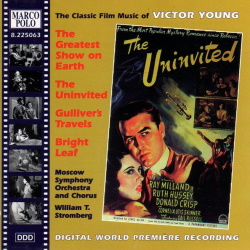 I commend once again the restoration of a classic Golden Age score by John Morgan and Naxos. This world premier recording by the Moscow Symphony Orchestra and Chorus under the baton of William Stromberg is excellent, and the audio quality, wonderful. Every composer hopes that one day they will write an immortal theme, well, Young achieved this with his theme for Stella. He had always worshipped his favorite composer Sergei Rachmaninov, and in a wondrous homage he earned immortality with Stella’s Theme, which achieved fame in the film, the concert hall, and pop culture thanks to the vocals of singers like Frank Sinatra. Masterful was how Young juxtaposed the musical identities of the two warring mothers, with Mary’s evoking fear, vengeance, and malevolence, while Carmel’s evoked warmth, tenderness and maternal love. This film was a classic ghost story, and Young in scene after scene unnerves, unsettles, frightens and terrifies us with his music. Yet there were also passages of warmth, comfort, and beauty, and it was also this juxtaposition, which made the ghostly terror more frightening. I believe director Lewis Allen’s success was achieved largely because of Young’s well-conceived and well executed music. I highly recommend this. outstanding score and compilation album for your collection.
For those of you unfamiliar with the score, I have embedded a YouTube link to a six minute suite; https://www.youtube.com/watch?v=bzlyd0bc-xM
Buy the Uninvited soundtrack from the Movie Music UK Store
Track Listing:
- Prelude (1:34)
- Squirrel Chase (1:22)
- The Village (0:45)
- The Sobbing Ghost (4:19)
- Sunday Morning – Stella’s Emotions (3:05)
- The Cliff (2:34)
- Grandfather and The Cliff (4:41)
- End of Ghost – Finale (5:31)
Running Time: 24 minutes 01 seconds
Marco Polo 8.225063 (1944/1998)
Music composed by Victor Young. Conducted by William Stromberg. Performed by Moscow Symphony Orchestra and Chorus. Original orchestrations by George Parrish and Leo Shuken. Recorded and mixed by Edvard Shakhnazarian and Vitaly Ivanov. Score produced by Victor Young. Album produced by John Morgan and William Stromberg.

Shop at the Movie Music UK Store

Member of the

 MOVIE MUSIC UK