Under-the-Radar Round Up 2023, Part 8
 Original Reviews by Jonathan Broxton
I’m pleased to present the latest instalment in my on-going series of articles looking at the best under-the-radar scores from around the world. This article, the eighth and last of 2023, is a biggie, a bumper crop, a last hurrah of outstanding music, and it covers ten scores from a wide array of genres and countries: a German documentary about an acclaimed artist, a World War I horror film, a British re-imagining of a horror classic, an Irish political thriller, a Norwegian horror movie about killer elves, a Spanish horror film about creepy children, another Spanish horror movie about creepy grandparents, a religious horror movie about cloning Jesus’s DNA, a British Christmas comedy, and Israeli drama about the power of hope!
ANSELM – Leonard Küssner
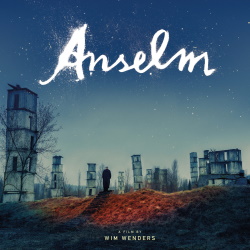 Anselm is a documentary feature film directed by the legendary Wim Wenders about the life and work of Anselm Kiefer, one of the most innovative and important painters and sculptors of our time. The film presents a cinematic experience of the artist’s work, which explores human existence and the cyclical nature of history, inspired by literature, poetry, philosophy, science, mythology and religion. For over two years, Wenders traced Kiefer’s path from his native Germany to his current home in France, connecting the stages of his life to the essential places of his career that spans more than five decades.
The score for Anselm is by the young German composer Leonard Küssner, who is one of the rising stars of European classical music, and who has already written ballets, chamber pieces, and operas, as well as orchestral scores for arthouse films, despite being just 30 years old. Küssner recorded Anselm in Bratislava with the Slovak National Symphony Orchestra, the Slovak Sinfonietta, and featured vocalists Birita Poulsen, Fanny Soyer, and Samantha Gaul, and it’s just outstanding – a dramatic, operatic, symphonic celebration of art and life.
The score is very traditionally orchestral, making use of the entire ensemble throughout. There is an inherent romanticism to a lot of the score, which I love, but thankfully Küssner is able to move between numerous different approaches in different cues, resulting in a score which is surprisingly rich and diverse. All the cues have value, but I was especially taken with the opening cue “An die Sonne,” which is is beatific and lyrical. Later, “Sonnenuhren” is dramatic and bombastic, with heavy timpani runs underpinning the orchestra. “Snowfields” is delicate and evocative, with standout performances for quiet woodwinds and soft harps. “America” is bold and tumultuous, and is built around a driving central string ostinato. “Barjac” is dreamy and romantic, with a noticeably important part for violas. “Tunnel” is mysterious and sinister, and is especially focuses on shifting, overlapping layers of low woodwinds. “Venice” is languid and jazzy, and sees muted brass combining with harpsichords and brushed percussion to excellent effect.
The pièce de résistance, however, is the vocal writing, which is performed beautifully by the vocalists in German numerous cues. The performances – which appear most prominently in “An duie Sonne,” “Sonnenuhren,” and “An die Sonne (Reprise)” – are just sublime, and if I didn’t know any better I could legitimately be convinced that they were new recordings of classical arias from a hundred or more years ago.
Anselm is an outstanding score, one of the best written for a documentary in 2023, and is something that will especially appeal to those with a strong predilection for large-scale orchestral works in the grand classical tradition, especially ones which use operatic vocals. Leonard Küssner is a composer whose career I will be watching with great interest. The score is available purchase from Groenland Records here, and as a digital download/stream from most good online retailers.
Track Listing: 1. An die Sonne (3:15), 2. Sonnenuhren (1:51), 3. Universum (4:40), 4. Snowfields (2:52), 5. Forrest (4:09), 6. America (2:23), 7. Barjac (4:26), 8. Castle (2:29), 9. Tunnel (2:20), 10. Venice (3:28), 11. Generations (2:00), 12. An die Sonne (Reprise) (1:39), 13. Anselm (3:04). Groenland Records, 38 minutes 53 seconds.
BUNKER – Andrew Morgan Smith
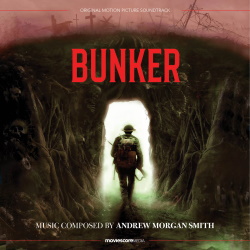 Bunker is an American horror movie directed by Adrian Langley. The story follows a group of soldiers during World War I who, after finding themselves trapped in a bunker, are soon faced with an even worse dilemma when an ‘ungodly presence’ appears in their midst and slowly turns them against each other. The film has a cast of mostly unknowns, and would likely have been completely forgotten were it not for its score by Louisiana-born composer Andrew Morgan Smith.
Smith is not a newcomer – he has almost 100 credits to his name, mostly low-budget features and short films – but it is only in recent years that his music has started to be released, and over the last couple of years his scores for films like Jeepers Creepers 3, You Might Be The Killer, and the Nicolas Cage western The Old Way have resulted in him receiving some positive attention. On Bunker, Smith explains that the director specifically wanted to have a score “in the neoclassical world,” which needed to “oscillate from pure horror to something far more classical in orientation” and asked him to write the score from the point of view of a composer from the 40s being asked write a modern horror score. The resulting work is excellent; it was recorded in Hungary with the Budapest Symphony Orchestra, and makes use of an instrument that Smith calls ‘the piano guts,’ which is the soundboard of an upright piano with its strings still on it, plucked and struck and bowed and rubbed to create wild noises and textures.
The score opens with the enormous “Bunker Overture,” a massive and vivid onslaught of orchestral sound which will remind listeners of classic genre scores by composers like Christopher Young and Elliot Goldenthal, especially in the way Smith uses shrill, dominant brass. The rest of the score develops along similar lines, where ominous strings and dissonant orchestral textures regularly erupt into enormous, impressively cacophonous sequences of action and horror. The superb “Gas Canister,” “Driven Mad,” the driving and Goldsmithian “Vomitous Mass,” “Roots,” and the Dies Irae-inspired “The Radio Bleeds” are notable in this regard, and will especially appeal to those who appreciate throwbacks to the 1980s and 1990s where this type of musicality was the norm, as opposed to the depressing drones of today.
The director’s instructions to write the score like a 1940s composer also appears to have had a real effect on the score’s sound; some of the more subdued moments in cues like “He’s Alive” have a sort of Golden Age elegance to them, especially in the string and woodwind writing, which remains wholly tonal and melodic despite the overarching mood of ominous darkness. Later in the score Smith engages in some wonderfully bold action, notably the outstanding Horner-esque “Swashbuckling” with its intense trumpet writing and sophisticated orchestration, and the excellent “The Griever,” which is essentially the score’s climax.
Bunker is an excellent album, in and out in 40 minutes with all the main highlights, and leaving an outstanding impression. This is a score written by a composer who was clearly having a ball revisiting the intricate action-horror scores of Jerry Goldsmith, Elliot Goldenthal, Chris Young, and others; it’s so nice to hear this type of bold, unashamedly grand writing in this sort of film in 2023. The score is available to download and stream from the usual online sources, via Moviescore Media’s website here (https://moviescoremedia.com/newsite/catalogue/bunker-andrew-morgan-smith/), and as CD-R release from the same label, and it comes with a strong recommendation for fans of any of the composers I namechecked in the review.
Track Listing: 1. Bunker Overture (2:05), 2. Into the Bunker (2:10), 3. He’s Alive (1:58), 4. Gas Canister! (2:02), 5. Driven Mad (2:12), 6. Vomitous Mass (2:57), 7. Digging (2:30), 8. Roots (3:40), 9. The Radio Bleeds (3:04), 10. He’s Gone (3:20), 11. Swashbuckling (2:05), 12. Escape (3:26), 13. Outside the Bunker (4:42), 14. The Griever (1:49), 15. The Journal (0:53). Moviescore Media MMS-23008, 38 minutes 53 seconds.
EL CUCO/THE CUCKOO’S CURSE – Diego Navarro
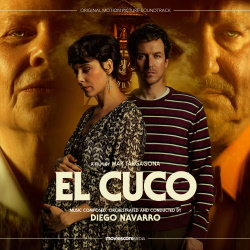 El Cuco, or The Cuckoo’s Curse, is a Spanish horror movie directed by Mar Targarona. The film stars Jorge Suquet and Belén Cuesta as Marc and Anna, a married couple, who decide to swap houses with Hans and Olga (Rainer Reiners and Hildegard Schroedter), a retired German couple they met online. However, after the change of houses is complete, Marc and Anna’s life becomes becomes a nightmare, as they quickly discover that there is much more to the house – as the pleasant elderly Germans – than they initially realized.
The score for El Cuco is by the great Spanish composer and conductor Diego Navarro, who in recent years has been making something of a name for himself in the horror genre off the back of such excellent scores as Dos and El Páramo, as well as his award-nominated scores in other genres such as Atrapa la Bandera, Pasaje al Amanecer, and El Fotógrafo de Mauthausen. Navarro is a wonderfully enthusiastic exponent of classic film music, and El Cuco is another example him intentionally adopting the lush, classical, thematic attitude that he loves, and using it in a horror context.
When taking about the inspiration for the score, Navarro explains that “the film’s premise, and also its title, relates to the cuckoo bird, and since the cuckoo bird and the cuckoo clock are always present in the film, my first idea was to build the main theme around the movement of the second hand of a mechanical clock.” During the main theme, the violas are playing the same note in exactly one second intervals, col legno style, where the strings are struck with the bow. In addition, as the sound of an actual cuckoo bird had to be present in the main theme, Navarro also incorporated the familiar two-note interval of the cuckoo call into the violins. These devices are then incorporated into the score’s more traditional theme, which written a spooky thriller tone for string orchestra, piano, harp, and percussion, with occasional small choir that is intended to highlight the idea of a ritual or spell.
The score unfolds as a wonderfully spooky delight, filled with passages of devilish suspense and brooding horror, but which occasionally emerges into something impressively large-scale and Gothic. The tick-tock main theme gets an excellent initial statement in the opening cue “El Cuco (Tema Principal),” and reappears frequently thereafter. A lot of the score dwells in this realm of moody, dark, romantic-but-mysterious music that is hugely effective. Other pieces of note include the soft and intimate piano writing in “Llegando A Casa” and “Reconciliación,” the deceivingly warm and tender romance in cues like “Una Nueva Ilusión” and “Tiempos Felices,” the emotional darkness of “El Accidente,” the militaristic precision and choral depth of “Fasnacht,” and the thrilling intensity of “Tu Cuerpo A Cambio De Su Sangre”.
There are moments in cues like “Premonición,” “El Hechizo,” “La Revelación,” and “El Espejo,” “El Hechizo Y El Hospital” where Navarro engages in some occasionally quite startling horror dissonance full of heavy tremolo strings, screeching voices, and explosions of abstract noise, to excellent effect. Then “Traigo Fresas” and “Una Plácida Ducha” are frantic, kinetic action pieces full of devilish string passages. We don’t hear Navarro engaging in this kind of flashy action too often, which is a shame, because he’s excellent at it.
This is yet another outstanding horror-thriller score from Diego Navarro, who continues to impress with his dramatic sense, his compositional excellence, and the engaging emotional quality he brings to these otherwise macabre stories. The score is available to download and stream from the usual online sources, via Moviescore Media’s website here (https://moviescoremedia.com/newsite/catalogue/el-cuco-diego-navarro/), and as CD-R release from the same label.
Track Listing: 1. El Cuco (Tema Principal) (2:54), 2. Llegando A Casa (1:59), 3. Premonición (0:48), 4. Una Nueva Ilusión (2:05), 5. La Cancela Abierta (1:09), 6. Ordenando Recuerdos (1:30), 7. El Accidente (2:28), 8. Tiempos Felices (1:20), 9. El Hechizo (3:35), 10. Todo Empieza A Cambiar (1:28), 11. Fasnacht (2:53), 12. La Revelación Pt 1 (2:46), 13. La Revelación Pt 2 (2:49), 14. Reconciliación (1:25), 15. El Espejo (3:17), 16. Tómate La Pastilla (1:54), 17. Traigo Fresas (1:47), 18. Devastación (2:25), 19. El Hechizo Y El Hospital (3:02), 20. Desazón (1:59), 21. Conversación (1:14), 22. Una Plácida Ducha (1:20), 23. El Parto (2:32), 24. Tu Cuerpo A Cambio De Su Sangre (1:29), 25. Nunca Me Gustó Mi Nariz (1:03), 26. Un Nuevo Comienzo (1:57), 27. El Cuco Suite (Créditos Finales) (5:16), 28. Blues Nocturno (Bonus Track) (0:48). Moviescore Media MMS-23030, 59 minutes 12 seconds.
THE DEVIL CONSPIRACY – Anne-Kathrin Dern
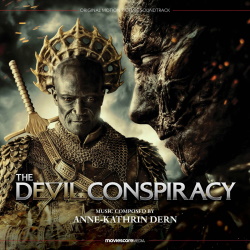 The Devil Conspiracy is a Gothic horror film directed Nathan Frankowski, starring Alice Orr-Ewing, Joe Doyle, Peter Mensah, and Joe Anderson. The story involves a powerful biotech company which has invented a breakthrough technology that allows them to clone history’s most influential people with just a few fragments of DNA – resulting in clones of Michelangelo, Galileo, Vivaldi, and others, being sold to the world’s ultra-rich for tens of millions of dollars. However, behind the scenes, the biotech company is secretly being run by a cabal of evil satanists, whose true aim is to steal the famous Shroud of Christ, which would give them possession of DNA of Jesus Christ himself.
The story is complete hokum, of course, and it did not get good reviews, but it offered a treat for score fans be allowing composer Anne-Kathrin Dern to step into the horror/thriller genre for the first time in her career. Dern is a wonderful, traditional melodicist, as her scores for projects like The Jade Pendant, The Legend of the War Horse, Lilly’s Bewitched Christmas, and the three Claus Family movies attest, but The Devil Conspiracy offers a completely new string to her bow.
In talking about the score, Dern says she “dove into a combination of synthesizers and sound design, paired with Baroque choirs, pipe organs, and electric guitars,” where the “religious and supernatural aspects of the film allowed for a very unique mix of sounds” that she rarely gets to play with. The resulting work is a large, bold, impressively complex piece of Gothic horror which does indeed blend expansive orchestral and choral textures with a number of unexpected solo instruments, some of which have religioso overtones, some of which almost feel like prog rock. The opening cue, “The First War,” is a perfect example of this approach, as it is essentially a snapshot of what most of the score sounds and feels like: imposing, aggressive, but also beautiful and spiritual in unexpected ways.
The rest of the score expands out from this opening piece, presenting numerous variations on the different styles, often with very impressive results. “Agnus Dei,” “Kyrie Eleison,” “Lacrimosa,” and “Miracle” are, as one would expect, a series of Latin religious chorales, all of which have a soothing, heavenly feel. Both “The Hound of Heaven” and “Responsibility” have an unexpectedly gritty and dirty piece that uses electric guitars to create a sound akin to a contemporary western, and reminds me of Christopher Young’s score for Ghost Rider. Parts of “Rise from the Ashes” and “Asylum” feel like excellent contemporary reworkings of ‘Tubular Bells’ from The Exorcist, which may have been intentional.
Some of the straight horror music does tend to be of the groaning/grinding kind, and has some unpleasantly guttural industrial-electronic noises that I don’t particularly care for, but the second half of “The Shroud of Turin” is impressively striking, and “The Stolen Children” and “Escape” are more driving and percussive than most of the other action/horror cues. The finale cue, “One Last Stand,” is a massive celebration of Gothic grandeur, full of chanted vocals and pipe organ goodness, layered against a huge amount of orchestral bombast.
I think what I like the most about The Devil Conspiracy is how different it is from Anne-Kathrin Dern’s usual sound. Versatility is such an underrated attribute for a film composer, and with this score Dern shows that the has the skillset to succeed in the modern horror world, just as her other scores have shown her adeptness in romantic dramas, family comedies, Christmas scores, and more. The score is available to download and stream from the usual online sources, via Moviescore Media’s website here (https://moviescoremedia.com/newsite/catalogue/the-devil-conspiracy-anne-kathrin-dern/), and as CD-R release from the same label.
Track Listing: 1. The First War (4:13), 2. Agnus Dei (2:01), 3. The Hound of Heaven (2:30), 4. Beast of the Ground (2:05), 5. Kyrie Eleison (1:42), 6. Rise from the Ashes (1:50), 7. The Shroud of Turin (6:06), 8. The Prophet’s Warning (4:06), 9. Lacrimosa (1:39), 10. Cult (2:17), 11. Asylum (2:51), 12. The Stolen Children (2:45), 13. DNA (3:42), 14. Seduction (5:20), 15. Escape (2:33), 16. The Devil Inside (6:27), 17. Responsibility (2:12), 18. The Cage (4:30), 19. Shotgun (1:53), 20. Brother (5:45), 21. Magnifico (0:55), 22. One Last Stand (5:58), 23. Mein Herr und Gott (0:33), 24. Miracle (1:21), 25. Mercy (4:32). Moviescore Media MMS-23006, 79 minutes 46 seconds.
DOCTOR JEKYLL – Blair Mowat
 Doctor Jekyll is a British horror film from the resurrected Hammer Films studio, directed by Joe Stephenson. It is a modern re-imagining of the classic Robert Louis Stevenson novella The Strange Case of Dr. Jekyll and Mr. Hyde, and stars Eddie Izzard as Dr. Nina Jekyll, a brilliant surgeon who made a fortune in the pharmaceutical industry, but who was forced into seclusion after a scandal. Many years later, Jekyll finds herself in need of an assistant, and hires Rob (Scott Chambers), an ex-con trying to get back on his feet. However, it soon becomes clear that there are evil forces at play in Jekyll’s life, and before long Rob find himself fighting for his life against a mysterious and manipulative entity. The film co-stars Lindsay Duncan, Jonathan Hyde, and Simon Callow, and has a score by one of the most exciting new voices in British film music, Scottish composer Blair Mowat.
Mowat has actually been around for quite some time, writing music for short films, indie films, and TV shows since around 2008, but it is only in the last couple of years that he has started to emerge into the mainstream and gain some international prominence. His other major 2023 score Nolly, about the life and death of legendary British soap actress Noele Gordon, was very impressive, but Doctor Jekyll is even more so.
The score is for the most part a big, bold, Gothic delight. The main theme, “Doctor Jekyll” is rampaging march full of chanting voices, cimbaloms, and striking strings, which sets a wonderfully evocative mood for the score as a whole, and is reprised to satisfying effect later in cues like “Attempted Murder”. The rest of the score develops along similar lines, and several cues stand out. “Jekyll and Hyde” has a touch of classic Danny Elfman to it, with its idiosyncratic vocal textures and sweeping orchestral passages. There is sense of brooding mystery and classical opulence to pieces like “A Grand Estate” and “The Plan”. There are eerie string harmonics and harpsichord tinkles running through the heavy dissonances “Hyde and Seek,” but these are counterbalanced by the inviting warmth of the vocal textures in “Nina and Rob”.
The middle section of action and suspense music – cues like “The History of Hyde,” “The Killing Game,” and others – is appropriately dark and menacing, but sometimes the score does occasionally get a little lost in a swamp of brooding sound design and chugging string ostinatos, which is a touch disappointing. However, the music does ramp up to a hugely entertaining finale, beginning with the crackerjack action cue “The Devastation of Hyde,” which layers bold and rich brass performances and Gothic chanted choirs against the swirling string section, but ends with a wash of heartbreaking beauty. “Sweet Goodbyes” is haunting and tender, with a searching violin part, and then the conclusive “Three Steps Ahead” end with an unexpectedly jazzy variation on the main theme.
The Hammer studio has always had a terrific track record when it comes to film music, and in its 1960s and 70s heyday their films were graced with scores from outstanding composers like James Bernard, Christopher Gunning, Harry Robinson, Tristram Cary, and David Whitaker, among many others. Had Mowat been writing music back then it is likely that this score would be held in an esteem similar to those classic Draculas and Frankensteins; this is excellent stuff, really exciting and bold, and should please fans of the genre immensely. This score is available to download and stream from most of the usual online sources on Mowat’s own label.
Track Listing: 1. Doctor Jekyll (1:23), 2. Jekyll and Hyde (1:01), 3. A Grand Estate (1:23), 4. The Interview (1:15), 5. Hyde and Seek (2:30), 6. Nina and Rob (2:08), 7. Searching for Sandra (2:38), 8. The History of Hyde (2:05), 9. The Killing Game (2:13), 10. The Plan (2:32), 11. Attempted Murder (2:11), 12. Intruders (2:36), 13. The Devastation of Hyde (5:38), 14. The Deal (3:14), 15. Transformation (0:39), 16. Sweet Goodbyes (1:04), 17. Three Steps Ahead (1:28). Blair Mowat, 35 minutes 38 seconds.
THE HEIST BEFORE CHRISTMAS – Samuel Bohn
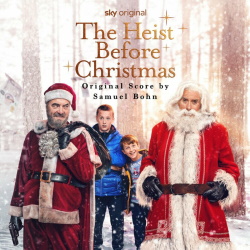 The Heist Before Christmas is a British Christmas-themed fantasy-comedy film directed by Edward Hall, starring Timothy Spall, James Nesbitt, Laura Donnelly, Bronagh Waugh, Bamber Todd, and Joshua McLees. The movie follows a 12-year-old Christmas-hating boy who unexpectedly finds two Santa Clauses in the woods, one of whom has just robbed a bank and is on the run, and one who appears to have fallen out of his sleigh and is suffering from amnesia.
The score for The Heist Before Christmas is by a relative newcomer, Samuel Bohn. Bohn started out working as a music programmer for Patrick Doyle, and as a composer assistant to people like Christian Henson, before going on to write scores for short films and various low-budget British independent projects. The Heist Before Christmas marks the first time that I have encountered Bohn’s music in its own right, but this is something I intend to rectify immediately going forward, because it’s really good, a sparkling and witty seasonal delight that combines traditional festive orchestrations with a breezily comedic caper approach.
The score opens with the outstanding “Into the Magical Forest,” which sounds just like you would expect it to, sylvan passages for the full orchestra given a pretty sheen with chimes, bells, a light chorus, and tender fluttery woodwind accents, all supporting a pretty main theme. There are one or two fun action sequences, including the fun and lively “Evading the Police,” the sprightly second half of “This Can’t Go On,” the energetic “On the Run,” the effervescent “Run, Sean, Run.”
Perhaps the pick of the action is tremendous pair comprising “The Chase” and “The Digger of Doom,” the former of which brings in a choir, while the latter is awash in exciting brass triplets. In addition there are several moments where the orchestra rises to wonderfully nostalgic and emotional crescendos, especially in “Mikey Wakes Up” and the conclusive “Out to the Stars”.
You can tell by the quality of the writing that Bohn did his apprenticeship under people like Patrick Doyle; there is an inherent musicality to his work that is really appealing, and which is sorely missed in so many modern scores. When you combine this with the lovely Christmassy orchestrations and the strong thematic content, The Heist Before Christmas is definitely a winner. The score is available to stream and download from all the usual major online resources on the Sky Music label.
Track Listing: 1. Into the Magical Forest (1:54), 2. Evading the Police (1:05), 3. This Can’t Go On (4:33), 4. The Marvellous Prize (1:21), 5. On the Run (0:57), 6. Discovering the Tickets (1:53), 7. You’re in the Naughty Book (2:07), 8. Run Sean, Run! (0:49), 9. Christmas Isn’t All Goodness and Light (1:11), 10. Sean or the Money (3:07), 11. Don’t Wave, Whatever You Do (1:43), 12. The Chase (1:08), 13. The Digger of Doom (1:51), 14. I’m So Sorry (1:09), 15. Suckers (1:06), 16. Mikey Wakes Up (3:06), 17. Out to the Stars (1:31). Sky Music, 30 minutes 44 seconds.
IN THE LAND OF SAINTS AND SINNERS – Diego Baldenweg, Nora Baldenweg, Lionel Vincent Baldenweg
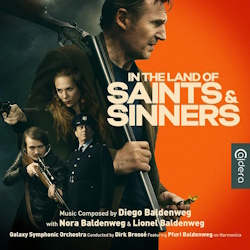 In the Land of Saints and Sinners is an Irish political thriller directed by Robert Lorenz, starring Liam Neeson, Ciarán Hinds, Kerry Condon, Colm Meaney, and Jack Gleeson in his first major role since he played Joffrey in Game of Thrones. The movie is set in a remote Irish village in the 1970s, where a newly retired former assassin Finbar Murphy is trying to lead a quiet life far from the political violence that grips the rest of the country. However, menacing terrorists from his past show up looking for revenge, and when Finbar discovers that one of them has been abusing a local girl he is drawn into an increasingly vicious game of cat and mouse where he must choose between exposing his secret identity or defending his new friends and neighbors.
The score for In the Land of Saints and Sinners is by the Swiss-Australian composing siblings Diego Baldenweg, Nora Baldenweg, and Lionel Vincent Baldenweg, who write together under the Great Garbo Music umbrella. The Baldenwegs first appeared on my radar in 2019 with their outstanding score for the historical drama film Zwingli, and anyone who enjoyed that score will find this one to be of a similar high standard.
Inspired by the idea that Finbar is a sort of mythical figure, a lone gunman turning his back on his former evil ways and protecting his new community, the Baldenwegs played around with music that combines the classic sound of a spaghetti western with traditional Irish instruments, which are then brought together with a symphonic orchestra and choir to give it a mysterious 1970s vibe. The main signature sound throughout the score is that of a harmonica, the sound of which was entirely intended to be a throwback to Ennio Morricone’s scores for classic Clint Eastwood westerns. Cues like “Lone Ranger,” the religioso “In the Land of Saints,” “Irish Western Ballad,” the eerie “The Cross-Etched Bullet,” and the purposeful “On a Mission” are notable examples of this style, while the turgid, downbeat performance of the main theme in “Finbar’s Theme” is hugely atmospheric.
To capture the traditional music for the film’s setting the composers drew inspiration from music by 17th century Irish harpist and composer Turlough O’Carolan, and then combined that with contemporary Irish folk instruments like mandolins, guitars, bodhran drums, and fiddles. I especially like the Irish lilt in cues like “Over the Ocean,” “Lullaby of Gleann Cholm Cille,” “A Lifetime of Poor Choices,” and the conclusive “This Land,” which give the entire score an authentic and evocative sound. The composers’ father, Pfuri Baldenweg, performs a blues harp in several of these cues.
Finally, the orchestra has an intentional 1970’s vibe to it, some of which reminded me of the gritty British thriller scores written by composers like Roy Budd and John Scott, where hints of jazz occasionally peek through, and where the orchestra often rises to perform beautiful recurring melodies. Cues like “Fleeing West,” “Road to Bantry,” “Intruders,” “Backstabber” the fantastic “Doireann’s Gun,” and the conclusive “The Grand Showdown” are uncompromisingly dramatic, enhancing the intrigue, and occasionally erupting into moments of powerful and kinetic action.
In the Land of Saints and Sinners is an excellent score, up there with some of the best of the year, really entertaining on multiple levels, and is yet another example of how good the Baldenwegs are; I hope their international profile continues to rise in the future. The score will be available to purchase, download, and stream from most major platforms shortly via Netflix Music.
Track Listing: 1. Fleeing West (3:19), 2. Ocean’s Tale (1:48), 3. Lone Ranger (1:42), 4. In the Land of Saints (1:58), 5. Road to Bantry (1:54), 6. The Forgotten County (1:48), 7. Irish Western Ballad (1:52), 8. The Cross-Etched Bullet (1:28), 9. Someone’s Dying Tears (1:24), 10. Intruders (1:34), 11. Finbar’s Theme (2:11), 12. Backstabber (2:16), 13. Dreaming of California (1:52), 14. Death Stare (1:55), 15. In the Land of Sinners (2:44), 16. Over the Ocean (2:46), 17. On a Mission (2:53), 18. Something Unforgivable (2:14), 19. Lullaby of Gleann Cholm Cille (2:27), 20. Doireann’s Gun (1:41), 21. Four Foot Deep (1:48), 22. Ever Since Margaret Died (2:01), 23. Runaway (1:34), 24. A Lifetime of Poor Choices (0:48), 25. The Grand Showdown (2:38), 26. This Land (4:31). Great Garbo Music/Netflix Music, 55 minutes 19 seconds.
JACOB THE BAKER – Sharon Farber
 Jacob the Baker is a powerful drama film, a USA-Israeli co-production, directed by Gev Miron, based on the popular novel by Noah Benshea. The film stars Benshea as himself, and details the encounter between him and a young, skeptical reporter (Dara Emery) who is assigned to him. Through a series of extended conversations the reporter discovers the incredible story of how Jacob, a fictional character, provides help and hope to countless people around the world through the bread he bakes.
The score for Jacob the Baker is by the outstanding Los Angeles-based Israeli composer Sharon Farber, whose previous work includes such excellent scores as When Nietzsche Wept from 2007, and Brainwashed: Sex-Camera-Power, the latter which earned her an SCL Award nomination for Outstanding Original Score for an Independent Film last year. Upon viewing Jacob the Baker Farber was inspired to set one of Benshea’s poems to music, the result of which is the song “Better Times,” performed by Farber’s daughter, singer Eden Kontesz. The melodic content of the song is lovely, the arrangement is lush and powerful, and Kontesz’s performance is impressive considering she recorded it when she was just 11 years old.
The “Better Times” melody of the song then informs the thematic content of the score itself. As Farber explains in the score’s press material, the movie tells six stories, and each segment received a musical element based on the melodic and harmonic lines of the song, which she then developed thematically and orchestrally. The resulting work is excellent; it’s deeply emotional, deeply personal score, filled with beautiful melodic content and gorgeous instrumental performances, especially from the piano and cello.
The entire score is worthwhile, but several cues stand out especially. “They’re All Jacob’s Children” is moving duet for piano and cello backed by warm orchestral textures that sets the tone for the score as a whole. Later cues like “The Love Bus” continue along the same vein, offering lovely passages of mostly attractive harmony between the different instruments, and “Be Who You Are” is enhanced by its expressive writing for guitar, harp, and accordion, but some of it does tend to be a little ‘meandery,’ creating a pleasant and relaxing mood without ever fully asserting itself with a really standout theme or sequence of real intensity.
Throughout a lot of the score (especially in parts of “Suffering in a Bottle,” the religioso “Faithless in Denmark,” the sorrowful “If You Find Love, Be Loving”) there a general undertone of anguish and heartbreak – clearly referencing the problems faced by the different people in the different vignettes – but as it develops this downbeat team is slowly replaced by something more positive and uplifting. The sweep in “The Window in the Arc” is sublime, and then in the conclusive “We Are All Jacob’s Children” Farber really ramps up the emotional content, offering a finale that is enormously satisfying.
I wish more people knew Sharon Farber’s music – or, at least, I wish she got bigger assignments that allowed her to be more well known – because she has a wonderfully rich, emotional edge to her writing that is very appealing. Jacob the Baker will definitely appeal to those whose musical taste is on the classical, symphonic, slightly bittersweet side of things – and as I am one of those people, it certainly appeals to me. The score is available to download and stream from the usual online sources, via Moviescore Media’s website here (https://moviescoremedia.com/newsite/catalogue/jacob-the-baker-sharon-farber/), and as CD-R release from the same label.
Track Listing: 1. Better Times (written by Sharon Farber and Noah Benshea, performed by Eden Kontesz) (4:18), 2. They’re All Jacob’s Children (2:39), 3. Mother in Need of Mothering (2:44), 4. The Love Bus (5:14), 5. Suffering in a Bottle/The Window in the Arc (8:39), 6. Faithless in Denmark (4:55), 7. Be Faith (3:16), 8. Be Who You Are (6:59), 9. If You Find Love, Be Loving (6:54), 10. I’ll Be There/Heartbroken Daughter (9:07), 11. We’re All Jacob’s Children (4:09). Moviescore Media MMS23007, 58 minutes 54 seconds.
THERE’S SOMETHING IN THE BARN – Lasse Enersen
 There’s Something In The Barn is a Norwegian horror movie directed Magnus Martens, starring Martin Starr, Amrita Acharia, and Kiran Shah. The story follows the Nordheims, a Norwegian-American family who fulfil their dreams of moving back to ‘the old country’ after inheriting a remote cabin in the mountains of Norway. With their two children reluctantly in tow, the Nordheims visit their new home, interact with some natives, and all appears to be going well – until they accidentally disturb the community of elves that live in a nearby barn, and all hell breaks loose.
The score for There’s Something In The Barn is by Finnish composer Lasse Enersen, who has been working in the pan-Scandinavian film and television music industry for more than 10 years; he worked with the Oscar-winning composer Hildur Guðnadóttir on the documentary Tom of Finland, scored the highest grossing film in Finnish history The Unknown Soldier in 2017, has collaborated with composers as varied as Alexandre Desplat, Heitor Pereira, and Abel Korzeniowski, and has recently become the composer-of-choice for Hollywood director Renny Harlin.
For There’s Something In The Barn, director Martens asked Enersen to write “a family friendly horror score that combines Scandinavian folk tunes with horror scores and 1980s Hollywood Christmas film music” – and he rose to the occasion, writing one of the most fun and festive comedy-horror scores in years.
The score is a bold and energetic orchestral delight that offers moments of seasonal whimsy and festive magic, but which often erupts into sequences of wonderfully creative carnage. There’s a pretty music-box like theme that runs through a lot of the score, which is usually carried by a celesta or other similar instrument, and which has a hint of John Williams’s Home Alone to it; it also has the ability to bring a sense of mystery to the score whenever it comes, especially in cues like “Nisseland Tales” and parts of “First Elf Encounter,” which is perfect music to underscore spooky stories around a camp fire. The references to Norwegian folk music appear in cues like “Americans in Norway,” which use a hardanger fiddle for local color, and are enjoyably authentic.
However, for me, the moments where the score erupts into bombastic action and horror music are the most satisfying. The opening cue, “There’s Something in the Barn,” is an excellent example of this, where Enersen uses thrusting forward-momentum string passages and loud, menacing horns to add real power to the evil elf attacks. Later cues like “The Barn,” “Ho Ho Ho, Police,” “Drunken Santa,” “Fighting Elves,” “Fireplace Gremlins,” and the frenetic finale “This Isn’t Detroit, Bill” continue this trend; the action music is fast and at times quite operatic in scale, with a driving internal tempo and a real flamboyance to orchestrations. Of special note are “Angry Elves” and the aforementioned “This Isn’t Detroit, Bill,” which use guttural vocal ideas to represent the elves and have wonderful horror arrangements of the main theme.
Some of the cues have a touch of classic Danny Elfman to them, while others like “Disturbance in the Kitchen” are actually more in the vein of a Christopher Young at his most dissonant. Furthermore, some of the cues towards the end of the score – especially “Sleddin’” – incorporate melodies from famous Christmas carols into the thematic base of the score, which is a lot of fun. Once or twice you can hear some of the limitations of Enersen’s synth orchestra – budgets are real – but this doesn’t in any way diminish the quality of the actual writing, which is excellent from start to finish.
Fans of recent seasonal horror scores like Krampus by Douglas Pipes or Violent Night by Dominic Lewis will find There’s Something In The Barn to be of a similar high quality, a yuletide delight full of magic and mayhem in equal amounts. The score is available to download and stream from the usual online sources, via Moviescore Media’s website here (https://moviescoremedia.com/newsite/catalogue/theres-something-in-the-barn-original-motion-picture-soundtrack/), and as CD-R release from the same label.
Track Listing: 1. There’s Something in the Barn (3:20), 2. Americans in Norway (1:35), 3. The Barn (1:27), 4. Nisseland Tales (1:12), 5. Ho Ho Ho, Police (1:47), 6. The Fiery Uncle (1:29), 7. Christmas Lights (2:27), 8. First Elf Encounter (2:53), 9. Inflatable Santa (1:32), 10. Disturbance in the Kitchen (2:57), 11. Drunken Santa (3:37), 12. Angry Elves (4:17), 13. Fighting Elves (4:05), 14. Drunken Elves (6:07), 15. Fireplace Gremlins (4:00), 16. Sleddin’ (2:29), 17. This Isn’t Detroit, Bill (5:37), 18. A Good Christmas? (3:00). Moviescore Media MMS-23027, 53 minutes 51 seconds.
TIN & TINA – Jocelyn Pook
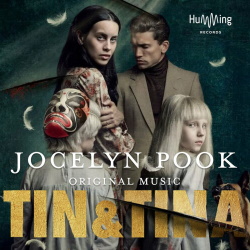 Tin & Tina is Spanish horror film directed by Rubin Stein. The film is set in the 1980s and stars Milena Smit and Jaime Lorente as Lola and Adolfo, a young couple who decide to adopt when they are told by a doctor that they can’t have children of their own. They visit a nearby convent, and initially intend to adopt a baby, but after meeting blond-haired pre-teen twins Tin and Tina, and hearing their heartbreaking story about how nobody loves them, Lola convinces Adolfo that they should adopt them instead. However, the new parents quickly come regret their decision, as it becomes apparent that Tin and Tina have a strong and ultra-catholic belief in God, and they take their interpretation of the Bible to violently literal extremes.
The score for Tin & Tina is, perhaps somewhat unexpectedly, by English classical composer Jocelyn Pook, who enjoyed a brief burst of popularity in the early 2000s after writing the score for Stanley Kubrick’s Eyes Wide Shut in 1999, but has not written music for a mainstream English language film in quite some time. Pook is still very active as a stage and concert hall composer, but most of her recent film work has been in Spanish and pan-European cinema, and it’s clear that she remains as versatile and musically ambitious as ever, because Tin & Tina is really great.
The opening “Tin and Tina Theme & Variations” is a sort of children’s lullaby set in waltz time, wordless female vocals over a lush and classical string section, a perfect combination of pretty and creepy, representing the two sinister children at the center of the story. Pook inserts this theme into the entire score, allowing it to really establish itself as the score’s primary identity, and it is especially prominent in cues like “Lighting the Candle” and “Dark Night of the Soul,” among others.
However, there is much more to the score than just this one idea. “Falling Slowly” introduces a painful, anguished descending string idea which seems to represent the emotions of the parents, Lola and Adolfo, when they learn they are unable to have children of their own. There are a number of eerie textures – moaning voices, undulating strings – in cues like “Blood Stain,” “Tied to the Bed,” and “Unbandaging Tin” representing the increasingly malevolent presence of the children, and then cues like the ancient-sounding “Battle of the Angels,” the liturgical “Cleansing Kuki’s Soul,” and the demonic “Hell Scene” have a powerful religioso element, often with chanting Latin voices and influences from medieval church music.
Tin & Tina is an excellent horror score, a perfect balance between the beatific and the brutal, and the fact that it is very different from the music that one might have expected Pook to write, considering her previous film music efforts, it one of the things that makes it so impressive. The score is available to download and stream from most of the usual online sources on the Humming Records label.
Track Listing: 1. Tin and Tina Theme & Variations (3:25), 2. Falling Slowly (4:07), 3. Blood Stain (1:36), 4. Battle of the Angels (1:37), 5. Cleansing Kuki’s Soul (2:45), 6. Lighting the Candle (1:27), 7. Tied to the Bed (3:01), 8. Baptizing the Baby (3:02), 9. Dark Night of the Soul (3:28), 10. Hell Scene (3:16), 11. Unbandaging Tin (1:43), 12. The Miracle (1:13), 13. Phone Call (1:13), 14. Story of a Leg (1:24), 15. Crucifixes in Suitcase (0:59), 16. Crown of Thorns (1:30), 17. Seeing Crucifix Stain (0:52). Humming Records, 36 minutes 38 seconds.
-
February 2, 2024 at 8:01 amMovie Music UK Awards 2023 | MOVIE MUSIC UK

Shop at the Movie Music UK Store

Member of the

 MOVIE MUSIC UK