GOLDEN BOY – Victor Young
 GREATEST SCORES OF THE TWENTIETH CENTURY
Original Review by Craig Lysy
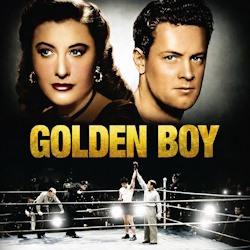
In 1938 Columbia Pictures bought the film rights to the play Golden Boy by Clifford Odets for $100,000, intending to showcase their star Jean Arthur with Frank Capra directing. However, when Capra was unavailable, Rouben Mamoulian was tasked with directing, which resulted in cast changes. William Perlberg was assigned production and the team of Lewis Meltzer, Daniel Taradash, Sarah Mason and Victor Heerman wrote the screenplay. Barbara Stanwyck was cast to star in the film as Lorna Moon, with Adolphe Menjou as Tom Moody, Joseph Calleia as Eddie Fuseli, and Lee J. Cobb as Papa Bonaparte. In an audacious decision, Mamoulian decided against studio wishes, to cast the young William Holden (21 years old) in his first acting role as Joe Bonaparte, a decision that ended up launching his career as a young heart throb.
The film explores the life of a promising, although struggling young violinist Joe Bonaparte who makes a fateful decision to take up boxing to earn much needed money, even though it risks damaging his hands. He is successful, begins to thrive in his new profession, but his conscience struggles with the sport’s brutal violence. To strengthen his resolve, Lorna Moon is dispatched by his manager Tom Moody to give him the necessary encouragement, while gangster Eddie Fuseli tries to cash in by buying Joe’s contract. In the fight of his career at Madison Square Garden Joe wins the bout, but his winning punch kills his opponent. He is devastated, abandons boxing, and he returns to his former life as a violinist with Lorna at his side. The film was a commercial success and critical reception was favorable, earning one Academy Award nomination for Best Original Score.
 Victor Young was a rising star at Columbia Pictures and was motivated to take on the assignment. He had an affinity for the story in that he began playing the violin at age six and achieved status as a virtuoso. I believe Young understood the nexus of the story’s narrative – that pursuing what you love in life, not money, ultimately brings you happiness and fulfilment. We see in the film that even though Joe abandon’s the violin for the money gained by boxing, he is never able to break free from his love of it, and in the end, returns to his violin and family like the biblical prodigal son.
For his soundscape Young provides three themes, one of which is original. I believe Young understood that the romance between Joe and Lorna grounds the film and he created a tender string borne Love Theme. Young’s writing for strings, a career hallmark, is on fine display and the theme is rendered in a multiplicity of guises across the emotional spectrum as Joe and Lorna’s romance is mercurial. When they are at last reconciled in love after his final fight, the theme becomes, transcendent. The second theme interpolates the tender lullaby melody of “Wiegenlied” Op. 49 No. 4 by Johannes Brahms. This theme was the first piece Joe mastered at 12 years of age and so it symbolizes his boyhood love of the violin. Yet it also speaks to papa’s love for Joe and his aspirations for his son to become a virtuoso violinist. The third theme, Joe’s Theme, interpolates “Thaïs Méditation” from the 1894 opera Thaïs by Jules Massenet. This gorgeous piece offers one of the most beautiful classical pieces for violin and speaks to Joe’s love for the violin, and serves as a leitmotif for him. Given the setting, Young also chose to infuse his soundscape with a number of traditional and classical pieces, including “We’re in the Money Now” offered as a melody sung to the nursery rhyme “The Farmer in the Dell”, the 4th movement of Symphony No. 7 in A Major by Ludwig von Beethoven, “Funiculi, Funicula”, a traditional Italian song by Luigi Denza and Peppino Turco, and “Passione” by Alfonso Salerno and Tullo Gramantieri.
There is no commercial release of the score, and so as such I will use film scene descriptors and time indices as references in my review. 00:00 “Studio Logo and Main Title” offers a magnificent score highlight. It reveals the Columbia logo, which flows into the opening credits. Young supports with a grand, soaring, molto romantico exposition of “Thaïs Méditation” from the Opera Thaïs (1894) by Jules Massenet. He concludes the credits with a solo violin d’amore. 01:00 “New York” takes us into the film proper, which reveals a view of its bustling streets with the camera taking us upwards to a window sign; “Boxing Enterprises – Tom Moody”. Young animates the scene with a jazzy modern vibe. In the office the much older Tom frets about his wife and promises Lorna, 20 years his junior, that when he is able to divorce her, they’ll get married. As they kiss, Joe barges in and upsets Tom with bad news – Lucky Nelson broke his hand in practice and cannot fight tonight. In an unscored scene Joe pesters Tom for a shot in the ring, which he rejects. However, when they learn he decked lucky Nelson, Lorna convinces Tom to roll the dice. Joe is ecstatic and calls his papa to inform him he will be home late tonight. In his shop, papa shows his friend Mr. Carp his birthday present for Joe – a $1,500 violin.
09:27 “Boxing Montage 1” reveals a montage of scenes with Joe in the ring boxing and repeatedly winning as a happy Tom and Lorna look on. Young introduces his animated Fight Motif, a vibrant and exciting statement propelled by horns energico and strings spiritoso. In an unscored scene papa has a disagreement with his son-in-law Siggie and daughter Anna. After they turn in, Joe comes home and informs papa and Mr. Carp that he won $100 in a boxing match, and shows him a newspaper article proving it. 14:21 “It’s a Mistake” reveals Joe informing papa that he is giving up music for a career in boxing. Papa is very disappointed and says, it is a mistake. Strings tristi voice papa’s disappointment and carry his walk out of the room. As Joe tells Mr. Carp that he will someday return to music, a solo violin doloroso offers “Thaïs Méditation”, ushering a dramatic ascent as Joe goes to join papa on the roof. He explains that he still loves the violin, but also relates his frustration of not earning a living like all his friends. Papa beseeches him to follow his heart where music lives, not his mind and pursuit of money. They cannot reconcile, and Joe departs leaving papa alone and devastated.
16:54 “News of the Ring” reveals an article relating the meteoric rise of Joe in the ring. Strings dramatico surge in a stepped ascent and unleash Joe’s Theme on a solo violin appassionato, which ends in a diminuendo of uncertainty. In an unscored scene Joe joins Lorna in the office where we see her cutting newspaper clippings of Joe’s many wins. He is clearly attracted to her and tries to elicit her interest, and offers a date to see a concert, but before she can answer, Tom barges in. Tom is hard on Joe, who storms off, and afterwards he crows to Lorna and Roxy that Joe is his ticket to becoming rich again. Joe returns home with his curly hair trimmed. He opens a chest drawer for a hand mirror and finds the violin case. He opens it and is stunned as he examines it. 21:15 “Joe Plays” offers a sublime score highlight and testament to Young’s compositional gift. It reveals him grabbing the bow and we shift downstairs to the store where papa waits on a customer. He hears Joe playing and runs upstairs where he finds Joe playing an original piece with passionate virtuosity. He stops as papa explains it was his birthday gift and begs him to resume playing. What unfolds is a sumptuous exposition of “Thaïs Méditation” from the Opera Thaïs as Anna watches adoringly. At 23:03 Anna goes to the piano and supports his performance, now rendered as a duet for violin and piano. Siggie and Mr. Carp join, as we are graced by a beautiful violin passage. There is sadness and love entwined in the notes, which speak to Joe’s unresolved conflict regarding his destiny. In an unscored scene Tom and Roxy fret to Lorna how Joe seems distracted and is losing his edge in the ring. Tom has had it and the three decide to visit him at his house. They meet and introduce themselves, and papa invites them in to meet.
25:53 “Joe Quits” as they enter, we hear Joe reprising “Thaïs Méditation” on his violin. Tom and Eddie are outraged when papa informs them that Joe is the best violinist in New York. Tom and Roxy storm upstairs, interrupt Joe and an argument erupts that leads to Joe quitting, and the two men storming out. On the street Tom frets that it is over, but Lorna offers to assist, say she knows how to get Joe to fight. 30:07 “Date Night” reveals Joe and Lorna attending a concert in the park, which Young supports with the 4th movement of Beethoven’s Symphony No. 7 in A Major. Afterwards, Lorna wants to go somewhere else, and at 30:48 “Joe and Lorna” offers a dramatic score highlight as they go to the roof of the Bonaparte store. Young unfurls his Love Theme on strings and piano, which are joined by woodwinds as they take in the sights. He opens up regarding his feelings and she asks about his life. When he relates people have always made fun of him, she uses the opening to say he can put that all to rest returning to the ring. But he says he hates the profession and worries that a hand injury will end his violin playing. At 32:50 the Love Theme blossoms for a molto romantico exposition as she places her hands in his and expresses her pride and admiration in him and his skill as a boxer. He waivers sensing that this may be an opportunity to make her his girl, but when he relents saying fighting is just not his nature, the music is severed at 34:03 as she angrily releases hands and shouts “Alright! Then fiddle away your life!” Before she leaves, he informs her of two things; one, that Moody put her up to this, and two, that she does not love Moody. At 34:25 we close sadly on the Love Theme as she departs in a huff. On the street the theme resumes as she relates that she does not like him, saying that he is too mixed up inside, and that she desires men who reach for a slice of fame. With that he grabs her and kisses her passionately. She is startled but dismissive, but as she gets into the cab a crescendo dramatico swells as he says he will show her, promising to be the next world champ as he slams the cab door.
38:23 “Boxing Montage 2” reveals Joe traveling by train to cities across America with a montage of Joe boxing victories and displays of venue fight lineups. Young propels the montage with energy and vibrancy using rapid paced strings spiritoso and celebratory horns. At 38:51 a woodwind diminuendo returns us to Tom’s office in New York where they celebrate Joe’s success. In an unscored scene, as they all wait for Joe to arrive, Siggie joins and asks to speak to Lorna alone. He pulls out a wad of $600 and hands it to her, saying that Joe’s father refuses to accept the money. She agrees to give Joe the money, but the room goes silent when the menacing gangster Eddie Fuseli arrives. He orders everyone out so he and Tom can talk business. Eddie demands to buy a piece of Joe, but Tom repeatedly refuses. When Joe arrives, he makes the offer directly to him. Joe says he will think it over and Eddie says to join him for lunch tomorrow at his hotel. As Eddie departs, he makes a veiled threat of what happens to people who oppose him. Afterwards Tom orders Joe to refuse Fuseli’s offer. Joe refuses and storms out saying no one orders him around. Tom then turns to Lorna and asks her to do whatever it takes to convince Joe to refuse Eddie’s offer. We see in her eyes that she realizes that Tom is just using her and has no romantic interest in her. On the street Lorna joins Joe, gives him the $600 and he decides he needs to personally see his papa. She opens up saying she has had a change of heart and accepts his offer to ride with him to visit his papa.
48:25 “Memories” reveals papa at home with a cello triste leading an unhappy musical narrative. As he lights his pipe at 48:39, “Wiegenlied” filled with heartache reprises on a solo violin as a photo of Joe as a little boy holding a violin is illuminated. The bell rings, Anna goes to answer it, and is ecstatic as she hugs Joe. Papa welcomes him with a hug and insists that he and Lorna stay for dinner. Papa still refuses the $600 so Joe gives it to Anna and says for Seggie to buy a new cab. When papa asks Lorna if Joe is happy and she answers I believe so, he asks Anna to also invite Mr. Carp for dinner as they must all celebrate. After dinner Anna takes to the piano and they all sing at 53:50 in Italian, the traditional festive Italian folk song, “Funiculi, Funicula”. Afterwards papa insists that Joe play the violin. Joe protests, but succumbs to the wishes of everyone. Papa asks that he play “Wiegenlied” and at 56:17 Anna on piano plays the introduction and Joe joins, but the music is sad and eventually sours off tune much to papa’s distress. Joe stops and refuses papa’s request to continue, saying that boxing and music do not mix. He thanks papa for the evening and departs, Lorna follows after papa begs her to help his son find what makes him happy.
58:46 “Lorna Begs Joe” offers a score highlight that is an emotional powerhouse. It reveals Joe parking the car and the two walking to a bluff overlooking the city. Lorna admits she was wrong and reverses herself saying that he needs to give up boxing and return to his music. Young offers an extended rendering of the Love Theme, which is clearly emoting from Lorna’s perspective. Joe refuses, saying he want to win the middle weight crown and that his hardened hands can never regain the suppleness needed for the violin. At 1:00:56 the music is sours when he declares that he will get Fuseli to help him. As she begs him not to go down this path the Love Theme becomes impassioned and blossoms at 1:01:35 as he hugs her and asks why she does not belong to him. At 1:01:51 a solo violin triste leads a sad musical narrative as she relates that Tom loves her, and saved her from ending up homeless on the streets. At 1:02:39 a solo cello affanato voices her pain as she relates that she is tired, wants peace and quiet, and once took a terrible beating because of love. She collapses into his arms with the Love Theme now emoting from his perspective as he says he knows you love me. He offers to tell Tom, but she says it is best that she tells him herself. At 1:03:28 the music brightens as he holds her and says this is the beginning of a wonderful life together, a man and his girl. A crescendo romantico swells as she agrees to share her life with his, and they join in a kissing embrace.
In an unscored scene, we return to the office and Tom greets Lorna with happy news – his wife has found a lover, wants a divorce, so they can soon get married. He is ecstatic, while she is guarded and non-enthused. She tries to call it off, Tom gabs her, and in walks Joe, who is now angry at the sight of her in Tom’s arms. He demands to fight in the Garden, Tom refuses, and in walks Eddie. Joe, against Tom and Lorna’s wishes makes a deal with the Devil, who with one call secures him a fight at the garden. Tom demands to be bought out for ten grand so he and Lorna can get married. When Joe declares he and Lorna are in love, she turns to him and says that she loves Tom. Joe feels betrayed and storms out as Lorna weeps. The scene closes with Eddie departing while threatening both Tom and Lorna to support Joe, or else. In another unscored scene Joe returns to the office after a press conference and finds Lorna alone. He confronts her duplicity and she fires back that he is not the man she fell in love with who loved music, but now a cheap imitation of Fuseli. When he says to go ahead and marry Tom, she is wounded and walks out. Fuseli arrives and Joe unloads on him, about how he feels suffocated. Fuseli makes a call and places a $4,000 bet at 7:5 odds for Bonaparte to win. He them reminds Joe that he made him, that he fights for the right to challenge for the middle-weight crown tonight, and that he should be grateful, which causes Joe to angrily depart.
1:13:42 “Madison Square Garden” opens grandy as we see “Madison Square Garden – Boxing Tonight – Chocolate Drop vs Joe Bonaparte”. In the locker room, which is unscored, Joe rages against Borneo, saying he insists on no visitors before the fight, when in walks papa. Tom also joins and tells Joe he hopes he is taught a lesson and loses. Eddie joins, orders Tom out, and then exhorts Joe to kill Drop as he has a lot of money riding on him. He leaves and Joe is left alone with papa. 1:16:18 “Papa’s Disappointment” offers a sublime score highlight and testament to Young’s writing for violin. It reveals Joe asking about the family and that he feels thankful that he, Siggie and Anna will all be watching the fight. Yet he sees the disappointment in papa’s eyes and says that he has to fight, as this is now his profession. Papa departs saying he is sorry for him, adding, that he hopes you win every fight. Young supports the scene exquisitely with a gorgeous, soliloquy by a solo violin of “Thaïs Méditation” filled with disappointment, and heartache. A juxtaposition of the son papa loves, to the son that he has become.
The fight is unscored. Joe takes to the ring as Siggie cheers him on. Papa, Tom and Lorna, and Eddie also watch as the announcer announces the title bout. The fight begins and the boxing is furious with Drop securing a knock down, from which Joe recovers. Papa is distraught and leaves the arena as round one ends. In round two Joe secures a knock down, from which Drop recovers. After another flurry, Joe lands a devastating hit, which knocks Drop out, and the fight is called after the ten count. In the locker room police arrive, inspect his gloves and hands, and declare him innocent in the death of Drop. Papa is speechless, and is told to go home by Joe. On the street Tom and Lorna hear word of Drop’s death. She is distraught and says she has to go to him. Tom grabs her, and asks if she loves him, and she answers, I love him. He releases her and she runs to find Joe. 1:27:55 “Lorna Confesses/Joe Seeks Absolution” reveals urgent strings romantico carrying her to the locker room. He is distraught that he killed a man, and Lorna tries to console him but to no avail. Young supports with a desperate rendering of the Love Theme full of longing, voiced from her perspective, which dissipates as he runs out. He enters Drop’s locker room where his family grieves. His brother is angry, but pulled back by the family. Joe is genuine in his regret and grief, which moves the family, especially Drop’s father who consoles him. Young supports with a string borne musical narrative that is poignant, and very moving, weaving regret, sadness and reconciliation into the notes. Joe departs, moved, and transformed by the man’s words.
At 1:30:44 in “Joe Quits”, tension swells in the corridor as Eddie arrives. He refuses to accept his winnings, and declares he is quitting. Eddie advises that he is setup for the title bout, with his share being $65,000, but Joe is adamant, saying he will never put on the gloves again. Eddie is furious, slaps him, and says that he has wasted his time on this golden boy and is crossing him off his list. A surge of strings irato carry his departure. Lorna arrives, takes his hand and says to be thankful you are rid of him. The Love Theme supports as they try to exit, but are turned back because of the crowds. They move back into the arena to reach the back exit, but at 1:33:21 aching strings full of regret support his gaze at the ring. Lorna, empowered by the Love Theme grabs him, says she loves him, and that we need each other and belong together. He says he has nothing to give her, as his hand is broken. She exhorts him that his music and a bright future awaits them, which Young supports with an impassioned Love Theme swelling with hope. 1:34:12 “Papa, I’ve Come Home” reveals Joe and Lorna arriving home with him declaring – “Papa, I’ve Come Home”. Papa is joyous, embraces him in a loving hug as we crescendo upon “Wiegenlied”, which culminates in a joyous flourish. 1:35:00 “Cast Credits” concludes with a heartfelt coda of “Wiegenlied”.
Victor Young began his Hollywood career in 1932, and most of the decade saw him working as a music arranger, orchestrator, and composer of additional and stock music. His two Oscar nominations in 1938 for “Army Girl” and “Breaking the Ice” served to unleash his career as a composer. For Golden Boy, Young was judicious in spotting his music, often letting the riveting dialogue carry the scene. But when music is provided, it enhanced the film’s narrative, and gave the story heart. The interpolation of two classical pieces as leitmotif’s were masterstrokes of conception. Wiegenlied” eloquently spoke to papa’s love, and aspiration for his son, while “Thaïs Méditation” spoke to Joe’s love for his beloved violin, the voice of his soul. The romance between Lorna and Joe was for me one of the most volatile and mercurial in cinema, spanning the full spectrum of human emotions. It is remarkable that Young’s Love Theme was able to both navigate and fully express these emotions, which at times shifted in a scene from one extreme to the other. Folks, this is a well-conceived and executed score and an early career gem for Young. Until such time that a major label provides a rerecording, I recommend you take in the score in film context, accepting the limitation of its archival sound.
For those of you unfamiliar with the score, I have embedded a YouTube link to the Main Theme:https://www.youtube.com/shorts/0TEQMsnbvF0
Track Listing:
- NOT AVAILABLE
Music composed and conducted by Victor Young. Orchestrations by Leo Shuken. Recorded and mixed by XXXX. Score produced by Victor Young and Morris W. Stoloff.

Shop at the Movie Music UK Store

Member of the

 MOVIE MUSIC UK