HEAVEN & EARTH – Kitaro
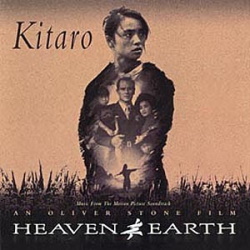 THROWBACK THIRTY
Original Review by Jonathan Broxton
Heaven & Earth is the third in director Oliver Stone’s trilogy of films looking at the Vietnam War. 1986’s Platoon followed the exploits of the young soldiers who were shipped off far from home and forced to endure the most horrific conditions. 1989’s Born on the Fourth of July looked at what happened to those same young men when they returned home to America, maimed and traumatized by what they had seen and done. Heaven & Earth looks at the same events from the point of view of the Vietnamese themselves. Stone’s sprawling, sometimes confusing, sometimes compelling movie stars débutante Hiep Thi Le as a simple Vietnamese woman, Le Ly Hayslip, who finds herself caught up in the violent upheaval of the Vietnam war and, inexplicably, falling in love with a kindly American soldier played by Tommy Lee Jones, who eventually takes her home with him to San Diego. Unfortunately, the film was not as well-received as its two predecessors, and today has mostly fallen into obscurity, which is a shame, especially from the point of view of its music.
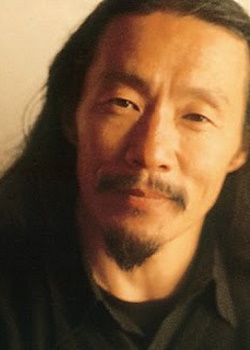
The score is by Japanese composer Masanori Takahashi, better known to the world as Kitaro. Takahashi/Kitaro first emerged as a prominent figure in the world of New Age and electronic music in the late 1970s, after spending much of the preceding decade touring Europe and Asia with his band Far East Family, and collaborating with fellow electronic prog-rock pioneers such as Tangerine Dream. He quickly gained international recognition for his innovative and atmospheric soundscapes, blending traditional Japanese music with modern electronic elements, and his score for the Japanese TV documentary series Silk Road was especially popular. Throughout the 1980s Kitaro had a successful dual career in Japan as a recording artist, live performer, and film & TV composer, but Heaven & Earth marked his debut scoring a film in English – and what a debut it was!
 As many people who read this website regularly know, scores which blend western orchestras with east Asian solo instruments rank as some of my all-time favorites. 1993 was the year that really solidified this for me; the first score of this type I ever consciously heard was Rachel Portman’s The Joy Luck Club, and this score followed soon after. For me, the appeal lies in the combination of both the two elements: lush, broad-canvas orchestral themes performed by large ensembles, with ethnic textures, instruments, and rhythms providing the detail and the emotional core. What makes Heaven & Earth stand out from others of its type is it’s authenticity; rather than the score being written by a westerner trying to write like an easterner, Kitaro just cuts out the middle man, and the result is pure magic.
The album opens with an epic cue, “Heaven and Earth (Land Theme)” which for me ranks as one of the most majestic tracks of this type I have ever heard. Here, Kitaro combines a full and powerful orchestra (under the baton of Hellraiser III composer Randy Miller) with Yu Xiao Guang’s sensitive rendering of a huqin Chinese violin, ethnic woodwinds, cascading dulcimers, glittering electronic sounds, and a beautifully-toned choir to produce almost 8 minutes of unadulterated musical greatness – a magnificent symphonic depiction of a noble people, a tragic love story, a beautiful country, and a sadness and longing for a region about to be devastated by the horrors of war. The crescendo that introduces the first performance of the main theme at 1:17 is magnificent, and after that it never lets go of your attention. The more playful and whimsical love theme is introduced just around the 3:00 mark, and there is a more serious and dramatic middle section that speaks to the darkness and hardship in Le Ly’s life, but it builds back up to a final statement of the main theme in the cue’s final third, surrounded by a beautiful waterfall of emotional strings.
The rest of the album, almost inevitably, pales in comparison to this opening, and they never reach the same majestic heights, but there are still definite highlights within these middle-album cues. “Ahn and Le Ly Love Theme” is gentle and heartfelt, again featuring a virtuoso huqin performance. “Saigon Reunion” is dramatic and more intense, but also completely glorious, rising to a marvelous, spine-tingling crescendo of unadulterated glory and celebration that is the closest the score comes to recapturing the same intensity as the first and last cues.
“ARVN” is harsh, aggressive, and angry, a brutal musical depiction of the suffering and humiliation Le Ly faced at the hands of the South Vietnamese, who suspect she is a spy for the North; this then continues on into “Sau Nightmare” and “V.C. Bonfire,” which shows how the North Vietnamese were not much different in how they treated Vietnamese women at the time. “Last Phone Call” and “Steve’s Ghosts” are more atmospheric, using the voices of chanting Buddhist monks, throat singing, and synthesized heartbeats within dissonant orchestral textures to project a feeling of discomfort.
“Village Attack/The Arrest” begins with an ear-shattering yelp and goes on to present a powerful, dissonant, percussion-driven cue which stands at odds with, but does not detract from, the rest of the score’s beauty, and instead adds depth to Le Ly’s story by continually refusing to shy away from her truly horrendous experiences. The whooshing effects in “Return to Vietnam” give the cue a mysterious, ethereal feel, which somehow makes the haunting performance of the main theme even more evocative.
Finally, just like the opening cue, the 10-minute “End Credits” returns to present a series of majestic and powerful orchestral performances of each of the main themes, including the percussive action and shrill woodwinds from the meat of the score. Some of the brass countermelodies that Kitaro and Miller employ are reminiscent of the grand, sweeping sound that John Barry might have written for a film like this, while the exquisite use of angelic voices, the ethnic instrumental textures, and the subtle electronics, maintains both the appropriate contextual sound, while also allowing Kitaro’s voice and personal stylistics to shine through. It’s just sensational.
There are also three tracks of traditional Vietnamese folk music, performed by actress Hiep Thi Le – “Sau Dau Tree,” “Trong Com,” and “Please Come Visit My Village of Hoa Qui,” which are appropriate and authentic, but are very different from the rest of the score.
It’s interesting to note the differences in approach Stone’s three Vietnam films took in terms of their music. Georges Delerue’s score for Platoon, despite being mostly replaced with excerpts from Samuel Barber’s Adagio for Strings, is a searing and heartbreaking lament for the innocence lost, not only by the soldiers themselves, but by America as a whole. John Williams’s score for Born on the Fourth of July was a bitter, ironic take on American patriotism, underscoring how badly the men were treated by the public after they came home. In contrast, for Heaven & Earth Kitaro chose to offer a more positive musical experience, focusing on the resilience of the Vietnamese people, the beauty of the country itself, and the unlikely love story at the heart of the narrative. Although all these scores are worthy of praise and acclaim, but Heaven & Earth probably is my favorite of the three.
Kitaro unexpectedly but deservedly won the Golden Globe for Best Score in 1993, beating out more famous works like Schindler’s List, The Piano, and The Nightmare Before Christmas, but he was overlooked at the Oscars. Sadly, Kitaro never fully capitalized on this; despite being one of an exceedingly small group of Asian composers who have truly made an impact on the Hollywood scoring scene, he has scored less than half a dozen film and TV projects since this, and only one – The Soong Sisters from 1997 – has any sort of international profile. As such, and despite him continuing to have enormous success in the New Age field – he still releases albums, goes on tour, and wins awards today, aged 70 – he is something of a film music anomaly. However, this should not discourage anyone from seeking out and listening to this score; Heaven & Earth is nothing short of extraordinary, one of the best scores of 1993, and those bookend cues are masterpieces.
Buy the Heaven & Earth soundtrack from the Movie Music UK Store
Track Listing:
- Heaven and Earth (Land Theme) (7:38)
- Sau Dau Tree (written by Le Ly Hayslip, performed by Hiep Thi Le) (3:41)
- Ahn and Le Ly Love Theme (4:55)
- Saigon Reunion (5:48)
- ARVN (3:41)
- Sau Nightmare (0:57)
- V.C. Bonfire (0:49)
- Trong Com (traditional) (0:43)
- Ahn’s House (Entrance/Please Come Visit My Village of Hoa Qui/Ahn Send Le Ly Away) (written by Le Ly Hayslip, Barry Fasman, Hiep Thi Le and Budd Carr, performed by Hiep Thi Le) (2:40)
- Destiny (1:13)
- Last Phone Call (1:41)
- A Child Without A Father (2:04)
- Village Attack/The Arrest (1:21)
- Walk to the Village (3:00)
- Steve’s Ghosts (1:30)
- Return to Vietnam (2:06)
- End Title (10:26)
Running Time: 58 minutes 06 seconds
Geffen GED-24614 (1993)
Music composed by Kitaro. Conducted and orchestrated by Randy Miller. Featured musical soloists Kitaro and Yu Xiao Guang. Recorded and mixed by Bruce Botnick. Edited by Carlton Kaller. Album produced by Kitaro and Gary Barlough.

Shop at the Movie Music UK Store

Member of the

 MOVIE MUSIC UK