THIS IS THE ARMY – Irving Berlin, Ray Heindorf
 GREATEST SCORES OF THE TWENTIETH CENTURY
Original Review by Craig Lysy
The Broadway play “This Is The Army” by James Coll and Irving Berlin was very successful, and Warner Brothers Studio executive Jack L. Warner decided to bring the story to the big screen in a patriotic effort to boost public morale during World War II. Warner and Hal B. Wallis purchased the film rights, would oversee production with a $1.87 million budget, Michael Curtiz was tasked with directing, and Casey Robinson and Claude Binyon would write the screenplay. A cast for the ages was assembled, including, as themselves: Irving Berlin, Frances Langford, Joe Louis, Kate Smith, and Ezra Stone. Joining them would be George Murphy as Jerry Jones, Joan Leslie as Eileen Dibble, George Tobias as Maxie Twardofsky, Alan Hale as Sergeant McGee, and Ronald Reagan as Corporal Johnny Jones.
Song and dance man Jerry Jones is drafted during WWI and stages a stage show called “Yip Yip Yaphank”, which is a rousing success. Twenty-five years later the world is engulfed in WWII and Jerry’s son Johnny enlists in the US Army. He tells his fiancé Eileen that he will postpone their marriage until after the war as he does not wish her to be a widow if he is killed. He accepts the Army’s request to stage a musical as his father did in WWI. The show is a great success, but the men are ordered back to their combat units. Before Johnny can depart, Eileen, who is a Red Cross volunteer, corners him back stage with a minister and they marry in the presence of their fathers. The film was a massive commercial success, earning a profit of $8.6 million. Critical reception was favorable, and the film received three Academy Award nominations, including Best Art Direction, and Best Sound Recording, winning one for Best Musical Picture Score.
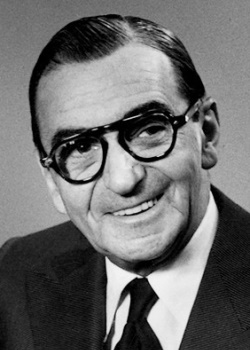 Director Michael Curtiz had enjoyed his collaboration with Ray Heindorf on the 1938 romantic comedy Four’s A Crowd and hired him, as he also had a track record of success with musicals, including “42nd Street” in 1933 and “Gold Diggers” in 1935. Heindorf understood that nineteen classic songs by Irving Berlin would be showcased with some of the finest singers of the day. As a veteran of scoring musicals, he realized that he needed to compose a score that drew from Berlin’s song melodies, so as to connect the various song vignettes, unify the film’s musical narrative, as well as supporting the intervening scenes.
For his soundscape Heindorf chose to use the melody from “It’s Your Country and My Country” as the theme, which weaves together the film’s song vignettes into a cogent, unified musical narrative. The melody is vibrant, energetic and patriotic, which made it a perfect tune to fuel the film’s narrative pacing and forward momentum. The song melodies from “Swanee River” and “Oh How I Hate To Get Up In The Morning” were also woven into the score, which again served to unify the musical narrative. Heindorf composed one original theme, a Love Theme for Johnny and Eileen. I offered a tender romance for strings, however its melody is not ardent, and never soars as Johnny is not a romantic and in the end had to be corralled into marriage by Eileen who bring a Chaplin backstage along with her wedding ring! Lastly, all songs were written by Irving Berlin based upon his Broadway Shows “Yip, Yip, Yaphank” (1918) and “This Is The Army” (1942). They are classics and offered inspiring and rousing American patriotism, which America needed early in WWII when the outcome was far from certain.
“Yip Yip Yaphank,” the World War I all-soldier show featured at the beginning of the movie, was an actual World War I all-soldier show. It was composed and produced by Irving Berlin while he was a US Army recruit at Camp Upton in Yaphank, NY. “Overture” offers a score highlight where Newman perfectly sets the patriotic tone of the film. It opens with a bugle declared revelry, which supports the Warner Brothers Pictures logo. At 0:06 we flow into a rousing orchestral rendering of the patriotic song “Your Country and My Country”, which supports the flow of the opening credits. At 1:02 we segue into the romantic ballad “I’m Getting Tires So I Can Sleep”, which closes out the opening credits. When the credits end, the “Its Your Country and My Country” melody supports script thanking Mr. Irving Berlin for making this picture possible through his two shows; “Yip, Yip, Yaphank” (1918) and “This Is The Army” (1942). We enter the film proper with a view of “New York City – 1917”. The street is bustling with life and a large poster of Uncle Sam dominates; “I want you for the U.S. Army. Enlist Now”. On a stage alto Gertrude Niesen, supported by an army band sings with patriotic pride; “Its Your Country And My Country”
On the album Heindorf opens the piece with an inspired, horned declared adaptation of the song’s melody, which perfectly sets the stage for Neisen’s vocals. The film omits this introduction and begins at 0:24 with Neisen’s performance. At 1:19 Heindorf sustains the song’s melody orchestrally as the camera brings us to the “Follies” Theater, which feature’s “Jerry Jones All Star Revue”. Inside we flow into the love ballad “My Sweetie”, performed by baritone George Murphy who strolls on stage surrounded by a retinue of beautiful women. At 0:57 Heindorf ups the tempo and provides a energetic orchestral rendering of the song, which supports Murphy and his troupe tap dancing. Afterwards he receives a draft notice, and asks Ethel to marry him, to which she consents. (*) “Maxie Enlists” reveals Russian immigrant Maxie Twardofsky kissing his mama goodbye as he departs to join the army. Heindorf supports with a valzer gentile, which offers a wonderful ambiance. (*) “Eddie Enlists” reveals him practicing his cornet with an off-key performance. His wife Eileen is unhappy he is joining the army. She cries that his just joining so he can play in the band, but he says he’ll be playing a bugle not a coronet and offers an off-key Reveille. (*) “Camp Upton New York” opens up with Eddie’s cringing declaration of reveille. Heindorf provides an orchestral rendering of the song’s melody as the newspaper declares that a “Soldier Show” has been approved. We flow into the kitchen where George Tobias and men’s chorus, supported by an army band, performs the ‘woe me’ song “Poor Little Me, I’m On K.P.”
 Afterwards in (*) “Jerry’s Preparations” we see him giving instructions necessary to make the show a success. Heindorf supports with a light-hearted piano animato tune, which later supports him giving dance instructions to his dancers as he graces the floor. Eddie arrives, wants to join, and Jerry asks him to play a melody on a cornet. He plays the melody for the song “Oh How I Hate To Get Up In The Morning”, which is joined by the men singing alternative lyrics mocking his playing. Across the room a piano led men’s chorus sings “Go Bless America”. Jerry comes over, nixes the song saying it is too slow for the finale. He distributes the new song and we shift to the theater atop horns grandioso, which propel a rousing prelude Americana as we see the billboard “Yip, Yip, Yaphank – Cast of 300 Soldiers”. Inside we flow into the song “We’re On Our Way To France” a rousing song highlight revealing Berlin at his best, which is performed by George Murphy and men’s chorus. At 0:35 an orchestral rendering of the song supports the men marching on stage as well as the convoy of trucks arriving out in front of the theater. The commanding officer is advised that the men will march along the main theater aisle to the convoy for the finale. At 1:28 we shift back to the stage empowered by a marcia militare. At 1:47 the men begin marching while resuming the song. As Eddie, Jerry and Maxie march out they say goodbye to their loved ones. (*) “Somewhere in France” reveals the men on a battlefield fighting, propelled by an aggressive, militaristic musical narrative embedded with quotes of “Yankee Doodle Dandy”. A brief respite shows the men in a bunker, but artillery pummels them, and the war motif resumes as brutal fighting begins anew. Heindorf proudly declares the song melody for “America” as newspapers announce an Armistice.
We flow into (*) “Goodbye France” performed by men’s chorus celebrating in a saloon, which reprises the patriotic energy of “We’re On Our Way To France”. We see Jerry with a leg brace that ends his dancing career. The men toast that the war is over, and may there never be another one. Yet dire horns resound twenty-one years later as we see a map of Poland aflame, marking the German attack that starts WWII. A grim musical narrative unfolds as a radio announcer lists all the countries that have fallen to Nazi aggression. He then introduces Kate Smith who with supporting chorus belts out an inspired iconic cinematic performance of “God Bless America”. During the performance we see a montage of scenes with Jerry, Maxie and the others who now have grown children that have become young adults, ready to carry on the tradition. Heindorf’s embellishment of the song in my judgment enhanced its performance in every way, bringing goosebumps with its conclusion in a glorious flourish.
(*) “December 7” displays supported by a dire and horrific musical narrative as we see the Japanese decimate Pearl Harbor. As Lieutenant Johnny Jones delivers the bad news to Mrs. Nelson that her son Blake died at Pearl Harbor, a grieving statement of “God Bless America” plays under the dialogue. He offers his help should they need it and then departs with a fine Newman flourish. Afterwards her other son Ted says he hasbusiness to take care of for Blake, again supported by a solemn rendering of “God Bless America”. (*) “Johnny and Eileen” reveals him calling on his gal at work, supported by a playful “Yankee Doodle Dandy”. He is in uniform and she says “you’ve enlisted!” “God Bless America” supports tenderly. He tells her to close the shop as they are going to do the town. A festive “God Bless America” supports their departure. An energetic swing tune supports their dancing at a nightclub. Frances Langford is announced, comes on stage and sings with her alto voice and men’s chorus “What Does He Look Like”, a folksy war song.
Afterwards, as Johnny and Eileen sit and talk about marriage, Heindorf supports softly under the dialogue with the song’s melody. He greatly disappoints her by saying that they have to wait as he does not want to make the same mistake many men do when they put on the uniform. She departs in a huff and tells him not to follow. (*) “K.P. Duty” reveals Twardofsky and Tommy being assigned K.P. duty for being flippant during morning calisthenics. Woodwinds sardonici support as they peel potatoes. Grandiose fanfare supports an official post announcing an Open House where men can invite their relatives to the base. As crowds flood into the base, Heindorf supports with a festive patriotic march. As Tommy and Johnny banter, Eileen joins them and Johnny asks Tommy to shove off. They sit and as they catch up Their Love Theme, a romance for strings supports. But the musical narrative sours as he again says no to marriage until the war is over and he is discharged. Well, she has had enough, takes off her engagement ring, wishes him good luck finding a wife, and storms off in a huff. As Major Davidson takes Jerry on a tour of the hall where “Yip, Yip, Yaphank” was born, a muted trumpet offers the “Oh How I Hate To Get Up In The Morning” melody. A wistful musical narrative unfolds as they all recall their time here. As Twardofsky enters the old kitchen he begins singing “Poor little me, I’m on KP”. They discover a billboard that lists the names of the performers, and the wistful musical narrative resumes as they recall each member, many of which lost their lives in the war. The major then makes his pitch to Jerry, saying; a new war requires a new show. Jerry agrees and offers his son who is stationed here to join, as do the other old timers who also have sons here. They agree to name the new show “This Is The Army”.
(*) “Recruitment” opens with grandiose fanfare as the bulletin board lists all the players. A montage follows of soldiers being called out one by one to report to Captain Boyd at the Army Relief Show. Heindorf supports with a spirited orchestral rendering of “Its your Country And My Country”. We shift to the theater whose billboard announces opening night for “This Is The Army All Soldier Show” supported by a festive “It’s Your Country And My Country” melody. The piece is sustained and supports the back stage preparations. “This Is The Army Mr. Jones” opens with a Bugling Corp on stage declaring reveille. The curtain opens empowered by field drums buttressed by trumpets, to reveal a massive stadium seated men’s choir. They sing a song brimming with classic, patriotic Americana. At 1:22 drums militare support a troupe of hapless out of shape army recruits who line up on stage. They begin singing a comedic continuation of the song in unison, with subsequent stanza sung by Jones, Green, and Brown. The men’s choir resume the song’s bravado patriotism as the recruit’s dress on stage; the front line of the chorus marches to the right to reveal the new recruits, now in uniform, marching to the front stage. As the last refrain is sung, they march right, then left, then off stage right. The song closes with a grand flourish as each row of the chorus sits down sequentially.
After a comedy routine, Corporal James Burrell, a tenor, is called to center stage to sing “I’m Getting Tired So I Can Sleep”, a tender love ballad full of longing. “Mandy” for this next number Ralph Magelssen, a tenor and male chorus. The sweet song offers another love ballad of a man aspiring for his wedding, sung with a strolling tempo with choral support. For the performance Magelssen and the troupe of dancers, half of which are in drag, perform in black face. The tap-dancing routine is performed to an orchestral rendering of the song melody of “Swanee River”. We then resume the song melody for “Mandy” with the dancers coupling on stage. For the finale, the finale stanza offers a more festive rendering of the song.
(*) “Performance Montage” reveals a number of calisthenics, comedy, and physical strength skits. We open with a troupe of soldiers performing calisthenics to “It’s Your Country and My Country”. We segue into soldiers performing precision power lifts supported by a patriotic musical narrative. A new routine is supported by more gentile music, which in turn gives way to drum propelled leaping acrobatics. We conclude with a human pyramid again supported by a festive “It’s Your Country and My Country”. “Ladies Of The Chorus” reveals Alan Hale and a men’s chorus performing in drag. The music offers comedic, playfulness draped with a faux romanticism. At this point, dapper looking men join and we alternate men’s and drag chorus’ with comedic dancing. Afterwards, backstage Jerry gets his performers ready for the next act, again supported by “It’s Your Country and My Country”. “That’s What The Well Dressed Man In Harlem Will Wear” reveals actual black soldiers in an act performed by James Cross, Joe Louis and a men’s chorus. The music, which supports is classic, energetic, big band Swing. At 1:37 trumpets declare “You’re In The Army Now”, which launches the men in synchronized tap dancing to the up tempo big band sound of “That’s What The Well Dressed Man In Harlem Will Wear”. At 2:30 musical comedy led by a funky bass supports a black man in drag joining the troupe. He and another guy put on a display of virtuoso tap dancing. The rest of the troupe joins in propelled by the music for an amazing display.
“How About A Cheer For The Navy” offers a rousing score highlight. It reveals an army troupe taking the stage and the men’s chorus begins singing patriotically “This is the Army Mr. Jones”. Shouts are heard; “How about the Navy? How about the Navy?” A mass of sailors storm and take over the stage. In a rousing performance full of patriotic pride, they begin singing. At 1:35 we shift to a rousing marcia patrottica as the men precision march onto a stage replica of a battleship. Once set, they resume singing with some on deck precision marching.
(*) “The Tour” reveals Johnny back stage getting a telegram from the army ordering them on tour, including Washington D.C. Heindorf again supports with “It’s Your Country and My Country”, which swells with patriotic fervor as a montage of train travel, city signs and performances unfold. The patriotic song “America” joins as the capitol dome is seen, and we flow into “It’s Your Country and My Country” rendered as a marcia patriottica. (*) “Johnny and Eileen” reveals Johnny’s arrival at the theater where he discovers Eileen in uniform. She says she just cannot give up on him. The tender romance for strings of their Love Theme support the reunion. However, once again it takes on auras of sadness due to his refusal to marry until after the war ends. For her it remains an issue as he struggles to explain his reasoning. He departs and exhorts the men to perform their best as the President is in attendance. As the president arrives the orchestra breaks out into a rousing “Hail To The Chief”.
(*) “Stage Door Canteen” opens the show atop jazzy piano before launching into a spirited jazz piece, which supports six soldiers tap dancing. They dance into the canteen populated by soldiers in uniform, and in drag. The playful and campy song unfolds sung by Sgt. Alan Manson as ‘Jane Cowl’ with men’s chorus and big band support. We shift to a drag, leg-lifting, line dance. Afterwards stand-up comedy provides and interlude. A lush string prelude romantico ushers in the song “I Left My Heart At The Stage Door Canteen” a tender and wistful romantic ballad performed by tenor Earl Oxford and chorus “With My Head In The Clouds” opens with a lush string borne prelude joined at 0:15 by baritone Robert Shanley and chorus who sing an aspirational love ballad of a pilot longing for his gal. A map displays Guadalcanal Island and we segue into a hangar at Henderson Field where men’s chorus perform with patriotic pride the song “American Eagles”. At 0:43 we shift to mixed chorus and slow with reverence as Blake’s widow has flashbacks of him, whom she dearly misses. At 1:18 rousing patriotic pride returns atop men’s chorus to end the song with a grand flourish.
(*) “Last Performance” reveals Jerry taking a seat next to his wife Ethel and confiding that they can go home tomorrow as tonight is their last performance. Heindorf supports with a vibrant performance of “It’s Your Country and My Country” in then background. The music is sustained backstage as Ted’s mother expresses her pride in him for joining the army. We shift to the stage and reveille rouses the troops from their tents, while “Swanee River” rendered as a march carries them into formation. On stage Twardofsky calls out an homage to Jerry, for his contributions and a rousing celebratory paean carries his walk to the stage to receive an army hat. Twardofsky asks him to take over, and he declares roll call as the men sound off. He orders them to march and they begin tap dancing to an energetic medley of “Alexander’s Ragtime Band” and “Swanee River”. They close the number marching stage right to “Swanee River”. He then goes to sleepyhead Irving Belin’s tent to rouse him in “Oh How I Hate To Get Up In The Morning”, which will be performed by Irving Berlin, George Murphy, George Tobias, Charles Butterworth and men’s chorus. Berlin exits the tent to applause and walks to center stage carried by the song’s melody.
(*) “We’re Getting Married” reveals Johnny back stage being asked to see Eileen who has returned. The melody from “Oh How I Hate To Get Up In The Morning” plays in the background. He joins her and she introduces a chaplain, and then beseeches him to marry her. The Love Theme joins as we see them married. Johnny then needs to rush out for the show’s finale. On stage all the men in uniform, with their rifles stand on a series of ascending rows. The general comes on stage and announces with regret, the final performance of the “Soldier Show”. As he departs to applause, we segue into the inspired patriotic pride of “This Time Is The Last Time”, sung by baritone by Robert Shanley and men’s chorus. The soldiers precision march as they join Shanley for a rousing performance that ends in a grand patriotic flourish. This concludes the film.
I watched the film twice and this album cue seems to be an outtake as I could not find the performance. “The Army’s Made A Man Out Of Me” offers a playful and comedic little ditty sung by Ezra Stone, Julie Oshins, Philip Truex and men’s chorus.
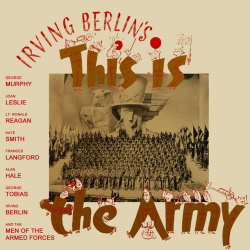 I used a digital album purchased from Amazon, which turned out to have terrible archival sound, so I cannot recommend you purchase it. America was at war on two fronts, D-Day had not occurred, and the outcome of the war in the Pacific against Japan was uncertain. The nation needed a film full of rousing and inspiring patriotism and Jack Warner and Michael Curtiz delivered the goods. They struck gold in their creative decision to use Irving Berlin’s songs, which for me are timeless and an enduring testament to his genius. They are inspiring, rousing, abounding with patriotism, and confidence in America’s capacity to overcome all obstacles. But they also spoke of love, and were well-suited to supporting the comedy performances. Ray Heindorf deftly wove the essential thread linking the song vignettes into a cohesive and unified musical narrative, which propelled the film’s narrative pacing. The use of the song melody from “It’s Your Country And My Country” was well-conceived as its patriotic optimism and drive kept the film vibrant, inspiring and engaging. Folks, Heindorf’s score and Berlin’s songs achieved a remarkable synergy rarely realized in cinema. The musical narrative masterfully expresses the full spectrum of human emotions; comedy, love, wistful longing, and inspiring patriotism, which elevates this film in every way. I believe it merited its Academy Award win, and highly recommend you take in the film on one of the streaming services until such time that a rerecording is made available.
For those of you unfamiliar with the score, I have embedded a YouTube link to the rousing finale: https://www.youtube.com/watch?v=LL1fVdyIlCw
Track Listing:
- Overture (1:38)
- Your Country And My Country (1:34)
- My Sweetie (1:55)
- Poor Little Me, I’m On K.P. (0:46)
- We’re On Our Way To France (3:01)
- God Bless America (3:51)
- What Does He Look Like (1:39)
- This Is The Army Mr. Jones (3:54)
- I’m Getting Tired So I Can Sleep (2:32)
- Mandy (2:58)
- The Army’s Made A Man Out Of Me (1:25)
- Ladies Of The Chorus (3:13)
- That’s What The Well Dressed Man In Harlem Will Wear (4:18)
- How About A Cheer For The Navy (3:16)
- I Left My Heart At The Stage Door Canteen (2:59)
- With My Head In The Clouds (2:00)
- American Eagles (1:50)
- Oh How I Hate To Get Up In The Morning (2:10)
- This Time Is The Last Time (3:10)
Music composed by Ray Heindorf. Song music and lyrics by Irving Berlin. Conducted by Ray Heindorf. Orchestrations by Ray Heindorf. Recorded and mixed by Charles David Forrest. Score produced by Ray Heindorf and Leo F. Forbstein.

Shop at the Movie Music UK Store

Member of the

 MOVIE MUSIC UK