SALTBURN – Anthony Willis
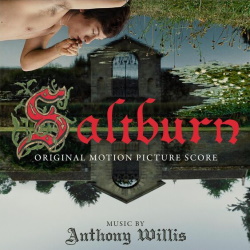 Original Review by Jonathan Broxton
WARNING: THIS REVIEW CONTAINS PLOT SPOILERS. IF YOU HAVE NOT YET SEEN THE FILM, YOU MIGHT WANT TO CONSIDER WAITING UNTIL AFTER YOU HAVE DONE SO TO READ IT.
Saltburn is an extraordinary, almost unclassifiable film. It’s the sophomore effort of the writer/director/producer/actress Emerald Fennell, who became the first British woman to be nominated for a Best Director Oscar in 2020 for her debut film Promising Young Woman; readers may also know her as the showrunner of the thriller TV series Killing Eve, and for her performance as Camilla Parker-Bowles in The Crown. The film stars the brilliant Barry Keoghan as Oliver Quick, a young man who leaves his working class background and enters Oxford University, and immediately becomes infatuated by his handsome classmate Felix Catton (Jacob Elordi). Felix invites Oliver to spend the summer at his family’s country estate – the Saltburn of the title – where he soon ingratiates himself with Felix’s mother Lady Elspeth (Rosamund Pike), his father Lord James (Richard E. Grant), and his sister Venetia (Alison Oliver), but makes an enemy of Felix’s American cousin Farleigh (Archie Madekwe). However, as the summer progresses, the relationships between Oliver and the Cattons begin to change, resulting in some truly devastating turns of events.
Large parts of Saltburn feel like a love story; a passionate, yearning tale of a young man discovering his sexuality. Part of it is a brutal, sometimes hilarious, dissection of the British class system, and what happens when a young man from working-class Liverpool enters a world inhabited by the impossibly wealthy, hopelessly out of touch, aristocracy. It’s a film about wanting acceptance, craving friendship, the desperate need to be loved. It’s about excess and debauchery, and sex in all its forms. But then halfway through the film it makes a hard lurch in a different direction and becomes something much darker, much more sinister, with revelations and developments that leave you questioning everything you have seen. It’s an excellent, confident, visually striking film which is likely to be a major player at the upcoming Academy Awards.
The score for Saltburn is by the Los Angeles-based English composer Anthony Willis, who is also likely to be a major player at the upcoming Academy Awards. Willis was part of John Powell’s gang at 5 Cat Studios for many years – he worked on the scores for How to Train Your Dragon 2 and Solo, among many others – before breaking out with his score for Fennell’s first film Promising Young Woman, and receiving a BAFTA nomination for his troubles. He made a box office splash with his score for M3GAN earlier this year, and is now back in the awards mix for Saltburn. What I like about Willis is that he is a very intelligent composer; not that other composers aren’t, but in the course of just three mainstream movies he has shown a particular knack for writing scores that work on multiple levels – they are often superficially beautiful, and fit within the expectations of the genre, but they also subvert that genre at the same time with music that offers commentary on the film’s subtext. Saltburn is a score that works very much like that – let me explain what I mean.
 At first glance, Saltburn appears to be one of those staid, upper-class English scores that have featured in films like this for decades. The ‘BBC period drama’ sound that was perfected by composers like George Fenton, Patrick Doyle, and Richard Robbins on the big screen, and by people like Geoffrey Burgon and Richard Rodney Bennett on the small. Brideshead Revisited, The Jewel in the Crown. You get the idea. Slow and elegant strings, pretty pianos, melodic ideas that go all the way back to the musical evocations of the English countryside written by Vaughan Williams, Elgar, and others. But what’s clever about Saltburn is that this sound is not reflective of the Catton family’s actual reality – instead, it’s the music of Oliver’s aspirations. It’s the music of what Oliver believes life at a stately home would be like – the genteel aristocratic fantasy, rather than the debauched, spoiled family that Oliver actually encounters. The way that Willis musically shows us the veneer of Saltburn, and then tears down those preconceptions as the film gets progressively darker, is outstanding, and is indicative of a composer who really understands how film music can work on multiple levels simultaneously.
Willis recorded the score with the London Contemporary Orchestra and Chorus, and it includes guest appearances from the organ at Temple Church. Thematically there are two central ideas that tie the score together – a theme for Oliver that Willis calls ‘Oliver’s Arpeggio,’ and a theme for Saltburn that Willis calls the ‘Saltburn Chant’. These two things represent the two key ideas of the film: who Oliver actually is, and who and what Oliver aspires to be. These two ideas are linked, and they often evolve and flow into each other as cues develop. These two main thematic ideas are then underpinned with another idea called the ‘Lust Throb,’ a recurring texture that is usually performed by a church organ or a Moog synthesizer, and which acts as a near-subliminal evocation of Oliver’s psyche – his lust for friendship, for acceptance, for sex, for money, for status, all of which are catalysts for his actions. In various interviews with trade presses, Willis explained “When it came to the lust I really liked the idea of some kind of visceral, subverted thing, something low that would give you that kind of throbbing feeling. We talked about the idea of how, after you’ve had a night out, somebody’s still partying and you can hear through the floorboards of the bedroom – the afterglow of a sort of synthy dance music or party music.”
The opening cue, “I Loved Him/Oliver Quick!” is a gorgeous piece for multi-layered strings and church organ that slowly emerges into an enormous homage to Handel’s 1727 coronation anthem ‘Zadok the Priest,’ which couldn’t be more redolent of the British aristocracy considering that it has been performed at the coronation of every monarch since George II, including Charles III’s earlier this year. This is the music that accompanies Oliver’s arrival at Oxford University, and acts as his introduction to this rich, opulent world of prestige and privilege.
“NFI’D” is the first introduction to Oliver’s theme, a slow, intimate, lonely-sounding piece for strings and piano, underpinned with a pulsating intensity of the Lust Throb. The subsequent “Felix Amica” is upbeat and engaging, with contemporary writing for strings and friendly-sounding electro-pop textures that seek to capture the initially happy college experience Oliver shares with Felix and his peers – possibly the first time Oliver has felt this kind of acceptance in his life. “Throwing Pebbles” then features intimate, emotional writing for strings, tender pianos, and warm horns which moves back and forth between fully developed versions of both Oliver’s theme and the Saltburn theme as Felix and Oliver cement their friendship through a sense of shared familial loss. The textures and harmonies here are gorgeous.
“Journey to Saltburn” features more of those slow and elegant strings backed by church organ, mostly based around the Saltburn theme, which slowly rise to a crescendo as Oliver arrives at Saltburn and is struck by the majesty of its architecture, and the opportunity being there offers him – again, Oliver’s aspirations coming to the fore. The subsequent “Felix’s Tour” is written mostly for piano and synth, and is magical and shimmery, as Felix gives Oliver the whirlwind tour of the house. This music captures the sense of wonderment and astonishment Oliver feels at being in these new surroundings, the elegance and the luxury, and is again based around fragments of the two main themes and the Lust Throb. “You’re So Real” underscores the first meeting between Oliver and Felix’s family, and features more slow and intimate writing for strings, but it also has a slight sense of uncomfortableness to it, mirroring how Oliver feels about being treated as a ‘working class curiosity’ by a family who may have never encountered one before.
“A Shared Bathroom/Inconsistent Stories” uses the sinister electronic pulses of the Lust Throb to underpin some anguished, eerie string phrases, as the first hints of Oliver’s increasingly unhealthy obsession with Felix begin to emerge via a late-night encounter in a bathtub; these eerie string phrases coalesce into the first statement of a more obvious Lust Theme, which is again harmonically linked to the music for Oliver, but is moving into much darker musical territory. “Venetia’s See-Through Night Dress” has a similar sound as the previous cue, seductive but sinister and filled with treachery; it underscores the uncomfortable ‘vampire sex’ scene between Oliver and Venetia in Saltburn’s gardens, and sees Willis moving around between the Saltburn Theme and the Lust Theme.
“Slightly Bad Form” places the Saltburn theme into a series of introspective piano lines backed by worried-sounding shimmering string textures, and this melts into “Accusations & Departures” which sees Willis presenting a bank of buzzing, nervous-sounding layered strings that come across as a targeted deconstruction of the more pastoral Saltburn sound that dominated much of the first part of the score, as the idyll of Oliver’s summer begins to turn into a nightmare. “The Summer Burned On” is a fascinating combination of hauntingly beautiful chords and similarly dangerous-sounding string dissonances, built around the ‘loneliness variation’ of Oliver’s theme, as Oliver starts to feel the Catton family pull away from him.
“Blood Run Cold” is anchored by a melancholy piano version of Oliver’s theme, full of bitterness and acrimony, underscoring a pivotal scene between Oliver and Venetia where she sees him for who he truly is for the first time; the music acts as a sort of lament for both of them, as Venetia realizes she has been taken in by Oliver’s schemes, and Oliver realizes that the idyll of his time at Saltburn is coming to an end. “The Maze” is then the emotional crux of the score, which begins with a low, brooding version of the Saltburn theme for cellos and basses, but then descends into anguished dissonance as Felix’s dead body is found in Saltburn’s maze and the family’s stoic façade begins to collapse. The huge, tragic, cascading string figures feel like screams of anguish – Willis’s music acts as the voice of rage and heartbreak that Felix’s parents are too ‘stiff upper lipped’ to convey themselves – while the beautiful choral statement of Oliver’s theme venerates Felix almost like a fallen angel, mirroring the costume party wings he was wearing when he died.
“Staff Exit” is a bittersweet duet for piano and harp backed by the Saltburn theme on an aching solo cello, as Oliver leaves the estate under a cloud of acrimony and death. “Almost None” underscores the film’s conclusive flash forward with a warm, inviting performance of Oliver’s theme for strings and pretty piano, and Oliver and Elspeth meet by ‘chance’ in a coffee shop and reminisce about the summer that Felix died – until the depth of Oliver’s scheming and deception is finally revealed. Here, the music becomes larger and more complex, and Willis returns to the aspirational, inviting, overtly-classical tone from the film’s opening. The music is built mostly around statements of and variations on Oliver’s theme, but several of the other ideas from the elsewhere in the score – the waterfall of strings from Felix’s death scene, the church organ, the Handel-esque brass chords – also reappear, backed by this wall of lavish orchestral finery. It’s a brilliant bit of revelatory magic as it is finally revealed that all the tragic things that happened at Saltburn all stemmed from Oliver’s lust, his jealousy, and his eventual depravity. The moment that Oliver rips a feeding tube out of Elspeth’s throat to kill her is almost celebratory; again, the whole thing is from Oliver’s twisted point of view, and what he sees as his personal triumph in finally getting the one thing he wanted: Saltburn itself. The conclusive “Felix’s Suite” a compilation of themes from the film played at their most majestic and orchestrally satisfying.
One curio is the “Spit Roast,” a piece of gritty dubstep that Willis wrote to be used as a source cue during Oliver’s birthday party sequence. Willis said that the conceptual idea behind the piece was that ‘someone’s random cousin from Bristol got a hold of the DJ set and started to play his new EP,’ so in a way it’s almost intentionally bad, but I actually sort of like it; it feels like a rejected Massive Attack track, which is perhaps unnecessarily harsh, but I think you get the idea. One other thing I also quickly want to mention is the song soundtrack, which was specifically curated by Emerald Fennell and consists of several judiciously chosen late-90s Britpop hits, many of which have direct thematic meaning to the scene in question. I especially like the use of “Rent” by the Pet Shop Boys in context, and the terrible karaoke version of “Low” by Flo Rida is brilliant, but I fear I will never experience Sophie Ellis Bextor’s disco classic “Murder On The Dancefloor” the same way again. There’s also a very funny throwaway line about Jarvis Cocker, Pulp, and the song “Common People” that made me laugh out loud, and again demonstrates Fennell’s musical literacy.
As I have said repeatedly, Saltburn is an excellent score that works on several intellectual levels. As a simple listening experience it’s very satisfying; Willis’s themes are pretty and appealing, and go through several pleasing variations, including some where they reach strong emotional highs. It has that engaging English costume drama sound that many enjoy, and fans of composers like George Fenton and others will appreciate it on that level. However, for me, what makes Saltburn so fulfilling is its context and its subtext; the way Willis uses the familiar ‘costume drama’ sound to mask the utter horror of what Oliver is doing, cloaking the sex and the death in pretty textures, as a superb piece of misdirection. It makes you root for Oliver, want him to succeed, feel the sense of awe and wonderment that he feels in this new environment, and then it rips it all out from under you in the most brilliant and devastating ways. This trio of scores – Promising Young Woman, M3GAN, and Saltburn – really illustrates what a special talent Anthony Willis is, and if the film itself becomes an awards season darling, his first Oscar nomination could be just around the corner.
Buy the Saltburn soundtrack from the Movie Music UK Store
Track Listing:
- I Loved Him/Oliver Quick! (3:27)
- NFI’D (1:38)
- Felix Amica (2:35)
- Throwing Pebbles (1:51)
- Journey to Saltburn (1:19)
- Felix’s Tour (1:37)
- You’re So Real (1:02)
- A Shared Bathroom/Inconsistent Stories (2:43)
- Venetia’s See-Through Night Dress (1:51)
- Slightly Bad Form (1:54)
- Accusations & Departures (0:54)
- The Summer Burned On (0:49)
- Spit Roast (2:55)
- Blood Run Cold (1:46)
- The Maze (2:21)
- Staff Exit (1:52)
- Almost None (5:35)
- Felix’s Suite (7:49)
Running Time: 43 minutes 58 seconds
Milan Records (2023)
Music composed by Anthony Willis. Conducted by Hugh Brunt. Orchestrations by Hugh Brunt, Brett Bailey and Giles Thornton. Organ solos performed by Charles Andrew. Special vocal performances by Ellie Sperling and Eloise Irving. Recorded and mixed by Nick Wollage. Edited by Peter Clarke. Album produced by Anthony Willis.
-
February 2, 2024 at 8:01 amMovie Music UK Awards 2023 | MOVIE MUSIC UK

Shop at the Movie Music UK Store

Member of the

 MOVIE MUSIC UK