MADAME CURIE – Herbert Stothart
 GREATEST SCORES OF THE TWENTIETH CENTURY
Original Review by Craig Lysy
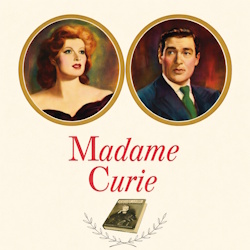
In 1938 Universal Pictures sought and bought the film rights to the biography “Madame Curie” by Éve Curie, the subject’s daughter, believing it afforded an excellent story to showcase their premier star, Irene Dunne. However, the project never got off the ground and the film rights were sold in 1940 to Metro-Goldwyn-Mayer. Sidney Franklin was assigned production with a $1.94 million budget and Mervyn LeRoy was tasked with directing. The journey to obtain a script was arduous, with both Aldous Huxley, and F. Scott Fitzgerald’s efforts being rejected. Eventually a collaborative effort by Paul Osborn, Hans Remeau and Walter Reisch was approved. Casting was also problematic with star Greta Garbo departing MGM for Warner Brothers. Joan Crawford was then turned down, causing her to also depart the studio for Warner Brothers, leaving Greer Garson with the role of Madame Curie. Joining her would be Walter Pidgeon as Pierre Curie, and Henry Travers as Eugéne Curie.
The story is set in Paris 1894 and offers a biopic of the famous scientist Marie Sklodowska Curie and the work she did with her husband Pierre in the discovery of the element radium. Marie was a Polish university student studying for her Master’s degree in physics when she met Professor Pierre Curie. She received permission to use space in his laboratory and over time they fell in love and were married. They collaborated in trying to isolate a radioactive substance Marie had identified as radium. After many years of painstaking research and experimentation radium was isolated and she and Pierre shared the Nobel Prize in Physics. Sadly, Pierre was killed crossing the street in a rainstorm leaving Marie alone to carry out their work, becoming the only person in history to win a second Nobel prize for Chemistry. The film was a commercial success, earning $1.09 million. Critical reception was favorable, and the film received seven Academy Award nominations, including Best Picture, Best Cinematography, Best Art Direction, Best Sound Recording, Best Film Score, Best Actor, and Best Actress.
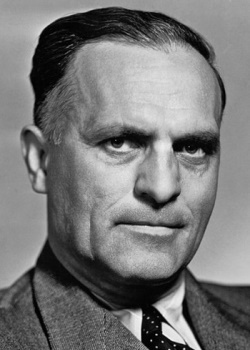
Director Mervyn LeRoy selected Herbert Stothart to score the film as they had collaborated well on four prior films – The Wizard of Oz (1939), Waterloo Bridge (1940), Blossoms in the Dust (1941) and Random Harvest (1942). Upon viewing the film Stothart understood that this was a dialogue driven story of scientific discovery, with an intimate focus on the marital and professional relationship between Marie and Pierre Curie. As was his custom, his compositional sensibility was to support subtly and unobtrusively so as to let the dialogue of the principals carry the film’s narrative.
 For his soundscape Stothart offers three primary themes. Marie Curie has two themes associated with her. Theme #1 is her most personal, offering confident five-note phrasing. In its purest form it speaks to her audacity, as a woman competing in the domain of men, to realize her professional aspirations. It embodies her striving for the truth, and tireless determination to overcome all obstacles and succeed. Theme #2 emotes from the perspective of Pierre Theme and speaks to the very basis of his attraction to her, which is not romantic, but instead, collegial. It supports scenes of her working in the lab and emotes as an energetic narrative carried by a declarative animated ten-note phrase, which is answered by a sumptuous eight-note phrase. It is often truncated or used with short discreet phrases, while she/they work but it always animates her irrepressible drive. The Love Theme speaks to the romance between Marie and Pierre and offers a delicate expression typically by solo violin d’amore. It is sweet, tender, but not ardent as Pierre is not a romantic by nature. For many of the scenes Stothart uses music like a cinematographer uses light, to evoke the emotional dynamics driving the narrative. Lastly, to support setting and cultural authenticity, he chose to infuse his soundscape with folk songs, and classical pieces, including “Twinkle, Twinkle, Little Star” from the French melody “Ah! vous dirai-je, Maman”, “Auprès de ma Blonde”, a traditional French folk song, and the “Wedding March” from A Midsummer Night’s Dream by Felix Mendelssohn.
There is no commercial release of the score, so as such I will use film scene descriptors and time indices for my review. 00:00 “Main Title” opens dramatically with grand, repeating fortissimo five-note declarations with counters of the Main Theme, which supports the MGM studio logo. At 00:11 a string descent initiates the flow of the opening credits, which pauses and sours at 00:20 as the film title displays. From out religioso auras arises the Main Theme, which shifts at 0:41 to the Marie Theme #2, and at 0:48 to the Love Theme atop strings romantico. 01:09 “50 Years Ago” offers narration, by strings maestoso, which evolves into an animated musical narrative as we hear of the countless students from all over the world who came to Paris to study at the renown Universite de Paris Sorbonne. We shift to the Main Theme, which plays under the dialogue as we are introduced to a poor girl, Marie Sklodowska who had left her homeland and family, a girl who is invincibly eager and aspires to realize her dreams. She sits in class focused intently on Professor Perot. She slowly, along with the music begins to wobble, passing out at 02:37 supported by strings tristi.
02:45 “Professor Jean Perot” reveals her professor, supported by horns reverenziali, entering his office where she lays on a sofa. He is impressed that she took first place in the Mathematics test last year and is pursuing dual degrees in physics and mathematics. He discovers she has not been eating well and graciously takes her out to dinner. At 03:58 we see her eating soup as the professor queries her about her background, learning that she loves Poland and intends to return to teach. Stothart supports unobtrusively under the dialogue with a musical set piece of gentility, borne by woodwinds delicato and strings. The musical narrative is sustained as they return, and he advises that he might recommend her to the Society of National Industry to study the magnetic properties of various steels, or to assist another professor with his experiments. She is grateful when he invites her for tea at his house Sunday, where he will introduce her to Dr. Pierre Curie. As she says good night and departs, we close on a woodwind borne misterioso. 06:13 “To Catch a Star” reveals he lighting a lamp in her room supported by her theme borne by strings tenero. Water drips down on her desk from a skylight and she steps on a chair to plug the leak with a cloth. At 06:46 as she gazes full of yearning at the star filled sky ethereal twinkles join, as her theme shifts to aspirational strings as she says; “To catch a star on your fingertips…”
07:10 “An Awkward Introduction” reveals Marie arriving for Sunday tea carried by a spritely rendering of her theme. At 07:29 she encounters a man at the door, and the music becomes playful as the jostle to ring the doorbell. They seem uncomfortable, no words are exchanged, and they enter carried by strings of delight. Inside Madame Perot introduces Marie to the man she met earlier, Dr. Pierre Curie. Later Dr. Perot convinces Dr. Curie to take on student in his lab. He is however, unsettled that it turns out to be Marie, a woman. She is thankful, while he is wooden and uncomfortable. At 12:15 the two Perot granddaughters begin to play on the piano, the melody from “Twinkle, Twinkle, Little Star”. In “First Day”, the next day at his lab, Dr. Perot is greeted by his student David. He relates how he was tricked by Dr. Perot into accepting a woman, adding that they are a distraction, and “enemies of science”. He sends David out to fetch a magnetometer and music enters at 14:56 atop bubbling woodwinds felice as Marie enters the building seeking Dr. Curie’s lab. At 15:13 the music shifts to a quasi-string borne romantic narrative as David is smitten by her beauty, becomes very attentive, and escorts her to the lab. Dr. Curie is sensitive to noise and David’s incessant fawning over Marie irritates him. At 18:26 David’s whistling of the French folk song “Auprès de ma Blonde” as he departs only adds wood to the fire. We close with a statement of the Marie Theme #2 as we see the two working at their work benches.
18:58 “A Thankful Escort” opens with horns maestoso as lanterns are lit at the Entree Les Cours En Physique at night. As Marie departs to the spritely motif that supported her arrival. Yet the music becomes beleaguered when thunder brings a downpour, forcing her back into the building. Pierre exits, exchanges pleasantries and departs supported by woodwinds voicing comedic irony. He returns, realizing she has no umbrella and graciously escorts her under his umbrella. Her spritely travel motif resumes to carry their departure. Later the rain has abated, and as they walk, she poses a mathematical quandary, which fascinates him. At 21:05 a flute led Marie Theme #2 joins as they reach her apartment. He thanks her for a scintillating discussion, and departs carried by the spritely travel motif. 21:46 “reveals a Marie perplexed hard at work in the lab supported by a wandering woodwind line, which never resolves. 21:59 “The Gift” opens with a bouncy walking motif, which carries Pierre into the lab. At 22:10 we shift to a string borne Marie Theme #2, expressed as a slow flowing danza gentile as he presents her an autographed copy of his book. She is thankful but resumes her work. We see he was hoping for a more effusive reply, is uncomfortable and the music speaks to this joining his discomfort with comedy. At 23:29 he begins whistling “Auprès de ma Blonde”, which surprises her.
“Pitchblende” Dr. Becquerel arrives, and asks Dr. Curie to witness a finding in his lab. He agrees and asks Marie to join them. He shows them a photo of a key taken in total darkness and postulates that certain rocks and minerals have the capacity to store sunlight. He then shows them a rock called pitchblende that refuted his hypothesis as it created the image, even though it was never exposed to the sun. Music enters at 26:29 as a misterioso, supporting Marie’s observation; it is as though a piece of the sun resides in the rock. Pierre and Marie are perplexed by the radiation and the misterioso supports their walk back to the lab. Pierre is visibly unsettled when she says her project is finished and she will be spending less time here as she must study for final exams. 28:39 “Pierre’s Fervent Plea” offers an exquisite score highlight. It reveals an impassioned exhortation for Marie to not return to Poland to teach, but to instead remain in Paris putting her extraordinary skills to work experimenting. Stothart’s music is masterful and insightful, offering exquisite tenderness and romanticism led by a violin d’amore thus informing us that this is an appeal from the heart. She admits she is flattered, but adds that this is a life plan that she cannot relinquish. With this admission the music descends into sadness, that ushers in a new aspirational melody by French horns nobile as Pierre confesses out load his perplexity of anyone with a scientific mind abandoning science. At 29:32 her string borne theme, which is tender and vulnerable, joins when she asks him to attend her graduation. He declines as he dislikes crowds, and we descend into disappointment as she departs.
In “Graduation” Pierre does indeed show up for the graduation ceremony. Award presentations commence and the first, the Order of Merit for the degree of Master of Physics is awarded to Marie Sklodowska, crowned 31:18 by a maestoso statement of her theme. Afterwards David informs Dr. Curie that Marie has departed as she must pack for her trip to Poland tomorrow. At 32:29 we see Marie packing supported tenderly by a solo violin delicato voicing her theme. Pierre visits and a romance for strings supports the reunion. His disappointment is palpable as she confirms her departure Tuesday for Poland. He extends an invitation to spend the weekend in the countryside visiting his parents. She is moved by the offer, and accepts, which both surprises him, and makes him happy. 35:07 “Visiting The Curies” reveals Marie playing croquet with Pierre and his father much to the delight of the family. Stothart supports with a both playfulness and gentility, creating a perfect ambiance. Pierre’s mother chats with Marie offering intuitive insight into all the people here gathered. When she turns to Marie at 36:34 strings bearing tender maternal warmth support her assessment; “stubborn, determined, obstinate, intelligent and flame-like”. Later, strings gentile carries on expressing familial warmth as we see Marie going through the family photo album. Mama invites her to stay longer, but Marie declines, saying she must return to Poland, which causes tension to seep into the musical narrative, and her theme to descend into sadness as Pierre again voices his frustration of her abandoning science. Mama perceives that his words come from the heart, not the mind, and as he departs with mama he apologizes. As Pierre says goodnight to his parents, fragments of the Love Theme gather, but fail to coalesce as papa tells mama her son is blind as a bat.
40:01 “The Proposal” offers the score’s supreme romantic highlight. It reveals shadows shifting back and forth under his bedroom door, which are reflective of his agitated pacing. Stothart supports softly, with a ticking clock motif, and almost aimless musical narrative by strings tenero and woodwinds. Woven into the narrative are fragments of the Marie Theme #2, which still fail to coalesce and like the larger musical narrative, never resolves. At 40:55 he makes a fateful decision and ascends the stairs to her room carried by an ascending motif by woodwinds animato, which unleash a forthright string borne statement of the Marie Theme #2 as he knocks on her door and calls her name. His parents wake and come out, as Marie calls out, “what is it”? At 41:19 he enters the room carried by a solo violin d’amore. The music ceases as he makes a fervent empirical, not romantic proposal to marriage. She ponders, and when she asks him, what she should do, music resumes at 42:55 from his perspective. It offers a warm, and tender narrative, but one lacking in romanticism as he counsels how their friendship, respect, and professional collaboration would deepen as they pursue their common scientific dream. At 43:18 as she answers we shift to a romance for strings, which supports her fateful decision to remain in Paris with him. He thanks her, departs and announces to his parents that they are engaged. He then realizes an oversight, reenters her room carried by the Love Theme, say he is sorry and kisses her lovingly on the forehead. As he departs and hugs his parents below the Love Theme and Marie Theme #2s blossom, joining romanticism and professional happiness.
44:54 “Wedding Reception” reveals our newlyweds at a reception at the Curie residence, where they take a photo and receive well-wishes. Stothart weaves a wonderful musical narrative of gentility and happiness, which perfectly supports the happy occasion. As they prepare to depart on two bicycles for their honeymoon, mama gives them cooked chicken and removes two scientific journals Pierre had packed, say he should have other things on his mind. As they depart at 46:43 a wonderful spirited musical narrative propelled by strings felice and bubbling woodwinds of delight carry them away, joined by a refrain of the “Wedding March” by Felix Mendelssohn. 47:03 “Honeymoon” reveals idyllic scenes of the countryside as out two lovers ride their bikes. Stothart supports with simplicity and gentility creating a wonderful carefree ambiance. At 47:36 they hold hands in front of a waterfall and we shift to the Marie Theme #2 rendered as a danza romantico as he compliments her on her beauty, and she kisses him. 47:55 “Marie’s Fateful Choice” offers a beautiful score highlight. We see them sitting on a deck of a river boat discussing their future. Marie decides that she wants to take on for her doctorate, discovering the radiation mystery behind Dr. Becquerel pitchblende. Stothart supports with classic romanticism, offering Marie’s Theme #2 as a tender, and heartfelt romance for strings and woodwinds for one of the score’s finest passages.
In an unscored scene a buoyant Pierre enters the lab and finds a dejected, and dispirited Marie. He presents her with a bouquet of flowers. She confides that she is discouraged and unsure of her methods. He agrees to inspect the electrometer tomorrow and counsels they forget about work and have a nice dinner with his parents tonight. At dinner papa offers criticism for women who do not bear children, Marie and Pierre deflect by discussing work and discovering what may be the source of Marie’s measurement variations. They make a speedy departure, promising to be back soon. In the lab Pierre discovers that his diagnosis of the problem was wrong, as the machine is in good working order. He asks that she demonstrate how she makes her measurements she measures (8) for the pitchblende that has uranium and thorium, (2) for uranium alone and (2) thorium alone. This leave (4) unaccounted for. He asks that she show him the chemical breakdown. In 1:00:36 “Other Extraneous Matter”, a misterioso unfolds as we see the list ends with “Other Extraneous matter 0.1%”. I light goes off in her head as she deduces that there may be an unknown element beyond the seventy-eight currently known to science. At 1:02:10 celli grave joined by muted disquieting horns support Pierre’s assertion, that if this is true, it will fundamentally change our whole conception of matter. Strings full of questioning join as she asserts that science may have to accept a new form of matter that is alive and dynamic, turning to Pierre and saying “We have discovered a new element.” At 1:03:55 she shouts “The residue of the pitch blade!” and runs to retrieve it empowered by a hopeful rendering of her theme. She places it in the electrometer measuring chamber, and sure enough the measurement is (4). We conclude on a crescendo of hope as Pierre asserts that this discovery of a new element may allow us to look into the secret of life itself!
In an unscored scene Marie tries to obtain funding from the university for a new laboratory and equipment so she can prove the existence of the 79th element, Radium. But the board is unreceptive citing her young age and the fact that she is a woman. After an impassioned defense by Pierre, they offer them a shed, that has no equipment, which is unheated, has a roof that leaks when it rains, and has a dirt floor. Pierre protests, but Marie accepts and they thank the Board for its ‘generous’ offer. 1:09:04 “The Shed” reveals the scores longest musical passage where Stothart composes a toiling musical narrative, which supports the physical strain and toll under which the Curie’s suffered. We open in a rainstorm, with a leaking roof and water pooling on the dirt floor in the derelict building. Grieving violins support the desolation. Narration commences that supports a montage of scenes that stretch over days, then months and finally years of the Curie’s working arduously. Forlorn woodwinds, a twinkling time flow motif and toiling violins of woe support. We see them melting large quantities of pitchblende from mines in Bohemia, from which they would extract all known elements, leaving what they hoped would be a few ounces of Radium. At 1:11:17 strings of duress support Marie almost passing out from the fumes. At 1:12:10 the musical narrative brightens as narration informs us that they had reached the end stage of two final elements and only needed to extract the Barium to end up with Radium.
1:12:34 “Separating Barium From Radium”, the music sours as narration reveals the significant challenge of separating these two elements. As she places the sample in the electrometer, woodwinds misterioso usher in a plaintive rendering of her theme as she declares; “No Separation”. Pierre reads their notes showing 458 failed attempts and a dispirited musical narrative embedded with sad quotes of her theme support his declaration, that they have failed. At 1:14:10 a crescendo of frustration swells atop Marie Theme #2, opposed by strings tristi as Pierre rages against the toll this experiment has taken on them, but especially on her. She will not relent and strings voicing determination support her determination, yet we close on a diminuendo of uncertainty as she is weak and is forced to sit down as the camera zooms in on her right hand. At 1:15:10 we flow seamlessly atop this uncertainty into “Burns” as we see Dr. Bladh examining her hand and commenting that these are strange burns, which he has never seen before. In 1:16:42 “Dr. Bladh’s Warning” a foreboding musical narrative unfolds as he recommends that she abandon her experiments as continued exposure to this unknown element could precipitate malignant cancer. We end on a crescendo dramatico, and then continue seamlessly into “Pierre’s Anger” at 1:16:58 as she reveals Dr. Bladh’s findings and he shouts out cancer! Forlorn woodwinds and strings tristi support Pierre’s anxiety as he demands that they end the experiments. She persuades him saying that if Radium has the power to harm normal tissue, then its power can be harnessed to destroy unhealthy tissue, which would revolutionize medicine. At 1:18:58 woodwind ascent with muted horns speaks of hope and support him kissing her hand, affirming without words, his support. We end with a bass grave sustain as narration informs that they continued their work using all available precautions.
1:19:20 “Marie’s Hands Heal” reveals narration saying Marie’s hands had healed and that they found a multi-step method of separating Barium from Radium. Fluttering woodwinds of hope lead a pastorale by woodwind felice as narration voices their slow, and tedious rate of success. Tremolo strings and bassoon grave support a view of the chemical mixing dish where we see the barium slowly evaporating, which then leaves a residue of pure Radium. Narration speaks of two years of work as we see hundreds of covered condensing bowls lined up in the lab. A subtle, unobtrusive musical narrative of uncertainty supports the montage, which ends with them viewing the final bowl that contains pure Radium. In “Radium Revealed” Lord Kelvin and Professor Perot pay a visit and are informed that hey have finished their work. Lord Kelvin is effusive with his praise, and compliments of Marie. Pierre reveals that to achieve the end result they needed to perform 5,677 bowl crystallizations. Music enters at 1:23:00 as an eerie woodwind misterioso as Kelvin and Perot examine the Radium, which is housed under a large glass cover. Marie says the tiny bowl represents eight tons of pitchblende and four years of work. At 1:23:25 Lord Kelvin congratulates them on their accomplishment and promises to return in the new year. Warm strings full of thanks, and woodwinds tenero support the two men’s departure. A diminuendo follows as the two doze off to sleep in the lab, and at 1:25:05 dissonant, muted horns and a string descent support the camera panning in on the encased radium.
1:25:23 “Four Long Years!” reveals the two waking the next day at 5 am. They are anxious to see if the Radium had crystallized and Stothart supports with strings and woodwinds, which join unease and anticipation. She asks him to look first, and an ascent of anticipation supports Pierre pulling open the curtain. As he gazes at the container, weeping strings emote Marie’s Theme. Forlorn strings of disbelief support her removing the class canopy and saying; “There is nothing there, not a grain of anything, just a stain.” She snaps unable to accept the outcome raging about four long years in this sled for nothing. At 1:27:21 strings affanato voice her and Pierre’s devastation. A musical narrative full of despair brings them home where papa complains about their daughter, only to sense something is very wrong. She goes upstairs to attend to Irene. Irene begs her to explain what happened as Pierre joins them. He offers to tell her a story about a strange and enchanted treasure locked up in a stone, which includes a story of a Princess and Prince. 1:29:30 “The Princess and Prince” reveals him telling a tale, which is an allegory to their quest to discover Radium. The story is for Marie’s benefit, as much as Irene’s. Saying that even though they failed in their quest, they did not despair as the understood that they would always have each other, and so lived happily ever after. Stothart supports Pierre’s storytelling with one of the score’s most beautiful passages as a heartfelt Marie’s Theme #1 rendered as a danza tenero. Afterwards weary strings support Pierre’s reminder that it is New Year’s Eve and perhaps we should not go to the party. But Marie insists and her theme gains some vibrancy.
1:31:31 “New Years!” opens to celebratory church bells. At the party Stothart supports with festive music abounding with happiness. Marie is despondent, but after they all toast, she and Pierre tenderly kiss. At 1:32:08 the band leads the crowd in singing a traditional French celebratory New Year’s song. In an unscored scene Marie cannot sleep a she cannot accept failing without knowing why she failed. She then has an epiphany – that the stain on the platter is Radium! 1:34:00 “Radium!” reveals them hurrying to the lab. As they look through the window into the dark interior Marie screams “Our Radium is there!” We see that the stained plate is luminescent. A crescendo gioioso carries their run to the plate where they join in a celebratory kissing embrace. We close intimately with violins tenero and they stare in wonder at their accomplishment. In an unscored scene the members of the press besiege papa at home, where he refuses to disclose Pierre and Marie’s location, much to their consternation. They argue that Marie being the first woman to win the Nobel prize, and the gesture of giving the secret of Radium to humanity for free are stories, which must be told. Papa is adamant, Pierre and Marie are tired, on holiday, and must be left alone.
1:36:19 “The Interview” reveals a young reporter showing up at the gate as Marie prepares fruit in the courtyard. Woodwinds gentile carry his entry, and his smile disarms Marie, who agrees to give him some news. She relates that the university has provided the Curies with a new multi-room laboratory with all the latest equipment, and many assistants. The presentation ceremony will be next week. He is tankful but regrets not being able to interview Madame Curie. She stuns him when she admits that he did interview Madame Curie as her two daughters Irene and Eve arrive. He departs, and Marie joins Pierre who is resting in the seaside garden. He relates how tired he was when he arrived, and that he might not have as much time left in his life. Marie frets at the loss of him, but he assures her he is not going anywhere.
The following three scenes offer romantic score highlights. 1:40:53 “I Love You Pierre” reveals Marie expressing her deep love and thankfulness for Pierre because of his kindness, gentleness and wisdom. For this heartfelt testament of love, Stothart supports not with ardor or fervency, but instead with the Love Theme expressed as a tender romance for strings. 1:44:13 “You’re Beautiful” reveals Marie being fitted for a new gown she will wear to the presentation ceremony. She asks the seamstress to admit Pierre, and he pauses, and says “You look very beautiful, Marie”. Stothart supports with the Love Theme rendered as a beautiful, and tender romance for strings as we see him enamored by her beauty. A rainstorm arrives, Pierre departs on a number of errands and strings tristi voice her goodbye. 1:46:16 “The Earrings” reveals him departing into the rain, which Stothart supports with portentous woodwinds and strings of unease. An oboe delicato emotes Marie’s Theme as we see him examining women’s jewelry in a shop. As he reviews earrings and describes Marie to the seller, we truly feel the depth of his love, as we are graced by the Love Theme.
1:48:45 “Pierre Dies” reveal him walking home with a soft promenade carrying his progress. His is lost in thought and walks across a busy street and at 1:49:16 a crescendo di orrore supports a four-horse cart pummeling, and then trampling him to death. A frenetic passage follows as people rush into the street to discover his dead body. We close with a diminuendo by strings affanato, which ends on a grim chord as the driver looks down with regret at Pierre’s crushed umbrella. 1:49:58 “Devastation” reveals Marie dressed immaculately in her new gown. Papa wishes to toast to their new lab as they wait for Pierre to come home. Stothart offers a warm and pleasant musical narrative borne by strings tenero. The doorbell rings and as Papa goes to answer Marie begins lighting candle supported by gentle statements of her theme. The music ceases as she pauses staring with disbelief. She walks into the hall and sees four professors standing grimly, and Papa sitting disconsolate. She is informed solemnly that Pierre had been killed instantly in a street accident. 1:52:08 weeping strings voice her devastation as she stands, unable to speak.
1:52:21 “Aftermath” offers a poignant score highlight. It reveals colleagues grimly departing the cemetery, supported by a lamentation led by strings. The grim musical narrative joined by bass grave supports a return to the house where Papa advises Professor Perot that Marie’s condition had not changed, and that she refuses to speak. Perot visits Marie to console her, and counsels that she considers how Pierre would want her to live under these circumstances. Saying that he believes Pierre would want you to continue your work. He tries to coax her carry on, but she refuses to speak, and continues sitting with a vacant affect. At 1:55:27 a musical narrative of hope unfolds as Perot prepares to depart, but turns around at the door and advises that ten years ago in his class that most of you would never achieve your dreams and catch a star on your fingertips, but you succeeded where most failed. He then departs and slowly her theme begins to emerge from a dark place as we see in her eyes that his words found their mark. At 1:57:00 a harp glissando usher in an awakening of her theme by strings tenero as she opens a keepsake box and reads a note; “See B.L. at institute regarding precautions against accidents to lab workers”, followed on page 2 by “Bring earrings for Marie.” She weeps, opens the earring container supported by weeping strings of regret. An aching Marie Theme #2 reprises, informing us that she intends to carry on as she sinks to the floor sobbing.
1:59:28 “Ceremony” offers a wondrous cinematic confluence of music, Garson’s acting and prose. It reveals a ceremony invitation to honor Madame Curie on the 25th anniversary of her discovery of Radium. Stothart provides honorifics, supporting with bright strings maestoso as we shift to the university great hall where narration commends her for a quarter of a century of great work. They all rise and announce Madame Curie, who enters to respectful applause. She bows to the audience, and then the faculty behind her. She exhorts her colleagues to continue the essential striving for scientific truth to better understand the universe and by doing so, illuminate humanity in hope of eliminating the great evils of ignorance, poverty, disease, wars and heartache. At 2:02:21 angelic violins brillante voice an inspired musical narrative of hope atop her Theme #1 to support her counsel to continue to seek the clear light of truth, knowing that Divine wonder will never fail us, offering an inspired speech;
“Even now, after twenty-five years of intensive research, we feel there is a great deal still to be done. We have made many discoveries. Pierre Curie, and the suggestions we have found in his notes and in thoughts he expressed to me, has helped to guide us to them. But no one of us can do much. Yet, each of us, perhaps, can catch some gleam of knowledge which, modest and insufficient of itself, may add to man’s dream of truth. It is by these small candles in our darkness that we see before us, little by little, the dim outlines of that Great Plan that shapes the universe. And I am among those who think that for this reason, science has great beauty and with its great spiritual strength will in time cleanse this world of its evils, its ignorance, its poverty, diseases, wars, and heartaches. Look for the clear light of truth. Look for unknown, new roads. Even when man’s sight is keener far than now, divine wonder will never fail him. Every age has its own dreams. Leave, then, the dreams of yesterday. You: Take the torch of knowledge and build the palace of the future”.[
She completes her speech to effusive applause and we close the film triumphantly atop a crescendo glorioso, which culminates in a grand flourish!
This would be a most challenging assignment for any composer given the film was cerebral, plodding, often tedious, lacked action, and the romance between the two principal actors was fleeting at best. Stothart rose to the challenge and in my judgement composed one of his most elegant scores. His two themes for Marie Curie brought this historic heroine to life, embodying the confidence, determination, work ethic and audacity, which allowed her to thrive in an age when society considered, universities a domain of men. I believe his tender Love Theme, often carried by a solo violin d’amore, was well-conceived. He understood that it emanated from Marie’s perspective as Pierre was not an ardent man, his nature being to love collegially from his mind, not from his heart. As a composer, rarely is Stothart’s music overbearing, instead he characteristically offered subtlety, nuance and unobtrusiveness. In this film he often chose to express not the characters themselves, but instead the scene’s emotional dynamics including, toiling, tedium, exhaustion, frustration, devastation, and elation. Lab work is by its very nature tedious and Stothart composed to make it more emotionally accessible, often propelling the film’s narrative and forward momentum. The score’s culmination in the final scene represents one of Stothart’s finest accomplishments as his music joins with Greer Garson’s performance and prose to achieve a sublime cinematic confluence. Folks, Stothart worked at MGM for twenty years and received twelve Academy Award nominations, winning one for “The Wizard of Oz” (1939). For me, this Oscar nominated score was one of the finest in his canon, offering elegance, insight, understated beauty. The fact that we are able to get through this two-hour plus movie is because of his score, which gave the film heart, and enhanced it in every way. Until such time that a rerecording is done by a major label, I highly recommend you take in the film to experience his handiwork.
For those of you unfamiliar with the score, I have embedded a YouTube link to a Main Title suite: https://www.youtube.com/watch?v=0xZ1ewXQl3w
Track Listing:
- NOT AVAILABLE
Music composed and conducted by Herbert Stothart. Orchestrations by Murray Cutter. Additional music by Daniele Amfitheatrof, William Axt, Bronislau Kaper, David Snell, Edward Ward, Franz Waxman and Eugene Zador. Recorded and mixed by XXXX. Score produced by Herbert Stothart.

Shop at the Movie Music UK Store

Member of the

 MOVIE MUSIC UK