MR. SMITH GOES TO WASHINGTON – Dimitri Tiomkin
 GREATEST SCORES OF THE TWENTIETH CENTURY
Original Review by Craig Lysy
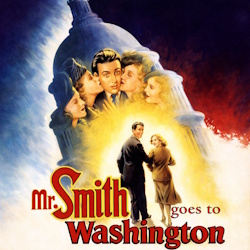
Columbia Pictures decided to purchase an unpublished story “The Gentleman From Montana” by Lewis R. Foster to adapt for a sequel to their film “Mr. Deeds Goes to Town (1936), which starred Gary Cooper and Jean Arthur. Frank Capra was placed in charge of production with a $1.5 million budget, would also direct, and Sidney Buchman and Myles Connolly were hired to write the screenplay. Gary Cooper was unavailable to reprise his role and so Capra decided to borrow James Stewart from MGM who he believed was perfectly suited to the role of Jefferson Smith. Joining him would be Jean Arthur as Clarissa Saunders, Claude Rains as Senator Joseph Harrison Paine, Edward Arnold as Jim Taylor, Guy Kibbee as Governor Hubert Hopper, Thomas Mitchell as Diz Moe and Beulah Bondi as Ma Smith.
The story follows the fortunes of Jefferson Smith, a naive and idealistic, leader of the Boy Rangers (Scouts) who is appointed to an open senator position by governor of his state. He joins with the state’s senior Senator Joseph Paine, his childhood hero, and an aspiring presidential hopeful. Yet the politics of Washington D.C. reveals not only the shortcomings of the political process, but corruption as well. His righteousness leads to conflict with his state’s political boss, Jim Taylor. The unscrupulous Taylor first tries to corrupt Smith and when this fails, attempts to destroy Smith through a scandal. In the end, Smith prevails after his one-man filibuster and wins the respect of all. Despite scathing criticism from the Washington D.C. establishment and the press, the film resonated with the public, earned a profit of $7.5 million and made James Stewart a major Hollywood star. Critical reception was favorable, and the film received an astounding eleven Academy Award nominations, including; Best Picture, Best Director, Best Film Editing, Best Art Direction, Best Screenplay, Best Sound Recording, Best Film Score, Best Actor, and two Best Supporting Actors, winning one award for Best Original Story.
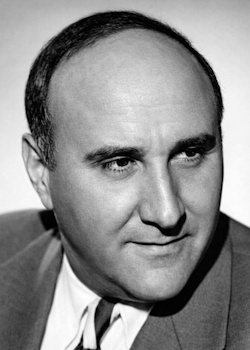 Director Frank Capra had immensely enjoyed his collaboration with composer Dimitri Tiomkin on two prior films, “Lost Horizon” (1937) and “You Can’t Take It With You” (1938) and so offered him the scoring assignment. Upon viewing the film Tiomkin surmised that this film at its core was a story of an idealistic genuine, and humble man challenged by Washington politics to maintain fidelity to his principles, or compromise and become part of a corrupt system. He did extensive research and made the creative decision for his soundscape, to infuse classic Americana, folk songs and patriotic anthems so as to ground James Stewart’s common man performance and reinforce his affection with the audience. He would use some of these song and anthem melodies as themes so as to unify his musical narrative.
Among the pieces he interpolated were; “Columbia, the Gem of the Ocean” (1843) by David T. Shaw, “Yankee Doodle’ (1755), traditional music of English origin, “America, My Country Tis of Thee” (1832) by Lowell Mason, based on the music by Henry Carey from “God Save the King” (1744), “Semper Fidelis” (1888) by John Philip Sousa, “The Star-Spangled Banner” (1814) by John Stafford Smith, “For He’s a Jolly Good Fellow”, traditional, “Auld Lang Syne” (1788), traditional Scottish 17th century music with lyrics by Robert Burns, “O Bury Me Not On the Lone Prairie” traditional cowboy song, “When Johnny Comes Marching Home” (1863) by Louis Lambert, “Taps” (1862) by Daniel Butterfield, “Battle Hymn of the Republic” (1856) by William Steffe, “Red River Valley, traditional, “Jeanie With the Light Brown Hair” (1854) by Stephen Foster, “(Oh My Darling) Clementine” (1884) by Percy Montrose, and “The Old Grey Mare, traditional.
There is no commercial release of the score, as such I will use film scene descriptors and time indices for this review. Also, the Boy Scouts of America refused to allow their organization to be used in the film, as such Capra created a fictitious “Boy Rangers” as a work-around. 00:25 “Main Title” offers a spot-on score highlight where Tiomkin channels unabashed American patriotism. It opens with display of the Columbia Pictures logo supported with the proud and patriotic “Columbia, the Gem of the Ocean” Anthem. At 0:32 the flow of the opening credits commences supported by a rousing rendition of “Yankee Doodle”. At 1:03 we segue into another patriotic American anthem “America, My Country Tis of Thee”. At 1:12 a coda of “Yankee Doodle” completes the opening credits. At 1:26 we enter the film proper with an unscored scene. Senator Joe Paine informs Governor Hubert Hooper of the death of fellow state Senator Samuel Foley. The Governor then informs political boss Jim Taylor as the three must with urgency appoint a successor. The next day Taylor and Paine agree to nominate, a yes man crony who will support their graft for the Willet Creek dam project. State legislative committees demand Henry Hill, and the Governor’s eight children insist on Jefferson Smith. The next day the Governor uses a coin toss and chooses Jefferson Smith the squeaky-clean head of the Boy Rangers after the coin lands upright on its side next to a Smith headline.
09:35 “Smith is Chosen” offers a score highlight revealing Tiomkin’s spot on support of the festive banquet. It reveals the Governor arriving at the Smith residence to inform Smith of his decision. Tiomkin supports with the Boy Ranger band, which is practicing in the living room, playing John Philip Sousa’s rousing marcia patriottica “Semper Fidelis”. The melody is sustained to support a Jackson City Star headline announcing Smith’s appointment. Taylor grudgingly accedes to the Governor’s wishes and orders a lavish banquet be held. 11:22 “Banquet” offers a montage of scenes of the patriotic banquet celebration, which Tiomkin supports with John Stafford Smith’s patriotic anthem, “The Star-Spangled Banner”. At 12:07 the Governor introduces his new senator Jefferson Smith supported by a salutatory rendering of the tradition song “For He’s a Jolly Good Fellow!” At 13:44 after his acceptance speech, the crowd applauds and the boys Ranger band marches in reprising “The Star-Spangled Banner”. At 14:45 the boys present Smith with a parting gift as everyone joins in singing the classic farewell song “Auld Lang Syne”.
15:46 “Train to Washington D.C.” offers a score highlight, which shows Tiomkin’s masterful support of Smith’s wide-eyed wonderment with a parade of classic Americana. It reveals senators Paine and Smith warmly reminiscing, which Tiomkin supports with a wistful rendering of the traditional cowboy song “O Bury Me Not On the Lone Prairie”. At the capital train station Senator Paine introduces Jefferson to his daughter Susan. 21:16 “Bus Tour” offers a wonderful score highlight where film narrative, Stewart’s acting and Tiomkin’s music achieve a wonderful confluence. It reveals Jefferson showing a boy’s sense of wonder after seeing the Capital dome. He escapes Taylor and his handlers to go sight-seeing on a bus. A montage of famous monuments is supported at by a sprightly interpolated and embellished rendering of “Yankee Doodle”. At 21:39 we flow into “America, My Country Tis of Thee” as Jefferson stands in awe of the Jefferson Memorial and then reviews the Declaration of Independence, the Constitution, the Liberty Bell and the Washington Monument. At 22:30 the Confederate patriotic anthem “When Johnny Comes Marching Home” by Louis Lambert is rendered as a marcia solenne, which supports his visit of the WWI monument, and the White House. At 22:43 the solemn memorial “Taps” by Daniel Butterfield supports a visit to the Arlington National Cemetery and tomb of the unknown soldier. At 23:21 Tiomkin interpolates a solemn rendering of the “Battle Hymn of the Republic” by William Steffe, and the traditional song “Red River Valley” as Jefferson stands in awe at the Lincoln Memorial.
In several unscored scenes Jefferson and Susan, Paine’s daughter become acquainted. She is initially dismissive, seeing him as a naïve country bumpkin, but she begins to warm to his genuine, and unpretentious demeanor. During a press conference the reporter’s bait him, seeking to take advantage at his inexperience. 33:08 “Animal Sounds” reveals reporters egging him on to make animal sounds, which he does. They twist his words and their photos support a series of unflattering headlines, which mock this ‘country bumpkin’. Tiomkin supports with a sardonic musical narrative replete with faux war-like American Indian cultural accents as six buffoon-like and raving mad photos are displayed under the captions; “Smith puts Indian Sign on Congress”, “Boy Ranger Smith Brings Own Axe to Grind”, “Smith Will Be Heard From”, “Smith Looks For Improvement”, “Smith Makes Fire to Put Heat on Congress”, and “Smith’s First Whiff of Washington”. In two unscored scenes, Senator Paine is appalled and dispatches his secretary Clarissa Saunders to ‘manage’ Smith and keep him quiet regarding politics. She insists on more money, and he offers a bonus and a better job as his standing in Washington rises. She escorts Smith to the Senate chamber where a page boy takes him to his seat. As he is taken to his seat, other senators mock him under their breath, while Clarissa takes a seat in the gallery. The page boy orients him to the Senate and the leaders of the majority and minority parties.
Smith presents his credentials to Paine who request that the Senate President swear him in. However, Senator Martin objects, offering a scathing rebuke, saying he is unworthy given his recent behavior and photos in the newspaper. Paine comes to his aide, vigorously defending him, vouching for his character. Smith is then sworn in and takes his place as a sitting senator. 41:46 “Smith is Angry” reveals him seeing his mocking photos in a newspaper, then staring angrily at the press gallery, and then storming out. A montage of scenes shows him punching out one reporter after another empowered by an angry rendering of the Columbia Anthem with comedic accents. At 42:16 we surge on a crescendo of rage as he fearlessly follows reporter Nosey into the National Press Club. We crest at 42:43 as he is subdued by reporters. He castigates them for failing to tell the truth. They counter by mocking his credentials and competence, declaring him an honorary stooge beholden for his appointment, and just another yes man. Welcome to Washington Jefferson Smith!
In two unscored scenes Smith complains to Paine that to do his job properly, he has to read and understand bills before he votes or else, he is just as the press labelled him – an honorary stooge yes man. Paine is clearly jaded and states that he does not even read the bills as they are too complicated. He says to relax and that he will tell him how to vote. To assuage him, Paine suggests he present a bill to fulfill his dream of establishing a national boy’s camp. Paine’s daughter Susan joins and engages Smith in conversation. He is uncomfortable with her as we see him fidgeting and bumbling. Back at the office Smith wants to write his bill tonight and have a vote the next day. Saunders gives the naïve, and clueless new senator a lecture as to how a bill is written, presented to the Senate, sent to committee, and then comes to a vote after the House and Senate have agreed on its final language. His enthusiasm is not dented and he requests that they get started immediately.
50:44 “Writing The Bill” opens with a harp glissandi, which ushers in an extended warm and homey rendering of the western folk song “O Bury Me Not on the Lone Prairie”. Smith is an idealist who speaks conceptually and wants to foster love of country and belief in its institutions. At 51:57 the homey western folk song Red River Valley enters for a warm and sentimental rendering. She however is a pragmatist and counters with logistics, process, and details. At 53:06 Tiomkin interpolates the romantic ballad “Jeanie With the Light Brown Hair” by Stephen Foster, which will evolve into their Love Theme. We see a captivated Jefferson inquiring about her life. He clearly appreciates her help and we see a nascent attraction as he complements her on her intelligence and talent. At 54:15 a happy and carefree musical narrative unfolds as Jefferson inquires about her first name, and she deflects, asking him to move on. Playful pizzicato strings join as he persists and begins guessing what her name is. She relents, and tells him, Clarissa. He then shifts back to his bill stating its size of 200 acres and planned location in Ambrose County along Willet Creek. The next day in the gallery, Clarissa confides with Diz to watch the fireworks as Smith’s proposal conflicts with Taylor and Paine’s graft land scheme of buying up the surrounding land around Willet Creek to rake in profits by selling it to the government for their proposed dam.
In an unscored scene, Senator Jefferson is recognized and nervously reads aloud his bill to build a national Boy’s Camp along Willet Creek to promote American ideals and foster mutual understanding by boys of all walks of life. Paine and political hack Chick McGann are stunned and hastily depart for an emergency conference. Upon concluding the reading of his proposed bill, the gallery, which is full of boys give a rousing applause, joined by his fellow senators. Later, Paine and McGann scheme to get Smith out of the chamber tomorrow when their dam bill is presented. At 1:00:47 Smith whistles the traditional song “Old Grey Mare” as he jauntily walks through the hall of the Senate. In an unscored scene he walks into his office and is besieged by a crowd seeking favors. Clarissa shepherds him into his office where he begins opening letters, each of which contain the 9 cents needed to attend his camp. Susan then calls and alerts Clarissa of her scheme to get Smith out of the senate chamber tomorrow. She hands the phone to Smith and he accepts Susan’s invitation to escort her to a reception for a princess.
1:05:02 “Clarissa Upset” reveals her playing a non-descript tune on the piano as she frets to Diz about Susan’s scheme. In several unscored scenes, they go out to dinner, and while drunk, she proposes marriage to Diz who accepts. Back at the office she tells Smith of her wedding plans, shows him the dam proposal for Willet Creek, tells him to go home as he is too descent for the senate and then quits. Smith is stunned, and in the hallway, Clarissa sobs, Diz realizes she is in love with Smith, and takes her home. Later, Smith stuns Paine accusing Taylor of graft, which exposes Paine, McGann and Taylor’s land scheme. Taylor travels to Washington and informs Paine he is taking over and will confront Smith. Paine will have none of it and departs. Taylor’s effort at bribery and intimidation fail as Smith calls him a liar and storms out. He storms into Paine’s office and Paine admits to Smith’s charges regarding Taylor’s control, saying that long ago he checked his ideals at the door so he could serve, adding that if you are going to be successful in the senate, that you need to compromise your principles. He counsels him for the sake of their friendship, to not oppose the Dam bill, or great powers will destroy him. Jefferson departs without saying a word, but his expression speaks volumes.
In unscored scenes, the next day as the bill is being read, Jefferson is recognized for five minutes to speak on section 40 of the Willet Dam bill. Senator Paine interrupts, and makes the charge that he has evidence which shows that Senator Smith is unfit to speak to this body. Paine declares that Smith owns the land on which the National Boy’s Club would be built. He demands an inquiry by the Ethics Committee be initiated to assess Smith’s fitness to serve. The press runs with the story while the crowd and fellow senators’ boo. The next day Governor Hooper gives false testimony to the committee, followed in suit by one county official after another. Two of three hand writing experts assert that Smith’s signature on the land deed is his. Then Paine thrusts the final dagger accusing Smith of profiteering. 1:29:18 “Smith’s Devastation” reveals him alone in contemplation at the Lincoln Memorial. Tiomkin supports with a molto tragico musical narrative led by strings affanato. He departs the monument with his suitcases in hand. At 1:30:15 he sits dejected in a monument vestibule and despairs as Tiomkin offers an aching rendering of the folk song “O Bury Me Not On the Lone Prairie”. At 1:39:15 as he weeps, Clarissa joins to console him supported by a tender and heartfelt rendering of their Love Theme, the song “Jeanie With The Light Brown Hair”. Interplay with “O Bury Me Not On the Lone Prairie” unfolds as he relates his despondency over his hero Senator Paine betraying him, and intention to quit and go home. But Clarissa exhorts him to stand for his principles and for the kids who idolize him as the music swells with confidence and patriotism. At 1:34:41 he says, let’s get a drink and strings energico propel them with resolute purpose, crowning their departure from the monument with a proud statement of “The Battle Hymn of the Republic”.
The film’s pivotal scene is unscored as Tiomkin defers to Smith’s impassioned soliloquy. The next day, Smith shows up for the roll call, fortified by Clarissa’s support in the gallery. Senator MacPhearson calls for a motion to expel Senator Smith. The clerk reads the committee’s judgment that Smith did indeed commit crimes and that he be expelled. Smith stands and is grudgingly recognized, delaying the roll call vote to expel him. His fervent denial leads Paine to viciously castigate him and lead a walkout with his fellow senators who refuse to listen to a liar and criminal. Smith perseveres and will not yield the floor. He uses senate rules to compel the president of the senate to order the return of all the senators. In another scene Taylor orders the vacillating Paine back to the chamber vowing he will use his power to discredit Smith in the state newspapers.
1:48:09 “Taylor Strikes” reveals him mobilizing his political machine. We see a montage of state newspapers and radio stations running headlines that feature brutal character assassination of Jefferson Smith, joined by billboards and posters. Tiomkin supports with a dire and dramatic musical narrative. Back in the senate chamber, Smith uses humor and his genuine down to earth demeanor to win the gallery’s support as cracks in senator opposition begin to be seen. 1:57:08 “Clarissa Plan” offers a score highlight with inspired interplay of competing musical narratives. It reveals that Taylor has shut down all favorable news for Smith. Clarissa decides to use the Boy’s Ranger publication to reveal the truth about Taylor’s graft and Smith’s innocence. She provides them the truth and a montage unfolds of the Boy Ranger’s presses churning out the truth vs Taylor controlled newspapers continuing their character assassination of Smith. Tiomkin offers an inspired interplay of a confident, youthful, and playful musical narrative for the Boy Rangers using the folk song melody of “(Oh My Darling) Clementine” by Percy Montrose vs a grim, and menacing musical narrative for Taylor’s political machine. At 1:59:19 a boy’s bugle reveille supports dozens of newspaper kids rushing out to deliver bundles of their newspapers propelled by a propulsive rendering of “(Oh My Darling) Clementine”. Taylor responds by sending out thugs to steal the boy’s papers and to physically beat them if they resist.
2:00:11 “The People Rally For Smith” reveals a hometown march supportive of Smith supported by a marching band playing a rousing, patriotic “Columbia, the Gem of the Ocean”, however Taylor uses his control of the police to douse them with water cannons. A counter musical narrative of faux Americana supports Taylor’s counter parades, which condemn Smith. 2:00:50 reveals Boys driving a car with a banner “Hurray For Jeff Smith” propelled by the Army’s bugle declared cavalry charge. They are rammed and driven off the road by Taylor’s thugs, resulting in injuries. Back at the senate chamber Jefferson is exhausted and making a last fervent appeal for as he nears the 24-hour mark for his filibuster. Senator Paine request for Smith to yield for a question is granted and he obtains permission to bring people in to show how the state is responding. Boys bring in fifty thousand Taylor sponsored telegrams that demand he yield the floor. Smith reads dozens and is devastated, but finds solace when the President of the Senate gives him a reassuring smile. He concludes with a direct face to face moral appeal to his fellow senator and hero Joe Paine. He then declares to the chamber, that he is not licked, will continue to fight for a lost cause against the Taylor’s of the world, and collapses from exhaustion. Paine rushes out of the chamber and gun shots ring out as men wrestle a gun from his hand. He then rushes back into the chamber and declares that everything Smith said is true, and that it is he who is guilty of graft, not fit for office, and should be expelled. Pandemonium erupts as Clarissa and Diz celebrate in the gallery. The President of the Senate sits back with a wry smile and we conclude the film at 2:09:25 “The End” with a joyous rendering of “(Oh My Darling) Clementine”. 2:09:36 “Cast Credits” is supported by a rousing medley of “Yankee Doodle”, and “America, My Country Tis of Thee”.
Capra had a political agenda when he envisioned this film to expose the endemic corruption of Washington politics, and state political bosses. The political and press establishments bristled after seeing the film, but the film resonated with the public, validating Capra in the end. Tiomkin had worked with Capra before and he appreciated the freedom and latitude he provided. Both men understood the need to infuses classic Americana, patriotism, and songs for the common man into the film’s musical narrative. Absolutely essential was the need for the music to buttress and empower our hero, Jefferson Smith. In scene after scene Tiomkin’s music achieved a confluence with Capra’s story-telling and Stewart’s heartfelt acting, ennobling the film’s narrative. As I have often stated, a score need not be fully original to achieve its mission, and often times source music is extremely effective in servicing a film. Folks, this score succeeds on every level and I believe the film owes much of its success to Tiomkin’s handiwork. If you like classic Americana, patriotic anthems and marches, and folk songs, well then, this is a score for you. Unfortunately you will have to hear it in context as you enjoy a wonderful film.
For those of you unfamiliar with the score, I have embedded a YouTube link to the bus tour montage; https://www.youtube.com/watch?v=RpbvLA8UMxk
Track Listing:
- NOT AVAILABLE
Music composed and conducted by Dimitri Tiomkin. Orchestrations by Dimitri Tiomkin. Recorded and mixed by XXXX. Score produced by Morris Stoloff and Dimitri Tiomkin.

Shop at the Movie Music UK Store

Member of the

 MOVIE MUSIC UK