THE AGE OF INNOCENCE – Elmer Bernstein
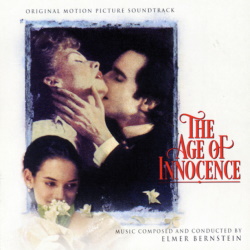 THROWBACK THIRTY
Original Review by Jonathan Broxton
Despite it containing almost no physical brutality whatsoever, director Martin Scorsese called his film The Age of Innocence “the most violent film he ever made”. However, unlike the blood-soaked intensity of films like Mean Streets, Taxi Driver, Raging Bull, and Goodfellas, the violence in The Age of Innocence is powerfully emotional, and it takes a heavy toll on the characters in the story. The film is a period drama adapted from the acclaimed novel by Edith Wharton, and is set in New York in the 1870s. Newland Archer (Daniel Day-Lewis), a wealthy and respected lawyer from a prominent family, becomes engaged to May Welland (Winona Ryder), a young woman from a similarly esteemed background. However, Newland’s life takes a complicated turn when May’s cousin, Countess Ellen Olenska (Michelle Pfeiffer), returns to New York after a failed marriage in Europe. Ellen’s arrival disrupts the rigid social norms and expectations of New York’s upper class, as she is seen as unconventional and a potential scandal; despite this, Newland finds himself drawn to Ellen’s free-spirited and non-conformist nature, leading to a passionate but forbidden love affair.
The film also boasts an impeccable supporting cast that includes Miriam Margolyes, Geraldine Chaplin, Michael Gough, Richard E. Grant, Mary Beth Hurt, Robert Sean Leonard, and Jonathan Pryce, and was one of the critical darlings of 1993, eventually going on to receive five Oscar nominations, including Best Supporting Actress for Ryder, Screenplay, Art Direction, and Costumes, the latter of which it won. The fifth nomination it received was for its score, which was written by the late, great Elmer Bernstein. Martin Scorsese is not a man who commissions original scores regularly – Mean Streets didn’t have one, nor did Alice Doesn’t Live Here Anymore, or Raging Bull, or Goodfellas – and on the few occasions he did up to this point in his career, his most regular collaborator was rock musician Robbie Robertson from The Band.
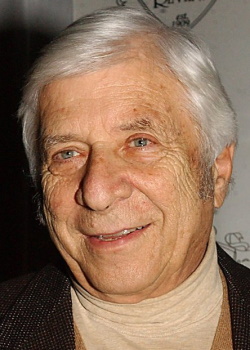 However, once in a while, Scorsese would embrace the lure of a more traditional score, and when he did the results were often spectacular. Bernard Herrmann received his last Oscar nomination for Taxi Driver in 1976. A young Howard Shore wrote the music for After Hours in 1985. Peter Gabriel’s music for The Last Temptation of Christ in 1988 was a cult hit. Scorsese had worked with Bernstein once before, when he was asked to adapt Bernard Herrmann’s music from the 1962 film Cape Fear for the 1991 remake, and so when it came time to score The Age of Innocence he called on him again, this time to write wholly original music.
The resulting score is outstanding; a lush, opulent representation of New York’s Gilded Age, filled to the brim with gorgeous themes, luxurious waltzes, and much more besides. It’s written for a large symphony orchestra that focuses mostly on strings, and which has a longing, romantic air that runs throughout all its different thematic ideas. It has a Golden Age sound – naturally, as Bernstein is from there – that would not have sounded out of place in one of the great period dramas of the 1940s and 50s. However, unlike other scores which try to emulate that sound with pastiche, there is an authenticity to The Age of Innocence that cannot be ignored. Whereas other composers of the day would try to recapture Golden Age aesthetics of years past, Bernstein was there writing it at the actual time, and this mindset flows through the entire piece.
The score overflows with memorable thematic ideas and beautiful orchestral textures. The title cue, “The Age of Innocence,” is an excellent, if perhaps a little introspective, waltz that expertly captures the inherent tragedy surrounding the film’s central love triangle; it appears later in several cues, in perhaps a little more emotional form, notably during the second half of “First Visit,” and then again in the darkly moving “Archer Pleads,” the evocative “Passage of Time,” the plaintive “Blenker Farm,” and the fulsome “Pick Up Ellen,” which builds up to a quite enormous, powerful finale. I have always found there to be a slight hint of Nino Rota’s famous theme for Franco Zeffirelli’s 1968 version of Romeo & Juliet in the chord progressions of Bernstein’s theme, which may be intentional considering the doomed lovers at the center of both that story and this one.
The theme for Miriam Margolyes’s character “Mrs. Mingott” is warm and inviting, elegant, wholesome and friendly, a rush of flowing strings. “Van Der Luydens” is probably my favorite cue on the entire album, a waltz of such florid sumptuousness and thematic brilliance that it almost takes the breath away – no wonder that it became a trailer music staple throughout the 1990s. The increased use of brass in this cue is notably impressive, as are the satisfying cymbal crashes that usher in the statements of the theme in the cue’s back half.
“Archery” is whimsical and playful, a real delight. “Ellen at the Shore” is beautiful, but has a slight sense of regret underpinning the lovely string melody at its core, and is notable for the guest appearance of the familiar ondes martenot sound that Bernstein embraced so wholeheartedly throughout the 1980s and 90s, and which feels like a visit from an old friend here. “Parker House” is slow and thoughtful, and surrounds its waltz-time rhythm with light tinkles from metallic percussion. I love how both the ‘Van der Luydens’ brass triplets and the ondes martenot textures come back together in “Farewell Dinner”.
However, not everything is a vivacious waltz or a swooning love theme, and Bernstein expertly captures the ‘emotional violence’ inherent in the story with a series of darker and moodier orchestral passages, notably in the first half of the otherwise gorgeous “Dangerous Conversation”. Other similar cues of note include the rather tragic-sounding “Slighted,” the gentle woodwind-led “First Visit” which has a vague air of To Kill a Mockingbird to it, the downbeat “Roses Montage,” and the saturnine harp textures in “Ellen’s Letter”.
The main theme returns prominently in the penultimate cue, “Madame Olenska,” but it is underpinned with sadness, regret, and missed opportunities, as Archer and Ellen ponder the life they could have had with each other, had circumstance been different. The reference to the ‘Van der Luydens’ brass triplets – this time transposed to strings – in the cue’s final moments beautifully recalls the beginnings of their relationship at the home of the titular family, and this segues superbly into the 5-minute “End Credits,” which reprises the main theme in all its romantic splendor.
The album also includes several pieces of classical incidental music heard prominently in the film. “At the Opera” features an excerpt from the aria “Il se fait tard! …adieu!” from Faust by Charles Gounod, and is just sublime, while the two famous Strauss waltzes – the “Radetzky March” and the “Emperor Waltz” from The Tales from the Vienna Woods – are just as ravishing and sumptuous as one would expect. I can’t listen to the “Radetzky March” without thinking of the wonderful New Year’s Day concerts that the Wiener Philharmoniker give each year – it’s just magnificent.
The Age of Innocence is an outstanding score, a late-career highlight from Elmer Bernstein, who deservedly earned a thirteenth career Oscar nomination for his work. It’s one that will appeal to film music orchestral traditionalists the most, as it overflows with gorgeous waltzes and effortlessly elegant strings, while also addressing the heartbreaking love triangle at the center of Wharton’s story and Scorsese’s film. The Age of Innocence may be Scorsese’s most violent film, but the music will sweep you away on a bed of aching romance and period splendor.
Buy the Age of Innocence soundtrack from the Movie Music UK Store
Track Listing:
- The Age of Innocence (4:37)
- At the Opera from ‘Faust’ (written by Charles Gounod) (3:11)
- Radetzky March (written by Johann Strauss) (2:16)
- Emperor Waltz Op. 437 from ‘Tales from the Vienna Woods’ (written by Johann Strauss) (2:26)
- Mrs. Mingott (1:42)
- Dangerous Conversation (2:13)
- Slighted (0:58)
- Van Der Luydens (2:17)
- First Visit (2:28)
- Roses Montage (1:19)
- Ellen’s Letter (2:05)
- Archer’s Book (2:08)
- Mrs. Mingott’s Help (3:49)
- Archer Pleads (1:48)
- Passage of Time (2:44)
- Archery (1:28)
- Ellen at the Shore (2:14)
- Blenker Farm (2:38)
- Boston Common (0:53)
- Parker House (1:16)
- Pick Up Ellen (2:12)
- Conversation With Letterblair (2:33)
- Archer Leaves (1:03)
- Farewell Dinner (2:04)
- Ellen Leaves (2:42)
- In Paris (1:12)
- Ellen’s House (0:48)
- Madame Olenska (2:17)
- End Credits (5:04)
Running Time: 64 minutes 25 seconds
Epic Records EPC-474576-2 (1993)
Music composed and conducted Elmer Bernstein. Orchestrations by Emilie A. Bernstein. Recorded and mixed by XXXX. Edited by Suzana Peric. Album produced by Elmer Bernstein.

Shop at the Movie Music UK Store

Member of the

 MOVIE MUSIC UK