HAUNTED MANSION – Kris Bowers
 Original Review by Jonathan Broxton
The latest Disney theme park property to hit big screens, hot on the heels of five Pirates of the Caribbean films, Tomorrowland, and Jungle Cruise, is Haunted Mansion. It’s the second film to be based on the wonderfully ghoulish ride after the 2003 Eddie Murphy movie which was scored by Mark Mancina, but where the first film deviated considerably from the canonical Haunted Mansion story, this one seems to be much more rooted in Disney lore. The film stars Rosario Dawson as Gabbie, a single mother who moves into a long-abandoned mansion with her teenage son, with dreams of turning it into a bed-and-breakfast – only to discover that the mansion is overrun with ghosts! At her wit’s end, the skeptical Gabbie turns to a group of psychics (Lakeith Stanfield, Tiffany Haddish, Owen Wilson, Danny DeVito) to help exorcise their mansion and destroy the ghosts around them. The film was directed by Justin Simien from a screenplay by Katie Dippold, and had a lot of good pre-release buzz, but unfortunately the film has been something of a commercial flop, likely due to the peculiar decision Disney took to release it in July rather than the more logical late-October.
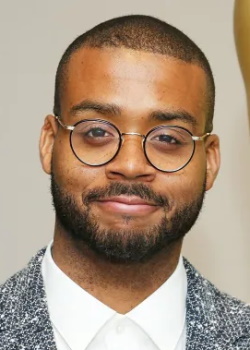
The score for Haunted Mansion is by Kris Bowers, who is having a terrific year in 2023. Having burst onto the scene a few years ago with his scores for the massively popular TV series Bridgerton, as well as critically acclaimed dramas like Green Book, When They See Us, The United States vs. Billie Holiday, and King Richard, Bowers is now being offered major studio projects with a great deal of scope; he wrote a terrific, traditionally classical score for the period drama Chevalier earlier this year, and his score for the Marvel super-hero TV series Secret Invasion has a magnificently memorable main title theme. Later this year he is supervising the music for the big-screen version of the Color Purple musical, and also scoring One Love, a biopic of Bob Marley. Haunted Mansion is yet another string to his bow – it’s a bold, anarchic, wonderfully devilish score that blends spooky orchestral hi-jinks and raucous moments of action and colorful comedy with tons of references to the original Disney attraction, notably the New Orleans jazz heard in the square outside the ride, and the iconic ‘Grim Grinning Ghosts’ song that is its primary musical identity.
 The ‘Grim Grinning Ghosts’ song – which was written by legendary Disney composer Buddy Baker and imagineer/lyricist Xavier Atenacio prior to the ride’s original opening in 1969 – is woven deeply within the DNA of Bowers’s score, so much so that the two become inseparable. From the ominous, moody opening organ chords that accompany riders when they first enter the ‘stretch room’ elevator, to the waltz variation that is heard when the guests are riding in the ‘doom buggies,’ to the jaunty vocal version that ends the ride (‘grim grinning ghosts come out to socialize’), almost every cue features some element of Baker’s tune. And it’s not just straight repetition either; Bowers does some really interesting, fun things with the melody, deconstructing it down and playing different aspects of it as the narrative requires.
It’s embedded deep within action cues, and it forms the cornerstone of the themes related to the Madame Leota and Hat-Box Ghost characters that come to life out of the ride and on to the silver screen. The first four notes of the theme are used as a leitmotif when the ghosts are doing ‘creepy things’ – you can hear them right at the outset of the opening cue “The Mansion,” and in multiple cues thereafter – and then the organ itself acts as a leitmotivic timbre. Bowers explains in an interview with Jazz Tangcay for Variety how he found a fun technique where he ‘played the theme on the organ, but then had the organ player hold the chord while he turned it off — so there’s a long sound of the organ dying as the air is no longer going through it, and that sound is used a lot throughout the film”. It’s clever stuff.
There are also new themes specifically related to Lakeith Stanfield’s character, astrophysicist-turned-paranormal tour guide Ben Matthias. In the same interview with Variety Bowers explains how “we meet Ben at a point in his life where he’s rejecting people and not wanting to be in any relationship, so this idea of this group of people who help him with all that he’s gone through made it clear to me that that would be the main theme”. There are two themes related to him: one is a familial theme that appears in a lot of the big moments, and then the other is the love theme for Ben and his late wife Alyssa, which comes in during several impactful moments related to grief and loss.
The album opens with an original song, “His Soul Left Gloss on the Rose” performed by The Soul Rebels, which has a wonderful dirge-like vibe that reminds me in places of those iconic Louisiana funeral processions, where the coffins are paraded through the streets preceded by brass bands playing mournful jazz tunes. The score quickly settles into its stride thereafter, though, presenting cue after cue of spooky hijinks and moments of bombastic orchestral carnage, tempered with some more introspective moments of thematic beauty.
Action cues like the second half of “The Mansion,” “Ben’s 1st Ghost Photo,” the imposing “William Gracey,” and “The Ghost Realm” are impressive in scope; Bowers allows his orchestra to rise to some striking heights, there are some rampaging rhythmic ideas of fast-paced chase music, and even some fulsome explosions of dissonance and chaos and occasional outright horror, especially in cues like the fantastic “Don’t Leave After Midnight,” the hugely abstract second half of “Ghost Wink,” the creepy “Finding Leota” with its chanted vocals, the unusual “Reverse Séance,” and additional parts of the aforementioned “The Ghost Realm”. These are counterbalanced by the warmer piano-and-string writing in the first half of “Ghost Wink,” and then later in “I’ll Talk to Him” and “She Was the Best,” which address the aforementioned romance/loss issues related to Ben and his family.
I love the lazy, languid, jazzy version of the Ghosts theme in “Photo Tour,” which is full of slurred brass and tapped snares, and then the more playful and jaunty version in “Breakfast,” which brings in some of the familiar Mellomen-style vocals from the ride. I really like “Alistair Crump,” the music that accompanies the reveal of the true identity of the famous Hat Box Ghost, in which vocalist/composer Tori Letzler and her husband, composer Steven Davis, add some cool, contemporary electronic textures to Bowers’s score.
The score’s finale – from “No Windows and No Doors” through to the end of the heroic “Bruce to the Rescue” – sees Bowers engaging in some of the most expansive and full-throttle action music of his career to date. It’s all full of flashing strings, bombastic percussion rhythms, moments of brass-led grandeur, and endless references to the Grim Grinning Ghosts theme, its various deconstructed and fragmented motifs, and its pipe organ sound. It’s very impressive indeed. The electronic textures for Crump the Hat Box Ghost are again prominent in “Crump’s Hat,” at times “It’s Happy Hour Somewhere” becomes a mass of brilliant orchestral carnage, before transforming into frenetic speed and magnificent musical pandemonium in the tremendous “Ghost Chase”. Those chanted vocals! Those brass triplets! Of course, everything ends with a dance party, and one final refrain of “Grim Grinning Ghosts” to bring the album to an upbeat close. The happy haunts have indeed materialized and begun to vocalize!
This is seriously impressive work from Kris Bowers, who with this score is now clearly established as one of the best young voices working in all of film music. Bridgerton proved he could do faux-British costume drama pastiche. The United States vs. Billie Holiday proved he was at home with the jazz and the blues. Chevalier showed he could work in a highly classical environment, Secret Invasion cemented his super hero chops and his talent for writing killer main themes, and now Haunted Mansion has given him a huge opportunity to showcase his fully orchestral action and light horror skills. Fans of the classic Disney attraction will be impressed with his handling of and respect for Buddy Baker’s legacy music, and everyone else will surely be impressed with the scope and scale of his own compositions.
Buy the Haunted Mansion soundtrack from the Movie Music UK Store
Track Listing:
- His Soul Left Gloss on the Rose (written by Kris Bowers, Erion Williams, Paul Robertson, Julian Gosin, Manuel J. Perkins Jr., Corey Peyton, Marcus Hubbard, Derrick Moss, and Lumar LeBlanc III, performed by The Soul Rebels) (2:39)
- The Mansion (4:41)
- Photo Tour (2:24)
- Ben’s 1st Ghost Photo (2:04)
- Don’t Leave After Midnight (1:46)
- The Séance Room (1:36)
- Ghost Wink (3:01)
- Finding Leota (3:17)
- William Gracey (2:24)
- Grim Grinning Ghosts (Breakfast) (1:19)
- I’ll Talk to Him (2:51)
- Reverse Séance (2:41)
- The Ghost Realm (3:22)
- She Was the Best (2:12)
- Alistair Crump (1:35)
- No Windows and No Doors (3:57)
- Crump’s Hat (2:03)
- It’s Happy Hour Somewhere (5:49)
- Ghost Chase (3:37)
- Bruce to the Rescue (5:14)
- Grim Grinning Ghosts (Dance Party) (1:32)
Running Time: 60 minutes 01 seconds
Walt Disney Music (2023)
Music composed by Kris Bowers. Conducted by Fabrizio Mancinelli. Orchestrations by Gregory Jamrok, Abraham Libbos, Josef Zimmerman, Cara Batema, Andrew Rowan, Zach Yaholkovsky, Kyle Gordon and Adam Bravo. “Grim Grinning Ghosts” written by Buddy Baker and Xavier Atenacio. Additional music by Max Wrightson, Thomas Kotcheff, Tori Letzler and Steven Davis. Recorded and mixed by Alan Meyerson. Edited by Ellen Segal. Album produced by Kris Bowers.
-
December 11, 2025 at 10:36 amHaunted Mansion (2023) Review: Disappointing Yet Dazzling Disney Ghost Ride - Movie Block

Shop at the Movie Music UK Store

Member of the

 MOVIE MUSIC UK