THE BAD AND THE BEAUTIFUL – David Raksin
 GREATEST SCORES OF THE TWENTIETH CENTURY
Original Review by Craig Lysy
MGM executives came across a magazine story “Of Good and Evil” by author George Bradshaw, which was expanded into a full story titled “Memorial to a Bad Man”. They believed this riveting character driven drama offered a potent narrative that would be perfect for the big screen. The studio purchased the film rights and assigned renown producer John Housman with production and a budget of $1.56 million. Charles Schnee was hired to write the screenplay and Vincente Minnelli was tasked with directing. A very talented cast was assembled, which included; Kirk Douglas as Jonathan Shields, Dick Powell as James Lee Bartlow, Walter Pidgeon as Harry Pebbel, Barry Sullivan as Fred Amiel, Lana Turner as Georgia Lorrison, Gloria Grahame as Rosemary Bartlow and Gilbert Roland as Victor “Gaucho” Ribera.
The story features a flashback narrative, which entwines the lives of actress Georgia Lorrison, Director Fred Amiel and screenwriter James Lee Bartlow with that of unscrupulous Hollywood producer Jonathan Shields. The three interwoven vignettes reveal how Shields screwed each of the three, causing great harm and resentment, yet in each case they all went on to succeed in their careers. First Shields marrys Georgia and features her in a lead role only to callously dump her afterwards for a bit player. Jonathan finally earns a shot of breaking out of directing B films, pitches his film idea to Shields who secures funding for the project only to assign another director for the film. And lastly James who while writing a script for Shields newest film sees his wife run away with a man Shields deliberated planted because he felt she was distracting him from his writing. Well Georgia in a fury quits, joins another studio, and becomes a star. Jonathan also leaves and ends up becoming an Academy Award winning director, and James writes a novel regarding his wife and lover who betrayed him, yet died in a subsequent plane crash and wins the Pulitzer Prize. The film was a commercial success, earning a profit of $1.8 million. Critics praised the film for offering a thoughtful, finely acted, and well told story, which explored the ugly underside of Hollywood movie culture. The film earned six Academy Award nominations, including; Best Actor, winning five for Best Actress, Best Screenplay, Best Cinematography, Best Art Direction and Best Costume Design.
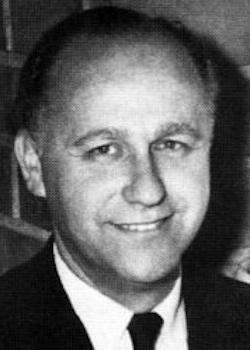 John Houseman and Vincente Minnelli tapped David Raksin to score the film, which explores the more sordid side of Hollywood film culture. Upon viewing the film, he discerned three interwoven vignettes, which he would have to link musically to hold the film’s over-arching narrative together. He also conceived of a score that provided a contemporaneous style, which he would embrace by showcasing saxophone and clarinet as well and some popular songs such as; “Don’t Blame Me” by Jimmy McHugh and Dorothy Fields, vocals by Peggy King, and “Temptation” by Nacio Herb Brown and Arthur Freed performed by Hadda Brooks with Milton Raskin at the piano. Houseman and Minnelli also tasked him to compose a persuasive Main Theme, a “Siren Song” to drive the film’s narrative. Raksin relates an amusing tale of how he struggled with this “Siren Song”;
“I was trying to make a piano part out of it. I was in Kay Thompson’s penthouse at the time. What I did not know was that Andre Previn was next door and could hear me. So I am struggling with the thing and the door opens and Andre says, ‘What the hell have you been playing in here’? I told him it was a thing I wrote for The Bad and the Beautiful and he asked me to play it through. So, I struggled through it, and looked up at him when I finished and all he said was, ‘Lunch’. Six weeks later Previn came on the soundstage while he was recording that same theme with full orchestra. And he says, ‘What a great piece! Marvelous. I’ve got to have it. I want to record it.’ Then Raksin said to Previn, ‘You son of a gun, I played this for you in Kay Thompson’s place and all you could say was ‘Lunch!’ Previn simply replied, ‘the way you play who could tell?’”
This theme took on a life of its own when made into a song, “Love Is For The Very Young” with lyrics by Dory Langdon. For his soundscape, Raksin composed one additional theme for James, an infectious, spritely melody borne by bubbling woodwinds of delight and strings felice. Most of the remaining music consists of variations of the Main Theme across a wide spectrum of emotions, as well as a number of set pieces. Raksin was clearly intent on speaking to each scene’s emotional dynamics, and his music really succeeded synergistically with the film’s narrative and pacing.
“Introduction” provides a score highlight, and offers the Main Title, which opens with the MGM lion’s roar empowered by an ominous drum propelled declaration, which ascends upwards dramatically. At 0:14 the flow of the opening credits unfolds set against the helmeted knight’s head of the Shield’s Picture’s studio logo, which states in French; “Non Sans Droit” (Not Without Right), a motto taken from Shakespeare’s coat of arms. Raksin supports with the sweeping melodramatic romanticism of his Main Theme, which fulfills Houseman’s directive of composing a “Siren Song” that would reel the audience into the drama. We flow seamlessly into the film proper with “Jonathan Calling” with the Main Theme expressed with carefree warmth by strings as we see a telephone ringing. A stage hand picks up the phone and answers that Mr. Ameil is on the camera boom rehearsing, as we see the theme’s graceful flow supporting the boom’s movement across the stage towards a sleeping Georgia. At 0:21 the music becomes mischievous as Fred refuses to take the transatlantic call from Jonathan Shields. The string borne theme resumes and becomes playfully mischievous at 0:32 as a smiling Georgia also refuses Shield’s call in her dressing room. The now playful theme shifts to woodwinds and strings at 0:47 for an extended exposition as James Lee Bartlow answers a phone call, and initial feigns he cannot hear due to a bad connection. Yet he finally agrees to let the operator connect Mr. Shields, who is paying for the call. He then tells Shields; “Drop Dead!” and hangs up.
“Jonathan Calling, Part 2” opens ominously with the Shield’s Motif as the company logo displays on the studio’s entry gates. Heraldic horns support the arrival of a car bearing three passengers; Georgia, Fred and James who have been summoned by studio executive Harry Pebbel. The Main Theme carries their arrival and entry, yet woven within its narrative is a sense of foreboding. The music sours at 0:51 as Georgia pulls out a black marker and defaces the Shield’s logo on an entry pillar with a moustache. Woodwinds full of trepidation support a nervous Harry who prepares three seats in his office, and then greets his guests graciously, though we see he is uneasy. In an unscored scene Harry makes a pitch, that Jonathan has a comeback movie planned and he wants Fred to write it, James to direct it, and Georgia to star in it. He offers a $2 million budget, and obtains their permission to get Jonathan on the phone. He asks his secretary to make the transatlantic call to Paris. We now shift to three flashback vignettes, which explore the poisoned relationship of each of the three.
Fred Vignette
As Harry turns to Fred, saying you’ve known Jonathan for eighteen years, we commence the first flashback as Fred looks angrily at an Oscar statuette on Jonathan’s mantle, which should have been his. Fred’s grievance is that he finally had a film idea, which would propel him from the backwaters of directing of B films. He pitched his film idea to Shields who secured funding for the project only to assign another director for the film. Salt is rubbed into his wound when the film earns an Academy Award. In “Fred we flash back to the burial of Jonathan’s father We open darkly and Raksin supports the minister’s laudatory eulogy with a dirge, replete with forlorn woodwinds. Fred, who has never met Jonathan, disparages his father as he stands next to him during the eulogy. Later, he is stunned and speechless, as he is introduced to Jonathan. “The House” reveals Fred summoning up the courage to apologize by driving to Jonathan’s estate in the Hollywood Hills, which Raksin supports with a foreboding musical narrative. He offers a forthright apology, which impresses Jonathan who invites him in.
“Eighteen Years Ago” reveals the two sharing a drink and as Jonathan reminisces about his father, which is supported by a wistful musical narrative. The men bond, a friendship forms and at 0:33 the music brightens with confidence and cliché American Indian motifs as we see them breaking into the film industry with ‘quickies’ – four day shoot western films. At 1:04 Raksin channels old Hollywood Golden Age sensibilities as narration shows the two men crashing ‘only the very best parties’ in an effort to get name recognition and a possible big break. We flow into “Don’t Blame Me” where we see Peggy Lee sing with softness and gentility, the popular romantic ballad.
In “Came The Dawn”, Jonathan is determined to find a means of getting producer Harry Pebble to hire him. He, Fred and their two dates pawn their possessions to get Jonathan enough money to join the poker table. He ends up deliberately losing $6,000 to Harry, and then has the audacity to ask for a job so he can pay it off! Well, Harry is impressed and hires him on the spot as a director for $300/week. Raksin provides the scene with a spritely, albeit cocky musical narrative, which perfectly supports Jonathan’s antics. “Oh Yes He Is!” reveals Jonathan, Fred and Amy at the beach where an ambitious Jonathan etches in the sand a crest with two Knight helmets – Shields and Amiel. Raksin opens with portentous French horns and the supports with a romantic rendering of the Main Theme as Jonathan tells Fred that he should marry Amy. He proposes, she answers yes, and we conclude warmly as they kiss, much to Jonathan’s satisfaction.
“Busy As A B” offers a montage of Jonathan and Fred making eleven “B” pictures for Harry, which Raksin propels with a spritely musical narrative borne by strings spiritoso. “The Dark” reveals Jonathan and Fred dismayed over the truly lame and terrible costumes for their next film “The Doom of the Cat Men”. They make the creative decision to only show the Cat Men’s luminous eyes against a pitch-black background. Raksin supports with a series of dark piano chords with ominous reverberation. In “Hurry and Keep Hurrying” Raksin supports the preparations for the movie’s debut with the Main Theme rendered as a scherzo propelled by strings energico. “Cat People – Main And End Titles” reveals the film’s opening and ending, which Raksin supports with a homage to Roy Webb, the original composer for the RKO film “The Cat People”. “Newsreel March” offers the usual effusive and celebratory music associated with newsreels, but it sours as a headline declares “It Stinks!”
“The Letdown” offers a beautiful score highlight, and what I believe may be its finest composition. As Jonathan and Fred drive home, Jonathan relates his usual “After Picture Blues”. He diverts to visit “Crow’s Nest”, home of the late famous actor George Lorrison, an actor he extols and admires. Raksin offers an evocative soliloquy by solo clarinet triste, where beauty and sadness entwine. As they enter the estate, the music dissipates and they find a wretched, and heart-broken daughter who disparages the “great actor”, her father who was a rat and a drunkard. “The Faraway Mountain” reveals a gambit by Fred and Jonathan to break out of the “B” movie backwaters with a story based on the book “The Far Away Mountain”. Jonathan’s passionate advocacy succeeds in overcoming Harry’s resistance. Jonathan and Fred spend countless hours together perfecting their script, and Raksin supports with music written for woodwind lovers, offering an aspirational passage brimming with hope where the melodic line shifts to and fro among kindred woodwinds.
“Roland In Babylon” reveals the men scheming to secure the renown Latin lover Victor “Gaucho” Rivera for the lead by taking him for a night on the town with a blonde bombshell. At the Latin nightclub, Raksin interpolates a classic Rhumba as we see Gaucho and their blonde bait dancing. Later, at another nightclub, Gaucho and the blonde slow dance as Hadda Brooks sings a stanza from the sultry “Temptation”. “The Betrayal” reveals Jonathan successfully getting the green light from Harry to begin production with a $1 million budget, a set location in Vera Cruz, Gaucho as the star and Von Ellstein to direct. Fred is shattered by the betrayal and Jonathan’s revelation that although he promised he would direct, Von Ellstein is the best. He rubs salt in the wound adding, that Fred was not yet ready to direct a $1 million film. Raksin transmutes the Main Theme into an aching and unbearable threnody of devastation for one of the score’s most poignant compositions. This concludes the Fred vignette, and we return to the present as Harry declares that Jonathan brushed you off his coattails, and ‘ruined you”, a man who has six kids, has won two Academy Awards, and is one of the most sought-after directors in Hollywood. “The Witch Goddess” and “Where Credit Is Due” are cues attached to two deleted scenes, that later offering the Main Theme as a dirge as Von Ellstein receives the Oscar award for best director.
Georgia Vignette
In the second vignette, we see Georgia gaze upon a drawing on the wall of the Devil holding a dagger – a caricature of Jonathan’s father drawn by her father George Lorrison. In “Georgia” we see the young actress trying to get a break and departing for a screen test at Shields Studios. She is nervous and Raksin supports with a tentative, dissonant musical narrative woven with sadness and uncertainty. At 0:31 the music brightens with hope and optimism as we see her extol her loyal and dutiful agent Gus who has driven her to a gas station where she changes into her audition dress. At 1:07 the music regains its tentativeness and uncertainty as she is escorted into Jonathan’s office with four other girls. “Two Very Early Hours” reveals that she has passed the interview. The next day she performs her screen test, perfecting her performance with Jonathan’s coaching on the second take. Raksin supports with an upbeat musical narrative brimming with optimism.
“The Defeat” reveals Georgia devastated by the very harsh and personal criticism by studio executives over her on-screen test. Weeping strings and forlorn horns support with a molto triste rendering of the Main Theme. Never the less, her salary is cheap and they decide to throw the dice with her. In “Almost Time, Parts 1 & 2” we see Georgia in a montage of costume fittings, makeup tests, and rehearsals. Jonathan is effusive with his praise, books her for a sojourn in Palm Springs and toasts to her success with champagne, sealing it with a kiss. Raksin supports with a romantic musical narrative offering vintage Hollywood sound. “Lonely Girl” reveals Georgia returning from her stay in Palm Springs. She appears sad, and lonely as she enters the soundstage. Raksin supports with a solo trombone triste voicing the Main Theme. She walks to her dressing room where she discovers a beautiful gift from Jonathan. The theme blossoms on strings romantico as she opens it to behold a pearl necklace and a note; “To my new star who will make me very proud of her.” Yet at 1:21 the music sours as she returns to the set complaining of the cold and how dry her throat was, voicing that it was so dry that she had to have a drink. As she exits the set the music swells, becoming tortured and dissonant.
“Fall From Grace” reveals Georgia not showing up for filming and Jonathan departing to find her, propelled by a musical narrative, which blends anger, mystery and determination. He goes to her apartment, breaks down her door and finds her drunk and passed out on the sofa. At 0:22 the Main Theme joins on soft strings romantico, which becomes sultry as she staggers to him. He then realizes that the key to managing Georgia’s instability, is to feign loving her. Tender strings romantico resume a loving rendering of the Main Theme as he carries her in his arms to his estate. The music is severed when he unceremoniously tosses her into his swimming pool.
“Ilyich All Over and More Of Same” offers an outtake from a long montage scene of Jonathan working diligently to prepare Georgia under the guise of romance. Raksin offered the following regarding his original conception:
“So, I composed a piece for string orchestra in the manner of a Russian composer named Anton Arensky, who wrote a series of elegant “Variations on a Theme by Tchaikovsky”. I entitled the piece “Ilychi All Over”, a pretty bad pun on Tchaikovsky’s middle name that is also a comment on the musical resemblance”.
I found this romantic piece a wonderful score highlight, which beautifully aligned with his soundscape. “Fourteen Wonderful Weeks” offers the much shorter replacement piece for the significantly shortened scene. Georgia has fallen in love with Jonathan and relates it was the happiest fourteen weeks of her life. Raksin supports with a happy, easy-going, strolling rendering of the Main Theme. “Phrygian Wedding” reveals narration by Georgia relating her suffering from Jonathan’s perfectionism as she is forced into countless retakes of the crucial wedding scene. Raksin supports solemn religiosity replete with church bells and grand climax as we see the lavish royal weeding. “The Premier” reveals the film’s Hollywood premiere, as the stars arrive at the red carpet to cheering crowds. Later they are all toasted by adoring fans after the film’s conclusion. Raksin supports the two scenes effusively with celebratory joie de vie.
In “Where You Are” Georgia and the cast are celebrating their success, with the Main Theme rendered with warmth and gentility. But Georgia is troubled as her man, Jonathan is conspicuously absent. She goes to his estate with a magnum of champagne and after ringing the doorbell several times a light turns on in the bedroom. At 0:32 the music darkens as we segue into “We Are Not Alone” and see Jonathan descending the stairs with dread. He greets her and she is bubbling with happiness, saying she has brought her party to him. He insists she go and leave him alone and is devastated when a bit player Lila joins them and makes it very clear that Jonathan is hers tonight. He sees the betrayal on her face, and cannot bear it, yelling with callous cruelty for her to get out. In “Katharsis Indicated” Georgia flees in her car in a rainstorm while suffering a nervous breakdown. Raksin propels the scene with a horrific strings furioso driven maelstrom of rage and devastation. Returning to the present, she declares she will never work with Jonathan again. Harry replied that he certainly ruined you, saying she was a drunk and a tramp playing bit parts, and he made you one of the most popular stars in Hollywood.
James Lee Bartlow Vignette
In “James Lee’s Narrative” Harry examines his Pulitzer Prize winning novel “A Women of Taste” and reads its biography. Raksin supports with a foreboding musical narrative that brightens atop strings felice voicing James’s Theme at 0:23 as we flashback to James exiting a bookstore. In the window display is his first novel “The Proud Land”, which was enjoying good sales nationwide. His theme’s spritely carefree musical narrative carries his walk home and continues inside as he listens to his wife Rosemary entertaining the women of the book club meeting in their parlor. He successfully sneaks into his study and begins typing his second novel, only to be interrupted by Rosemary’s friend Miss Rosser, who asks that he autograph his novel that she purchased. Later in an unscored scene he takes a call from Jonathan Shields, who makes him an offer to come to Hollywood, all expenses paid to discuss his ideas for his next film. James declines over Rosemary’s objections, but then relents as he sees she really wants to go. We flow into “California” atop lush languorous Latin dance rhythms as the camera reveals the famous Beverly Hills Hotel, where they are provided a luxurious bungalow. The next day in an unscored scene, Jonathan uses his charm, and charisma to persuade James to write the screenplay for his adaptation of his novel “The Proud Land”.
“I Started To Work and How Well Is Enough” is a delightful score highlight, which reveals James beginning work on the screenplay. Strings felice and bubbling woodwinds of delight empower his spritely theme. An interlude at 0:23 supports Rosemary beeping her car horn below to show off her new fur stole. His theme resumes its spritely happiness as he returns to work and resumes his typing. The next day in an unscored scene Jonathan stops by and is unhappy at the slow progress, determining that Rosemary is distracting James from his work. His solution is to take James to his retreat at Lake Arrowhead where he can work without distractions, as Gaucho shows Rosemary around town. In “I Started To Work reprise and How Well Is Enough reprise” James wakes at the cabin and a montage follows of the two men working together as they collaborate to complete the screenplay. Raksin supports with a delightful reprise of James’ Theme, which ends sharply as James sees a newspaper headline that shows Gaucho and his wife died in a plane crash. They go to the crash site, and James identifies the body. He is devastated and Jonathan consoles him with a drink.
In “Let’s Get To Work” Jonathan coaxes James that the best way to overcome this is to complete the task at hand. And so, James resumes work empowered by his theme, but it has shed its happiness and vitality for a sadder exposition. In an unscored scene Von Ellstein quits as director over creative differences with Jonathan, who is forced to take the reins of directing the rest of the film. In “The Proud Land”, a film intended to be similar to “Gone With The Wind”, a montage of scenes culminating with the End Titles unfold, ending in the projection room. Raksin, in a purposeful homage to Max Steiner offers music, which would have made the maestro proud. Afterwards Jonathan is scathing in self-criticism, saying he butchered the film, and ruined a beautiful, sensitive story. His ego will not permit him to release such a bad film, which causes Shield’s Productions, himself, Harry and Syd to all go bankrupt.
Later “She Wasted You” as James tries to console Jonathan, a self-destructive Jonathan decides to rupture their friendship by revealing a terrible truth to James. He tells him that neither he, nor Gaucho killed Rosemary, rather she killed herself. Adding that whether you like it or not, that you are better off without her. James punches him in the face and then departs without saying a word, supported by a grieving rendering of his theme. In an unscored scene we return to the present and Harry says to James that yes, Jonathan sure destroyed you, as you came out of it with nothing but a Pulitzer Prize novel and the highest salary of any writer in Hollywood. Harry declares that each of them need to give the Devil his due. Jonathan’s call goes through and with him on the line Harry asks if they will work with him on this new film. However, one by one, they all refuse and depart in “The Spellbinder” (End Title), a magnificent score highlight. Georgia picks up a phone in the anteroom and she, James and Fred all listen to Jonathan selling his idea to Harry. We see Georgia is clearly affected as she still loves him, and the men are captivated and seem interested. The film ends with the audience unsure if the three have relented or not. Raksin supports the crucial scene with the Main Theme’s most powerful iteration, which opens atop a solo saxophone before expanding into a grand orchestral statement, the Siren song demanded by John Housman.
I would like to thank Marilee Bradford and Rhino Records for resurrecting David Raksin’s masterpiece score to “The Bad and the Beautiful”. The mastering of the archival monaural ¼ inch magnetic tape was meticulous and well done. The finished monaural audio quality may be a non-starter for audio purists, but I believe that the beauty of Raksin’s handiwork can still be appreciated. Producer John Houseman demanded a “Siren Song” to pull the audience into the picture, and Raksin responded with one of the finest compositions in his canon. The film’s narrative presented challenges in that it featured three discreet, though interrelated story vignettes. Raksin masterfully used his versatile Main Theme to weave together the three stories, which enhanced the film’s storytelling, and ensured that director Vincente Minelli realized his vision. Many beautiful set-pieces are featured including the masterpiece cues “The Letdown” with its haunting clarinet soliloquy, “Ilyich All Over” whose sumptuous strings offer an homage to Tchaikovsky, “Lonely Girl” which showcases a melody voiced by a solo trombone, a rarity in film scores, and “The Spellbinder” where the Main Theme achieves its apogee, opening atop solo saxophone and culminating with a grand orchestral statement to conclude the film. Folks, this score offers what I believe to be one the finest in David Raksin’s canon. I believe the score to be a collector’s prize, and despite the monaural sound recommend the album’s purchase as essential for your collection.
For those of you unfamiliar with the score, I have embedded a YouTube link to the Main Theme: https://www.youtube.com/watch?v=DeH0NF51BAk
Buy the Bad and the Beautiful soundtrack from the Movie Music UK Store
Track Listing:
- Introduction (Main Title) (1:24)
- Jonathan Calling (2:07)
- Jonathan Calling, Part 2 (1:24)
- Fred (1:19)
- The House (0:35)
- Eighteen Years Ago (1:40)
- Don’t Blame Me (2:05) (Extended Version)
- Came The Dawn (0:49)
- Oh Yes He Is! (1:05)
- Busy As A B (0:31)
- The Dark (0:41)
- Hurry and Keep Hurrying (1:16)
- Cat People – Main And End Titles (0:14)
- Newsreel March (0:17)
- The Letdown (2:11) (Extended Version)
- The Faraway Mountain (0:37)
- Roland In Babylon (0:39)
- Temptation (2:04) (Extended Version)
- Brief Holiday (0:21) (Outtake)
- The Betrayal (1:56)
- The Witch Goddess (0:17) (Outtake)
- Where Credit Is Due (0:38) (Outtake)
- Georgia (1:28)
- Two Very Early Hours (0:23)
- The Defeat (0:35)
- Almost Time, Parts 1 & 2 (3:16) (Extended Version)
- Lonely Girl (1:49) (Extended Version)
- Fall From Grace (1:28)
- Ilyich All Over and More Of Same (2:37) (Outtakes)
- Fourteen Wonderful Weeks (0:59)
- Smoke That Cigarette (0:29) (Outtake)
- Phrygian Wedding (0:30)
- The Premeer (0:55)
- Where You Are / We Are Not Alone (0:46) (Extended Version)
- Katharsis Indicated (0:23)
- Katharsis Achieved (0:38) (Outtake)
- James Lee’s Narrative (2:17)
- California (0:30)
- I Started To Work and How Well Is Enough (1:10)
- I Started To Work Reprise and How Well Is Enough Reprise (1:58)
- Let’s Get To Work (0:27)
- The Proud Land (0:40)
- She Wasted You (0:35)
- The Spellbinder (End Title) (2:18)
- Introduction (Main Title) (1:53) (Unused Version #1)
- Introduction (Main Title) (1:55) (Unused Version #2)
- The Spellbinder (End Title) (2:24) (Unused Version)
Running Time: 56 minutes 33 seconds
Rhino R272400 (1952/1996)
Music composed and conducted by David Raksin. Orchestrations by David Raksin. Recorded and mixed by XXX. Score produced by David Raksin. Album produced by Marilee Bradford

Shop at the Movie Music UK Store

Member of the

 MOVIE MUSIC UK