Under-the-Radar Round Up 2023, Part 2
 Original Reviews by Jonathan Broxton
I’m pleased to present the latest instalment in my on-going series of articles looking at the best under-the-radar scores from around the world. This article, the second of 2023, covers five scores for projects all from French cinema, highlighting yet again just what a treasure trove of outstanding music is coming from that country right now. The scores covered run the gamut of genres, from light comedy to historical melodrama, period romance, and more!
BARDOT – Arthur Simonini
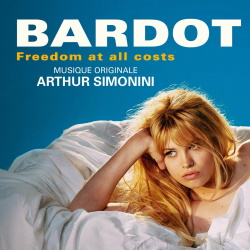 Bardot is a French drama television series about the actress and model Brigitte Bardot, one of the most iconic stars of French cinema. Specifically, it follows the period in Bardot’s life from 1949, when she first appeared on the cover of a magazine, to the birth of her son in 1960, and looks at her life at the height of her fame – including when she achieved international recognition in 1957 for her role in Roger Vadim’s And God Created Woman, as well as her iconic role in Jean-Luc Godard’s film Le Mépris – which also coincided with periods of great tumult and personal tragedy. It stars newcomer Julia de Nunez in the title role, and was created and directed by Danièle Thompson and Christopher Thompson for the France 2 network.
The score for Bardot is by composer Arthur Simonini, a relative newcomer on the French music film whose most well-known work to date is probably his 2019 score Portrait de La Jeune Fille En Feu. As one would expect his score for Bardot draws heavily on the film music style of French cinema in the late 1950s and early 1960s, notable composers such as Paul Misraki, Georges Delerue, Michel Magne, and other icons of the French New Wave movement. It’s not pastiche per se, but it does intentionally pay homage to that style, and to Simonini’s credit he captures the sound and musical flavor of that period excellently.
The main theme, “Double B,” combines lush and dreamy strings, vocals, and classical piano runs with a slightly more contemporary beat featuring electronic textures and pulsating guitars, to excellent effect. Other cues of note include the jazzy, romantic, effortlessly smooth and elegant “Vadim,” the gorgeously melancholy “Idées Noires,” the gentle piano lines and swooning violin textures of “Jean-Louis,” the doo-wop vibes of “La Mostra,” the vivacious classicism of “Paparazzi,” the prancing delicacy of “Dolce Vita,” the smoky trumpet vibes of “Pilou,” and so much more.
Bardot is an excellent album, a superb trip down memory lane that celebrates one of French’s cinemas eternal icons, and also pays excellent homage to the composers whose music accompanied her on the silver screen. The score is available stream and download from most good online retailers.
Track Listing: 1. Double B (1:58), 2. Vadim (1:59), 3. Idées Noires (3:35), 4. Jean-Louis (3:47), 5. La Mostra (1:08), 6. Rue de la Pompe (2:00), 7. Sacha (1:46), 8. Enzo (1:23), 9. Paparazzi (2:10), 10. Dolce Vita (1:02), 11. Pilou (2:37), 12. Naissance (1:28), 13. Clouzot (1:18), 14. Le Boum (2:36). Federation Studios, 28 minutes 47 seconds.0
C’EST MON HOMME/LOVING MEMORIES – Romain Trouillet
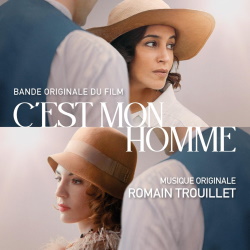 C’Est Mon Homme – which translates literally as That’s My Man, but is properly known as Loving Memories – is a French period drama directed by Guillaume Bureau, starring Leïla Bekhti, Karim Leklou, and Louise Bourgoin. Set in the aftermath of the Great War in 1916, the story follows Julie, a widow whose husband Julien was supposedly killed in action during the conflict. However, Julie unexpectedly sees a photograph of what appears to be her husband, alive and well, so she tracks him down, and finds that he has amnesia, and has been living as a vagrant on the streets. They reconnect and Julie helps him to fall in love with her again – until another woman, Rose-Marie, appears and claims to be the man’s real wife.
The score for C’Est Mon Homme is by the super-talented young French composer Romain Trouillet, whose recent scores for Edmond (2019) and De Gaulle (2020) impressed me greatly. There’s a superb sense of romance and drama inherent in this music, which veers from being lovely and sweeping to being more intense and urgent as the score progresses. It has a superb melodic core, strongly lyrical and at times wonderfully expressive, and the orchestations are rich and full, with a strong string-led core backed by more tentative woodwind passages and delicate piano textures.
The relationship between Julie and Julien is the most well-defined, and is expressed through several beautiful cues, notably “Le Retour de Julien,” “Un Rêve,” and the brief but quirky “L’Amour Viendra” which begin hesitantly and with a touch of skepticism, but quickly blossom into something utterly delightful, summery and at times almost carefree. The arrival of Rose-Marie in “L’Autre Femme” throws a spanner in the works with a new theme that almost feels like a Gallic variation of Chopin’s funeral march, almost as if her arrival results in the death of Julie and Julien’s new relationship, and many of the subsequent cues are slow, moody, and introspective. The period ragtime jazz in “Les Filles de l’Apollo” and “Charleston” comes as a shock, but they are creative and authentic.
The score returns to its familiar sound in “L’Amour Vache,” and thereafter Trouillet engages in some much more bold and dramatic writing, including the excellent title C’est Mon Homme (which has more than a hint of Alexandre Desplat in the phrasing of the woodwinds), and the moving finale in “La Loi du Désir” and “C’est Moi,” which ends on a slightly downbeat and bittersweet note.
C’Est Mon Homme is an excellent, mature, serious romantic drama score with some excellent lyrical passages, moments of heightened emotion, and lovely writing for the full orchestral ensemble, and it yet another a score from a young and talented composer working in the French film music industry. It’s available to download and stream via most good online retailers from Milan Records.
Track Listing: 1. La Force de Croire (1:26), 2. La Photo (0:49), 3. Le Retour de Julien (2:11), 4. La Quête des Souvenirs (2:14), 5. Un Rêve (2:45), 6. L’Amour Viendra (0:28), 7. L’Autre Femme (1:03), 8. La Jeune Fille et la Mort (1:21), 9. Le Télégramme (1:05), 10. Fuir (0:34), 11. Frimousse (1:02), 12. La Trahison (1:04), 13. L’Amour Fou (1:58), 14. Fascination (performed by Louise Bourgoin) (1:05), 15. Les Filles de l’Apollo (2:06), 16. Charleston (2:49), 17. Je Sens Bien Que Je Vous Plais (performed by Louise Bourgoin) (2:16), 18. L’Amour Vache (1:44), 19. C’est Mon Homme (2:12), 20. Envers et Contre Tous (1:12), 21. L’Amour Est Un Jeu (performed by Louise Bourgoin) (1:03), 22. Une Nouvelle Vie (1:06), 23. Réminiscence (0:45), 24. Valse En La Mineur (1:22), 25. La Loi du Désir (1:46), 26. C’est Moi (1:10). Milan, 36 minutes 36 seconds.
LE COURS DE LA VIE/LIFE LESSONS – Vladimir Cosma
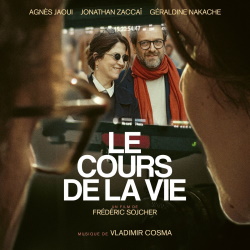 Le Cours de la Vie is a French romantic drama film directed by Frédéric Sojcher, starring Agnès Jaoui as Noémie, a middle-aged woman who re-discovers her passion for cinema as a way of rekindling her dull life. On her first day at her film school she is shocked to find that Vincent (Jonathan Zaccaï) her childhood love, is the director of the school; through his masterclasses on the art of screenplay writing Noémie remembers what it is to love passionately – and she and Vincent rekindle their affair, many years later. It’s a very French film in every sense of the word, and its cinematic intelligence is enhanced greatly by its score, by the Franco-Romanian composer Vladimir Cosma.
83-year-old Cosma is one of those composers who gets very little attention in the English-speaking world, despite having been working successfully since the early 1960s, mainly because he almost never scores English-language films; despite this, he is a legend in the French film industry, and it’s not difficult to see why – his music is emotional, tuneful, melodic, witty and whimsical, and Le Cours de la Vie is very much cut from the same cloth.
As the film itself is about French cinema, much of the film’s score features tracks drawn from Cosma’s immense back catalogue, and so for anyone unfamiliar with his work then this score would be a perfect place to start to get a sense of what the composer is all about.
“La Première Année” are “Alphonsine” are from the score for the 2006 film Le Temps des Porte-Plumes, and are slow, elegant, refined pieces for lush strings, with a hint of darkness to the woodwind accents. “En Famille” is from the score for the 1973 film Pleure Pas la Bouche Pleine, and is an introverted piece for accordion and orchestra rooted in regional folk music. “Je Me Souviens, Mercuès” is from the score for the 1984 film Mistral’s Daughter, and is similarly lush and elegant, but again has a touch of melancholy and reflectiveness in the combination writing for strings and accordion. “La Main du Chamane” is from the score for the 1999 film Le Fils du Français, and is moodily romantic, again using the strings to take the lead.
“But Sériel” is a deep cut from the score for the 1968 short film But, and is a piece of unusual and quirky percussive experimentalism. “Hélène et François” is from the 1991 film La Totale, and is an atmospheric piece that makes use of more prominent electronic tonalities. “La Vache Aux Trousses” is from the 2000 film La Vache et le Président, and is more dramatic and tense, with pizzicato strings underpinning the melody. “La Route de Sibérie” is from the score for the 1975 film Michel Strogoff and is all about dark drama, with a strong cello motif running through a series of bold string textures. However the standout piece for me is “Soleil,” from the 1997 film of the same name, a staggeringly beautiful romantic theme that builds out from a solo guitar until it emerges into a swooning, sweeping piece for the full orchestra that really underlines what a tremendous composer Cosma is.
The only two brand new pieces are the “Générique Début” and the “Générique Fin,” and both are based around same new melody; the former arranges it for a pair of expressive acoustic guitars, jazzy and melodious and sunny, but with a little hint of sultriness too, while the latter transposes it to a gorgeous solo piano. It’s really good.
Le Cours de la Vie will be mostly redundant to anyone who already knows and loves Vladimir Cosma’s music, but for anyone (mostly Americans) who remain unfamiliar with his vast output, this album is a perfect sampler to get you started – and you get 8 minutes of music to boot! It’s available to download and stream via most good online retailers from the Larghetto Music label.
Track Listing: 1. Le Cours de la Vie (Générique Début) (3:58), 2. La Première Année (5:19), 3. En Famille (1:24), 4. Je Me Souviens, Mercuès (2:20), 5. La Main du Chamane (1:07), 6. But Sériel (1:29), 7. Hélène et François (1:16), 8. La Vache Aux Trousses (1:05), 9. Alphonsine (2:18), 10. La Route de Sibérie (1:15), 11. Soleil (3:30), 12. Le Cours de la Vie (Générique Fin) (3:37). Larghetto Music, 28 minutes 38 seconds.
JEANNE DU BARRY – Stephen Warbeck
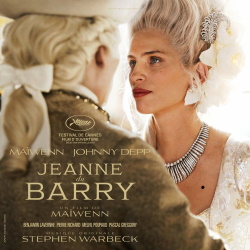 Jeanne du Barry is a historical drama film written, directed and produced by Maïwenn and starring herself and Johnny Depp in the leading roles. It also stars Pierre Richard, Benjamin Lavernhe, Noémie Lvovsky, Pascal Greggory, Melvil Poupaud and India Hair. The film looks at the last few months of the life of the real Madame du Barry, who in the 1790s used her intelligence and allure to climb the social ladder, eventually becoming part of the inner circle of King Louis XV. They fall in love and, against all propriety and etiquette, she moves to Versailles, where her arrival scandalizes the court. Unfortunately her end was not a happy one – she was executed by guillotine during the French Revolution on accusations of treason – but her brief flirtation with power made her an iconic figure in French history.
The score for Jeanne du Barry is by Oscar-winner Stephen Warbeck, whose career these days is spent almost exclusively writing for French and Dutch cinema. Warbeck has explored the musical stylistics of the period before in his score for Quills, but whereas that music often went to darker places in exploring the life of the Marquis de Sade, the music for Jeanne du Barry is lush and romantic.
The main theme for Jeanne is a gorgeous, swooning solo cello piece augmented with oboe and piano – beautiful with a hint of underlying tragedy – that occasionally reminds me of something Wojciech Kilar might have written for a film like this. The melody from this cue runs through much of the score, following the ascent of the social climber through French royal society. Interesting statements include the delicate woodwind-led version in “Renvoyée,” the intimate harp in “Jeanne Rencontre du Barry,” the richly melancholic “Présentation de Jeanne à la Cour,” and the introspective duet for piano and cello in “La Mort d’Adolphe”
Elsewhere, I really enjoy the pretty vocals that infuse “La Première Nuit” with a touch of the angelic, the regal ‘trumpet voluntary’-style flourishes and dainty rhythms in “Le Lever du Roi” and “Le Roi et la Comtesse,” the swooning romance of “Jeanne à Versailles,” and the wonderfully exuberant and dramatic “La Chasse,” which has a stronger focus on brass. Towards the end of the score – as the eventual fate of Jeanne and, in turn, the entire French aristocracy – becomes clearer, Warbeck allows the score to rake take a more tragic turn, with more emphasis on searing cello writing and prominent choir; cues like “Dernier Adieu,” “La Mort du Roi,” and “La Fin” have a palpable emotional quality.
Jeanne du Barry is a score which will greatly appeal to traditional classicists who appreciate a touch of French period music in their orchestral scores. It has the slightly subdued sound that many Warbeck scores tend to have – Shakespeare in Love certainly did – but there is still plenty of outstanding music to experience and enjoy. It’s available to download and stream via most good online retailers from the Why Not Productions label.
Track Listing: 1. Jeanne du Barry (2:22), 2. Le Début (2:30), 3. Renvoyée (3:10), 4. Jeanne Rencontre du Barry (1:52), 5. La Première Nuit (2:34), 6. Le Lever du Roi (1:58), 7. Mort de la Reine (1:48), 8. Présentation de Jeanne à la Cour (2:05), 9. Jeanne à Versailles (2:29), 10. La Chasse (1:30), 11. Le Roi et la Comtesse (1:03), 12. Le Style du Barry (1:47), 13. La Mort d’Adolphe (2:56), 14. Les Marches (2:10), 15. Le Roi Est Malade (1:24), 16. Dernier Adieu (3:36), 17. La Mort du Roi (2:49), 18. La Fin (1:58), 19. Après La Mort de Jeanne (1:41), 20. Générique de Fin (3:07). Why Not Productions, 44 minutes 49 seconds.
UN HOMME HEUREUX/A HAPPY MAN – Amine Bouhafa
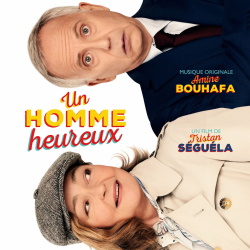 Un Homme Heureux is a contemporary and topical French comedy drama directed by Tristan Séguéla. The film stars Fabrice Luchini as Jean, a conservative man campaigning to be re-elected as the mayor of a small town in northern France. However his campaign – and his life – is derailed when Edith (Catherine Frot), his wife of 40 years, tells him a secret she has been keeping for decades but that she can no longer repress: that she is – and always has been – a man, and she wants to undergo gender reassignment surgery.
The score for Un Homme Heureux is by the Tunisian-born Paris-based composer Amine Bouhafa, whose previous excellent works include the TV series Grand Hotel: Secret of the Nile (2016), and the films La Belle et la Meute (2017), and Le Sommet des Dieux (2021). Un Homme Heureux shows off the composer’s more charming and whimsical side with a series of bouncy, jazzy, catchy tunes that underscore the comic misadventures of the two main characters as they try to adjust to the new dynamic in their marriage.
The main theme, “Un Homme Heureux,” is a terrific piece of light Gallic jazz, full of sprightly guitars, lively clarinets, upbeat percussion lines, and a wash of strings that’s infectiously upbeat and good natured. “Un Petit Bisou” and “Campagne” are similarly mischievous, full of little pizzicato textures and vivacious struck and plucked percussion, and the latter eventually adopts a tone not too dissimilar from John Williams’s The Terminal. “Le Monde Change” is a little dirtier but still full of energetic good humour, and has luscious string passage in its second half, and “Moustache” is clearly inspired by the rhythmic part of Ravel’s Bolero, while the conclusive “Montreuil-Sur-Mer” is a bright caper that ends the score on a high.
Other cues address the more serious and emotional side of the story with elegance and charm; cues like “Tendresse” have some lovely, sparkling writing for strings and woodwinds that sounds a little like Alexandre Desplat at his most playful, while “Eddy” is an intimate waltz built around a gorgeous, bittersweet piano melody. “Le Bal des Acharnés” is the emotional climax of the score – tender and moving.
Un Homme Heureux is a light, charming, playful diversion written in that inimitable style that only the French can do; it also shows off a very different side to the music of Amine Bouhafa that I really enjoy. This isn’t a score that is going to linger long in the memory, but it’s a lovely piece of Gallic breeze when it’s playing, and that’s sometimes enough. It’s available to download and stream via most good online retailers on the Gaumont label.
Track Listing: 1. Un Homme Heureux (3:11), 2. Tendresse (2:12), 3. Un Petit Bisou (1:57), 4. Eddy (2:31), 5. Le Monde Change (1:28), 6. Moustache (2:00), 7. Séparation (2:11), 8. Campagne (2:38), 9. Le Bal des Acharnés (1:53), 10. Montreuil-Sur-Mer (2:50). Gaumont, 22 minutes 51 seconds.

Shop at the Movie Music UK Store

Member of the

 MOVIE MUSIC UK