ONE HUNDRED MEN AND A GIRL – Charles Previn
 GREATEST SCORES OF THE TWENTIETH CENTURY
Original Review by Craig Lysy
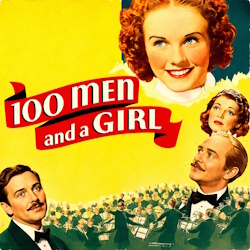
In 1937 Universal Pictures decided to embark on a new musical comedy based on an original story by writer Hans Kraly. Joe Pasternak and Charles R. Rogers were assigned production with a $762,000 budget, Henry Koster was tasked with directing, and Kraly was hired to adapt his story and write the screenplay. For their cast, the studios premiere star Deanna Durbin, who was also a vocally trained soprano, would star as Patsy Cardwell. Joining her would be Adolphe Menjou as John Cardell, renown conductor Leopold Stokowski as himself, Eugene Pallette as John R, Frost, and Alice Brady as Mrs. Frost.
The story opens with unemployed, and down on his luck trombone player John Cardwell failing to secure a job interview with conductor Leopold Stokowski. His daughter Patsy, who is a singer, goes out and fights for her father and ninety-nine other physicians who are also unemployed. By force of will, dogged determination and pure audaciousness, Patsy manages to stage a performance of her one-hundred-member orchestra at the home of a furious and aggrieved Leopold Stokowski. Yet he acquiesces to her request for a tryout and he is very much pleased with their performance of Litszt’s Hungarian Rhapsody No. 2. Stokowski postpones his European tour and agrees to conduct a concert with the orchestra. Well, the concert is a smashing success, crowned by Patsy’s wonderful vocal performance of “Brindisis”, the drinking song from Giuseppe Verdi’s opera La Traviata (1852). The film was a commercial success earning a profit of $1.5 million. It was also a critical success, earning five Academy Award nominations, including; Best Picture, Best Original Story, Best Film Editing, and Best Sound Recording, winning one for Best Film Score.
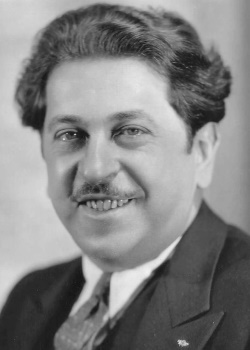 Charles Previn was head of the music Department at Universal Pictures and personally took charge of the project. Previn decided to infuse his soundscape with a number of classical music and opera pieces given that the story resided in the realm of classical music and followed the plights of down on your luck orchestral musicians. Selections included Symphony No. 5 in E Minor by Tchaikovsky, Rakoczy March by Berlioz, the Overture from Zampa Ou la Fiancée de Marbre by Ferdinand Hérold, Lohengrin by Richard Wagner, the Alleluja from Mozart’s ‘Exultate Jubilate’, Hungarian Rhapsody No. 2 by Franz Liszt, and the drinking song ‘Libiamo Ne’ Lieti Calici’ from La Traviata by Giuseppe Verdi. He would also include a number of new and traditional songs, including It’s Raining Sunbeams by Friedrich Hollaender and Sam Coslow, A Heart That’s Free by Alfred G. Robyn and Thomas Railey, and the traditional refrain For He’s a Jolly Good Fellow. He also composed some incidental music to bridge the various song and aria vignettes and speak to the emotional dynamics unfolding on the screen.
00:17 “Studio Logo” the resplendent rotating art deco globe displays the Universal Pictures logo, composed by Jimmy McHugh, which is introduced by a drum roll and grand fanfare declarations. 00:39 “Main Title/Tchaikovsky Symphony No. 5” reveals Leopold Stokowski conducting a performance of the grim opening of the Fourth Movement of Tchaikovsky’s Symphony No. 5 in E minor, which slowly swells with fury and dramatic power as the flow of the opening credits unfolds on the screen. We segue seamlessly into the film proper captivated by Stokowski’s conducting of one of Tchaikovsky’s most passionate works. At 04:00 the symphony’s magnificent Main Theme returns triumphantly as we see a grim John Cardwell peering through a stage side door. We close with a grand and glorious declaration of the Main Theme, which brings effusive praise by the audience. Afterwards, John, an unemployed trombonist, pleads with Stokowski for a job, but is rebuffed, and turned over to an unsympathetic orchestra manager who orders security to throw him out. On the street, a woman drops her purse, which oozes money and John’s effort to turn it in is met by security slamming the door in his face.
09:15 “The Deception” reveals a dejected John walking home supported by a musical narrative voiced by strings spiritoso and aching woodwinds. He arrives at the apartment and is given a morning eviction notice, but he pays the $52 owed, much to the Mrs. Tyler, his landlord’s surprise and delight. A string descent motif carries an ecstatic Patsy down the stairs, crowned with effusive strings felice as she hugs her father. They return to the room and she overflows with joy, telling her neighbor Michael, an unemployed flautist the good news. Racing strings energico carry Patsy downstairs to retrieve their packed suitcases as they will be staying after all. He discloses to Michael that he lied, showing him the purse, he found.
11:49 “It’s Raining Sunbeams” reveals Michael playing the piano as Patsy sings the popular song of the same name. The song offers Durbin’s sweet vocal, which abounds with unbridled happiness and joie de vie! 14:45 “Patsy Follows Cardwell” reveals her father going to ‘orchestra rehearsal’, after ordering Patsy to stay home. Well, she will have none of it and sneaks out propelled by Berlioz’s renown Rakoczy March. She arrives and is denied admission to rehearsal by Marshall, the security man, who said he threw her father out and that he is not employed by the orchestra. She will not believe him, races upstairs and is devastated to find that her father is not among the trombone players. The Rakoczy March receives a robust performance as we see Stokowski conducting its rehearsal performance. At a restaurant John and Michael fine tune their deception as they return home for dinner. 17:57 “The Truth Revealed” reveals John returning home and his deception is exposed by Patsy who cries in his arms. Aching strings tristi voice her disappointment as she finds an address in the purse and departs to return it to the owner.
19:25 “Patsy Meets Mrs. John R. Frost” reveals Patsy meeting the socialite and returning her purse. She declines a reward of $200, asking instead for $52.10, which a gentleman agrees to pay. She says please give it to Mrs. Frost as compensation of the money we took to pay our rent. Mrs. Frost is impressed by Patsy’s integrity and invites her to join her party. Soft party source music plays under the dialogue as Mrs. Frost fawns over her and makes her feel welcome. When she learns her father plays the trombone, and that she sings, she insists that Patsy sing for her guests. 23:17 “A Heart That’s Free” offers a wonderful song highlight, which reveals Patsy singing the popular song, which speaks of love, freedom and a carefree life. Her sterling soprano vocals join with a gentile melody of exquisite romanticism, achieving a sublime confluence of voice, melody and lyrics.
The guests applaud effusively and praise her vocals. When Patsy explains that her father, like too many musicians are unemployed Mr. Frost suggest that the solution is the creation of more orchestras. Patsy resolves to assemble an orchestra and is ecstatic when Mrs. Frost and several of her guests agree to be its patron. Patsy is joyous and runs away full of thanks to advise her father and other musicians. Later that night at the local hangout Patsy tries unsuccessfully to convince her father that Mrs. Foster will sponsor an orchestra. She grabs Michael, calls Mrs. Foster who repeats to Michael on the phone that Patsy is telling the truth. Her father, Michael and the other musicians agree to give it a try as they have nothing to lose. The next day the musicians assemble in a local garage for rehearsal only to be confronted by the owner who demands payment up front. In 32:36 “Zampa, ou la Fiancée de Marbre” John stalls and conducts the orchestra in a rousing rendering of the Hérold’s overture over the screaming rants of the garage owner demanding his money. Patsy arrives at the Frost residence to obtain money to pay the garage owner only to find that she has departed for Europe. The butler advises that Mr. John R. Frost is at the Merchant’s club, and Patsy runs off desperate to find him. She finds him, tells her story and he agrees to fund her, advising that she head off and he will follow in his limousine.
39:51 “For He’s a Jolly Good Fellow” as Mr. Frost arrives, he is greeted by a celebratory rendering of the classic French song by the orchestra. Yet Frost is adamant, he will not sponsor the orchestra and admits that his wife was only humoring Patsy, and his offer of a contract for her, was a joke. Her father is furious, punches him, and orders him to leave. A dejected John then asks the orchestra to leave and a drape of sadness descends to support their departures. 44:51 “Patsy Meets Stokowski” reveals her sneaking into the concert hall as Stokowski launches in the rousing heroism and romanticism of Wagner’s “Lohengrin: Prelude to Act III”. She watches awestruck by the beauty and magnificence of the music. Afterwards she applauds only to be rebuffed by Stokowski and thrown out by Marshall, the security guard. She escapes to Stokowski’s office, takes a phone call from a newspaper editor, and discloses that Stokowski will conduct an orchestra of unemployed musicians, funded by Mr. John R. Frost. After hanging up the editor orders the story run in the next edition. Stokowski’s manager discovers her, does not believe her story that she is to meet Stokowski. He consults Stokowski who says she must leave.
As the manager, and Marshall search for her, Stokowski continues rehearsal at 53:35 with Mozart’s note-rich “Alleluja: from the motet ‘Exultate, jubilate’”. Patsy joins her sterling soprano vocal to the orchestra and impresses Stokowski who continues the performance, which ends gloriously with her voice on high C. The orchestra applauds, and Stokowski joins her in the gallery. Stokowski praises her voice, but declines to conduct her orchestra as he is leaving for a concert tour of Europe. Yet he agrees to discuss matters again with her in six months when he returns. Later her sympathetic cabby, whom she owes $8.40 agrees to take her home where she confides to her father that her plan to secure help from Stokowski failed. At 1:01:22 a musical narrative by strings tristi voice Patsy’s dismay as her father and Michael console her. 1:03:10 “Breaking News” reveals newspapers churning off the printing press that state; “Stokowski to Conduct Unemployed Musicians, with John R. Frost Sponsoring”. A montage of newspapers be sold follows supported by a dramatic musical narrative crowned with Tchaikovsky’s Main Theme fanfare form his Symphony No. 5. Later Frost is outraged when he reads the newspaper headline but is dissuaded calling his lawyer by his business associates who see benefits from the news. Stokowski’s manager denies the story, while Patsy’s father and fellow musicians are elated.
Well, Frost decides that funding this is a good business decision, and offers $1,000 to fund the orchestra for six months. Frost then departs to see Stokowski to formalize the deal. Stokowski denies the story, refuses and an angry Frost storms out believing his business competitor planted the story out of spite. Stokowski orders his butler that he is not to be disturbed and departs as we see Patsy has snuck into the manor.
1:13:30 “Hungarian Rhapsody No. 2 in C sharp minor: Lento a capriccio” reveals Stokowski playing the molto dramatico rhapsody on piano forte as Patsy lets in the orchestra for a surprise impromptu performance. She sneaks into Stokowski’s study and discloses that she planted the story. When he asks why, she says she has one hundred reasons, and does he wish to hear them? He answers yes and at 1:16:01 the orchestra launches into Verdi’s dramatic and supremely festive dinking song from “Libiamo ne’ lieti calici from ‘La traviata’”. Stokowski is astonished by the quality of the musicians and begins to passionately conduct the orchestra for a bravado performance as a montage of newspaper headlines display “Stokowski Postpones European Trip to Conduct Orchestra of Jobless Musicians”. We flow into at 1:19:57 “Stokowski Conducts Unemployed Orchestra” as a concert program displays; Liszt’s Hungarian Rhapsody No. 2, Mozart’s Aria L’Amero Saro Costante, Ravel’s Alborado Del Grazioso and Brahms’s Symphony No. 2 in D Major. We conclude at 1:20:12 with a rousing encore performance of “Libiamo ne’ lieti calici from ‘La traviata’”, which brings the audience to its feet. Stokowski calls for Patricia Cardwell to congratulate her for brining this to fruition. The crowd demands she sing and informs Stokowski she will sing La Traviata. At 1:22:12 her soprano vocals provide a resplendent performance of Verdi’s famous festive Dinking Song”. We conclude with a glorious flourish as “The End” displays.
Once again, we have an Academy Award winning film score which lacks a commercial release. Previn understood that the film’s narrative focused on three story lines; Patsy’s vocals, her efforts to find her father and his fellow unemployed musicians the dignity of work, and showcasing Leopold Stokowski’s mastery as a brilliant conductor. To support Patsy, a number of contemporaneous songs, and classical arias were infused into the score to showcase Deanna Durbin’s sterling soprano vocals. Additionally, Previn had to weave several famous classical works and opera pieces into the tapestry of his score given that the story’s narrative involved unemployed musicians, and Stokowski needed their performance to showcase his conducting. While the bulk of the score does not offer original music, this is not necessary for it to fulfill its mission – to support the film’s story-telling. In scene after scene Previn’s musical choices enriched and enhanced the film’s narrative, allowing director Henry Koster to achieve his vision. If you like stories that feature classical music, opera and sterling soprano vocals, then this is a film score for you.
For those of you unfamiliar with the score, I have embedded a YouTube link to a performance of A Heart That’s Free by Deanna Durbin: https://www.youtube.com/watch?v=O8xGHPjycTQ
Track Listing:
- NOT AVAILABLE
Music composed by Charles Previn. Conducted by Leopold Stokowski. Additional music and orchestrations by Frank Skinner and Charles Henderson. Recorded and mixed by XXX. Score produced by Charles Previn.

Shop at the Movie Music UK Store

Member of the

 MOVIE MUSIC UK