CLIFFHANGER – Trevor Jones
 THROWBACK THIRTY
Original Review by Jonathan Broxton
One of the silliest, but most enjoyable, action adventure movies of the early 1990s was the Sylvester Stallone vehicle Cliffhanger – aka the film that put many people off mountain climbing for life. Sly plays Gabe Walker, a park ranger and expert mountaineer working in the Colorado Rockies. Walker is left traumatized after the wife of his best friend Hal (Michael Rooker) falls to her death during an ill fated rescue; he plans to retire and tries to convince his girlfriend, fellow ranger Jessie (Janine Turner) to come with him. However, his plans for a quiet life are put on hold when they receive a distress call from the mountain, and Gabe and Hal set off to help – only for them to discover that the distress call was a fake placed by Eric Qualen (John Lithgow), a psychopathic British former military intelligence officer, now the leader of the gang of thieves trying to rob $100 million from the U.S. Treasury. Their plane has crashed on the mountain, and the money is scattered all over the area, and Qualen wants Gabe to retrieve it for them. The film was directed by Renny Harlin and was a major box office hit in the summer of 1993.
The score for Cliffhanger was by South African composer Trevor Jones, who had been nominated for both a BAFTA and a Golden Globe for his score for The Last of the Mohicans the previous year, and was enjoying a run of popular mainstream Hollywood hits at the time, off the back of titles like Mississippi Burning, Sea of Love, and Arachnophobia, among others. In many ways Cliffhanger is a stylistic cousin of The Last of the Mohicans – some would perhaps say it is too close – but despite these similarities I have always found it to be an outstanding piece of orchestral action adventure scoring, anchored by a soaring main theme which captures the epic majesty of the mountains.
 The two bookends of the score – the “Cliffhanger Theme” and the “End Credits” – are built around this main theme, and are two of my all-time favorite Trevor Jones pieces. This is spectacle music at its finest; a rousing, resplendent melody focused on trumpets, surrounded by sweeping strings, outstanding counterpoint from the rest of the brass section, cymbal clashes and rumbling timpani, as well as occasional electronic sweeteners which add a touch of magic. The pacing in the opening cue is slow and grandiose, matching the scope of the film’s breathtaking cinematography, while the finale has a faster pace, and feels more celebratory. The End Credits is also bisected by a B-section that offers a compelling symphonic exploration of the villain’s theme offset against a minor-key variation on the main theme, which is really outstanding.
The main theme is present throughout much of the score as a recurring heroic theme for Gabe, and as the story progresses it often appears in counterpoint to the more sinister villain’s theme for Qualen and his gang of bank robbers, but more on that later. I like the slightly apprehensive variation on Gabe’s theme in “Sarah’s Farewell,” which focuses on a smaller ensemble and increased woodwind presence. I also like the relieved statement during “Bats,” and the darkly determined version in “Helicopter Fight,” although Jones does often interrupt statements of the theme with cacophonous orchestral stingers to underline some dramatic event, which some may find frustrating.
“Sarah Falls” underscores the brilliant sweaty-palmed set-piece where Gabe tries to rescue his best friend’s girl when her harness begins to break as she pulls herself along a zipline above a massive crevasse, only for him to see her plummet to her death. I have to stop for a moment to recognize that this is one of the most frightening action scenes I have ever seen – being someone who doesn’t like heights this taps into every primal fear I have – and also to praise the performance of Michelle Joyner, the actress playing Sarah, who gives one of the most impressive portrayals of terrified panic I have ever seen. Jones’s music plays into this tension perfectly, using shrill string figures and low, muscular brasses to pass an intense rhythmic idea around, heightening the drama and eventual tragedy of the piece.
The theme for Lithgow’s Qualen and his crew of criminals first begins to assert itself in the “Sunset Searching” cue, and is a brooding, ominous piece for low brass, low strings, and slithering woodwinds, underpinned by a tick-tock percussive idea. There’s more than a hint of Jerry Goldsmith in Qualen’s theme, and as the score develops he regularly offsets it against Gabe’s theme to illustrate their conflict. These two themes also form the backbone of many of the score’s superb action sequences, which are bold and exciting and full of energetic rhythmic ideas that, unexpectedly, sometimes remind me of the Hoth Battle sequences from John Williams’s The Empire Strikes Back. “Bats” also sees Jones augmenting the undulating theme for Qualen with more prominent electronic enhancements, while also allowing several brutal explosions of impressively brassy dissonance to emanate from Gabe’s theme.
Of the many mid-album action cues, “Tolerated Help,” “Base Jump,” “Two Man Job,” “Kynette Is Impaled,” and large parts of “Fireside Chat,” are all especially excellent – kinetic and compositionally complex. As well as continuing the John Williams and Jerry Goldsmith references, some of the rhythmic ideas Jones uses in these cues also have a touch of Alan Silvestri about them; the layered percussion, the prominent snare drum riffs, and the particular phrasing of some of the brass reminds me very much of the score for Predator, and all the positive connotations that brings. I’m not suggesting that Jones was unduly led by a temp track, but the influences are very much apparent once you spot them.
“Rabbit Hole” is another excellent action cue, and offers perhaps the most satisfying incarnation of Qualen’s theme in an action setting, as well as an unusual synth-vocal version of Gabe’s theme that laments the death of a supporting character with emotional depth. “Icy Stream” is full of anticipation and suspense, and has a brilliant little rhythmic motif in the brass that suggests heroism combined with trepidation.
 The final set piece, “Helicopter Fight,” is an absolute powerhouse that again pits statements of Gabe’s theme and Qualen’s theme against each other, and surrounds these melodic ideas with a number of outstandingly rowdy and bombastic percussion rhythms – including a fantastic sequence headlined by a xylophone – guttural rampaging brass passages underpinned with a rumbling piano, and an array of tension-fille strings. The Alan Silvestri sound is present again here – Predator, Back to the Future, The Abyss – but despite these clear tonal influences, it’s all wonderfully satisfying in its own right.
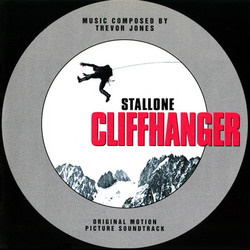
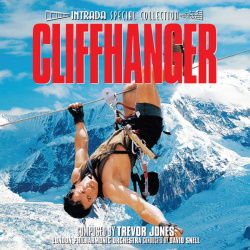
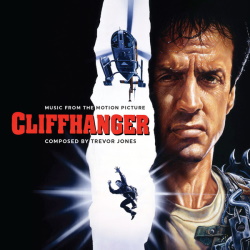
The score for Cliffhanger was originally released as a 50-minute package on the Scotti Bros label when the film came out and, honestly, I have always been satisfied with this release – it hits all the main thematic ideas, offers a broad range of action selections, and finishes with a flourish. Despite this, two labels have seen fit to offer expanded releases; first, in 2011, Intrada Records released a limited edition 2-CD set of the complete score, expanded to more than 80 minutes; then, in 2017, La-La Land Records released a different limited edition 2-CD set produced by Neil S. Bulk featuring a new stereo mix of the film score from the original digital 3-track masters, with both the complete score and the original 1993 album presented separately. It’s excellent, and both sets are highly recommended to fans.
 Listening to this score today, 30 years down the line, really makes me stop and think how lucky film score fans were in the 1990s. The fact that a jumped-up Sylvester Stallone action B-movie like Cliffhanger could receive a score as rousing, as memorable, as thematically dense, and with orchestral action music this complex and interesting – and for it to be the expected norm back then – is something that should not be taken for granted. Trevor Jones has always had a penchant for soaring, wondrously heroic main themes, and although it certainly has its roots in The Last of the Mohicans, Cliffhanger is one of these, and is one of his best. For fans of the film, and for fans of that sound, this score should not be overlooked.
Buy the Cliffhanger soundtrack from the Movie Music UK Store
Track Listing:
- 1993 SCOTTI BROS ORIGINAL RELEASE
- Cliffhanger Theme (3:49)
- Sarah’s Farewell (2:11)
- Sarah Falls (3:50)
- Gabe Returns (1:16)
- I Understand (1:54)
- Sunset Searching (1:38)
- Tolerated Help (1:18)
- Base Jump (2:54)
- Bats (4:07)
- Two Man Job (2:22)
- Kynette Is Impaled (2:07)
- Fireside Chat (4:00)
- Frank’s Demise (0:32)
- Rabbit Hole (2:34)
- Icy Stream (1:32)
- Jessie’s Release (1:36)
- Helicopter Fight (5:11)
- End Credits (7:20)
- 2011 INTRADA EXPANDED RELEASE
- Cliffhanger Theme (3:52)
- Setting Cable (2:14)
- Sarah Slips (4:03)
- Driving Invitation (3:12)
- I Understand (1:40)
- Being Tracked/Matheson Revives (6:51)
- Plane Crash (1:50)
- Two Man Job (2:09)
- Tolerated Help (2:57)
- Fetch/Expensive Funeral (6:04)
- Hal Leads (1:24)
- Ice Castle/Sunset Searching (2:03)
- Night Searching/Face Flare (4:18)
- Qualen In Hut/Fireside Chat (1:14)
- Brett’s Death/Evan’s Dive (4:07)
- Bats (2:24)
- Wolves Away (1:57)
- Footbridge (0:40)
- Gabe’s Caught (1:27)
- Kynette’s Impaled (4:02)
- Qualen’s Timebomb/Jessie’s Close Call (4:03)
- Frank’s Demise (2:36)
- Blown Bridge/Krystel’s Sacrifice (3:02)
- Rabbit Hole (1:34)
- Delmar Falls (2:27)
- Rabbit Surprise (2:58)
- Icy Stream/Jessie’s Release/Hooked Copter/Copter Fight (9:35)
- Cliffhanger (End Credits) (7:23)
- 2017 LA-LA LAND EXPANDED RELEASE
- Cliffhanger Theme (3:52)
- Sarah’s Farewell (2:14)
- Sarah Falls (4:06)
- Gabe Returns (3:12)
- I Understand (1:39)
- Being Tracked (4:02)
- Matheson Revives (3:00)
- Plane Crash (1:49)
- Two Man Job (2:08)
- Tolerated Help (2:56)
- Fetch/Expensive Funeral (6:16)
- Hal Leads (1:23)
- Ice Castle (0:46)
- Sunset Searching/Night Searching (3:52)
- Face Flare (1:47)
- Qualen in Hut/Fireside Chat (1:13)
- Brett’s Death/Evan’s Dive (4:04)
- Bats (2:24)
- Wolves Away/Footbridge (2:33)
- Gabe’s Caught (1:27)
- Kynette Is Impaled (3:59)
- Qualen’s Time Bomb (1:04)
- Jessie’s Close Call (3:02)
- Frank’s Demise (2:36)
- Blown Bridge (0:50)
- Kristel’s Sacrifice (2:15)
- Rabbit Hole (1:34)
- Delmar Falls (2:28)
- Rabbit Surprise (2:57)
- Icy Stream/Jessie’s Release/Hooked Copter/Helicopter Fight (9:35)
- End Credits (Cliffhanger) (7:21)
- Cliffhanger Theme (3:51) ORIGINAL SOUNDTRACK ALBUM
- Sarah’s Farewell (2:14) ORIGINAL SOUNDTRACK ALBUM
- Sarah Falls (3:51) ORIGINAL SOUNDTRACK ALBUM
- Gabe Returns (3:12) ORIGINAL SOUNDTRACK ALBUM
- I Understand (1:39) ORIGINAL SOUNDTRACK ALBUM
- Sunset Searching (1:20) ORIGINAL SOUNDTRACK ALBUM
- Tolerated Help (2:56) ORIGINAL SOUNDTRACK ALBUM
- Base Jump (4:08) ORIGINAL SOUNDTRACK ALBUM
- Bats (2:24) ORIGINAL SOUNDTRACK ALBUM
- Two Man Job (2:08) ORIGINAL SOUNDTRACK ALBUM
- Kynette Is Impaled (4:00) ORIGINAL SOUNDTRACK ALBUM
- Fireside Chat (0:34) ORIGINAL SOUNDTRACK ALBUM
- Frank’s Demise (2:36) ORIGINAL SOUNDTRACK ALBUM
- Rabbit Hole (1:34) ORIGINAL SOUNDTRACK ALBUM
- Icy Stream (1:38) ORIGINAL SOUNDTRACK ALBUM
- Jessie’s Release/Helicopter Fight (5:12) ORIGINAL SOUNDTRACK ALBUM
- End Credits (Cliffhanger) (7:21) ORIGINAL SOUNDTRACK ALBUM
- Hooked Copter (Stereo Album Mix) (2:52) BONUS TRACK
Running Time: 50 minutes 11 seconds – Original
Running Time: 82 minutes 06 seconds – Expanded Intrada
Running Time: 145 minutes 54 seconds – Expanded La-La Land
Scotti Bros. 72392 75417-2 (1993) – Original
Intrada Special Collection Volume 156 (1993/2011) – Expanded
La-La Land Records LLLCD 1418 (1993/2017) – Expanded
Music composed by Trevor Jones. Conducted by David Snell. Performed by The London Philharmonic Orchestra. Orchestrations by Trevor Jones, Lawrence Ashmore, Jeff Atmajian, Guy Dagul, Brad Dechter and Geoff Alexander. Recorded and mixed by John Richards. Edited by Dan Carlin. Original album produced by Trevor Jones. Intrada expanded album produced by Douglass Fake and Roger Feigelson. La-La Land expanded album produced by Neil S. Bulk.
Leave a reply to Dirk Cancel reply

Shop at the Movie Music UK Store

Member of the

 MOVIE MUSIC UK
For me a disappointing score. Jones writes great themes but as for action music, I prefer other composers. It’s all too messy with hardly any excitement or rhythm. Listen tot ‘Air Force One’ if you want to know what I mean.