THE CONSTANT NYMPH – Erich Wolfgang Korngold
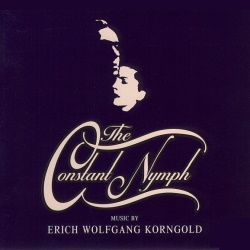 GREATEST SCORES OF THE TWENTIETH CENTURY
Original Review by Craig Lysy
The 1924 novel The Constant Nymph by Margaret Kennedy was a popular sensation, which spawned a successful play by Basil Dean in 1926, and two movie incarnations; a 1928 silent film starring Ivor Novello and a 1933 talkie with Brian Aherne. Warner Brothers decided that they could offer a definitive film version and so bought the film rights from 20th Century Fox in 1940. The studio secured support from Kennedy to proceed and Henry Blanke and Hal B. Wallis were assigned production with a $1.1 million budget, Edmund Goulding was tasked with directing, and Kathryn Scola was hired to write the screenplay based on Basil Dean’s 1926 version. A superb cast was assembled, including; Joan Fontaine as Tessa Sanger, Charles Boyer as Lewis Dodd, and Alex Smith as Florence Creighton.
The story explores a tragic tale of unrequited love. Belgian composer Lewis Dodd is seeking to rebound from the flop of his last symphony and conceives a symphonic poem to be called “Tomorrow”. He stays at the home of his orchestrator Albert Sanger, who has four daughters, one of which Tessa loves Lewis and serves as his muse. Rather than wait for Tessa to come of age, Lewis marries his rich and beautiful cousin Florence not for love, but instead for the security her money brings. This brings Tessa to tears and heartache, which cannot be assuaged. Six months later Tessa and her sister Paula have been taken in by the Dodd’s so they might attend a prestigious school in London. Tessa arouses jealousy in Florence who forbids her to attend the premier of “Tomorrow”, which she inspired and assisted Lewis in refining. She is heartbroken and collapses at home while listening to the performance on the radio. The Tone Poem is a massive success and when a thankful Lewis returns home to share his happiness with Tessa, he finds that she has died from her chronic heart condition. He is devastated, hugs her and weeps as something precious has been lost. The Constant Nymph was a commercial success earning $3.45 million. The film secured one Academy Award nomination for Best Actress.
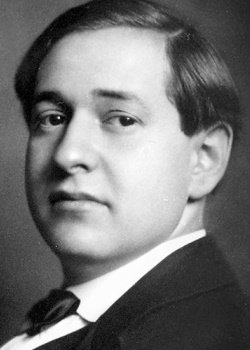 The creative team believed renowned classical composer Erich Wolfgang Korngold was ideally suited for their project. He was hired to score the film in 1942 and brought in very early in production. Given the classical music context of the story, Korngold took on a greater and more expansive role than usual. He convinced the creative team to adopt his idea of changing Dodd’s symphony to a symphonic tone poem for contralto woman’s voice and orchestra. Margaret Kennedy fully supported this approach and provided the vocal text. Concerning the film’s narrative, Korngold understood that at its core, this was a tragic story of unrequited love, and that he would have to speak to Tessa’s anguish, and Lewis’ devastation and regret with her death. He also understood that Dodd’s symphonic tone poem “Tomorrow” would be the showcase piece, which would anchor the score.
For his soundscape, Korngold composed four primary themes. Given that the story offers a classic love triangle, he provided two Love Themes for the woman and girl seeking his affections. Both themes emote from the women’s perspective, not Lewis’. Tessa’s Theme supports her girl-like identity, innocence and purity, but also serves as a Love Theme, which speaks to Tessa’s aspirational yearning, yet unrequited love for Lewis. It offers sparkling, refulgent strings and vibrant horns of aspiration. Its expression is tender and full of yearning, yet ultimately fails as Lewis too late realizes that she is his true love. Florence’s Theme offers a refined, warm string borne statement that comforts like a warm blanket on a cold night. There is tenderness in the notes and I believe Korngold perfectly captured her sweetness and charm. It also serves as a second Love Theme, which supports the more ardent love of Florence. Unlike Tessa’s love theme, it is unabashedly romantic, more mature, and more passionate. Charles’ Theme supports this portly and pompous aristocrat with a comedic sensibility empowered by a waddling tuba. For the symphonic tone poem “Tomorrow”, the score features three incarnations, which trace its development and evolution; an early Tessa inspired chamber ensemble version with violin, viola, cello, piano and vocal, an experimental, dissonant, pounding and modernist version for two pianos, and lastly, its final form, a grand, molto romantico orchestral version with contralto woman’s voice and angelic women’s choir. Most interesting is that when Florence dominates Lewis’ life (“Tomorrow” version 2) the piece’s romanticism and melody disappear, while when Tessa dominates (“Tomorrow” versions 1 and 3) the piece’s romanticism and melody blossom. Lastly, to ground the film Korngold infused a number of classical and folk tunes, including “The Artist’s Life” waltz by Richard Strauss II. “Londonderry Air”, the Irish traditional ballad also known as “Danny Boy”, and Serenade in D Major by Franz Joseph Haydn.
Given that there is no bona fide commercial release of the score, I will use scene descriptors and film time indices for my review. 00:00 “Main Title” offers a wonderful score highlight where we are graced by Korngold’s classic European romanticism. We open grandly with sparkling, refulgent strings, wondrous harp glissandi and vibrant horns of aspiration of the Chalet Theme, which usher in an extended effusive rendering of the “Tomorrow” Theme exquisite romanticism as the Warner’s Brothers Studio logo displays. The flow of the opening credits unfolds as we see a rapturous drawing of Tessa, Lewis’ muse against a mountainous background. At 01:09 “Brussels” we flow into the film proper as “Brussels” displays in script as tolling bells ring as Marie warns Georges of Lewis’s temper tantrum in response to terrible reviews of his latest symphony’s debut in London. He asks Marie to send a telegram to Albert Sanger advising of his arrival at his chalet in Switzerland tomorrow.
As Lewis packs, we flow into 06:18 “Chalet Sanger”, a wondrous and romantic score highlight atop strings spiritoso, which voice the vibrant Chalet Theme. A change of scene reveals Roberto arriving with a telegram carried by a vibrant statement of the Chalet Theme. Tessa takes the envelope, is elated that Lewis is coming to visit, and runs in to tell her sisters the good news. Her yearning Love Theme abounds with joy as racing strings felice carry her into the chalet where she announces the wonderful news to Kate. At 07:26 Kate slaps Tessa on the butt and orders her to get Paula out of bed. A happy and playful musical narrative carries her to the bedroom, where she literally pulls Paula out of bed. At 07:50 bubbling woodwinds of happiness usher in Tessa’s Love Theme as she frantically searches to find a ribbon for her hair. At 08:14 the music darkens and embraces a sad narrative as Madame Lina Sanger slams the bedroom door and shouts “You drunken pig!” Yet Tessa is not deterred as bubbling woodwinds felice percolate as the Love Theme and Chalet themes join. Kate gifts her one of her hair ribbons and Tessa runs up the stairs to bring papa a new bottle of brandy. At 09:12 a gentile Chalet Theme borne as a woodwind pastorale supports her tenderly waking her father. At 10:27 aching, yearning strings, so full of longing, usher in Tessa’s Love Theme as he responds to her query about Lewis, both as a man, and as a musician. At 11:01 whistling signals Lewis’ arrival and Tessa bolts down the stairs carried by racing strings energico. Paula and her sprint to greet Lewis and at 11:26 Tessa’s Love Theme blossoms as she leaps into his warm embrace. Afterwards, he introduces Monsieur Trigorin and a joyous musical narrative supports them all walking to the chalet.
“Yearning for Love” offers a romantic score highlight where we see Lewis departing for a nap as Paula fixes Tessa’s hair. At 13:34 The Chalet Theme on woodwinds tenero ushers in Tessa’s yearning Love Theme for a beautiful exposition as she speaks of realizing his love when she grows up. It becomes rapturous when the melody is transferred to solo violin d’Amore. 15:03 “Toni Comes Home” reveals Paula and Tessa racing out to greet Toni, but a grim chord supports Tessa grimacing in pain and clutching her chest due to a flare-up by her weakened heart. Toni relates her disgust at Fritz, an older suitor, who bought her gifts not for love, but for other reasons. At 15:24 all is once again well with the world as Toni races up to the loft, followed by Tessa and Paula after she learns Lewis is here. At 18:20 Lewis leaves them his latest composition and departs to see dear friend and orchestrator Mr. Sanger. A tender oboe led woodwind statement of the tone poem’s opening bars supports as Tessa reads aloud the poetic verse.
21:00 “Tomorrow” offers an exquisite score highlight of rapturous beauty. It reveals Sanger worrying about the fate of his daughters as he is in poor health. As Lewis consoles him, we are graced with a chamber ensemble version of the Tomorrow tone poem by violin, viola, cello, piano. At 21:44 Sanger plays the piece on piano forte and the melody takes wing. 22:36 “Lewis Counsels Fritz” offers a beautiful confluence of music and poetry. Lewis gives Fritz advice regarding the wooing of Toni, as the ensemble of Paula on violin, Kate on cello and Trigorin on piano play the Tomorrow tone poem diegetically. Lewis conducts while Tessa watches as her viola’s strings are broken. After Lewis recites the first stanza, Tessa sings the beautiful poetic lyrics of the remaining stanzas
In 25:56 “Lewis and Tessa”, after the performance, Lewis hugs Tessa and congratulates her, but she is overcome and runs away carried by a molto tragico rendering of the song’s melody as Lewis chases after her. Because of her weak heart she runs out of breath and he catches her. She tells him that this spot is special, as it is where she writes her poetry. She recites one for him supported by a violin sustain. Tessa and Lewis’ intimate moment together is shattered by Kate screaming in 29:05 “Papa’s Death”. A horrific, discordant musical narrative carries their run into the chalet. From out this horror a threnody full of pain unfolds as a sobbing Toni blames herself for provoking her father’s anger and death. At 30:34 we slowly transition atop ethereal strings as Tessa and Lewis read a note from her father, written on Lewis’ musical manuscript: “To remind Lewis Dodd of his nice little tune, a symphonic poem, which could be titled ‘Tomorrow’”.
As she weeps, we close with a sad, musical narrative full of regret by the Tomorrow melody, joined with ethereal, religioso solemnity, replete with elegiac muted trumpets and bells funebre. 31:16 “The Hill” offers exquisite romanticism by Korngold. We open with shimmering tremolo strings and ethereal woodwinds, which emote the Chalet melody crowned with refulgent bells as we see Tessa, Paula and Toni placing flowers by their father’s tombstone on the hill. At 31:37 the music brightens atop a pastorale as the girls see the arrival of Fritz below. Yet it sours when Toni refuses to join the greeting party, as she is still upset with him. Ascending strings of aspiration, which usher in a sumptuous romance for strings carry Fritz into the Chalet. Roberto informs him that Lina has run off with Trigorin, Kate is at school in Milano, with only Toni, Paula and Tessa remaining. 34:00 “I’m Going To Marry Her” reveals Tessa revealing that Toni will soon depart for Paris to join a cabaret. Fritz will have none of it and declares his intent to marry her. Celli romantico with harp adornment voice his intentions, but the moment is shattered by two gunshots.
34:12 “Uncle Charles” offers a comedic musical narrative of Charles’ pompous theme replete with a waddling tuba as the portly man descends from upstairs, complaining that he missed shooting an obnoxious crow, which had been tormenting him. He makes Fritz’ acquaintance and advises that he is taking Paula and Tessa to London with him so they may continue their education. At 36:09 horns pompose declare his theme as Charles summons Roberto to serve breakfast. We slowly transition atop celeste to a spritely musical narrative as the girls depart to pick flowers, not accommodating Fritz’ request as to Toni’s whereabouts. As they travel and speak of love, Tessa’s Love Theme carries them. 36:56 “Florence” reveals Florence joining them after a swim with Lewis, carried by an extended rendering of her theme borne by warm strings tenero adorned with harp glissandi. The girls depart leaving Lewis and Florence alone.
39:24 “Lewis and Florence” offers a sublime romantic score highlight. We see her flirting with Louis, who is clearly amorous. He solicits her to depart with him, which intrigues her. He speaks of joining a poor musician who wants to take her into his arms, and she at last surrenders herself to him as the embrace and kiss. Korngold introduces the second Love Theme, which reflects the sweeping passion felt by our lovers. Paula arrives and discovers them kissing, and the love theme becomes tentative as she sheepishly calls them to breakfast. Yet she is stunned when Lewis informs her that he and Florence are to be married. He sends Paula on her way at 40:46, her flight supported by bubbling woodwinds. She is frantic to find Tessa but no one knows where she went. The musical narrative by strings spiritoso and woodwinds animato reflect this rising panic, as the frantic music becomes increasingly discordant. 41:39 “Tessa’s Devastation” offers a score highlight with a molto tragico rendering of Tessa’s Love Theme. It reveals her fainting after Lewis informs her of his wedding plans with Florence, as dire horns of devastation cry out her Love Theme. Her beleaguered Love Theme supports as Lewis carries her to bed. Uncle Charles is famished and demands to eat, his comic theme joining at 42:33, joining Florence’s Theme as she sits him down and calms him. Tessa wakes and her Love Theme struggles on a wavering violin delicato as Paula asks Lewis to leave. After he leaves, we see a crushing devastation in her eyes with her Love Theme, now borne by violins affanato, which voice her grief.
Script displays “London Half a Year Later”. 45:05 “Charles” reveals Charles arriving home carried by an extended rendering of his pompous theme. A second grand piano is being delivered for the recital tonight, and its delivery causes an argument between Lewis and Florence, which reveals their marriage is in trouble as he utters very harsh and hurtful words. In 50:17 “Lewis Apologizes”, after a paternal talk by Charles, Lewis realizes he was too harsh and joins Florence, offering her a most welcome apology. Korngold graces us with a beautiful exposition of their Love Theme. Yet the moment is lost when a telegram informs them that the girls have run away from school, which prompts Lewis to leave to search for them as Florence frets that he will not show up for the recital. As she ascends the stairs, a sad rendering of her theme supports. 54:13 “The Recital” reveals guests arriving for the evening recital, which is supported by a shrill soprano, who best years, if there ever were any, have passed long ago. She is screeching out an ear shattering aria, much to the displeasure of Charles. We flow into an elegant orchestral rendering of Strauss’ “The Artist’s Life” waltz. Lewis returns home much to Florence’s relief and greets Fritz and Toni who declare she is pregnant. Roberto then informs Lewis that the girls have arrived and he is very pleased. At 57:31 we flow into “Londonderry Air” as the girls and Florence join Lewis upstairs. It is very apparent that Tessa still longs for Lewis as they embrace, while an uncomfortable Florence watches. At 59:13 we flow into Haydn’s graceful, and gentile “Serenade” as Lewis and Florence depart to join the recital.
1:02:03 “Tomorrow” reveals Lewis and pianist Caroli presenting the symphonic poem for two pianos. The piece is played aggressively and coldly in a pounding, modernist style, which sheds all remnants of the music’s consonance, melody and romanticism. Paula and Tessa listen on the stairs and are perplexed as to why he has presented the piece in this manner. Tessa declares that there is no melodic line or feel to it, as though he has again lost his heart. We close on a dissonant chord at 1:04:05 as Tessa weeps. The next morning in 1:04:54 “Tessa Comes to Lewis” reveals Tessa joining Lewis in his studio, over the objections of a jealous Florence, carried with fervor by her Love Theme. A crashing descent brings her to his studio where she steals some pastry. Music stops as she discloses her disappointment of his Tone Poem, which she attributes to Florence. At 1:06:18 he goes to his piano and again plays the first bars of his piece in modernist fashion to Tessa’s dismay as Florence joins them. Florence asks Tessa’s opinion of the performance as she is a musician, and she says it was very loud, defiant and aggressive, and that some people would pretend to like, not able to understand it. She explains that it was a beautiful piece with a melodic line, that he never developed. An argument erupts between Florence over the piece, but it is in reality over Lewis. He asks Tessa to stay and help him rediscover the original piece and a dispirited Florence leaves realizing he chose Tessa’s advice over hers.
1:09:52 “Tessa Remembers” reveals Tessa jogging her memory, as she begins playing the piece in its original form on the piano. The melody is wistful, romantic and yearning, which is impactful as it brings Lewis back to the piano. He plays the opening bars in grand romantic style, which restores the beauty of his music, much to Tessa’s delight. As she says “That’s it!” at 1:10:50, a magnificent orchestral statement is made, which restores the beauty, grandeur and romanticism of his piece. A chord of distress at 1:14:20 “I Got a Stitch” supports Tessa grimacing in pain from another stitch by her weak heart. In a scene unsupported musically, Florence frets to her father that she fears she is losing Lewis to Tessa, who she dislikes immensely. Charles tries to comfort and console her, but to no avail.
1:19:13 “Florence is Angry” reveals Lewis asking for a brandy and soda later, and Tessa rushing to get it, but she is topped in her racks as Florence yells angrily; “He said later!” supported by discordant woodwinds. All three are taken aback and Florence’s now pitiful Love Theme joins on strings. A dark chord supports Fritz’s arrival with the roses Tessa planned to be given Florence in Lewis’ name, but the scheme is exposed further raising tension with Florence. Tessa tells Fritz that he will again recognize the piece as it has regained Lewis’ heart. At 1:21:16 Florence asks if you are familiar with Lewis’ heart, and she answers that she appreciates it supported by a quote of her Love Theme. Florence is furious and walks away in a huff supported by her aggrieved Love Theme, which surges on a crescendo irato as she goes upstairs. Fritz departs and Korngold provides a grim aftermath as Lewis rejoins Tessa in the study.
They discuss Florence, but the conversation turns to Tessa when Lewis at last voices what he has felt ashamed of for so long. She does not want to hear it, but all pretenses are dropped at 1:22:55 “Forbidden Love”, a score romantic highlight. Tessa turns her head and begins to weep, supported by her Love Theme filled on a weeping violin filled with heartache and longing. An extended exposition of the theme supports as he questions why he did not understand these feeling for her before, only to be told it is too late and that he must now forget them. He declares his love for her but she says it is too late. He admits he was impulsive in proposing to Florence and regrets that he made the wrong choice. At 1:24:30 a solo violin d’Amore supports there embrace, but when he tries to kiss her, she bolts supported by discordant woodwinds saying that Florence is her cousin and that she cannot betray her. As Lewis watches, his face full of regret, Tessa departs and ascends the stairs supported by her Love Theme, so full of heartache.
Later, in “I Thought You Were Decent!”, Florence joins Lewis in the bedroom as they prepare to depart for the concert. She sees his bags packed and asks to go with him, apologizing for her behavior in the afternoon. But he devastates her saying; “You are attractive, young and deserve more than I can ever give to you”. She begs him for another chance, but he asks for her to take care of and try to understand Tessa. It all goes to shambles when he admits that he has always loved her, and she asks bitterly, why he married her. Music enters at 1:30:38 angrily with strings of devastation emoting her Love Theme as Florence storms out saying; “I thought you were decent!” She finds the maid taking smelling salts to Tessa as she has had another spell, and grabs it, saying she will take it, departing atop an angry rendering of her theme. As she reaches Tessa’s bedroom door and knocks, the musical tempest of anger dissipates as she enters.
1:33:56 “Florence Confronts Tessa” reveals both women dropping all pretenses as Florence accuses her of stealing her husband. Tessa under duress, admits that she has always loved Lewis, that she cannot help it, but realizes he is married, which is why she plans to leave. Florence says disdainfully; “What do you know of love?” But when Tessa answers; “Yes, I do. I know all about it.” Florence erupts empowered by her angry theme, and shakes Tessa violently while shouting “What do you mean by that!” Tessa faints. Florence helps her up as their themes entwine in a tête-à-tête. She gives her the smelling salts, tells her to stay home and rest and departs, her theme now ascendant. Florence grabs her wrap and heads out, as Lewis comes to Tessa’s bedroom caried by ethereal strings. He asks her to get ready, but she deflects saying it is best she remains home due to her palpitations. They share a tender moment, and at 1:38:42 “Lewis Kisses Tessa”, their Love Theme at last blossoms for its most romantic iteration though its petals fall away, as he kisses her on the forehead on her insistence, and he says that he will return to her after the concert. Her theme carries his departure from the house, and ends with bittersweetness as Tessa holds the boutonnière, she bought for him in her hand.
1:40:29 “The Concert” reveals Fritz greeting Lewis at the concert hall. Woven into the orchestra’s tune up are strains of Florence’s Theme as he advises that Florence is having a fit, thinking he will not show up. 1:41:27 “Tomorrow” offers a sublime confluence of music, poetry and film narrative. A mystical, tubular bell laden rendering of Florence’s Theme supports the conductor taking the podium, while we see Tessa coming downstairs with a packed suitcase. At 1:42:18 a grand, fortissimo declaration by horns magnifico launches the tone poem, which Tessa and Roberto hear over the radio. Soon, Roberto leaves to get Tessa something to eat. At 1:42:48 a live orchestra shot supports a sweeping molto romantico statement of the “Tomorrow” Main Theme, which reaches for the heavens. At 143:33 horns nobile, joined by ethereal harp glissandi take Tessa back to her beloved hill, site of her father’s grave. Strings romantico carry her to Lewis, who says he has been calling her. They affirm their love for each other at 1:44:25 as the Tomorrow Love Theme joins. At 1:45:15 a woman contralto begins singing with an aching pathos, the “Tomorrow” poem: “When I am dead another love will cheer thee. The sun will rise as bright tomorrow morn.” “Tessa panics, saying; “I am afraid! The words frighten me!” and she returns to the Creighton study as the woman continues singing: “The birds will sing, though I no longer near thee must lie forlorn, lie forlorn.” We return to the concert hall at this point, where we see the woman contralto singing “When I am in my grave, the flowers blowing shall make thee garlands twenty times as sweet.” We return to the Creighton study; “Beauty will live, though I must sleep unknowing beneath thy feet, though I must sleep beneath thy feet.”
From 1:46:49 – 1:47:28 we soar to the tone poem’s climax atop a grand, molto romantico climax, as the contralto is joined gloriously by woman’s choir. Tessa is overcome by the powerful emotions unleashed and collapses unto death as we see Lewis depart the theater. 1:47:48 “Lewis Finds Tessa” reveals Lewis entering the Creighton manor carried by dire, formless low register bass and piano rumblings of doom. The bass surge with urgency as he runs up the stairs to find Tessa’s room empty. A misterioso emerges as tremolo celli and bass carry him downstairs where he is joined by Florence. She begs him not to hate her, and to forgive her. She says she is stepping aside out of love so he and Tessa can be happy. He thanks her as Charles and several guests arrive for a nightcap. Lewis enters the study and Roberto tells him she is sleeping on the couch. They walk to see her and at 1:50:14 “Tessa Has Died”/End Title”, tremolo violins usher in a dire chord of death as they she is dead. Roberto leaves weeping and as writhing strings of pain carry Lewis to her. At 1:50:30 a solo forlorn flute usher in an elegy by strings full of heartache, which voice the Tomorrow Theme as he takes her in his arms. The melody ascends passionately, yet dies, his love too late and unrealized. We conclude grandly with a molto romantico flourish atop the Tomorrow Theme as the camera moves to the hearth, where a single flame emerges, which transforms into a glorious sunrise to end the film. 1:51:31 “Cast” where a magnificent women’s choral empowered reprise of the “Tomorrow” melody ascends gloriously unto the heavens, ending with a grand flourish.
Unfortunately, once again a masterpiece of the Golden Age lacks a bona fide commercial release. May I live to see a re-recording, it is imperative that the beauty of Korngold’s handiwork finds voice. I find it sad that Hollywood gave up on Korngold’s ability to score films, while he accepted this bitter reality and returned to his first passion, composing concert and opera music. We see with his late opus scores like “The Sea Wolf” (1941), “Between Two Worlds” (1944), “Devotion” (1946), “On Human Bondage” (1946), and “Deception” (1946) that his enormous talent was in no way limited to swashbuckling and period pieces, and that he could masterfully score film noir and modern drama films. For this film, the creative team and author fully supported his brilliant idea to change Dodd’s composition from a symphony to a symphonic tone poem for contralto and women’s choir. “Tomorrow” offers a grand, effusive, molto romantico piece with dramatic eloquence and magnificence. The piece is crucial to the film’s narrative, with its various incarnations directly linked inspirationally to the two women vying for his love. The tragedy of the love triangle is at the core to the film’s narrative. Masterful is the developmental arc of the two love themes with one evolving and finally blossoming, and one devolving and withering. Tessa’s love theme is initially girl-like, tender, yearning, and aspirational. Yet we discern its slow evolution during the film as we bear witness to it blossoming with unabashed romanticism when Lewis’ has an epiphany and finally realizes that she is indeed his true love. Conversely, over the course of the film, as Florence becomes angry, defensive and fearful that she is losing Lewis to Tessa, her Love Theme loses its fervor and vitality, becoming weighted down with bitterness and fatalistic sadness. Folks, this film of unrequited love was elevated in every conceivable way by Korngold’s masterful scoring. In scene after scene his music created a sublime cinematic confluence, which enhanced the human drama unfolding on the screen, thus ensuring Goulding achieved his vision. I highly recommend you take in the film to fully appreciate this late career gem, until such time that a rerecording cam be made.
For those of you unfamiliar with the score, I have embedded a YouTube link to a wonderful ten-minute suite; https://www.youtube.com/watch?v=wCgiBRzOcn8
Track Listing:
- NOT AVAILABLE
Music composed and conducted by Erich Wolfgang Korngold. Orchestrations by Hugo Friedhofer. Recorded and mixed by XXXX. Score produced by Erich Wolfgang Korngold and Leo F. Forbstein.

Shop at the Movie Music UK Store

Member of the

 MOVIE MUSIC UK