Mikis Theodorakis, 1925-2021
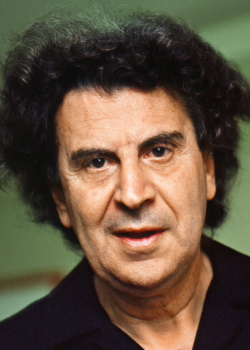 Composer, songwriter and political activist Mikis Theodorakis died in Athens, Greece, on September 2, 2021, at the age of 96.
One of the most important figures in modern Greek music, Theodorakis wrote more than a thousand works encompassing songs, symphonies, operas, ballets and film scores. Internationally, however, he remains best known for the music of Zorba the Greek, Z and Serpico, which brought the sound of modern Greece to audiences around the world.
Michail Theodorakis was born on the Greek island of Chios on July 29, 1925. He began composing as a teenager and studied at the Athens Conservatory before continuing his education at the Paris Conservatoire. His early concert music showed the influence of European modernism, but Theodorakis increasingly sought to combine classical technique with Greek folk traditions, Byzantine music and popular song.
His first film scores were written for Greek productions during the early 1950s, and he soon began working internationally. Among his early credits were Michael Powell and Emeric Pressburger’s Ill Met by Moonlight (1957), Jules Dassin’s Phaedra (1962), Anatole Litvak’s Five Miles to Midnight (1962), and Michael Cacoyannis’s Electra (1962). The latter began one of his most important director-composer relationships and established the intensely Greek musical language that would soon make him internationally famous.
That breakthrough came with Cacoyannis’s Zorba the Greek (1964), starring Anthony Quinn and Alan Bates. Theodorakis’s score drew on Greek folk music and the sound of the bouzouki, culminating in “Zorba’s Dance,” the accelerating sirtaki that accompanies the film’s celebrated final scene. The melody became an international phenomenon and, for millions of listeners, virtually synonymous with Greece itself. The score earned Theodorakis Golden Globe and Grammy nominations.
Theodorakis’s political life was inseparable from his music, although it was only one aspect of an enormous career. He participated in the resistance during the Nazi occupation and suffered imprisonment and torture during the Greek Civil War. After the military junta seized power in 1967, his music was banned, and he was arrested and imprisoned before international pressure secured his release in 1970. He subsequently lived in exile and became one of the best-known artistic symbols of resistance to the dictatorship.
His political experience gave particular force to Costa-Gavras’s Z (1969), a thriller inspired by the assassination of Greek politician Grigoris Lambrakis. Theodorakis was still a political prisoner while the film was being prepared, and its soundtrack drew heavily on his existing music. Built around urgent Greek rhythms and politically charged melodies, the result became one of the defining scores of European political cinema and won the BAFTA Award for Original Film Music.
Theodorakis worked with Costa-Gavras again on State of Siege (1972), while other notable scores included The Trojan Women (1971) and Sidney Lumet’s Serpico (1973). For the latter, starring Al Pacino as an honest New York police officer confronting corruption, Theodorakis wrote a haunting central theme whose distinctly Mediterranean character gave the film an unexpectedly personal and melancholy identity. The soundtrack brought him a second Grammy nomination.
Although cinema brought him worldwide recognition, film scoring represented only part of Theodorakis’s output. His major concert and vocal works included the Mauthausen song cycle, Axion Esti, Canto General, symphonies, operas and the ballet Zorba the Greek. He also served several terms in the Greek parliament and remained an outspoken public figure throughout his life.

Shop at the Movie Music UK Store

Member of the


